

A Garmin watch can be a focused running tool, a serious navigation device, or a polished health tracker that happens to record workouts. The difficult part is separating the watches built for genuinely different users from the models that mainly differ in styling.
Our Best Garmin Watch picks cover everything from the simple Forerunner 55 to the satellite-connected fēnix 8 Pro. The Garmin fēnix 8 Pro is the best overall pick, with the Forerunner 970, fēnix 8 Solar, Venu 4, and more affordable fitness-focused options rounding out the range.
| # | Product | Award | Display | Battery | Best for |
|---|---|---|---|---|---|
| 1 | Garmin fēnix 8 Pro | Best overall | 1.4-inch AMOLED | Not specified | Off-grid athletes |
| 2 | Garmin Forerunner 970 | Best for serious runners | AMOLED | Up to 15 days | Marathon and triathlon training |
| 3 | Garmin fēnix 8 Solar | Best battery life | 1.4-inch solar | Up to 48 days with solar charging | Long outdoor adventures |
| 4 | Garmin Venu 4 | Best for everyday wellness | Color display | Up to 12 days | Health tracking and daily wear |
| 5 | Garmin Instinct 3 Solar | Best rugged design | 0.9-inch solar | Unlimited with solar conditions | Hiking and hard use |
| 6 | Garmin vívoactive 6 | Best fitness all-rounder | AMOLED | Up to 11 days | Everyday workouts |
| 7 | Garmin Forerunner 165 | Best for new runners | AMOLED | Up to 11 days | Guided run training |
| 8 | Garmin vívoactive 5 Ivory | Best for sleep tracking | 1.2-inch AMOLED | Up to 11 days | Sleep and recovery |
| 9 | Garmin vívoactive 5 Black | Best for phone-free workouts | 1.2-inch AMOLED | Up to 11 days | Music and general fitness |
| 10 | Garmin Forerunner 55 | Best simple running watch | Not specified | Up to 2 weeks | Straightforward run tracking |
1. Garmin fēnix 8 Pro: Best Overall
Pros
- Built-in inReach satellite and LTE connectivity
- Sapphire lens and titanium bezel
- TopoActive, golf, and ski maps
- LED flashlight and 40-meter dive rating
- Advanced multisport and health features
Cons
- Large 51mm case
- Satellite and LTE features require an active subscription
- More capability than most casual users need
Best for: athletes and adventurers who need training tools, navigation, and emergency communication in one watch.
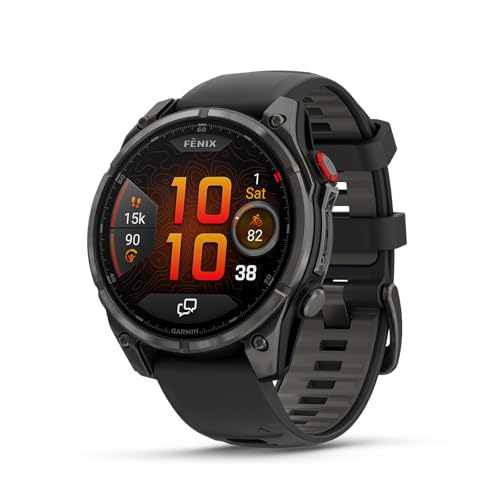
The Garmin fēnix 8 Pro is the watch we would choose when the trip matters more than the convenience of carrying a phone. It combines the full multisport character of Garmin's fēnix line with built-in inReach technology, so it can send messages, provide location check-ins, and trigger an interactive SOS through satellite connectivity. LTE adds another route for messages, voice calls, LiveTrack, and location sharing when cellular coverage is available.
Its 51mm body is substantial, but the construction matches the intended use. A titanium bezel, scratch-resistant sapphire lens, and metal buttons make it feel prepared for rough trails rather than merely styled like an outdoor watch. The bright 1.4-inch AMOLED touchscreen is easier to read than a basic monochrome panel, while button controls remain useful when hands are wet, cold, or gloved. Preloaded TopoActive maps with relief shading add useful context on the trail, and the watch also includes golf course and ski resort maps.
The feature list goes well beyond route recording. Advanced training metrics, training plans, wrist-based heart rate, sleep monitoring, HRV status, Pulse Ox, and an ECG app make this a serious health and performance device. The built-in LED flashlight is a small feature that becomes useful quickly, especially when getting around camp or finding a lock after dark. A 40-meter dive rating and support for scuba and apnea activities widen its range further.
The weakness is the same thing that makes the fēnix 8 Pro special: it is a lot of watch. The large case may feel awkward on a smaller wrist, and the satellite and LTE functions depend on an active subscription, coverage, and local regulations. The Garmin Forerunner 970 is a more focused choice for runners, while the Garmin fēnix 8 Solar makes more sense for people who prioritize extended battery performance over AMOLED brightness.
Choose the fēnix 8 Pro if your normal week can include a structured workout, a long trail, and a place where your phone has no signal. For runners who spend most of their time on roads, the more specialized Forerunner models are easier to justify. Readers narrowing their search around training should also consider how running features change the right watch for your routine.
2. Garmin Forerunner 970: Best for Serious Runners

Pros
- Lightweight titanium bezel and sapphire lens
- Full-color maps and multi-band GPS
- Running economy and running dynamics
- Up to 26 hours in GPS mode
- Built-in microphone, speaker, and flashlight
Cons
- Some advanced running metrics require the HRM 600 monitor
- Less suited to diving and broad adventure use than the fēnix models
- Training data can be excessive for casual runners
Best for: dedicated runners, triathletes, and athletes who want detailed feedback on training load and running form.
The Garmin Forerunner 970 is the most persuasive option here for someone who thinks first in mileage, pace, recovery, and race preparation. It has a lightweight titanium bezel, sapphire lens, bright AMOLED touchscreen, and physical buttons, so it feels more refined than a basic running tracker without losing the tactile controls that matter during a workout.
Battery life reaches up to 15 days in smartwatch mode and up to 26 hours in GPS mode. That GPS figure matters more than the headline smartwatch number for marathon and triathlon training because it leaves room for long sessions without constant charging. Full-color built-in maps, multi-band GPS, and dynamic round-trip routing also make it useful when a normal run becomes an unfamiliar route.
This is where the Forerunner 970 separates itself from the Forerunner 165 and Forerunner 55. It provides running economy, step speed loss, running tolerance, wrist-based running dynamics, and running power. Running economy and step speed loss require the HRM 600 monitor for the relevant measurements, but the watch still offers a much deeper training picture on its own. Garmin Coach plans adapt to performance and recovery, while multisport auto-transition can detect changes between swimming, cycling, and running.
The watch is less compelling if you want a general outdoor companion. The fēnix 8 Pro has satellite communication, dive support, and a broader adventure feature set, while the fēnix 8 Solar has far longer battery potential. The Forerunner 970 also puts a lot of information in front of you. That is useful for a committed athlete and distracting for someone who only wants distance and pace.
For the runner who wants to understand why a workout helped, hurt, or needs more recovery, the Forerunner 970 is the sharper tool. It is also the better choice for someone planning to move from standalone running into triathlon training without changing watches.
3. Garmin fēnix 8 Solar: Best Battery Life

Pros
- Up to 48 days in smartwatch mode with solar charging
- Up to 149 hours in GPS mode with solar charging
- Sapphire lens and titanium bezel
- Multi-band GPS with SatIQ
- Dive support, maps, and LED flashlight
Cons
- Solar charging results depend on light conditions
- Large 51mm case
- Solar display is less vivid than the AMOLED alternatives
Best for: hikers, expedition-minded users, and athletes who want to minimize charging interruptions.
The Garmin fēnix 8 Solar is built around a simple idea: a watch should stay useful when access to a charger is inconvenient. Its 51mm case contains a 1.4-inch solar-charged display, and Garmin rates it for up to 48 days in smartwatch mode with solar charging. In GPS mode, the claimed figure reaches up to 149 hours with solar charging. Those figures assume all-day wear and specified light conditions, so they are best understood as a ceiling rather than a promise for every trip.
The display choice is important. Solar charging supports exceptional endurance, but it does not have the vivid, high-contrast look of the AMOLED screen on the fēnix 8 Pro or Forerunner 970. The payoff is an always-on design that is better aligned with long periods away from a wall outlet. Sapphire glass and a titanium bezel help protect the watch when a route gets rough, and the LED flashlight adds practical visibility after dark.
Navigation is strong. Multi-band GPS with SatIQ, a three-axis compass, gyroscope, and barometric altimeter provide the foundation for route finding and elevation awareness. Dynamic round-trip routing can create directions that return you to your start on schedule, while the 40-meter dive rating and leakproof metal buttons make the watch suitable for scuba and apnea activities. Training readiness, strength plans, stamina tracking, and a broad set of sports apps keep it from being merely a navigation device.
The weakness is physical and visual. A 51mm watch is not subtle, and the solar display asks you to accept a different look from the bright AMOLED screens elsewhere in this guide. The Instinct 3 Solar is tougher in spirit and simpler to operate, but it lacks the fēnix's maps, dive features, and broader training package. The fēnix 8 Pro is the better pick if satellite messaging and LTE matter more than maximum endurance.
Pick the fēnix 8 Solar for multi-day travel, remote routes, and anyone who regards frequent charging as a genuine nuisance. It is the clearest choice for endurance first, screen flair second.
4. Garmin Venu 4: Best for Everyday Wellness

Pros
- Up to 12 days of battery life
- Stainless steel design
- Built-in flashlight
- Broad sleep and health tracking
- Health status and lifestyle logging
Cons
- Less focused on advanced running metrics
- The 45mm case may feel large on smaller wrists
- Some health features are estimates, not medical diagnoses
Best for: people who want a polished daily smartwatch with substantial sleep, stress, and activity tracking.
The Garmin Venu 4 is the most natural daily-wear option in this group. Its bright color display and stainless steel design are easier to pair with ordinary clothes than the rugged fēnix and Instinct models, while the built-in flashlight adds a surprisingly useful bit of practicality. Battery life reaches up to 12 days, enough to make continuous sleep tracking realistic instead of something you abandon after a few nights.
Garmin gives the Venu 4 a strong wellness focus. Wrist-based heart rate, Body Battery, fitness age, stress tracking, meditation tools, and sleep coaching all work together to show patterns rather than isolated readings. Sleep guidance includes recommendations for how much rest you need and uses circadian rhythm information to frame the advice. The health status feature looks for changes in heart rate, HRV, skin temperature, and other data that could indicate increased stress on the body.
The ability to log behaviors such as caffeine and alcohol intake gives the app more useful context. You can then see how those habits may affect sleep, stress, and HRV. That approach is more helpful than treating every overnight measurement as a verdict. The 45mm size and stated 135 to 200mm wrist circumference make the fit worth checking before buying, especially if you prefer a smaller watch.
The Venu 4 does not replace the Forerunner 970 for serious run analysis, and it lacks the fēnix 8 Pro's satellite communication and dive capability. It is also not the right device for anyone seeking medical diagnosis. The health data is intended as a close estimate of tracked metrics, and availability for features such as Pulse Ox varies by country.
Choose the Venu 4 if your watch needs to handle office hours, sleep, gym sessions, and daily habits without looking like expedition equipment. For a broader look at the category, the difference between general fitness tracking and smartwatch features is a useful place to focus.
5. Garmin Instinct 3 Solar: Best Rugged Design

Pros
- Solar charging can support unlimited battery life in stated conditions
- 10 ATM water rating
- Multi-band GPS with SatIQ
- Fiber-reinforced polymer case and metal-reinforced bezel
- LED flashlight with variable intensity and strobe modes
Cons
- Small 0.9-inch display
- Less polished for maps and rich visual data
- Solar battery claims require substantial outdoor light
Best for: outdoor users who want a durable, low-maintenance watch with strong navigation basics.
The Garmin Instinct 3 Solar has a different personality from the fēnix and Venu watches. Its 45mm fiber-reinforced polymer case and metal-reinforced bezel are designed to shrug off the ordinary knocks of outdoor use, and the 10 ATM water rating gives it a clear advantage for swimming and wet conditions. It looks purposeful rather than decorative.
The standout feature is the solar charging lens. Garmin says the watch can achieve unlimited battery life with solar charging under the stated conditions of all-day wear and three hours outside per day in 50, 000 lux. That depends heavily on how much light the watch actually receives, but the concept is still useful for regular outdoor wear. You are less likely to think about charging when daylight is part of your routine.
The display is a 0.9-inch panel, so this is not the model to choose for dense map detail or a particularly spacious interface. It makes room for a three-axis compass, barometric altimeter, multi-band GPS, and SatIQ, which helps balance positioning performance with battery use. The LED flashlight offers variable intensities and strobe modes, and Garmin Pay, smart notifications, incident detection, and Assistance broaden its everyday usefulness when paired with a compatible smartphone.
The limitation is refinement. The Garmin fēnix 8 Solar offers a much richer map and training experience, while the Garmin Venu 4 is more comfortable as a lifestyle watch. The Instinct 3 Solar also makes you work with a smaller, simpler display. Skip it if you want vivid AMOLED visuals or a watch that blends quietly into formal settings.
Buy the Instinct 3 Solar when resilience, outdoor navigation, and reduced charging matter more than a luxurious interface. It is particularly well suited to hikers, campers, and people who are hard on their gear.
6. Garmin vívoactive 6: Best Fitness All-Rounder

Pros
- Up to 11 days of battery life
- More than 80 indoor and GPS sports apps
- Bright AMOLED display
- Sleep coaching and smart wake alarm
- Animated workouts and adaptive training plans
Cons
- Less specialized for advanced running than the Forerunner line
- No satellite communication
- Health readings are estimates rather than medical measurements
Best for: users who rotate between walking, gym workouts, swimming, cycling, and general wellness tracking.
The Garmin vívoactive 6 is the easiest watch here to recommend to someone whose exercise routine changes from week to week. It is not trying to be an expedition computer or a dedicated race instrument. Instead, it offers a bright AMOLED display, up to 11 days of battery life, and more than 80 indoor and GPS sports apps covering activities such as walking, running, cycling, HIIT, mobility, swimming, and golf.
That breadth matters because the watch does not force you to define yourself as a runner or cyclist. Animated workouts for cardio, yoga, strength, HIIT, and Pilates can guide form, while Garmin Coach plans adapt daily using health and recovery information. Personalized suggested walking workouts are a welcome touch for anyone trying to build a consistent movement habit without following a formal training plan.
Sleep features are unusually prominent. Sleep coaching, sleep tracking, nap detection, HRV status, and Body Battery help connect a night's rest to the next day's activity. The smart wake alarm is designed to vibrate at an optimal time, which is a more practical feature than another graph that you never check. Wrist-based heart rate, stress tracking, fitness age, menstrual cycle and pregnancy tracking, and meditation tools fill out the health side.
For dedicated runners, the Forerunner 165 offers more explicit run guidance, while the Venu 4 has a more premium everyday design and deeper lifestyle logging. The vívoactive 6 is not the choice for multi-band navigation, advanced running dynamics, or satellite communication. Its strength is balance, and its weakness is that it stops short of the specialist features that distinguish Garmin's higher-end models.
Choose the vívoactive 6 when your main goal is to move more, sleep better, and keep a wide selection of workouts on your wrist. It is a particularly sensible fit for households where one person may use the watch for walking and another day for strength or swimming.
7. Garmin Forerunner 165: Best for New Runners
Pros
- Bright AMOLED touchscreen with button controls
- Up to 11 days of battery life
- Daily suggested workouts that adapt to recovery
- Garmin Coach and race training plans
- Garmin Pay and safety features
Cons
- Up to 19 hours in GPS mode
- Less advanced than the Forerunner 970
- Safety features require a paired smartphone and coverage
Best for: runners who want structured guidance without the complexity of a top-tier training watch.
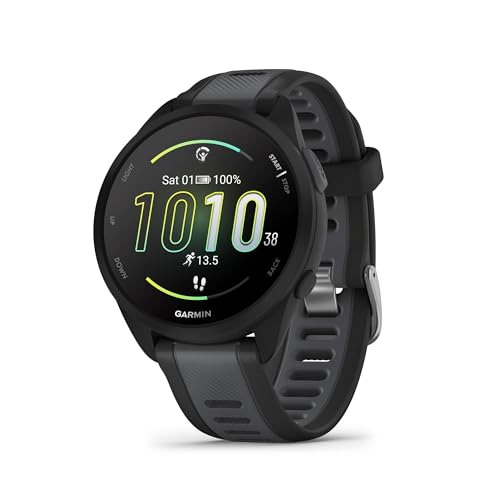
The Garmin Forerunner 165 gets the basics right for someone moving from casual jogging into planned training. Its 43mm size keeps it relatively manageable on the wrist, and the AMOLED touchscreen makes daily readings easy to see. Physical buttons remain available for starting and stopping workouts, which is useful when sweat makes touchscreen control less pleasant.
Battery life reaches up to 11 days in smartwatch mode and up to 19 hours in GPS mode. That is enough for ordinary training schedules, though the Forerunner 970 is better suited to long events and multi-sport weekends. The watch includes more than 25 activity profiles, covering running, cycling, HIIT, strength, and other workouts.
The training features are the main reason to choose it. Daily suggested workouts respond to performance and recovery, while Garmin Coach and race-adaptive plans can shape preparation around a specific event. Training effect explains the main benefit of a session, and recovery time gives a practical indication of when another hard workout makes sense. Morning reports combine sleep, recovery, training outlook, weather, and HRV status in one place.
The Forerunner 165 also handles daily smartwatch duties well. Smart notifications work with paired Android and Apple phones, Garmin Pay supports contactless payments in supported countries and networks, and incident detection and Assistance can send live location to emergency contacts during selected outdoor activities. These safety features need a compatible smartphone, setup, and network coverage, so they are not a substitute for independent emergency communication.
The Forerunner 55 is simpler and more direct, while the Forerunner 970 offers much deeper analysis for experienced athletes. Choose the Forerunner 165 if you want a clear path from first structured runs to a race plan without wearing a large adventure watch.
8. Garmin vívoactive 5 Ivory: Best for Sleep Tracking

Pros
- Up to 11 days of battery life
- Up to 5 days with the display always on
- Sleep coaching and nap detection
- More than 30 built-in sports apps
- Wheelchair mode and phone-free music
Cons
- Less capable for advanced training than Forerunner models
- No rugged navigation hardware
- The Ivory finish may not suit everyone
Best for: users who want a compact health and fitness watch with strong sleep and recovery tools.
The Garmin vívoactive 5 Ivory is a friendly, compact fitness smartwatch that puts recovery on equal footing with exercise. Its bright AMOLED display is easy to read, and battery life reaches up to 11 days in smartwatch mode or up to five days with the display always on. That balance makes it practical to wear overnight, which is essential if sleep information is part of your reason for buying a watch.
Sleep coaching, HRV status, automatic nap detection, and Body Battery are the core experience. The watch does not merely record that you slept. It uses sleep, naps, stress, and workouts to help explain why you may feel ready for activity or better served by rest. Garmin includes morning reporting, stress tracking, fitness age, and menstrual cycle and pregnancy tracking, though the data is intended as a close estimate of tracked metrics.
The vívoactive 5 supports more than 30 indoor and GPS sports apps, including walking, running, cycling, HIIT, swimming, golf, Pilates, and yoga. Preloaded workouts can be used for strength, cardio, HIIT, yoga, and Pilates, and custom workouts can be created in the Garmin Connect app. Wheelchair mode tracks pushes rather than steps and adds push and handcycle activities, an important distinction that many general fitness watches overlook.
Music can be downloaded from Spotify, Amazon Music, or Deezer accounts and played through paired wireless headphones, allowing phone-free listening during a workout. The watch is not intended to replace the Forerunner 165 for race-focused training, and it lacks the Instinct 3 Solar's compass, altimeter, and rugged construction. The Garmin vívoactive 5 Black has the same feature set, so this Ivory version is mainly a finish choice rather than a capability choice.
Pick the vívoactive 5 Ivory if sleep, naps, daily energy, and varied low-to-moderate workouts matter more than advanced route navigation. If you want a neutral look and the same tools, the Black version is the obvious alternative.
9. Garmin vívoactive 5 Black: Best for Phone-Free Workouts

Pros
- Up to 11 days of battery life
- Downloadable music from major services
- AMOLED display with always-on option
- Wheelchair mode and broad activity tracking
- Sleep coaching and Body Battery
Cons
- More than 30 sports apps, fewer than the vívoactive 6
- Not designed for rugged navigation
- No advanced running hardware
Best for: gym users and walkers who want music, health tracking, and workouts without carrying a phone.
The Garmin vívoactive 5 Black is the most straightforward companion for ordinary workouts. It has a bright 1.2-inch AMOLED display, up to 11 days of battery life, and a familiar set of health tools that encourage consistent use rather than demanding constant analysis. The Black finish is less visually distinctive than the Ivory version, but the two watches share the same core hardware and features.
Music is the differentiator for this entry. Playlists from Spotify, Amazon Music, or Deezer can be downloaded to the watch, then played through wireless headphones. That lets you leave the phone behind for a gym session, walk, or run while still listening to something familiar. The watch also records activities such as running, cycling, swimming, HIIT, Pilates, and yoga.
Health tracking covers wrist-based heart rate, Body Battery, stress, sleep, naps, HRV status, fitness age, and morning reporting. Garmin includes preloaded cardio, strength, HIIT, Pilates, and yoga workouts, plus the option to create custom workouts in Garmin Connect. Wheelchair mode tracks pushes rather than steps and includes push, handcycle, and wheelchair-focused workouts.
The vívoactive 6 is the stronger all-rounder if you want more than 80 sports apps, a smart wake alarm, and animated exercise guidance. The Forerunner 55 is a better fit if all you want is clear run distance, pace, and GPS battery endurance. Neither vívoactive 5 model offers the deeper running metrics of the Forerunner 970 or the outdoor communication tools of the fēnix 8 Pro.
Choose this version if phone-free music and general fitness are central to your routine. It is also a good match for someone who wants Garmin's recovery tools without the visual bulk of its adventure watches. For a wider comparison of daily smartwatch functions, the features that matter when a watch replaces your phone for short trips can help clarify the trade-offs.
10. Garmin Forerunner 55: Best Simple Running Watch

Pros
- Up to 2 weeks of smartwatch battery life
- Up to 20 hours in GPS mode
- Daily suggested workouts
- PacePro guidance and race predictions
- Lightweight, focused running design
Cons
- Older and simpler than the Forerunner 165
- No AMOLED display
- Fewer smartwatch and health features than the vívoactive models
Best for: runners who want dependable GPS, suggested workouts, and clear training guidance without a complicated interface.
The Garmin Forerunner 55 is the cleanest expression of a running watch in this roundup. It does not try to be a luxury smartwatch or an expedition computer. It tracks how far, how fast, and where you run, then adds enough training guidance to make the next session more purposeful.
Battery life is strong for this focused design, with up to two weeks in smartwatch mode and up to 20 hours in GPS mode. PacePro provides GPS-based pace guidance for a selected course or distance, while race time predictions and finish time estimates help turn training data into a concrete goal. Suggested workouts vary in intensity based on training history, fitness level, and recovery time.
The watch also tracks cycling, track running, virtual running, pool swimming, Pilates, HIIT, and breathwork. Wrist-based heart rate, intensity minutes, fitness age, and all-day respiration add basic wellness context. Free watch faces, data fields, apps, and widgets from the Connect IQ Store provide some customization, though they require compatible smartphone apps.
The Forerunner 55's weakness is its age and limited ambition. The Forerunner 165 adds a brilliant AMOLED touchscreen, morning reports, Garmin Pay, safety tools, and more modern training feedback. The vívoactive 5 models are better if music, sleep coaching, and general fitness matter more than running simplicity. The 55 is also not the right pick for multi-band GPS, full-color maps, or advanced running dynamics.
Choose the Forerunner 55 if you want a watch that stays out of the way and gives you the information needed to run consistently. It is the most focused option here, and that is precisely why it remains appealing.
How to choose the best garmin watch
The right Garmin depends less on the logo and more on the kind of activity, display, navigation, and training feedback you will actually use.
Training focus
Start by deciding whether running is the main activity or just one item on a larger list. The Forerunner 55 and Forerunner 165 are built around running guidance, while the Forerunner 970 adds running economy, running dynamics, running power, triathlon support, and deeper training analysis.
General fitness users should look at the vívoactive 5, vívoactive 6, or Venu 4. Outdoor athletes will get more from the fēnix and Instinct families, which add navigation hardware and stronger adventure features.
Battery and charging
Battery claims vary dramatically by model and use. The Forerunner 55 can run for up to two weeks in smartwatch mode, while the fēnix 8 Solar can reach up to 48 days in smartwatch mode with solar charging under stated light conditions. GPS use reduces endurance, and always-on displays affect it too.
Solar charging is most useful for people who spend regular time outdoors. It should not be treated as a guarantee that a watch never needs a charger. AMOLED watches are more vivid, but their battery figures and charging habits differ from solar and simpler displays.
Pick the battery system that matches your routine, not the largest number on the box.
Display and controls
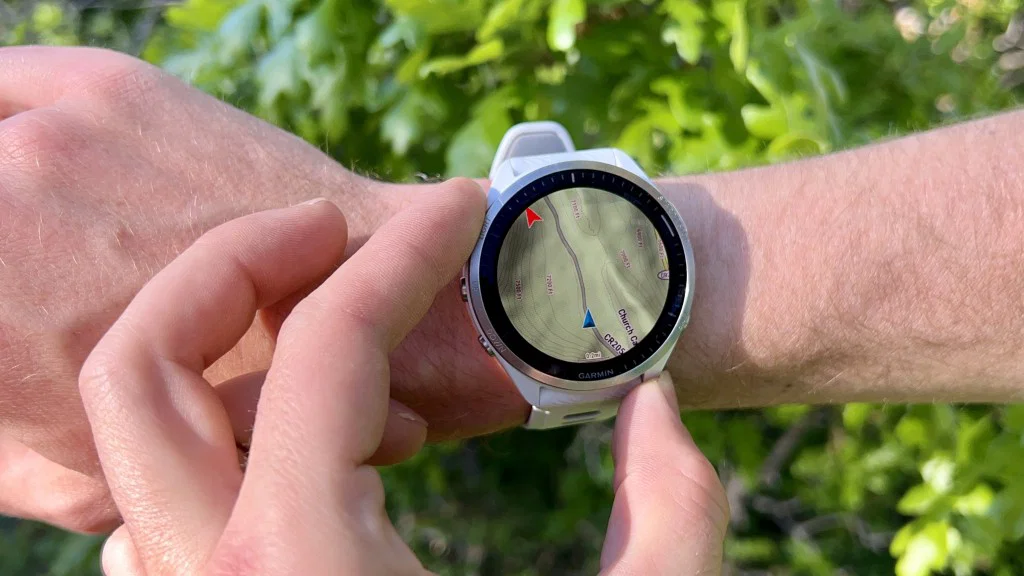
AMOLED screens on the fēnix 8 Pro, Forerunner 970, Forerunner 165, vívoactive models, and Venu 4 provide bright colors and easy-to-read workout information. The fēnix 8 Solar and Instinct 3 Solar take a different approach, prioritizing endurance and outdoor practicality.
Touchscreens are convenient for scrolling maps and health data, but buttons remain valuable during rain, swimming, or intense workouts. The Forerunner 165 and 970 combine both control methods, while the Instinct 3 Solar keeps the experience more rugged and direct.
Navigation and communication
For ordinary road runs, built-in GPS is enough. Serious navigation starts with features such as multi-band GPS, SatIQ, a compass, a barometric altimeter, maps, and dynamic routing. The fēnix 8 models and Forerunner 970 are the most capable here, while the Instinct 3 Solar provides a rugged navigation foundation without the same rich map experience.
Communication is a separate consideration. The fēnix 8 Pro adds inReach satellite and LTE connectivity, but satellite and cellular features require an active subscription, coverage, and compliance with local rules. Smartphone-dependent safety features on several other models need phone pairing and network coverage.
Health and recovery tools
Body Battery, sleep tracking, HRV status, stress tracking, morning reports, nap detection, and recovery guidance appear across much of Garmin's range. The Venu 4 and vívoactive 5 and 6 emphasize daily wellness, while the Forerunner and fēnix models connect recovery information more directly to training.
Remember that Garmin says several health readings are close estimates rather than medical measurements. Pulse Ox and ECG availability can vary by country, and these features should not replace professional medical advice.
Frequently asked questions
Which Garmin watch is best for most people?
The Garmin fēnix 8 Pro is the most capable overall because it combines advanced training, mapping, health tools, rugged materials, and satellite and LTE communication. It is also large and complex. For everyday wellness and varied workouts, the Garmin Venu 4 or vívoactive 6 will suit more people.
Which Garmin watch is best for running?
The Forerunner 970 is the strongest running specialist in this group. It adds multi-band GPS, maps, adaptive training plans, running economy, running dynamics, running power, and triathlon features. The Forerunner 165 is a simpler choice for newer runners, while the Forerunner 55 covers the fundamentals with less distraction.
Which Garmin watch has the longest battery life?
The fēnix 8 Solar has the longest stated battery performance, reaching up to 48 days in smartwatch mode and up to 149 hours in GPS mode with solar charging under specified conditions. Actual performance depends on light exposure, GPS use, display settings, and other features.
Is the Garmin fēnix 8 Pro suitable for hiking?
Yes. It includes TopoActive maps with relief shading, multi-sport GPS, and outdoor health and training tools. Its inReach satellite features can provide messaging, location check-ins, and SOS support when an active subscription and suitable coverage are available.
Which Garmin watch is best for sleep tracking?
The vívoactive 5, vívoactive 6, and Venu 4 all provide strong sleep-focused features. They include sleep tracking, sleep coaching, nap detection, HRV status, and Body Battery. The Venu 4 adds broader lifestyle logging, while the vívoactive 5 keeps the experience compact and straightforward.
Can Garmin watches play music without a phone?
The vívoactive 5 models support downloaded music from Spotify, Amazon Music, or Deezer accounts and connect to wireless headphones. Other watches in this list offer different connectivity features, but the available music functions depend on the model and compatible services.
Do Garmin safety features work without a phone?
Many standard safety features, including incident detection and Assistance, require a paired compatible smartphone with network coverage and prior setup. The fēnix 8 Pro is different because its inReach technology can provide satellite communication with an active subscription, subject to coverage and local restrictions.
The bottom line
The Garmin fēnix 8 Pro is the most complete pick in this guide. Its combination of AMOLED readability, sapphire and titanium construction, maps, diving support, advanced training, and inReach satellite communication makes it the one to choose for serious outdoor use. The Forerunner 970 is the better specialist for runners and triathletes who want detailed performance analysis without the fēnix's expedition focus.
For ordinary fitness and wellness, the Garmin Venu 4 and vívoactive 6 are easier to live with, while the Forerunner 165 gives new runners a clear training path. The Best Garmin Watch for an undecided buyer is the fēnix 8 Pro, but anyone who does not need satellite communication should choose the model that fits their primary activity instead.
As an Amazon Associate we earn from qualifying purchases.