

Choosing serious headphones is rarely about finding the most elaborate feature list. The real problem is matching an open or closed design, driver tuning, impedance, and comfort to the way you actually listen. The Best headphones for audiophiles should make music absorbing without forcing you into a setup that does not suit your room or equipment.
We ranked these eight wired models by their capabilities and intended use. The list runs from versatile studio monitors and open-back listening headphones to practical DJ and recording tools. Our top pick is the Audio-Technica ATH-M50X, with the Philips SHP9500, Sennheiser HD600, and beyerdynamic models offering compelling alternatives for different listening spaces.
Comparison table
| # | Product | Award | Driver | Design | Cable or impedance | Best for |
|---|---|---|---|---|---|---|
| 1 | Audio-Technica ATH-M50X | Best overall | 45 mm | Closed, circumaural | Detachable cable | Music, studio work, and everyday focused listening |
| 2 | Philips SHP9500 | Best open-back comfort | 50 mm neodymium | Open, over-ear | 1.5 m cable | Relaxed home listening |
| 3 | Audio-Technica ATH-M20X | Best simple studio monitor | 40 mm | Closed, circumaural | Single-side cable | Entry-level monitoring |
| 4 | beyerdynamic DT 990 PRO | Best wide-open sound | Not specified | Open, circumaural | 250 ohm, 3 m coiled cable | Critical listening with an amplifier |
| 5 | Sennheiser HD600 | Best reference listening | Not specified | Open, metal mesh | Detachable Kevlar-reinforced cable | Detailed home listening |
| 6 | Sennheiser HD 505 | Best modern Sennheiser fit | Not specified | Open-back | 1.8 m, 3.5 mm plug | Long music and gaming sessions |
| 7 | OneOdio Pro-10 | Best for DJ flexibility | 50 mm | Over-ear | 3.5 mm and 6.35 mm compatible | DJs, instruments, and shared listening |
| 8 | beyerdynamic DT 770 PRO | Best closed-back isolation | Not specified | Closed, circumaural | 80 ohm, 3 m straight cable | Recording and noisy rooms |
1. Audio-Technica ATH-M50X: Best Overall

Pros
- 45 mm drivers provide clear sound across an extended range
- Closed circumaural design helps isolate outside sound
- Swiveling earcups support one-ear monitoring
- Detachable cable is easier to replace or store
Cons
- Closed-back design feels less open than the Philips SHP9500
- The fit is more studio-focused than featherlight
- No wireless listening option
Best for: listeners who want one wired pair for music, monitoring, and everyday focused use.
The Audio-Technica ATH-M50X is the easiest pair here to recommend when you want a headphone that can move between jobs without becoming fussy. It has the practical character of a studio monitor, but the closed earcups and deep bass response also make it comfortable for concentrated music listening. The first thing to know is that it does not try to create an airy room around your head. It puts the music in a controlled, isolated space, which is useful beside a noisy computer or in a shared room.
Its proprietary 45 mm large-aperture drivers use rare earth magnets and copper-clad aluminum wire voice coils. Those details matter less as engineering trivia than as an indication of the design's intent: the M50X is built to preserve clarity through a broad frequency range while keeping bass accurate and substantial. The circumaural cups sit around the ears, helping reduce room noise without relying on electronic noise cancellation. That isolation makes small changes in a recording easier to follow, while the bass response gives drums and electronic tracks enough physical presence to avoid sounding clinical.
The hardware is unusually useful for working listeners. The earcups swivel 90 degrees, so one ear can remain free during monitoring or cueing. The cable is detachable, a meaningful advantage over the fixed cable on the ATH-M20X. The listed weight is about 0.64 pounds, light enough for a full session without making the construction feel flimsy. Audio-Technica also uses professional-grade material on the headband and earpads, though the fit remains more utilitarian than luxurious.
The trade-off is the closed presentation. The Philips SHP9500, DT 990 PRO, and HD600 sound more naturally spacious because their open designs let air move through the earcups. The M50X is the better all-rounder if you need isolation, and it is much easier to use in a shared room than those open headphones. Listeners who want a softer, more relaxed fit for quiet home sessions may prefer the Sennheiser HD 505.
The M50X is the pair our team would keep when only one model can cover music, editing, casual recording, and travel around the house. It is not the most spacious headphone here, but its combination of detail, isolation, swiveling cups, and a detachable cable makes it the most complete package.
2. Philips SHP9500: Best Open-Back Comfort
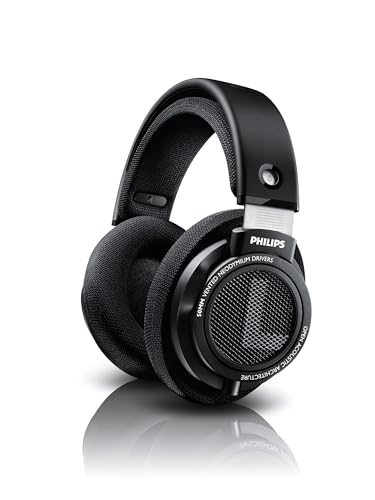
Pros
- Open acoustic system creates a natural home-listening presentation
- 50 mm neodymium drivers cover the full spectrum
- Breathable ear cushions suit long sessions
- Double-layered headband cushion adds support
Cons
- Open cups leak sound into the room
- Ambient noise is not blocked
- Less suitable for recording around a microphone
Best for: home listeners who want an airy open-back design and a comfortable fit.
The Philips SHP9500 takes a very different approach from the ATH-M50X. It is an open-back headphone designed for a quiet room, and its most immediately noticeable quality is the lack of pressure that closed earcups can create. Sound is allowed to escape through the acoustic system, so music feels less sealed inside the cups. That makes it a natural choice for sitting at a desk or listening in a private room, where isolation is not the priority.
The SHP9500 uses 50 mm neodymium drivers and is described as covering the full spectrum of sound. The larger driver size does not automatically make a headphone better, but here it supports the broad, spacious presentation the open enclosure is designed to provide. The result should appeal to listeners who want vocals and instruments to feel separated rather than crowded together. It is a particularly sensible alternative to the closed Audio-Technica models when room ambience and long-session comfort matter more than keeping every outside sound away.
Comfort is central to this model. The double-layered headband cushion spreads pressure across the top of the head, while the breathable ear cushions avoid the warmer feel common to sealed pads. The product weighs about 0.66 pounds, placing it close to the ATH-M50X in the supplied dimensions. Its 1.5 m cable is shorter than the 3 m cables on the beyerdynamic models, which is tidy for a desk but gives less freedom to move around a room.
The limitation is not subtle: these are not headphones for a noisy office, a bus, or a recording room where sound leakage could reach a microphone. The ATH-M50X and DT 770 PRO are much better at containing music and excluding the room. The SHP9500 also lacks the replaceable-cable flexibility of the M50X and HD600. For a quiet home setup, though, its open design and breathable padding make it easier to wear for an extended listening session.
If you are deciding between an intimate sealed headphone and a more relaxed open model, how an open design changes the listening experience is the key question. Choose the SHP9500 when the answer points toward air, comfort, and an undisturbed room rather than isolation.
3. Audio-Technica ATH-M20X: Best Simple Studio Monitor

Pros
- 40 mm drivers are tuned for studio tracking
- Closed circumaural cups help with sound isolation
- Enhanced low-frequency tuning suits monitoring and rhythm-heavy music
- Single-side cable exit keeps the cable arrangement simple
Cons
- Fixed cable offers less flexibility than the ATH-M50X
- Less open and spacious than the Philips SHP9500
- Fewer convenience features than the higher-tier Audio-Technica model
Best for: a listener who wants a straightforward closed-back monitor for a desk or studio.
The Audio-Technica ATH-M20X is the no-nonsense member of this group. It does not try to be a lifestyle headphone, and it does not bring the swiveling cups or detachable cable found on the M50X. Instead, it focuses on the basics of a closed circumaural design, a single-side cable exit, and a tuning intended for studio tracking and mixing.
Its 40 mm drivers use rare earth magnets and copper-clad aluminum wire voice coils. The smaller driver specification compared with the M50X and Philips SHP9500 is not a verdict on sound quality, but it does help define the M20X as a more compact monitoring tool. Audio-Technica specifically tunes it for enhanced low-frequency performance, so listeners should expect bass to remain a clear part of the presentation rather than disappearing behind the midrange. That makes it useful for tracking where rhythm and low-end information need to remain easy to hear.
The closed cups contour around the ears and help isolate the listener from the room. That is the right construction for recording, focused desk work, or checking a mix without an open headphone spilling sound outward. At about 0.46 pounds in the supplied product information, it is the lightest of the two Audio-Technica models here. The single-side cable exit also avoids cables coming from both sides, a small detail that makes movement around a desk less untidy.
The M20X gives up important flexibility to the M50X. Its cable is not described as detachable, and the earcups do not have the M50X's 90-degree swivel feature. The Philips SHP9500 is a better fit for open, relaxed listening, while the M20X makes more sense when outside noise and leakage are problems. Listeners with a dedicated headphone amplifier may also find the DT 990 PRO or HD600 more rewarding for spacious critical listening.
This is the model to choose when you want a capable monitor and do not need a long list of extras. It is easier to understand than the more specialized open-back choices, and its low-frequency emphasis gives it a clear role for tracking and direct music listening.
4. beyerdynamic DT 990 PRO: Best Wide-Open Sound

Pros
- Open-back construction creates a wide, natural soundstage
- 250 ohm design suits headphone amps and studio interfaces
- Replaceable velour ear pads support long sessions
- 3 m coiled cable provides room to move
Cons
- Open cups leak sound and admit room noise
- 250 ohms is a poor match for some low-output devices
- Heavier than the Philips SHP9500 and Sennheiser HD600
Best for: critical home listening with a suitable amplifier or audio interface.
The beyerdynamic DT 990 PRO is for the listener who wants the room around the music to feel large. Its open-back design gives recordings a wide, natural soundstage, making it more convincing for critical listening and professional editing than a sealed monitor. This is a purpose-built home or studio headphone, not a model to take into a noisy public space.
The defining electrical detail is its 250 ohm impedance. The manufacturer positions that version for professional studio interfaces, dedicated headphone amplifiers, home hi-fi equipment, and audiophile systems. In practice, the impedance tells you to consider the output device before buying. A suitable amplifier or interface can drive it appropriately, while a weak source may not provide the headroom or control you expect. That is a more important pairing decision here than the driver size, which is not specified in the supplied product data.
Comfort is handled with soft, replaceable circumaural velour pads and a firm but comfortable professional headband. The supplied dimensions list a weight of about 0.84 pounds, making it the heaviest model in this roundup. That does not rule it out for long listening, but the fit and headband pressure will matter more than they do with the lighter HD600 or ATH-M20X. Its 3 m coiled cable is useful at a workstation, though the coil adds bulk compared with the shorter Philips lead.
Compared with the closed ATH-M50X, the DT 990 PRO provides more room and less isolation. Compared with the Sennheiser HD600, it has the same broad open-back purpose but a more studio-oriented physical design and a more demanding 250 ohm connection. The Sennheiser HD 505 is a more flexible option for listeners who want an open design with a 1.8 m cable and a 3.5 mm plug.
Skip this model if you plan to run it from an uncertain phone or laptop output, or if anyone nearby will be bothered by leaked sound. For a quiet listening chair connected to appropriate equipment, however, the DT 990 PRO remains one of the clearest choices for a spacious presentation.
5. Sennheiser HD600: Best Reference Listening

Pros
- Neodymium ferrous magnets support precise dynamic audio
- Open metal mesh earcups suit critical listening
- Plush pads are designed for extended comfort
- Detachable Kevlar-reinforced cable is durable and flexible
Cons
- Open construction provides no isolation
- The long-established design lacks modern wireless features
- Best suited to a quiet listening setup
Best for: listeners who want a lightweight open headphone with a reference-focused character.
The Sennheiser HD600 is the most traditional audiophile headphone in this selection. Its appeal is not built around convenience features. Instead, it combines an open metal mesh earcup design, neodymium ferrous magnets, and a lightweight construction aimed at precise, dynamic listening. It feels like an instrument for sitting down with an album rather than a general-purpose headset.
The open enclosure keeps the presentation from feeling sealed. That design can make acoustic instruments, voices, and layered arrangements easier to follow because the cups are not trying to isolate the listener from the room. The product information does not specify a driver size, so there is no reason to compare it by millimeters. Its real distinction is the combination of open construction and audiophile-grade clarity, supported by the magnet system and the detailed tuning described by Sennheiser.
Long-session comfort is one of the HD600's strengths. Plush ear pads and a listed weight of about 0.57 pounds keep it lighter than the DT 990 PRO. Its detachable Kevlar-reinforced oxygen-free copper cable is designed to reduce handling noise while remaining flexible. That cable arrangement also makes the HD600 more serviceable than a fixed-cable model such as the ATH-M20X, although it does not make the headphone suitable for wireless use.
There are clear reasons to choose another model. The ATH-M50X is more practical in a shared room because its closed cups isolate sound. The Philips SHP9500 is another open option with 50 mm drivers and a breathable cushion design, while the newer HD 505 offers a 3.5 mm plug, a 1.8 m cable, and compatibility with HD 500 series accessories. The HD600 is the more focused choice for a listener who cares about a classic open reference presentation and already has a quiet setup.
Listeners comparing several open models should focus on the balance between soundstage, isolation, and room noise. If the room is quiet and the goal is careful music listening rather than portability, the HD600 remains a particularly serious pick.
6. Sennheiser HD 505: Best Modern Sennheiser Fit
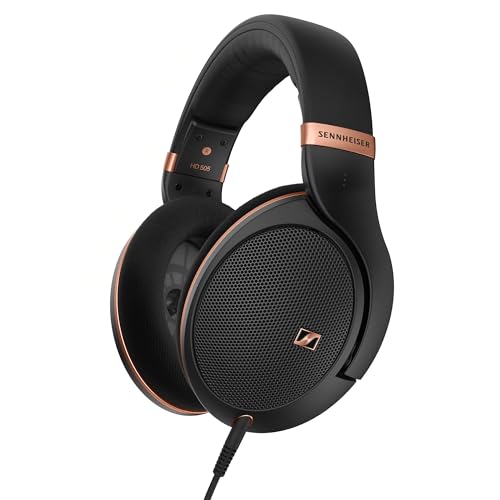
Pros
- Open-back design supports an airy presentation
- Laminate diaphragm is designed for clear highs and mids
- Controlled bass avoids an overly loose low end
- Velour pads and reduced clamping force suit long sessions
- Compatible with HD 500 series cables and accessories
Cons
- Open cups leak sound
- Wired design is not suited to untethered listening
- Less useful in noisy rooms than a closed monitor
Best for: home listeners who want comfortable open-back sound for music, work, or gaming.
The Sennheiser HD 505 is the most flexible open-back Sennheiser in this group. It is positioned for music, work, gaming, travel, and audiophile listening, but its construction still makes the intended environment clear. This is a quiet-room headphone. The open cups are designed to create a spacious presentation, not to keep the outside world away.
Sennheiser uses an advanced laminate diaphragm and describes the result as crisp highs, clear mids, and controlled bass. Those three traits give the HD 505 a clear sonic brief. It should suit recordings where vocal texture, acoustic detail, and separation matter, while the controlled low end keeps the sound from becoming dominated by bass. The supplied data does not include a driver size or impedance, so the useful specifications here are the design, diaphragm, cable, and fit rather than an invented driver comparison.
The physical design is made for extended wear. A lightweight headband, reduced clamping force, and plush velour ear pads are all intended to reduce fatigue. The 1.8 m cable ends in a 3.5 mm plug, which is a straightforward connection for many home sources. It also works with HD 500 series cables and accessories, giving owners a clearer upgrade and replacement path than the fixed cable on the M20X. A drawstring bag is included, according to the listed features.
The HD 505 is a more modern-feeling alternative to the HD600, especially for someone who wants a conventional 3.5 mm connection and accessory compatibility. The Philips SHP9500 remains a strong rival for breathable comfort, while the ATH-M50X is the better choice when isolation matters. The DT 990 PRO is more specialized because its 250 ohm design asks more of the source.
Do not choose the HD 505 for a commute, shared office, or recording booth. Sound will escape, and outside noise will remain audible. For a person who listens at home for hours and wants clear mids, controlled bass, and a low-pressure fit, it is one of the most approachable open-back picks here.
7. OneOdio Pro-10: Best for DJ Flexibility

Pros
- 50 mm drivers emphasize bass, vocals, and crisp highs
- 90-degree swiveling cups support single-ear monitoring
- Works with 3.5 mm and 6.35 mm audio connections
- Adjustable headband supports different fits
- Shared audio port allows another pair to connect
Cons
- Wired-only operation limits convenience
- More DJ-oriented than reference-focused
- Over-ear isolation is not the same as active noise cancellation
Best for: DJs, musicians, and beginners who need flexible wired connections.
The OneOdio Pro-10 is the practical specialist in this roundup. It is not trying to compete with the HD600 as a reference headphone. Its appeal is the way it handles real equipment and real listening situations. A DJ can monitor with one ear, a guitarist can connect to an instrument setup, and a listener can use either a standard 3.5 mm or larger 6.35 mm jack without hunting for a separate adapter.
The 50 mm speaker drivers use neodymium magnets and are tuned for powerful bass, clear vocals, and crisp highs. That makes the Pro-10 a lively option for music where rhythm and vocal presence need to remain obvious. The description calls the sound balanced despite the bass emphasis, but this is still a more energetic studio and DJ tuning than the transparent, open approach of the HD600 or HD 505.
The 90-degree swiveling earcups are the most important physical feature. Single-ear monitoring is useful for cueing tracks or keeping one side open while working with an instrument. Soft padded cushions and an adjustable, stretchable headband are intended to keep the fit comfortable over longer sessions. The product weighs about 0.66 pounds, close to the Philips SHP9500 and ATH-M50X in the supplied information.
One unusual feature is the shared audio port, which lets another pair of headphones connect for listening to music or video without a splitter. That is handy, though it is not a substitute for the more refined build and cable arrangements of the higher-end studio models. The ATH-M20X is a better choice for a simple monitoring desk, and the ATH-M50X is more convincing when you want isolation plus a detachable cable. The Pro-10 wins on connection flexibility and monitoring features.
Choose it if your headphone needs include a DJ mixer, keyboard, guitar, audio interface, or shared listening. Skip it if your priority is the widest, most natural soundstage for quiet album sessions. The OneOdio earns its place by being useful across equipment, not by pretending to be the same kind of headphone as the open reference models.
8. beyerdynamic DT 770 PRO: Best Closed-Back Isolation

Pros
- Closed design blocks ambient noise during monitoring
- 80 ohm impedance suits home studio interfaces and amplifiers
- Velour pads provide a soft over-ear fit
- 3 m straight cable supports movement around a workspace
- Replaceable components improve long-term serviceability
Cons
- Fixed 3 m cable is cumbersome for casual portable use
- Closed cups sound less spacious than open-back rivals
- 80 ohms may not be ideal for every phone or laptop
Best for: recording, editing, and focused listening where outside noise must stay out.
The beyerdynamic DT 770 PRO is the closed-back counterpoint to the DT 990 PRO. It is built for professional recording and monitoring, where keeping room noise out and headphone sound in can matter more than an expansive open stage. The enclosed design also makes it a better fit for editing in a shared space or listening beside other people.
The supplied features emphasize that the closed cups reveal high-frequency detail and expose mix imperfections, noise, clipping, and digital artifacts. That is a useful description of its role. It is intended to help the listener concentrate on the recording rather than make the room part of the presentation. The driver size is not specified, so the meaningful technical distinction is the 80 ohm impedance and closed acoustic system.
The 80 ohm version is described as a match for home studio interfaces, receivers, and integrated amplifiers. It sits between easy-to-drive portable headphones and more demanding 250 ohm studio designs such as the DT 990 PRO. A 3 m straight cable gives plenty of room to move around a workstation, and the cable arrives with a 3.5 mm plug plus a threaded 6.35 mm adapter. That is convenient for switching between consumer and studio equipment, though the long cable is more awkward away from a desk.
Soft velour pads and a lightweight design keep the fit comfortable during intensive studio sessions. The product information lists a weight of about 0.60 pounds, lighter than the DT 990 PRO. Beyerdynamic also highlights replaceable parts, which is an important practical advantage for a headphone intended for repeated professional use. The build is more purposeful than decorative, and that suits the model.
The ATH-M50X is a better all-rounder for someone who wants a detachable cable and one-ear monitoring. The DT 990 PRO is the better choice when an open soundstage matters and the source can handle 250 ohms. The DT 770 PRO should be the pick when isolation, long cable reach, and studio durability are more important than an airy presentation.
It is not the obvious choice for a phone in a pocket, and people who want a short cable or wireless convenience should look elsewhere. For a home recording setup or a room where outside sound is a constant distraction, the DT 770 PRO is the most focused closed-back tool here.

How to choose best headphones for audiophiles
The right pair depends on the relationship between your room, your source, and the kind of detail you want to hear. These are the factors that separate the eight models in useful ways.
Open and closed acoustic design
Open-back headphones allow air to pass through the earcups. That usually creates a more spacious presentation, as seen with the Philips SHP9500, beyerdynamic DT 990 PRO, Sennheiser HD600, and HD 505. The drawback is sound leakage in both directions, so they work best in a quiet room.
Closed-back headphones such as the ATH-M50X, ATH-M20X, and DT 770 PRO reduce outside noise and keep music from disturbing nearby people. They are the safer choice for recording, shared rooms, and focused desk work. They generally create a more contained presentation than open designs.
Choose open-back headphones for the room you wish you had, and closed-back headphones for the room you actually have.
Driver design and tuning
Driver diameter is only one part of a headphone's sound. The M50X uses 45 mm drivers, the M20X uses 40 mm drivers, and the Philips and OneOdio models use 50 mm drivers. Magnet type, diaphragm construction, enclosure design, and tuning all shape the result.
Look for a tuning that matches your music. The M20X and OneOdio Pro-10 emphasize low-frequency presence, while the HD 505 is described with clear highs, clear mids, and controlled bass. A wider, more natural presentation may matter more than bass impact if you listen mostly to acoustic, classical, or vocal recordings.
Impedance and source matching
Impedance affects how easily a source can drive a headphone. The DT 990 PRO is a 250 ohm model intended for dedicated headphone amps, home hi-fi, and studio interfaces. The DT 770 PRO uses 80 ohms and is positioned for home studio interfaces, receivers, and integrated amplifiers.
Do not assume a phone or laptop will perform equally well with every wired headphone. If the source is weak, the headphone may not reach a comfortable listening level or may lose the control you expect. When the product specifies an impedance, treat it as a setup requirement rather than a number to collect.
Cable and connection
A detachable cable makes replacement and storage easier. The ATH-M50X and HD600 have detachable cable designs, while the ATH-M20X uses a single-side cable and the beyerdynamic models use long fixed cables. The Sennheiser HD 505 includes a 1.8 m cable with a 3.5 mm plug, while the DT 770 PRO includes a 3.5 mm plug and threaded 6.35 mm adapter.
Connection length also affects daily comfort. A 1.5 m Philips cable is tidy at a desk, while a 3 m cable offers room to move around a studio. The OneOdio Pro-10 stands out for compatibility with both 3.5 mm and 6.35 mm connections.
Fit, padding, and weight
A headphone that sounds excellent but becomes uncomfortable after an hour will not get much use. The HD600 is listed at about 0.57 pounds, the DT 770 PRO at about 0.60 pounds, and the DT 990 PRO at about 0.84 pounds. Weight is only part of the fit, since headband pressure, earcup depth, and pad material also matter.
Velour pads on the beyerdynamic models and HD 505 can feel less warm over long sessions. Breathable cushions help the Philips SHP9500, while the OneOdio Pro-10 uses padded cushions and an adjustable headband. People sensitive to clamping should pay close attention to the product's comfort design, not just its acoustic claims.

Frequently asked questions
Are open-back headphones better for audiophile listening?
Open-back headphones can provide a more spacious and natural presentation, which is useful for quiet-room music listening. They are not automatically better for every person because they leak sound and do not block ambient noise. The HD600, HD 505, Philips SHP9500, and DT 990 PRO all require a reasonably quiet listening environment.
Do these headphones need a headphone amplifier?
Not every model needs a dedicated amplifier. The 250 ohm DT 990 PRO is specifically intended for studio interfaces, headphone amps, and home hi-fi equipment, while the 80 ohm DT 770 PRO is aimed at home studio and integrated amplifier use. Source output varies, so check the equipment you plan to use before choosing a high-impedance model.
Which pair is best for a noisy room?
The closed Audio-Technica ATH-M50X, ATH-M20X, and beyerdynamic DT 770 PRO are better suited to noisy rooms than open-back headphones. The DT 770 PRO is the most isolation-focused of the three, while the ATH-M50X adds swiveling earcups and a detachable cable. None of these models uses active noise cancellation.
Can I use these headphones for recording?
Closed-back headphones are generally the safer choice for recording because they reduce sound leakage into a microphone. The ATH-M20X and DT 770 PRO are purpose-built for studio monitoring, while the ATH-M50X is more versatile for recording and general listening. Open-back models are better reserved for mixing or playback when microphone bleed is not a concern.
Which headphones are easiest to connect to different equipment?
The OneOdio Pro-10 supports both 3.5 mm and 6.35 mm audio connections and is designed for devices including instruments, mixers, amplifiers, computers, and mobile devices with compatible jacks. The DT 770 PRO includes a 3.5 mm plug with a threaded 6.35 mm adapter. The HD 505 uses a 3.5 mm plug.
Are detachable cables important?
A detachable cable is useful if you want easier storage or the option to replace the cable without replacing the headphones. The ATH-M50X and HD600 have detachable cable designs, while the M20X and beyerdynamic models listed here use fixed cables. A fixed cable can still work well, but it gives you fewer repair and setup options.
Which headphones suit long listening sessions?
Comfort depends on head shape, but several models are designed with extended use in mind. The Philips SHP9500 has a double-layered headband cushion and breathable ear cushions, while the HD 505 uses reduced clamping force and plush velour pads. The HD600 is also relatively light, and the beyerdynamic models use soft velour pads.

The bottom line
The Audio-Technica ATH-M50X is the strongest all-purpose pick among the Best headphones for audiophiles here. Its closed design works in more rooms than an open-back model, its 45 mm drivers provide a clear and substantial presentation, and the detachable cable plus 90-degree swiveling cups make it practical for monitoring. Choose the Sennheiser HD600 instead if you listen in a quiet room and want a lightweight open reference headphone, or choose the beyerdynamic DT 990 PRO if a wide stage and 250 ohm studio setup are central to your system.
The Philips SHP9500 and Sennheiser HD 505 are the most comfortable open-back alternatives, while the beyerdynamic DT 770 PRO is the better specialist for isolation and recording. The ATH-M20X keeps things simple, and the OneOdio Pro-10 makes the most sense for DJ work, instruments, and varied connections.
If you are undecided, choose the ATH-M50X for mixed use, or the HD600 for quiet-room music listening.
As an Amazon Associate we earn from qualifying purchases.