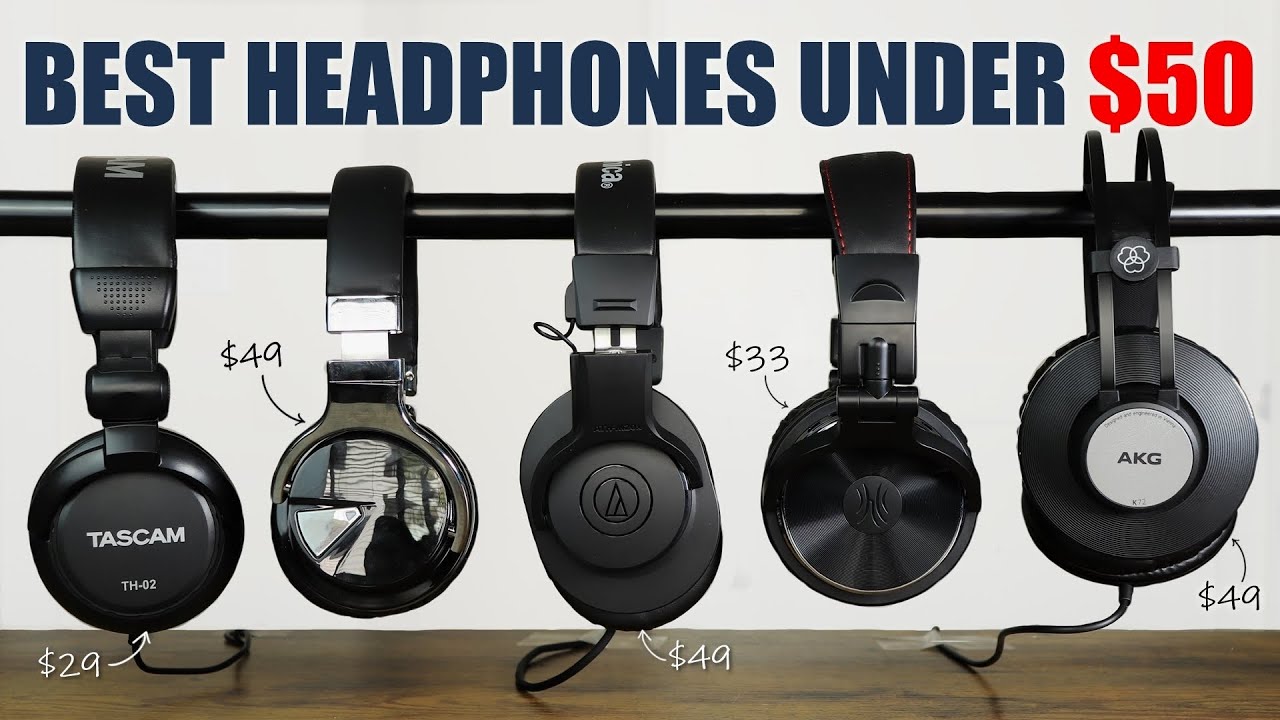

A good pair of inexpensive headphones should not force you to choose between reliable wireless use, tolerable comfort, and sound you can enjoy for more than a few minutes. The problem is that compact on-ear models, larger over-ear designs, wired headphones, and noise-cancelling sets all solve different problems.
Our Best headphones under 50 picks include dependable wireless models from Sony and JBL, a simple wired Sony, and noise-cancelling options from Soundcore and TOZO. The Beats Solo 4 entries are included as useful reference points for shoppers comparing this category with more capable models, though their listed prices may place them outside the stated limit.
Sony WH-CH520 Blue is our top pick for most listeners. The rest of the list covers long battery life, over-ear comfort, noise reduction, wired simplicity, and compatibility with two devices.
Comparison table
| # | Product | Award | Battery | Design | Best for |
|---|---|---|---|---|---|
| 1 | Sony WH-CH520 Blue | Best overall | Up to 50 hours | On-ear, wireless | Everyday listening and calls |
| 2 | JBL Tune 510BT | Best simple wireless pick | Up to 40 hours | Foldable on-ear | Music and commuting |
| 3 | Sony ZX110 | Best wired headphones | Wired | Closed-back on-ear | Devices with a headphone jack |
| 4 | Sony WH-CH520 Black | Best black wireless pick | Up to 50 hours | On-ear, wireless | Work and study |
| 5 | JBL Tune 720BT | Best over-ear battery | Up to 76 hours | Over-ear, wireless | Long listening sessions |
| 6 | Soundcore Q30 | Best for noise cancellation | Up to 50 hours with ANC | Over-ear, wireless | Travel and office noise |
| 7 | Sony WH-CH520 Cappuccino | Best color option | Up to 50 hours | On-ear, wireless | Style-conscious listeners |
| 8 | Beats Solo 4 Metallic Pink | Best for Apple and Android users | Up to 50 hours | On-ear, wireless | Spatial and lossless audio |
| 9 | TOZO HT3 | Best battery life | Up to 90 hours | Over-ear, wireless | Travel and multitasking |
| 10 | Beats Solo 4 Matte Black | Best lightweight premium design | Up to 50 hours | On-ear, wireless | Portable listening |
1. Sony WH-CH520 Blue: Best Overall

Pros
- Up to 50 hours of battery life
- Two-device multipoint connection
- Lightweight on-ear design
- Sound can be adjusted in the Sony app
Cons
- On-ear pads provide less isolation than over-ear headphones
- No active noise cancellation
- The strongest features require the companion app
Best for: someone who wants a light wireless pair for music, calls, and daily computer use.
The Sony WH-CH520 Blue is the pair we would hand to most people who want uncomplicated wireless headphones. It is light enough to wear through a work session, easy to take on and off because the earcups swivel, and it avoids the bulk that comes with the over-ear models lower down this list. The on-ear fit does not block a noisy room, but it feels less enclosing when you need to stay aware of what is happening around you.
Sony claims up to 50 hours of battery life, which gives this model excellent endurance for commuting, study, and occasional travel. USB Type-C charging and quick charging make it less irritating to maintain, while multipoint lets it stay connected to two devices. That last feature is especially useful at a desk: the headphones can handle a call from a phone without requiring a fresh pairing when you have been listening from a computer.
Sound can be tailored through EQ Custom in the Sony Headphones Connect app. That matters because the WH-CH520 is not locked into one tuning. Sony also includes DSEE, intended to improve the quality of compressed music files, and Fast Pair support for locating the headphones through Google's Find My Device service. The built-in microphone handles hands-free calls, though an on-ear design still leaves more surrounding sound audible than a sealed over-ear pair.
The JBL Tune 510BT is a credible alternative if you prefer a more direct, button-led experience, and the Sony WH-CH520 is more flexible when app adjustment and multipoint matter. The Soundcore Q30 is the better answer for airplane engines and office chatter because it adds active noise cancellation, but it is much larger. Sony's weakness is simple: there is no ANC, and the pads rest on the ears rather than around them.
Choose the blue WH-CH520 when light weight, long battery life, adjustable sound, and two-device use matter more than maximum isolation. It is the most balanced starting point in this group.
2. JBL Tune 510BT: Best Simple Wireless Pick

Pros
- Up to 40 hours of wireless playback
- Foldable design
- Two-device wireless connection
- Quick charge adds two hours after five minutes
Cons
- No active noise cancellation
- Shorter battery claim than the leading Sony models
- On-ear design has limited passive isolation
Best for: listeners who want recognizable bass-forward sound and physical controls without extra complexity.
The JBL Tune 510BT has a straightforward personality. It is an on-ear wireless headphone with an adjustable headband, foldable construction, and controls on the earcup. There is no attempt to turn it into a full travel system with noise modes or a long list of sound profiles. That simplicity is its appeal for a student, commuter, or family member who wants to pair it with a phone and start listening.
JBL's Pure Bass tuning gives the Tune 510BT a livelier presentation than a neutral office headset. Bass-heavy music gets the emphasis many listeners expect from a portable JBL, while the closed earcup design helps keep some sound from leaking out. It will not isolate a train or airplane like an ANC model, and the on-ear pads cannot create the same seal as the TOZO HT3 or Soundcore Q30.
Battery life reaches up to 40 hours, and a five-minute charge adds two hours of playback. A full recharge takes as little as two hours through the included USB Type-C cable. The headphones can switch between two devices, which is useful when a call arrives while audio is playing elsewhere. A microphone on the earcup supports hands-free calls, and the multifunction button can summon Siri or Google Assistant.
The Sony WH-CH520 Blue lasts longer and offers more sound customization, so it remains the stronger all-purpose pick. The JBL Tune 510BT counters with a foldable build and a more immediate control scheme. If you want to understand what you give up moving from wired to wireless, the Tune 510BT is a clear example: portability improves, but charging and Bluetooth become part of ownership.
Its main limitation is the lack of noise cancellation and the shorter battery claim than Sony's 50-hour models. Skip it if you need strong isolation or regularly work in loud places. Pick it when punchy sound, easy controls, and foldable portability are the priorities.
3. Sony ZX110: Best Wired Headphones

Pros
- No charging or pairing required
- Lightweight design
- Swiveling earcups fold for storage
- Closed-back design helps contain sound
Cons
- Requires a 3.5mm headphone jack
- No microphone or wireless features are listed
- Cable limits movement
Best for: someone who wants a light, reliable pair for a laptop, handheld device, or other 3.5mm source.
The Sony ZX110 is the antidote to battery anxiety. Plug in the L-shaped 3.5mm stereo connector and it plays. There is no app, Bluetooth menu, charging routine, or pairing memory to manage. That makes it a particularly sensible choice for a child, a spare pair kept in a desk drawer, or anyone using equipment that still has a standard headphone jack.
Sony uses 1.38-inch neodymium dynamic drivers, and the stated frequency range runs from 12 Hz to 22 kHz. Those figures do not guarantee a particular sound signature, but the design is clearly aimed at energetic everyday listening, with the company describing the response as punchy and rhythmic. The closed-back earcups help keep music contained and provide some passive separation from nearby sound.
At about 0.26 pounds, the ZX110 is the lightest product in this roundup by the supplied specifications. The earcups swivel for easier storage and travel, while cushioned earpads keep the basic design from feeling completely bare. There is no battery to age, so the useful life depends mainly on the cable, pads, and headband surviving regular handling.
The Sony WH-CH520 models are much more convenient with phones and computers that lack a headphone jack. They also offer microphones and multipoint. The ZX110 wins when immediate plug-and-play use matters, and it avoids the wireless compression and charging concerns that some listeners dislike. The trade-off is that the cable can catch on a bag or desk, and the product data does not list a built-in microphone.
This is the one to choose for wired listening, not for calls on a modern phone or for airport travel. If your source has a 3.5mm socket and you want something light that can be folded flat for storage, the ZX110 remains a focused, sensible design.
4. Sony WH-CH520 Black: Best Black Wireless Pick

Pros
- Up to 50 hours of battery life
- Multipoint connection for two devices
- Built-in microphone
- App-based EQ adjustment and DSEE processing
Cons
- No ANC
- On-ear pads do not fully surround the ears
- The black and blue versions have the same core design
Best for: office and study listeners who want the WH-CH520 feature set in a discreet finish.
The Sony WH-CH520 Black is functionally the same headphone as the blue WH-CH520 above. Its appeal is the understated finish, which makes it less visually prominent in an office or classroom. The lightweight frame, adjustable headband, soft ear pads, and swiveling earcups remain the important ownership details. It is easy to carry and does not feel like a travel headset strapped to the side of your head.
The battery claim is up to 50 hours, with USB Type-C charging and quick charging available when time is short. Multipoint pairing lets the headphones remain linked with two devices. For a desk setup, that can mean moving between a work computer and a phone without repeatedly opening Bluetooth settings. The built-in microphone supports hands-free calls, though the open nature of an on-ear fit means some background sound will remain part of the experience.
The Sony Headphones Connect app provides EQ Custom, giving you a way to adjust the sound to suit spoken content, pop, podcasts, or bass-heavy music. DSEE is included for streamed compressed audio, and Swift Pair helps connect to compatible Windows 10 computers. Find My Device support can help locate the headphones if they are misplaced.
Compared with the JBL Tune 510BT, this Sony offers longer stated battery life and a more developed software feature set. Compared with the Soundcore Q30, it is smaller and lighter but cannot reduce low-frequency background noise. The lack of ANC is the deciding weakness, especially for frequent flights or noisy open-plan offices.
The black version is a sensible choice when you want the WH-CH520's balance without a bright finish. Buy it for quiet workspaces, casual listening, and calls. Skip it if you want over-ear isolation or a richer set of physical noise controls.
5. JBL Tune 720BT: Best Over-Ear Battery

Pros
- Up to 76 hours of battery life
- Over-ear design
- Bluetooth 5.3
- App EQ and Voice Aware calling
Cons
- Heavier than the on-ear Sony models
- No active noise cancellation listed
- Larger design is less discreet for short errands
Best for: listeners who prefer earcups around the ears and want to charge as infrequently as possible.
The JBL Tune 720BT changes the fit more than the feature list. Its over-ear design is a better match for people who find on-ear pads tiring, and the larger frame gives the headphones a more substantial presence. That also makes them less compact than the Sony WH-CH520, but the comfort benefit can be worth it for long sessions at home or in a study space.
Its headline figure is up to 76 hours of battery life, the longest stated endurance from JBL in this list. A five-minute quick charge adds three hours, and a full recharge can take as little as two hours over USB Type-C. Bluetooth 5.3 handles the wireless connection, while JBL's app provides EQ adjustment and voice prompts in a chosen language.
The earcup controls support calls and playback, and Voice Aware lets you hear your own voice while talking. That is useful for avoiding the closed-in feeling that can come with over-ear headphones during calls. JBL's Pure Bass sound is intended to give music extra low-end weight, though listeners wanting a more carefully tailored response may prefer the Sony app's sound adjustment.
The Soundcore Q30 is the stronger option when active noise cancellation is the reason for buying over-ear headphones. The TOZO HT3 offers even longer stated battery life and more connection modes. The Tune 720BT is less complicated than both, and its 76-hour claim makes it a better fit for someone who simply wants long, uninterrupted wireless listening.
There is no ANC listed, so do not choose it as a dedicated airplane headset. Its size and weight also make it less appealing if you want something to disappear into a small bag. For home listening, extended study sessions, and anyone who dislikes on-ear pressure, the Tune 720BT is a compelling alternative.
6. Soundcore Q30: Best for Noise Cancellation

Pros
- Hybrid ANC with three listening modes
- Up to 50 hours with noise cancellation
- Up to 70 hours in standard mode
- Memory foam protein leather earcups
- 40mm drivers with stated response extending to 40 kHz
Cons
- ANC does not work through the AUX connection
- Larger and heavier than on-ear models
- Older design than some newer entries here
Best for: commuters, office workers, and travelers who need active reduction of low-frequency noise.
The Soundcore Q30 is the most purpose-built noise-cancelling option in this group. Its over-ear cups use memory foam with protein leather, creating a fuller seal than the on-ear Sony and JBL designs. That seal helps before ANC even begins, and it makes the Q30 feel like a proper travel headphone rather than a basic wireless set with a noise mode added as an afterthought.
Soundcore uses hybrid active noise cancellation with dual noise-detecting microphones. There are three modes: Transport for airplane-style engine noise, Outdoor for traffic and wind, and Indoor for offices and nearby conversations. The modes are more useful than a single generic ANC setting because different surroundings produce different problems. Low-frequency rumble is the area where this design should make the most noticeable difference.
The Q30 uses 40mm drivers with flexible silk diaphragms, and the supplied specifications state that treble extends up to 40 kHz. Battery life reaches up to 50 hours with ANC on and 70 hours in standard mode. A five-minute charge adds four hours of listening. Those figures give the Q30 a useful balance between travel endurance and everyday practicality.
The JBL Tune 720BT has a longer stated battery life but no ANC. The TOZO HT3 has more connection options and a longer battery claim, while the Q30 has a clearer set of named noise modes and a comfort-focused earcup design. One important limitation is that ANC is not compatible with an AUX cable connection, so wired listening does not preserve every wireless feature.
The Q30 is not the lightest option, and its over-ear construction may feel warm during long sessions. It is the right purchase when background noise is the problem you are trying to solve, not simply when you want headphones for music. For a quieter commute or office, it is the most capable pick here.
7. Sony WH-CH520 Cappuccino: Best Color Option

Pros
- Up to 50 hours of battery life
- Multipoint Bluetooth connection
- EQ adjustment in Sony's app
- Lightweight construction with swivel earcups
Cons
- No ANC
- On-ear fit offers limited isolation
- The supplied weight detail is inconsistent with the other WH-CH520 listings
Best for: someone who wants the WH-CH520 platform in a softer, less conventional finish.
The Sony WH-CH520 Cappuccino is another version of the same well-rounded Sony design, but its finish gives it a distinct reason to exist in this list. The neutral color is less stark than black or white and feels more deliberate than a generic office headset. Underneath, it keeps the light on-ear construction, adjustable headband, soft pads, and swiveling earcups that define the family.
The supplied listing claims up to 50 hours of battery life and quick charging through USB Type-C. Multipoint pairing supports two devices at once, which makes this model practical for alternating between a phone and a computer. The built-in microphone is ready for hands-free calls, while Swift Pair helps with compatible Windows 10 computers.
As with the other WH-CH520 entries, Sony provides EQ Custom in its Headphones Connect app. That is a useful advantage over a completely fixed-sound headphone because you can adjust the balance rather than accepting the factory tuning. DSEE is also listed for streamed compressed files, and Find My Device support provides a way to check the last known location or make the headphones play a sound.
The blue and black WH-CH520 models are the better comparisons if finish does not matter. They have the same central strengths, while the Soundcore Q30 makes more sense for a noisy commute. One caution is that the supplied product information reports an unusually tiny weight for this color listing, so we would not use that number to compare it with the other two colors. The consistent design description is the more useful guide.
Choose the Cappuccino version when you like the WH-CH520 feature set but want a softer visual statement. It is not a different acoustic platform, and it cannot replace an ANC model. Its appeal is the combination of light daily comfort, multipoint convenience, and a distinctive finish.
8. Beats Solo 4 Metallic Pink: Best for Apple and Android Users

Pros
- Up to 50 hours of battery life
- Personalized Spatial Audio with dynamic head tracking
- Lossless audio through USB-C or 3.5mm
- One-touch pairing for iOS and Android
- Class 1 Bluetooth
Cons
- On-ear design has less isolation than over-ear models
- No active noise cancellation listed
- Its listed price can place it outside the target category
Best for: listeners who want spatial and lossless listening features across Apple and Android devices.
The Beats Solo 4 Metallic Pink is included for shoppers who are considering a step up from the basic wireless models. Its on-ear fit keeps the profile relatively portable, while the flex-grip headband and angled adjustable earcups are designed to hold the headphones securely. UltraPlush ear cushions are intended to balance comfort and durability, though an on-ear design still presses against the ears rather than enclosing them.
Battery life reaches up to 50 hours, and Fast Fuel gives up to five hours of playback after a 10-minute charge. The more unusual feature is lossless audio over USB-C or a 3.5mm audio cable. That gives the Solo 4 a useful wired role for compatible sources, while Class 1 Bluetooth is intended to extend range and reduce dropouts.
Beats also lists Personalized Spatial Audio with dynamic head tracking. This is most relevant to supported films and music, where the effect can make compatible content feel more expansive. One-touch pairing works with both iOS and Android, and the built-in microphone supports calls and voice assistant interaction. That broad compatibility keeps the Solo 4 from being an Apple-only recommendation.
The Sony WH-CH520 is lighter on features and easier to recommend for the strict category, while the Beats Solo 4 is more ambitious with its spatial and lossless capabilities. The Soundcore Q30 remains the better choice for noise reduction because the Beats does not list ANC. The main practical weakness is category fit: its listed price can put it outside a search specifically limited to products under 50.
The Metallic Pink finish is the differentiator here, not a separate acoustic design. Choose it if Apple and Android compatibility, wired lossless playback, and spatial audio matter more than isolation. Skip it if the hard limit is non-negotiable or if you need a sealed travel headphone.
9. TOZO HT3: Best Battery Life

Pros
- Up to 90 hours of playback
- Hybrid ANC with an advertised 45 dB reduction
- Bluetooth, AUX, and USB-C connection modes
- Dual-device connection
- Replaceable ear pads and foldable design
Cons
- Many features may require app setup
- Noisy-environment claims are broad
- Larger over-ear fit is less discreet than on-ear models
Best for: travelers and multitaskers who want very long battery life and several ways to connect.
The TOZO HT3 is built around abundance. It offers an over-ear fit, hybrid noise cancellation, three connection methods, dual-device pairing, multiple EQ modes, and a battery claim that reaches up to 90 hours. That makes it less of a minimalist headphone and more of a feature-packed travel companion. The foldable frame helps when it is time to put the headphones away.
TOZO lists 45 dB of ANC and four high-sensitivity microphones that monitor surrounding sound. The product description says the system adapts to subway, airplane, and cafe noise. ANC performance always depends on fit and the type of sound around you, but the HT3 has the right hardware concept for reducing low-frequency background noise. A dedicated call microphone and AI noise reduction are also listed for voice use.
The 40mm dynamic drivers are designed for deep bass, clear mids, and crisp highs. TOZO's OrigX acoustic tuning and Hi-Res Audio claims are paired with 32 customizable EQ modes in the TOZO app. This is more sound control than the JBL Tune 510BT offers and a wider adjustment system than the fixed design of the Sony ZX110. It may appeal to listeners who enjoy changing profiles for music, movies, and gaming.
Connectivity is a real strength. The HT3 supports Bluetooth, AUX 3.5mm, and USB-C, and it can connect with two devices. A 10-minute quick charge is said to add nine hours of playback. The ear pads are removable and replaceable, which is a useful longevity feature that is not listed for the other models here. The headphone is also described as supporting spatial audio and a low-latency gaming mode.
The Soundcore Q30 offers a more focused ANC experience with three named modes, while the JBL Tune 720BT is simpler and has a long battery claim without the same feature overload. The HT3's weakness is that the extensive list can make setup and sound adjustment feel more involved. Its over-ear construction also takes up more room than a Sony WH-CH520.
Pick the HT3 if long trips, dual-device work, and connection flexibility matter most. It is the most versatile model here on paper, but it is not the one to buy if you want a small, simple headphone with no app learning curve.
10. Beats Solo 4 Matte Black: Best Lightweight Premium Design

Pros
- Up to 50 hours of battery life
- Lossless audio over USB-C and 3.5mm
- Personalized Spatial Audio with head tracking
- Supports iOS and Android pairing
- Lightweight listed design
Cons
- No ANC listed
- On-ear fit does not provide over-ear isolation
- Its listed price can exceed the target category
Best for: listeners who want a compact Beats design with wired and wireless listening options.
The Beats Solo 4 Matte Black shares its core design with the Metallic Pink version, but the black finish is more restrained and easier to blend into a work or travel setup. The ultralight ergonomic frame, flex-grip headband, and angled adjustable earcups are intended to keep the fit stable without adding an over-ear shell. UltraPlush cushions add padding where the on-ear structure meets the head.
Its battery life is rated up to 50 hours, and a 10-minute Fast Fuel charge can provide up to five hours of playback. USB-C and 3.5mm connections support lossless audio, giving the Solo 4 a role beyond ordinary Bluetooth listening. That is useful for compatible computers, music players, or situations where you want to avoid wireless transmission.
The Solo 4 works with both iOS and Android, including one-touch pairing, and its built-in microphone handles calls and voice assistant commands. Personalized Spatial Audio with dynamic head tracking is the headline listening feature. It requires suitable content to show its advantage, but it gives the Beats a more modern feature set than the Sony WH-CH520 and JBL Tune 510BT.
The Metallic Pink Solo 4 is the same fundamental product with a different finish, so the decision between those two is visual. The Sony WH-CH520 is a more natural match for the stated category, while the Soundcore Q30 and TOZO HT3 are stronger when the goal is blocking outside noise. The Solo 4's clear weakness is that it is still on-ear and does not list active noise cancellation.
Choose the Matte Black Solo 4 for portable listening, wired lossless playback, and cross-platform pairing. If you simply need dependable wireless music and calls, Sony's smaller WH-CH520 is the more sensible fit. If you want premium design and spatial audio features, the Solo 4 makes its case.

How to choose best headphones under 50
The right pair depends less on a headline feature than on how you listen. Start with the fit, then consider connection type, battery needs, isolation, and call features.
On-ear and over-ear fit
On-ear headphones rest on the outer ear and are usually lighter and easier to carry. The Sony WH-CH520, JBL Tune 510BT, and Beats Solo 4 use this approach. It is a good fit for casual listening and awareness of your surroundings, but it usually provides less passive isolation.
Over-ear headphones surround the ear with larger cushions. The JBL Tune 720BT, Soundcore Q30, and TOZO HT3 are better choices when you want a more enclosed listening space. They can be more comfortable for some people during long sessions, though they take up more room and may feel warmer.
Battery life
Battery claims range from 40 hours on the JBL Tune 510BT to 90 hours on the TOZO HT3. Higher endurance means fewer charging interruptions, but quick-charge performance can matter just as much. Sony offers up to 50 hours, Soundcore offers up to 50 hours with ANC and 70 hours without it, and JBL's Tune 720BT reaches up to 76 hours.
A long battery claim matters most when the headphones also recharge quickly and remain comfortable enough to wear.
Noise cancellation
Active noise cancellation is useful for steady low-frequency sound from engines, ventilation, and traffic. It is not the same as a perfect seal, and it will not remove every nearby conversation. Soundcore provides Transport, Outdoor, and Indoor modes, while TOZO lists adaptive hybrid cancellation and four microphones.
The Sony and JBL on-ear models do not list ANC. Choose them when awareness and a lighter frame matter more than quiet. Choose an over-ear ANC model when reducing environmental noise is the central reason for buying.
Wireless and wired connections
Bluetooth is convenient for phones and modern computers, but it requires charging and pairing. Multipoint is helpful if you switch between a phone and computer, and it appears on the Sony WH-CH520, JBL Tune 510BT, and TOZO HT3.
A 3.5mm connection removes battery dependence. The Sony ZX110 is wired only, while the Beats Solo 4 supports both 3.5mm and USB-C wired listening. TOZO adds Bluetooth, AUX, and USB-C modes. If you still use older audio equipment, check the available connector before choosing.
Sound adjustment and drivers
A companion app can make a fixed headphone easier to live with. Sony offers EQ Custom and DSEE, JBL offers EQ through its app, Soundcore uses 40mm drivers with multiple ANC modes, and TOZO lists 32 EQ modes. Beats adds Personalized Spatial Audio and lossless playback through wired connections.
Driver size alone does not determine sound quality. Look for a tuning option if your tastes vary, and consider whether you prefer a bass-forward presentation such as JBL's Pure Bass approach or a more adjustable system.
Microphones and calls
A built-in microphone is useful for calls, classes, and voice assistants, but microphone performance depends on the surrounding noise and the headphone's design. Sony and JBL list hands-free calling, while Beats supports calls and voice assistant interaction. TOZO adds a dedicated call microphone and AI noise reduction, and JBL's Voice Aware feature lets you hear your own voice while speaking.
If calls are occasional, any listed microphone may be sufficient. If meetings are central to your use, prioritize a model with explicit call features and a fit that remains comfortable for extended conversations.

Frequently asked questions
Are on-ear or over-ear headphones better for daily listening?
On-ear headphones are lighter and easier to carry, while over-ear headphones generally provide a fuller seal around the ears. The Sony WH-CH520 and JBL Tune 510BT suit people who prefer a smaller frame. The Soundcore Q30, JBL Tune 720BT, and TOZO HT3 are better when isolation and earcup space matter more.
Which headphones have the longest battery life?
The TOZO HT3 has the longest stated battery life in this roundup at up to 90 hours. The JBL Tune 720BT follows with up to 76 hours, while the Sony WH-CH520 models and Beats Solo 4 list up to 50 hours. Soundcore lists up to 50 hours with ANC and up to 70 hours in standard mode.
Do any of these headphones have active noise cancellation?
Yes. The Soundcore Q30 and TOZO HT3 list hybrid active noise cancellation. The Q30 offers Transport, Outdoor, and Indoor modes, while TOZO lists adaptive cancellation with four microphones. The Sony WH-CH520, JBL Tune 510BT, JBL Tune 720BT, Sony ZX110, and Beats Solo 4 do not list ANC.
Which model is best for a wired connection?
The Sony ZX110 is the simplest wired option and uses an L-shaped 3.5mm stereo plug. The Beats Solo 4 supports lossless audio through USB-C or a 3.5mm cable. TOZO also includes AUX connectivity, though its appeal is its broader combination of wired and wireless modes.
Can these headphones connect to two devices?
The Sony WH-CH520 and JBL Tune 510BT list two-device connection support. TOZO HT3 also lists dual-device connectivity. This feature is useful when you move between a phone and computer without wanting to disconnect and pair again.
Which headphones work with both iPhone and Android?
The JBL Tune 510BT, Beats Solo 4, and Sony models use standard Bluetooth connections suitable for phones, though the Beats listing specifically mentions one-touch pairing for both iOS and Android. App features can vary by platform, so check the relevant companion app if EQ or other controls matter.
Are the Beats Solo 4 included within the category limit?
The Beats Solo 4 entries are included as comparison products because they share the compact wireless headphone format and offer useful features such as lossless audio and spatial audio. Their listed prices may exceed the category limit, so shoppers applying a strict under 50 rule should focus on the Sony, JBL, Soundcore, and TOZO options instead.
The bottom line
The Best headphones under 50 for most people are the Sony WH-CH520 Blue, with the black and Cappuccino versions offering the same central design in different finishes. They combine up to 50 hours of battery life, multipoint pairing, app-based EQ, a built-in microphone, and a light on-ear fit.
Choose the Soundcore Q30 when noise cancellation matters more than compactness, or the TOZO HT3 when battery life and connection flexibility come first. The Sony ZX110 remains the straightforward answer for a wired 3.5mm source, while the JBL models suit listeners who prefer bass-forward sound and simple controls.
If you are undecided, choose the Sony WH-CH520 for everyday wireless listening, the Soundcore Q30 for noisy commutes, or the Sony ZX110 when you never want to charge headphones.
As an Amazon Associate we earn from qualifying purchases.