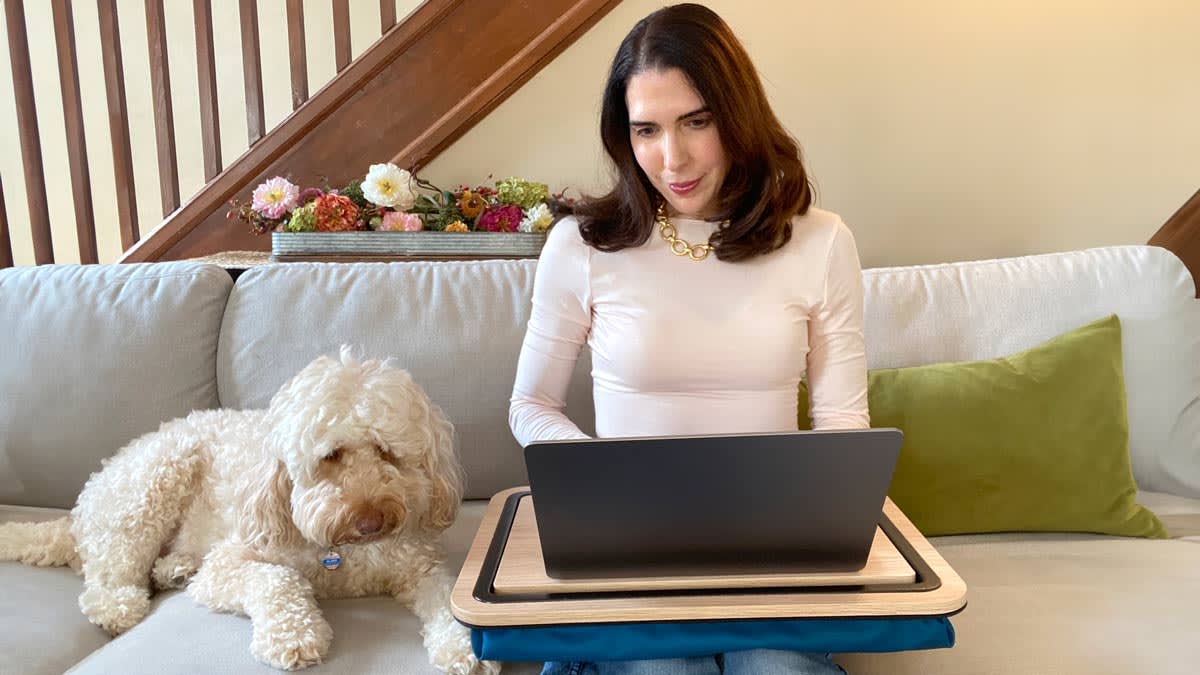

Finding the right laptop gets difficult when a large gaming machine, a compact Mac, and a basic Windows notebook all appear in the same search. The Best best lap top choice depends on what you do most, how much screen space you need, and how much performance you can actually use.
We picked ten laptops that cover demanding games, schoolwork, office tasks, video calls, and everyday browsing. Apple MacBook Air 13-inch is our top pick for most people, while the range includes a powerful ASUS gaming laptop, large-screen HP models, business-ready Dell and Lenovo machines, and a compact MacBook Neo.
Comparison table
| # | Product | Award | Processor | Display | Best for |
|---|---|---|---|---|---|
| 1 | Apple MacBook Air 13-inch | Best overall | Apple M5 | 13.6-inch Liquid Retina | Most people, students, and creators |
| 2 | ASUS ROG Strix G16 | Best for gaming | Intel Core i7-14650HX, RTX 5060 | 16-inch FHD+ 165Hz | PC gaming and demanding workloads |
| 3 | HP 17.3-inch Ryzen 5 Business Laptop | Best large-screen Windows laptop | AMD Ryzen 5 7430U | 17.3-inch FHD IPS | Spreadsheets, work, and home use |
| 4 | Apple MacBook Neo 13-inch | Best compact Mac | Apple A18 Pro | 13-inch Liquid Retina | Everyday Apple computing |
| 5 | Dell 15.6-inch Core Ultra 5 Laptop | Best Windows multitasker | Intel Core Ultra 5 225U | 15.6-inch FHD | Office work and AI-assisted tasks |
| 6 | HP OmniBook 3 17.3-inch | Best big-screen basic laptop | AMD Ryzen 3 30 | 17.3-inch FHD IPS | Streaming and home computing |
| 7 | Dell Latitude 5420 | Best compact business laptop | Intel Core i5-1145G7 | 14-inch FHD | Practical office portability |
| 8 | Dell 16-inch Core 7 Laptop | Best for a roomy workspace | Intel Core 7 150U | 16-inch FHD+ 16:10 | Documents, calls, and multitasking |
| 9 | Lenovo 15.6-inch Business Laptop | Best basic business laptop | Intel N100 | 15.6-inch FHD | Light office and schoolwork |
| 10 | HP 15.6-inch Touchscreen Laptop | Best touchscreen pick | AMD Ryzen 3 7320U | 15.6-inch HD touchscreen | Simple tasks with touch input |
1. Apple MacBook Air 13-inch: Best Overall

Pros
- M5 chip is suited to demanding everyday work
- Light 2.71-pound design
- 12MP Center Stage camera
- Two Thunderbolt 4 ports and support for two external displays
Cons
- Smaller screen than the large HP and Dell models
- macOS may not suit Windows-only software
- Storage is limited to 512GB
Best for: students, mobile professionals, and anyone who wants a polished all-purpose Mac.
The Apple MacBook Air 13-inch is the laptop we would hand to someone who has not yet decided what kind of computer they need. It is light enough to carry every day, but the M5 chip gives it enough headroom for large documents, creative apps, video calls, and a busy collection of browser tabs. The 2.71-pound body is notably easier to live with than the 5.84-pound ASUS ROG Strix G16.
Its 13.6-inch Liquid Retina display is compact, but it makes text sharp and photos vivid with support for 1 billion colors. The screen is a better fit for travel and classroom desks than a 17.3-inch panel. Apple includes 16GB of unified memory and a 512GB SSD, a sensible combination for multitasking and a substantial collection of apps and files. The claimed battery life is up to 18 hours, though actual use will vary with brightness and workload.
The camera is a real strength. The 12MP Center Stage camera can keep you in frame during calls and supports Desk View for showing a workspace from above. Two Thunderbolt 4 ports, MagSafe charging, a headphone jack, Wi-Fi 7, and support for two external displays make the Air more adaptable than its thin design suggests. Apple also includes a three-mic array and four-speaker system with Spatial Audio and Dolby Atmos support.
The main limitation is software compatibility. Anyone who relies on Windows-only business tools, specialized engineering programs, or PC games should look at the Dell and ASUS options instead. The 13.6-inch screen can also feel cramped beside the 16-inch Dell or either 17.3-inch HP. For readers comparing machines for school, our guide to the features that matter through a full day of classes is useful context.
Choose the MacBook Air if you want a quiet, portable computer that handles nearly every mainstream task without feeling bulky. It beats the MacBook Neo on memory, storage, camera capability, and connectivity, while the ROG Strix G16 remains the clear choice for serious gaming.
2. ASUS ROG Strix G16: Best for Gaming

Pros
- RTX 5060 graphics are built for modern PC gaming
- 165Hz display with a stated 3ms response time
- 1TB PCIe Gen 4 SSD
- Vapor chamber, tri-fan cooling, and liquid metal chipset compound
Cons
- Heavy at 5.84 pounds
- Gaming hardware is excessive for simple office work
- 16GB memory is less generous than some general-purpose models
Best for: PC gamers who want strong graphics hardware and a fast screen in one machine.
The ASUS ROG Strix G16 is not a conventional school or office laptop with a few gaming touches. It is a gaming system first, and the design makes that clear. The Intel Core i7-14650HX processor and NVIDIA GeForce RTX 5060 Laptop GPU give it the strongest performance profile in this group for demanding games and graphics-heavy work.
The 16-inch display uses a 16:10 aspect ratio, FHD+ resolution, a 165Hz refresh rate, and a stated 3ms response time. That combination is aimed at smooth motion, so fast camera pans and competitive games should look more fluid than they would on the 60Hz screens found on many ordinary laptops. ASUS also lists an ACR film to improve contrast and reduce glare. The screen is more useful for gaming than the 13-inch panels on both Apple models, though it also makes the computer less compact.
Inside, 16GB of DDR5-5600MHz memory supports modern multitasking, while the 1TB PCIe Gen 4 SSD gives game installations and larger project files room to breathe. ROG cooling uses an end-to-end vapor chamber, three fans, and Conductonaut Extreme liquid metal applied to the chipset. Those components are designed to help the system sustain performance during demanding sessions rather than merely produce a brief burst of speed.
The weakness is easy to understand: this is a large, heavy machine. At 5.84 pounds, it is much less appealing for someone who carries a laptop between classes every day. The 360-degree RGB light bar can be switched off with Stealth Mode, but the gaming identity remains. The Dell 16-inch Core 7 Laptop is a calmer office machine, and the MacBook Air is dramatically easier to carry.
Buy the ROG Strix G16 when gaming performance, refresh rate, and graphics capability matter more than portability. It is also the most convincing choice here for GPU-heavy creative work, provided you are comfortable with its size and Windows environment.
3. HP 17.3-inch Ryzen 5 Business Laptop: Best Large-Screen Windows Laptop

Pros
- Large 17.3-inch FHD IPS display
- Six-core, 12-thread Ryzen 5 7430U processor
- 32GB memory and 1TB SSD
- Windows 11 Pro and numeric keypad
Cons
- Larger footprint than every laptop here except the other 17.3-inch HP
- No dedicated graphics listed
- Less convenient for frequent travel
Best for: home offices, spreadsheets, remote learning, and users who want a spacious Windows desktop replacement.
The HP 17.3-inch Ryzen 5 Business Laptop is the sensible answer for someone who wants laptop convenience without giving up a generous work area. Its 17.3-inch display makes spreadsheets, side-by-side documents, and long web pages easier to manage than on the MacBook Air or Dell Latitude 5420.
The panel is Full HD at 1920 by 1080, uses IPS technology, and has a stated 178-degree viewing angle. That matters when more than one person is looking at a presentation or when you are working from an awkward position. The anti-glare finish should also help with reflections in a bright room. A full-size keyboard with a numeric keypad suits data entry better than the compact keyboards on the Apple laptops.
The Ryzen 5 7430U has six cores and 12 threads, with speeds up to 4.3GHz according to the listing. Paired with 32GB of DDR4 memory, it is unusually well suited to keeping many office apps and browser windows open. The 1TB SSD provides more working space than the 256GB drives in the Lenovo and Dell Latitude. Wi-Fi 6, Bluetooth 5.4, USB-C, USB-A, and HDMI give it the connections needed for a basic workstation.
HP also includes Windows 11 Pro, a dedicated Copilot key, and Fast Charge support that can restore up to 50 percent battery in approximately 45 minutes. The weakness is physical rather than computational. At 4.6 pounds, it is lighter than the ASUS, but its 17.3-inch frame still belongs on a desk more than in a small backpack. Readers choosing between home and office use can compare the screen and keyboard traits that make a laptop comfortable at home.
Choose this HP over the HP OmniBook 3 when multitasking, storage, and Windows Pro features matter more than a simpler everyday setup. It is the strongest large-screen Windows choice in this group for documents and productivity.
4. Apple MacBook Neo 13-inch: Best Compact Mac

Pros
- Compact aluminum design
- A18 Pro chip supports everyday work and Apple Intelligence
- Up to 16 hours of battery life claimed
- 1080p FaceTime HD camera
Cons
- 8GB unified memory
- 256GB SSD leaves less room for large libraries
- Fewer listed performance details than the MacBook Air
Best for: Apple users who want a small, straightforward laptop for school, communication, and everyday tasks.
The Apple MacBook Neo 13-inch is the uncomplicated Mac in this lineup. Its aluminum design weighs 2.71 pounds, matching the listed weight of the MacBook Air, and its compact dimensions make it comfortable to carry. It is aimed at everyday assignments, web use, video calls, streaming, and Apple Intelligence rather than demanding professional workloads.
The A18 Pro chip is the heart of the machine. Apple describes it as suitable for class notes, presentations, everyday AI tools, and Apple Arcade games. The Liquid Retina display supports 1 billion colors, which should make text, photos, and video look clean, though the listing does not provide a resolution or refresh-rate figure. That omission makes the MacBook Air easier to evaluate for users who care about display specifications.
A 1080p FaceTime HD camera is a useful step above basic webcams for classes and meetings. The dual-mic array is designed to keep voices clear, and the side-firing speakers are intended to create a wider sound field. Apple claims up to 16 hours of battery life. Wi-Fi and the wider macOS ecosystem also make it a natural fit for people already using an iPhone.
The trade-off is the 8GB of unified memory and 256GB of SSD storage. Those capacities can suit light work, but users who keep large media libraries, use many demanding apps, or expect to keep the computer for years should move up to the MacBook Air. Windows users should also consider the Dell 15.6-inch Core Ultra 5 Laptop or Lenovo instead of switching operating systems.
The MacBook Neo makes sense when portability and simple Apple integration matter most. It beats the Windows basic laptops on ecosystem cohesion and camera details, while the MacBook Air is the better long-term choice for heavier multitasking.
5. Dell 15.6-inch Core Ultra 5 Laptop: Best Windows Multitasker

Pros
- Intel Core Ultra 5 225U processor
- 16GB memory
- Up to 300 nits brightness
- ComfortView and lifted hinge design
Cons
- The listing does not specify storage capacity in the features
- No dedicated graphics listed
- Heavier than both Apple laptops
Best for: Windows users who want a modern processor and a comfortable screen for office work.
The Dell 15.6-inch Core Ultra 5 Laptop takes a practical middle position. It is more capable and modern than the basic Lenovo, but less specialized than the ASUS gaming laptop. Its 3.67-pound weight is manageable for occasional travel, while the 15.6-inch screen gives office documents more room than the smaller Apple computers.
The listing describes the display as a 15-inch panel with up to 300 nits brightness and a three-sided narrow bezel, while the product title identifies the machine as 15.6 inches and FHD. That brightness figure is useful for ordinary indoor work, and the narrow bezel keeps the chassis from feeling unnecessarily wide. Dell ComfortView is intended to reduce blue-light emissions during extended viewing.
The Intel Core Ultra 5 225U processor includes an NPU for AI features, and 16GB of memory gives the system a sensible multitasking foundation. A dedicated Copilot key provides quick access to Microsoft's assistant. The lifted hinge is intended to improve typing posture and airflow, two small design decisions that matter during long work sessions.
Storage is the key uncertainty because the product title identifies memory but does not state an SSD capacity in the provided features. That makes it harder to recommend for users with large photo, video, or game libraries. The MacBook Air offers a clearly stated 512GB SSD, and the HP 17.3-inch Ryzen 5 Business Laptop provides a stated 1TB SSD.
Pick this Dell for a balanced Windows work machine with current Intel platform features. It is a better fit than the Lenovo for heavier multitasking, but it lacks the large workspace of the 16-inch Dell and the 17.3-inch HP.
6. HP OmniBook 3 17.3-inch: Best Big-Screen Basic Laptop

Pros
- Large 17.3-inch Full HD IPS display
- 512GB PCIe NVMe SSD
- FHD camera with HDR auto-switch
- Claimed battery life up to 14 hours and 15 minutes
Cons
- 8GB memory
- Ryzen 3 30 processor is aimed at lighter workloads
- 4.43-pound body is not highly portable
Best for: home users who want a large screen for browsing, streaming, and everyday documents.
The HP OmniBook 3 17.3-inch is built around screen space rather than maximum speed. Its large Full HD IPS panel is useful for watching video, reading documents, and keeping several windows visible. The 178-degree viewing angle should help maintain a consistent picture when you are not sitting directly in front of it.
The AMD Ryzen 3 30 processor is described as handling everyday performance, streaming, casual gaming, and photo editing. That places it below the Ryzen 5 7430U in the larger HP, but it should suit lighter home workloads. The 8GB of LPDDR5 memory is adequate for basic use, though it leaves less breathing room for extensive multitasking than the 32GB in the HP 17.3-inch Ryzen 5 Business Laptop.
Storage is more generous than the memory configuration suggests. The 512GB PCIe NVMe M.2 SSD gives applications and personal files room to grow, and the Radeon 610M graphics are designed for entertainment and efficient everyday visuals. HP claims up to 14 hours and 15 minutes of battery life, with Fast Charge restoring 0 to 50 percent in approximately 45 minutes.
The FHD camera includes HDR auto-switching for changing light, and advanced AI noise reduction is intended to isolate your voice during calls. Wi-Fi 6, Bluetooth 5.4, Windows 11 Home, and a Copilot key round out the feature set. Its drawback is the 4.43-pound weight, which makes the Dell Latitude a better choice for commuting.
The OmniBook 3 is the right pick when a large screen matters more than advanced multitasking. It has a more useful SSD than the Lenovo and a better camera setup, while the larger HP offers stronger processing and more memory for sustained office work.
7. Dell Latitude 5420: Best Compact Business Laptop

Pros
- Compact 14-inch FHD format
- 16GB DDR4 memory
- Windows 11 Pro
- HDMI and camera included
Cons
- Renewed condition
- Older Intel Core i5-1145G7 platform
- 256GB SSD
Best for: office users who want a compact Windows Pro laptop for straightforward work.
The Dell Latitude 5420 is the most compact traditional business laptop here. Its 14-inch FHD display gives it a smaller footprint than the 15.6-inch and 17.3-inch options, while the listed 3-pound weight makes it a natural fit for commuting. It is also the only product in this group explicitly identified as renewed, which is important for buyers who want a new machine only.
The Intel Core i5-1145G7 is an older quad-core processor listed at 2.00GHz. It is not intended to compete with the ASUS gaming system or the newer Core Ultra and M5 machines, but it should be suitable for documents, email, web applications, and video calls. The 16GB of DDR4 memory is a welcome strength for keeping several ordinary applications open.
Storage is a 256GB SSD. That should keep Windows and common applications responsive, but it will fill more quickly than the 512GB and 1TB configurations in this roundup. The laptop includes a camera and HDMI, so it can connect to an external screen without requiring a separate adapter.
The main reason to skip it is age and condition. The renewed label means it is not the same proposition as a new Dell 15.6-inch or Dell 16-inch model, and the older processor has less headroom for demanding future software. Still, its compact dimensions are attractive when a larger display is not essential.
Choose the Latitude 5420 for basic business work in a small, familiar Windows package. It is more portable than the Lenovo and has twice the listed memory, but the newer Dell models are better suited to buyers who want a current platform.
8. Dell 16-inch Core 7 Laptop: Best for a Roomy Workspace

Pros
- 16-inch FHD+ display with a 16:10 aspect ratio
- Intel Core 7 150U processor
- 16GB memory
- FHD camera with wide dynamic range and noise reduction
Cons
- 4.37-pound weight
- Larger than the 15.6-inch Dell
- No dedicated graphics listed
Best for: users who want a broad work area without moving to a 17.3-inch laptop.
The Dell 16-inch Core 7 Laptop is a screen-first Windows notebook. Its 16-inch FHD+ display uses a 16:10 aspect ratio, giving documents and web pages extra vertical space compared with conventional widescreen panels. That makes it a strong option for reading, spreadsheets, and multitasking without the full footprint of a 17.3-inch model.
The Intel Core 7 150U processor and 16GB of memory are aimed at ordinary productivity. The listing does not identify a dedicated graphics processor, so this is not a gaming alternative to the ASUS. It is better suited to browser tabs, office applications, streaming, and video meetings than to graphics-intensive work.
Dell ComfortView Plus is designed to reduce blue-light emissions while preserving color, and adaptive thermals adjust power behavior when the laptop is on a stable surface. The raised design also supports the practical goal of keeping typing comfortable. A camera with up to FHD resolution, wide dynamic range, and temporal noise reduction should be useful for calls in uneven lighting.
The 4.37-pound weight is the catch. It is heavier than the Dell 15.6-inch Core Ultra 5 Laptop and both Apple options, so it is best carried occasionally rather than everywhere. The product information lists a 1TB size configuration, but the supplied feature text does not explain the storage type, so buyers should confirm the exact configuration before ordering.
This Dell makes sense when screen area is more important than compact travel. It beats the 15.6-inch Dell for documents and reading, while the HP 17.3-inch laptops offer even more space at the cost of a larger chassis.
9. Lenovo 15.6-inch Business Laptop: Best Basic Business Laptop

Pros
- 15.6-inch FHD anti-glare display
- Wi-Fi 6 and Gigabit Ethernet
- Two USB-C ports with Power Delivery and DisplayPort
- Physical webcam privacy shutter
Cons
- Intel N100 is intended for lighter workloads
- 8GB memory
- 256GB SSD
Best for: light office work, remote learning, and users who need useful wired connectivity.
The Lenovo 15.6-inch Business Laptop keeps its priorities clear. It is a straightforward Windows 11 machine for documents, email, video conferences, and remote learning. The 15.6-inch Full HD display gives it a familiar workspace, and the anti-glare surface is better suited to long desk sessions than a highly reflective panel.
Its Intel N100 processor has four cores and speeds up to 3.4GHz, according to the listing. That is enough for common productivity software, but it is not the processor to choose for heavy editing, complex data work, or demanding games. The 8GB of DDR5 memory and 256GB PCIe 4.0 NVMe SSD should keep startup and application loading responsive for basic use.
Connectivity is where this Lenovo stands out. It includes Wi-Fi 6, Bluetooth 5.2, Gigabit Ethernet, two USB-A 3.2 ports, two USB-C ports with Power Delivery and DisplayPort, HDMI 1.4b, and an audio jack. That makes it easier to connect wired networks, displays, and accessories than many thin laptops. A 720p webcam with a physical privacy shutter and TPM 2.0 add practical business features.
The limitations are the modest processor, memory, and storage capacities. Users who regularly keep many large applications open should move to the Dell 15.6-inch Core Ultra 5 Laptop or HP 17.3-inch Ryzen 5 Business Laptop. The Lenovo is also described as weighing 3.33 pounds in its feature text, while the supplied product information gives a conflicting weight, so we would not use its weight as a deciding factor.
Choose this model when ports, a Full HD screen, and basic business features matter more than raw performance. It is a better office tool than the HP touchscreen for users who need wired networking and multiple display connections.
10. HP 15.6-inch Touchscreen Laptop: Best Touchscreen Pick

Pros
- HD touchscreen supports tap, swipe, and pinch input
- AMD Ryzen 3 7320U processor
- 8GB LPDDR5 memory
- 3.52-pound design
Cons
- 1366 by 768 display resolution
- 256GB SSD
- No dedicated graphics listed
Best for: simple home computing where touch input is more important than display sharpness.
The HP 15.6-inch Touchscreen Laptop offers the most direct interface in this group. Its touchscreen lets you tap, swipe, and pinch through Windows, which can be useful for browsing recipes, navigating large icons, or using a laptop away from a desk. The 3.52-pound body is reasonably manageable for a 15.6-inch computer.
The screen is the compromise. It uses a 1366 by 768 resolution, lower than the Full HD panels on the Lenovo, both large HP models, and the Dell laptops. Text and spreadsheets will not look as spacious or sharp, especially when several windows are open. The touch layer adds flexibility, but it does not change the panel's limited workspace.
The AMD Ryzen 3 7320U, 8GB of LPDDR5 memory, and 256GB PCIe NVMe SSD form a basic everyday configuration. It should handle web use, documents, streaming, and ordinary Windows tasks. AMD Radeon Graphics are included for general entertainment, but the listing does not identify this as a dedicated graphics system.
The 3.52-pound weight is lighter than the larger HP models, and Windows 11 Home keeps the experience familiar. Storage is limited beside the 512GB HP OmniBook 3 and 1TB configurations elsewhere in the group. Users who spend hours in spreadsheets should also consider the Lenovo's sharper Full HD screen.
This HP is the one to choose when touchscreen interaction genuinely improves the way you work. If touch is not important, the Lenovo offers a more useful display, while the Dell Latitude offers a more compact business-oriented format.

How to choose Best best lap top
The right laptop starts with the work you need it to perform, not the longest specification list. Focus on these factors before choosing between the ten models above.
Processor performance
The processor sets the ceiling for multitasking, application responsiveness, and demanding work. Intel Core Ultra, Intel Core 7, Apple M5, and the ASUS Core i7 are the strongest platforms in this group, while the Intel N100 and Ryzen 3 models suit lighter tasks.
For documents, email, streaming, and web applications, a basic processor can be enough. Choose a stronger chip when you regularly edit photos, use large spreadsheets, compile software, or keep many demanding applications open.
Memory capacity
Memory affects how many applications and browser tabs can remain active without slowing down. The 8GB models are best reserved for simple workloads, while 16GB gives most Windows users more comfortable multitasking. The HP 17.3-inch Ryzen 5 Business Laptop goes further with 32GB.
Apple's unified memory works differently from conventional PC memory, but the same practical principle applies. The MacBook Air's 16GB configuration gives it more headroom than the MacBook Neo's 8GB.
Display size and resolution
A 13-inch display improves portability, while 15.6-inch and 16-inch screens give office documents more breathing room. The 17.3-inch HP models are best for users who want a laptop to function as a mostly stationary desktop replacement.
Resolution matters too. Full HD is a better fit for text-heavy work than the HP touchscreen's 1366 by 768 panel. Gamers should also look at refresh rate and response time. The ASUS is the only model here with a stated 165Hz refresh rate and 3ms response time.
A bigger screen helps only if you have somewhere to use it. Measure the desk and the bag before choosing a 17-inch laptop.
Storage capacity
A 256GB SSD can work for documents and cloud-based files, but it leaves less room for photos, games, and downloaded media. The 512GB HP OmniBook 3 and MacBook Air offer more breathing room, while the HP 17.3-inch Ryzen 5 Business Laptop lists a 1TB SSD.
Storage type also matters for responsiveness. The Lenovo, HP OmniBook 3, HP touchscreen, and ASUS listings identify PCIe NVMe or Gen 4 SSD storage. If the capacity is not clear, confirm the exact configuration before buying.
Portability and build
Weight is only part of portability. Screen size, chassis dimensions, charger size, and battery claims all affect how practical a laptop is away from a desk. The Apple laptops are the lightest choices in this group at 2.71 pounds, while the ASUS and 17.3-inch models are better treated as portable desktops.
For regular commuting, a 14-inch or 13-inch model is easier to manage. For a fixed home office, the extra space of the HP 17.3-inch Ryzen 5 Business Laptop or Dell 16-inch Core 7 Laptop can be more useful.
Operating system and camera
macOS is a strong fit for people already using iPhone services and Apple applications, while Windows 11 offers broader compatibility with business software and PC games. Windows 11 Pro on the HP 17.3-inch model and Dell Latitude adds a more business-oriented environment.
Camera quality varies. The MacBook Air has a 12MP Center Stage camera, the MacBook Neo has a 1080p camera, and the HP OmniBook 3 lists an FHD camera with HDR auto-switching. Anyone who spends much of the day in meetings should treat the webcam as a core feature rather than an afterthought.

Frequently asked questions
What is the Best best lap top for most people?
The Apple MacBook Air 13-inch is the strongest all-purpose choice in this group. It combines the M5 chip, 16GB of unified memory, a 512GB SSD, a high-quality camera, and a light design. Choose a Windows model instead if you need Windows-only software or PC gaming.
Which laptop is best for gaming?
The ASUS ROG Strix G16 is the gaming pick. Its Intel Core i7-14650HX processor, RTX 5060 Laptop GPU, 165Hz FHD+ display, and 3ms response time are designed for demanding games. Its weight and gaming-focused cooling make it less suitable as a simple office laptop.
Is a 13-inch laptop large enough for school?
A 13-inch laptop can be a good school computer when portability matters. The MacBook Air and MacBook Neo are easier to carry than the large HP models, but a 15.6-inch or 17.3-inch screen is more comfortable for spreadsheets and side-by-side documents.
Is 8GB of memory enough for a laptop?
8GB can handle browsing, email, streaming, and basic documents, but it provides less headroom for heavy multitasking. The 16GB Dell, ASUS, and MacBook Air configurations are safer choices for demanding or long-term use.
Should I choose a touchscreen laptop?
Choose a touchscreen when tapping, swiping, and pinch-to-zoom are part of how you work. The HP 15.6-inch Touchscreen Laptop provides that flexibility, but its 1366 by 768 resolution is less suitable for dense spreadsheets than the Full HD screens elsewhere in this roundup.
Is a 17-inch laptop practical for everyday use?
A 17-inch laptop works well on a desk because it provides a broad workspace. It is less convenient for frequent travel, so commuters should consider the MacBook Air, MacBook Neo, or Dell Latitude 5420 instead.
How much storage should a laptop have?
A 256GB SSD is suitable for light office work and cloud storage, while 512GB gives more room for applications and personal files. Users with games, video, or large photo libraries should look at the 1TB configurations in this selection.

The bottom line
The Best best lap top for most readers is the Apple MacBook Air 13-inch. Its M5 chip, 16GB unified memory, 512GB SSD, strong camera, and low weight give it the broadest mix of portability and capability. The ASUS ROG Strix G16 is the better specialist choice for gaming, thanks to its RTX 5060 graphics and 165Hz display.
For Windows productivity, the HP 17.3-inch Ryzen 5 Business Laptop stands out with 32GB of memory, a 1TB SSD, Windows 11 Pro, and a large IPS display. The Dell 15.6-inch Core Ultra 5 Laptop is a more conventional fit for users who want a current Windows processor in a smaller chassis.
If you are undecided, choose the MacBook Air for general use, the ASUS for games, or the HP 17.3-inch model when a large Windows workspace matters most.
As an Amazon Associate we earn from qualifying purchases.