

A music-production laptop has to stay composed when a project fills with software instruments, effects, and audio tracks. A bright screen and a slim chassis matter less than dependable processing, enough memory for a large session, fast storage, and ports that work with your interface and other studio hardware.
The Best laptops for music production in this group range from compact Apple silicon machines to gaming laptops with serious cooling and Windows systems built around larger screens. The right choice depends heavily on your DAW, plug-in collection, operating system preference, and how often you move between a desk and a rehearsal room.
Our top pick is the Apple MacBook Pro M5 Space Black, with options below for portable setups, Windows users, large-screen workflows, and lighter recording duties.
Comparison
| # | Product | Award | Processor | Memory and storage | Display | Best for |
|---|---|---|---|---|---|---|
| 1 | Apple MacBook Pro M5 Space Black | Best overall | Apple M5, 10-core CPU and 10-core GPU | 16GB unified memory, 1TB SSD | 14.2-inch Liquid Retina XDR | Serious production in macOS |
| 2 | ASUS ROG Strix G16 | Best Windows performance | Intel Core i7-14650HX | 16GB DDR5, 1TB Gen 4 SSD | 16-inch FHD+ 165Hz | Large Windows sessions and gaming |
| 3 | Dell 16 Plus | Best large-screen workstation | Intel Core Ultra 9 288V | 32GB RAM | QHD+ 16:10 | Multitasking across a wide workspace |
| 4 | Apple MacBook Pro M5 Silver | Best MacBook Pro alternative | Apple M5, 10-core CPU and 10-core GPU | 16GB unified memory, 1TB SSD | 14.2-inch Liquid Retina XDR | Producers who prefer a lighter finish |
| 5 | KAIGERR RX16 | Best expandable Windows laptop | AMD Ryzen 7 H255, 8-core and 16-thread | 24GB DDR5, 512GB NVMe SSD | 16-inch IPS | Upgradable project storage |
| 6 | Apple MacBook Neo Indigo | Best portable Mac | Apple A18 Pro | 8GB unified memory, 256GB SSD | 13-inch Liquid Retina | Mobile songwriting and editing |
| 7 | Apple MacBook Neo Silver | Best compact Apple laptop | Apple A18 Pro | 8GB unified memory, 256GB SSD | 13-inch Liquid Retina | Students and light production |
| 8 | HP OmniBook 3 17.3-inch | Best large budget screen | AMD Ryzen 3 30 | 8GB LPDDR5, 512GB SSD | 17.3-inch FHD | Arranging at a fixed desk |
| 9 | HP Essential 15.6-inch | Best for basic recording | Intel N100, 4-core | 8GB DDR4, 256GB SSD | 15.6-inch Full HD | Simple tracks and office work |
| 10 | QSXQSX 15.6-inch Laptop | Best for very light projects | Intel 5205U | 4GB RAM, 128GB storage, expandable to 512GB | 15.6-inch FHD | Notes, demos, and basic editing |
1. Apple MacBook Pro M5 Space Black: Best Overall

Pros
- M5 processor has a 10-core CPU and 10-core GPU
- 16GB unified memory handles substantial sessions
- 1TB SSD leaves useful room for projects and instruments
- Strong built-in audio and studio-friendly connectivity
Cons
- macOS compatibility needs checking for every plug-in and interface
- 14.2-inch display can feel tight beside a large mixer
- More laptop than a casual beat-making setup needs
Best for: producers who want a capable, polished Mac for demanding sessions.
The Apple MacBook Pro M5 Space Black is the one we would keep for a serious portable studio. It has the headroom to run a dense arrangement without making the computer feel like the limiting part of the setup, while its 14.2-inch Liquid Retina XDR display keeps waveforms, plug-in interfaces, and automation visible in a compact footprint. The aluminum body weighs about 3.42 pounds, so it remains practical to carry even though it is built for much heavier work than the MacBook Neo models.
Apple pairs the M5 with a 10-core CPU, a 10-core GPU, 16GB of unified memory, and a 1TB SSD. For music production, the memory is the key piece. It gives a DAW more room for virtual instruments, sample libraries, and background applications before the system starts leaning heavily on storage. The 1TB SSD is also a better starting point for project folders and sound libraries than the 256GB drive in the MacBook Neo. It will not make a poorly organized library disappear, but it gives a working producer useful breathing room.
The display is unusually strong for a laptop used around a studio. Apple lists up to 1, 600 nits peak brightness, up to 1, 000 nits sustained brightness, and a 1, 000, 000:1 contrast ratio. Those figures matter more for visual editing and mixed creative work than for hearing a mix, but the clean, high-contrast panel is helpful when a session includes long timelines and small control labels. Three Thunderbolt 4 ports, MagSafe 3, an SDXC card slot, HDMI, and a headphone jack make it easier to connect an interface, monitor, storage, and other gear without immediately reaching for a hub.
It is not a universal recommendation. macOS is excellent when your DAW and plug-ins support it, but a Windows-only instrument or older interface driver can change the calculation. The screen is also smaller than the 16-inch ASUS ROG Strix G16 and Dell 16 Plus, and the built-in storage can still fill quickly with orchestral libraries. For a producer who wants sustained creative performance, strong audio hardware integration, and a portable professional machine, this is the most complete pick.
2. ASUS ROG Strix G16: Best Windows Performance

Pros
- High-performance Core i7-14650HX processor
- 16GB DDR5 memory and 1TB Gen 4 SSD
- Vapor chamber, tri-fan cooling, and liquid metal thermal design
- Useful 16-inch 16:10 display
Cons
- Gaming design is heavy at about 5.84 pounds
- Fans and lighting may not suit a quiet studio
- Battery-focused mobility is not its main strength
Best for: Windows producers who run demanding sessions and also want gaming capability.
The ASUS ROG Strix G16 takes a different approach from the MacBook Pro. It is a substantial Windows machine with the cooling hardware to support a high-power processor, rather than a quiet minimalist notebook designed around low heat. That makes it a compelling choice for users whose music setup includes Windows-specific software, large plug-in chains, or other demanding creative applications.
Its Intel Core i7-14650HX is paired with 16GB of DDR5-5600MHz memory and a 1TB PCIe Gen 4 SSD. Those are sensible production specifications. The memory gives a modern DAW room for multiple instruments and effects, while the fast SSD helps projects and applications open promptly. The NVIDIA GeForce RTX 5060 is not essential for recording or mixing, but it gives the laptop considerable graphics capability for gaming, video work, and GPU-accelerated applications.
The 16-inch screen uses a 16:10 layout, FHD+ resolution, a 165Hz refresh rate, and a 3ms response time. The refresh rate is mainly a gaming benefit, yet the taller aspect ratio still makes a mixer or piano roll feel less cramped than on a typical 16:9 display. ASUS also adds an ACR film to improve contrast and reduce glare. Its end-to-end vapor chamber, tri-fan design, and Conductonaut Extreme liquid metal on the chipset are meaningful here because a production session can keep the processor busy for long stretches.
The trade-off is physical. At roughly 5.84 pounds, this is much less convenient than either MacBook Neo, and its gaming styling can look out of place beside microphones and studio monitors. The fans may also matter if the laptop sits close to a microphone during recording. Compared with the MacBook Pro M5, it gives Windows users more flexibility and a larger workspace, but it does not match the MacBook's compact feel or integrated macOS workflow. Choose it when Windows compatibility and sustained performance matter more than travel weight.
3. Dell 16 Plus: Best Large-Screen Workstation

Pros
- Intel Core Ultra 9 288V processor
- 32GB of RAM for large multitasking workloads
- Spacious QHD+ 16:10 display
- Aluminum construction and military-grade testing
Cons
- Storage capacity is not specified
- About 4.12 pounds before accessories
- Product information does not list dedicated audio ports
Best for: producers who arrange, edit, and manage other applications on one large screen.
The Dell 16 Plus is the most interesting option for a producer who dislikes working in a cramped window. Its QHD+ display uses a 16:10 format, giving a DAW more vertical room for track lanes, mixer channels, and plug-in controls. The larger canvas also suits people who keep a browser, notation tool, reference track, or documentation open beside the main project.
Dell lists an Intel Core Ultra 9 288V and 32GB of RAM. The memory figure is the standout specification because it is generous for a laptop in this group. It can help when a session is only one part of the workload, such as when the producer is also managing sample folders, video references, a live stream, or multiple editing applications. The Core Ultra platform is described as being built for AI workloads, power efficiency, and cooler, quieter performance, though the listing does not provide detailed audio benchmark results.
The aluminum laptop weighs about 4.12 pounds and includes an FHD+ webcam with Windows Hello face recognition. Dell also says the Plus line has undergone military-grade testing, which speaks to the chassis approach rather than to musical capability directly. A one-year onsite service offering is included in the listed support details. Those are useful practical touches for a workstation that may live on a desk and travel occasionally.
The largest omission is storage information. Producers should verify the exact drive configuration before committing, especially if their work depends on large sample libraries. Dell also does not specify a headphone jack, interface-friendly port selection, or Thunderbolt details in the available product information. That makes the ASUS ROG Strix G16 easier to recommend for clearly documented high-performance connectivity, while the Dell wins on memory and workspace. Pick the Dell when a broad screen and 32GB of RAM are the priorities, and plan to confirm the ports before building around it.
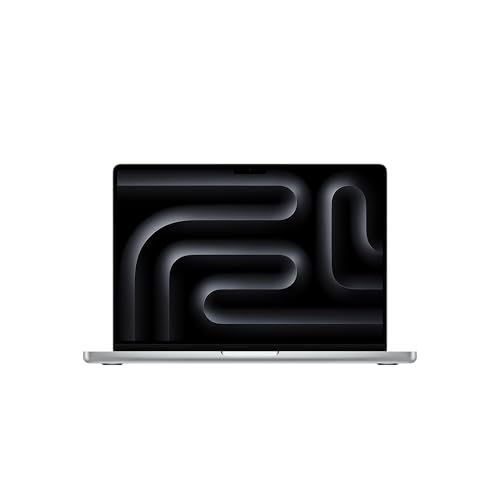
4. Apple MacBook Pro M5 Silver: Best MacBook Pro Alternative
Pros
- M5 chip includes a 10-core CPU and 10-core GPU
- 16GB unified memory and 1TB SSD
- Liquid Retina XDR screen with high contrast
- Three Thunderbolt 4 ports plus HDMI and SDXC
Cons
- macOS may not support every older music tool
- 14.2-inch screen benefits from an external display
- Built-in storage can still be limited for large libraries
Best for: Mac users who want the same production hardware in a silver finish.
The Apple MacBook Pro M5 Silver is functionally the twin of the Space Black model above. The finish is the visible difference, but that does not make this a throwaway duplicate. It gives shoppers who want this exact M5 configuration a second finish option, and the underlying specification is just as well suited to a portable recording or mixing rig.
The M5 combines a 10-core CPU with a 10-core GPU, while 16GB of unified memory handles the shared demands of macOS, a DAW, instruments, and effects. The 1TB SSD is a practical foundation for active projects. Producers who keep a larger sample collection will still want external storage, but the drive is less restrictive than the 256GB capacity in the MacBook Neo. Apple also says its silicon runs favorite applications such as Microsoft 365 and Adobe Creative Cloud quickly, which helps if production sits alongside other creative work.
Its 14.2-inch Liquid Retina XDR screen reaches up to 1, 600 nits peak brightness, up to 1, 000 nits sustained brightness, and a 1, 000, 000:1 contrast ratio. More important in daily use, the display gives small timeline controls and detailed interfaces a crisp home. The built-in audio hardware is unusually complete for a thin laptop, with three studio-quality microphones and six speakers supporting Spatial Audio and Dolby Atmos. Those speakers are not a substitute for monitors, but they are useful for checking a rough balance away from the desk.
The port selection is one of its strongest advantages over the MacBook Neo. Three Thunderbolt 4 ports, MagSafe 3, SDXC, HDMI, and a headphone jack make a multi-device setup easier to organize, and Apple says the laptop supports up to two external displays. The weakness remains software compatibility, not raw capability. If your plug-ins and interface drivers are ready for macOS, this is an excellent professional platform. If you need a bigger built-in workspace, the Dell 16 Plus is the more natural Windows alternative.
5. KAIGERR RX16: Best Expandable Windows Laptop

Pros
- Ryzen 7 H255 with 8 cores and 16 threads
- 24GB DDR5 memory listed in the product title
- 512GB NVMe SSD with stated upgrade support
- Dual-fan cooling and a 16-inch IPS display
Cons
- Available listing details conflict on the memory configuration
- Graphics are integrated Radeon RX Vega 8
- Brand and support history may need closer checking
Best for: Windows users who want memory and storage expansion options.
The KAIGERR RX16 is aimed at buyers who want more internal flexibility than a sealed ultraportable typically offers. Its Ryzen 7 H255 processor is listed with 8 cores, 16 threads, and speeds up to 4.9GHz. That is a useful shape for a production computer because a DAW can spread work across multiple cores while individual tracks and instruments still depend on responsive single-core behavior.
The product title lists 24GB of DDR5 memory and a 512GB NVMe SSD. The feature text, however, describes a 16GB configuration and says the memory can be upgraded to 64GB using two 32GB modules. It also says the NVMe or NGFF storage can be upgraded to 4TB. That discrepancy is important. Confirm the shipped configuration and upgrade arrangement before buying, particularly if your sessions depend on a particular amount of memory from day one.
The 16-inch IPS display is described as having a wide color gamut and a high refresh rate, though the listing does not provide the exact refresh figure or resolution. The size is useful for a mixer and timeline, and the laptop's dual-fan cooling is intended to move heat away during sustained work. Wi-Fi 6 and a backlit keyboard round out the everyday setup. The integrated Radeon RX Vega 8 graphics are adequate for ordinary display work, but this is not the pick for demanding GPU-heavy creative tasks.
Compared with the ASUS ROG Strix G16, the KAIGERR is lighter at about 3.86 pounds and puts more emphasis on upgradeability than on a dedicated graphics processor. Compared with the MacBook Neo, it offers a larger screen and Windows software access, but it does not have the same compact aluminum design or clearly documented battery claim. It is a reasonable choice for a hands-on Windows user who is comfortable checking the configuration and planning future upgrades.
6. Apple MacBook Neo Indigo: Best Portable Mac

Pros
- Compact 13-inch Liquid Retina display
- A18 Pro chip and 8GB unified memory
- Up to 16 hours of stated battery life
- Lightweight aluminum design at about 2.71 pounds
Cons
- 256GB SSD fills quickly with sample libraries
- 8GB memory limits ambitious sessions
- Available port details are limited
Best for: mobile songwriters and producers working on smaller sessions.
The Apple MacBook Neo Indigo is the easiest laptop here to carry from a classroom to a rehearsal room. Its 13-inch display and roughly 2.71-pound weight keep the footprint small, while the recycled aluminum enclosure gives it a more substantial feel than a typical entry-level notebook. For writing parts, arranging a modest project, or making edits between locations, that portability is its defining advantage.
Apple equips it with an A18 Pro chip, 8GB of unified memory, and a 256GB SSD. That combination is better suited to light and moderate production than to huge sample-heavy templates. Eight gigabytes can handle a focused session, but it gives less room for many simultaneous virtual instruments and effects than the 16GB MacBook Pro models. The 256GB drive also calls for disciplined project management or external storage once a library grows.
The 13-inch Liquid Retina display supports 1 billion colors, which makes text and interface elements look clean and gives visual media a lively appearance. A 1080p FaceTime HD camera, dual-mic array, and two side-firing speakers are useful for calls, rough playback, and collaboration. Apple claims up to 16 hours of battery life, a helpful figure for mobile work, though demanding music sessions can place a different load on a laptop than ordinary school or office tasks.
The Indigo model has the same practical strengths and limitations as the Silver model below. Choose this one for the finish, not because it changes the production capability. It is much easier to travel with than the ASUS ROG Strix G16 or Dell 16 Plus, but those larger systems offer more memory or more clearly defined high-performance hardware. This is the right Mac for a producer whose sessions stay controlled and whose priority is having a dependable creative computer close at hand.
7. Apple MacBook Neo Silver: Best Compact Apple Laptop

Pros
- A18 Pro chip in a compact aluminum body
- 13-inch Liquid Retina display supports 1 billion colors
- Up to 16 hours of stated battery life
- 1080p camera and dual-mic array
Cons
- 8GB unified memory is not aimed at huge sessions
- 256GB storage requires careful library management
- Small screen can make detailed mixing slower
Best for: students and producers who need a small macOS laptop for lighter projects.
The Apple MacBook Neo Silver is the same compact production platform as the Indigo model, with a silver finish. That makes it a straightforward choice for someone who wants the Neo's portability without moving into the larger MacBook Pro line. At about 11.71 inches wide and 2.71 pounds, it should fit easily in a smaller bag and leave room for an interface or headphones.
The A18 Pro chip gives the machine a modern Apple silicon foundation, but the 8GB unified memory defines its realistic workload. It is suitable for recording vocals and instruments, arranging a manageable number of tracks, and using a focused collection of plug-ins. It is less comfortable as a central machine for orchestral templates or projects that keep many memory-hungry instruments loaded at once.
The 13-inch Liquid Retina display is crisp and supports 1 billion colors. That is pleasant for editing and general creative work, although a smaller panel means more scrolling when a project grows. The 1080p camera, dual-mic array, and side-firing speakers make the Neo useful for collaboration and quick reference playback. Apple also lists FileVault, Find My, automatic security updates, and Touch ID support in its feature material, though the exact Touch ID configuration should be confirmed for the model being ordered.
The Silver and Indigo Neo models should be judged on color preference and availability rather than performance. The HP OmniBook 3 gives you a much larger screen, while the MacBook Pro M5 gives you substantially more memory, storage, ports, and sustained creative headroom. The Neo makes sense when carrying comfort and macOS are more important than building the biggest possible session.
8. HP OmniBook 3 17.3-inch: Best Large Budget Screen

Pros
- Large 17.3-inch FHD display
- 512GB PCIe NVMe SSD
- Wi-Fi 6 and Bluetooth 5.4
- Up to 14 hours and 15 minutes of stated battery life
Cons
- Ryzen 3 processor is intended for everyday workloads
- 8GB LPDDR5 memory limits large sessions
- About 4.43 pounds, so it is not especially portable
Best for: producers who want a broad arrangement view at a desk.
The HP OmniBook 3 17.3-inch is built around screen area rather than workstation-class muscle. Its large FHD display can make an arrangement easier to follow, especially for users who prefer seeing more tracks at once instead of constantly zooming and scrolling. It is the kind of laptop that makes more sense on a desk than in a crowded backpack.
HP lists an AMD Ryzen 3 30 processor, 8GB of LPDDR5 memory, and a 512GB PCIe NVMe M.2 SSD. The SSD capacity is helpful for active projects and general files, while LPDDR5 memory offers a newer memory type than the HP Essential's DDR4 configuration. Still, 8GB is a clear ceiling for large virtual-instrument sessions. The listed Radeon 610M graphics are aimed at entertainment and everyday visuals, not advanced graphics workloads.
Battery life is listed at up to 14 hours and 15 minutes, with fast charging that restores the battery from zero to 50 percent in approximately 45 minutes. HP also includes Wi-Fi 6, Bluetooth 5.4, a full HD camera with HDR auto-switching, and advanced AI noise reduction for clearer calls. Those collaboration features do not replace a proper microphone, but they are useful when production work shares time with lessons, meetings, or remote collaboration.
At approximately 4.43 pounds, this is less convenient to move than either MacBook Neo. The Ryzen 3 platform also sits well below the MacBook Pro M5, ASUS ROG Strix G16, and Dell 16 Plus for ambitious sessions. Its advantage is the 17.3-inch workspace, not raw track count. Choose it for arranging, editing, and light recording at a fixed desk, and consider an external interface and storage as the project grows.
9. HP Essential 15.6-inch: Best for Basic Recording

Pros
- Four-core Intel N100 processor
- 15.6-inch Full HD anti-glare display
- USB-C, two USB-A ports, HDMI, and headphone jack
- Wi-Fi 6 and Bluetooth 5.3
Cons
- 8GB DDR4 memory is modest for production
- 256GB SSD leaves limited room for libraries
- Product listing contains conflicting memory and storage details
Best for: simple recording, editing, and everyday work on Windows.
The HP Essential 15.6-inch is a basic Windows laptop that can make sense for a producer whose projects stay small. Its four-core Intel N100 processor runs at up to 3.4GHz, and the 15.6-inch Full HD anti-glare screen gives enough room for a conventional DAW layout. It is not designed as a dedicated studio workstation, but it has the basic shape for recording, editing, and learning a DAW.
The main listed configuration includes 8GB of DDR4 memory and a 256GB PCIe NVMe SSD. The feature text says the SSD supports fast boot and application launches, which is useful for daily work, but 256GB is quickly spoken for by operating-system files, projects, and sample content. The product information separately lists a size of 16GB DDR5 RAM and 512GB PCIe SSD, so shoppers should verify the exact configuration before ordering. That conflict is too significant to ignore.
Connectivity is better defined than on several other entry-level choices. HP lists USB-C, two USB-A ports, HDMI, and a headphone jack, along with Wi-Fi 6 and Bluetooth 5.3. Those ports make it easier to attach an audio interface, external drive, display, or MIDI controller without relying entirely on adapters. The full-size keyboard includes a numeric keypad, and HP claims more than eight hours of battery life with fast charging support.
The N100 is not a sensible foundation for a large library-heavy session. The MacBook Neo offers a more portable and polished experience, while the HP OmniBook 3 provides more storage and a larger display. The Essential is best reserved for a small number of audio tracks, basic software instruments, and a user who also needs a general-purpose Windows computer. Verify the memory and storage before buying, then keep the project scope realistic.
10. QSXQSX 15.6-inch Laptop: Best for Very Light Projects

Pros
- 15.6-inch FHD display
- Intel 5205U processor
- Storage can expand from 128GB to 512GB
- USB-C, HDMI, and SD card reader
Cons
- 4GB RAM is a serious limit for music software
- 128GB built-in storage is very small
- Wi-Fi 5 and Bluetooth 4.2 are older connectivity standards
Best for: notes, simple demos, and basic audio editing with modest software demands.
The QSXQSX 15.6-inch Laptop is the least capable option here, but it has a clear use case. It is a basic Windows notebook for writing lyrics, organizing ideas, playing reference tracks, and handling a small demo project. Its 15.6-inch FHD display is more comfortable than a very small screen for arranging notes and navigating a simple session.
The Intel 5205U runs at a 1.9GHz base frequency. The bigger concern is the 4GB of RAM, which leaves little room for a DAW, software instruments, effects, and background applications at the same time. The built-in 128GB storage is similarly tight. The listing says an expansion slot supports storage up to 512GB, which can help, but expansion does not change the memory limitation.
The laptop weighs about 3.6 pounds and includes Windows 11 with a one-year Office 365 subscription. Its connectivity includes USB-C, HDMI, an SD card reader, dual-band Wi-Fi 5, and Bluetooth 4.2. That is enough for ordinary peripherals and file handling, although the older wireless standards and modest internal hardware make it less attractive as a long-term studio center.
The HP Essential is a safer step up for basic Windows production because it lists twice the memory and a faster NVMe storage setup, though its own configuration needs verification. The QSXQSX model should be chosen only when the intended work is genuinely light. It is not the laptop to buy for large plug-in chains, many virtual instruments, or a growing sample library.

How to choose best laptops for music production
The right production laptop is defined by the workload it can sustain, not by a single processor label. Start with your DAW and plug-ins, then weigh memory, storage, cooling, display space, ports, and portability together.
Processor performance
A DAW uses the processor for plug-in calculations, virtual instruments, audio effects, and general responsiveness. Core count helps when a project can distribute work across tracks, while strong single-core performance matters for tracks that must run in sequence. The Apple M5, Intel Core i7-14650HX, Intel Core Ultra 9 288V, and Ryzen 7 H255 are the serious choices here.
The Intel N100, Ryzen 3 30, and Intel 5205U are better suited to recording and light editing. They can work for a simple project, but they leave less room for dense arrangements and many real-time effects.
Memory capacity
Memory determines how much of a session can remain active without relying on slower storage. Eight gigabytes can work for basic audio recording, but 16GB is a more comfortable starting point for regular production. The Dell 16 Plus stands out with 32GB, while the KAIGERR listing claims 24GB but contains conflicting configuration information that needs confirmation.
A laptop with soldered memory can be difficult or impossible to expand later. If your work depends on large sample instruments, treat memory as a core specification rather than a minor convenience.
For music production, memory headroom is what keeps a growing session from becoming a constant exercise in freezing tracks.
Storage capacity and speed
An SSD makes the operating system, DAW, projects, and sample libraries feel more responsive than a traditional hard drive. Capacity matters just as much as speed because instrument libraries and recorded takes accumulate quickly. The MacBook Pro models and ASUS ROG Strix G16 include 1TB drives, while the MacBook Neo models provide 256GB.
Expansion can change the picture. The KAIGERR listing describes upgrade support for both memory and storage, and the QSXQSX laptop lists storage expansion to 512GB. Confirm the exact slot and shipped configuration before relying on those claims.
Cooling and sustained performance
A processor that performs well briefly may slow down when a long session keeps it busy. Active cooling helps maintain performance, though it can introduce fan noise near a microphone. The ASUS ROG Strix G16 has the clearest high-performance cooling design in this group, with a vapor chamber, tri-fan system, and liquid metal thermal material.
Thin laptops such as the MacBook Neo are easier to carry, but their compact format is aimed at a different workload. For recording vocals in the same room, a quieter machine can matter more than maximum processing power.
Ports and operating system
Your interface, MIDI controller, external drive, display, and headphones all need a practical connection plan. The MacBook Pro offers three Thunderbolt 4 ports, HDMI, SDXC, MagSafe 3, and a headphone jack. The HP Essential lists USB-C, two USB-A ports, HDMI, and a headphone jack. The Dell listing is less specific, so check it before building a studio around the machine.
Operating system compatibility is equally important. macOS is a strong choice when your DAW, plug-ins, and interface drivers support Apple silicon. Windows offers broader hardware variety and is the natural fit for software that requires Windows. If your work also includes visual projects, you may want to compare how much screen and graphics power creative editing needs before choosing a machine.

Frequently asked questions
How much RAM is enough for music production?
Sixteen gigabytes is a sensible target for regular production with multiple tracks, effects, and virtual instruments. Eight gigabytes can handle smaller sessions, but it leaves less room for sample-heavy work. Thirty-two gigabytes, as listed for the Dell 16 Plus, is better suited to large templates and multitasking.
Is a MacBook good for music production?
Yes, a MacBook can be an excellent production computer when your DAW, plug-ins, and audio interface drivers support macOS and Apple silicon. The MacBook Pro M5 models offer the strongest combination in this group, while the MacBook Neo models are better for lighter and more mobile sessions.
Is a gaming laptop suitable for music production?
A gaming laptop can be very capable for production because it often combines a powerful processor, substantial cooling, fast storage, and upgradeable memory. The ASUS ROG Strix G16 is a strong example, though its weight, fan noise, and gaming-focused design may be inconvenient for recording near a microphone.
Does music production require a dedicated graphics card?
No. Most DAWs and audio plug-ins depend more heavily on processor performance, memory, and storage than on a dedicated graphics processor. The ASUS ROG Strix G16 has a GeForce RTX 5060, but that is more useful for gaming and visual workloads than for ordinary recording and mixing.
How much storage should a production laptop have?
A 1TB SSD is a comfortable starting point for active projects and a growing collection of instruments. A 256GB drive can work if you use external storage, but it will require more management. The MacBook Pro and ASUS ROG Strix G16 are the clearest choices here for built-in storage capacity.
Do I need a large laptop display?
Not necessarily, but a larger screen makes long arrangements and mixer views easier to navigate. The Dell 16 Plus and HP OmniBook 3 provide more workspace than the 13-inch MacBook Neo. A compact laptop can still work well with an external monitor at a desk.

The bottom line
The Best laptops for music production in this group start with the Apple MacBook Pro M5 Space Black. Its M5 processor, 16GB of unified memory, 1TB SSD, strong display, built-in audio hardware, and broad port selection make it the most balanced choice for serious portable work. The Silver version offers the same production hardware for shoppers who prefer that finish.
Windows users should choose the ASUS ROG Strix G16 when sustained performance, a larger display, and clear connectivity matter most. The Dell 16 Plus is the better fit for a large multitasking workspace and 32GB of memory, while the MacBook Neo models suit mobile producers with smaller sessions.
If you are undecided, choose the MacBook Pro M5 for demanding work, the ASUS for Windows flexibility, or the MacBook Neo when carrying comfort matters more than session size.
As an Amazon Associate we earn from qualifying purchases.