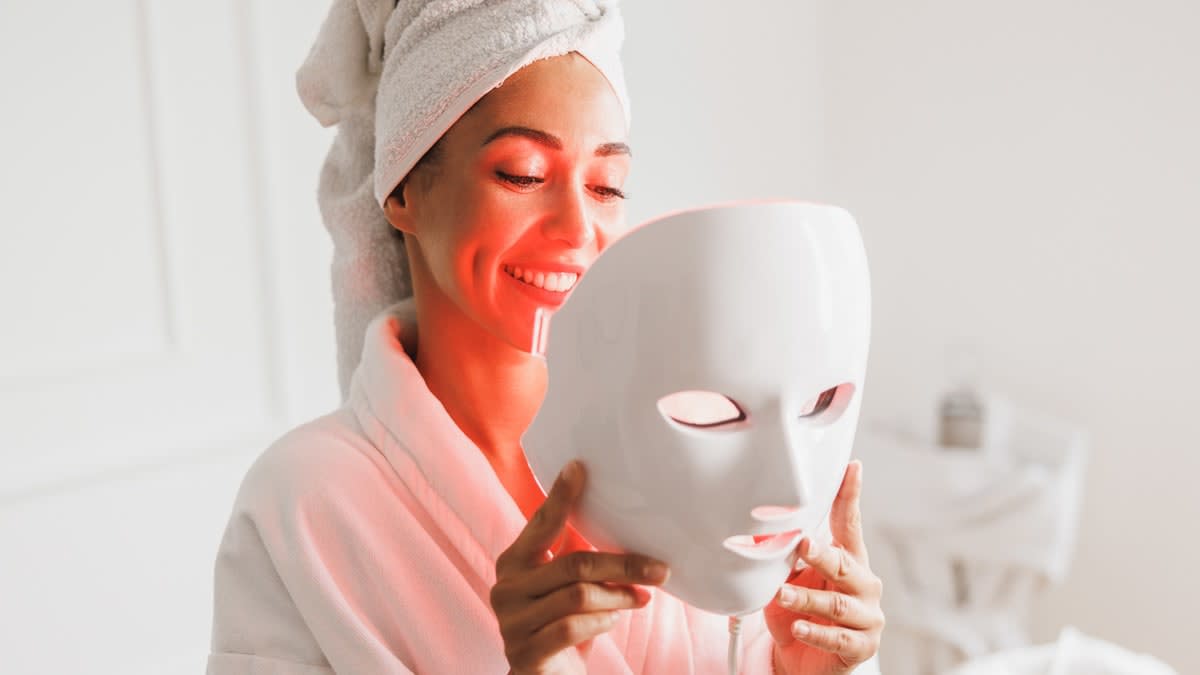

A face mask that slides out of a drawer is more useful than one that requires a carefully protected appointment in your calendar. The challenge is separating meaningful light coverage and useful treatment controls from a crowded field of vague beauty claims. The best LED face masks make the routine simple enough to repeat, fit closely enough to illuminate the intended area, and offer wavelengths that match your skin concerns.
This group ranges from compact masks with fast preset routines to full-coverage silicone designs with several light modes. Some concentrate on red and near-infrared light, while others add blue or amber settings for blemishes, redness, and tone. Shark CryoGlow LED Face Mask in Blue Frost is our single best pick, with CurrentBody, INIA, iRestore, and the other masks covering different priorities.
Comparison of the best LED face masks
| # | Product | Award | Wavelengths | LEDs | Coverage | Best for |
|---|---|---|---|---|---|---|
| 1 | Shark CryoGlow LED Face Mask in Blue Frost | Best overall | Red, blue, infrared | Not stated | Face and under-eye cooling | Short guided routines |
| 2 | INIA GLOW 4D Wireless Mask | Best flexible fit | Dual NIR, red, blue, amber | 320 | Full face | Facial contours and comfort |
| 3 | wavytalk Glow Time Mask | Best for detailed modes | 415nm, 590nm, 630nm, 850nm | 456 chips | Full face | Acne and fine lines |
| 4 | CurrentBody Skin Series 2 | Best premium coverage | 633nm, 830nm, 1072nm | 236 bulbs | Face | Red and near-infrared treatment |
| 5 | iRestore LED Face Mask | Best targeted wavelengths | 415nm, 635nm, 830nm | 360 | Face | Fine lines and blemishes |
| 6 | Shark CryoGlow LED Face Mask in Lilac Frost | Best cooling routine | Red, blue, infrared | Not stated | Face and under-eye cooling | Puffiness and quick sessions |
| 7 | Shark CryoGlow LED Face Mask in Rose Glow | Best Shark color option | Red, blue, infrared | Not stated | Face and under-eye cooling | Multi-purpose routines |
| 8 | INTEO 4-Mode Face and Neck Mask | Best face and neck coverage | 460nm, 600nm, 660nm, 850nm | 680 beads | Face, neck, and chest | Extended coverage |
| 9 | BNU 4-Mode Wireless Mask | Best travel design | Red, near-infrared, blue, yellow | 400 beads | Face | Cordless portability |
| 10 | Onisdin Face and Neck Mask | Best brightness control | 630nm, 850nm | Not stated | Face and neck | Adjustable intensity |
1. Shark CryoGlow LED Face Mask in Blue Frost: Best Overall

Pros
- Six-minute better-aging treatment
- Separate acne-clearing and skin-sustain programs
- Integrated under-eye cooling
- Three cooling levels
Cons
- Heavier than the most flexible silicone masks
- The light wavelengths are not specified numerically
- Under-eye treatment adds complexity
Best for: someone who wants a guided face mask with cooling built into the routine.
The Shark CryoGlow is the easiest mask here to recommend to someone who wants a routine rather than a collection of settings. Its main treatment takes six minutes, and the controls divide the experience into recognizable goals: better aging, skin clearing, or skin sustain. That matters because a short, repeatable session is easier to keep using than a device that asks you to interpret several wavelengths before every treatment.
The better-aging mode uses red and infrared LEDs. The skin-clearing mode combines blue and infrared with red light in an eight-minute session, while the skin-sustain mode uses red, blue, and infrared for four minutes. The product information does not give numerical wavelength values or an LED count, so buyers who want to compare exact light output should look at the wavytalk Glow Time Mask or CurrentBody Skin Series 2 instead. Shark's distinction is the way these capabilities are packaged, not a detailed specification sheet.
The under-eye system sets CryoGlow apart from every other product in this group. InstaChill provides three temperature-controlled cooling levels, and the under-eye revive treatment can run from five to 15 minutes. That gives the mask a second purpose when puffiness or the feel of tired eyes is more important than a full anti-aging session. Its listed weight is about 1.49 pounds, so it is not as discreet or light-feeling as a soft silicone mask, but the compact dimensions help keep it from becoming unwieldy.
The limitation is simple: this is not the choice for a wavelength enthusiast who wants every technical detail laid out. The INIA GLOW 4D offers dual near-infrared technology and a flexible silicone body, while wavytalk lists both wavelength values and power density. Shark wins on routine design, clinical-testing claims, FDA clearance, and cooling. Skip it if you want a very light mask or if under-eye cooling has no place in your skincare routine.
For someone who wants to press a button and follow a short, clearly defined treatment, the Blue Frost CryoGlow is the strongest all-rounder. It is particularly appealing if acne, redness, and under-eye puffiness sit alongside fine lines on your list of concerns.
2. INIA GLOW 4D Wireless Mask: Best Flexible Fit

Pros
- Flexible medical-grade silicone
- 320 LEDs across the face
- Dual near-infrared technology
- Wireless use with cooling gel pad
- Four targeted light modes
Cons
- Does not cover the neck
- Exact wavelengths are not provided
- Cooling is limited to a gel pad
Best for: someone who wants a conforming wireless mask with broad face coverage.
The INIA GLOW 4D feels designed around the problem that makes many LED masks frustrating: a rigid shell can sit close to one part of the face and float away from another. Its flexible medical-grade silicone is intended to conform across the forehead, cheeks, chin, and jawline. That full-face approach is more compelling than a headline LED count by itself, because consistent positioning determines how evenly the light reaches the skin.
INIA uses 320 LEDs and dual NIR channels, although the listing does not state the numerical wavelengths. The four modes are red, blue, amber, and combo. Red is aimed at a smoother and more radiant appearance, blue at clearer-looking skin, amber at balanced tone, and combo at a general treatment. The choices are broad enough for a mixed routine, while the Shark CryoGlow is better if you want preset sessions with exact run times.
Wireless operation makes this one easier to wear while watching television or moving around the house. A magnetic cooling gel pad is included to soothe puffy eyes and help reduce redness. The listed dimensions are roughly 8.94 by 7.56 by 4.49 inches, but the more useful design detail is its flexible construction. It should be a better starting point for anyone who finds hard masks leave gaps around the sides of the face.
The weakness is the lack of technical specificity. INIA gives an LED count and describes dual NIR, but it does not provide the individual wavelength numbers or power density in the supplied details. That makes a precise comparison harder than it is with wavytalk or CurrentBody. It also stops at the face, unlike the INTEO mask, which reaches the face, neck, and chest.
The GLOW 4D is the pick for fit and flexibility rather than cold therapy or exhaustive documentation. If a close, comfortable face fit is the feature most likely to keep you consistent, this is the mask we'd choose after Shark.
3. wavytalk Glow Time Mask: Best for Detailed Modes

Pros
- 456 high-purity LED chips
- Three treatment modes
- Lists 415nm, 590nm, 630nm, and 850nm light
- 40mW/cm² stated power density
- USB-C charging and wireless operation
Cons
- Charger is not included
- No neck coverage
- Requires more decisions than preset-led masks
Best for: someone who wants clearly described wavelengths for acne, fine lines, and tone.
The wavytalk Glow Time is the most specification-rich mask in this lineup. It gives you three named modes instead of simply offering a color-changing light: anti-fine-line uses 630nm red and 850nm near-infrared, anti-acne uses 415nm blue and 630nm red, and rejuvenation uses 590nm amber. For a buyer who has a specific concern, that clarity is useful. You know what the manufacturer intends each mode to do.
It also lists 456 LED chips and a 40mW/cm² power density, with full-face coverage and extra attention to the T-zone and U-zone. Those figures do not guarantee results, but they tell you more about the device's intended output than the Shark CryoGlow listing does. The ten, 15, and 20-minute session choices provide more control than Shark's short presets, though they also make the experience feel less automatic.
The physical design is soft liquid silicone with light-sealing eye pads and adjustable straps. That combination should help with glare and fit, especially when the mask is worn for the longer settings. A 2500mAh battery supports cordless use, and the supplied details specify a USB-C cable with a 5V/1A charger required but not included. The charging requirement is a small but important ownership detail, especially for someone expecting to use a spare high-output phone charger.
Wavytalk claims lab results after 28 days, including changes in breakouts, fine lines, and radiance. Those claims are manufacturer supplied and individual results can differ, so the practical case for this mask rests more securely on its transparent mode layout and stated power density. CurrentBody Skin Series 2 has a more specialized three-wavelength arrangement, while iRestore has a simpler three-wavelength setup with a short ten-minute routine.
Skip Glow Time if you want cooling, a neck panel, or the fewest possible controls. If you are comfortable choosing between red, blue, and amber treatments and want the most concrete light information in this roundup, wavytalk is the better fit. Readers comparing the science behind these categories may also want to consider how different light wavelengths map to common skin concerns before choosing a routine.
4. CurrentBody Skin Series 2: Best Premium Coverage

Pros
- 236 LED bulbs
- Three stated wavelengths
- Adds 1072nm deep near-infrared
- Flexible liquid silicone shape
- Veritace NFC card for individual mask information
Cons
- No blue or amber mode listed
- No treatment duration in the supplied details
- Face-only coverage
Best for: someone focused on red and near-infrared treatment with a flexible premium design.
CurrentBody Skin Series 2 takes a focused approach. Its 236 LED bulbs emit red light at 633nm, near-infrared at 830nm, and deep near-infrared at 1072nm. The addition of 1072nm is the feature that most clearly separates it from the simpler red and infrared masks in this selection. It is built for a buyer who wants the mask's light program centered on fine lines, wrinkles, redness, and overall radiance rather than acne-specific blue light.
The flexible liquid silicone shape is described as a Best-Fit design tested on thousands of faces. That kind of construction should be easier to position across different facial contours than a hard panel, and the listing emphasizes coverage and comfort in any setting. CurrentBody does not give a power density in the supplied information, so wavytalk remains the more informative choice for shoppers who want that number before buying.
A Veritace NFC card comes with each mask and provides information about how the individual mask delivers results. It is an unusual feature, and it may appeal to people who like a more traceable device experience rather than a generic controller. The product details do not state battery capacity, session length, or a blue-light setting, so the mask's everyday controls are less clear here than they are on Shark, iRestore, or BNU.
That narrower focus is also the main weakness. If breakouts and oil balance are central concerns, iRestore's 415nm blue mode or Shark's blue and infrared clearing treatment gives you a more direct option. If your goal is concentrated red and near-infrared coverage, CurrentBody is more compelling than a four-mode mask that leaves its wavelengths unspecified. A useful companion read is what to look for when comparing flexible light therapy designs before committing to one style.
CurrentBody Skin Series 2 suits the buyer who values a refined silicone fit and three clearly named wavelengths. It is not the most versatile mask here, but its focused setup is easy to understand.
5. iRestore LED Face Mask: Best Targeted Wavelengths

Pros
- 360 LEDs
- Red, infrared, and blue wavelengths
- Ten-minute sessions
- Dual-strap design
- Blocks direct light from the eyes
Cons
- Heavier than several flexible masks
- Does not list amber light
- Face-only treatment
Best for: someone who wants a straightforward ten-minute routine with three targeted wavelengths.
The iRestore mask makes the decision process simple without being too basic. It uses 360 LEDs and three numerical wavelengths: red at 635nm, infrared at 830nm, and blue at 415nm. That gives it a clear division of labor. Red and infrared address the look of fine lines and firmness, while blue is included for blemishes and irritation. There is no amber mode, but the core combination covers the concerns most buyers mention first.
Its ten-minute sessions, recommended three to five times a week, are easier to fit around a morning or evening routine than longer treatments. The mask is described as lightweight yet sturdy, with a dual-strap system that holds it away from the face and blocks direct light from the eyes. The listed weight is 1.81 pounds, which is notably more substantial than the Shark CryoGlow and may matter if you plan to walk around during treatment.
The 360-LED layout gives iRestore a strong coverage story, but the product information does not state power density or battery capacity. That makes it less technically detailed than wavytalk. It also does not reach the neck or chest, so INTEO remains the more suitable option for someone who wants to extend a session below the jawline.
iRestore says the mask can be used with serums or moisturizers and is suitable for dry or oily skin. That is a convenient routine detail, but users should still follow the supplied instructions and check any light-therapy contraindications that apply to them. The sturdy dual-strap construction may be less comfortable than INIA's flexible silicone if fit is your main concern.
Choose iRestore when you want exact red, blue, and infrared wavelengths in a clearly timed routine. It is more focused than the multi-color BNU and less feature-heavy than Shark, which makes it a sensible middle ground for targeted facial care.
6. Shark CryoGlow LED Face Mask in Lilac Frost: Best Cooling Routine

Pros
- Six-minute better-aging treatment
- Eight-minute skin-clearing treatment
- Three cooling levels
- Adjustable five to 15-minute under-eye program
- FDA cleared according to the listing
Cons
- Wavelength numbers are not listed
- About 1.49 pounds
- The color is the only functional difference from other CryoGlow entries
Best for: someone who wants Shark's short treatments and integrated under-eye cooling.
The Lilac Frost version of Shark CryoGlow is functionally the same mask as the Blue Frost model. Its appeal is the same unusually complete routine: six minutes for better aging, eight minutes for skin clearing, four minutes for sustaining radiance, and a separate under-eye treatment lasting five to 15 minutes. The short timings remove much of the friction from daily use.
Red and infrared LEDs are used for the better-aging treatment. The clearing program combines blue and infrared with red, while the sustain program uses all three light types. Shark also includes InstaChill cooling with three temperature-controlled levels. That cold under-eye feature is the reason to choose CryoGlow over CurrentBody or iRestore, neither of which lists a comparable cooling system.
Like the Blue Frost version, the Lilac mask is listed at about 1.49 pounds and has compact dimensions. It is not the lightest mask in this article, but it should feel more self-contained than a flexible silicone unit with a separate controller. The listing says the device was developed with dermatologists, backed by clinical testing, and FDA cleared, which may matter to buyers who prefer a more established treatment platform.
There is no performance distinction in the supplied details between this Lilac Frost model and the Blue Frost model. The listing does not state numerical wavelengths or an LED count, so buyers who want to compare those figures should look at iRestore or wavytalk. The color is the reason to select this entry, not a change in treatment capability.
If you want Shark's program structure and prefer this finish, the Lilac Frost model is a capable pick. Choose it for cooling and convenience, not because the color changes the light treatment.
7. Shark CryoGlow LED Face Mask in Rose Glow: Best Shark Color Option

Pros
- Same short guided treatments as other CryoGlow models
- Red, blue, and infrared treatment modes
- Built-in under-eye cooling
- Three temperature-controlled chill levels
Cons
- No numerical wavelength details
- No stated LED count
- The Rose Glow finish does not add a separate feature
Best for: someone who wants the CryoGlow system in the Rose Glow finish.
Rose Glow is another color variant of Shark's CryoGlow FW312 platform. Its practical experience is defined by the same four treatment choices: a six-minute better-aging mode, an eight-minute skin-clearing mode, a four-minute skin-sustain mode, and an under-eye revive treatment adjustable from five to 15 minutes. That consistency makes it easy to understand, especially for someone who does not want to build a schedule around individual colors.
The better-aging program uses red and infrared LEDs. Skin clearing uses blue, infrared, and red, and skin sustain uses red, blue, and infrared. The device also includes InstaChill cooling with three temperature settings. This combination gives Rose Glow more everyday range than the red-and-near-infrared-only CurrentBody, but wavytalk remains the better choice if exact wavelengths and power density are important to you.
The mask is compact and listed at approximately 1.49 pounds. Its cooling system is the feature most likely to affect daily enjoyment because it adds a distinct under-eye treatment instead of treating the face as one uniform area. Shark says the platform was developed with dermatologists, clinically tested, and FDA cleared. The supplied details do not provide an LED count or numerical wavelength values, so there is less technical information to assess than with iRestore's 360 LEDs and stated wavelengths.
There is no stated functional reason to choose Rose Glow over Blue Frost or Lilac Frost. The Rose Glow finish is the differentiator in this entry, and the three models should be treated as the same device family for treatment decisions. Skip it if color does not matter and select whichever CryoGlow version suits your preferences.
Rose Glow is a good fit for a buyer already drawn to Shark's cooling and short sessions. It is a convenience-first mask, with the same strengths and technical omissions as the other CryoGlow variants.
8. INTEO 4-Mode Face and Neck Mask: Best Face and Neck Coverage

Pros
- Face, neck, and chest coverage
- 680 stated light beads
- Four wavelength modes
- Rechargeable 2000mAh remote
- Wireless use
Cons
- Listed weight is about 2.62 pounds
- Exact session output is not stated
- Larger coverage can make positioning less discreet
Best for: someone who wants one mask to cover the face, neck, and chest.
The INTEO mask solves a problem the face-only designs ignore: the skin below the jawline. Its design is intended to cover the face, neck, and chest, and the listing claims 680 light beads made from more than 100 plus 70 bead positions with four LED beads in each. The exact bead description is awkward, but the important ownership point is that this is a substantially more expansive treatment area than the masks built only around the face.
There are four wavelength settings: infrared at 850nm, red at 660nm, orange at 600nm, and blue at 460nm. Red and infrared are positioned for elasticity and radiance, blue for oil balance, and orange for pigmentation and redness. This is a broad set of options, though the listing does not provide power density. The iRestore gives more direct numerical detail for its three wavelengths, while INTEO offers more coverage and an additional orange mode.
A rechargeable 2000mAh remote controls five timer choices from ten to 30 minutes. The product recommends three to four sessions a week, with 20 minutes per session, and says a charge supports 120 minutes of weekly use. The cordless magnetic battery control should make a full neck-and-chest session easier to manage than a wired setup. Soft silicone, adjustable straps, and light-blocking eye coverage are also listed as comfort features.
The size is the trade-off. The mask weighs about 2.62 pounds according to the product information, considerably more than Shark CryoGlow and heavier than several face-only alternatives. That may be tiring if you expect to walk around while wearing it. Its broad panel also makes it less subtle than INIA or CurrentBody, and the listing gives no clinical study details comparable to Shark's treatment claims.
Choose INTEO when coverage below the face is not optional. It is the specialist pick for the neck and chest, and its four modes give it more flexibility than the basic red and infrared masks, but buyers who want a light, face-only routine should look elsewhere.
9. BNU 4-Mode Wireless Mask: Best Travel Design

Pros
- 400 LED beads
- Four light modes
- Foldable and cordless
- Dual 1000mAh batteries
- Up to 120 minutes of continuous use
Cons
- Listed weight is about 1.98 pounds
- Numerical wavelengths are not provided
- Mini remote adds another piece to carry
Best for: someone who wants a foldable wireless mask for trips or flexible home use.
BNU is built around portability. Its foldable construction, cordless design, detachable eye protectors, and adjustable head straps make it more travel-minded than CurrentBody or iRestore. The mask has 400 LED beads and four modes: red, near-infrared, blue, and yellow. That gives it a useful spread of treatment types without requiring a cord to remain near a wall outlet.
The listing describes red light as an anti-aging mode, near-infrared as a deeper tightening mode, blue as an oil-balancing option, and yellow as a way to brighten dull-looking skin and reduce redness. It does not provide numerical wavelengths or a power density, so it is difficult to compare output directly against wavytalk, iRestore, or CurrentBody. BNU's strength is the practical design rather than technical transparency.
Two 1000mAh rechargeable batteries are said to provide up to 120 minutes of continuous use per full charge. Timer settings run from ten to 30 minutes, and the included mini remote handles the controls. The mask is described as soft silicone, waterproof, and easy to clean. Its listed dimensions are about 13 by 8.5 by 1.5 inches, and its listed weight is approximately 1.98 pounds, so foldability does not make it the lightest option.
The detachable eye protectors can be useful for adjusting comfort, but they also mean one more part to keep track of. BNU claims suitability for all skin types and includes a one-year warranty, yet the supplied product details do not offer the same treatment-specific documentation as Shark. If your main need is a clear wavelength specification, this is not the first mask to choose.
BNU makes sense for frequent travelers or anyone who wants a flexible, self-contained device. It is more portable than the larger INTEO and more mode-rich than a red-only approach, but it gives up some of the technical detail found in the higher-ranked masks.
10. Onisdin Face and Neck Mask: Best Brightness Control

Pros
- Face and neck coverage
- Five-level brightness adjustment
- 630nm and 850nm light
- Portable design with power storage
- Simple hands-free operation
Cons
- LED count is not stated
- Treatment modes and session length are not specified
- Less technical detail than competing masks
Best for: someone who wants a simple face-and-neck mask with adjustable brightness.
Onisdin takes the least complicated route in this group. The mask is designed for face and neck coverage and uses 630nm light alongside 850nm near-infrared. It also provides five brightness levels, which is the defining control here. That adjustment can be useful for someone who finds bright LED devices uncomfortable or who wants to begin gently while getting used to the routine.
The mask is described as lightweight, ergonomic, portable, and hands-free. Its full-face coverage is intended to distribute light evenly, while the power-storage design supports use away from a fixed outlet. Those are sensible features for a routine device, but the product information does not state an LED count, power density, battery capacity, or timer options. Buyers who want to compare the hardware closely will get more usable information from BNU, wavytalk, or INTEO.
Onisdin's two-light setup is narrower than the four-mode designs from INIA, wavytalk, and BNU. That can be a benefit if you only want red and near-infrared treatment without blue, yellow, or amber choices. It is a limitation if acne or tone is a central concern and you want a dedicated blue or amber mode. The mask also covers the neck, giving it an advantage over face-only CurrentBody and iRestore.
The biggest weakness is the sparse detail. The listing says the device is suitable for various skin types and easy to incorporate into a daily routine, but it does not state how long a session should last or how frequently it should be used. Follow the supplied instructions rather than guessing at a schedule. If you want a more explicit routine, Shark's preset programs are easier to follow.
Onisdin is best for a buyer who values brightness adjustment and face-and-neck coverage over a long feature list. It is a straightforward option, but not the one to choose when technical documentation is your priority.

How to choose the best led face mask
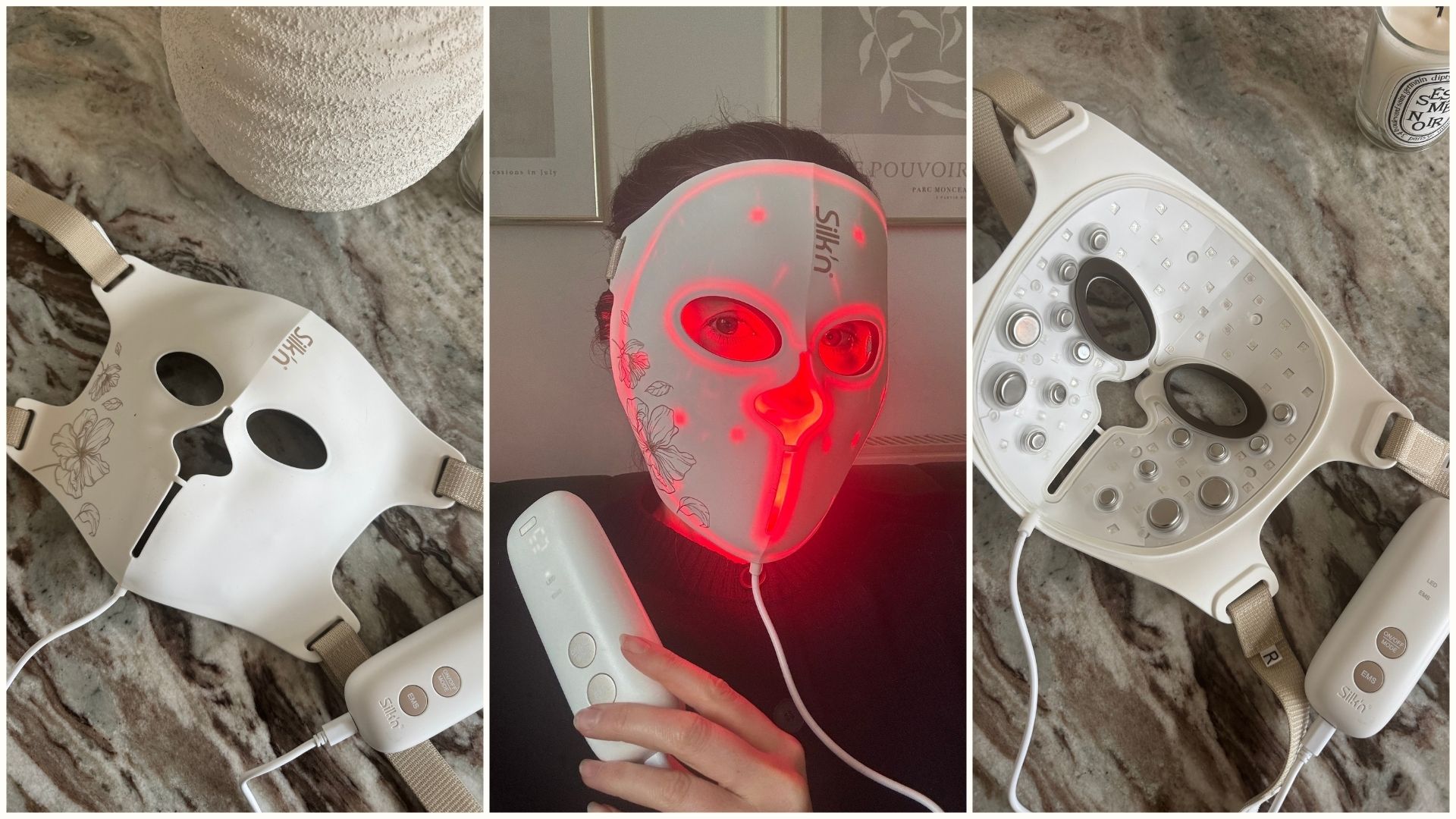
A useful LED mask is a balance of light selection, coverage, fit, treatment controls, and a routine you can repeat without irritation or hassle.
Wavelengths
Red and near-infrared light are the most common choices for the appearance of fine lines, firmness, and radiance. Blue light is more relevant when blemishes and oil balance are part of the goal, while amber or yellow modes are aimed at tone and redness. Numerical wavelengths make comparison easier, as seen on iRestore, wavytalk, CurrentBody, and INTEO. A mask that only names colors gives you less information about what it actually emits.
Coverage and fit
A face-only mask may be easier to wear, but it leaves the neck outside the treatment area. INTEO and Onisdin extend coverage below the jaw, while most of the other picks focus on the face. Flexible silicone generally has an advantage when facial contours make rigid masks sit unevenly. Look for adjustable straps and eye protection that block glare without forcing the mask tightly against your skin.
The mask you will wear consistently is more useful than the one with the longest feature list.
LED count and output
LED counts can indicate how extensively a mask is populated, but they do not tell the whole story. INTEO lists 680 light beads, wavytalk lists 456 LED chips and 40mW/cm² power density, and iRestore lists 360 LEDs. Most entries do not provide comparable output figures, so avoid treating a larger count as proof of stronger treatment. Even coverage and a comfortable fit matter just as much.
Treatment modes
Preset modes are valuable when you want the device to tell you what to do. Shark CryoGlow has four named routines with short durations, while iRestore has a clear ten-minute schedule. Manual multi-color masks such as wavytalk, INIA, BNU, and INTEO give more room to target different concerns, but they require more judgment. Choose fewer modes if decision fatigue could stop you using the mask.
Comfort and power
A cordless mask is easier to use while relaxing, traveling, or doing light tasks. Check the charging arrangement, battery information, timer settings, straps, and total weight. BNU lists dual 1000mAh batteries and up to 120 minutes of use, wavytalk lists a 2500mAh battery, and INTEO lists a rechargeable 2000mAh remote. Shark's cooling system adds comfort around the eyes, but its mask is heavier than several silicone alternatives.
For a broader look at how treatment features vary, the differences between red light mask designs and routines can help clarify which specifications deserve attention.
Frequently asked questions
Do LED face masks help with both wrinkles and acne?
Some do, but the modes matter. Red and near-infrared settings are commonly positioned for the appearance of fine lines and firmness, while blue light is used in products such as Shark CryoGlow, iRestore, wavytalk, INIA, and BNU for blemish-focused routines. Check the product instructions and choose a device with the light type that matches your concern.
How often should an LED face mask be used?
The recommended schedule differs by product. INTEO suggests three to four sessions a week with 20-minute sessions, iRestore suggests ten-minute sessions three to five times a week, and wavytalk lists three to five uses weekly. Shark provides shorter named programs, so follow the schedule supplied with the specific mask rather than combining routines from different products.
Is near-infrared light the same as red light?
No. They are different parts of the light spectrum, even though masks often combine them. The products in this group list near-infrared values such as 830nm, 850nm, or 1072nm alongside red wavelengths such as 630nm, 633nm, or 660nm. A mask can include both, but one should not be treated as a substitute for the other when comparing specifications.
Can an LED face mask cover the neck?
Some can. INTEO is designed for the face, neck, and chest, while Onisdin is described as a face-and-neck mask. Shark, INIA, wavytalk, iRestore, CurrentBody, and BNU are described primarily around facial coverage in the supplied details. Check the shape and instructions carefully if the neck is a main treatment area.
Are LED face masks safe for every skin type?
Several listings describe their masks as suitable for various or all skin types, but that is not a guarantee for every person or condition. Read the contraindications and product instructions before use, especially for the CurrentBody mask, which specifically directs buyers to review them. Stop using a device if it causes discomfort and ask a medical professional about concerns that may affect light therapy.
Which LED face mask is easiest to use?
Shark CryoGlow is the simplest because its better-aging, clearing, sustain, and under-eye programs have defined durations. iRestore is also straightforward with its ten-minute sessions. Masks such as wavytalk and INTEO offer more control, but that flexibility means spending more time selecting a mode and timer.
The bottom line
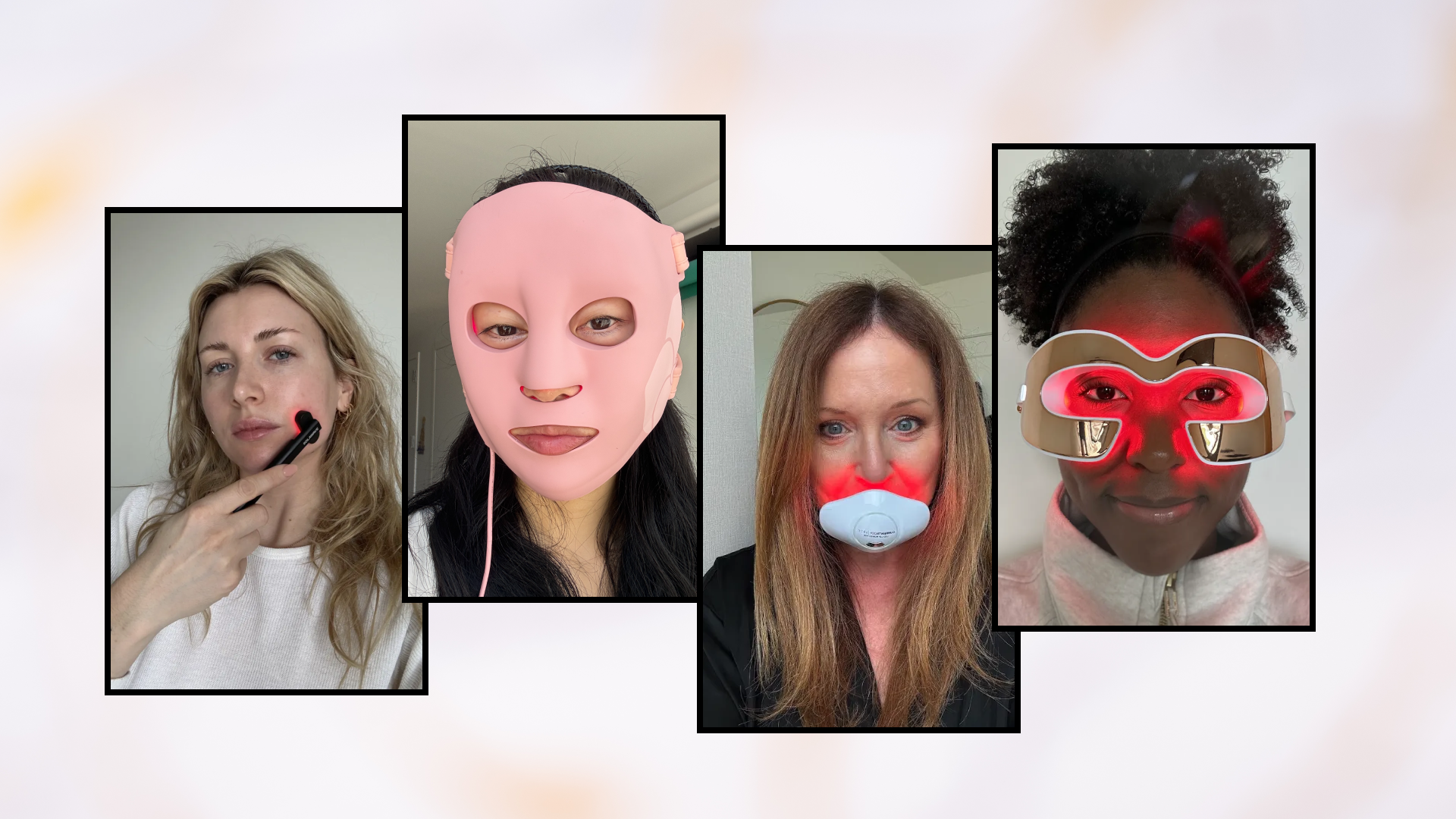
The Best LED face masks are not defined by LED count alone. Shark CryoGlow LED Face Mask in Blue Frost is our top pick because it combines short, clear treatment programs with red, blue, and infrared modes plus useful under-eye cooling. INIA GLOW 4D Wireless Mask is the better alternative for someone who prioritizes a flexible silicone fit, while wavytalk Glow Time Mask is the strongest choice for buyers who want detailed wavelength and power information.
Choose INTEO if neck and chest coverage matters most, iRestore if you want a direct red, blue, and infrared routine, and CurrentBody if you prefer a focused three-wavelength design with flexible silicone. If you are undecided, pick the mask whose schedule and fit you can realistically keep using several times a week.
As an Amazon Associate we earn from qualifying purchases.