

A LiFePO4 battery can look full at the wrong voltage and still leave an RV, trolling motor, or solar setup short of power. The charger has to match the battery chemistry, charging voltage, and capacity, while handling the battery management system safely. The wrong choice can be painfully slow, incompatible, or unable to wake a deeply discharged pack.
Our Best lifepo4 battery charger picks range from compact 4A maintainers to fast 20A units, plus versatile models that also handle lead-acid batteries and 24V systems. NOCO GENIUS10 is the single best all-around pick, with the broadest battery compatibility and useful temperature compensation. The rest cover fast 12V charging, low-current maintenance, dual-voltage vehicles, and compact battery packs.
Comparison table
| # | Product | Award | Charging output | Battery support | Best for |
|---|---|---|---|---|---|
| 1 | NOCO GENIUS10 | Best overall | 10A | 6V and 12V lead-acid, LiFePO4 | Mixed battery collections |
| 2 | VATRER POWER 20A | Best fast lithium charger | 20A, 14.6V | 12V LiFePO4 | RV and boat batteries |
| 3 | NOCO GENIUS1 | Best compact maintainer | 1A | 6V and 12V lead-acid, LiFePO4 | Small batteries and storage |
| 4 | LiTime 20A | Best for off-grid systems | 20A, 14.6V | 12V LiFePO4 | RV, home, and solar banks |
| 5 | NOCO GENIUS5 | Best middle ground | 5A | 6V and 12V lead-acid, LiFePO4 | Cars and medium batteries |
| 6 | E-FAST 20A | Best aluminum-housing design | 20A, 14.6V | 12V LiFePO4 | High-capacity deep-cycle packs |
| 7 | PZ.P 15A | Best dual-voltage charger | 15A at 12V, 8A at 24V | LiFePO4 and lead-acid | Cars, trucks, and boats |
| 8 | Haisito 20A | Best display | 20A at 12V, 10A at 24V | LiFePO4 and lead-acid | Users who want live data |
| 9 | ULTRAPOWER 4A | Best compact lithium unit | 4A, 14.6V | 12.8V LiFePO4 | Small packs and portable gear |
| 10 | ECO-WORTHY 10A | Best simple maintainer | 10A | 12V lead-acid, LiFePO4 | Everyday vehicle batteries |
1. NOCO GENIUS10: Best Overall

Pros
- Charges both 6V and 12V batteries
- 10A output handles larger packs more quickly
- Temperature sensor adjusts charging in changing weather
- Force Mode can charge batteries down to zero volts
- Includes clamps and integrated eyelet terminals
Cons
- Larger and heavier than low-current maintainers
- Extra modes require reading the manual carefully
- The charger is not dedicated only to LiFePO4 batteries
Best for: owners who want one charger for LiFePO4, lead-acid, vehicle, marine, and powersport batteries.
The NOCO GENIUS10 is the charger we would keep in a garage that contains more than one kind of battery. It has enough output for a serious 12V deep-cycle battery, but it is not locked to lithium use. It also handles 6V batteries, which makes it more useful around older equipment and smaller applications than the dedicated 12V models here.
Its 10A charging rate is the important middle ground. It is substantially more capable than the GENIUS1 and GENIUS5 when a large battery needs to be brought back up, but it avoids the narrower 20A focus of the VATRER POWER 20A, LiTime 20A, and E-FAST 20A. The charger supports 6V and 12V lead-acid types, including AGM, gel, SLA, and VRLA, as well as LiFePO4. That broad compatibility matters if the same charger will move between a car, lawn equipment, and an RV battery.
The integrated thermal sensor is one of the more useful features in this group. It adjusts charging for ambient temperature instead of treating a hot or cold battery like one sitting in mild indoor conditions. GENIUS10 can start charging batteries at 1V, and its Force Mode can manually charge a battery at zero volts. That is a useful recovery option, although it also means the user needs to select the correct mode rather than blindly connecting it.
The design is not especially small at 9.1 by 4.41 by 4.48 inches and 3.99 pounds. Its 72-inch AC cable and 80-inch DC cable provide useful reach, while the included clamps and eyelet terminals cover temporary and semi-permanent connections. NOCO also includes a mounting bracket, screws, and a three-year warranty. This is not the pick for someone who only needs to maintain a small battery, and it is more charger than a compact lithium pack requires.
If you are still deciding between the battery and the charger, the charging requirements that separate a LiFePO4 setup from a lead-acid one are the right place to start. For everyone else, GENIUS10 is the most flexible choice in this lineup.
2. VATRER POWER 20A: Best Fast Lithium Charger

Pros
- Delivers up to 20A to 12V LiFePO4 batteries
- 14.6V charging voltage is dedicated to lithium iron phosphate
- Supports 0V activation
- Includes M8 terminals and a 50A Anderson connector
- Built-in fan supports sustained charging
Cons
- Designed for 12V lithium batteries only
- Fan noise and airflow matter during continuous use
- Less versatile than the NOCO models
Best for: RV, boat, and other 12V LiFePO4 owners who want rapid charging with Anderson connectivity.
The VATRER POWER 20A takes a direct approach. It is a 12V LiFePO4 charger, not a general-purpose unit trying to serve every battery chemistry. Connect it to a compatible lithium battery and its 20A output is the main attraction, especially for a 100Ah pack that would take much longer on a 4A or 5A charger.
The charger uses a 14.6V charging voltage and universal 100 to 240V AC input at 50Hz or 60Hz. Its charging process transitions between constant current, constant voltage, and float or cutoff operation. That is the right kind of staged behavior for a LiFePO4 battery, while the built-in over-voltage, short-circuit, and over-temperature protections add safeguards during a long charging session.
VATRER POWER claims a theoretical five-hour charge for a 12V 100Ah LiFePO4 battery. Actual time depends on the battery's state, charging acceptance, and the point at which current tapers, so that figure should be treated as a useful indication of speed rather than a guarantee. The charger is specified for 12V lithium batteries from 40Ah to 300Ah, giving it a sensible range for compact RV and marine banks.
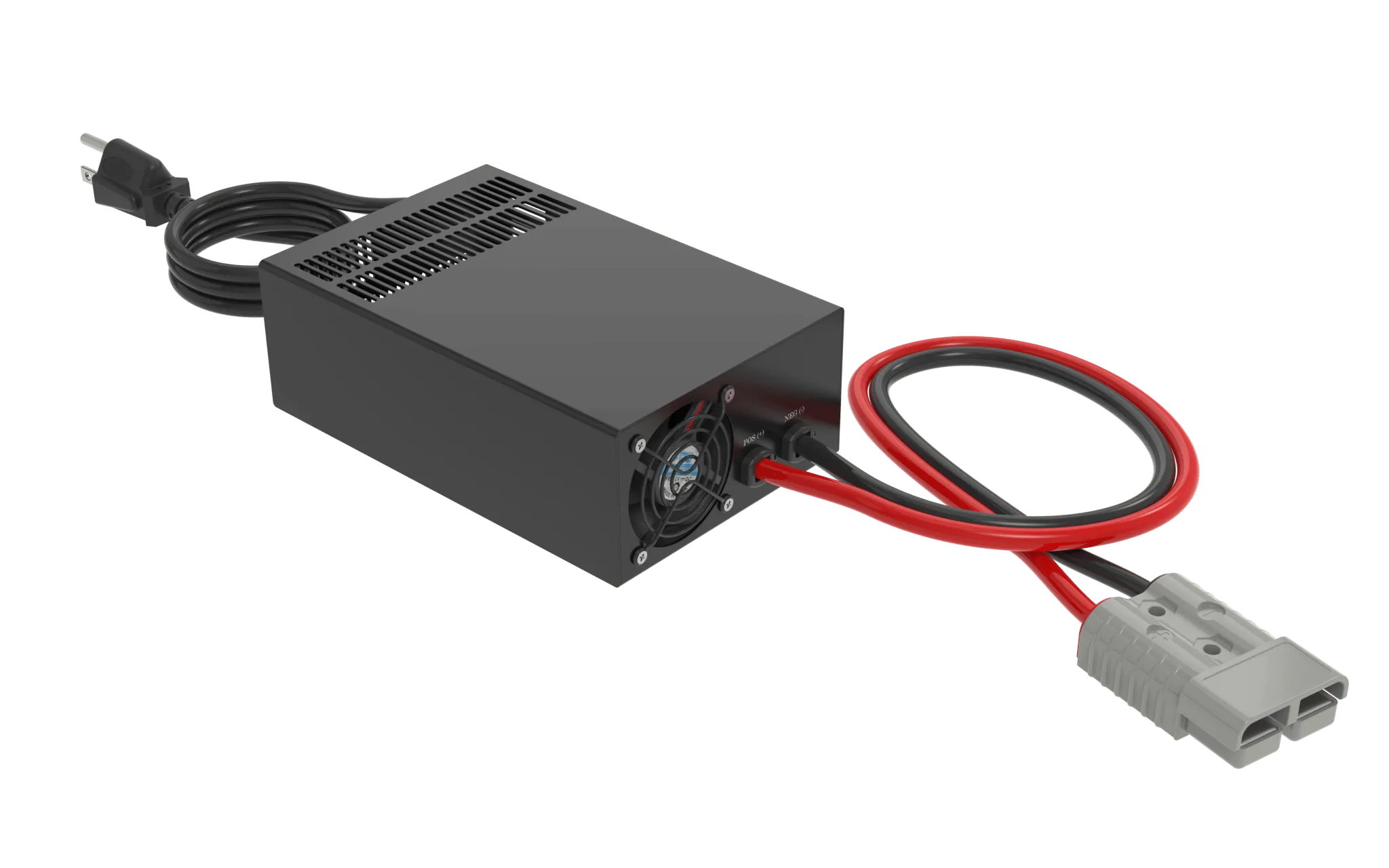
Connection options are unusually practical. The unit has M8 terminals and a 50A Anderson connector, so it can suit a battery already wired for a quick disconnect. A multistatus LED indicates charging, full, fault, or protection conditions. At 7.99 by 3.94 by 2.13 inches and 2.87 pounds, it is manageable, though the built-in cooling fan means it needs room around the housing.
Compared with the LiTime 20A, this charger is similarly focused on fast 12V lithium charging, but its 40Ah to 300Ah guidance and dual heavy-duty connections make its intended use particularly clear. Skip it if you need 6V charging, lead-acid support, or a low-current maintainer. Choose it when the battery is a substantial 12V LiFePO4 pack and waiting for a small charger is not acceptable.
3. NOCO GENIUS1: Best Compact Maintainer

Pros
- Small 0.95-pound design
- Supports 6V and 12V batteries
- Works with LiFePO4 and several lead-acid types
- Temperature compensation helps with seasonal storage
- Force Mode can address zero-volt batteries
Cons
- 1A output is slow for large deep-cycle batteries
- Direct wall plug limits placement flexibility
- Not intended for rapid charging
Best for: small LiFePO4 batteries, seasonal vehicles, motorcycles, and long-term maintenance.
The NOCO GENIUS1 is for the battery that needs attention, not urgency. Its 1A output makes it a maintenance specialist for motorcycles, lawn equipment, smaller recreational batteries, and vehicles parked for long periods. It is also the least cumbersome charger here, weighing 0.95 pounds and measuring 3.5 by 2.3 by 1.3 inches.
It supports 6V and 12V lead-acid batteries, including AGM, gel, SLA, and VRLA, along with 12V LiFePO4 batteries. That makes it more adaptable than many small lithium-only units. The integrated thermal sensor adjusts the charge for surrounding temperature, which is useful when a stored vehicle sits in a garage that changes considerably between seasons.
GENIUS1 can charge batteries from 1V and includes a Force Mode for completely dead batteries down to zero volts. Its automatic monitoring is intended to let the charger remain connected indefinitely without overcharging. It also includes pulse charging for lead-acid sulfation and acid stratification. Those repair functions apply to the lead-acid side of its compatibility, not as a reason to expect a damaged lithium battery to recover.
The 110-inch DC cable is generous, but the direct wall plug-in design is less convenient when the battery is far from an outlet. Charging a larger RV battery at 1A will take patience, and this is where the GENIUS5 or GENIUS10 becomes a more practical tool. GENIUS1 also lacks the 20A output and Anderson connector found on the dedicated lithium chargers.
For long storage, though, its low output is an advantage rather than a flaw. It keeps a battery topped up without bringing a large, fan-cooled charger into the job. Readers comparing maintenance options can also see how a maintainer differs from a charger used for recovery before choosing. GENIUS1 is the right pick for small batteries and slow, hands-off care.
4. LiTime 20A: Best for Off-Grid Systems

Pros
- 20A output charges 12V LiFePO4 batteries quickly
- 0V activation can wake BMS-protected batteries
- Aluminum alloy housing helps with heat dissipation
- Includes LED indicators and a cooling fan
- Multiple electrical protections
Cons
- Not waterproof
- Not suitable for direct marine environments
- Large, almost square housing
Best for: stationary RV, home, off-grid, and solar battery installations.
The LiTime 20A is built around the needs of a 12V LiFePO4 battery bank rather than a vehicle owner's mixed collection of batteries. It supplies 20A at 14.6V, a combination suited to 12V or 12.8V lithium batteries in an RV, home backup, off-grid, or solar system. It is the kind of charger that makes sense when charging speed matters but the battery normally stays in one installation.
Its 0V activation feature is useful for a battery whose management system has disconnected the cells after deep discharge. The charger automatically transitions through constant-current, constant-voltage, and float or cutoff stages. It also lists protection against over-temperature, over-voltage, short circuit, over-current, low voltage, and reverse polarity. Those protections do not eliminate the need to verify the battery's specifications, but they make the charging process less dependent on constant supervision.
The aluminum alloy housing and cooling fan are designed to move heat away during sustained operation. LED indicators show charging status, and the charger includes an Anderson connector for a quick connection. Its published dimensions are 5.91 by 3.94 by 5.91 inches, so it takes up more space than the small ULTRAPOWER 4A. That footprint is easier to accommodate in a utility area than in a tightly packed vehicle compartment.
The key weakness is explicit: this charger is not waterproof. It should not be treated as marine equipment simply because LiFePO4 batteries are common on boats. The VATRER POWER 20A and E-FAST 20A also offer fast charging and heavy-duty connections, but LiTime is more naturally aimed at an indoor, RV, or protected off-grid setup. Its two-year warranty and stated technical support add some reassurance for a permanently installed charger.
Choose LiTime when the battery lives under cover and needs a proper 20A charging source. Boat owners should skip it unless the charger can be kept completely protected from water and spray.
5. NOCO GENIUS5: Best Middle Ground

Pros
- 5A output suits many everyday 12V batteries
- Supports 6V, 12V, lead-acid, and LiFePO4
- Temperature compensation adjusts charging behavior
- Force Mode reaches zero-volt batteries
- Includes clamps, eyelets, and mounting hardware
Cons
- Slower than dedicated 20A lithium chargers
- Larger than the GENIUS1
- Repair features are primarily relevant to lead-acid batteries
Best for: drivers who need more speed than a maintainer but do not need a 20A lithium specialist.
The NOCO GENIUS5 makes a strong case for not overbuying a high-output lithium charger. Its 5A output is enough for many car, motorcycle, lawn equipment, and moderate deep-cycle batteries, while the charger remains compatible with 6V and 12V systems. It is a particularly sensible step up from the GENIUS1 when that model's 1A output feels too slow.
The battery support is broad. GENIUS5 works with LiFePO4 as well as flooded, maintenance-free, AGM, gel, SLA, and VRLA lead-acid batteries. Its temperature sensor adjusts charging according to ambient conditions, helping prevent overcharging in hot weather and undercharging in cold weather. The automatic monitoring mode is designed for indefinite connection, which suits seasonal storage.
It also includes the recovery features shared by the GENIUS family. The charger can start at 1V, and Force Mode can manually charge down to zero volts. Pulse charging targets sulfation and acid stratification in lead-acid batteries. That mix of maintenance, recovery, and compatibility makes it more versatile than the lithium-only 20A models, though it cannot match their speed on a large LiFePO4 bank.
The hardware weighs 1.59 pounds and measures 7.95 by 3.43 by 4.61 inches. Its 72-inch AC cable and 80-inch DC cable provide useful reach, and the box includes clamps, integrated eyelet terminals, mounting hardware, and a three-year warranty. The GENIUS10 is better for large or frequently used batteries, while GENIUS1 is easier to store and better suited to very small batteries.
The GENIUS5 is the one to buy when the charger must do several jobs without becoming a high-output installation unit. Choose a 20A lithium model instead if a 100Ah battery has to be recharged quickly after regular deep discharge.
6. E-FAST 20A: Best Aluminum-Housing Design

Pros
- 20A output for rapid 12V lithium charging
- Aluminum alloy housing supports heat dissipation
- 0V activation for depleted batteries
- M8 terminals and 50A Anderson connector
- Dual-state charging indicator
Cons
- Dedicated to 12V LiFePO4 batteries
- Cooling fan needs clear airflow
- No 6V or 24V mode
Best for: high-capacity 12V lithium batteries in golf carts, RVs, and protected marine setups.
The E-FAST 20A is a close alternative to the VATRER POWER 20A, with the same central idea: supply a large 12V LiFePO4 battery with enough current to make charging practical. It provides up to 20A at 14.6V and accepts 100 to 240V AC input at 50Hz or 60Hz. For a compatible 12V battery bank, that is a much faster approach than using a small maintenance charger.
The unit supports 0V activation, which is intended to reactivate a depleted battery or wake a battery management system. Its charging logic moves through constant-current, constant-voltage, and float or cutoff phases. Over-voltage, short-circuit, and over-temperature protections are built in, but users still need to confirm that the battery is a 12V LiFePO4 model and that its recommended charging current suits a 20A source.
E-FAST uses an aluminum alloy housing and a cooling system with a built-in fan. It has M8 terminals plus a 50A Anderson connector, giving it both a more permanent connection method and a quick-disconnect option. The charger measures 8 by 4 by 2.5 inches and weighs 2 pounds. The red and green indicators keep the status simple, showing charging and full charge rather than presenting a more detailed display.
The VATRER POWER 20A has a more informative multistatus LED system, while the E-FAST keeps its indication easier to read at a glance. Neither replaces the versatility of the NOCO GENIUS10, which supports lead-acid and 6V batteries too. E-FAST also has no 24V mode, so it is the wrong tool for a mixed fleet that includes 24V equipment.
For a protected garage, RV compartment, or golf cart setup, the aluminum housing and dual connection options are compelling. Marine users should keep the charger dry, and anyone needing a general vehicle charger should choose one of the broader NOCO models.
7. PZ.P 15A: Best Dual-Voltage Charger

Pros
- Supports 12V and 24V battery systems
- 15A at 12V and 8A at 24V
- Large color display shows charging information
- Nine-stage charging and maintenance
- Includes temperature compensation and repair mode
Cons
- Cannot activate or charge a totally dead battery
- Specified operating temperature is 14°F to 82°F
- More complicated than a dedicated 12V charger
Best for: owners who maintain both 12V and 24V LiFePO4 or lead-acid equipment.
The PZ.P 15A earns its place by handling two system voltages. It supplies 15A in 12V mode and 8A in 24V mode, making it more useful for a garage or workshop with cars, trucks, boats, and larger equipment. The automatic support for LiFePO4 and lead-acid batteries gives it a wider remit than the dedicated 12V chargers.
Its nine-stage charging process is designed to move from charging into trickle or float maintenance once the battery is full. A large color screen shows voltage, current, internal temperature in Fahrenheit or Celsius, charge percentage, and selected seasonal modes. That live information is more useful than a simple red or green indicator when diagnosing a battery or checking whether a 24V system was detected correctly.
PZ.P also includes temperature compensation, reverse-polarity protection, overcurrent protection, overvoltage protection, short-circuit prevention, and a cooling system. Its 6.7-foot charging cable helps when the battery is not right beside the outlet. The charger measures 7.88 by 3.74 by 3.55 inches, so it is not especially difficult to place, but it is less pocketable than the ULTRAPOWER 4A.
The important limitation is buried in the feature set: it cannot activate or charge totally dead batteries. That separates it from the GENIUS10, GENIUS5, GENIUS1, VATRER POWER 20A, LiTime 20A, and E-FAST 20A, all of which list some form of low-voltage or zero-volt activation. PZ.P is better for a battery that can still communicate with the charger, especially when the system may be 12V or 24V.
This is the right choice for multi-vehicle owners who need the screen and dual-voltage flexibility. It is excessive for a small 12V LiFePO4 battery and not the recovery pick for a battery that has fallen completely silent.
8. Haisito 20A: Best Display

Pros
- 20A output at 12V and 10A at 24V
- Automatic detection of 12V and 24V systems
- Large LCD shows voltage, current, temperature, and percentage
- Separate lithium and lead-acid charging modes
- Includes a forced charging mode for some low-voltage 24V batteries
Cons
- Cannot activate a totally dead battery
- The display adds complexity for simple maintenance
- No listed 0V activation
Best for: users who want to see charging data while working with 12V and 24V batteries.
The Haisito 20A is the most informative charger in this roundup. Instead of relying on a few status lights, it uses a large LCD to show charging current, voltage, temperature, and battery percentage. That is useful when a battery is charging slowly and you want to know whether the issue is the charger, the connection, or the battery itself.
At 12V it supplies 20A, and at 24V it supplies 10A. The charger automatically identifies the system voltage and supports separate lithium LiFePO4 and lead-acid modes, including AGM, gel, SLA, and conventional lead-acid batteries. Its pulse repair mode is intended to help with old, idle, or stratified batteries. The automatic selection is convenient, although a manual forced mode is available if a low-voltage 24V battery is mistakenly identified as 12V.
This model is not the same kind of recovery tool as the GENIUS family or the 0V activation lithium chargers. Haisito explicitly says it cannot activate a totally dead battery. That distinction matters when buying for an unattended boat or an RV battery that may have been deeply discharged. It is a capable charger for a battery with enough voltage to be recognized, not a universal answer to zero-voltage failure.
The dual-voltage output makes Haisito more flexible than VATRER POWER 20A, LiTime 20A, and E-FAST 20A. Those models are better if the job is strictly fast 12V LiFePO4 charging and a simple indicator is enough. Haisito measures 8 by 6.6 by 2.6 inches, so its broad housing and display need a stable, visible location.
Buy this one when charging data is more important than the smallest possible enclosure. Skip it for a tiny lithium pack or a battery that regularly falls all the way to zero volts.
9. ULTRAPOWER 4A: Best Compact Lithium Unit

Pros
- Compact 1.05-pound housing
- Four-stage automatic charging
- 0V activation for 12.8V LiFePO4 batteries
- ETL-listed safety design
- Multiple connector options
Cons
- 4A output is slow on large battery banks
- Intended for lithium batteries rather than mixed chemistries
- Indicator description is inconsistent about the number of LEDs
Best for: compact 12.8V LiFePO4 batteries in portable, powersports, and small deep-cycle applications.
The ULTRAPOWER 4A is a small lithium charger with a useful selection of connections. It is designed for 12.8V four-cell LiFePO4 batteries and supplies 14.6V at up to 4A. That output is modest beside the 20A models, but the compact enclosure makes more sense for a small battery in a motorcycle, golf trolley, UAV, or fishing setup.
Its four-stage process includes pre-charge or activation, bulk charging, constant voltage, and full-charge cutoff. The feature list also says it can activate a 0V battery and wake a BMS-protected battery. Overcharging, overcurrent, overvoltage, short circuit, over-temperature, and reverse polarity protections are included. The fanless design is a practical advantage when the charger will be used outdoors or near a sleeping area.
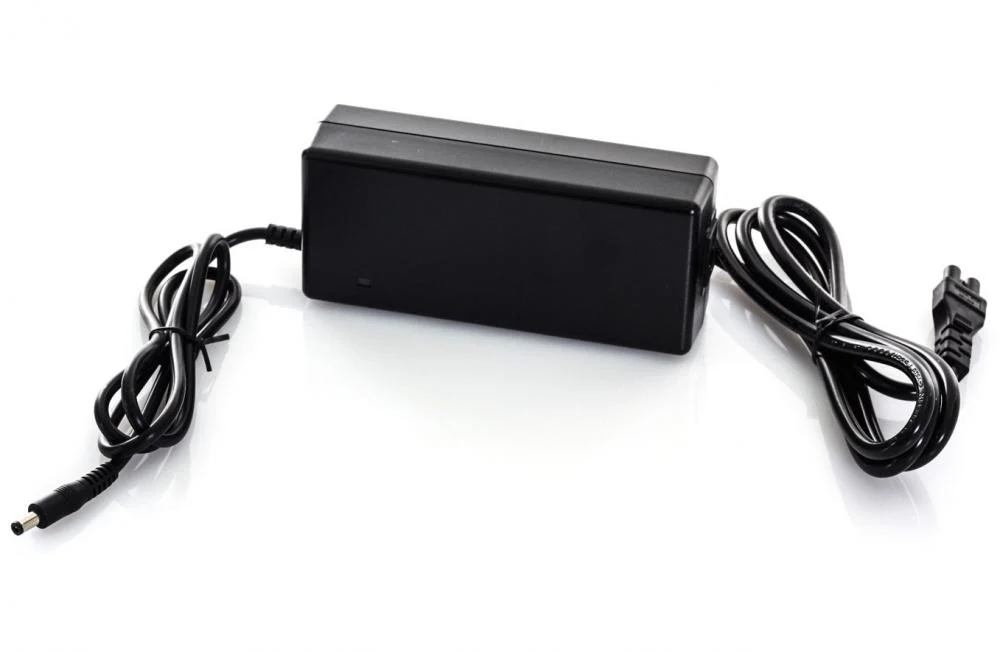
ULTRAPOWER weighs 1.05 pounds and measures 4.95 by 2.69 by 1.65 inches. It includes a 5525 barrel jack connector, fish clips, and 6mm ring terminals, with an SAE quick-disconnect connection for compatible battery interfaces. The status system is intended to show power and charge levels from 25% to 100%. The listing refers to both four and five LED indicators, so the precise indicator count should not be treated as a deciding specification.
The 4A output is enough for smaller packs but will make a large RV battery a slow project. That is where the VATRER POWER 20A, E-FAST 20A, or LiTime 20A has a clear advantage. ULTRAPOWER is also not the pick for someone who regularly switches between LiFePO4 and lead-acid batteries, since its design is specifically centered on lithium.
Its small size, fanless operation, and connector variety make it easy to keep with a compact battery system. Choose it for portability and quiet operation, not for quickly replenishing a large bank.
10. ECO-WORTHY 10A: Best Simple Maintainer

Pros
- 10A output for 12V batteries
- Supports both lead-acid and LiFePO4
- Automatic charging and maintenance
- Includes clips and fused ring-terminal cable
- SAE connector makes setup straightforward
Cons
- No 6V or 24V support
- Narrower input specification than several competitors
- Less detailed status information
Best for: straightforward 12V charging and maintenance for vehicle and recreational batteries.
The ECO-WORTHY 10A keeps the job simple. It supports 12V lead-acid and LiFePO4 batteries and supplies up to 10A, which puts it in the same output class as the GENIUS10. Its automatic charging, maintenance, and desulfation functions are aimed at owners who want one straightforward unit for cars, motorcycles, lawn equipment, ATVs, trucks, boats, and similar vehicles.
The charger uses a 100 to 110V AC input and provides 12V 10A output. It can detect low voltage, sulfation, or capacity loss and prompt the user to repair or charge the battery. That is useful diagnostic guidance, though it is not the same as a dedicated recovery mode. If a battery has no usable voltage, the GENIUS10 or one of the lithium chargers with 0V activation is a safer choice.
Connection is uncomplicated. ECO-WORTHY includes battery clips and an O-ring terminal cable with a 10A fuse, plus an SAE connector for quick connection. The charger measures 8.86 by 3.94 by 2.17 inches and weighs 1.7 pounds. It is reasonably compact, but it offers less cable and display detail than some of the other models here.
The GENIUS10 is the stronger choice for 6V batteries, changing temperatures, and a wider set of lead-acid formats. The PZ.P 15A and Haisito 20A are better for 24V equipment. ECO-WORTHY makes more sense when the battery is always 12V and the user prefers a basic setup over multiple modes and a large screen.
For readers comparing automotive options, the connection and safety details that matter around a vehicle battery are worth checking before installation. ECO-WORTHY is a sensible uncomplicated charger for a normal 12V routine, but it is not the most capable recovery or multi-voltage tool.
How to choose best lifepo4 battery charger
The right charger is determined less by the biggest current number than by battery chemistry, system voltage, and how the battery will be used.
Battery chemistry
A LiFePO4 battery needs a charging profile intended for lithium iron phosphate. Look for a stated 14.6V output for a 12V or 12.8V LiFePO4 battery, along with charging stages such as constant current and constant voltage. A charger that supports lead-acid as well can be useful, but make sure its lithium mode is explicit rather than assumed.
Charging current
Current controls how quickly a battery can recharge. The 1A GENIUS1 is appropriate for maintenance and small batteries, while 4A and 5A models suit smaller or moderately sized packs. A 10A to 20A charger is more practical for larger deep-cycle batteries, provided the battery manufacturer allows that charging rate.
A fast charger is only an advantage when the battery is designed to accept its current.
System voltage
Most LiFePO4 batteries used in recreational equipment are 12V or 12.8V systems, but some garages also contain 24V equipment. PZ.P and Haisito support both 12V and 24V operation. A 12V-only charger is simpler and can be the better fit when there is no chance of connecting it to the wrong system.
Activation and recovery
Deeply discharged lithium batteries may disconnect their BMS and appear dead. Models with 0V activation, such as GENIUS10, GENIUS5, GENIUS1, VATRER POWER 20A, LiTime 20A, E-FAST 20A, and ULTRAPOWER 4A, are designed to address some low-voltage situations. PZ.P and Haisito specifically cannot activate a totally dead battery, so they are better for batteries that still register voltage.
Connections and monitoring
Clamps are useful for temporary charging, while ring terminals and Anderson connectors suit batteries that stay installed. Displays show more information than simple LEDs, which can help diagnose a weak battery or confirm that the correct system voltage was detected. A fan can support high-current charging, but it needs open airflow and may be audible.
Frequently asked questions
Can a LiFePO4 battery use a lead-acid charger?
Only use a charger that specifically lists LiFePO4 or lithium iron phosphate compatibility. A lead-acid-only mode may use a charging profile that is not appropriate for a lithium battery. Several models here support both chemistries, but the correct mode still needs to be selected.
What voltage should a 12V LiFePO4 charger provide?
The dedicated 12V lithium models in this roundup use 14.6V charging output. That figure is intended for a 12V or 12.8V LiFePO4 battery made from four cells. Always compare the charger's output with the battery manufacturer's charging specification.
Is 20A too much for a LiFePO4 battery?
It depends on the battery's permitted charging current and capacity. The 20A models are intended for larger 12V lithium batteries, and their listings cite ranges such as 40Ah to 300Ah for compatible batteries. A small battery may require a lower-current charger.
Can these chargers wake a completely dead battery?
Some can attempt low-voltage or 0V activation, including the NOCO GENIUS models, VATRER POWER 20A, LiTime 20A, E-FAST 20A, and ULTRAPOWER 4A. PZ.P cannot activate or charge a totally dead battery, and Haisito also states that it cannot activate a totally dead battery. Activation is not a guarantee that a damaged battery can be recovered.
Do I need a charger with a maintainer mode?
A maintainer mode is useful when a vehicle or battery will sit for weeks or months. It lets the charger monitor the battery and provide maintenance charging instead of continuously applying its full output. GENIUS1 is particularly suited to this role because its 1A output is designed for slow upkeep.
Can I use a 12V charger on a 24V battery bank?
No, not unless the charger explicitly supports 24V operation. A 12V-only charger should not be connected to a 24V battery system. PZ.P and Haisito are the options in this roundup that list both 12V and 24V output modes.
Are these chargers safe to leave connected?
Several models describe automatic monitoring, float or cutoff operation, and protection against conditions such as over-temperature, over-voltage, short circuit, and reverse polarity. Leave a charger connected only when its instructions permit unattended maintenance, the battery is compatible, and the charger has adequate ventilation. A charger that is not waterproof should remain protected from rain and spray.
The bottom line
The Best lifepo4 battery charger for most mixed-use garages is NOCO GENIUS10. Its 10A output, 6V and 12V support, LiFePO4 and lead-acid compatibility, temperature compensation, and low-voltage recovery features make it the most adaptable choice. It is larger than a simple maintainer, but that is a reasonable trade for broader capability.
For a dedicated 12V lithium setup, VATRER POWER 20A is the faster choice, while NOCO GENIUS1 is the better fit for small batteries and long-term storage. Choose PZ.P 15A or Haisito 20A when 24V support and live charging information matter more than zero-volt activation.
If you are undecided, buy GENIUS10 for mixed batteries, or choose a 20A lithium model only when your battery's specifications support that charging current.
As an Amazon Associate we earn from qualifying purchases.