

A microSD card can be the difference between a camera that keeps recording and one that stops just as the important moment starts. The label is crowded with A1, A2, U1, U3, V10, V30, read speeds, write speeds, and compatibility warnings, but those marks do not all matter for every device.
We compared ten cards across phone storage, 4K and 5K video, action cameras, drones, security cameras, dash cams, and Nintendo Switch systems. The Best micro sd card for demanding recording is the SanDisk Extreme 256GB, while the range below also includes simpler Full HD cards, a high-capacity 512GB option, and a two-card Gigastone pack.
Comparison
| # | Product | Award | Capacity | Speed class | Best for |
|---|---|---|---|---|---|
| 1 | SanDisk Extreme 256GB | Best overall | 256GB | U3, V30 | Action cameras, drones, 5K video |
| 2 | SanDisk Ultra 256GB | Best for Full HD storage | 256GB | U1, V10 | Phones, tablets, Full HD video |
| 3 | SanDisk Extreme 256GB A2 | Best for 4K and 5K | 256GB | U3, V30 | Cameras, drones, Nintendo Switch |
| 4 | SanDisk Ultra 128GB 195MB/s | Best compact phone upgrade | 128GB | U1, V10 | Android phones and tablets |
| 5 | SanDisk Extreme PRO 512GB | Best high-capacity PRO card | 512GB | U3, V30 | Heavy video capture |
| 6 | SanDisk Extreme 128GB 160MB/s | Best established 128GB Extreme | 128GB | U3, V30 | 4K recording and apps |
| 7 | Gigastone 128GB 2-Pack | Best two-card pack | 2 x 128GB | A1, V30 | Dash cams and security cameras |
| 8 | SanDisk Extreme 128GB A2 | Best for Switch and 5K | 128GB | U3, V30 | Nintendo Switch and action cams |
| 9 | SanDisk Ultra 128GB 140MB/s | Best basic phone card | 128GB | U1 | Android phones and laptops |
| 10 | SanDisk Extreme 512GB | Best long-recording capacity | 512GB | U3, V30 | Drones and extended 5K capture |
1. SanDisk Extreme 256GB: Best Overall

Pros
- Up to 245MB/s read speed
- Up to 170MB/s write speed
- U3 and V30 ratings support demanding video
- Rated for 5K and 4K UHD capture
- Broad environmental protection claims
Cons
- Its headline transfer speeds require compatible hardware
- It is more capability than a basic phone expansion needs
Best for: someone recording high-resolution video with an action camera, drone, or compatible Android device.
The SanDisk Extreme 256GB is the card we would choose when the device matters more than the label on the packaging. It has the fastest stated read and write figures in this group, and its U3 and V30 ratings give it the right performance class for sustained 4K and 5K recording. That makes it a more serious option than the SanDisk Ultra 256GB, which is aimed at Full HD storage and carries U1 and V10 ratings.
Its headline figures are up to 245MB/s for reading and up to 170MB/s for writing. Those numbers are most useful when moving large video files to a compatible reader or recording device. They do not mean every phone, camera, or reader will reach those speeds, and the card requires compatible hardware to make use of the fastest performance. Still, the combination gives this 256GB card plenty of headroom for high-bitrate footage and rapid offloads.
Capacity is well judged for a working camera card. The 256GB size leaves room for longer shoots without making the card the only place a large library exists. SanDisk also describes it as temperature proof, humidity proof, waterproof, shock proof, drop proof, magnet proof, X-ray proof, and wear-out proof. Those claims are especially relevant for a card that will spend time in a drone or action camera rather than sitting inside a phone.
The weakness is straightforward: the card's speed ceiling is easy to waste in a host device with a slower interface. Someone using a phone mainly for music, photos, and Full HD clips should look at the Ultra models instead. The SanDisk Extreme 256GB earns the top spot because it covers the widest range of demanding uses without giving up useful capacity.
2. SanDisk Ultra 256GB: Best for Full HD Storage

Pros
- 256GB capacity for extensive everyday storage
- Up to 195MB/s read speed with compatible hardware
- A1 rating for app performance
- Designed for Full HD video
- Works with the SanDisk Memory Zone app
Cons
- U1 and V10 ratings are not aimed at the most demanding 4K capture
- Maximum transfer speed depends on a compatible reader
Best for: Android phones, tablets, and other devices that need substantial Full HD storage rather than 5K recording.
The SanDisk Ultra 256GB makes sense when the job is adding room, not chasing the highest sustained video performance. Its 256GB capacity is enough for a large collection of photos, music, games, podcasts, and Full HD video, and the card is positioned for Android smartphones, tablets, digital cameras, and laptops. It is a calmer, simpler alternative to the Extreme cards.
SanDisk lists read speeds of up to 195MB/s for the 128GB through 1.5TB models when used with the company's QuickFlow microSD UHS-I Card USB-A Reader. That is a useful offload figure, but it should be read as a compatible-system maximum rather than a promise for every device. The U1 and V10 ratings tell the more important story for recording: this is intended for Full HD video, not the sustained demands associated with the U3 and V30 cards higher in the list.
The A1 rating adds a little flexibility for phones and tablets. It is designed to support faster app launches and general app performance, although the host device and the app itself still affect the result. The included card does not need to be treated as a specialist camera accessory. It is better understood as a broad storage expansion card that can also handle ordinary video duties.
Compared with the SanDisk Ultra 128GB 195MB/s, this version simply gives the user twice the listed capacity while keeping the same stated read speed and A1 positioning. The SanDisk Extreme 256GB is the better fit for 4K, 5K, drones, and fast shooting. Skip the Ultra 256GB if your camera specifically calls for U3 or V30. For a phone, tablet, or Full HD library, its straightforward design is the appeal.
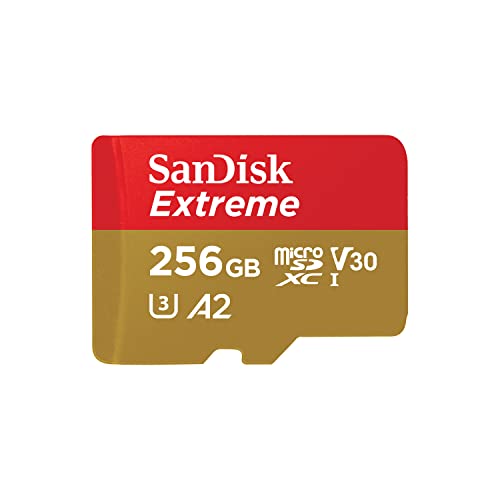
3. SanDisk Extreme 256GB A2: Best for 4K and 5K
Pros
- U3 and V30 ratings for 4K and 5K video
- A2 rating for supported app workloads
- Up to 190MB/s read speed
- Up to 130MB/s write speed
- Includes an SD adapter
Cons
- The fastest read figure requires compatible equipment
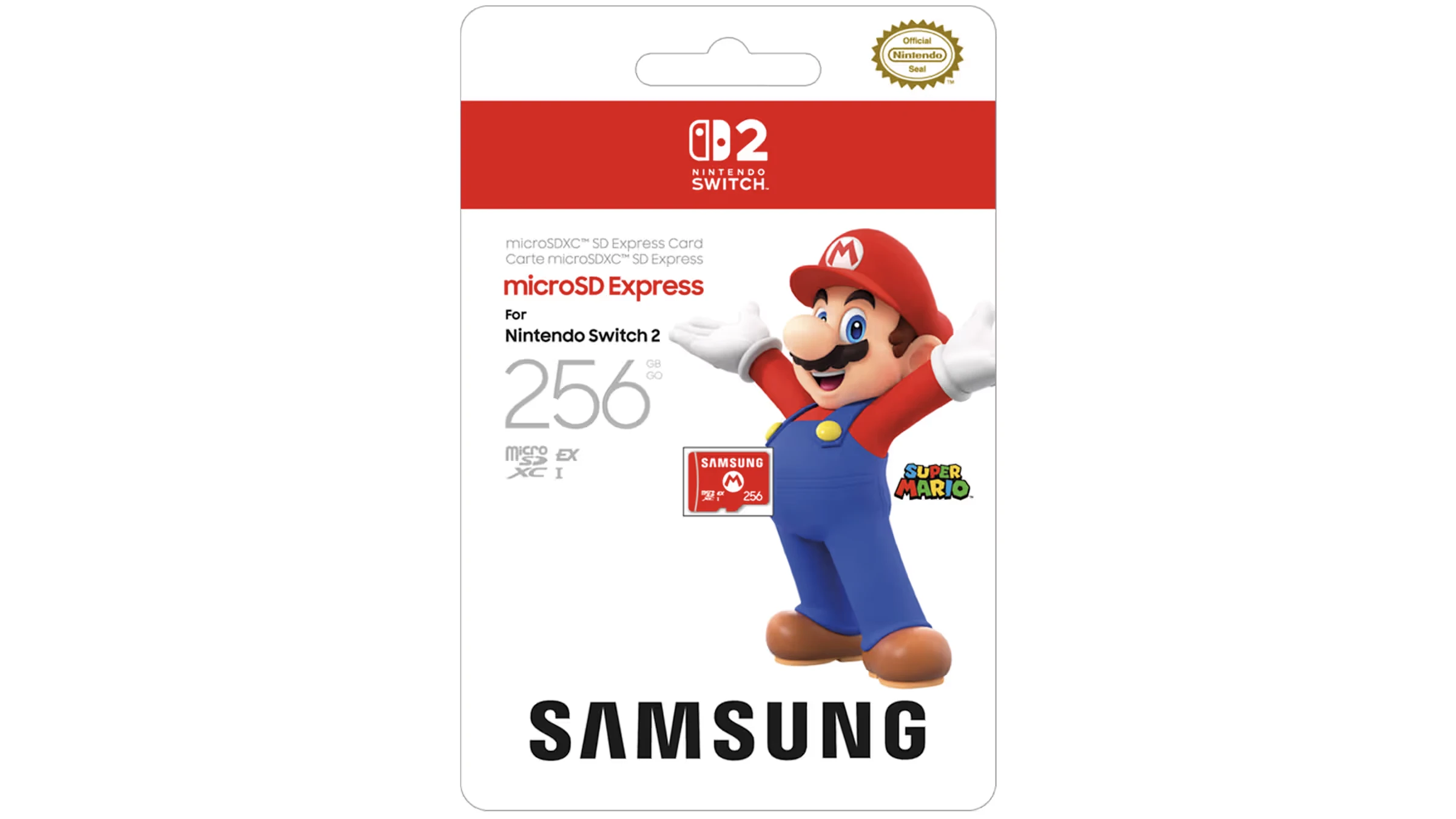
- Not intended for Nintendo Switch 2
Best for: users who need a versatile 256GB card for 4K or 5K video, apps, and Nintendo Switch storage.
The SanDisk Extreme 256GB A2 is the versatile middle ground in the Extreme family. It has enough capacity for serious video work, an SD adapter for devices with a full-size SD slot, and ratings that cover more than basic phone storage. Its U3 and V30 marks are the useful part for recording, while A2 is relevant when the card hosts apps on a compatible device.
The stated read speed reaches 190MB/s with SanDisk QuickFlow technology, and write speed reaches 130MB/s. SanDisk says those figures depend on the host interface and compatible equipment. In practice, the value of those numbers is faster movement of large clips when the reader and computer can keep up. The V30 classification is more important during capture because it designates a sustained video capture rate of 30MB/s with a compatible UHS-enabled host.
This card is also rated for 4K and 5K UHD video, with the usual device and file-format qualifications. Its A2 rating is specified as 4, 000 read IOPS and 2, 000 write IOPS, though actual app behavior varies with the host device and app type. That combination gives it a broader role than the SanDisk Ultra 256GB. It can serve as a camera card, a drone card, or expandable storage for a device that benefits from A2 performance.
The SanDisk Extreme 256GB at number one has faster stated read and write figures and the newer 5.3K positioning. This model remains the more sensible choice for someone who specifically wants an adapter and a proven 4K or 5K format. It is listed as compatible with Nintendo Switch, but not Nintendo Switch 2, so owners of the newer console should check its requirements before buying.
4. SanDisk Ultra 128GB 195MB/s: Best Compact Phone Upgrade

Pros
- Up to 195MB/s read speed with compatible equipment
- A1 app-performance rating
- Supports Full HD video
- 128GB size suits everyday phone expansion
- Memory Zone app for organizing and backing up files
Cons
- U1 and V10 ratings limit its role for demanding video
- No adapter is specified in the product information
Best for: Android phone and tablet owners who want a capable 128GB storage expansion card.
The SanDisk Ultra 128GB 195MB/s is the sensible phone-first pick when 128GB is enough. It is small, uncomplicated, and aimed at adding room for photos, music, games, podcasts, and Full HD video. The card uses the same current Ultra positioning as the 256GB model above, so the difference here is capacity rather than a different kind of everyday experience.
Its stated read speed reaches up to 195MB/s when paired with the compatible SanDisk QuickFlow USB-A reader. That can shorten transfers of a large photo or video library, but the phone, reader, and computer all need to support the relevant interface. The card's U1 and V10 ratings make its intended video role clear. It is suited to Full HD capture and general storage, not the U3 and V30 territory needed by the more demanding Extreme cards.
The A1 rating is a useful match for Android expansion. SanDisk says it is optimized for faster app launches and overall app performance, though moving apps to removable storage is still controlled by the phone's software. The Memory Zone desktop or Android app is intended to help back up, organize, and transfer content, which is more useful here than a long list of extreme video claims.
The SanDisk Ultra 256GB is the better fit if your library is growing quickly, while the SanDisk Extreme 128GB 160MB/s is the clear step up for 4K video. Choose this card for ordinary phone and tablet storage, and skip it if your camera manual calls for V30. It is a compact, focused card rather than a universal high-performance solution.
5. SanDisk Extreme PRO 512GB: Best High-Capacity PRO Card

Pros
- 512GB capacity for extended recording
- Up to 200MB/s read speed
- Up to 140MB/s write speed
- A2, U3, and V30 ratings
- Includes an adapter and RescuePRO Deluxe
Cons
- Its large capacity is unnecessary for lighter phone use
- Maximum transfer rates require compatible hardware
Best for: creators who need substantial capacity for smartphones, action cameras, or drones.
The SanDisk Extreme PRO 512GB is the card for people who hate stopping to swap storage. Its 512GB capacity is the largest in this roundup apart from the similarly sized SanDisk Extreme 512GB, and the PRO branding is backed by stronger stated transfer figures than the older 128GB Extreme models. It is designed for Android smartphones and tablets, drones, and action cameras.
SanDisk lists read speeds of up to 200MB/s and write speeds of up to 140MB/s through QuickFlow technology. Those figures can make a meaningful difference when moving a large batch of footage, but only if the reader and host device support the required performance. During recording, the U3 and V30 ratings matter more than the transfer headline. They identify a card intended for sustained 4K UHD capture with a compatible device.
A2 support is another useful distinction. SanDisk describes the A2 standard as helping app performance and faster charging, while the supplied RescuePRO Deluxe software adds a recovery tool to the package. The product also includes an adapter, so the card can move between a microSD slot and a full-size SD workflow without needing another accessory.
The trade-off is not speed but scale. A 512GB card is a lot of storage to place in one tiny removable device, and a phone user storing occasional photos may never need it. The SanDisk Extreme 512GB has faster stated write speed, while the Extreme PRO brings the adapter and RescuePRO Deluxe bundle. Pick the PRO when long recording sessions and the bundled recovery software matter more than chasing the newest transfer claim.
For larger camera libraries, it can also help to think about the storage used after the shoot. A card is convenient for capture, but how to move large video libraries off a camera becomes just as important once the card starts filling.
6. SanDisk Extreme 128GB 160MB/s: Best Established 128GB Extreme

Pros
- U3 and V30 ratings for 4K UHD video
- Up to 160MB/s read speed
- Up to 90MB/s write speed
- A2 app-performance rating
- Water, temperature, shock, and X-ray protection claims
Cons
- Lower transfer figures than newer Extreme models
- 128GB leaves less room for long recording sessions
Best for: users who want a 128GB Extreme card for 4K capture, apps, and rugged everyday use.
The SanDisk Extreme 128GB 160MB/s remains a well-rounded option for anyone who wants the Extreme line's video ratings without moving to a larger card. It includes an adapter, which is convenient for transferring files through a full-size SD reader, and its 128GB capacity is easy to manage across several devices. This is an older design than the newer Extreme cards, but its core capabilities still fit a lot of cameras and action cams.
The card is rated for up to 160MB/s read speed and up to 90MB/s write speed. The read figure is relevant when transferring high-resolution photos and 4K UHD video, while the write figure is more directly tied to how quickly the card can accept new footage. Neither is guaranteed across every host, but the combination is notably better suited to capture than the U1 and V10 Ultra cards.
U3 and V30 are the important marks here. They identify a card designed for 4K UHD and Full HD video with a compatible device, and V30 indicates a sustained video capture rate of 30MB/s. A2 support also makes it a more capable app-storage option than A1 cards, although the phone's software and storage controller still determine how much of that advantage appears.
The SanDisk Extreme 256GB A2 offers faster stated transfer figures and double the capacity, while this 128GB card has a simpler role and a long-running product design. It is not the one to choose for very long drone flights or 5K projects. It is a good fit for a 4K camera, action camera, or phone that benefits from A2 performance and an adapter.
7. Gigastone 128GB 2-Pack: Best Two-Card Pack

Pros
- Two 128GB microSD cards
- Up to 95MB/s read and 40MB/s write
- A1 and V30 markings
- Two SD adapters included
- Waterproof, shockproof, temperature-proof, and X-ray-proof claims
Cons
- Requires formatting for some older devices
- Lower transfer speeds than the SanDisk Extreme cards
Best for: users who need separate cards for a dash cam, security camera, drone, or other everyday recording device.
The Gigastone 128GB 2-Pack takes a different approach from the single high-speed cards here. You get two 128GB microSD cards and two SD adapters, which is useful when one device stays in a dash cam or security camera while another travels in a phone, drone, or action camera. The second card also provides a practical spare when a card needs to be removed for file transfer.
The stated read and write speeds are up to 95MB/s and 40MB/s. Those figures sit below every SanDisk Extreme card in the roundup, so this is not the pick for the fastest offloads or the most demanding high-bitrate workflows. The A1 and V30 markings still give it a useful mix of app and video capability, and the product is advertised for 4K Ultra HD recording.
Compatibility needs more attention here. The cards are natively formatted to exFAT, and Gigastone says older security cameras, dash cams, and Android phones may require formatting to FAT32 through the device settings before use. That is not a flaw, but it is an extra setup step that should be handled before an important recording job. The product lists compatibility with cameras, security cameras, action cameras, sports cameras, laptops, tablets, PCs, and smartphones.
The SanDisk Extreme 128GB A2 cards are better for higher transfer speeds and more demanding video work. The Gigastone pack is more interesting when you have two devices or want a spare ready to go. It also lists waterproof, shockproof, temperature-proof, and X-ray-proof protection, plus a five-year limited warranty. Check the target device's file-system requirements first, then this pack makes sense for distributed storage.
8. SanDisk Extreme 128GB A2: Best for Switch and 5K

Pros
- Supports 4K and 5K UHD-ready recording
- U3 and V30 ratings
- A2 rating for apps
- Up to 190MB/s read speed
- Includes an SD adapter
Cons
- Write speed is lower than the newer 256GB Extreme card
- Not compatible with Nintendo Switch 2
Best for: Nintendo Switch owners and action-camera users who need a capable 128GB card.
The SanDisk Extreme 128GB A2 is particularly easy to place because it covers two distinct jobs well. It is listed as compatible with Nintendo Switch, and its U3, V30, and A2 ratings also make it suitable for 4K and 5K video and app storage. The included SD adapter adds flexibility when footage needs to move through a full-size card reader.
Its stated read speed reaches up to 190MB/s using SanDisk QuickFlow technology, while write speed reaches up to 90MB/s. As with the other QuickFlow figures, the highest read speed requires a compatible reader and host interface. For video capture, the V30 rating is the more useful guide because it identifies a sustained 30MB/s video class for compatible UHS-enabled devices.
The A2 rating is specified at 4, 000 read IOPS and 2, 000 write IOPS, though actual performance varies with the device and app. That makes this card more adaptable than the SanDisk Ultra 128GB 140MB/s, which carries an A1 and U1 configuration for lighter phone storage. The Extreme 128GB A2 is built for a device that may need both fast enough recording and responsive storage access.
The product is explicitly marked as not compatible with Nintendo Switch 2, so that limitation should decide the purchase for owners of the newer console. The SanDisk Extreme 256GB A2 offers twice the capacity, and the newer SanDisk Extreme 256GB has faster stated write performance. Choose this one when 128GB is enough and Switch compatibility, 5K support, and the adapter are the priorities.
9. SanDisk Ultra 128GB 140MB/s: Best Basic Phone Card

Pros
- Up to 140MB/s transfer speed
- A1 rating for app loading
- Full HD support
- Compatible with Android phones, tablets, and laptops
- Ten-year limited warranty
Cons
- U1 rating is not intended for demanding 4K capture
- No adapter is listed with the card
Best for: straightforward 128GB expansion in an Android phone, tablet, Chromebook, or Windows laptop.
The SanDisk Ultra 128GB 140MB/s is the least complicated card in the group. It is aimed at Android smartphones and tablets, Chromebooks, and Windows laptops, where the main need is extra space for files, photos, apps, and Full HD media. It does not pretend to be a specialist 5K capture card, and that narrower purpose is useful when choosing a card for an everyday device.
SanDisk lists transfer speeds of up to 140MB/s and says the card can move up to 1, 000 photos per minute. The real transfer rate depends on the reader and host device, but the figure gives it a reasonable role for backing up a phone or moving a modest photo library. Its U1 and Full HD positioning put it below the U3 and V30 Extreme models for sustained video work.
The A1 rating is designed to help with app loading, while the SanDisk Memory Zone app provides a way to view, access, and back up phone files in one place. A ten-year limited warranty is also listed. Those details make it a practical storage card for a phone or laptop, not a card whose main purpose is to sustain a demanding camera stream.
If you are choosing storage for a camera, the differences that matter when storing camera footage deserve more attention than the transfer number printed on the front. For a phone or Chromebook, the SanDisk Ultra 128GB 140MB/s is a clean fit. Move up to the Ultra 128GB 195MB/s for faster stated reads, or to an Extreme card when 4K recording is involved.
10. SanDisk Extreme 512GB: Best Long-Recording Capacity

Pros
- 512GB capacity for longer recordings
- Up to 245MB/s read speed
- Up to 170MB/s write speed
- Supports 5.3K and 4K UHD video
- Broad environmental protection claims
Cons
- A large card can leave more footage in one place
- Fastest figures require compatible equipment
Best for: drone pilots and creators who need extended 5K or 4K recording without changing cards frequently.
The SanDisk Extreme 512GB is the capacity-first version of the top pick. It uses the same stated up to 245MB/s read and 170MB/s write speeds, along with U3 and V30 video ratings, but doubles the storage to 512GB. That makes it the natural choice for long flights, extended shoots, and anyone who would rather offload once than keep swapping cards.
The card is positioned for 5.3K point-of-view footage, 4K UHD video, action cameras, drones, and Android devices. U3 and V30 are the meaningful recording marks, while the high read and write figures matter when compatible equipment is used to move large files. A slower host device will not turn into a fast one simply because this card has a high stated ceiling.
SanDisk lists the same protection claims as the 256GB version: temperature proof, humidity proof, waterproof, shock proof, drop proof, magnet proof, X-ray proof, and wear-out proof. It also supports the SanDisk Memory Zone desktop or Android app for backing up, organizing, and transferring files. Those are sensible features for a card likely to spend time in outdoor equipment.
The SanDisk Extreme PRO 512GB has a slightly lower stated read and write combination but includes an adapter and RescuePRO Deluxe. The SanDisk Extreme 256GB is easier to manage and takes the top spot for most users because 256GB is a more balanced working capacity. Pick this 512GB model when recording length is the deciding factor, and skip it if your device has a lower capacity limit or your workflow depends on keeping several smaller cards separated.
How to choose the best micro sd card
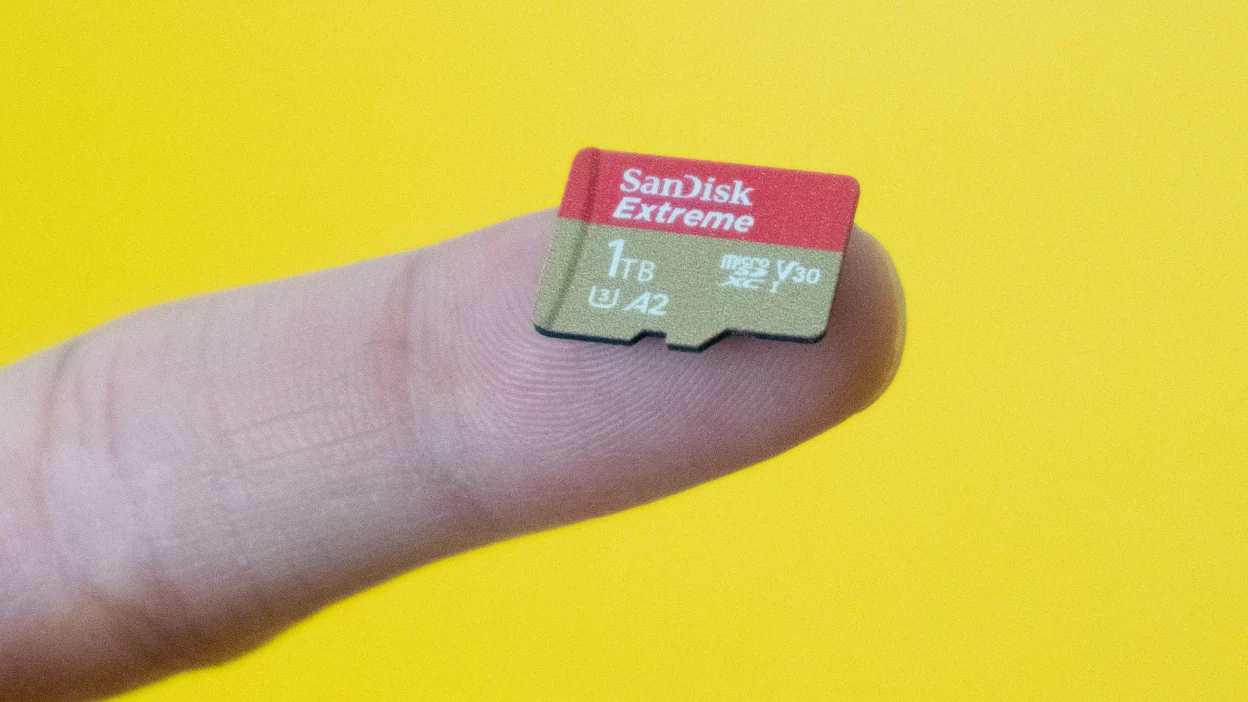
The right card depends on the host device first, then on the kind of files it must record and move.
Capacity
Capacity determines how much footage, photography, music, or app data the card can hold before it needs an offload. A 128GB card suits everyday phone storage and shorter recording sessions, while 256GB gives a camera or drone more breathing room. The 512GB cards are aimed at extended capture, but check the device's supported maximum before choosing one.
Sustained video speed
The U1, U3, V10, and V30 marks are more useful for recording than a headline read speed. U1 and V10 suit Full HD workloads, while U3 and V30 are designed for more demanding 4K and 5K recording with a compatible host. A high read number can make file transfers quicker, but it does not replace the sustained write capability a camera needs while recording.
For video, choose the sustained speed class first and treat the headline transfer rate as a secondary benefit.
Read and write speeds
Read speed affects how quickly files can move from the card to a computer or phone. Write speed affects how quickly the card accepts new photos and video, so it matters more during burst shooting and high-resolution recording. The fastest claims in this roundup require compatible readers and host devices, and actual results can be lower.
App performance
A1 and A2 ratings describe performance for app-related workloads rather than ordinary sequential video transfer. A2 is specified at 4, 000 read IOPS and 2, 000 write IOPS in the SanDisk Extreme cards here, while A1 is the more basic app rating used by the Ultra and Gigastone models. The phone must support using removable storage for apps before either rating has much practical impact.
Device compatibility
Check the device manual before buying, especially for Nintendo Switch consoles, dash cams, security cameras, and older Android phones. The Gigastone cards use exFAT and may need to be formatted to FAT32 for some older devices. The SanDisk Extreme cards listed as compatible with Nintendo Switch are specifically marked as not compatible with Nintendo Switch 2.
Frequently asked questions
Is a 128GB microSD card enough for a phone?
A 128GB card is enough for many phones used for photos, music, apps, and Full HD video. It may feel restrictive for a camera that records high-resolution video regularly. Check how much removable storage your phone supports and whether it allows apps to use the card.
What does V30 mean on a microSD card?
V30 is a Video Speed Class marking that designates a sustained video capture rate of 30MB/s when used with a compatible host device. It is intended for more demanding recording than V10. It does not guarantee that every camera will record at a particular resolution or frame rate.
Is A2 better than A1 for phone apps?
A2 is the higher app-performance rating and is specified with higher input and output figures than A1. The actual improvement depends on the phone's storage controller, software, and the app being used. A2 does not automatically make large video transfers faster.
Can a microSD card record 4K video?
A card with U3 and V30 markings is generally the stronger choice for 4K recording, provided the camera supports the card and its recording format. The SanDisk Extreme and Extreme PRO models in this list carry those ratings. Always check the camera maker's recommended card class.
Do faster read speeds make video recording better?
Read speed mainly affects moving files off the card. Write speed and the sustained video class are more important while the camera is recording. A card with a high read figure but an unsuitable video class may still be a poor choice for demanding capture.
Can I use these cards in a Nintendo Switch?
The SanDisk Extreme 256GB A2 and SanDisk Extreme 128GB A2 are listed as compatible with Nintendo Switch, but both are marked as not compatible with Nintendo Switch 2. The other cards should be checked against the console's requirements before purchase. Capacity limits and formatting can also affect compatibility.
Should I format a new microSD card?
Formatting can help a device prepare the card with the file system it expects. Gigastone specifically says its 128GB cards use exFAT natively and may need FAT32 formatting for some older security cameras, dash cams, or Android phones. Back up anything important before formatting.
The bottom line
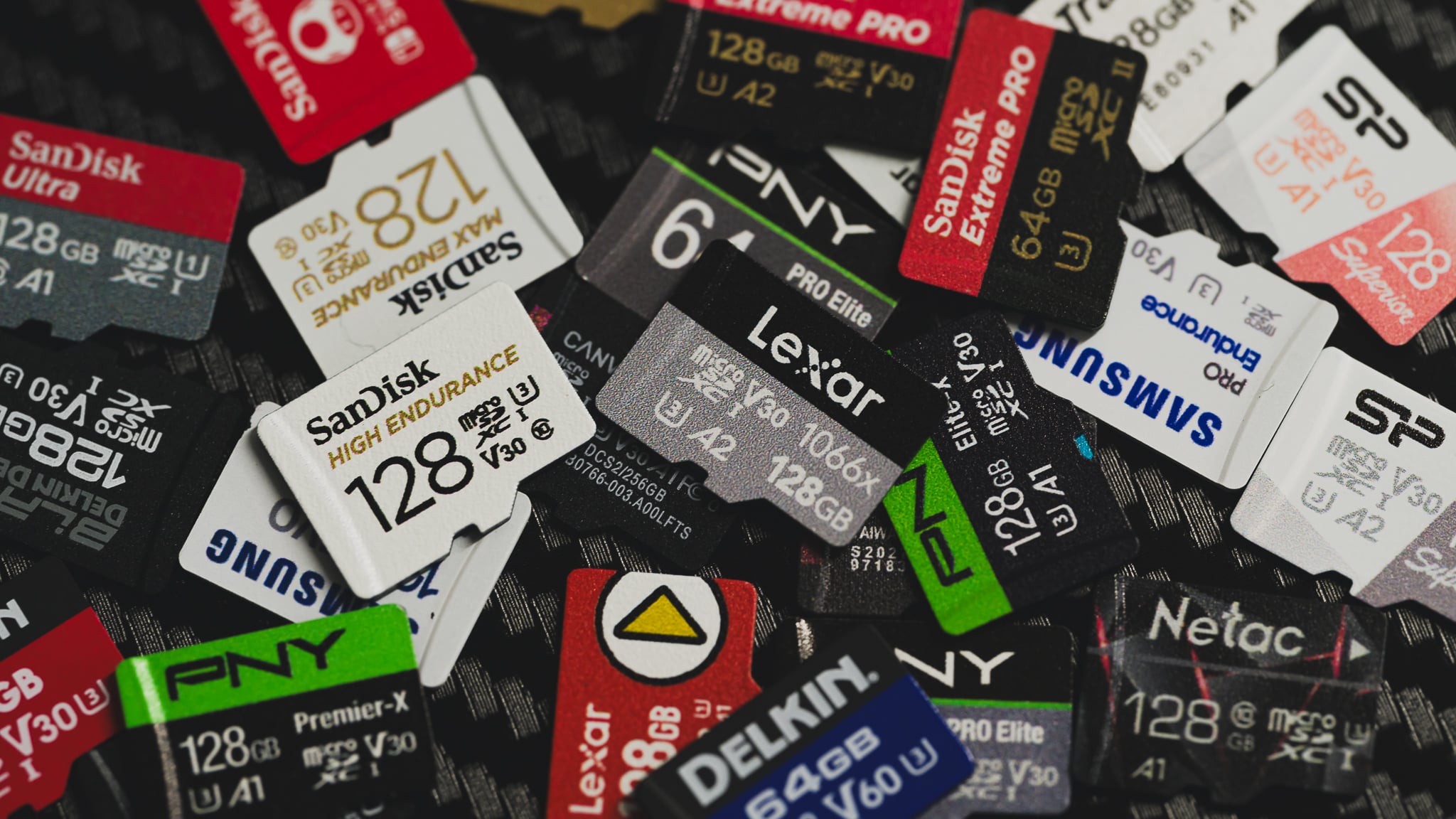
The Best micro sd card for demanding, mixed use is the SanDisk Extreme 256GB. Its U3 and V30 ratings, up to 170MB/s write speed, and support for 5K and 4K UHD capture make it the most complete choice for action cameras, drones, and compatible phones. The SanDisk Extreme 256GB A2 is close behind for buyers who specifically want an adapter, A2 app performance, and Nintendo Switch compatibility.
For longer recording sessions, choose the SanDisk Extreme 512GB or SanDisk Extreme PRO 512GB. Phone owners focused on Full HD storage can stay with the SanDisk Ultra 128GB 195MB/s or SanDisk Ultra 256GB, while the Gigastone 128GB 2-Pack is the practical choice when two devices need separate cards.
If you are undecided, match the card's sustained video class to the device first, then choose the smallest capacity that comfortably covers your recording sessions.
As an Amazon Associate we earn from qualifying purchases.