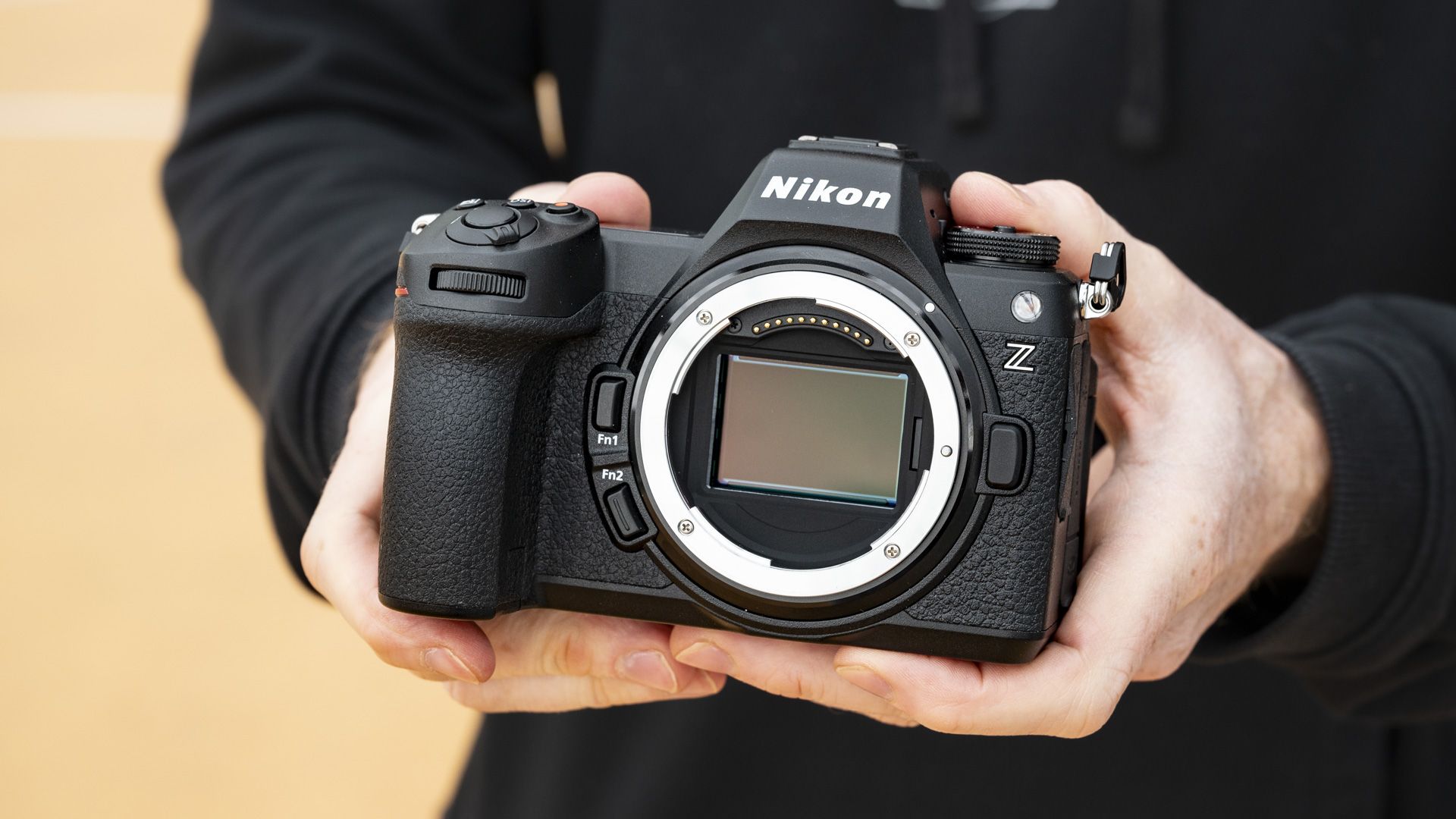

A phone can make a sharp picture in good light, but it still struggles when you want lens control, natural background blur, responsive subject tracking, or serious video options. The right interchangeable-lens body also gives you room to grow instead of forcing every creative decision through a touchscreen.
Our Best mirrorless camera picks range from approachable APS-C models to fast full-frame hybrids. The Canon EOS R50 is the strongest all-around choice, while the other eight make better sense for specific needs such as wildlife reach, compact vlogging, low-light work, or a first interchangeable-lens system.
Comparison table
| # | Product | Award | Sensor | Video | Best for |
|---|---|---|---|---|---|
| 1 | Canon EOS R50 | Best overall | 24.2MP APS-C | 6K oversampled 4K at 30 fps | Hybrid creators |
| 2 | Nikon Z50 II | Best two-lens kit | 20.9MP APS-C | 4K at 60p | Travel and wildlife |
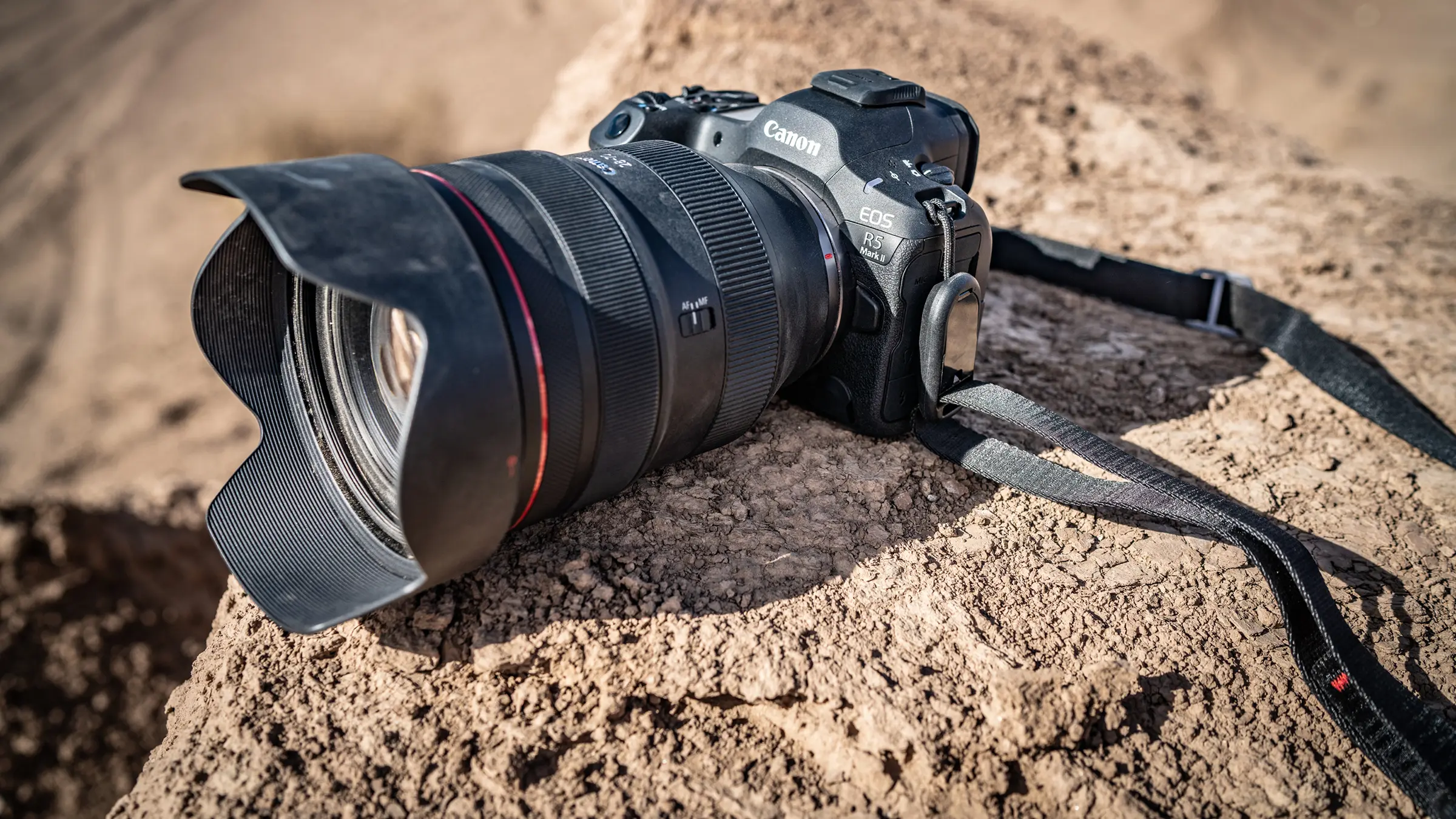
| 3 | Canon EOS R6 Mark II | Best full-frame Canon | 24.2MP full frame | Hybrid photo and video | Action and low light |
| 4 | Sony a6400 | Best compact Sony | APS-C | 4K | Everyday shooting |
| 5 | Canon EOS R100 | Best beginner Canon | 24.1MP APS-C | 4K at 24 fps | First-time camera buyers |
| 6 | Sony ZV-E10 | Best for streaming | 24.2MP APS-C | Oversampled 4K | Video creators |
| 7 | Canon EOS R50 Bundle | Best creator bundle | APS-C | 4K | New vloggers |
| 8 | Canon EOS R100 Bundle | Best starter bundle | 24.1MP APS-C | 4K at 24 fps | Basic photography kits |
| 9 | Sony a7 IV Bundle | Best full-frame resolution | 33MP full frame | 4K at 60p, 10-bit | Detailed stills and video |
1. Canon EOS R50: Best Overall

Pros
- 24.2MP APS-C sensor produces detailed stills
- Excellent subject detection and tracking
- Vari-angle touchscreen and electronic viewfinder
- 6K oversampled 4K video
- Fast continuous shooting
Cons
- The included 18-45mm lens is limited for distant subjects
- Small body may feel cramped with larger lenses
- Bundle contents vary by listing
Best for: creators who want one approachable camera for stills, video, and vlogging.
The Canon EOS R50 is the easiest camera here to recommend without knowing exactly what the buyer shoots. It has the friendly controls and compact body that help a beginner get started, but its autofocus and video features are advanced enough that a new creator will not outgrow it immediately. The vari-angle touchscreen is especially useful for self-recording, low-angle compositions, and quick menu changes.
Its 24.2MP APS-C sensor gives still photos enough detail for substantial cropping and prints, while the DIGIC X processor keeps the camera responsive. The Dual Pixel CMOS AF II system covers up to 100% by 100% of the frame with 651 AF zones. It can detect and track people, animals, and vehicles, which is a meaningful advantage over the simpler Canon EOS R100. Continuous shooting reaches 12 frames per second with the electronic first-curtain shutter and 15 frames per second with the electronic shutter.
Video is where the R50 separates itself from most entry-level alternatives. It records 6K oversampled uncropped 4K at up to 30 frames per second, so the footage starts with more information before being reduced to the final resolution. Full HD recording can reach 120 fps for slow motion. The camera also includes a 2.36-million-dot electronic viewfinder, built-in Wi-Fi and Bluetooth, vertical video tools, and a close-up demo mode that can shift focus toward an object brought close to the camera.
The weakness is the 18-45mm kit lens. It is useful for daily photos, portraits, and street shooting, but it does not give much reach, and its maximum aperture is modest. The body is also small enough to become less comfortable with a large telephoto lens. Compared with the Nikon Z50 II, the R50 is the more creator-friendly camera, while Nikon offers a more useful two-lens starting kit. Choose the Canon EOS R50 if you want the most balanced path into hybrid shooting and expect to record yourself as often as you photograph other people.
2. Nikon Z50 II: Best Two-Lens Kit

Pros
- Includes 16-50mm and 50-250mm lenses
- 4K video at 60p
- Subject detection for people, animals, and vehicles
- Useful built-in Picture Control presets
- Electronic VR for video
Cons
- Lower resolution than the Canon EOS R50
- Two lenses make the kit less compact
- The larger telephoto lens adds bulk
Best for: travelers and photographers who want broad focal-length coverage from day one.
The Nikon Z50 II is the practical pick for someone who already knows a single short kit zoom will not be enough. The included NIKKOR Z DX 16-50mm lens handles landscapes, street scenes, family photos, and general travel work. The NIKKOR Z DX 50-250mm lens then reaches into wildlife, sports, distant details, and compressed portraits without requiring an immediate lens-shopping session.
The camera uses a 20.9MP DX format APS-C sensor. That is a little less resolving than the Canon EOS R50's 24.2MP sensor, but it remains comfortably suited to everyday photography and social video. Nikon adds 31 built-in Picture Control presets, with the option to create or save custom presets and download Cloud Picture Controls. Those controls let photographers shape color and contrast at capture rather than relying on editing every file later.
Autofocus recognizes people, dogs, cats, birds, and vehicles, with dedicated bird and airplane modes for more specific subjects. That makes the Z50 II more purposeful for outdoor shooting than the basic Canon EOS R100. Video recording reaches 4K UHD at 60p, and the camera supports 120p slow motion in Full HD. Electronic VR helps smooth movement, while the built-in flash is useful for casual indoor portraits and night scenes.
The trade-off is size and system weight. The body is compact, but carrying both lenses makes this a more substantial travel kit than the Sony a6400 with its 16-50mm lens. The Nikon also gives up some still-image resolution to the R50. For a reader deciding between them, the Z50 II wins when reach and out-of-camera creative controls matter more than the smallest possible kit. It is the one to choose for trips where distant subjects are part of the plan.
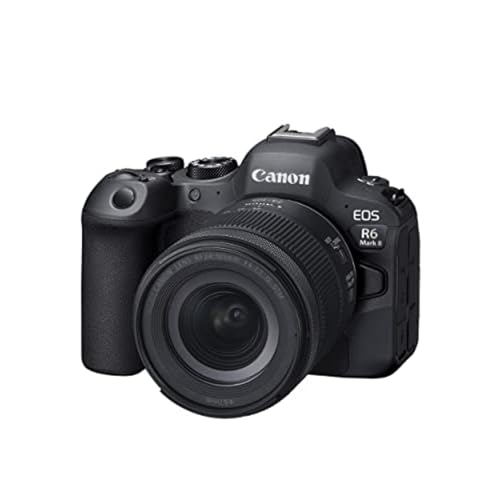
3. Canon EOS R6 Mark II: Best Full-Frame Canon
Pros
- 24.2MP full-frame sensor
- Very fast electronic and mechanical shooting
- Broad subject detection
- ISO range from 100 to 102400
- Includes 24-105mm zoom lens
Cons
- Heavier than the APS-C bodies
- The kit lens has a modest maximum aperture
- More camera than casual shooters need
Best for: photographers who need full-frame image quality and strong action performance.
The Canon EOS R6 Mark II feels like a serious working tool rather than a starter camera. Its full-frame sensor gives photographers more control over depth of field and low-light shooting than the APS-C models in this list. The bundled RF24-105mm lens is a flexible everyday zoom, covering wide views through short telephoto framing for portraits, events, and general outdoor work.
Canon pairs the 24.2MP sensor with the DIGIC X processor and an ISO range of 100 to 102400, expandable to 204800. Those figures do not remove the need for good exposure technique, but they give the camera more room when the light drops. The Dual Pixel CMOS AF II system covers up to 100% by 100% of the frame with 1, 053 AF zones. It detects people, animals, vehicles, aircraft, trains, and horses, making it a stronger action camera than the R50.
Speed is its defining advantage. Mechanical shooting reaches 12 frames per second, while the electronic shutter can reach 40 frames per second. RAW burst mode and pre-shooting capture up to approximately 30 frames per second can help when the important moment happens just before the shutter is fully pressed. Those capabilities are excessive for a family snapshot, but they become useful for unpredictable movement and fast events.
The limitation is the kit's physical and optical compromise. The R6 Mark II body is heavier than the Canon EOS R50, and the RF24-105mm F4-7.1 lens is not especially bright at the long end. It is also a poor fit for someone who mainly wants a small camera for quick trips. The Sony a7 IV offers higher resolution, but the Canon is more appealing for fast-moving subjects and Canon users who prioritize autofocus behavior and burst speed. Pick this model when action, low light, and full-frame flexibility matter more than carrying the lightest kit.
4. Sony a6400: Best Compact Sony

Pros
- Compact APS-C body
- Real-time Eye Autofocus
- 425 phase and 425 contrast detection points
- 11 fps continuous shooting
- Flip screen and 4K video
Cons
- Older design than the newest Canon and Nikon picks
- The 16-50mm lens has limited reach
- Small body controls can take adjustment
Best for: travelers and everyday photographers who want a small interchangeable-lens camera.
The Sony a6400 remains a compelling small camera because it concentrates a capable autofocus system into a body that is easy to take everywhere. The included 16-50mm lens collapses down for carrying and covers familiar everyday angles. Its flip screen supports vlogging and self-portraits, while the interchangeable E-mount gives owners a large range of lenses to explore later.
Sony's real-time Eye Autofocus is the headline feature. The system uses 425 phase-detection and 425 contrast-detection points spread across 84% of the sensor area. That wide coverage helps the camera maintain focus as a subject moves away from the center. Continuous shooting reaches 11 frames per second, giving it more action capability than the Canon EOS R100 even though both are aimed at accessible users.
The a6400 also records 4K video and supports time-lapse plus slow and quick motion functions without requiring post-processing for every effect. Its APS-C sensor is a useful middle ground between a phone and a full-frame body, offering more lens control while keeping the camera relatively compact. For travelers who want to understand photography rather than rely entirely on automatic phone processing, this remains a sensible entry point.
Its age shows in the overall handling and feature balance. Newer cameras such as the Canon EOS R50 provide a more modern autofocus experience and stronger creator tools, while the Sony ZV-E10 is more specifically shaped around video. The a6400's 16-50mm lens is convenient but not especially versatile for distant subjects. Choose it when portability, Sony's autofocus, and access to E-mount lenses matter more than having the newest body design.
5. Canon EOS R100: Best Beginner Canon

Pros
- 24.1MP APS-C sensor
- Small and lightweight body
- Face and eye detection
- Animal and vehicle detection
- Includes 18-45mm kit lens
Cons
- 4K video is limited to 24 fps
- Simpler creator controls than the R50
- 6.5 fps shooting applies with One-Shot AF
Best for: beginners who want a straightforward first camera for still photography.
The Canon EOS R100 is deliberately uncomplicated. It is small, light, and less intimidating than a larger full-frame camera, but it still accepts interchangeable RF lenses. The 18-45mm kit zoom is a useful first lens for family photos, travel scenes, portraits, and casual street work. The body is the smallest and lightest in Canon's EOS R series according to the supplied product details.
Its 24.1MP APS-C CMOS sensor produces enough detail for substantial everyday use, including natural background blur when paired with the right lens and composition. The DIGIC 8 processor supports the camera's 4K recording and shooting functions. Dual Pixel CMOS AF covers up to 143 zones and includes human face and eye detection, along with animal and vehicle detection for more varied subjects.
The R100 can record HD video at up to 120 frames per second and Full HD at 60 fps. Its 4K mode reaches 24 fps, which suits a cinematic-looking frame rate but gives less flexibility than the R50's 4K at 30 fps or the Nikon Z50 II's 4K at 60p. Continuous still shooting reaches 6.5 shots per second with One-Shot AF. That is fine for casual movement, but it is not designed as an action specialist.
The Canon EOS R50 is a better long-term choice for anyone interested in vlogging, fast subjects, or frequent video. The R100 makes more sense for a photographer who wants physical camera controls and lens flexibility without a complicated learning curve. It also lacks the R50's more advanced Dual Pixel CMOS AF II system and vari-angle creator-oriented feature set. Skip it if video is central to your work, but choose it for uncomplicated still photography and a small first step beyond a phone.
6. Sony ZV-E10: Best for Streaming
Pros
- 24.2MP APS-C sensor
- 6K oversampled 4K video
- Product Showcase Setting
- Background Defocus button
- USB live streaming without extra hardware
Cons
- Video-first design is less traditional for photography
- Included lens has limited reach
- Older BIONZ X processor
Best for: streamers, presenters, and vloggers who want an interchangeable-lens setup.
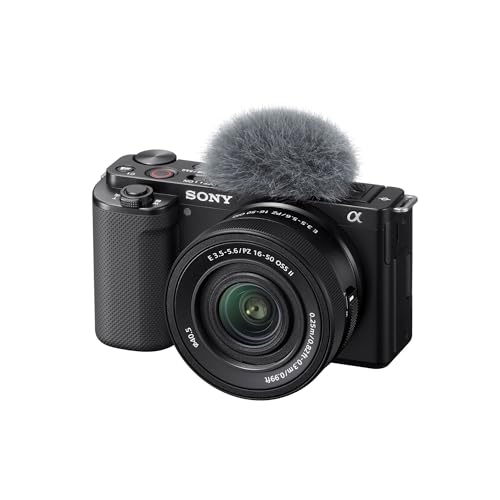
The Sony ZV-E10 is built around the moment a person turns the camera toward themselves. Its 16-50mm lens covers a useful range for desk videos, handheld vlogs, and casual photos, while the APS-C body leaves room to change lenses later. It is a better fit for a creator who thinks in clips and live broadcasts than for someone who wants a traditional viewfinder-led photography experience.
The 24.2MP APS-C Exmor CMOS sensor and BIONZ X processor support 4K movie recording oversampled from 6K with full pixel readout and no pixel binning. Starting with more image information helps preserve detail in the final 4K footage. Product Showcase Setting shifts focus from the face to an object placed close to the camera, which is useful for demonstrations and reviews.
Sony adds a Background Defocus button for quickly switching the background blur effect, keeping a presentation simple while recording. The most practical feature for a home creator is USB live streaming with a single cable and no additional hardware or software. That makes the ZV-E10 easier to integrate into a basic streaming setup than a camera that needs a separate capture device.
The camera is less satisfying for photographers who want a built-in electronic viewfinder or more extensive stills-focused controls. The Canon EOS R50 is the better hybrid body, while the ZV-E10 has the clearer advantage for direct-to-computer streaming. If your main use is talking to an audience, showing products, or making vertical and horizontal video, it is a focused tool. For a broader look at cameras aimed at on-camera presentation, see these controls that make self-recording less awkward.
7. Canon EOS R50 Bundle: Best Creator Bundle
Pros
- EOS R50 body with 18-45mm lens
- Dual Pixel AF II
- Vari-angle touchscreen
- 4K video and vertical shooting tools
- Includes shoulder bag and memory card
Cons
- Bundle adds accessories rather than a second lens
- Kit lens remains limited for distant subjects
- The listing's bundle format needs careful checking
Best for: beginners who want a ready-to-use Canon creator kit.
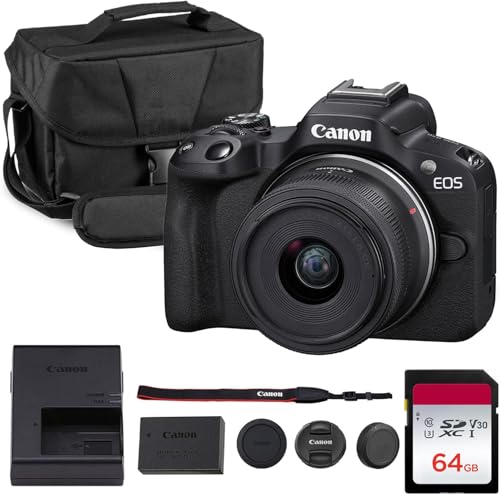
The Canon EOS R50 Bundle uses the same core camera that earns our top spot, but packages it for someone who wants to start shooting immediately. The included 18-45mm lens is appropriate for daily content, portraits, street scenes, and basic vlogging. A shoulder bag and 64GB UHS-I SDXC memory card make the kit easier to carry and use without assembling accessories separately.
The R50's main strength is the way it removes friction without making the camera feel basic. Dual Pixel AF II tracks faces, eyes, people, animals, and vehicles, while Creative Assist gives new users a more understandable way to shape the look of an image. Vertical video tools are useful for social platforms, and the vari-angle touchscreen lets the operator monitor framing from in front of the camera.
The camera records oversampled 4K and includes a close-up demo mode that automatically shifts focus to a nearby subject. That is a small but meaningful feature for product demonstrations, tutorials, and unboxing videos. The 18-45mm range starts wide enough for a desk or handheld shot and reaches a natural standard view, though it will not replace a telephoto lens for wildlife or sports.
This bundle does not change the R50's limitations. The body is still compact, and larger lenses can make the grip feel less substantial. The included lens is also slow compared with a bright prime, so indoor creators may eventually want another lens or more lighting. Compared with the standalone R50 entry, this version is attractive when the bag and card are useful, but the Nikon Z50 II is the more capable out-of-the-box option for distant subjects because it includes a second telephoto zoom.
8. Canon EOS R100 Bundle: Best Starter Bundle

Pros
- 24.1MP APS-C sensor
- Compact EOS R100 body
- 18-45mm IS STM lens
- Includes 64GB memory card
- Includes Canon shoulder bag
Cons
- 4K video tops out at 24 fps
- Less capable autofocus than the R50
- Bundle does not add a second lens
Best for: first-time photographers who need a basic camera kit with storage and carrying protection.
The Canon EOS R100 Bundle is the sensible version of a first-camera package. It includes the R100 body, the RF-S18-45mm F4.5-6.3 IS STM lens, a 64GB UHS-I memory card, and a Canon EOS 200ES shoulder bag. That combination covers the practical items a beginner needs for carrying and saving photos without adding a confusing stack of extras.
The camera itself has a 24.1MP APS-C sensor and DIGIC 8 processor. Its face and eye detection can help keep people sharp, and the system also recognizes animals and vehicles. The 18-45mm lens is compact and suited to ordinary subjects, with a focal range that works for group photos, travel scenes, and simple portraits.
Video recording reaches 4K at up to 24 fps, Full HD at 60 fps, and HD at up to 120 fps. The camera can also shoot up to 6.5 frames per second with One-Shot AF. Those capabilities are enough for family clips and occasional creator work, but the Canon EOS R50 is markedly better for someone who plans to build a video channel or film moving subjects regularly.
The bundle's main weakness is that its accessories cannot compensate for the R100's simpler body. The R50 Bundle gives creators stronger autofocus, 4K at up to 30 fps, and more flexible video features. Still, this R100 package is a clean starting point for a photographer who wants a modest learning curve and a protected way to carry the camera. It is not the pick for ambitious video, but it makes sense when still images are the priority.
9. Sony a7 IV Bundle: Best Full-Frame Resolution

Pros
- 33MP full-frame sensor
- 759-point fast hybrid autofocus
- Real-time Eye AF
- 4K 60p video in 10-bit
- 5-axis image stabilization
Cons
- Heavier and more complex than APS-C cameras
- Bundle includes many extras to sort through
- 28-70mm lens is less versatile than 24-105mm
Best for: photographers who want high-resolution full-frame stills with serious video capability.
The Sony a7 IV Bundle is aimed at a more experienced buyer who knows why a full-frame body and higher resolution matter. Its 33MP Exmor R CMOS sensor gives more room for cropping than the 24.2MP Canon EOS R6 Mark II, and the included FE 28-70mm lens covers common landscape, portrait, and snapshot perspectives. This is a substantial kit rather than a pocketable travel camera.
Sony gives the a7 IV a 759-point fast hybrid autofocus system with Real-time Eye AF. The 3.68-million-dot electronic viewfinder has a 120Hz refresh rate, and the three-inch 1.03-million-dot vari-angle touchscreen supports both composition and control. Five-axis SteadyShot image stabilization helps reduce camera shake, while the camera can shoot at up to 10 frames per second.
For video, the a7 IV records 4K at 60p in 10-bit and includes S-Cinetone, Creative Looks, Soft Skin Effect, and focus breathing compensation. Those features give experienced creators more latitude in production and a more polished starting point. The bundle also includes a 64GB UHS-I SDXC card, spare battery, charger, case, tripod, filters, hood, and editing software, though the camera body and lens remain the important parts of the package.
The Canon EOS R6 Mark II is the stronger pick for extreme burst shooting, reaching 40 fps electronically, while the Sony offers more still-image resolution and a deeper video feature set. The a7 IV is also not the friendliest recommendation for a beginner. Its controls and full-frame lens system reward deliberate learning, and the 28-70mm lens does not have the same range as Canon's 24-105mm kit lens. Choose this Sony when detailed stills, 10-bit video, and full-frame expansion are more important than simplicity. For a closer look at that sensor-size decision, consider how full-frame bodies change lens choices and low-light shooting.
How to choose best mirrorless camera
The right camera depends less on a headline megapixel number than on how its sensor, autofocus, lens, screen, and video modes fit the way you actually shoot.
Sensor format
APS-C sensors, used by the Canon EOS R50, Canon EOS R100, Nikon Z50 II, Sony a6400, and Sony ZV-E10, balance image quality with compact bodies and lenses. Full-frame sensors, used by the Canon EOS R6 Mark II and Sony a7 IV, make it easier to create shallow depth of field and maintain image quality in dim conditions, but the camera and lenses are generally larger.
Autofocus coverage
Autofocus matters most when people, pets, wildlife, or vehicles move unpredictably. Look for subject detection, eye detection, broad frame coverage, and tracking modes. The Canon EOS R50 and EOS R6 Mark II have especially broad Dual Pixel CMOS AF II coverage, while the Nikon Z50 II adds dedicated bird and airplane modes.
Lens range
The kit lens determines what you can photograph comfortably on day one. A short 16-50mm or 18-45mm zoom is convenient for daily use, portraits, and travel. The Nikon Z50 II stands apart here because it includes both a 16-50mm lens and a 50-250mm lens, giving it much more reach than the single-lens kits.
Video controls
For casual clips, standard 4K is enough. Creators should look for frame-rate options, oversampled footage, subject tracking, a vari-angle screen, product-focused autofocus, and simple transfer or streaming tools. The Canon EOS R50 adds 6K oversampled 4K, while the Sony ZV-E10 makes USB streaming particularly straightforward.
A camera is easier to keep using when the screen, lens, and autofocus suit your actual subjects, not just the specifications on the box.
Handling and portability
A compact body is easier to carry, but small controls can feel cramped with larger lenses. Full-frame models such as the Canon EOS R6 Mark II and Sony a7 IV are more substantial, while the Sony a6400 and Canon EOS R100 are easier to bring along. Consider the complete camera and lens combination, not just the body dimensions.
Frequently asked questions
Is a mirrorless camera better than a phone?
A mirrorless camera provides interchangeable lenses, a larger sensor, physical controls, and more control over focus and background blur. A phone is usually faster for automatic processing and instant sharing. The better option depends on whether you want creative control or maximum convenience.
Which camera is easiest for a beginner?
The Canon EOS R100 is the simplest stills-focused starting point in this group. The Canon EOS R50 is easier to recommend for a beginner who also wants to vlog or record video because it has stronger autofocus, a vari-angle touchscreen, and more modern creator features.
Which model is best for vlogging?
The Canon EOS R50 is the strongest hybrid option because it combines a vari-angle screen, subject tracking, oversampled 4K, and vertical video tools. The Sony ZV-E10 is more focused on video presentation and has a useful USB streaming mode, making it a strong alternative for desk-based creators.
Do I need a full-frame camera?
No. APS-C cameras can produce detailed photos and high-quality 4K video while keeping the body and lenses more manageable. Full frame becomes more compelling when you frequently shoot in dim light, want stronger background separation, or need a larger system for demanding work.
Which camera includes the most useful lenses?
The Nikon Z50 II includes the NIKKOR Z DX 16-50mm and 50-250mm lenses. That combination covers everyday wide and standard shooting as well as distant subjects, so it offers broader initial coverage than the single-lens Canon and Sony kits.
Is more megapixel resolution always better?
No. Higher resolution can provide more room to crop, as with the Sony a7 IV's 33MP sensor, but autofocus, lens quality, lighting, and technique also shape the final image. A lower-resolution camera with better handling for your subject can produce better results in practice.

The bottom line
The Canon EOS R50 is the Best mirrorless camera choice for most people because it combines a detailed 24.2MP APS-C sensor, excellent subject tracking, a vari-angle screen, fast shooting, and oversampled 4K in a relatively approachable body. It suits beginners, families, travelers, and creators without forcing any one group to accept a major compromise.
Choose the Nikon Z50 II if two lenses and long-range shooting matter more than maximum resolution. Choose the Canon EOS R6 Mark II for full-frame action and low-light work, or the Sony a7 IV when higher-resolution stills and 10-bit video are the priority.
If you are undecided, buy the Canon EOS R50 unless you already know you need full-frame performance or a telephoto lens in the box.
As an Amazon Associate we earn from qualifying purchases.