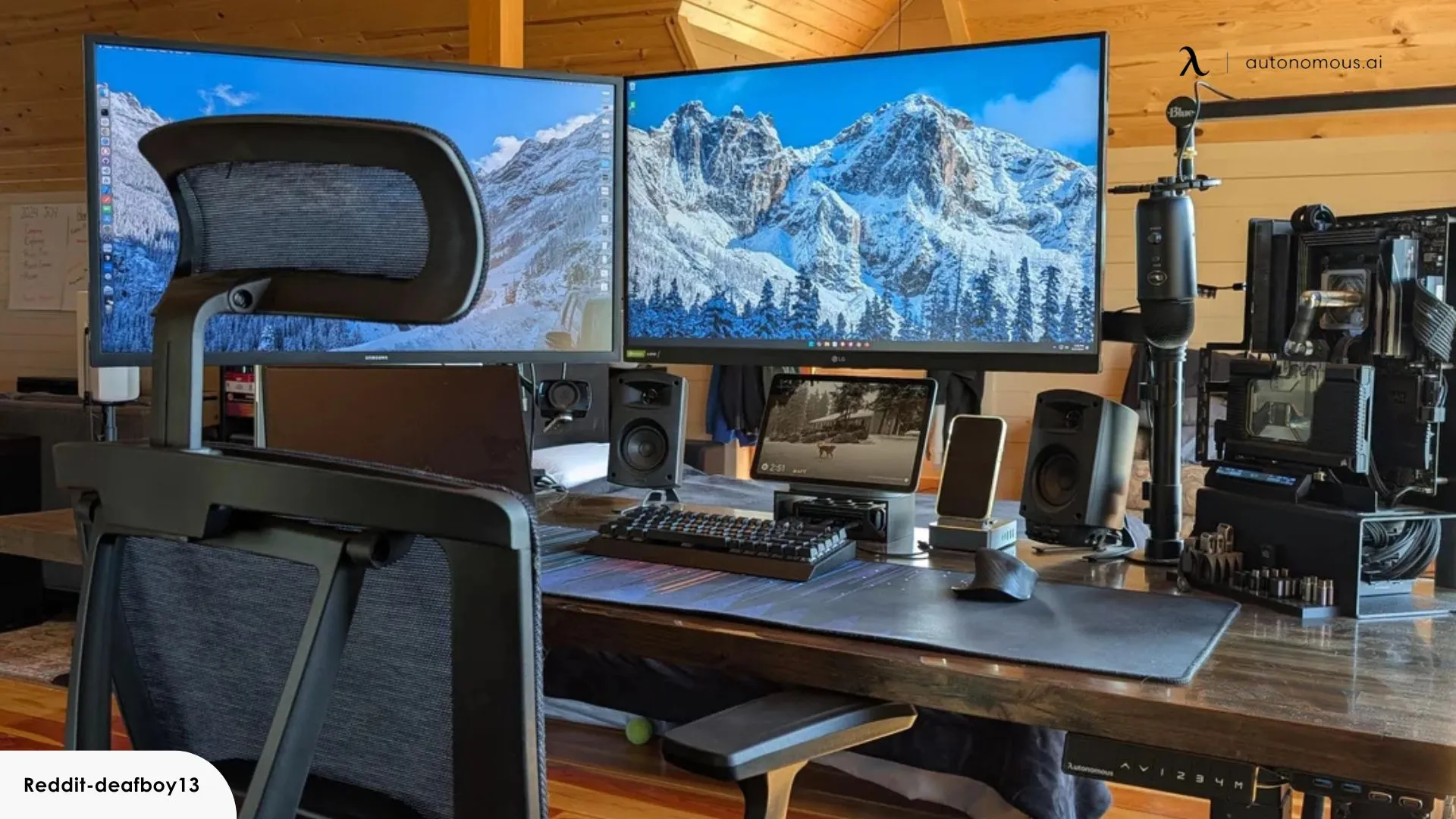

A productive desk can fall apart when your email, spreadsheet, browser tabs, and video call all compete for one screen. The right Best monitor setup for work gives each task room to breathe, but the answer is not always three identical displays. Desk depth, laptop compatibility, screen size, and the amount of cable management you can tolerate matter just as much.
We compared compact dual-monitor bundles, a three-screen arrangement, a portable laptop extender, a desk lamp, and a 49-inch ultrawide. Our top pick is the Kado 24-inch Dual Curved, with the Philips as the simplest single-screen choice and the Exovyn as the most expansive option.
Comparison table
| # | Product | Award | Size | Resolution and refresh | Best for |
|---|---|---|---|---|---|
| 1 | Kado 24-inch Dual Curved | Best overall | Two 24-inch curved screens | 1920x1080, 75Hz | A balanced two-screen desk |
| 2 | Philips 241V8LB | Best single monitor | 23.8-inch VA screen | 1920x1080, 100Hz | Reading and everyday office work |
| 3 | Kado 27-inch Dual Curved | Best large dual setup | Two 27-inch curved screens | 1920x1080, 75Hz | Large spreadsheets and side-by-side documents |
| 4 | ShineTech Dual Head Lamp | Best desk lighting | 31.5-inch light span | Five color temperatures | Even illumination across a monitor desk |
| 5 | Wixzet 15.6-inch Extender | Best portable setup | 15.6-inch detachable screen | 1920x1080, 300 nits | Work that moves between desks |
| 6 | Exovyn 49-inch Ultrawide | Best ultrawide | 49-inch curved VA screen | 5120x1440, 165Hz | One-screen command centers |
| 7 | Kado 27-inch Dual Pack | Best for roomy desks | Two 27-inch curved screens | 1920x1080, 75Hz | A spacious conventional dual setup |
| 8 | Kado 24-inch Dual Pack | Best compact dual pack | Two 24-inch curved screens | 1920x1080, 75Hz | Smaller desks and home offices |
| 9 | Kado 27-inch Triple Pack | Best three-screen layout | Three 27-inch flat screens | 1920x1080, 75Hz | Maximum separate workspace areas |
1. Kado 24-inch Dual Curved: Best Overall

Pros
- Two matching 24-inch curved displays
- 1500R curvature keeps the pair visually cohesive
- 98% sRGB coverage and built-in speakers
- 75Hz refresh rate feels smoother than a basic office panel
Cons
- Full HD gives less room for dense documents than a higher-resolution ultrawide
- Curved screens need careful alignment on a narrow desk
- The bundle is more equipment than a single-screen worker needs
Best for: someone building a straightforward two-screen office around matching displays.
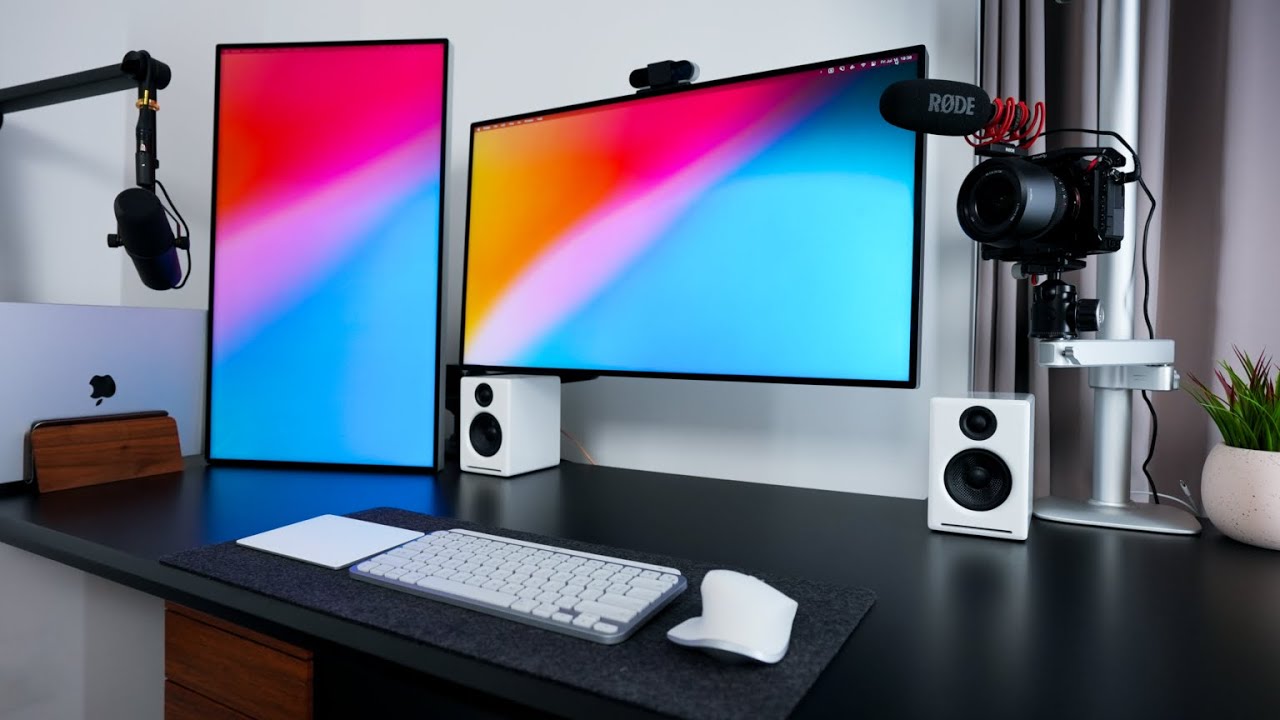
The appeal of the Kado 24-inch Dual Curved is that it solves the awkward part of a multi-monitor setup before you start. Both screens share the same size, shape, resolution, and refresh rate, so a document dragged from one display to the other does not feel like it has entered a different visual environment. A 24-inch panel also takes less horizontal space than a pair of 27-inch screens, which makes this the easiest Kado bundle here to place on an ordinary home-office desk.
Each display runs at 1920x1080 and 75Hz. Full HD is a sensible match for email, web applications, office documents, and video calls, though it does not provide the fine text or expansive canvas of the Exovyn 49-inch Ultrawide. The extra refresh headroom over a standard 60Hz office display makes cursor movement and scrolling feel a little less stiff. That difference is modest, but it is noticeable during a long day of switching between windows.
The 1500R curve is more useful when the screens are angled inward than when they are left flat. It helps keep the outer edges pointed toward you, reducing the sensation that the second display is sitting at an extreme angle. Kado also cites 98% sRGB coverage, which is a useful amount of color coverage for general creative work and media, though anyone doing color-critical photo work should look more closely at a purpose-built panel. Built-in speakers save desk space for calls and casual audio, but they are not a replacement for dedicated speakers or headphones.
This pair is a better all-round office arrangement than the Kado 27-inch Dual Curved when desk space is limited, and it is more useful for multitasking than the Philips 241V8LB. The weakness is the resolution. Two Full HD screens provide width, not extra detail, and a large spreadsheet can still require plenty of scrolling vertically. The person who wants crisp high-density text or a single seamless workspace should skip this for the Exovyn. For most people who want two matching windows without an elaborate monitor hunt, this is the one we'd keep.
2. Philips 241V8LB: Best Single Monitor

Pros
- VA panel with deeper blacks and stronger contrast
- 100Hz refresh rate for smooth scrolling
- 178-degree viewing angles
- EasyRead mode suits long documents
- Nearly bezel-free on three sides
Cons
- A single screen cannot separate as many tasks as a dual setup
- Full HD limits working room for dense spreadsheets
- The listed dimensions include a deeper footprint than a very slim display
Best for: an office worker who wants one comfortable, readable screen rather than a multi-monitor array.
The Philips 241V8LB is the sensible choice for a desk where simplicity matters. It is a 23.8-inch display, close to the familiar 24-inch class, and its nearly bezel-free design on three sides makes the screen feel less boxed in. There is no second panel to align, no broad curved arrangement to accommodate, and no need to divide a small desk into multiple viewing zones.
The VA panel is the defining feature. Philips describes it as producing brighter whites, deeper blacks, and gradients across 16.7 million colors. That combination suits documents, websites, and video particularly well when the room lighting changes during the day. The 178-degree viewing angle also helps keep the image consistent when you lean back or look across the desk, though a single screen still works best when positioned directly in front of you.
Its 100Hz refresh rate is the highest among the conventional office displays here, aside from the gaming-focused Exovyn. It will not transform office software, but scrolling through long pages and moving a pointer around the desktop should look more fluid than on a 60Hz display. The EasyRead mode is a useful office-specific touch, giving lengthy documents a more paper-like presentation. That is a more relevant feature for a writer, student, or administrator than a collection of gaming modes.
The Philips loses to the Kado 24-inch Dual Curved if your work depends on keeping two applications visible at once. It wins on restraint, especially for someone who does not want a wide pair of panels taking over the desk. The lack of a second screen is the central limitation, not a hidden flaw. Choose it if your work is mostly one application at a time, and consider the sizes that still work in tight spaces before adding a second display later.
3. Kado 27-inch Dual Curved: Best Large Dual Setup

Pros
- Two roomy 27-inch curved displays
- 1500R curve supports an inward-facing arrangement
- 98% sRGB coverage
- Built-in speakers keep the desk clear
- 75Hz refresh rate
Cons
- Two Full HD 27-inch panels have lower pixel density
- The pair needs substantial desk width
- Larger screens make alignment more important
Best for: a home office with enough surface area for two large side-by-side displays.
The Kado 27-inch Dual Curved gives each application a generous physical window. A browser can stay open on one side while a spreadsheet, document, or video call occupies the other without making either feel cramped. The two matching displays are particularly helpful for people who spend the day comparing source material with their own work.
The trade-off is pixel density. Both screens use 1920x1080, so the image is spread across a larger 27-inch area than it is on the 24-inch Kado bundles. Text remains usable for ordinary office work, but it will not look as tightly drawn as it does on a smaller Full HD panel. If you want large windows more than compact, high-density text, that compromise is reasonable. If you stare at small type all day, the Philips or a higher-resolution display deserves consideration.
The 1500R curve gives the pair a more enveloping shape, especially when the left and right screens are angled toward the center. Kado also lists 98% sRGB coverage, which gives ordinary graphics and web content a broad color range. Fast response claims and gaming modes make the monitors more versatile outside office work, while the built-in speakers handle basic system audio without adding another object to the desk.
Compared with the Kado 24-inch Dual Curved, this version is easier to read at a distance and better for large tables, timelines, and side-by-side documents. Compared with the Exovyn 49-inch Ultrawide, it gives you two physically separate screens and simpler window management, but much less horizontal resolution. Its real weakness is not performance. It is the amount of furniture and viewing distance the pair demands. Skip it if your desk is shallow or narrow. Pick it when spacious, separate work areas matter more than compactness.
4. ShineTech Dual Head Lamp: Best Desk Lighting

Pros
- 31.5-inch double-head span covers a broad desk
- Five color temperatures from 3000K to 6000K
- Ten brightness levels for each color temperature
- 360-degree gooseneck and 180-degree adjustable heads
- Clamp fits desks up to 2.9 inches thick
Cons
- It is a lighting accessory, not a display
- Clamp mounting depends on a suitable desk edge
- Wide coverage needs space above the monitors
Best for: a dual-monitor workstation that needs even task lighting without a large lamp base.
The ShineTech Dual Head Lamp earns a place in this roundup because a monitor setup is more than the panels. A bright window behind the screens, a dark wall around them, or a pool of light on one side of the desk can make long work sessions needlessly tiring. This lamp spreads light across a broad surface instead of forcing one small lamp to illuminate only one corner.
Its double head spans 31.5 inches and is designed to cover desks up to 71 inches wide. That makes the lamp a natural companion to the Kado dual-monitor pairs, particularly when the monitors occupy most of the desk. The 26.7-inch height clearance should fit above many monitor arrangements, but the lamp still needs to be positioned carefully so it does not sit in the sightline or reflect directly into the displays.
The lighting controls are unusually flexible. There are five color temperatures between 3000K and 6000K, with ten brightness levels for each, for 50 combinations in total. Warmer settings can make evening work feel less stark, while cooler settings provide a sharper task-lighting appearance during the day. The 360-degree gooseneck and 180-degree adjustable heads let you direct the light toward the desktop rather than straight into your eyes.
The clamp accommodates surfaces up to 2.9 inches thick and includes an EVA protective pad. That saves space compared with a weighted base, but it also means the desk edge must be compatible. ShineTech lists a memory function, 10-minute and 45-minute auto-off timers, and LEDs rated for up to 50, 000 hours. Those details make it practical for routine use, though the product cannot solve a display that is too small or too dim. Pair it with the Kado 24-inch Dual Curved when the desk needs balanced illumination, and skip it if you already have controlled room lighting or no safe place to clamp it.
5. Wixzet 15.6-inch Extender: Best Portable Setup

Pros
- Detachable design supports multiple configurations
- 15.6-inch Full HD IPS display
- 300 nits brightness and HDR support
- Each detachable screen weighs 1.5 pounds
- Supports laptops from 13 to 17.3 inches
Cons
- Connection requirements vary by laptop
- A laptop with one full-featured USB-C port may need HDMI and extra USB power
- A portable extender is less spacious than two full-size desk monitors
Best for: remote workers who need extra screens at changing locations.
The Wixzet 15.6-inch Extender approaches the work monitor problem from the opposite direction. Instead of building a permanent desk around two or three panels, it turns a compatible laptop into a more capable mobile workstation. The detachable design supports a triple-screen laptop arrangement, a dual-screen arrangement, or use as a standalone portable monitor.
That flexibility is the key advantage. Wixzet lists more than 11 configurations, with 235-degree folding and 90-degree rotation. A screen can sit beside the laptop for email or a reference document, rotate for a different viewing position, or separate from the laptop when the work surface calls for a more conventional arrangement. Each detachable screen weighs 1.5 pounds, and a carrying case is included, so the system is designed for movement rather than permanent installation.
The display is a 15.6-inch 1920x1080 IPS panel with a claimed 120% sRGB color gamut, HDR support, and 300 nits brightness. Those specifications point to colorful, reasonably bright visuals for documents, calls, streaming, and general creative work. The screen is not physically as large as the Kado displays, but its Full HD resolution is a sensible fit for the size. The extender supports Windows, macOS, ChromeOS, Linux, Android, and DeX, along with laptops from 13 to 17.3 inches.
Setup is more dependent on the laptop than the plug-and-play wording might suggest. Two full-featured USB-C ports can carry video and power through two USB-C cables. With one full-featured USB-C port, the arrangement uses USB-C plus HDMI, and HDMI use requires an additional USB-A to USB-C cable for power. That is manageable, but it is a real compatibility checkpoint. Read how to keep a portable workstation from becoming cable-heavy before committing to a mobile setup. The Wixzet is the clear choice for travel, but permanent desk users should choose the larger Kado or Exovyn screens instead.
6. Exovyn 49-inch Ultrawide: Best Ultrawide

Pros
- 5120x1440 Dual QHD workspace
- 32:9 format can replace two conventional monitors
- 165Hz refresh rate and 1ms MPRT
- Height adjustment, tilt, and swivel
- Picture-by-picture mode for two devices
Cons
- Nearly 47 inches wide
- Requires a deep, sturdy desk and careful placement
- Its gaming specifications are more than most office tasks require
Best for: a user who wants one continuous, very wide workspace for several applications.
The Exovyn 49-inch Ultrawide is the dramatic option, but its appeal for work is straightforward: it gives you an enormous continuous canvas without a bezel in the middle. A document, browser, chat panel, and monitoring window can sit side by side in one desktop. That is a different experience from the Kado pairs, where each display remains a separate physical workspace.
The resolution is 5120x1440, described as Dual QHD, across a 32:9 VA panel. That is enough horizontal room to treat the screen like two wide displays while keeping a single central workspace. The 1500R curve helps bring the edges toward the viewer, and the 3000:1 contrast specification should produce stronger separation between dark and light areas than a typical basic office panel. Exovyn lists 16.7 million colors and 85% NTSC coverage, making it suitable for general visual work, though its color claims do not make it the obvious pick for demanding photo editing.
The 165Hz refresh rate and 1ms MPRT response target gaming, but they also make fast pointer movement and scrolling feel particularly smooth. FreeSync and G-Sync compatibility are relevant if this desk also serves as a gaming station. For work, the more important features are the height-adjustable stand, tilt and swivel movement, flicker-free operation, blue-light filtering, and picture-by-picture mode. PBP can show two connected devices side by side, which is useful when a work laptop and another computer need to remain visible.
The physical size is the catch. The listed width is 46.68 inches, so this is not a monitor to squeeze onto a narrow surface. It also weighs 16.96 pounds, and the broad panel needs stable support. The Kado 27-inch Dual Curved is easier to replace or rearrange because it uses two separate screens, while the Exovyn is cleaner once installed. If your desk can accommodate it and you dislike the seam between two monitors, this is the most capable single-screen workspace here. Everyone else should measure first.
7. Kado 27-inch Dual Pack: Best for Roomy Desks

Pros
- Two 27-inch curved displays
- 1500R curvature
- 98% sRGB coverage
- Built-in speakers
- 75Hz refresh rate
Cons
- Full HD is less dense across a 27-inch panel
- The pair has a substantial footprint
- It needs careful positioning for a comfortable viewing angle
Best for: a large desk where two conventional 27-inch displays are easier to manage than an ultrawide.
The Kado 27-inch Dual Pack is closely related to the Kado 27-inch Dual Curved, but it belongs on a different kind of desk. It is the choice for someone who already knows they want two large screens and prefers a straightforward dual-monitor arrangement. The 27-inch size gives applications more physical room than the 24-inch pairs, which helps when a document, design window, or spreadsheet needs to stay open without constant resizing.
Both displays use 1920x1080 resolution and a 75Hz refresh rate. That combination handles ordinary office software well, and the higher refresh rate keeps everyday movement reasonably smooth. The limitation is the same one found on the other Full HD 27-inch Kado displays: the pixels are spread over a larger area. If crisp small text is your priority, a smaller Full HD screen can look tighter, while the Exovyn provides more usable resolution across its much larger canvas.
The 1500R curve is designed for a more comfortable viewing position when the monitors are angled toward the center. Kado cites 98% sRGB performance and built-in speakers, so the pair can handle general visual work and basic audio without extra desk equipment. The fast-response and custom gaming-mode claims add flexibility for after-hours use, although they are not the reason to choose this package for office work.
The distinction between this model and the Kado 27-inch Dual Curved is not obvious from the core specifications, since the listed size, curve, resolution, refresh rate, color coverage, and speakers are closely matched. Both need a wide surface. The more important comparison is with the Exovyn: this pair gives independent screens and familiar window snapping, while the Exovyn offers a continuous high-resolution workspace. Choose this Kado when two separate displays fit your workflow better. Skip it if your desk cannot place both panels at a comfortable distance.
8. Kado 24-inch Dual Pack: Best Compact Dual Pack

Pros
- Two compact 24-inch curved displays
- 1500R curve
- 98% sRGB coverage
- Built-in speakers
- 75Hz refresh rate
Cons
- Full HD limits the amount of information visible vertically
- Two panels still require more width than one
- The curve can be less useful if the screens cannot be angled inward
Best for: a smaller desk that still needs two matching screens.
The Kado 24-inch Dual Pack is the compact counterpart to the larger Kado bundles. Two 24-inch panels give a home office the basic dual-screen advantage without taking up as much horizontal space as a pair of 27-inch displays. One screen can hold a call or reference page while the other carries the main task, and the matching design keeps the setup visually consistent.
Each monitor has a 1920x1080 resolution and 75Hz refresh rate. That is a practical combination for email, browser work, word processing, and general administration. The 24-inch size also makes Full HD a better fit than it is on the 27-inch versions, because text and interface elements occupy a denser portion of the screen. It is still not a high-resolution setup, so large spreadsheets will eventually run into the limits of the vertical workspace.
The 1500R curve works best with the screens slightly turned toward you. Kado lists 98% sRGB coverage, fast response performance, custom gaming modes, and built-in speakers. The speakers are handy for basic alerts and calls, while the color coverage gives the monitors a more capable appearance for general graphics than a purely utilitarian office panel. There is no reason to buy this pair for serious color-critical work without more information about calibration.
The Kado 24-inch Dual Curved is the closer rival. The shared core specifications make these two difficult to separate by image quality alone, so desk fit and the intended arrangement should guide the decision. The weakness is the lack of extra resolution, not the dual format. Someone who wants a clean two-window setup on a modest desk should choose this package. Someone with room for larger displays, or someone who wants one seamless canvas, should move up to the Exovyn instead.
9. Kado 27-inch Triple Pack: Best Three-Screen Layout

Pros
- Three matching 27-inch flat displays
- 100% sRGB coverage
- 75Hz refresh rate
- Built-in speakers
- Separate screens suit independent work areas
Cons
- Three Full HD panels need considerable desk space
- Flat screens create bezels between work areas
- 27-inch Full HD is less dense than smaller Full HD displays
Best for: people who need three separate windows visible at once and have the desk to support them.
The Kado 27-inch Triple Pack is for a specific kind of multitasker. Three screens let you dedicate one panel to communication, one to the main project, and one to reference material or monitoring. That arrangement is useful for coding, research, trading dashboards, and workflows where constantly hiding one application to reveal another becomes the main irritation.
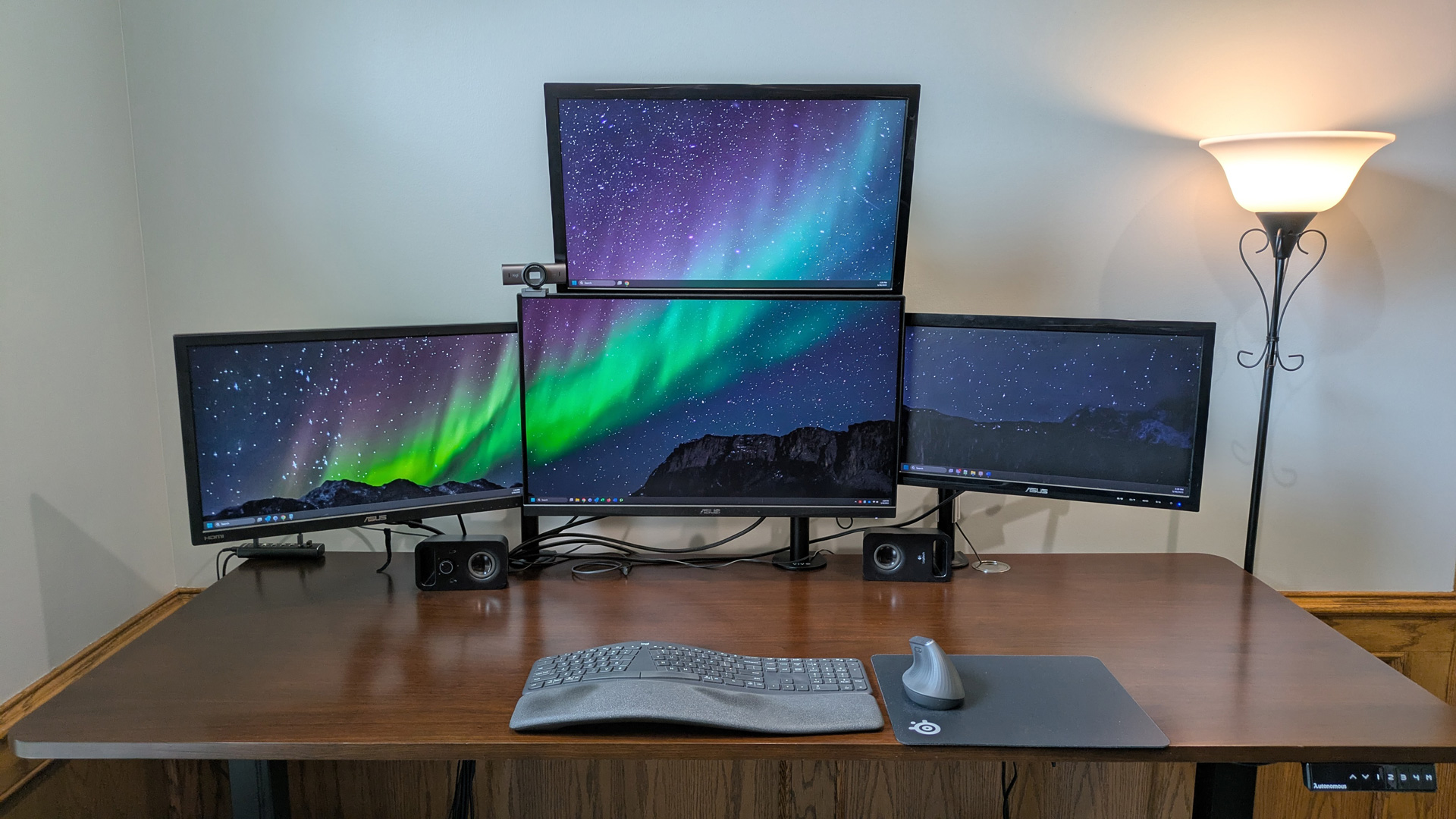
The displays are flat rather than curved, which changes how they should be arranged. The center screen can sit directly ahead, with the outer two angled inward. Flat panels make that arrangement predictable and avoid the curve mismatch that can happen when a curved pair is positioned separately. The product lists 1920x1080 resolution and a 75Hz refresh rate for each display, enough for standard office work but not a high-density reading experience.
Kado claims 100% sRGB coverage here, slightly broader than the 98% listed for the curved dual bundles. That can help general web graphics and visual content look consistent, though coverage alone does not establish color accuracy. Built-in speakers reduce the need for separate audio hardware, and the product description specifically points to ergonomic positioning as a way to reduce eye strain and neck discomfort. That benefit depends on how carefully the screens are placed, not simply on owning three of them.
This package beats the dual Kado models when the third application genuinely needs a permanent home. It loses to the Exovyn if you want a continuous workspace without two seams, and it loses to the Philips if you want a quiet, uncluttered desk. The main weakness is the physical footprint combined with 27-inch Full HD panels. Measure the desk and plan the viewing angles first. If your work really does need three persistent windows, this is the most direct route in the group.
How to choose best monitor setup for work
The right setup starts with the way your work is divided, then moves to screen size, resolution, connection needs, and physical comfort.
Screen count
Two screens are useful when tasks stay separate, such as a video call beside a document or a spreadsheet beside a browser. Three screens make sense only when the third window has a permanent role. A single ultrawide can provide similar horizontal room without bezels, but separate monitors are easier to reposition and replace.
Do not count screens as productivity by themselves. A pair of 24-inch Full HD panels can be more comfortable on a modest desk than three 27-inch displays that force you to turn your head constantly.
Resolution and pixel density
1920x1080 is adequate for standard office applications, especially on a 24-inch screen. On a 27-inch panel, the same resolution spreads across more surface area, so small type and fine interface details can look less dense. The Exovyn's 5120x1440 resolution offers a much broader canvas and more horizontal detail, but it also creates a larger physical installation.
Resolution should follow the work. Writing, email, and web applications can live comfortably at Full HD. Large spreadsheets, timeline-heavy tools, design work, and several windows arranged side by side benefit from more pixels.
A larger screen is not automatically a larger workspace if the resolution stays the same.
Panel shape and viewing position
Curved monitors work best when they face inward toward the user. The 1500R curve on the Kado models can make a dual arrangement feel more unified, but it needs enough desk depth and careful alignment. Flat monitors are easier to place in a three-screen arc and can be more predictable when each display serves a different role.
An ultrawide is a different decision. Its continuous panel removes the central bezel, while a dual setup gives you two independent screens. Think about whether you prefer one broad desktop or separate physical zones before choosing.
Refresh rate and motion
A 75Hz office monitor is a small but useful step above a basic 60Hz display. Scrolling, cursor movement, and window dragging can look smoother. The Philips reaches 100Hz, while the Exovyn reaches 165Hz and adds gaming-oriented synchronization features.
Higher refresh rates matter most when you scroll frequently, work with motion, or use the same desk for gaming. They should not take priority over readable resolution, suitable size, or a stand that lets you position the screen correctly.
Desk fit and ergonomics
Measure the usable width and depth, not just the tabletop's advertised dimensions. The Exovyn is listed at 46.68 inches wide, while a pair or trio of conventional monitors needs room for bezels, stands, cables, and inward angles. A portable extender is easier to store, but its screen area is smaller and its connection requirements depend on the laptop.
Place the primary screen directly in front of you. Keep secondary displays close enough that you can glance across rather than twist your neck. A clamp lamp such as the ShineTech can improve the surrounding light, but it also needs clearance above the displays and a desk edge up to 2.9 inches thick.
Laptop and device connections
A permanent monitor setup needs enough outputs from the computer, docks, or adapters. The Wixzet has more specific requirements: two full-featured USB-C ports can handle its dual USB-C connection, while a one-port laptop may need HDMI plus USB power. Compatibility should be checked before choosing a portable screen.
Mac users should also confirm that their particular computer supports the desired number of external displays. For a compact Apple desk, the display connections that simplify a small Mac workspace can be more important than choosing the largest panel.
Frequently asked questions
Is a dual-monitor setup better than one ultrawide?
It depends on how you organize work. Two monitors make it easy to dedicate each display to a separate task, while an ultrawide gives you one continuous desktop without a center bezel. The Exovyn offers the most horizontal space here, but the Kado pairs are easier to rearrange.
Is 1920x1080 enough for office work?
Yes, for email, browser work, documents, and many spreadsheets. It is a more natural fit on a 24-inch display than on a 27-inch display, where the same pixels are spread across a larger area. Higher resolution becomes more useful when you keep several dense applications visible or work with detailed images.
Are curved monitors useful for productivity?
A curve can help the outer edges of a wide or dual setup face the user more directly. The benefit is strongest when the screens are angled inward and positioned at a comfortable distance. It is not a substitute for proper screen height, viewing distance, and lighting.
Should I buy two monitors or three?
Buy three only when you can name the third task that needs to stay visible all day. A three-screen arrangement can suit coding, research, monitoring, and communication-heavy work, but it takes much more desk space. For most home offices, two screens provide the more manageable balance.
Can a portable monitor extender replace desktop monitors?
It can replace them for mobile work, but not in every workflow. The Wixzet provides a 15.6-inch Full HD display and flexible configurations, yet its physical workspace is smaller than a pair of 24-inch or 27-inch panels. It also depends on the laptop's USB-C and HDMI capabilities.
Does a desk lamp help with monitor fatigue?
Balanced room and desk lighting can reduce harsh contrast between a bright display and a dark surrounding area. The ShineTech provides adjustable color temperature and brightness across a wide span, but it cannot correct glare caused by a lamp aimed directly at the screen. Position the light toward the desk surface and away from the panel.
Do built-in monitor speakers replace external speakers?
They can handle alerts, calls, and casual audio without taking up more desk space. They are less suitable when you want fuller music, clear dialog at higher volume, or a more immersive sound field. The Kado displays include speakers, while the usefulness of that feature depends on how much audio your work involves.
The bottom line
The Best monitor setup for work for most people in this group is the Kado 24-inch Dual Curved. It gives you two matching 24-inch Full HD displays, a 1500R curve, 75Hz motion, broad sRGB coverage, and built-in speakers without demanding the surface area of the 27-inch pairs. The Philips 241V8LB is the better choice for a simpler one-screen desk, especially if EasyRead mode and a 100Hz refresh rate matter more than multiple windows.
Choose the Exovyn 49-inch Ultrawide when one continuous, high-resolution workspace is the priority and your desk can support its nearly 47-inch width. Choose the Wixzet 15.6-inch Extender when the workstation needs to travel, and the Kado 27-inch Triple Pack only when three separate work areas are genuinely necessary.
If you are undecided, start by measuring the desk and counting the windows that must stay visible, then choose the smallest setup that handles both.
As an Amazon Associate we earn from qualifying purchases.