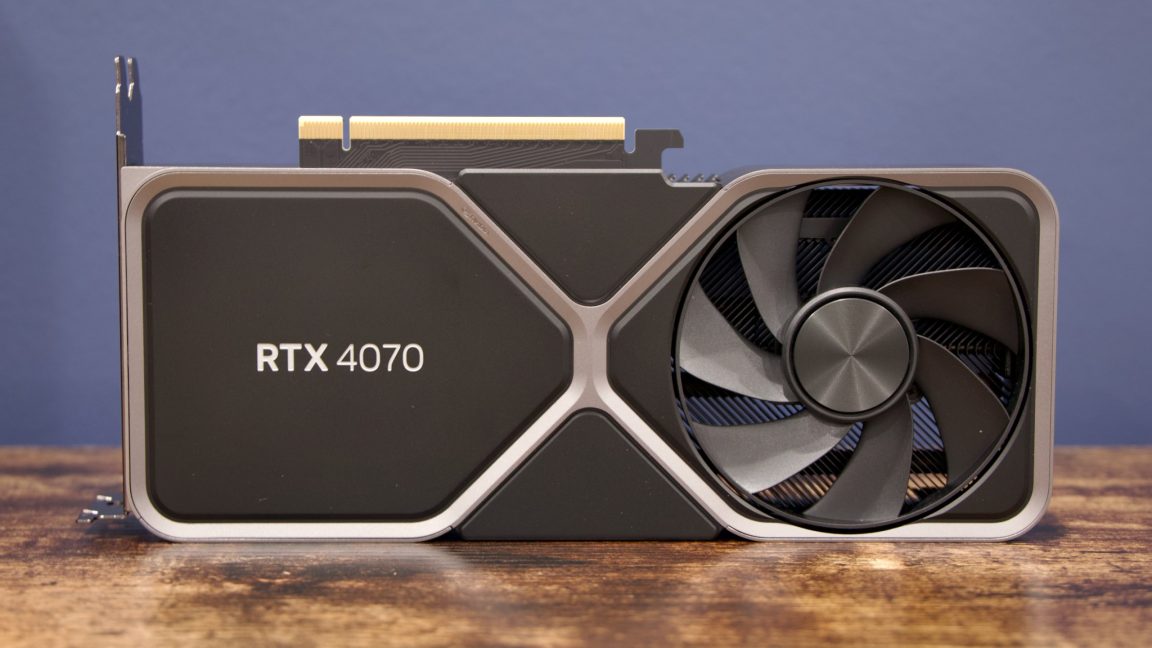

A graphics card search can go sideways quickly when an RTX 4070 list includes newer RTX 5070 and RTX 5060 Ti models. The Best NVIDIA GeForce RTX 4070 roundup therefore needs to separate the original Ada cards from newer alternatives, while still explaining when a different generation makes more sense.
We compared the 10 cards by GPU family, memory, cooling design, dimensions, connectivity, and useful features such as DLSS, ray tracing, Dual BIOS, and small-form-factor compatibility. Our top pick is the NVIDIA GeForce RTX 4070 Super, while the range includes compact newer cards, sturdy factory-overclocked models, and higher-memory options.
Comparison table
| # | Product | Award | GPU | Memory | Best for |
|---|---|---|---|---|---|
| 1 | NVIDIA RTX 4070 Super | Best overall | GeForce RTX 4070 Super | 12GB GDDR6X | High-end 1440p gaming |
| 2 | Gigabyte RTX 4070 Windforce OC | Best balanced RTX 4070 | GeForce RTX 4070 | 12GB GDDR6X, 192-bit | Quiet mainstream builds |
| 3 | ASUS RTX 5060 Ti Dual | Best newer compact option | GeForce RTX 5060 Ti | 16GB GDDR7 | Newer features in a smaller card |
| 4 | MSI RTX 4070 Ti Super Ventus | Best for extra memory | GeForce RTX 4070 Ti Super | 16GB GDDR6X, 256-bit | Demanding games and creative work |
| 5 | ASUS TUF RTX 4070 OC | Best rugged design | GeForce RTX 4070 | 12GB GDDR6X | Long-term heavy use |
| 6 | NVIDIA RTX 4070 Founders Edition | Best reference design | GeForce RTX 4070 | 12GB GDDR6X | Clean, compact PC builds |
| 7 | Gigabyte RTX 4070 Super Windforce | Best three-fan Super | GeForce RTX 4070 Super | 12GB GDDR6X, 192-bit | Sustained gaming loads |
| 8 | ASUS Prime RTX 5070 White | Best white SFF-ready card | GeForce RTX 5070 | 12GB GDDR7 | Small white gaming PCs |
| 9 | PNY RTX 5070 Ti Epic-X | Best creator-focused upgrade | GeForce RTX 5070 Ti | Not specified | AI and creative applications |
| 10 | ASUS Prime RTX 5070 | Best thermal feature set | GeForce RTX 5070 | 12GB GDDR7 | Compact systems with sustained loads |
1. NVIDIA RTX 4070 Super: Best Overall

Pros
- Super-series GPU for demanding 1440p gaming
- 12GB of GDDR6X memory
- NVIDIA reference design
- Simple Titanium and Black finish
Cons
- Product listing provides very few technical details
- Dimensions appear unusually incomplete
- No cooling or output information is specified
Best for: someone who wants the most direct step up from the standard RTX 4070 generation.
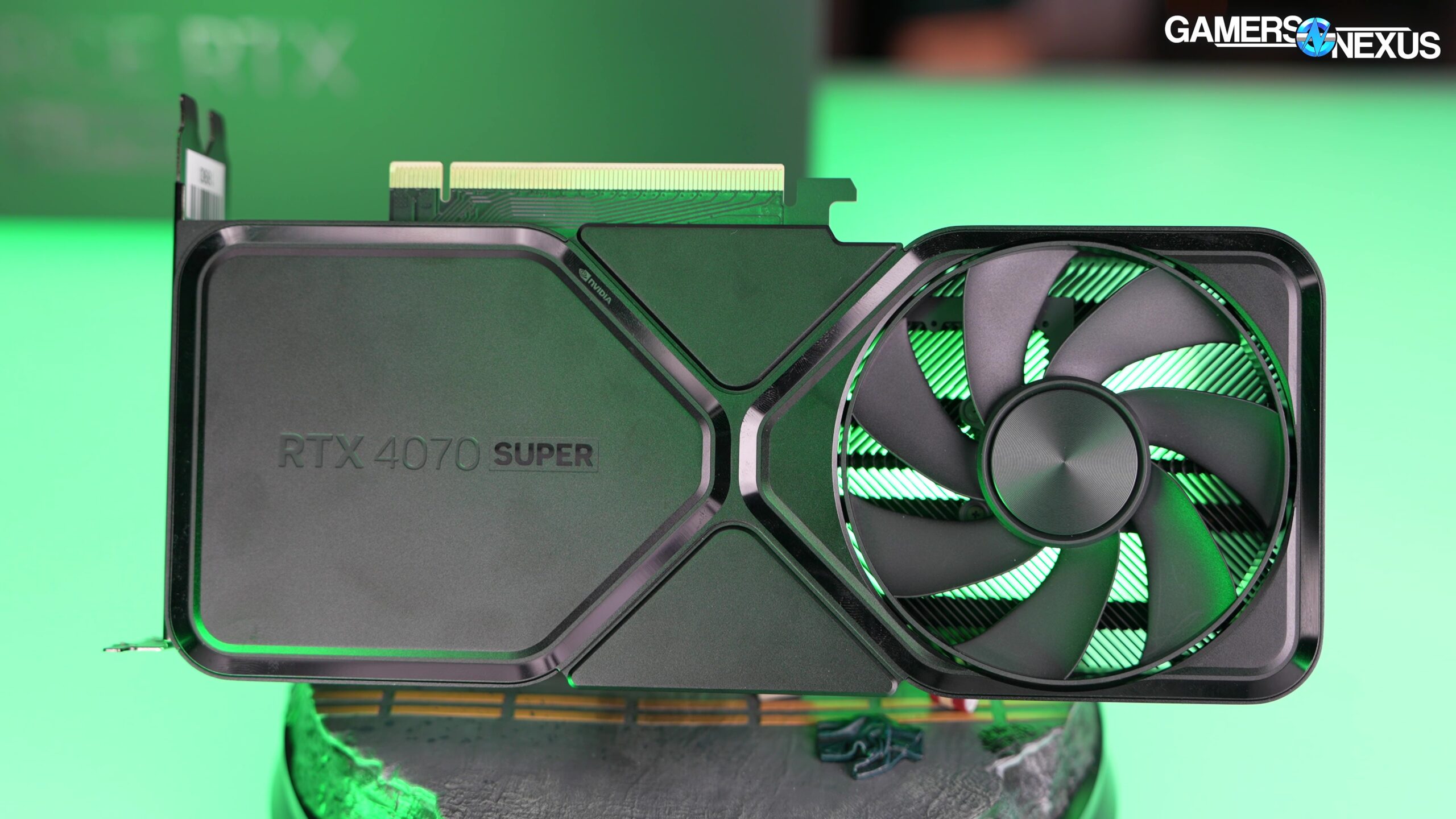
The NVIDIA RTX 4070 Super is the straightforward answer for shoppers who want a 4070-class card without moving to a completely different product family. It uses the GeForce RTX 4070 Super GPU and 12GB of GDDR6X memory, the combination that makes this card a sensible fit for modern 1440p gaming and ray-traced workloads.
The important caveat is how little supporting information accompanies this particular listing. Its feature data is empty, and the listed dimensions include a length and width of 9.60628 inches but an implausibly tiny height of 0.0393700787 inches. That means we cannot responsibly use the height as a case-clearance measurement. Buyers should confirm the physical design, power requirements, and included outputs before committing to a tightly packed build.
Compared with the standard Gigabyte RTX 4070 Windforce OC, this card starts with the stronger Super designation, but the Gigabyte provides much more useful information about its three-fan cooler, Dual BIOS, backplate, and dimensions. The Super is the better fit when the GPU tier matters most. The MSI RTX 4070 Ti Super Ventus moves up to 16GB and a 256-bit memory interface, so it is the more convincing choice for unusually demanding games or memory-heavy creative projects.
This is not the pick for someone who wants a highly documented aftermarket cooler or a known card length. The NVIDIA RTX 4070 Founders Edition is easier to evaluate as a compact reference design because its listing specifies a 2.48 GHz boost clock, 5, 888 CUDA cores, PCIe 4.0 compatibility, and HDMI plus DisplayPort outputs.
For a buyer who has room to verify the missing details and wants the Super GPU specifically, this is the card to start with. It represents the cleanest match for the central question, even though the listing itself deserves more careful checking than the cards below.
2. Gigabyte RTX 4070 Windforce OC: Best Balanced RTX 4070

Pros
- Three-fan WINDFORCE cooling system
- 12GB GDDR6X on a 192-bit interface
- Dual BIOS and metal backplate
- Anti-sag bracket included
Cons
- Standard RTX 4070 rather than the Super model
- Nearly 10.3 inches long
- Product listing does not specify display outputs
Best for: a conventional gaming desktop that has room for a full-size three-fan card.
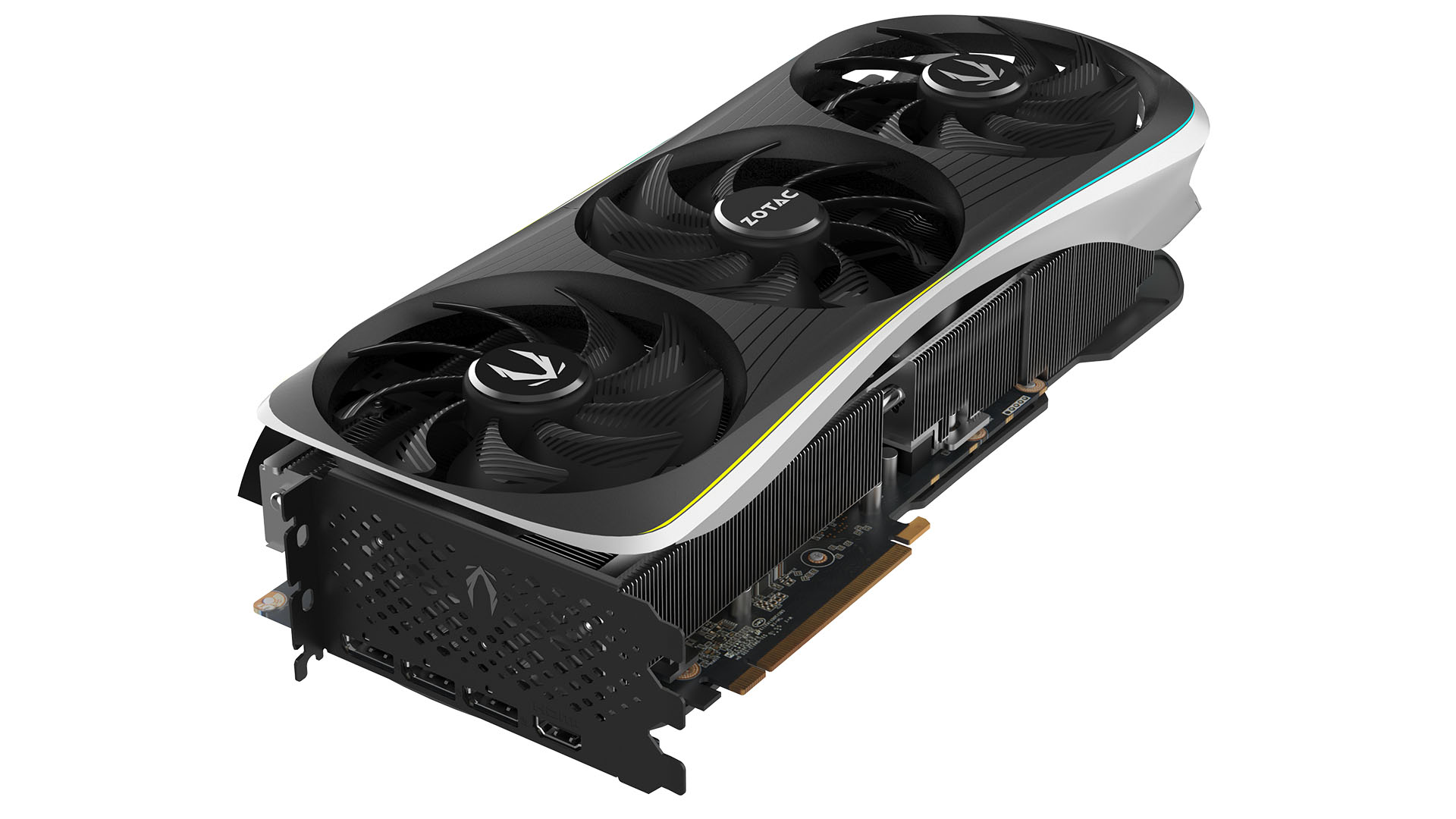
The Gigabyte RTX 4070 Windforce OC is the most complete all-rounder in this group. It takes the standard GeForce RTX 4070 and pairs it with 12GB of GDDR6X memory on a 192-bit interface, then adds a three-fan WINDFORCE cooling system. That is a sensible hardware mix for a gaming PC intended to run demanding 1440p titles without the card dominating the rest of the build.
Gigabyte gives this model the practical extras that make an installed component easier to live with. Dual BIOS gives the card two operating profiles, while the protection metal backplate adds support behind the PCB. An anti-sag bracket is also specified, which matters because a 10.27557-inch card can put noticeable leverage on a motherboard slot when installed horizontally.
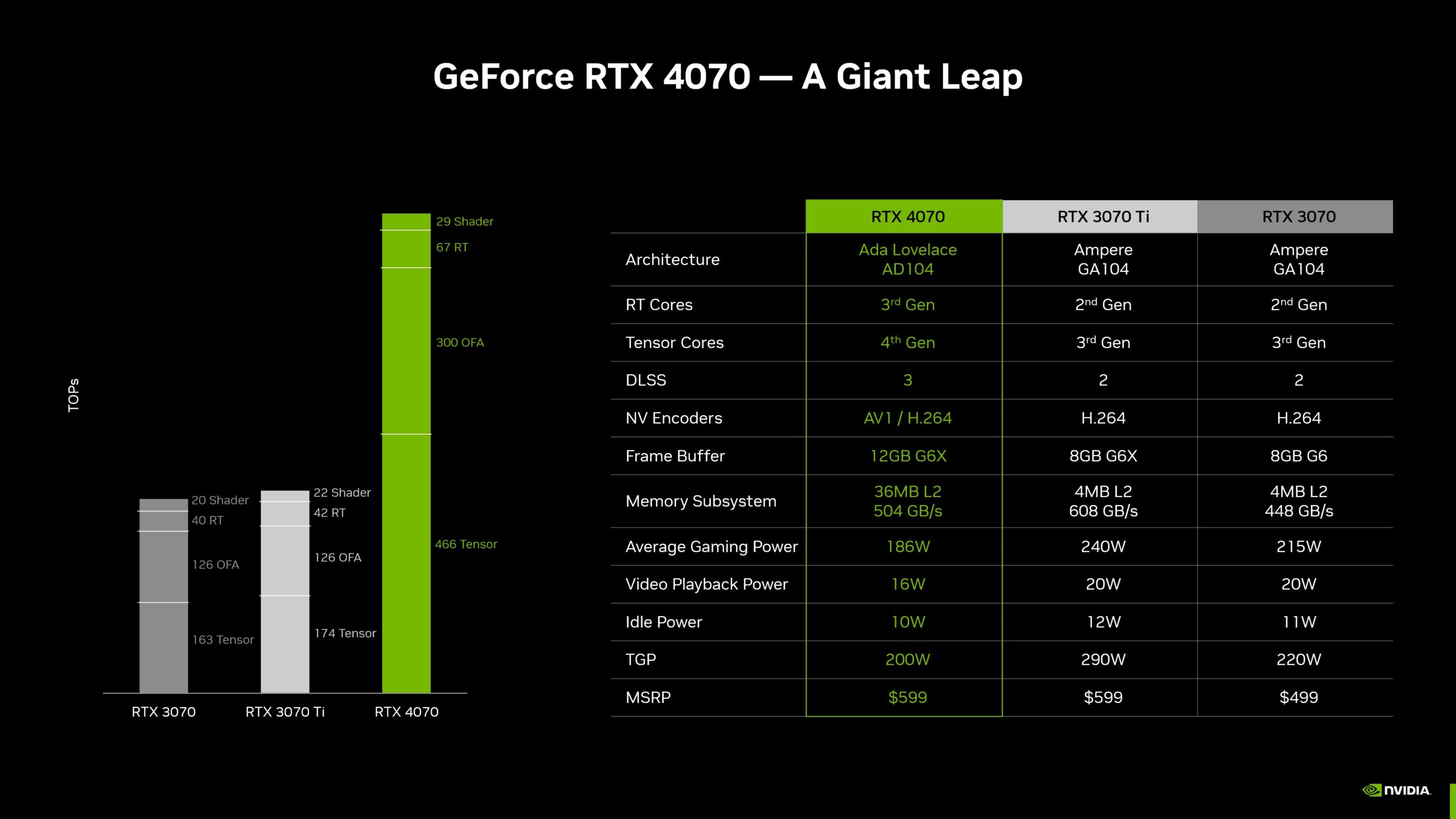
The card supports DLSS 3, full ray tracing, fourth-generation Tensor Cores, and third-generation RT Cores. Those features are more useful than the marketing labels suggest. DLSS can reduce the rendering load in supported games, while dedicated ray-tracing and Tensor hardware help the card handle lighting effects and AI-assisted image reconstruction. Readers comparing several graphics cards for a new build may also want to consider how much cooling a gaming graphics card really needs before choosing between two otherwise similar models.
The obvious trade-off is that the Gigabyte is a standard RTX 4070, while the Gigabyte RTX 4070 Super Windforce uses the more powerful Super GPU. The Super model is the one to choose when extra rendering headroom is the priority. The standard card makes more sense for a quieter, less aggressive system plan where its established cooler and clearly stated dimensions matter more than moving up one GPU tier.
Skip it if your case cannot accept a card around 10.3 inches long or if you need confirmed display-output details before ordering. For everyone else, this is the most convincing conventional RTX 4070 design in the list.
3. ASUS RTX 5060 Ti Dual: Best Newer Compact Option

Pros
- 16GB of newer GDDR7 memory
- PCIe 5.0 and DLSS 4 support
- 2.5-slot format
- Axial-tech fans with 0dB technology
- Listed at 9 inches long
Cons
- Not an RTX 4070
- Less wide memory interface than the 4070 Ti Super
- The newer feature set may not matter in older games
Best for: a compact new build where current-generation features and memory capacity matter more than matching the 4070 name.
The ASUS RTX 5060 Ti Dual is an intentional detour from the 4070 family. It uses the newer NVIDIA Blackwell architecture, 16GB of GDDR7 memory, and DLSS 4. That combination gives it a different appeal from the older Ada cards here. It is not the answer for someone who specifically needs an RTX 4070, but it deserves attention when the goal is a newer compact card with more memory.
The dimensions are more useful than the long product title suggests. The card is listed at 9 inches long, 4.7 inches wide, and 2 inches high, with a 2.5-slot design. Those measurements still require a case check, but they make it easier to place in a smaller desktop than the 11.9-inch ASUS TUF or the 12-inch ASUS Prime cards. ASUS also identifies it as SFF-Ready, which is a meaningful distinction for a small-form-factor build.
Its Axial-tech fan design uses a smaller hub, longer blades, and a barrier ring intended to increase downward air pressure. The listing also specifies 0dB technology, so the card is designed around silent fan behavior during light use. Its OC mode reaches 2632 MHz, compared with 2602 MHz in default mode. Those clock figures describe the card's factory profiles, not a guarantee of a fixed gaming speed in every chassis.
The NVIDIA RTX 4070 Super remains the more natural choice for a reader searching specifically for a 4070-class card, and the MSI RTX 4070 Ti Super Ventus has a wider 256-bit interface. The ASUS wins on newer PCIe 5.0 support, 16GB of memory, HDMI 2.1b, DisplayPort 2.1b, and a more compact body. It loses on naming clarity for this particular roundup.
Choose it only if you are comfortable comparing across generations. It is a strong small-build alternative, but shoppers who want the known Ada feature set and established RTX 4070 identity should stay with the first two cards.
4. MSI RTX 4070 Ti Super Ventus: Best for Extra Memory
Pros
- 16GB of GDDR6X memory
- 256-bit memory interface
- 2655 MHz extreme clock
- Two DisplayPort 1.4a and two HDMI 2.1a outputs specified
Cons
- Listing identifies the condition as used
- No dimensions are provided
- Triple-fan card size is not documented here
Best for: demanding users who want more video memory and a wider interface than the regular RTX 4070 provides.
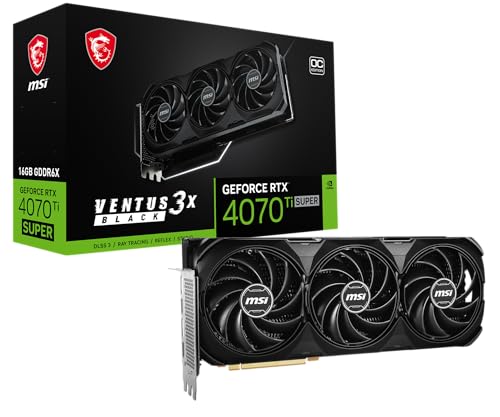
The MSI RTX 4070 Ti Super Ventus is the most capable Ada-based option in this selection on paper. Its GeForce RTX 4070 Ti Super GPU is paired with 16GB of GDDR6X memory running at 21 Gbps and a 256-bit interface. That extra capacity and wider path are useful when games, high-resolution textures, or creative applications put more pressure on video memory.
MSI specifies an extreme clock of 2655 MHz, along with two DisplayPort 1.4a connections and two HDMI 2.1a connections. The output arrangement is especially helpful for a multi-display workstation or a gaming setup that needs several modern connections without adapters. The card also uses a Ventus 3X design, indicating a three-fan cooler, though the listing does not provide the card's length, width, or height.
That missing size information is a serious planning problem for a large GPU. The Gigabyte RTX 4070 Windforce OC is easier to fit because its 10.27557-inch length and 4.96062-inch width are stated. MSI's card should not be chosen for a compact case without checking the complete manufacturer's clearance information elsewhere.
The 4070 Ti Super also changes the purpose of the purchase. The NVIDIA RTX 4070 Founders Edition is a more restrained reference card for a compact or clean-looking build, while this MSI is aimed at sustained heavy workloads. The extra memory is the reason to choose it, not a desire for the smallest or simplest installation. Readers working in video, 3D, or AI applications can also compare which graphics hardware suits different PC workloads before deciding whether the additional memory is useful to them.
The listing's used condition is another reason to approach it carefully. It may suit a buyer who has verified the card's history and physical fit, but it is not the low-friction recommendation for someone assembling a new system. If you want the strongest Ada option here and can confirm condition, case clearance, and power compatibility, this is the one with the most headroom.
5. ASUS TUF RTX 4070 OC: Best Rugged Design

Pros
- 12GB GDDR6X memory at 21 Gbps
- 2580 MHz OC mode
- Enlarged Axial-tech fans
- Dual ball bearings and reinforced exoskeleton
- GPU Tweak III support
Cons
- Large 11.9-inch length
- Heavy 2.6-pound design
- Standard RTX 4070 GPU
Best for: a roomy desktop where physical durability and cooling hardware matter more than compact dimensions.
The ASUS TUF RTX 4070 OC is built like a component intended to stay installed for years. It uses the standard GeForce RTX 4070 GPU with 12GB of GDDR6X memory at 21 Gbps, then surrounds it with a reinforced exoskeleton, larger Axial-tech fans, and dual ball bearings. The result is a card that prioritizes support and cooling hardware over a small footprint.
ASUS lists an OC mode of 2580 MHz and a default mode of 2550 MHz. The card supports DLSS 3, full ray tracing, fourth-generation Tensor Cores, and third-generation RT Cores. GPU Tweak III adds software controls for performance tweaking, thermal management, and system monitoring, so this is one of the better picks for an owner who likes to watch or adjust the card's behavior.
The physical numbers deserve attention. At 11.9 inches long, 5.5 inches wide, and 2.5 inches high, it is substantially larger than the NVIDIA RTX 4070 Founders Edition and the 9-inch ASUS RTX 5060 Ti Dual. Its listed 2.6-pound weight also makes motherboard support and case clearance worth checking before installation. The recommended power supply is 750W, which is another system-level requirement supplied in the listing.
This card's weakness is not capability but proportion. The Gigabyte RTX 4070 Windforce OC offers a three-fan cooler and a metal backplate in a shorter body, while the Gigabyte RTX 4070 Super Windforce moves to the Super GPU. The ASUS TUF earns its place through construction and cooling details, not because it is the newest or smallest option.
Buy it for a spacious case and a user who values robust hardware, long-lived fan bearings, and adjustment software. Skip it if your build is compact or if the extra bulk does not serve a specific cooling need.
6. NVIDIA RTX 4070 Founders Edition: Best Reference Design

Pros
- Compact 9.6-inch length
- 12GB GDDR6X memory
- 2.48 GHz boost clock
- 5, 888 CUDA cores
- HDMI and DisplayPort outputs
Cons
- Standard RTX 4070 rather than RTX 4070 Super
- Listing gives an incomplete height measurement
- No detailed cooler information is supplied
Best for: a clean reference-style system with limited room for a very large aftermarket card.
The NVIDIA RTX 4070 Founders Edition is the card for readers who prefer a direct NVIDIA design rather than a large board partner cooler. Its listing identifies a 2.48 GHz boost clock, 5, 888 CUDA cores, dedicated ray-tracing and Tensor cores, and 12GB of GDDR6X memory. Those are the core details needed to understand where it sits in the 4070 family.
It is also one of the easier cards here to place physically. The listed length is 9.6 inches and the width is 4.4 inches, with PCIe 4.0 and earlier PCIe 3.0 compatibility. HDMI and DisplayPort outputs are specified, making it a practical choice for a typical gaming monitor setup. The height entry is only 0.1 inches, however, so that number should not be used for a real clearance decision.
The Founders Edition supports DLSS, Game Ready and Studio drivers, NVIDIA Broadcast, G-SYNC, GPU Boost, and PCIe Gen 4. That software and feature support gives it a broad role beyond gaming. It is less specialized than the ASUS TUF RTX 4070 OC, which adds a faster OC mode and more elaborate cooling hardware, but it is easier to justify in a restrained build.
The NVIDIA RTX 4070 Super is the more compelling performance choice within the same general family, while the Gigabyte RTX 4070 Windforce OC provides more explicit cooling and structural features. The Founders Edition's case is its simplicity. There is less information about fan behavior and thermal design, but there is also less physical bulk than the oversized ASUS TUF.
Choose it when the reference design, compact length, and NVIDIA feature set are more important than factory overclocking. It is not the card to pick for maximum memory or the newest architecture, but it remains a clear, uncluttered version of the original RTX 4070 idea.
7. Gigabyte RTX 4070 Super Windforce: Best Three-Fan Super

Pros
- RTX 4070 Super GPU
- Three-fan WINDFORCE cooling system
- 12GB GDDR6X on a 192-bit interface
- Metal backplate
- Graphene nano lubricant
Cons
- 10.27-inch card needs case clearance
- No output configuration is stated
- Larger and heavier than the Founders Edition
Best for: sustained gaming sessions where a three-fan cooler is preferable to a compact reference card.
The Gigabyte RTX 4070 Super Windforce takes the strongest GPU family represented by the first-party card and puts it in a clearly documented three-fan design. It has 12GB of GDDR6X memory on a 192-bit interface, a WINDFORCE cooling system, and a protective metal backplate. For a gaming desktop that will spend long periods under load, that is a more substantial physical package than the compact Founders Edition.
The card is listed at 10.27 inches long, 4.96 inches wide, and 2 inches high, with a weight of about 2.76 pounds. It is not a small card, and the weight makes a support bracket or careful installation sensible. Its dimensions are still more manageable than the 11.9-inch ASUS TUF, but small cases should be measured rather than judged from the product name.
Gigabyte also lists graphene nano lubricant as part of the design. That is a small detail, but it points to the card's focus on fan operation and longevity. The feature list does not specify the display outputs, clock modes, or a Dual BIOS, so the Gigabyte RTX 4070 Windforce OC remains the more fully documented Gigabyte option even though this model uses the newer Super GPU.
The choice between the two Gigabyte cards is straightforward. Pick the Super Windforce when the GPU tier and sustained cooling matter most. Pick the standard Windforce when the original RTX 4070 is sufficient and you prefer a listing that spells out Dual BIOS, RGB Fusion, and an anti-sag bracket. The ASUS RTX 5060 Ti Dual is shorter and has 16GB of GDDR7, but it belongs to a different performance and architecture discussion.
This is the Super card for buyers who want an aftermarket three-fan layout without moving to the larger Ti Super class. Confirm the case clearance and outputs first, then it becomes one of the most sensible high-performance choices in the group.
8. ASUS Prime RTX 5070 White: Best White SFF-Ready Card
Pros
- Blackwell architecture and DLSS 4
- SFF-Ready design
- 12GB GDDR7 memory
- 2.5-slot format
- White finish for coordinated builds
Cons
- Not an RTX 4070
- 12-inch length is still substantial
- No memory interface is specified
Best for: a white small-form-factor gaming PC that needs newer architecture and a coordinated finish.
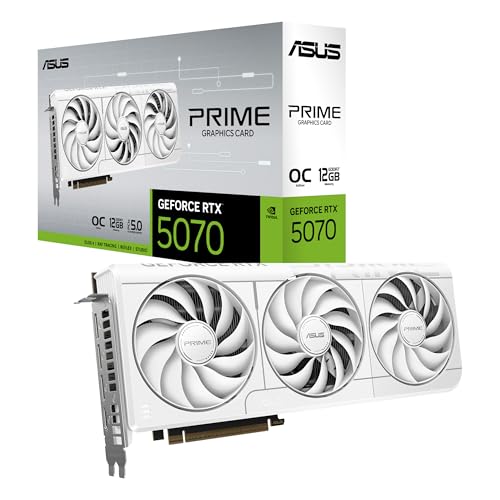
The ASUS Prime RTX 5070 White is the most visually distinctive card here, but the color is not its main reason to exist. It uses NVIDIA Blackwell architecture, DLSS 4, 12GB of GDDR7 memory, and a 2.5-slot design that ASUS describes as SFF-Ready. That makes it a current-generation alternative for a small build rather than a direct RTX 4070 replacement.
The OC mode reaches 2587 MHz, with a default mode of 2557 MHz. ASUS's Axial-tech fans use a smaller hub, longer blades, and a barrier ring intended to increase downward air pressure. Those details suggest an effort to keep cooling effective within the relatively constrained 2.5-slot format. The card is 12 inches long, 5 inches wide, and 2 inches high, so SFF-Ready does not mean universally compact.
The ASUS RTX 5060 Ti Dual is shorter at 9 inches, making it the easier fit for genuinely tight cases. The Prime RTX 5070 White offers a stronger GPU class, but its 12-inch length means the chassis must be checked carefully. The ASUS Prime RTX 5070 in black shares the same listed dimensions and core GPU specifications, so the white model is primarily the choice for a coordinated build.
Its central weakness is category fit. A shopper searching for the Best NVIDIA GeForce RTX 4070 may not want to compare a Blackwell RTX 5070 at all. Yet newer architecture, DLSS 4, and GDDR7 can make this the more sensible purchase when the system is being built from scratch and the buyer is not tied to Ada.
Choose it for a white gaming PC with enough length and depth for a 2.5-slot card. Skip it if the goal is specifically to match an existing RTX 4070 system or if your case's GPU clearance is closer to the 9.6-inch Founders Edition class.
9. PNY RTX 5070 Ti Epic-X: Best Creator-Focused Upgrade

Pros
- RTX 5070 Ti GPU
- Fifth-generation Tensor Cores
- Fourth-generation ray-tracing cores
- DLSS and Reflex support
- Epic-X RGB lighting
Cons
- Not an RTX 4070
- Dimensions are not specified
- Triple-fan design and weight suggest a larger installation
Best for: creators and developers who can use newer AI, ray-tracing, and application acceleration features.
The PNY RTX 5070 Ti Epic-X is the most obvious move beyond the original 4070 brief. It uses a GeForce RTX 5070 Ti GPU and focuses its feature list on fifth-generation Tensor Cores, new streaming multiprocessors, fourth-generation ray-tracing cores, DLSS, and Reflex. It is aimed at more than frame rates, with explicit support for AI-assisted work and creative applications.
PNY also calls out NVIDIA Studio drivers and RTX acceleration in creative applications. That matters to a user who works across editing, 3D, AI, or development tools, because driver stability and application support can be as important as game performance. Reflex is aimed at reducing pipeline latency in competitive games, so the card has a credible gaming role too.
The listing does not provide memory capacity, memory type, clock speed, display outputs, or physical dimensions. It does identify the card as a triple-fan model and lists a weight of 3 pounds, but the height, length, and width fields are all zero. Those omissions make it impossible to make a responsible case-fit claim. The MSI RTX 4070 Ti Super Ventus is much easier to evaluate for memory-heavy work because its 16GB GDDR6X capacity and 256-bit interface are specified.
This PNY card is also not the right answer for someone who wants a known 4070-family purchase. The NVIDIA RTX 4070 Super is the cleaner match for that search, while the ASUS Prime RTX 5070 models offer documented SFF-Ready dimensions and 12GB of GDDR7. PNY's advantage is its newer Ti-class positioning and creator-oriented feature set.
Buy it when those newer AI and Studio features are central to the PC, and confirm the full physical and power specifications before installation. For a straightforward 1440p gaming system, it is more GPU than the brief requires and less documented than the better-matched options.
10. ASUS Prime RTX 5070: Best Thermal Feature Set

Pros
- Blackwell architecture and DLSS 4
- 12GB GDDR7 memory
- SFF-Ready 2.5-slot design
- Axial-tech fans
- Phase-change GPU thermal pad
Cons
- Not an RTX 4070
- 12-inch length limits small-case compatibility
- No memory interface or clock speed is specified
Best for: a compact-to-mid-size PC where thermal-transfer hardware and Dual BIOS matter.
The ASUS Prime RTX 5070 is the black counterpart to the white model above, with a feature that makes it the more interesting of the two for sustained workloads. ASUS specifies a phase-change GPU thermal pad intended to improve heat transfer and lower GPU temperatures. It also uses Blackwell architecture, DLSS 4, 12GB of GDDR7, and a 2.5-slot SFF-Ready design.
The cooling layout uses Axial-tech fans with a smaller hub, longer blades, and a barrier ring designed to increase downward air pressure. The card measures 12 inches long, 5 inches wide, and 2 inches high, and weighs 2.3 pounds. Those figures are reasonable for a mid-size gaming tower, but the length is too much to ignore in a compact chassis.
The ASUS Prime RTX 5070 White has the same listed dimensions and similar core specifications, so the choice between them is mainly about the finish and this model's explicitly listed phase-change thermal pad. The ASUS RTX 5060 Ti Dual is much shorter and also includes a 0dB fan feature, making it more attractive for a very small or quiet system. The Prime RTX 5070 is the stronger thermal-focused option, not the easiest card to fit.
It is another cross-generation alternative rather than a direct answer to the RTX 4070 question. The Gigabyte RTX 4070 Super Windforce stays closer to the requested family and provides a three-fan cooler with a metal backplate, while the ASUS Prime brings newer architecture and memory technology. Neither should be selected without checking the rest of the system's compatibility.
Choose this model when DLSS 4, GDDR7, and the phase-change thermal pad have a clear role in your build. If you simply want an RTX 4070-class card with fewer variables, the NVIDIA or Gigabyte models above are easier recommendations.
How to choose best nvidia geforce rtx 4070
The right card depends on more than the number in its name. Compare the GPU generation, memory, cooling design, physical clearance, and outputs against the needs of the complete PC.
GPU generation
The RTX 4070, RTX 4070 Super, and RTX 4070 Ti Super use NVIDIA's Ada Lovelace generation in this selection. The RTX 5060 Ti and RTX 5070 models use Blackwell, with DLSS 4 identified in their listings. A newer generation can bring newer AI and rendering features, but a 4070-family card may be the better fit when compatibility and the intended performance tier are already clear.
Video memory
Memory capacity matters when games use large textures, when multiple displays are active, or when creative applications load substantial projects. The standard 4070 models here have 12GB of GDDR6X, the MSI Ti Super has 16GB of GDDR6X, and the ASUS 5060 Ti has 16GB of GDDR7. Do not assume that a newer memory type automatically makes every card faster, since GPU class and memory interface also shape performance.
Choose memory for the applications you actually run, not for a specification that sounds newer in isolation.
Cooling and fan layout
A three-fan design such as the Gigabyte Windforce cards is intended for sustained heat dissipation, while the Founders Edition takes a more compact reference approach. ASUS adds enlarged Axial-tech fans to the TUF model, 0dB technology to the Dual 5060 Ti, and a phase-change thermal pad to the Prime 5070. Good cooling needs enough case airflow around it, so a large cooler cannot compensate for a cramped or poorly ventilated enclosure.
Card dimensions
Length, width, height, slot thickness, and weight all affect installation. The Founders Edition is listed at 9.6 inches long, the ASUS Dual RTX 5060 Ti at 9 inches, and the ASUS TUF RTX 4070 at 11.9 inches. The ASUS Prime RTX 5070 cards reach 12 inches, despite being described as SFF-Ready. Measure the case's GPU clearance and account for adjacent slots before choosing.
Display outputs and platform support
The MSI card explicitly lists two DisplayPort 1.4a outputs and two HDMI 2.1a outputs. The Founders Edition lists HDMI and DisplayPort connectivity, while the ASUS 5060 Ti lists HDMI 2.1b and DisplayPort 2.1b. Check the monitor connections, desired resolution, and number of screens together. PCIe compatibility is broad across these cards, but the exact power and physical requirements still need confirmation for the individual model.
Frequently asked questions
Is the RTX 4070 Super better than the original RTX 4070?
The RTX 4070 Super is the higher-tier version represented by the NVIDIA and Gigabyte cards in this list. The original RTX 4070 remains useful for a more restrained system, but the Super model is the stronger starting point when the two are otherwise suitable.
Is 12GB of graphics memory enough for gaming?
Twelve gigabytes can be suitable for many 1440p gaming systems, especially when the rest of the GPU is well matched to the display. The MSI RTX 4070 Ti Super and ASUS RTX 5060 Ti provide 16GB for users whose games or applications place heavier demands on memory.
Which card is easiest to fit in a smaller PC?
The ASUS RTX 5060 Ti Dual is listed at 9 inches long and 2.5 slots thick. The NVIDIA Founders Edition is listed at 9.6 inches long. SFF-Ready branding on the ASUS Prime RTX 5070 cards is useful, but their listed 12-inch length still requires a large enough case.
Should I choose a three-fan graphics card?
A three-fan cooler can be a sensible choice for sustained gaming or other heavy workloads, provided the case has enough room and airflow. The Gigabyte Windforce models and PNY Epic-X use three-fan designs, while the smaller cards may be easier to install in compact systems.
Does DLSS matter when choosing an RTX card?
DLSS can reduce rendering load and improve supported-game performance, so it matters when the games you play use it. The 4070 models list DLSS 3, while the newer ASUS and PNY cards list DLSS 4 or newer Blackwell-related features. It should be treated as one part of the decision rather than a substitute for suitable raw GPU capability.
Is the MSI RTX 4070 Ti Super suitable for creative work?
Its 16GB of GDDR6X memory, 256-bit interface, and 2655 MHz extreme clock make it the most explicitly memory-equipped Ada card here. It is worth considering for applications that can use extra graphics memory, but the listing does not provide physical dimensions and identifies the condition as used.
Do I need a new motherboard for these graphics cards?
The NVIDIA RTX 4070 Founders Edition is listed as compatible with PCI Express 4.0 and earlier PCI Express 3.0. The newer ASUS cards list PCIe 5.0. Compatibility depends on the motherboard slot, case, power supply, and available clearances, so the graphics card should be checked against the entire system rather than the slot generation alone.
The bottom line
The Best NVIDIA GeForce RTX 4070 choice is the NVIDIA RTX 4070 Super when the priority is the stronger 4070-family GPU and a direct match for this category. Choose the Gigabyte RTX 4070 Windforce OC instead when a documented three-fan cooler, Dual BIOS, backplate, and anti-sag bracket are more useful than moving to the Super model.
The MSI RTX 4070 Ti Super Ventus is the specialist pick for extra memory and a wider interface, while the ASUS RTX 5060 Ti Dual and ASUS Prime RTX 5070 cards make sense only when newer Blackwell features or small-form-factor compatibility matter more than staying with the RTX 4070 family.
If you are undecided, start with the NVIDIA RTX 4070 Super, then verify card length, slot thickness, power requirements, and monitor outputs before ordering.
As an Amazon Associate we earn from qualifying purchases.