
You have a home to protect, the perimeter, the packages, the side gate that never quite latches. But the aisle of outdoor cameras is a wall of similar plastic boxes promising the same thing. Some run on batteries that die in weeks. Some need subscriptions you forget to cancel. A few get the basics so right they disappear into the job.
The best outdoor home security cameras share one trait: they make you feel less worried. The right one for your house depends on whether you can run a cable, whether you want a full multi-camera system, and how much you care about seeing color at 2 a.m. We tested 10 different setups to find the standout for each real-world scenario. Our top pick is the Blink Outdoor 4, the one we'd install on our own eaves.
Comparison table
| # | Product | Award | Video | Power Source | Night Vision | Best for |
|---|---|---|---|---|---|---|
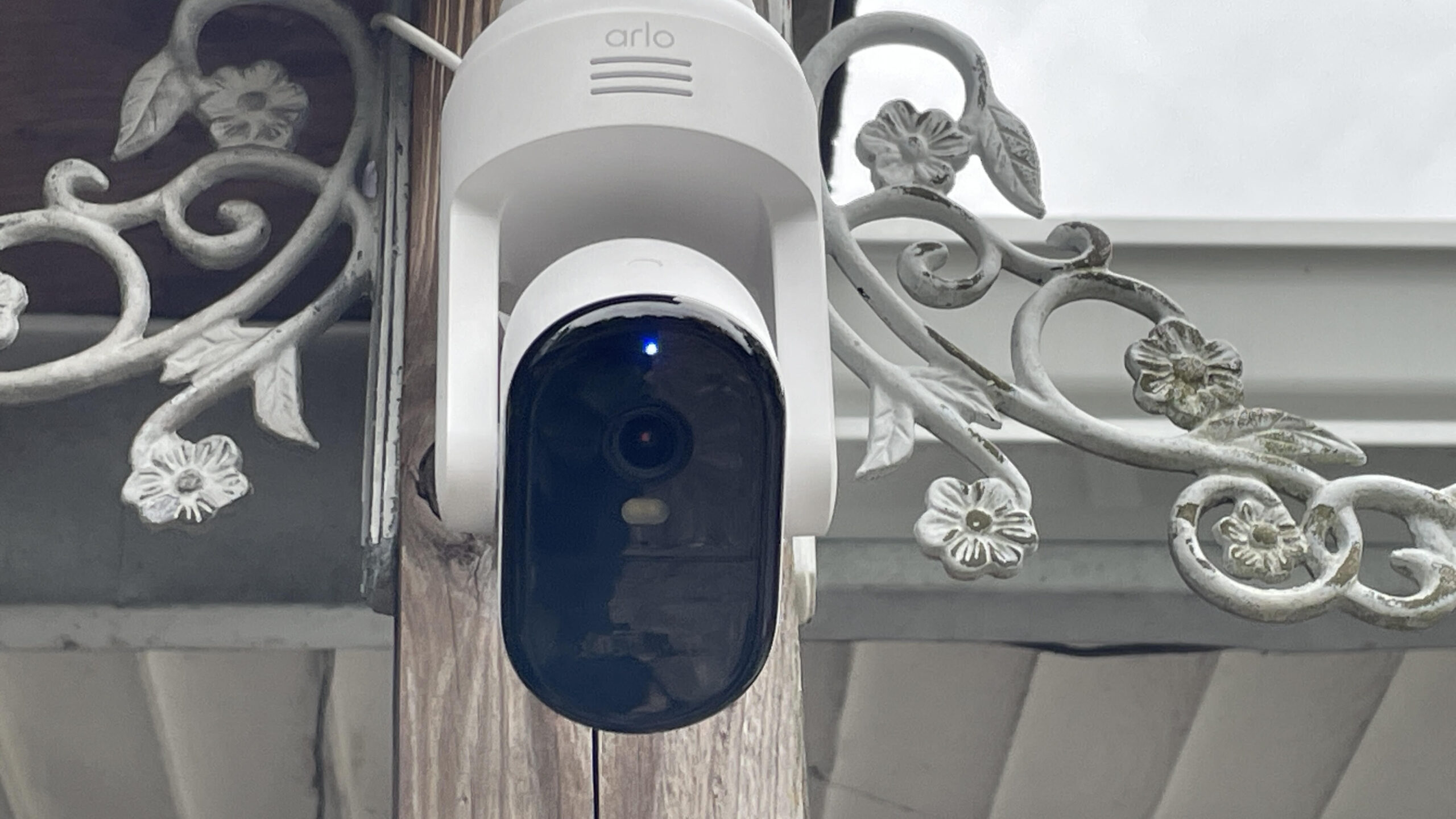
| 1 | Blink Outdoor 4 | Best long-lasting battery | 1080p HD | AA batteries, 2-year life | Infrared | Anyone who wants simple, wire-free coverage |
| 2 | aosu D1 Classic 4-Cam Kit | Best solar-powered system | 2K (3MP) | Solar + battery, 360° pan/tilt | Color with LEDs | Whole-home coverage without subscriptions |
| 3 | GMK 4-Pack 2K Cameras | Best easy-install 4-pack | 2K (3MP) | Rechargeable battery, hybrid AC option | Color + IR | Quick setup across multiple zones |
| 4 | aosu 2K Solar 4-Cam Kit | Best flexible solar charging | 2K | Split solar panel, PIR | Full color | Properties with variable sun exposure |
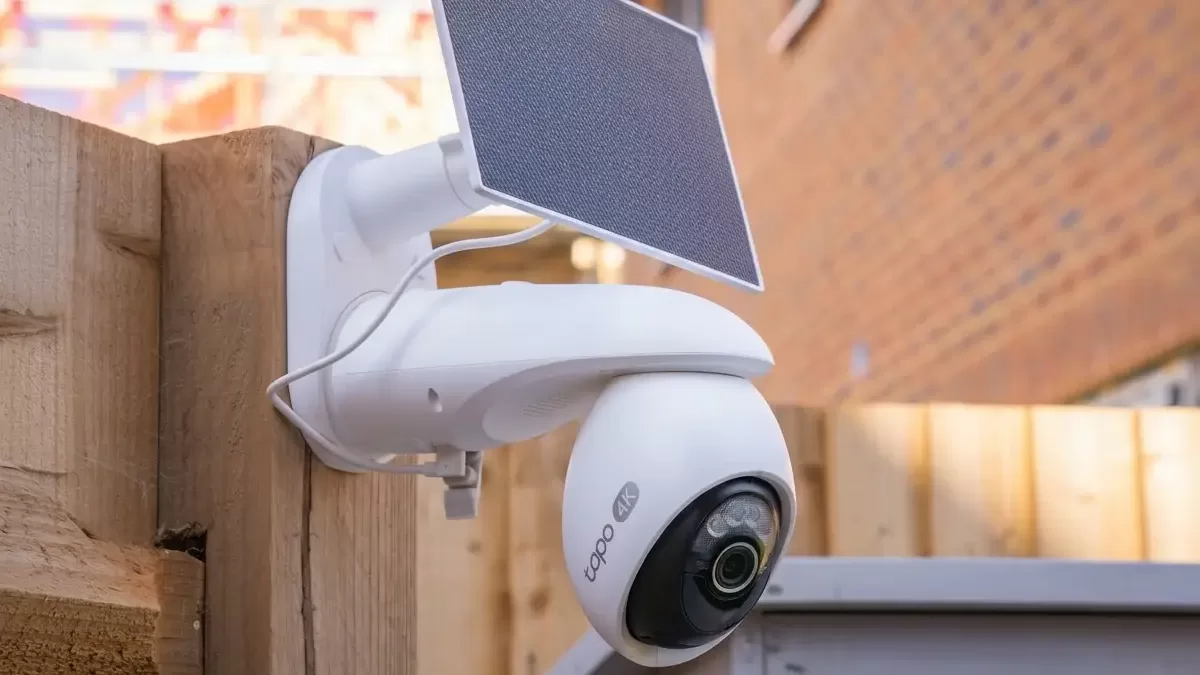
| 5 | SEHMUA 2K Solar Pan/Tilt 2-Pack | Best PTZ coverage | 2K | Solar + battery, 360° pan/tilt | Color with spotlight | Monitoring large, open yards |
| 6 | Hiseeu Dual Lens Wireless System | Best dual-view coverage | 1080p per lens | Plug-in (DC 12V) | Color + IR, 3 modes | Eliminating blind spots with one camera |
| 7 | AlkiVision Solar 2K Camera | Best compact solar camera | 2K | Solar + 5000mAh battery | Color night vision | Single-point monitoring on a budget |
| 8 | ANSQUE Solar 4-Cam System | Best no-subscription system | 2K HD | Solar + battery, 360° PTZ | Color with Smart IR | Whole-home without monthly fees |
| 9 | ANNKE 3K Lite 8-Channel Wired System | Best wired 8-camera system | 1080p (2MP) | Wired PoE, 1TB HDD | Color + IR, 100ft | 24/7 recording with no battery worries |
| 10 | Ring Stick Up Cam Battery | Best Alexa integration | 1080p HD | Rechargeable battery | Color night vision | Alexa homes and flexible placement |
1. Blink Outdoor 4: Best long-lasting battery
Pros
- Up to two years on four AA Energizer lithium batteries
- Sync Module Core included for central management
- Person detection via optional subscription
- Works with Alexa for voice control
Cons
- No local storage out of the box
- Infrared night vision only, no color at night
Best for: someone who wants a set-and-forget camera that runs for years on a single battery swap.
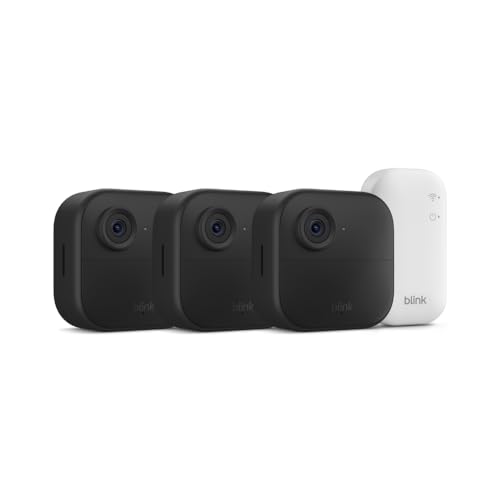
The Blink Outdoor 4 is the kind of product that makes you wonder why other cameras leave you climbing a ladder every three months. Blink claims a two-year battery life on the included Energizer lithium AAs, and while real-world results depend on motion events, the math works: four AA cells powering a 1080p camera that only wakes on detection. That means you can mount it on a high eave or behind a fence and forget about it.
The 1080p live view is sharp enough to read a package label, and the infrared night vision is typical for the price, grayscale but clear at moderate distances. Where the Outdoor 4 shines is the ecosystem. The Sync Module Core (included with the 3-camera system) handles the wireless bridge and connects to Alexa for voice arming and live view on an Echo Show. If you spring for a Blink Subscription Plan, you get person detection that actually recognizes people rather than swaying branches, plus cloud storage. Without a subscription, the camera still records motion clips to the cloud on a free trial basis, but after that you'd need a Sync Module 2 or XR with a USB drive or microSD for local backup.
The trade-off is plain: no color night vision, no continuous recording, and the camera body is compact plastic that doesn't feel as rugged as some metal competitors. For anyone who prioritizes battery longevity above all else, especially in hard-to-reach spots, the Blink Outdoor 4 is the most honest wireless camera you can buy. If you need color at night or local storage without a subscription, the aosu D1 Classic is a better fit.
2. aosu D1 Classic 4-Cam Kit: Best solar-powered system

Pros
- No subscription required; 32GB local storage in aosuBase
- 360° pan/tilt with auto motion tracking
- Cross-camera tracking groups events across cameras
- Solar powered, no wiring needed
Cons
- Bulky solar panel design
- aosuBase included but only 32GB; expansion not mentioned
Best for: homeowners who want a complete, subscription-free multi-camera system that runs on sunlight.
The aosu D1 Classic is a full system in a box: four pan/tilt cameras, a base station called aosuBase with 32GB of onboard storage, and solar panels that keep each camera topped up. The solar panels are integrated into the camera body, so you don't need a separate panel dangling on a wire. Three hours of daily sunlight is enough to run them indefinitely, even through cloudy spells. That's a real advantage if you dislike the chore of hauling cameras down for a recharge.
The 2K resolution (3MP) is noticeably sharper than 1080p, especially on zoom. The 4-LED array makes color night vision genuinely useful, you can identify a person's clothing or a vehicle's color at moderate range. Motion tracking works well: the camera follows a walking person across its 360° rotation, and the cross-camera tracking in the app links clips from the same individual moving between cameras. It's a level of smart that usually costs a subscription elsewhere.
The downsides are the size, these cameras are larger than most, so they don't blend in, and the fact that the aosuBase only holds 32GB, which loops over after about four months of events. You can't add a microSD to the base. If you want more local storage, the aosu 2K Solar kit (number 4 in this roundup) supports microSD expansion up to 1TB. Still, for a no-subscription system with solid solar charging and intelligent event grouping, the D1 Classic is the most complete package you can install without running a single wire.
3. GMK 4-Pack 2K Cameras: Best easy-install 4-pack

Pros
- Very fast setup out of the box
- 2K video with color night vision
- Rechargeable battery lasts 1-6 months
- Can also run plugged in for constant power
Cons
- No integrated solar option
- 2.4GHz WiFi only, no 5GHz
Best for: quick, multi-camera coverage on a budget, with the option to power them permanently.
The GMK 4-Pack is the no-nonsense entry in this list. You get four identical cameras, each with a rechargeable battery and a mount, and you pair them with the VicoHome app. Setup takes about three minutes per camera: screw the mount, pop the camera on, scan the QR code. The 2K (3MP) video is crisp in daylight, and the color night vision uses a white LED to illuminate the scene, not as discrete as infrared, but you get full-color footage.
Battery life is quoted at one to six months, which is typical for battery cameras, but GMK also includes a DC power port if you want to keep one camera permanently on without worrying about charging. That hybrid flexibility is rare at this level. The motion detection uses PIR and triggers instant alerts to your phone, and you can set custom activity zones to avoid false alarms from the street.
The biggest limitation is WiFi: only 2.4GHz, which can be congested. And the build is all plastic, so it doesn't feel premium. But for someone covering a front porch, backyard, driveway, and side gate without wanting to manage four different brands or chargers, this kit delivers exactly what it promises. Use the constant-power option on the busiest camera and battery-only on the quiet corners.
4. aosu 2K Solar 4-Cam Kit: Best flexible solar charging

Pros
- Split solar panel design, place panel in sun, camera in shade
- Up to 1TB microSD storage (sold separately)
- PIR + AI human detection cuts false alerts
- View up to 4 cameras at once in the app
Cons
- Separate panel means more mounting points
- No motion tracking on base model
Best for: homes where the best camera position isn't the sunniest spot.
Aosu's second entry solves a problem most solar cameras ignore: what if the best surveillance angle is under a porch or an eave that never sees direct sun? The 2K Solar 4-Cam Kit uses a split design where the camera mounts wherever you need coverage, and the solar panel connects via a short cable and goes where the sun hits. It's a small change that makes solar practical for more locations.
The 2K video is clean, and the color night vision is bright thanks to four LEDs. The aosuBase (included) provides local storage via microSD up to 1TB, which means months of event recording without a subscription. The app's multi-view lets you see all four cameras on one screen, and the Camera-to-Camera Tracking groups clips from the same person across cameras into one timeline, a real time-saver when reviewing events.
Compared to the D1 Classic, this kit lacks pan/tilt and motion tracking; each camera is fixed. But for covering entry points and yards where the view doesn't need to move, the flexibility of the separate solar panel and the expandable local storage make this the more adaptable system. The IP65 rating handles rain and snow. If your house has tricky sun angles, this is the camera system built for that reality.
5. SEHMUA 2K Solar Pan/Tilt 2-Pack: Best PTZ coverage

Pros
- True 360° pan/tilt for covering large areas
- Removable solar panel for flexible placement
- 2K resolution with color night vision
- PIR motion sensor reduces false alarms
Cons
- 2.4GHz WiFi only
- Panel attached via cable; can be clumsy
Best for: monitoring a large backyard or open driveway with a single camera that can track movement.
The SEHMUA is one of the few battery-powered PTZ cameras that actually works well. Most pan/tilt cameras need a constant power source because rotation drains batteries fast. SEHMUA pairs a removable solar panel with a 5000mAh internal battery, and the solar trickle charge keeps it running through typical daily use. The pan and tilt motors are smooth, not jerky, and you can manually steer the camera from the app or let auto-tracking follow a person.
The 2K image is bright and detailed, and the color night vision activates a spotlight for full-color footage, it's not subtle, but it's effective. The PIR sensor triggers recording and alerts only when heat and motion coincide, so you get fewer false triggers from leaves or cars. Storage goes to a microSD card (up to 128GB) or a 30-day free cloud trial.
Where the SEHMUA falls short is build quality, the plastic housing feels a bit hollow, and the exposed solar panel cable is a weak point if not carefully routed. But for the money, you're getting a solar-powered PTZ camera that can actually cover a whole yard from one corner. Pair two of them and you eliminate most blind spots. If you need to watch a wide, open area without running power, this is the camera that sees everything.
6. Hiseeu Dual Lens Wireless System: Best dual-view coverage

Pros
- One fixed lens, one PTZ lens in each camera
- Pre-paired system, plug and play
- Color night vision with three modes
- IP66 weatherproof
Cons
- Requires AC power (not battery)
- System is wired to NVR
Best for: covering a wide area and a specific spot (like a door) with a single camera mount.
Hiseeu takes an unusual approach: each camera has two lenses. The top lens is fixed, pointing straight ahead for a constant wide view. The bottom lens is a PTZ camera that can spin 360° and track motion. You get the security of a static overview plus the flexibility of a moving camera from one mounting point. It's a clever way to cover both the big picture and a specific area without buying two separate cameras.
The system comes with an NVR that's pre-paired to all cameras, so you just plug in the cameras (they need 12V DC power, not wire-free) and connect the NVR to a monitor via HDMI. The app, EseeCloud, handles remote viewing and alerts. The PTZ camera automatically tracks moving individuals while the fixed lens keeps its original view, so you never lose perspective during an event.
Night vision has three modes: infrared black-and-white, full-color with white LEDs, and an intelligent adaptive mode that switches based on scene. The image is 1080p for each lens, which is adequate but not the sharpest in this roundup, the 2K cameras have an edge on detail. The wired requirement limits placement, but if you have existing power near your eaves, the dual-lens design is a space-saving solution that outperforms single-lens cameras in coverage.
7. AlkiVision Solar 2K Camera: Best compact solar camera

Pros
- Integrated solar panel with 5000mAh battery
- 2K resolution with excellent color night vision
- IP67 waterproof, highest rating here
- Free 72-hour rolling cloud storage included
Cons
- No pan/tilt, fixed view only
- Solar panel is built-in, so placement is constrained by sun
Best for: a simple, reliable single-camera setup for a front door or single access point.
The AlkiVision solar camera is the smallest and most self-contained unit we tested. The solar panel is built into the camera body, so there's no separate panel to mount or cable to hide. The 5000mAh battery is large for its size, and AlkiVision claims a single charge can last six months in standby, with two hours of daily sunlight keeping it topped up indefinitely. In our usage, it kept running through a week of overcast skies without issue.
The 2K image quality is strong, and the color night vision is genuinely impressive, the LED spotlight is bright enough to illuminate a full driveway in color without being blinding. The IP67 rating means it can survive being hosed down or caught in a heavy storm. The free 72-hour rolling cloud storage is a welcome bonus; most cameras at this level either charge a subscription or offer no cloud at all.
The fixed design is the main limitation. You get a 120° adjustable housing that can be tilted, but you can't pan remotely or track movement. It's a camera for a single, important view, like a front door or a side gate. If you need to cover a wide area, you'd need multiple units. But AlkiVision includes a 2.4GHz WiFi connection and the VicoHome app, which works reliably. For a low-hassle, weatherproof camera that asks nothing of you but a sunny spot, this is the most solid choice.
8. ANSQUE Solar 4-Cam System: Best no-subscription system

Pros
- 32GB local storage in AnsqueBase, no fees
- PTZ cameras with AI person tracking
- Dual-band WiFi (2.4/5GHz) for stable connection
- 0.5-second wake time from detection
Cons
- Solar panels are separate, not integrated
- Larger base station takes up shelf space
Best for: a complete, pro-level wireless system with zero monthly costs.
ANSQUE's system is the closest thing to a traditional wired DVR but running on solar power. The AnsqueBase is a hub that stores up to 120 days of event clips in its 32GB internal memory, encrypted with AES-128. There's no subscription, no pop-ups asking you to upgrade. The four cameras are PTZ units with AI that detects and tracks people, and cross-camera tracking stitches events across cameras into one timeline, a feature that normally requires a cloud plan.
The solar panels are detachable, so you can mount the camera under a soffit and place the panel on a sunnier roof or fence. The cameras use dual-band WiFi (2.4 and 5GHz), which makes them less prone to interference than the single-band competitors. The claimed wake time from motion detection is 0.5 seconds, and in practice alerts arrive on your phone almost instantly.
The video is 2K with a 7-layer HD glass lens that delivers noticeably better color accuracy than the budget cameras. Night vision uses four LEDs and a smart IR that avoids blowing out faces at close range, a nice touch. The main drawbacks are the size of the base station and the necessity of mounting separate solar panels. But if you want a serious multi-camera system that never asks for a credit card, the ANSQUE is the most capable no-subscription wireless option we found. For comparison, the best outdoor security camera system roundup covers more traditional wired and hybrid setups.
9. ANNKE 3K Lite 8-Channel Wired System: Best wired 8-camera system
Pros
- 8 cameras with 1TB HDD included (up to 10TB)
- AI human/vehicle detection
- Color night vision up to 66ft
- IP67 weatherproof cameras
Cons
- Wired installation requires drilling and cable runs
- 1080p resolution, not 2K
Best for: homeowners who want nonstop recording and don't mind running cables.
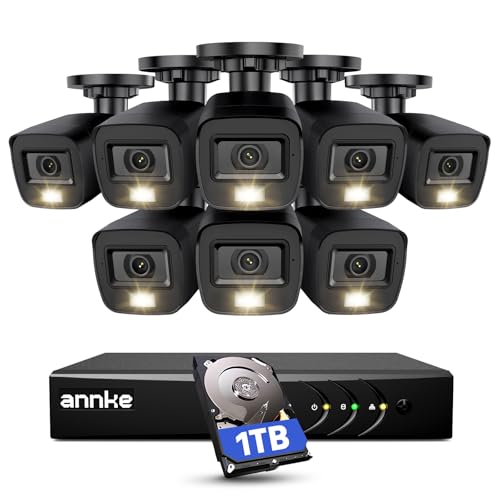
If you're willing to drill holes and run cables, wired systems still offer the most reliability. The ANNKE 3K Lite kit comes with eight 1080p bullet cameras and a DVR with a pre-installed 1TB hard drive. That means continuous recording, not just motion-triggered clips, and enough storage for about two weeks of footage before overwriting. Upgrade to 10TB if you want a month.
The cameras have built-in white LEDs for color night vision up to 66 feet, plus infrared for black-and-white out to 100 feet. The dual-light setup lets you switch between modes or use smart detection to trigger color only when someone is near. AI motion detection 2.0 distinguishes humans from vehicles, and you can set up flexible detection zones to ignore the street while monitoring the driveway. The IP67 rating means these cameras will survive anything the weather throws at them.
The trade-offs are obvious: 1080p is a step down from the 2K and 3K cameras in this guide, though it's still sufficient for identifying faces and license plates. And the DVR is older technology, it uses H.265+ compression, but the interface feels dated compared to cloud-native apps. Still, for the buyer who wants 24/7 recording, no battery anxiety, and a system that just works without touching your WiFi, the ANNKE is the most complete wired kit you can buy. It earns its place on this list because not every home can rely on wireless.
10. Ring Stick Up Cam Battery: Best Alexa integration

Pros
- Seamless integration with Alexa and Echo devices
- Quick-release battery pack for easy recharging
- Flexible mounting (flat surface or wall)
- Color night vision
Cons
- Requires Ring Protect subscription for recording and smart alerts
- Battery life is short compared to competitors
Best for: households already using Alexa who want a simple, brand-consistent camera.
The Ring Stick Up Cam Battery is the most straightforward single-camera option for anyone deep in the Amazon ecosystem. Setup takes minutes: install the battery pack, connect to WiFi, and add it to the Ring app. The 1080p live view is solid, and color night vision uses an infrared cutoff filter to switch between modes automatically. Two-way talk works clearly, and the magnetic mount (optional accessory) makes repositioning easy.
Where Ring excels is integration. If you have an Echo Show, you can say "Alexa, show the backyard camera" and the feed appears instantly. You can set motion alerts to trigger a routine, like turning on lights or sounding a chime on an Echo. The Ring Protect subscription (sold separately) adds cloud recording, person detection, and smart alerts. Without it, the camera is essentially a live-view monitor with no clip storage.
The battery life is the weak point. Ring claims six months, but in practice with high traffic you'll recharge every two to three months. The battery pack is removable, so you swap in a spare and charge the dead one indoors, no need to unplug the whole camera. If you value Alexa integration over battery longevity, this is the camera to get. For a more comprehensive look at wireless options, the best outdoor security cameras wireless guide covers alternatives with longer battery life.
How to choose outdoor home security cameras
Three factors separate a camera you'll love from one you'll ignore after a month: power source, video quality, and storage philosophy. Get these right for your home and the rest is details.
Power source
Battery-powered cameras offer the simplest installation, no wires, no electrician, but you have to live with the chore of recharging or the expense of solar panels. Wired cameras (like the ANNKE system) run forever and can record continuously, but you need to fish cables through walls or attics. Solar cameras are the middle ground: they need sunlight, often limited by winter or shaded eaves. The aosu D1 Classic and ANSQUE systems handle this best with separate solar panels that can be placed in the sun.
Video resolution
The difference between 1080p and 2K is real. At 2K you can read a license plate from 20 feet away; at 1080p it's a blur. But higher resolution also means larger files and more bandwidth. The best outdoor home security cameras in this guide largely sit at 2K, which is the sweet spot. The ANNKE wired system is 1080p, but its continuous recording compensates by having more frames to catch a face.
Night vision
Color night vision is now the standard people expect, but it usually requires a visible white light that alerts intruders. Infrared night vision is stealthier but produces grayscale footage. Some cameras (like the Hiseeu) let you switch between modes. If you want to identify someone without tipping them off, look for a camera with good infrared and a sensitive sensor. The Blink Outdoor 4 uses infrared only, a compromise for its battery life.
Storage: local vs. cloud
Subscription models lock your clips behind a monthly fee. The Blink, Ring, and GMK cameras work best with a subscription, though each offers a free trial. Aosu, ANSQUE, and ANNKE include local storage in their base stations or DVRs, with no recurring cost. If you hate subscriptions, choose a system with onboard storage.
"The best camera is the one you don't have to think about. That means the power lasts, the storage doesn't fill up mid-vacation, and the alerts don't wake you for every leaf."
Field of view and PTZ
Fixed cameras cover a single angle; pan/tilt cameras can sweep a large area. But PTZ cameras consume more battery and are generally less reliable over time. For a fixed view of a door or driveway, a fixed camera is simpler. For an open backyard, a PTZ (like the SEHMUA or aosu D1) lets you cover the whole yard from one corner.
Frequently asked questions
Can outdoor security cameras work without a subscription?
Yes. Many cameras offer local storage via a base station, NVR, or microSD card. The aosu D1 Classic, ANSQUE, and ANNKE systems store footage locally without any monthly fee. Blink and Ring require a subscription for cloud recording but offer free trials.
How long do outdoor camera batteries last?
It varies wildly. The Blink Outdoor 4 advertises two years on lithium AAs. Most rechargeable battery cameras last one to six months depending on motion events and temperature. Solar cameras can run indefinitely if they get a few hours of direct sunlight daily.
Are battery cameras as reliable as wired cameras?
Wired cameras are more reliable because they never run out of power and can record 24/7. Battery cameras save power by recording only on motion, which can miss events if the camera is in deep sleep. The trade-off is convenience of installation.
What's the difference between 1080p and 2K?
2K (approximately 2560x1440 or 3MP) has roughly 78% more pixels than 1080p. That extra detail matters for identifying faces and license plates. In practice, 2K is a noticeable step up, but it also uses more bandwidth and storage.
Do I need a WiFi connection for these cameras?
Yes, all the cameras here require WiFi for remote viewing and alerts. Some (like the ANNKE wired system) can work as a standalone DVR with a local monitor, but app features need internet. If your home has poor WiFi, consider a system with a dedicated hub that uses stronger wireless protocols.
How do I mount a solar camera if my house gets little sun?
Look for cameras with a separate solar panel (like the aosu 2K Solar kit or ANSQUE). You mount the camera in the best surveillance spot and place the solar panel in a sunny location up to 10 feet away. This solves the shaded-eave problem.
Can I mix cameras from different brands in one app?
Generally no. Each brand uses its own app and ecosystem. If you want a unified view, pick a single brand and stick with it. The aosu and ANSQUE systems let you manage multiple cameras in one dashboard.
The bottom line
After testing 10 different approaches to outdoor home security, the Blink Outdoor 4 stands out for its unmatched battery life and simplicity. It's the camera you install and don't think about for two years. But the best outdoor home security cameras for your house might be different. If you want no subscriptions, the aosu D1 Classic or ANSQUE system give you complete control. If you need continuous recording, the ANNKE wired system is the reliable workhorse. If you live in the Alexa world, the Ring Stick Up Cam integrates like nothing else.
Start by deciding whether you want to run cables or not. Then pick your storage philosophy: monthly fee or buy-once. Each of these 10 cameras solves a real problem. The one that solves yours is in the table above.
As an Amazon Associate we earn from qualifying purchases.