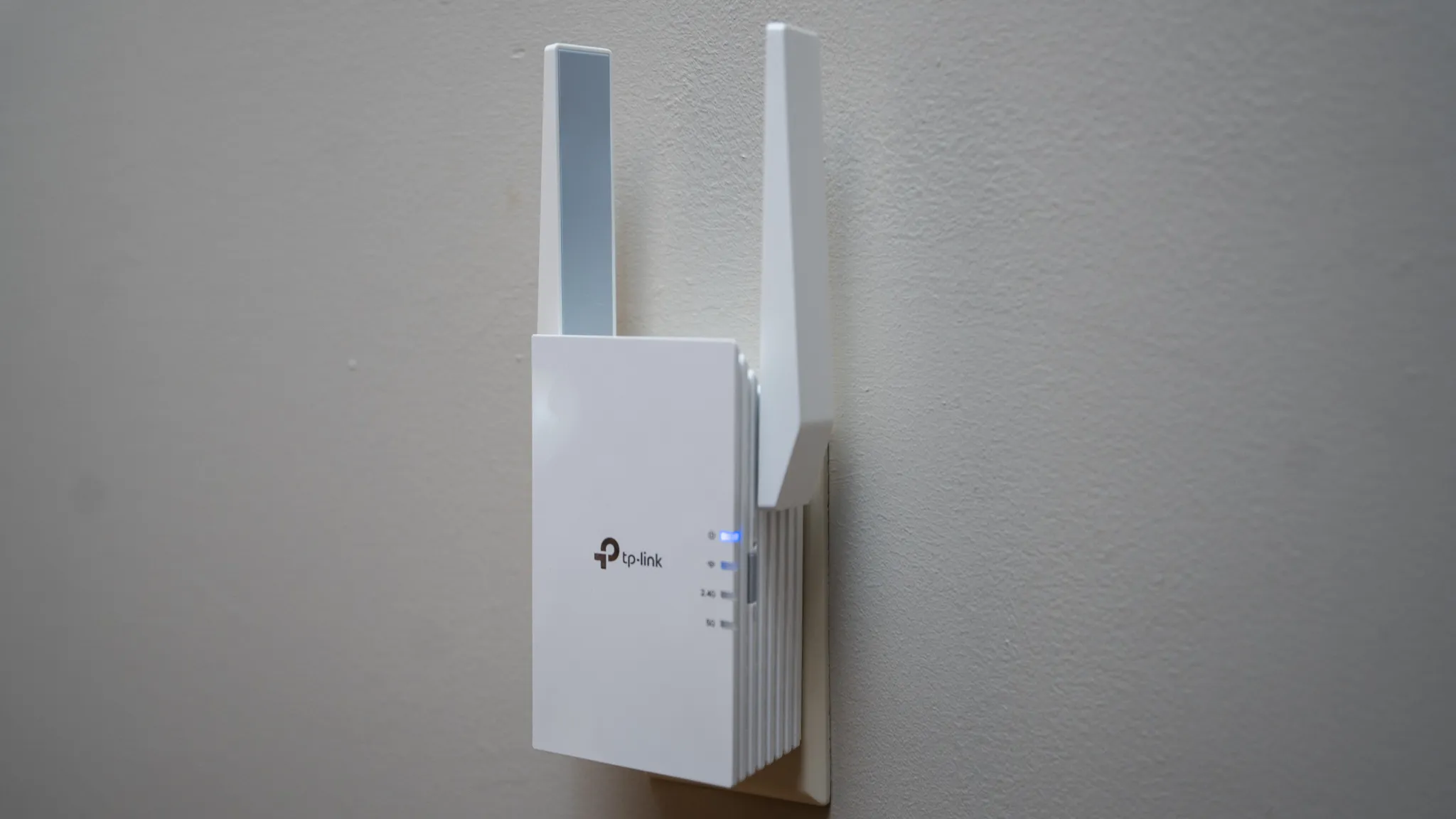

A weak signal at the patio is annoying. A weak signal at a detached garage, campsite, farm building, or outdoor camera can make the network feel useless. Indoor range extenders are rarely designed for rain, dust, long Ethernet runs, or pole mounting, which is why outdoor access points need a different set of priorities.
The Best outdoor wifi extender picks below cover everything from compact mesh nodes to rugged Wi-Fi 6 access points with PoE power. We looked for useful wireless capacity, credible outdoor protection, flexible operating modes, and a setup that matches the kind of property you are trying to cover.
Our top pick is the WAVLINK AX3000 4-Antenna, with options ranging from Wi-Fi 7 mesh hardware to the lightweight TP-Link EAP225-Outdoor.
| # | Product | Award | Wireless class | Outdoor protection | Power | Best for |
|---|---|---|---|---|---|---|
| 1 | WAVLINK AX3000 4-Antenna | Best overall | AX3000, 2402 Mbps at 5 GHz, 573 Mbps at 2.4 GHz | IP67 | Active or passive PoE | Large yards and mixed outdoor setups |
| 2 | Deco 7 BE5000 Outdoor | Best Wi-Fi 7 mesh | BE5000, 4324 Mbps at 5 GHz, 688 Mbps at 2.4 GHz | IP65 | PoE+ or AC | Newer Deco mesh networks |
| 3 | Mekupc AX3000 Outdoor | Best for events | AX3000, 2402 Mbps at 5 GHz, 573 Mbps at 2.4 GHz | IP67 | Passive PoE | Events and commercial spaces |
| 4 | WAVLINK AX1800 Four Antenna | Best long-range AX1800 | AX1800, 1201 Mbps at 5 GHz, 574 Mbps at 2.4 GHz | IP67 | Active or passive PoE | Starlink and rural properties |
| 5 | WAVLINK AX1800 Long Range | Best weather protection | AX1800 dual band | IP67 | Active or passive PoE | Harsh outdoor conditions |
| 6 | WAVLINK Wi-Fi 7 BE5100 | Best Wi-Fi 7 reach | BE5100, 4323 Mbps at 5 GHz, 688 Mbps at 2.4 GHz | IP67 | Active or passive PoE | Wi-Fi 7 devices outdoors |
| 7 | TP-Link Deco X50-Outdoor | Best Deco Wi-Fi 6 node | AX3000 dual band | Weatherproof and dustproof | PoE+ or AC | Existing Deco systems |
| 8 | WAVLINK AX3000 Six-Antenna | Best for many devices | AX3000, 2402 Mbps at 5 GHz, 573 Mbps at 2.4 GHz | IP67 | Active or passive PoE | Dense outdoor device loads |
| 9 | TP-Link EAP225-Outdoor | Best compact access point | AC1200, up to 1200 Mbps | IP65 | Active, passive, or 802.3af/at PoE | Omada networks and small areas |
| 10 | WAVLINK AX3000 600mW | Best high-power option | AX3000, 2402 Mbps at 5 GHz, 573 Mbps at 2.4 GHz | IP67 | Active or passive PoE | Campsites and open properties |
1. WAVLINK AX3000 4-Antenna: Best Overall

Pros
- AX3000 dual-band wireless capacity
- Four detachable 8dBi omni-directional antennas
- IP67 enclosure with lightning and static protection
- Active and passive PoE support
- Multiple operating modes
Cons
- The PoE converter is not waterproof
- Mesh mode is limited to WAVLINK devices
- Large, substantial outdoor hardware
Best for: homeowners and property managers who need a flexible, rugged access point for a broad outdoor area.
The first thing to understand about the WAVLINK AX3000 4-Antenna is that it is more than a plug-in repeater. It is a full outdoor access point with repeater, router, AP, AP plus repeater, and mesh modes. That makes it easier to fit into an existing network, especially when you can run Ethernet to the installation point instead of asking the unit to repeat a weak signal.
Its AX3000 rating comes from a claimed 2402 Mbps on 5 GHz and 573 Mbps on 2.4 GHz. Those are link rates rather than guaranteed internet speeds, but the split makes sense outdoors. The 5 GHz band offers more capacity for nearby phones, cameras, and laptops, while 2.4 GHz generally travels farther and handles obstacles more gracefully. Four detachable 8dBi omni-directional fiberglass antennas and two built-in amplifiers are designed for broad coverage rather than a narrow point-to-point beam.
The enclosure is rated IP67, and the device lists 15kV electrostatic discharge and 6kV lightning protection. It is specified for operation from -20°C to 50°C, with 10 to 90 percent non-condensing humidity. Those details matter more than a flashy wireless label when the unit will spend years outside. Active 802.3AF/AT PoE and passive PoE support also let you send power and data over one Ethernet cable. The included guidance limits that cable to CAT5E or above and 100 meters.
This is a more adaptable pick than the Mekupc AX3000 Outdoor, and it has a clearer fit for a general home or property installation than the older TP-Link EAP225-Outdoor. It is also more flexible than the Deco products if your network is not already part of one mesh family. The drawback is physical: this is not discreet equipment, and the outdoor rating does not apply to the PoE converter. Keep that part protected indoors or inside a suitable enclosure.
Choose the WAVLINK AX3000 4-Antenna when you want one unit that can serve as an access point today and a repeater or mesh node later. It is the strongest all-around fit for a large yard, farm, detached building, or outdoor camera network.
2. Deco 7 BE5000 Outdoor: Best Wi-Fi 7 Mesh

Pros
- Wi-Fi 7 with Multi-Link Operation
- Up to 4324 Mbps on 5 GHz and 688 Mbps on 2.4 GHz
- Two 2.5 Gbps PoE+ ports
- Works with wired or wireless backhaul
- Pole and wall mounting accessories
Cons
- IP65 protection is below the IP67 models here
- Its strongest features need a Wi-Fi 7 network and compatible devices
- Mesh operation is tied to the Deco ecosystem
Best for: Deco owners building a high-capacity outdoor mesh with newer Wi-Fi 7 clients.
The Deco 7 BE5000 Outdoor is the cleanest choice for someone who already lives inside the TP-Link Deco system. Rather than creating a separate outdoor network, it joins the mesh and lets devices move between Deco units under one network name. That is much more convenient than manually switching a phone between an indoor router and an outdoor repeater.
The wireless specification is the most ambitious in this group. The unit lists 4324 Mbps on 5 GHz and 688 Mbps on 2.4 GHz, along with Multi-Link Operation, Multi-RUs, and 4K-QAM. These features are designed to improve throughput, latency, and reliability with compatible Wi-Fi 7 equipment. Older phones and laptops can still connect because the unit is backward compatible, but they will not make use of every Wi-Fi 7 feature.
The wired side is unusually strong. Two 2.5 Gbps PoE+ ports can take advantage of a multi-gig network and support wired backhaul, which is preferable when the outdoor unit is separated from the main router by a long cable. TP-Link says the node can add up to 2, 800 square feet and support up to 150 devices. Those are coverage claims, not promises for every yard, but they show where this model is aimed. It can also run from AC power, and the included mounting kit supports wall or pole installation.
The IP65 rating protects against dust and water jets, but it is a step below the IP67 protection on the WAVLINK AX3000 4-Antenna and Mekupc AX3000 Outdoor. That difference is worth considering for exposed installations. The Deco app is a genuine advantage for setup and management, while HomeShield adds network protection, parental controls, and IoT security features.
The Deco 7 BE5000 Outdoor beats the older Deco X50-Outdoor for wireless generation and wired capacity. It loses to the WAVLINK models on ecosystem independence and, on paper, enclosure protection. Pick it when your home network is already Deco-based and your priority is a fast, unified Wi-Fi 7 mesh outdoors.
3. Mekupc AX3000 Outdoor: Best for Events

Pros
- AX3000 dual-band capacity
- Five high-gain omni-directional antennas
- IP67 casing and lightning protection
- Supports AP, router, repeater, and hybrid modes
- Starlink-compatible
Cons
- Passive PoE is the listed power option
- The PoE converter is not waterproof
- No mesh ecosystem comparable to Deco
Best for: outdoor events, farms, RV areas, and commercial deployments that need broad coverage and flexible placement.
The Mekupc AX3000 Outdoor has the shape of a specialist deployment tool. Its five high-gain omni-directional antennas and five built-in power amplifiers are intended to spread a signal across open areas with many connected devices. That makes it more interesting for a temporary event, warehouse yard, farm, or RV area than for someone who simply wants stronger Wi-Fi beside a back door.
Its AX3000 dual-band specification lists 2402 Mbps at 5 GHz and 573 Mbps at 2.4 GHz. The 5 GHz band is the capacity band for nearby, bandwidth-heavy clients, while 2.4 GHz is useful when coverage and obstacle penetration matter more. The product lists support for up to 128 devices and includes a gigabit Ethernet port, so it has the basic wired capacity expected from an outdoor access point.
The IP67 enclosure is a substantial strength. The device is specified for -20°C to 50°C and lists 15kV electrostatic discharge and 6kV lightning resistance. Passive PoE lets one Ethernet cable carry data and power to the installation point. The cable guidance calls for CAT5E or above and a maximum length of 100 meters. As with several products here, the PoE converter itself is not waterproof, so the indoor end of the installation needs careful treatment.
The Mekupc supports AP, router, repeater, and hybrid modes. That is useful if the network plan changes, but it does not offer the polished ecosystem management of the Deco 7 BE5000 Outdoor. The WAVLINK AX3000 4-Antenna is the safer general recommendation for a home because it supports both active and passive PoE and has a more established mesh path within its own family. The Mekupc counters with one extra antenna and a clear commercial-use focus.
This is the model to consider when the installation is about coverage across an open venue rather than seamless roaming inside a branded home mesh. Skip it if you want a simple app-led setup or need active PoE compatibility.
4. WAVLINK AX1800 Four Antenna: Best Long-Range AX1800

Pros
- Four detachable 8dBi omni-directional antennas
- AX1800 Wi-Fi 6 dual-band performance
- IP67 enclosure
- Active and passive PoE support
- Mesh, AP, router, repeater, and AP plus repeater modes
Cons
- Large physical footprint
- Mesh mode works only with WAVLINK devices
- The PoE converter must stay protected from weather
Best for: rural properties, yards, garages, and Starlink installations that need a rugged long-range node.
The WAVLINK AX1800 Four Antenna is a sensible step down from the AX3000 models when the connected devices do not need as much aggregate capacity. It still has the important outdoor traits: a sealed enclosure, removable high-gain antennas, PoE power, and several network modes. The result is a practical access point for a garage, yard, barn, or RV parking area.
The AX1800 rating combines 1201 Mbps on 5 GHz with 574 Mbps on 2.4 GHz. That is enough wireless headroom for ordinary browsing, outdoor cameras, streaming, and smart-home devices, assuming the wired connection and internet service can support them. Four 8dBi omni-directional fiberglass antennas are designed to distribute coverage around the unit. WAVLINK claims up to 200 to 300 meters of radius in line-of-sight conditions, though trees, walls, terrain, and antenna height will change the result.
Weather protection is one of its strongest reasons to exist. The IP67 enclosure is specified for rain, snow, dust, and operating temperatures from -20°C to 50°C. The device also lists 6kV lightning and 15kV static protection. Active 802.3AF/AT and passive PoE support gives installers more flexibility than a unit restricted to one power standard. The recommended CAT5E or better cable length is 100 meters, and the PoE converter is not weatherproof.
This model is easier to recommend for a Starlink-based rural setup than the TP-Link EAP225-Outdoor because its feature set is newer and its protection rating is higher. The WAVLINK AX1800 Long Range is a close alternative, with a similar four-antenna approach and IP67 casing. The difference is mostly in the emphasis: this version explicitly combines the AX1800 rating with detachable antennas and several operating modes.
The weakness is its size. It needs a sturdy mounting point and sensible cable routing, not a casual shelf location. If your outdoor area is modest and your router already sits near the patio, the smaller TP-Link unit may be easier to live with. For broad, open coverage, this WAVLINK is the better fit.
5. WAVLINK AX1800 Long Range: Best Weather Protection

Pros
- IP67 enclosure for demanding outdoor conditions
- Four custom-engineered 8dBi antennas
- Wi-Fi 6 with MU-MIMO and beamforming
- Active and passive PoE support
- AP, router, repeater, and WISP modes
Cons
- Does not list the individual band speeds
- Mesh support is limited to WAVLINK equipment
- Large antennas require deliberate mounting
Best for: exposed installations where enclosure protection and straightforward long-range coverage matter most.
The WAVLINK AX1800 Long Range is the less flashy of the two AX1800 WAVLINK entries, and that is part of its appeal. It concentrates on the things that make an outdoor access point useful: four fiberglass antennas, a sealed enclosure, PoE, and operating modes that can adapt to the network you already have.
The product identifies itself as dual-band Wi-Fi 6 and includes MU-MIMO and beamforming. It does not provide separate 5 GHz and 2.4 GHz throughput figures in the supplied details, so it would be misleading to treat it as identical to every other AX1800 unit. The antenna design is more concrete: four custom-engineered 8dBi antennas are meant to distribute a stable signal across a large, open area.
The IP67 enclosure is the headline feature. It is described as protected against heavy rain, snow, dust, wind, ultraviolet exposure, and temperature extremes. Active 802.3af/at PoE and passive PoE are both supported, allowing a single Ethernet cable to handle the outdoor connection and power. It also supports AP, router, repeater, and WISP modes. WISP mode can be useful in a property where the device needs to connect to an upstream wireless network and share that connection locally.
Compared with the WAVLINK AX1800 Four Antenna, this model provides less detailed throughput information but presents a stronger emphasis on outdoor durability. Compared with the WAVLINK AX3000 4-Antenna, it has less stated wireless capacity. That makes the choice straightforward: use the AX1800 Long Range for a smaller device load or a harsh location, and move up to AX3000 when many clients will be active at once.
The main limitation is that this is still a large outdoor installation rather than a compact home accessory. It is also not the right fit for a Deco household that wants app-managed roaming. Choose it when weather exposure is the concern that keeps you awake, not when Wi-Fi 7 features are the goal.
6. WAVLINK Wi-Fi 7 BE5100: Best Wi-Fi 7 Reach

Pros
- Wi-Fi 7 dual-band 4-stream design
- Up to 4323 Mbps at 5 GHz
- Up to 688 Mbps at 2.4 GHz
- IP67 housing
- Active and passive PoE support
Cons
- Mesh mode works only within the WAVLINK family
- The PoE converter is not waterproof
- Wi-Fi 7 benefits depend on compatible client devices
Best for: users with newer Wi-Fi 7 laptops and phones who want high outdoor wireless capacity.
The WAVLINK Wi-Fi 7 BE5100 takes the rugged outdoor design of the AX-series units and moves it to Wi-Fi 7. That matters most when the network includes recent laptops, phones, or other clients that can use the newer standard. For older devices, it remains a capable dual-band access point, but the headline features will not transform their connection.
The stated wireless rates are 4323 Mbps on 5 GHz and 688 Mbps on 2.4 GHz, with four streams. The product also lists support for Wi-Fi 7 features and up to 300 meters of radius coverage. As always, that coverage claim assumes favorable placement and line of sight. The four 8dBi detachable omni-directional fiberglass antennas and two built-in amplifiers give the hardware a clear long-range purpose.
The device supports mesh, AP, router, repeater, and AP plus repeater modes. That flexibility is useful for a property where the unit may begin as a wired access point and later become part of a broader WAVLINK setup. Active and passive 802.3AF/AT PoE are supported, with a recommended CAT5E or better cable no longer than 100 meters. The unit is IP67 rated and lists 15kV ESD and 6kV lightning protection.
The Deco 7 BE5000 Outdoor is the more attractive choice for an existing Deco household because of its app, unified mesh, and two 2.5 Gbps PoE+ ports. The WAVLINK BE5100 is more appealing when outdoor protection and brand-neutral operating modes matter more than ecosystem polish. It also has a higher stated 2.4 GHz rate than the Deco unit, though real performance will depend on the clients and network layout.
Do not buy this solely for a Wi-Fi 7 label if most of your devices are older. Its real advantage appears when several compatible clients need capacity at the same time. For that audience, it is the most capable rugged WAVLINK option in this group.
7. TP-Link Deco X50-Outdoor: Best Deco Wi-Fi 6 Node

Pros
- Extends an existing Deco mesh
- Wi-Fi 6 AX3000 class
- PoE+ and AC power options
- Two gigabit PoE ports
- Wall and pole installation options
Cons
- Requires the Deco ecosystem for mesh features
- Weatherproofing details are less specific than an IP67 rating
- Older than the Wi-Fi 7 Deco 7 Outdoor
Best for: Deco users who need a simple outdoor node for a patio, backyard, or guest house.
The TP-Link Deco X50-Outdoor is the straightforward choice for an existing Deco system. Its real advantage is not unusual antenna hardware or a massive list of operating modes. It is the fact that the same Deco app can add it to the network, manage it, and let devices move between indoor and outdoor nodes without requiring a separate network name.
This is an AX3000 dual-band Wi-Fi 6 unit. The supplied product details do not provide separate band throughput figures, so the useful takeaway is its wireless class rather than a promise of a particular speed. It is intended for a backyard, patio, or guest house, where a wired connection can give the node a strong backhaul and keep outdoor client traffic from competing with a weak wireless link back to the router.
Power and installation are flexible. The unit supports 802.3at PoE+ as well as AC power, and its two gigabit PoE ports can reduce the number of cables needed at the mounting point. TP-Link supports pole and wall mounting, which makes it easier to place the node where coverage is actually needed instead of leaving it beside an indoor outlet.
Its weatherproof and dustproof construction is designed for outdoor use, but the supplied details do not state a specific IP rating. That is a meaningful difference from the IP67 WAVLINK models and the IP65 Deco 7 BE5000 Outdoor. HomeShield provides network and IoT protection, basic parental controls, quality of service, and reports, while Alexa support can handle simple guest Wi-Fi commands.
The Deco 7 BE5000 Outdoor is the better technical match for a new installation built around Wi-Fi 7 and multi-gig wired links. The X50-Outdoor makes more sense when the rest of the home is already Deco Wi-Fi 6 and the goal is an uncomplicated extension. If you are still deciding between a mesh node and a separate access point, how a wired backhaul changes outdoor coverage is the important question to settle first.
8. WAVLINK AX3000 Six-Antenna: Best for Many Devices

Pros
- Six 7dBi omni-directional antennas
- AX3000 wireless class
- Supports up to 256 or more devices
- IP67 enclosure
- Active and passive PoE support
Cons
- The product advises adding a ground wire
- Mesh mode is limited to WAVLINK devices
- The large antenna array needs careful placement
Best for: busy outdoor networks with cameras, smart-home devices, phones, and visitors connecting at once.
The WAVLINK AX3000 Six-Antenna is built around client density. Six 7dBi omni-directional antennas and two built-in amplifiers give it a different emphasis from the four-antenna AX3000 model above. It is a better fit when an outdoor network has to serve many devices in a broad area rather than simply reach one distant laptop.
Its AX3000 wireless capacity is listed as 2402 Mbps on 5 GHz and 573 Mbps on 2.4 GHz. The product says it can connect 256 or more devices simultaneously. That number should not be read as a guarantee that every device will receive full bandwidth, but it does describe the intended use: cameras, phones, smart TVs, speakers, and other clients sharing an outdoor network.
It supports mesh, AP, router, repeater, and AP plus repeater modes. Active 802.3AF/AT and passive PoE are supported, and the recommended Ethernet run is CAT5E or better up to 100 meters. The IP67 enclosure, 15kV ESD protection, and 6kV lightning protection are suitable for outdoor deployment. WAVLINK recommends a ground wire to help protect against static electricity and lightning, which is an installation detail worth taking seriously.
The WAVLINK AX3000 4-Antenna is the more balanced choice for most homes. It uses four 8dBi antennas and has a clearer general-purpose profile. The Six-Antenna model is more compelling when the extra antenna hardware and claimed client capacity align with the site. It is also less appealing than the Deco 7 BE5000 Outdoor if you want app-based management and a unified mesh with 2.5 Gbps ports.
This is not a small device to hide behind a planter. Plan the mounting height, cable route, grounding, and PoE converter location before buying it. For a campsite, community area, farm, or outdoor worksite with a large number of simultaneous clients, that preparation can pay off in a more capable network.
9. TP-Link EAP225-Outdoor: Best Compact Access Point

Pros
- Compact and lightweight design
- Omada SDN management
- Multiple SSIDs
- Active and passive PoE support
- IP65 weatherproof enclosure
Cons
- Older AC1200 wireless generation
- Lower capacity than the Wi-Fi 6 and Wi-Fi 7 picks
- Requires more network knowledge than a typical mesh node
Best for: small outdoor areas, Omada networks, and installations where compact hardware matters.
The TP-Link EAP225-Outdoor is the outlier in this roundup, and it earns its place by being small, light, and management-friendly rather than by chasing the newest wireless standard. At 0.37 pounds, it is dramatically easier to mount than the larger WAVLINK units. That can matter on a narrow pole, a shed wall, or a location where bulky antenna hardware would be awkward.
Its 802.11ac Wave 2 design supports dual-band speeds up to 1200 Mbps and includes MU-MIMO. TP-Link lists outdoor coverage beyond 200 meters at 2.4 GHz and beyond 300 meters at 5 GHz under its stated conditions. Those figures are not directly comparable with the other products' radius claims, but they show that this is intended as a real access point, not merely a short-range indoor extender placed outside.
The EAP225-Outdoor supports up to 16 SSIDs, with eight for each band, which is useful for separating staff, guests, cameras, or equipment. It can be managed through the Omada hardware, software, or cloud controller, and standalone mode is also available. Active 802.3af/at and passive PoE support simplify installation. The IP65 enclosure protects against outdoor weather, though it is not as highly sealed as the IP67 WAVLINK options.
The trade-off is obvious beside the AX3000 models. It has less wireless capacity and an older standard, so it is not the first choice for a crowded yard with many new devices. It is more attractive than the Deco products for an Omada-managed network, and its compact body beats nearly every other option here when mounting space is tight. If you are comparing general-purpose repeaters as well, when a separate access point makes more sense than a repeater can prevent a mismatched purchase.
Choose this TP-Link when you want a compact, configurable access point and already understand the Omada approach. Skip it if you want the highest capacity, a simple mesh app, or the strongest available weather rating.
10. WAVLINK AX3000 600mW: Best High-Power Option

Pros
- 600mW power and enhanced receiver design
- AX3000 dual-band wireless capacity
- Four 8dBi omni-directional antennas
- IP67 enclosure
- Six operating modes
Cons
- Mesh support is restricted to WAVLINK equipment
- The PoE converter is not waterproof
- No specific coverage distance is supplied
Best for: campsites, factories, communities, and open properties where signal strength is a central concern.
The WAVLINK AX3000 600mW takes a familiar AX3000 formula and puts more emphasis on radio power and receiver design. The product specifies up to 600mW of power, four 8dBi omni-directional fiberglass antennas, and two built-in high-power amplifiers. That combination is aimed at improving reach and penetration across open outdoor sites.
The dual-band figures are 2402 Mbps at 5 GHz and 573 Mbps at 2.4 GHz, with support for up to 256 devices. It supports Wi-Fi 6 and the older 802.11 standards, so it can serve a mixed collection of phones, cameras, smart-home products, and laptops. The available modes include mesh, AP, router, repeater, and AP plus repeater, which gives it a useful amount of configuration flexibility.
Like the other rugged WAVLINK models, this one uses an IP67 enclosure and lists 15kV ESD and 6kV lightning protection. Active and passive PoE are supported through a converter, with CAT5E or better cable recommended within 100 meters. The converter is not waterproof, so it needs to remain sheltered. The product does not provide a specific distance figure, which is preferable to treating a broad marketing range as a certainty.
The WAVLINK AX3000 4-Antenna is the better default recommendation because it has a similarly strong wireless class and a clearer general-purpose design. The Six-Antenna model is more compelling for dense client loads, while the 600mW version is the one to consider when the installation's main concern is signal strength. The TP-Link EAP225-Outdoor is much easier to mount, but it has a lower AC1200 class and IP65 protection.
A higher power figure cannot overcome poor placement, blocked line of sight, a weak upstream link, or bad cable routing. Install this unit where its antennas have a clear view of the area, and protect the PoE hardware properly. It is a sensible specialist pick for large open properties, but not the most balanced choice for a typical patio.
How to choose the best outdoor wifi extender
The right outdoor Wi-Fi extender depends less on a headline range claim than on the connection between wireless capacity, physical placement, weather protection, and the way power reaches the installation.
Wireless standard and capacity
Wi-Fi 6 is the sensible baseline for a busy outdoor network. AX1800 models such as the WAVLINK AX1800 Four Antenna have enough capacity for ordinary streaming, browsing, cameras, and smart-home devices, while AX3000 models leave more room for simultaneous clients. Wi-Fi 7 models add features such as Multi-Link Operation and higher stated throughput, but only compatible devices can use their full capabilities.
A higher wireless class does not increase the speed of an internet connection by itself. It gives the access point more room to handle local traffic and several devices at once.
Antennas and coverage pattern
Omni-directional antennas spread coverage around the access point, which suits yards, patios, campsites, and open work areas. High-gain antennas can help extend the usable signal, but antenna height, walls, trees, terrain, and the strength of the upstream connection matter just as much.
Four 8dBi antennas on the WAVLINK AX3000 4-Antenna serve a different purpose from the compact antennas on the EAP225-Outdoor. Choose a broad coverage pattern for an area around the installation, not a long narrow link to one distant building.
Weather protection
Look for a stated IP rating rather than a vague promise that a device is weatherproof. IP67 models are sealed against dust and can withstand temporary water immersion, while IP65 models protect against dust and water jets. The IP67 WAVLINK models are the strongest fit for exposed sites, while the IP65 TP-Link EAP225-Outdoor needs more care in placement.
The rating applies to the outdoor unit, not automatically to the PoE converter, Ethernet coupler, or power adapter. Those components need their own sheltered location.
A weatherproof access point is only as reliable as the cable entry and PoE hardware attached to it.
PoE and backhaul
PoE is usually the cleanest way to install an outdoor access point. One Ethernet cable carries data and power, so the unit can sit on a pole or wall away from an outdoor outlet. Active 802.3af/at PoE is useful when the network already has a compatible switch, while passive PoE may require the included converter or a matching power setup.
A wired backhaul is preferable when you can run Ethernet to the installation point. Wireless repeating can work, but the access point must receive a strong upstream signal before it can provide a strong downstream one.
Mesh ecosystem and management
Deco products are the natural choice for an existing TP-Link Deco household. They offer app-based setup and a single mesh network, while Omada products suit users who want centralized access point management. WAVLINK units provide several operating modes and can form mesh networks within the WAVLINK family, but they are not universal mesh nodes for other brands.
Choose the ecosystem that matches the router and management tools you already use. A more advanced access point can be a poor fit if you do not want to configure a separate network.
Frequently asked questions
Can an outdoor Wi-Fi extender connect to any router?
Most of these products support common Wi-Fi standards and can operate as repeaters or access points, so they can work with many routers. Mesh features are more restricted. WAVLINK mesh is intended for WAVLINK devices, while Deco mesh is designed for TP-Link Deco equipment.
Is PoE required for an outdoor Wi-Fi extender?
No. Some models support AC power, and the Deco X50-Outdoor can use either AC or PoE+. PoE is useful when the installation point is far from an outlet because one Ethernet cable can carry both power and network data.
Is IP67 better than IP65 for outdoor Wi-Fi?
IP67 provides a higher level of water protection than IP65. That makes it better suited to exposed installations, though the cable connection, PoE converter, and power equipment still need protection. An IP65 device can be suitable under a covered patio or on a sheltered wall.
How far can an outdoor Wi-Fi extender reach?
The answer depends on placement, antenna design, obstacles, interference, and the signal reaching the extender. Several products list coverage up to 200 to 300 meters in radius or line-of-sight conditions, but those figures should not be treated as guaranteed performance across trees, walls, or uneven terrain.
Should I use a wired access point or wireless repeater?
Use a wired access point when you can run Ethernet to the outdoor location. It avoids the performance loss and placement limits that come from repeating a weak wireless signal. A repeater is more convenient when cabling is impossible, but it needs a strong upstream connection.
Does Wi-Fi 7 help older phones and laptops?
Older devices can connect to Wi-Fi 7 hardware because the standard is backward compatible. They will not use Wi-Fi 7-only features such as Multi-Link Operation, so the advantage may be limited until newer clients join the network.
Can these products work with Starlink?
The WAVLINK AX3000 4-Antenna, WAVLINK AX1800 Four Antenna, and Mekupc AX3000 Outdoor specifically list Starlink compatibility or support. A Starlink Ethernet Adapter may be needed for some installations, and the access point still needs a suitable wired or wireless connection to the Starlink system.
The bottom line
The Best outdoor wifi extender for most large yards, farms, and mixed outdoor networks is the WAVLINK AX3000 4-Antenna. Its AX3000 capacity, four 8dBi antennas, IP67 enclosure, active and passive PoE support, and multiple modes make it the most adaptable choice. Its size and sheltered PoE converter are real drawbacks, but they are easier to plan around than an underspecified outdoor network.
The Deco 7 BE5000 Outdoor is the better pick for a Deco household that wants Wi-Fi 7, app-managed roaming, and dual 2.5 Gbps PoE+ ports. For a smaller or Omada-managed installation, the TP-Link EAP225-Outdoor remains appealing because it is compact and configurable.
If you are undecided, choose the WAVLINK AX3000 4-Antenna for flexibility, the Deco 7 BE5000 Outdoor for an existing Deco mesh, or the TP-Link EAP225-Outdoor when compact installation matters most.
As an Amazon Associate we earn from qualifying purchases.