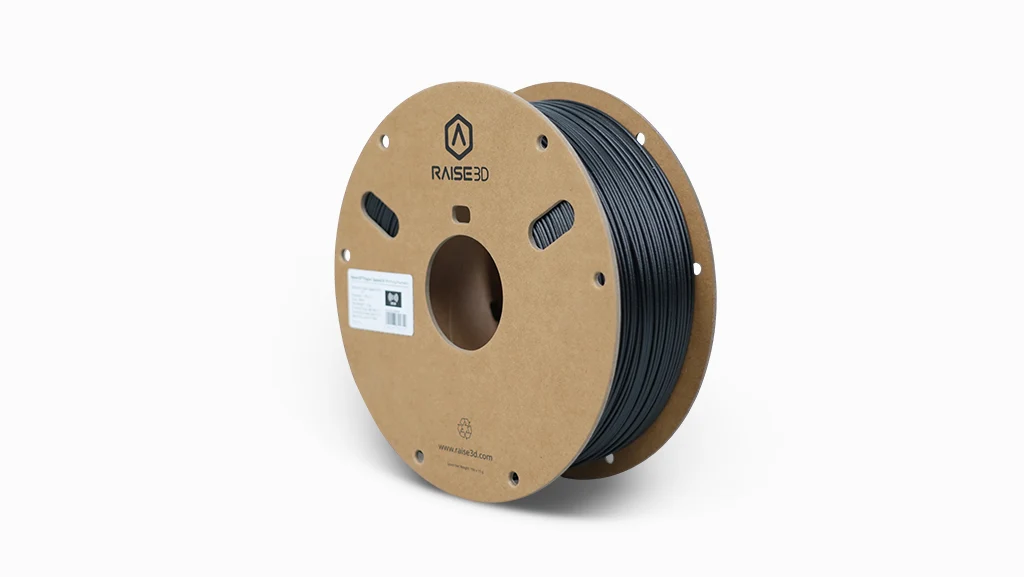

PETG is the material many 3D printer owners reach for when PLA is too brittle but ABS feels unnecessarily demanding. The trouble is that PETG quality varies: a poorly wound spool, inconsistent diameter, or damp material can turn a simple bracket into a stringy, popping mess. The Best PETG filament should feed consistently, bond firmly between layers, and match the speed and temperature range of your printer.
We compared ten black PETG options, including single spools, multi-spool bundles, high-speed formulas, and a reusable-spool design. OVERTURE High Speed PETG is our top pick for its combination of fast-printing support, stated dimensional tolerance, neat winding, and broad usefulness. The rest of the list ranges from large SUNLU bundles to compact everyday spools and specialist high-speed material.
Comparison table
| # | Product | Award | Diameter | Spool quantity | Best for |
|---|---|---|---|---|---|
| 1 | OVERTURE High Speed PETG | Best overall | 1.75mm, +/- 0.02mm | 1kg | Fast, functional prints |
| 2 | SUNLU PETG 4kg Bundle | Best bulk bundle | 1.75mm, +/- 0.02mm | 4 x 1kg | Frequent PETG printing |
| 3 | SUNLU PETG 1kg | Best everyday spool | 1.75mm, +/- 0.02mm | 1kg | General-purpose parts |
| 4 | Polymaker PETG High Speed | Best for surface finish | 1.75mm | 1kg | Clean functional models |
| 5 | Creality PETG 2kg Bundle | Best two-color bundle | 1.75mm, +/- 0.02mm | 2 x 1kg | Black and white projects |
| 6 | Creality CR-PETG 1kg | Best for Creality printers | 1.75mm, +/- 0.03mm | 1kg | Creality printer owners |
| 7 | SUNLU PETG 2kg Bundle | Best reusable-spool option | 1.75mm, +/- 0.02mm | 2 x 1kg | Refill-based printing |
| 8 | ELEGOO PETG 1kg | Best straightforward spool | 1.75mm, +/- 0.02mm | 1kg | Mechanical parts |
| 9 | ELEGOO Rapid PETG | Best high-speed bundle | 1.75mm, +/- 0.02mm | 2 x 1kg | High-speed printers |
| 10 | ANYCUBIC PETG | Best reusable spool | 1.75mm, +/- 0.02mm | 1kg | Clear-looking, durable models |
1. OVERTURE High Speed PETG: Best Overall

Pros
- Supports speeds from 30 to 300mm/s
- Stated diameter tolerance of +/- 0.02mm
- Neatly wound for AMS and MMU systems
- Vacuum-sealed and pre-dried
Cons
- The high-speed claims still depend on printer tuning
- The spool is limited to black
- Storage remains important after opening
Best for: users who want one dependable PETG spool for ordinary and faster functional printing.
OVERTURE High Speed PETG is the most balanced filament here. It is not defined by one extreme specification. Instead, it combines a useful speed range, a stated +/- 0.02mm diameter tolerance, neat winding, and a 1kg spool that fits the way most people actually print. That makes it easier to recommend than a material that only makes sense on a very fast machine.
The advertised printing range runs from 30 to 300mm/s, with a nozzle range of 230 to 260°C and a bed range of 65 to 70°C. Those are broad operating targets rather than a guarantee that every printer will produce a good part at 300mm/s. The practical advantage is that the formula is intended to keep its flow consistent as speed rises, so a tuned printer has more room to move faster without immediately exposing underextrusion or weak layer bonding.
The +/- 0.02mm tolerance matters most on long prints and parts that need predictable dimensions. OVERTURE also says the spool is vacuum-sealed and pre-dried, while the winding is designed for AMS and MMU use. That combination makes it a stronger multi-material candidate than the standard SUNLU PETG 1kg, although SUNLU offers a similarly precise stated diameter and a lower-speed profile that may suit a conventional printer just as well.
The weakness is that high-speed PETG still needs the right hotend, cooling, acceleration, and retraction settings. A basic printer will not automatically turn this into a 300mm/s material, and black is the only listed color for this spool. PETG also absorbs moisture, so opening the vacuum pack is not the end of the storage process. If you want a simple spool for slow decorative work and do not care about faster printing, ELEGOO PETG 1kg is a more straightforward alternative.
For a printer owner who wants durable parts, clean feeding, and flexibility across normal and faster jobs, OVERTURE is the one we'd keep. It is the strongest all-rounder in this group rather than the most specialized option.
2. SUNLU PETG 4kg Bundle: Best Bulk Bundle

Pros
- Four individually packaged 1kg spools
- Stated +/- 0.02mm dimensional accuracy
- Strong layer adhesion and impact resistance
- Suitable for outdoor parts
Cons
- Every spool is black
- A large bundle needs careful storage
- The recommended speed tops out below the fastest options here
Best for: print-heavy households, workshops, and small production runs that need several matching spools.
SUNLU PETG 4kg Bundle is made for people who go through filament rather than people trying PETG for the first time. It includes four 1kg black spools, and each spool is described as individually baked, vacuum-sealed, and packed with desiccant. That format is useful because unopened material can stay sealed while one spool is in use.
SUNLU lists a nozzle range of 240 to 260°C, a bed range of 60 to 70°C, and a printing speed of 50 to 200mm/s. The speed ceiling is not as ambitious as OVERTURE High Speed PETG or ELEGOO Rapid PETG, but the range is more than adequate for a great many standard FDM printers. Its stated +/- 0.02mm diameter accuracy should help maintain consistent extrusion during long jobs, particularly when a spool is feeding for many hours.
The material is positioned around toughness, impact resistance, and layer adhesion. Those traits suit brackets, tool holders, outdoor fixtures, and other parts that will see repeated handling. SUNLU also claims resistance to moisture and UV exposure, though that does not make a printed part permanently immune to weather. The 4kg format is a clear advantage over SUNLU PETG 1kg for repeat users, while the single-spool version is easier to store and less committing for occasional printing.
The main drawback is the all-black selection. It is practical for workshop parts, but not especially flexible for color-coded assemblies or display models. Four spools also occupy more storage space than the product page's compact presentation suggests, and PETG should remain protected from humidity. Someone who prints only occasionally should choose Polymaker PETG High Speed or a single-spool option instead.
For a workshop that wants a consistent supply of black PETG and does not need extreme speed, this bundle is the sensible large-format choice. It is especially well suited to repeat jobs where layer strength matters more than decorative color.
3. SUNLU PETG 1kg: Best Everyday Spool

Pros
- Tough, impact-resistant PETG formulation
- Stated +/- 0.02mm diameter accuracy
- Vacuum packaging protects the unopened spool
- Works with common 1.75mm FDM printers
Cons
- No high-speed focus
- Black is the only listed color
- The spool still needs drying if it absorbs moisture
Best for: general-purpose printing when you want one conventional 1kg PETG spool.
SUNLU PETG 1kg is the uncomplicated member of this lineup. It is a standard 1kg spool with a familiar 1.75mm diameter, and its appeal comes from the basics: strong layer adhesion, impact resistance, neat winding, and wide compatibility with common FDM printers. There is no unusual spool system or aggressive speed target to work around.
SUNLU recommends 240 to 260°C at the nozzle, 60 to 70°C on the bed, and 50 to 200mm/s for printing. That gives the material a useful range for both moderate and faster everyday jobs, but the best setting will still depend on the printer, nozzle, cooling, and part geometry. The stated +/- 0.02mm accuracy is a good sign for steady feeding, particularly on walls and functional parts where inconsistent flow can show up as visible variation.
The claims around toughness and weather resistance make this a practical material for holders, covers, brackets, and outdoor components. Its vacuum packaging also helps the spool arrive in usable condition. Compared with Creality CR-PETG 1kg, SUNLU offers a tighter stated tolerance, while Creality gives more explicit guidance around a 220 to 250°C nozzle and 70 to 80°C bed. Compared with SUNLU PETG 4kg Bundle, this single spool is easier to store and a better fit for a printer that does not consume material constantly.
It is not the right pick for someone specifically shopping for rapid-print behavior, and the all-black presentation limits it for visual projects. PETG can also become stringy or produce popping when damp, so the sealed packaging should not be mistaken for permanent moisture protection. If your printer is tuned for high-speed production, OVERTURE High Speed PETG or ELEGOO Rapid PETG has a clearer reason to exist.
For a first PETG spool or a reliable replacement for routine parts, SUNLU PETG 1kg is easy to understand and easy to place in a normal workflow. It avoids unnecessary extras while covering the material traits most users actually need.
4. Polymaker PETG High Speed: Best for Surface Finish

Pros
- High-speed formulation with a smooth finish
- Heat resistance listed at 80°C
- Strong layer adhesion
- Designed for AMS and multi-material systems
Cons
- The listed formula is replacing the original PolyLite PETG
- Only 1kg is included
- No specific high-speed ceiling is stated
Best for: functional models where finish quality and heat resistance matter alongside toughness.
Polymaker PETG High Speed has a more focused brief than the standard spools. It is aimed at users who want PETG's toughness and heat performance without accepting a rough, visibly compromised surface. The material is described as easy to print without an enclosure, with good surface finish and compatibility with most FDM printers and multi-material systems.
The product information gives two useful thermal figures. It lists 80°C heat resistance and up to 70°C HDT. Those figures describe different ways of evaluating heat performance, but the practical message is that this filament is intended for parts exposed to more heat than ordinary PLA can comfortably handle. That suits brackets, jigs, fixtures, outdoor mounts, and similar functional components.
The spool is vacuum-sealed and neatly wound for AMS feeding. Polymaker also emphasizes improved interlayer bonding, which is more important than a glossy surface when the printed part will be pulled, bent, or loaded. OVERTURE High Speed PETG is the better choice if you want an explicit speed range up to 300mm/s, while Polymaker is more persuasive when a controlled finish and stated thermal performance sit higher on the priority list.
There is some uncertainty in the product positioning because the listing says this new formula succeeds the original PolyLite PETG, which is being discontinued. That does not make the material unsuitable, but buyers who rely on a long-established profile may need to adjust their settings. The absence of a stated maximum speed also makes it less direct for users shopping specifically around printer speed.
Polymaker is a good match for careful functional printing, especially when the part needs to look presentable as well as hold together. It is not the most obvious choice for a bulk supply, but it has a distinct reason to be in this group.
5. Creality PETG 2kg Bundle: Best Two-Color Bundle

Pros
- Includes separate black and white 1kg spools
- Stated +/- 0.02mm accuracy
- Tough, glossy material with strong impact resistance
- Compatible with many common FDM printers
Cons
- The bundle mixes two colors rather than matching spools
- No specific printing temperature range is provided
- Storage is still important for both spools
Best for: makers who want black and white PETG for functional and visible parts.
Creality PETG 2kg Bundle is the practical alternative to the all-black multipacks. It includes one black and one white 1kg spool, which makes the bundle more useful for labels, contrasting components, prototypes, and parts where color helps identify function. The material is described as glossy and highly transparent, although the actual appearance will depend on the white and black formulations, wall thickness, and print settings.
Creality highlights low shrinkage, impact resistance, temperature resistance, and high elongation at break. In plain terms, the printed part is intended to tolerate some flexing and knocks instead of snapping like a brittle material. The listed dimensional accuracy is +/- 0.02mm, a useful figure for steady extrusion and repeatable walls. The product is also described as compatible with popular printers from Creality, ELEGOO, and Anycubic, among others.
This bundle stands apart from SUNLU PETG 4kg Bundle, which provides more total material but only in black. It is also more visually flexible than Creality CR-PETG 1kg, though the single-spool product may make more sense if every project uses black. Creality's claims of odorless and non-toxic printing are helpful context, but normal ventilation is still sensible around any heated polymer.
The listing does not provide a nozzle or bed temperature range, which makes initial setup less specific than with SUNLU or OVERTURE. That is a minor nuisance rather than a deal breaker, since PETG profiles can be tuned from the printer's own material guidance. The other limitation is that a two-color bundle is less convenient for someone who wants a deep supply of one shade.
Choose this one when color versatility matters and the parts need PETG's toughness. It is a more interesting bundle than a duplicate-black pack, especially for a mixed workload.
6. Creality CR-PETG 1kg: Best for Creality Printers

Pros
- Designed with Creality printers in mind
- Neatly wound and vacuum-sealed
- Recommended nozzle range of 220 to 250°C
- Glossy, tough PETG formulation
Cons
- Stated tolerance is +/- 0.03mm
- The product listing has inconsistent branding details
- No multi-spool option in this entry
Best for: Creality owners who want a conventional black PETG spool from the printer brand's ecosystem.
Creality CR-PETG 1kg is the most natural fit for a Creality-centered setup. It is a conventional black spool intended for 1.75mm FDM printers, with explicit compatibility claims for Ender and CR series machines as well as printers from other major brands. The formula is described as tough, glossy, and resistant to cracking and warping.
The recommended nozzle range is 220 to 250°C, with a build-plate range of 70 to 80°C. That lower nozzle starting point may appeal to users whose printer profile already runs PETG conservatively. The spool is described as thoroughly dried, vacuum-sealed, and mechanically wound, which addresses three common causes of frustrating prints: moisture, debris, and tangles.
Its stated diameter tolerance is +/- 0.03mm, slightly less precise on paper than OVERTURE High Speed PETG, SUNLU PETG 1kg, and ELEGOO PETG 1kg, which each list +/- 0.02mm. That does not automatically predict a bad print, but it gives the other spools a stronger specification for users making tight-fitting mechanical parts. Creality's emphasis is more about smooth feeding, broad compatibility, and a familiar material profile.
One detail deserves attention before ordering: the listing identifies the brand as Yoopai even though the product title and description present it as official Creality material. That inconsistency is not a filament performance specification, but it is a reason to inspect the listing carefully. Users who want the clearest material data may prefer Creality PETG 2kg Bundle, which also states a tighter tolerance.
This is the sensible Creality-oriented pick when you want a single spool and a straightforward starting profile. Skip it if diameter tolerance is your main selection criterion or if you need a faster-printing material.
7. SUNLU PETG 2kg Bundle: Best Reusable-Spool Option

Pros
- Two 1kg black spools
- Reusable spool design
- Stated +/- 0.02mm dimensional accuracy
- Suitable for AMS and AMS Lite systems
Cons
- Requires drying before use for optimal results
- Both spools are black
- Reusable hardware is less useful if you do not buy refills
Best for: frequent printers who want to reduce spool waste and use refill material later.
SUNLU PETG 2kg Bundle is the most interesting SUNLU entry for people thinking beyond the first print. It includes two 1kg black spools and uses a reusable spool design intended to work with future refills. The larger inner spool diameter is also meant to help feeding, while precision winding reduces the chance of tangles and breaks.
SUNLU recommends a nozzle temperature of 220 to 250°C and a bed temperature of 65 to 75°C. It also recommends drying the filament before use for optimal results, an important admission for PETG rather than a sign of poor material. The stated 1.75 +/- 0.02mm accuracy should help it feed consistently through a broad range of printers, including Bambu Lab AMS and AMS Lite systems as described in the listing.
The formulation focuses on toughness, elongation, layer adhesion, and resistance to cracking or warping. That makes it a practical choice for parts that need to flex slightly or survive repeated handling. SUNLU PETG 4kg Bundle is the better pick for maximum supply, but this 2kg set is easier to manage and leaves the reusable-spool system as a meaningful feature rather than just another duplicate spool.
The catch is that the reusable design only pays off when you intend to keep buying compatible refills. It also adds a system decision that does not matter to someone who simply wants a spool to print today. The black-only selection is another limitation for display work, and the recommended drying step means the sealed package should be treated as a starting point, not a guarantee of dry filament forever.
For repeat users with a compatible workflow, this is the most forward-looking bundle in the list. It makes particular sense for someone who wants to limit discarded spool hardware over several filament purchases.
8. ELEGOO PETG 1kg: Best Straightforward Spool

Pros
- Stated +/- 0.02mm diameter accuracy
- Strong and impact-resistant material
- Neatly wound to reduce tangles
- Broad 1.75mm FDM compatibility
Cons
- No special high-speed focus
- Only one black 1kg spool
- Should be dried again after storage or unpacking
Best for: ordinary mechanical parts, holders, clamps, and printer components.
ELEGOO PETG 1kg is the no-nonsense option. It does not try to sell a reusable spool, a four-spool supply, or an unusually high speed ceiling. Instead, it concentrates on tough material, smooth feeding, reduced warping, and compatibility with most 1.75mm FDM printers.
The listed diameter accuracy is +/- 0.02mm, and ELEGOO says each spool is mechanically wound and manually inspected. That should reduce the risk of sudden tangles or filament snapping at the spool. The material is positioned for mechanical parts, holders, clamps, and 3D printer components, where impact resistance and layer adhesion matter more than a particularly vivid surface.
ELEGOO also says the filament is dried before packing and vacuum-sealed against moisture and dust. The instructions still advise drying it completely before using it again, which is sensible for PETG. Compared with SUNLU PETG 1kg, ELEGOO offers a similar stated tolerance and general-purpose role. SUNLU provides more explicit outdoor and weather-resistance claims, while ELEGOO makes the more direct case for everyday mechanical parts.
There is no stated nozzle temperature range or dedicated fast-printing profile, so this is not the spool to choose when speed is the central concern. ELEGOO Rapid PETG has a clearer high-speed purpose, and OVERTURE gives more detailed operating parameters. The single black spool also feels limited for anyone building color-coded models.
If you want a conventional PETG material with sensible handling characteristics and no extra system to learn, ELEGOO is a strong fit. It is the kind of spool that can stay in a workshop's regular rotation.
9. ELEGOO Rapid PETG: Best High-Speed Bundle

Pros
- Supports a listed speed range from 30 to 600mm/s
- Two 1kg spools included
- Stated +/- 0.02mm dimensional accuracy
- Compatible with standard and high-speed printers
Cons
- 600mm/s depends heavily on the printer
- The spools use cardboard
- Both spools are black
Best for: owners of high-speed printers who want a two-spool PETG supply.
ELEGOO Rapid PETG makes the boldest speed claim in this roundup. The listing gives a range from 30 to 600mm/s, with enhanced fluidity intended to help the filament melt and flow quickly. That is potentially useful on printers built for high throughput, but it should not be read as a universal setting. Most printers will need their own limits, cooling balance, acceleration values, and temperature profile.
The product includes two 1kg black spools, each on a cardboard spool. The stated +/- 0.02mm accuracy supports consistent feeding, while the winding process is intended to reduce tangles and snapping. ELEGOO also describes good light transmittance, low shrinkage, toughness, and impact resistance, giving this material a broader purpose than simply making small prints finish sooner.
Compared with OVERTURE High Speed PETG, ELEGOO offers a much higher stated top speed and twice the total filament in the bundle. OVERTURE, however, provides a more restrained 30 to 300mm/s range and more detailed settings around nozzle and bed temperatures. That makes OVERTURE feel easier to position for mixed printer fleets, while ELEGOO is the more obvious experiment for a genuinely rapid machine.
The main risk is taking the 600mm/s figure literally. A high-speed material cannot overcome a printer's mechanical limits or inadequate hotend capacity. Cardboard spools can also behave differently from plastic spools in some holders and automatic systems, so check the printer's spool support before committing. If your printer runs at conventional speeds, ELEGOO PETG 1kg is simpler.
Choose Rapid PETG when your printer can make use of its intended flow characteristics and you want two matching spools. It is a specialist pick, but one with a clear purpose.
10. ANYCUBIC PETG: Best Reusable Spool

Pros
- Reusable spool with threaded connection
- Stated +/- 0.02mm diameter tolerance
- Strong chemical and water resistance claims
- Compatible with most 1.75mm FDM printers
Cons
- Only one 1kg spool
- The intelligent identification feature is tied to ACE Pro
- Transparency claims may vary with print settings
Best for: Anycubic users who want a reusable spool and durable PETG for everyday parts.
ANYCUBIC PETG combines ordinary PETG strengths with one of the more distinctive spool designs here. The 1kg black spool uses a threaded connection system intended to be reused with spool-free filament. That can reduce discarded hardware over time, while the threaded design is meant to keep the refill stable and reduce tangling or filament scattering.
The filament has a stated +/- 0.02mm tolerance and is described as suitable for most 1.75mm FDM printers and 3D printing pens. Anycubic also highlights low shrinkage, strong adhesion, and resistance to water, chemicals, and common cleaning agents. Those characteristics point toward chassis, toys, mechanical prototypes, and utility parts that may see more handling than a display model.
The material is also promoted for clarity and light transmission, with prints that can appear semi-transparent or transparent under illumination. Black PETG will not behave like a clear filament, so this claim is best understood as a surface and light-transmission characteristic rather than a promise of crystal-clear parts. Creality PETG 2kg Bundle makes a stronger case for a glossy, transparent-looking project, while ANYCUBIC's reusable spool gives it the more interesting long-term handling feature.
The intelligent identification chip is designed to work with the ACE Pro system. That could be convenient for an Anycubic owner with compatible hardware, but it is not a general advantage for every FDM printer. The single-spool format is also less useful for a high-volume workshop than SUNLU PETG 4kg Bundle.
ANYCUBIC is a sensible choice when spool reuse and resistance to water or chemicals matter more than speed. It is a capable general PETG spool with a feature that becomes more useful as your filament collection grows.
How to choose best petg filament
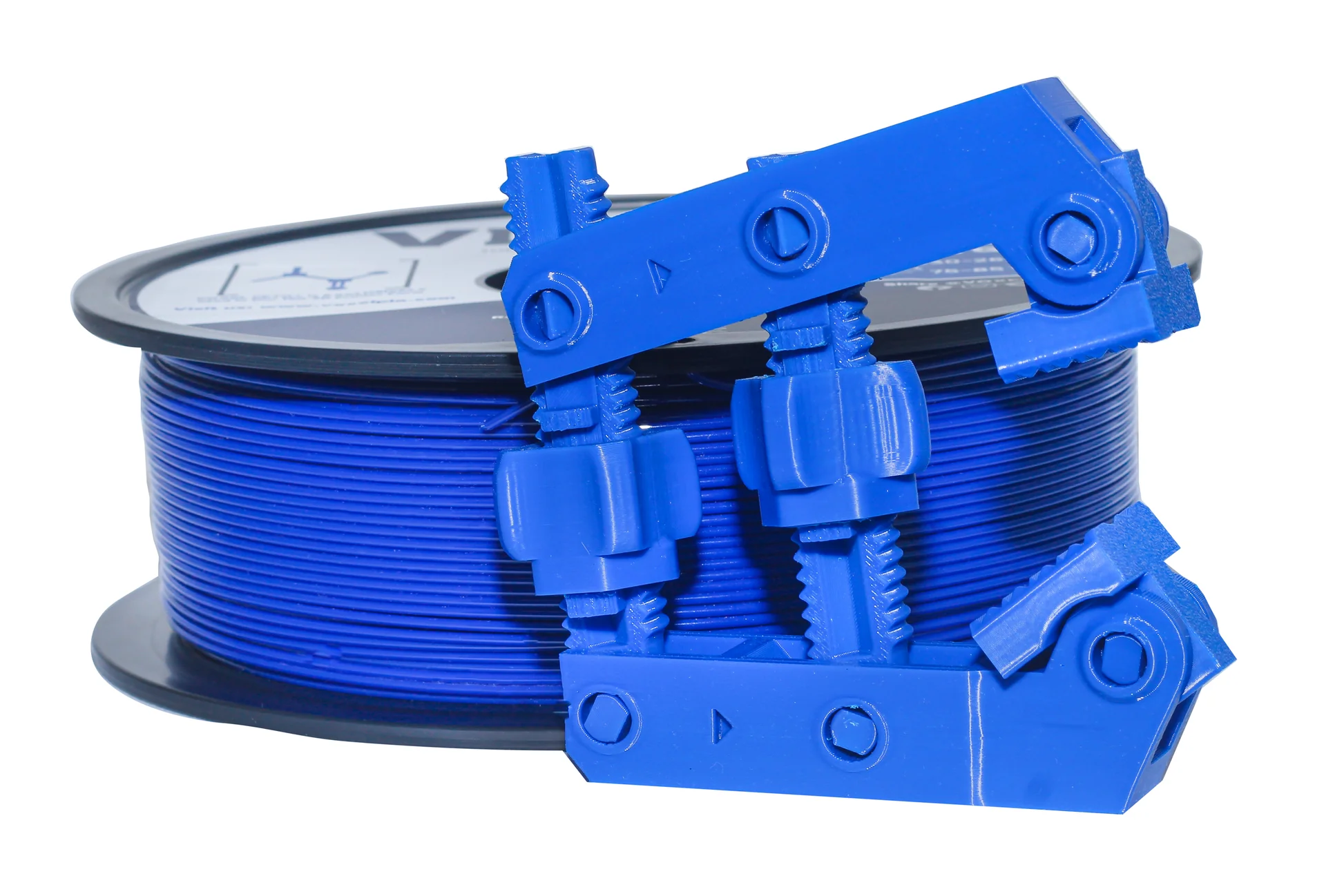
The right PETG spool depends on the printer's speed, the part's job, and how carefully you can manage moisture after opening the package.
Diameter consistency
A 1.75mm filament should stay close to its stated diameter along the entire spool. The products here list tolerances from +/- 0.02mm to +/- 0.03mm. Tighter stated control can make extrusion more predictable, especially on long walls, thin features, and parts that need to fit with another component.
Diameter accuracy does not replace printer calibration. A clean nozzle, correct extrusion multiplier, suitable temperature, and stable spool path still matter. Treat the tolerance as one useful indicator, not a guarantee of perfect dimensions.
Layer adhesion and toughness
PETG is often selected because it can make stronger, less brittle parts than PLA. Look for language around layer adhesion, impact resistance, elongation, and resistance to cracking. These properties matter for brackets, clips, tool holders, enclosures, and parts that will be handled repeatedly.
A tough material can still fail if the layers are too cool, the part cools too quickly, or the design puts force across a weak orientation. If you are moving from PLA, the differences between common filament materials and their uses can help you decide whether PETG is the right step.
Printing speed
High-speed PETG is useful only when the printer can melt and deposit it quickly enough. OVERTURE lists a range up to 300mm/s, while ELEGOO Rapid PETG lists up to 600mm/s. Those figures describe the material's intended capability, not a setting every printer can safely use.
For a conventional printer, stable flow at moderate speed is more valuable than an impressive maximum. High-speed profiles also need appropriate temperature, cooling, acceleration, and retraction settings. If the printer is built around rapid production, select a formula designed for that workload. Otherwise, a general-purpose spool is often easier to tune.
Moisture control
PETG absorbs moisture, and damp filament can pop at the nozzle, produce rough surfaces, increase stringing, and weaken the print. Vacuum sealing, desiccant, and pre-drying help the spool arrive ready to use, but they do not protect it indefinitely after opening.
Store open filament in a dry container or filament dryer, and dry it again when print quality changes unexpectedly. The features that make a filament dryer useful are especially relevant to PETG because moisture can undo the advantages of a carefully manufactured spool.
A precise PETG spool still needs dry storage, a clean nozzle, and a profile tuned for your printer.
Spool and system compatibility
Most of these products use 1.75mm filament, but the spool itself can still affect the experience. Reusable designs from SUNLU and ANYCUBIC suit users who plan to buy refills, while ELEGOO Rapid PETG uses cardboard spools. AMS, AMS Lite, and other multi-material systems also need a spool that feeds smoothly and fits the holder.
Check the printer's supported spool dimensions and the material system's guidance before buying a bundle. A neatly wound spool is useful, but it cannot fix a holder that is too narrow or a feed path that does not accommodate the spool's construction.
Frequently asked questions
Is PETG harder to print than PLA?
PETG is generally manageable on a tuned FDM printer, but it has different habits from PLA. It can string more, bond strongly to some build surfaces, and become difficult to print when damp. A suitable bed temperature, clean surface, and controlled retraction make a large difference.
What temperature should PETG filament use?
The recommendations in this roundup range from 220 to 260°C at the nozzle, with bed settings from 60 to 80°C. Start with the filament maker's stated range, then adjust with a temperature tower or small calibration print. The correct setting depends on the printer, nozzle, cooling, and layer height.
Does PETG need an enclosure?
Not usually. Polymaker describes its PETG as printable without an enclosure, and the other products are also intended for common FDM printers. An enclosure can help with drafts and temperature stability, but it is not automatically required for PETG in the way it can be for some more demanding materials.
How should PETG be stored?
Keep opened PETG away from humid air in a sealed container with a suitable desiccant, or use a filament dryer when needed. Vacuum packaging protects the unused spool, but once opened, the material can gradually absorb moisture. Popping sounds, extra stringing, and rough extrusion are common signs that drying may help.
Can PETG be used in an AMS system?
Several products are described as suitable for AMS or other multi-material systems, including OVERTURE High Speed PETG, Polymaker PETG High Speed, and the SUNLU 2kg bundle. Compatibility also depends on the spool's shape, material, and the specific feeder. Check the system's physical clearance and spool guidance before loading it.
Is PETG suitable for outdoor parts?
PETG is often chosen for outdoor components because it offers toughness and better weather resistance than PLA. SUNLU specifically describes its formula as UV and moisture resistant, while other products mention water, chemical, or weather resistance. Outdoor exposure still depends on wall thickness, print orientation, color, temperature, and continuous sunlight.
The bottom line
The Best PETG filament in this group is OVERTURE High Speed PETG. Its 1.75mm diameter, stated +/- 0.02mm tolerance, neat winding, pre-drying, and 30 to 300mm/s target make it versatile enough for routine functional parts and faster printer profiles. SUNLU PETG 1kg is the simpler alternative for everyday printing, while Polymaker PETG High Speed is a strong choice when surface finish and heat performance matter.
Choose SUNLU PETG 4kg Bundle for a steady supply of black material, Creality PETG 2kg Bundle when black and white are more useful, or ELEGOO Rapid PETG when your printer can genuinely take advantage of high flow. For reduced spool waste, SUNLU PETG 2kg and ANYCUBIC PETG have the most distinctive designs.
If you are undecided, start with OVERTURE unless your priority is bulk supply, reusable hardware, or very high-speed printing.
As an Amazon Associate we earn from qualifying purchases.