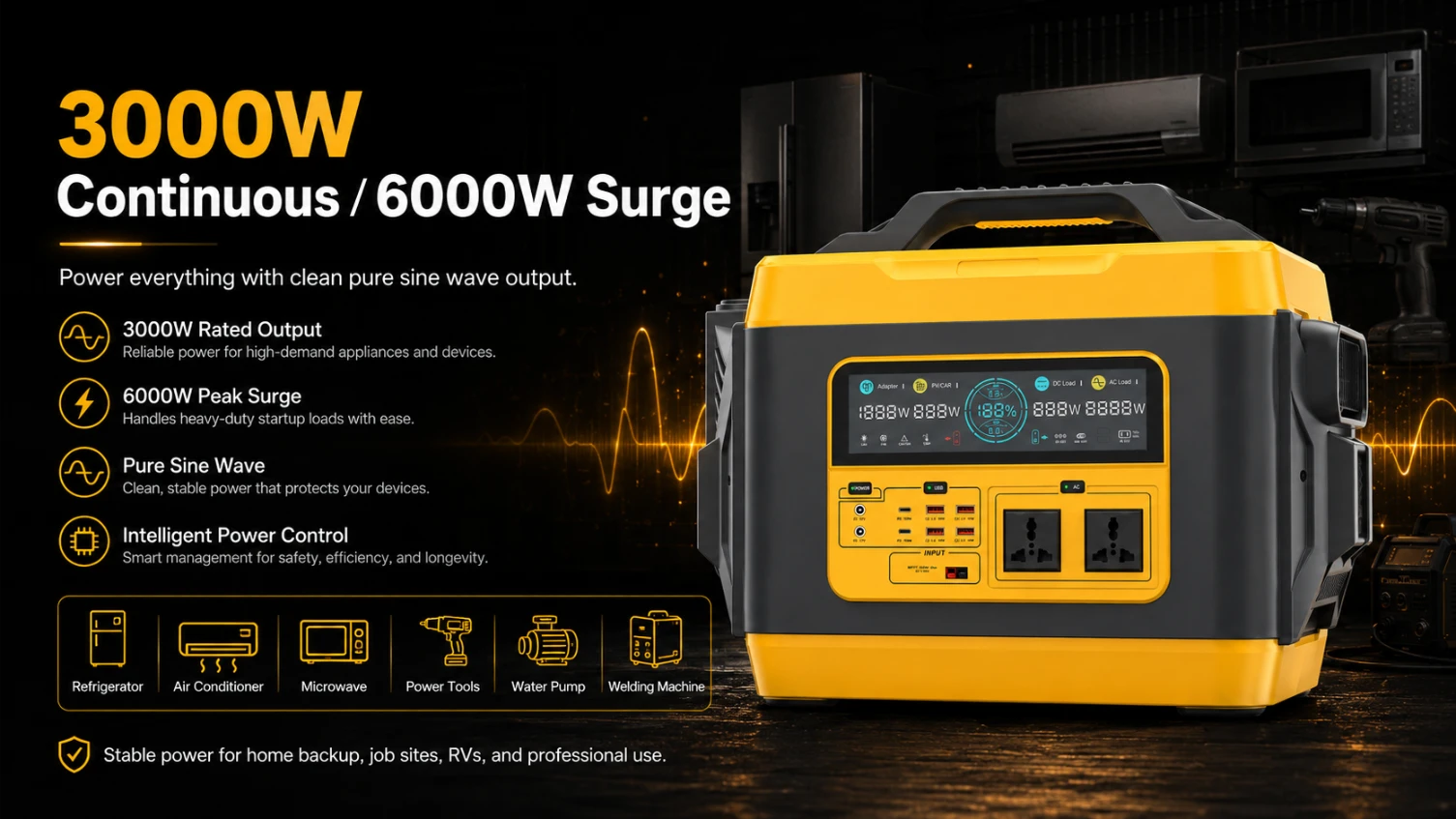

A portable power station can keep a phone, laptop, cooler, or medical device running when a campsite has no outlet or the house loses power. The hard part is matching the battery and inverter to the appliances you actually use. A small 300W unit is easy to carry, but it cannot replace a serious home backup system.
We compared compact kits with included solar panels against larger Jackery systems built for outages and extended backup. The Best portable solar generator for most people is the Jackery 1000 v2 Solar Kit, while the list also includes very small camping units and a full-size home backup system.
Portable solar generator comparison
| # | Product | Award | Battery capacity | AC output | Solar panel | Weight | Best for |
|---|---|---|---|---|---|---|---|
| 1 | Jackery 1000 v2 Solar Kit | Best overall | 1, 070Wh | 1, 500W | 200W | 23.8 lb | Camping and outage backup |
| 2 | Jackery Explorer 2000 v2 | Best large portable unit | 2, 042Wh | 2, 200W | 2 x 200W | 39.5 lb | High-demand appliances |
| 3 | Jackery HomePower 3600 Plus | Best home backup | 3, 584Wh | 3, 600W | 2 x 200W | 77.16 lb | Extended household outages |
| 4 | Jackery Explorer 1000 v2 | Best station-only pick | 1, 070Wh | 1, 500W | Not included | 23.8 lb | Buyers with a solar panel |
| 5 | EnginStar 300W Solar Generator | Best compact 300W kit | 296Wh | 300W | 60W | 6.5 lb | Small electronics and CPAP use |
| 6 | Apowking 300W Solar Generator | Best quiet compact kit | 220Wh | 300W | 40W | 5 lb | Quiet tents and indoor use |
| 7 | MARBERO M823 | Best compact capacity | 237Wh | 300W | 60W | Not stated | Flexible camping charging |
| 8 | ZeroKor 300W Solar Generator | Best small-device kit | Not stated | 300W | 60W | 5.08 lb | Lightweight day trips |
| 9 | EnginStar 300W Solar Generator | Best pure sine wave compact kit | 296Wh | 300W | 60W | 6.5 lb | Sensitive electronics |
| 10 | ZeroKor 300W 40W Kit | Best dual-station bundle | 280Wh | 300W and 100W | 40W | Not stated | Two power levels outdoors |
1. Jackery 1000 v2 Solar Kit: Best Overall

Pros
- 1, 070Wh battery in a 23.8-pound body
- 1, 500W AC output with 3, 000W surge peak
- LFP battery rated for more than 4, 000 cycles
- 200W solar panel is included
- App offers fast, quiet, and efficiency modes
Cons
- One-hour charging requires the app's emergency mode
- Solar charging reaches 80 percent in six hours with the included panel
- Solar panel and station ship separately
Best for: campers and households that need one versatile, durable power station for electronics and moderate appliances.
The Jackery 1000 v2 Solar Kit is the easiest recommendation here because it avoids the usual compromise between portability and usable output. At 23.8 pounds, it is still manageable for a car-based campsite, yet its 1, 070Wh battery is large enough for repeated phone, laptop, lighting, and small-appliance use. The foldable handle helps when moving it from a vehicle to a tent or indoor backup spot.
Its 1, 500W AC output and 3, 000W surge peak give it far more headroom than the compact 300W models below. Jackery lists three pure sine wave AC ports, two USB-C ports, one USB-A port, and a DC car port. One USB-C port supports 100W power delivery, so a laptop can charge directly without carrying its usual adapter. That output mix is more useful than a station that has plenty of ports but only modest AC power.
Charging behavior is a strong point. The included 200W panel can take the battery to 80 percent in six hours under the stated conditions, while wall charging defaults to 1.7 hours. The app can activate a one-hour full-charge mode, a 30 dB quiet overnight mode, and an energy efficiency mode. The LFP battery is specified to retain more than 70 percent of its original capacity after 4, 000 cycles, with a lifespan exceeding 10 years.
Compared with the Jackery Explorer 1000 v2, this kit adds the solar panel and is ready for off-grid use out of the box. The Jackery Explorer 2000 v2 is the better choice for larger appliances and longer runtimes, but it is considerably heavier. The real weakness here is that the fastest charging mode must be enabled in the app, and the included panel is not a quick way to refill the whole battery. Skip it if you need to run high-wattage heating appliances for long periods.
For most readers, this is the Best portable solar generator because it combines a sensible size, durable battery chemistry, useful AC output, and a complete solar setup. It suits the buyer who wants one unit for road trips, outages, and occasional off-grid work without jumping to a full home backup system.
2. Jackery Explorer 2000 v2: Best Large Portable Unit

Pros
- 2, 042Wh battery for longer runtimes
- 2, 200W AC output from three AC ports
- 100W USB-C power delivery
- Includes two 200W solar panels
- 20 ms seamless switching for backup use
Cons
- Listed weight is 39.5 pounds
- Solar charging takes six hours with 400W of panels
- Correct DC plug connection matters when connecting Jackery panels
Best for: users who need to run larger appliances or keep several devices working through a prolonged outage.
The Jackery Explorer 2000 v2 is the step up for anyone who has already outgrown a 1, 000Wh-class station. Its 2, 042Wh capacity gives it a much deeper reserve for refrigeration, communications equipment, laptops, lights, and other household essentials. At 39.5 pounds, it remains movable by one person, but it is no longer a casual carry to a distant campsite.
The 2, 200W AC output is the feature that separates it from the smaller Jackery. Three AC ports can handle a broader mix of appliances, and the 100W USB-C port keeps modern laptops and other high-draw USB devices simple to charge. The unit uses a LiFePO4 battery and a temperature control system intended to reduce fan noise. Jackery also specifies a 20 ms seamless switching time, which makes it more suitable for keeping selected equipment powered during an interruption.
The bundled pair of 200W panels provides 400W of solar input. Jackery says the station can reach 80 percent from AC in 66 minutes, or a full charge in 102 minutes with emergency super charging enabled through the app. Solar charging takes six hours with the 400W panel setup. Silent charging takes five hours at 30 dB, a useful option when the station is inside a living area or near a sleeping space.
The Jackery 1000 v2 Solar Kit is easier to lift and carry, while the Jackery HomePower 3600 Plus has much more capacity and output for serious home backup. The Explorer 2000 v2 occupies the middle ground well, but its weight is the unavoidable downside. It is also important to use the specified straight DC8020 plug when connecting compatible Jackery panels. Buyers who only need phones, lights, and a laptop should skip this much larger station.
Choose this model when the words “run the refrigerator” or “keep several appliances going” are part of the plan. It is not the most portable generator here, but it is one of the most capable units that can still travel in a vehicle without a permanent installation.
3. Jackery HomePower 3600 Plus: Best Home Backup

Pros
- 3, 584Wh LFP battery
- 3, 600W output with 7, 200W parallel output
- Supports 120V and 240V in parallel
- Expandable capacity
- Wheels and telescopic handle improve movement
- Hybrid AC and DC charging reaches full charge in two hours
Cons
- 77.16-pound weight limits true portability
- Large footprint compared with camping stations
- Solar panels and station may arrive separately
Best for: households preparing for extended outages and users who need high output for pumps, heaters, dryers, or other demanding appliances.
The Jackery HomePower 3600 Plus is a home backup system that happens to have wheels. Its 3, 584Wh battery is in a different class from the compact stations here, and the 3, 600W output gives it enough headroom for appliances that small camping power banks cannot approach. Jackery says the system can provide 7, 200W in parallel and support 120V and 240V operation in parallel.
That capability matters when an outage affects more than phones and lamps. The stated use cases include pumps, heaters, and dryers, and the expandable design can reach 21kWh per unit or 43kWh with multiple units. The station uses LFP cells with a stated 6, 000-cycle rating and a 10-year lifespan. Jackery also describes battery cells tested at 302 degrees Fahrenheit and operation in conditions as low as minus 4 degrees Fahrenheit.
Charging is unusually flexible for a unit this large. Hybrid AC and DC charging can reach 100 percent in two hours, AC charging takes 2.5 hours, and solar charging takes four hours with the included panel arrangement. The kit includes two 200W solar panels. Plug-and-play operation is another advantage for home use, particularly when the goal is to keep essential equipment running rather than build a complicated electrical system.
The Jackery Explorer 2000 v2 is a better fit for a mobile setup, and the Jackery 1000 v2 Solar Kit is far easier to carry. The HomePower 3600 Plus wins when capacity and output matter more than lifting weight. At 77.16 pounds, its wheels and telescopic handle are essential, not decorative. Skip it if your main use is hiking, tent camping, or moving power over uneven ground.
This is the right pick for a homeowner who wants quiet, fume-free backup with substantial reserve capacity. It is also the clearest choice for readers who want a system that can grow beyond a single battery pack.
4. Jackery Explorer 1000 v2: Best Station-Only Pick

Pros
- 1, 070Wh LFP battery
- 1, 500W AC output and 3, 000W surge peak
- 100W USB-C power delivery
- Three pure sine wave AC ports
- App-controlled quiet and emergency charging modes
Cons
- Solar panel is not included
- Compatible only with Jackery solar panels for solar charging
- Fast charging needs an app setting
Best for: buyers who already own a compatible panel or want a capable power station without a bundled solar kit.
The Jackery Explorer 1000 v2 has the same core station design as the bundled 1000 v2 kit, and that makes it a strong choice for anyone who does not need another panel. The 1, 070Wh LFP battery and 23.8-pound body create a practical balance for weekend camping, vehicle travel, and short home outages.
Its 1, 500W AC output, 3, 000W surge peak, and three pure sine wave AC ports let it handle more than USB-only power banks. Two USB-C ports, one USB-A port, and a DC car port cover phones, tablets, cameras, laptops, and vehicle accessories. The 100W USB-C output is especially convenient for laptops because it reduces the number of separate chargers in a travel kit.
Jackery lists a one-hour charge from zero to 100 percent with emergency charging activated in the app. The default charging mode takes 1.7 hours, while the app also provides a 30 dB quiet overnight mode. The battery is specified to retain more than 70 percent capacity after 4, 000 charge cycles and to last more than 10 years. Those details make the station more appealing as a frequently used device rather than something left untouched for years.
The obvious difference from the Jackery 1000 v2 Solar Kit is the missing 200W panel. The station-only model also works only with Jackery solar panels for solar charging, so buyers should account for that limitation before building a kit. The Jackery Explorer 2000 v2 offers twice the general capacity and higher output, but it adds considerable weight. Skip this model if you want a complete solar setup in one purchase.
For someone who already has the right panel, this is a clean, capable station. It is also a sensible foundation for a custom setup, provided the buyer is comfortable staying within Jackery's panel compatibility requirement.
5. EnginStar 300W Solar Generator: Best Compact 300W Kit

Pros
- 296Wh battery with 300W AC output
- 110V pure sine wave AC outlets
- Six output categories across eight ports
- Includes a foldable 60W panel
- 6.5-pound station is easy to carry
Cons
- 300W output rules out heaters and compressor-heavy appliances
- Solar charging is limited by the 60W panel
- Lithium-ion battery is rated for more than 1, 000 cycles, below the long-life Jackery units
Best for: campers who need AC power for small electronics, a camera kit, or a modest CPAP setup.
The EnginStar 300W Solar Generator is a compact kit that gets the fundamentals right. The 6.5-pound station is light enough for a short carry from a car to a campsite, and its 296Wh battery is more useful than the very smallest emergency power banks. The included 60W foldable panel makes the package immediately usable away from an outlet.
EnginStar specifies two 110V pure sine wave AC outlets, two regulated DC outputs, a fast-charge USB port, and USB-C output rated at 18W. Pure sine wave output is preferable for sensitive electronics such as laptops, and the regulated DC ports make the station more predictable for compatible 12V or 24V equipment. The total of eight output ports also lets several small devices charge at once.
The station can be recharged through AC, a car socket, or a compatible 12V to 25V solar panel. Maximum charging speed is listed at 65W, with a full charge in three hours under the stated conditions. The solar panel uses monocrystalline cells with a stated 23 percent conversion efficiency, and it folds to a compact size. Its USB-A, USB-C, and DC outputs also let it charge small devices directly.
The Apowking 300W Solar Generator weighs less and has a quiet fanless design, while the MARBERO M823 offers a larger 237Wh battery with a similar 300W class output. EnginStar's advantage is the combination of pure sine wave AC, regulated DC outputs, and the included panel. Its weakness is the modest 300W ceiling, so appliances with heating elements or compressors are poor matches. Buyers needing a larger reserve should move to the Jackery 1000 v2.
This is a straightforward camping kit for electronics rather than a miniature household generator. For readers comparing how much panel area is practical on a campsite, the 60W foldable panel is a manageable starting point, but it is not intended to refill a large battery quickly.
6. Apowking 300W Solar Generator: Best Quiet Compact Kit

Pros
- Five-pound power station
- 220Wh battery and 300W rated output
- Two pure sine wave AC outlets
- Seven ports can operate together
- Fanless operation
- Wide-area 300-lumen LED light
Cons
- Smaller battery than the EnginStar kit
- Included panel is limited to 40W
- Compact output is not suitable for high-draw appliances
Best for: tent campers and indoor users who value low noise, low weight, and built-in lighting.
The Apowking 300W Solar Generator is the easiest compact station to carry in this group. The power station weighs five pounds and measures 8.5 by 6.7 by 4.1 inches. That small footprint makes it a natural fit for a tent, car, or bedside emergency kit, especially when fan noise would be irritating.
Its 220Wh battery supports a 300W rated output with a 600W peak, and the two 110V AC outlets use pure sine wave output. Apowking also lists two USB-C PD ports, three USB-A ports, and a DC carport. All seven ports can operate at once according to the product information, which is useful for a group charging phones, cameras, and tablets at the same time.
The large-area LED backlight is more useful than a tiny flashlight for campsite work. It is listed at about 300 lumens and 5, 000K, with a runtime of more than 30 hours on a single charge. The station is described as fanless, so it should be less intrusive in a quiet tent or indoor room. Its multi-layer battery management system monitors voltage, current, and temperature and includes automatic shutdown for abnormalities.
The EnginStar 300W Solar Generator has a larger 296Wh battery and a 60W panel, while the ZeroKor 300W Solar Generator is similarly light and offers a larger panel. Apowking wins for quiet operation and lighting, but its 220Wh capacity leaves less reserve. The 40W panel also makes solar replenishment a slow process. Skip it if your main goal is running a refrigerator or other high-draw appliance.
This is a focused tool for small electronics and illumination. It makes sense for a quiet campsite, a car emergency kit, or a room where a compact light and several charging ports matter more than long runtimes.
7. MARBERO M823: Best Compact Capacity

Pros
- 237Wh lithium-ion battery
- 300W rated pure sine wave AC output
- Two AC outlets plus USB-C and USB-A ports
- Includes a foldable 60W solar panel
- Flashlight has flashlight, strobe, and SOS modes
Cons
- Product dimensions are larger than several compact competitors
- 300W limit excludes heating appliances and similar loads
- Solar connection requires selecting the correct adapter
Best for: outdoor users who want more battery capacity than the smallest compact kits provide.
The MARBERO M823 takes a middle position among the small stations. Its 237Wh battery is larger than the Apowking's 220Wh capacity, though it remains firmly in the compact 300W class. The included 60W foldable panel makes it suitable for a campsite, fishing trip, or short off-grid stay where phones, lights, and laptops are the main loads.
The output selection is generous. The M823 has two pure sine wave AC outlets rated at 300W, with a 375W peak, two QC3.0 USB-A ports, two additional USB-A ports, an 18W USB-C PD port, and a DC output. That combination is more flexible than a station with only one AC outlet, especially when several people need to charge devices simultaneously.
The panel uses solar arrays with a stated conversion rate of 21.5 to 23.5 percent. Connecting it involves attaching the supplied DC cable, choosing the correct adapter, and placing the panel in direct sunlight. That process is not difficult, but it is less immediate than simply plugging in a standard wall charger. The station also has flashlight, strobe, and SOS modes for nighttime use or emergencies.
The EnginStar 300W Solar Generator is lighter at 6.5 pounds and has a slightly larger 296Wh battery, while the Apowking 300W Solar Generator is smaller and fanless. MARBERO's advantage is its broad port mix and included 60W panel. Its weakness is the less compact stated footprint, measuring 16 by 12 by 10 inches, and the lack of a published weight in the supplied information. Readers wanting a truly light daypack kit should consider the ZeroKor model instead.
The M823 is best for buyers who want a compact station with a usable selection of outputs and a real solar panel in the box. It is more versatile than the smallest units, but its 300W limit still requires careful appliance selection.
8. ZeroKor 300W Solar Generator: Best Small-Device Kit

Pros
- 5.08-pound power station
- Includes a 60W monocrystalline panel
- Two 300W maximum AC outlets
- Multiple USB outputs and DC port
- Built-in reading and SOS flashlight modes
- AC, car, and solar charging options
Cons
- Battery capacity is not stated
- Loads above 300W are not supported
- Panel junction box must be kept dry
Best for: lightweight trips where phones, tablets, cameras, and other small electronics are the primary loads.
The ZeroKor 300W Solar Generator is one of the easier compact kits to pack. The station weighs 5.08 pounds and measures 8.5 by 6.7 by 4.1 inches, so it does not demand much room in a vehicle or camping bag. It is designed around small electronics rather than appliances, and the included 60W panel keeps the kit self-contained for basic outdoor charging.
ZeroKor lists two AC outlets with a 300W maximum, one DC port, three standard USB ports, and a quick-charge USB port. There are also reading and SOS flashlight modes. That makes the station useful for a cluster of personal devices, but the absence of a stated battery capacity makes it harder to predict runtime compared with the EnginStar or MARBERO models.
Charging can happen from a wall outlet, a 12V car port, or a compatible solar panel. The built-in MPPT controller is intended to improve solar charging, and the 60W monocrystalline panel is listed at 20.5 percent conversion efficiency. The panel also has USB-A, USB-C, and DC outputs, allowing it to charge small devices directly. Its junction box is not waterproof, so it needs protection from rain and wet ground.
The Apowking 300W Solar Generator has a published 220Wh battery and weighs slightly less, while the EnginStar 300W Solar Generator offers pure sine wave AC and a stated 296Wh capacity. ZeroKor is a sensible pick when the lightest practical bundle matters, but the missing capacity figure is a genuine limitation. Skip it if you need to plan exact runtimes for medical equipment or longer overnight use.
This is a good personal charging kit, not a general-purpose backup generator. It fits the reader who wants solar charging, a flashlight, and AC access in a small package and already knows that the connected devices will stay well below 300W.
9. MARBERO M82 MAX: Best Ultra-Compact Power Bank

Pros
- Very light 2.3-pound station
- 111Wh lithium battery
- Four USB-A ports and one USB-C port
- Includes a 30W foldable solar panel
- Two AC ports with 80W output and 120W peak
- Separate DC output reaches 120W
Cons
- AC output is far below the 300W stations
- Small battery is aimed at personal electronics
- Solar panel replenishes the battery slowly
Best for: hikers and travelers who need phone, tablet, light, and small USB device charging without carrying a heavy station.
The MARBERO M82 MAX is closer to a large power bank with AC outlets than to a conventional camping power station. The station weighs 2.3 pounds, while the foldable panel weighs 1.8 pounds. That combined portability is its main appeal. It can fit into an outdoor kit without the bulk associated with 200Wh or 300Wh stations.
Its 111Wh battery supports four USB-A ports, one USB-C port, two AC ports, and one DC port. The AC output is rated at 80W with a 120W peak, while the DC port can reach 120W. Those figures are enough for phones, lights, tablets, and some smaller electronics, but they rule out the appliances supported by the Jackery units. The output layout is practical when several personal devices need power at once.
The included solar panel uses arrays rated at 21.5 to 23.5 percent conversion efficiency and folds to 8.3 by 12 by 1.18 inches. The station itself measures 6.5 by 3.2 by 4.6 inches. This is a highly portable arrangement, though the 30W panel is better for maintaining a small battery than for quickly restoring it after heavy use. The kit also includes a power adapter and cigarette lighter output.
The MARBERO M823 has more than twice the battery capacity and a 300W AC output, while the Apowking 300W Solar Generator offers a larger battery and still weighs only five pounds. The M82 MAX wins for hiking weight and personal electronics, but it should be skipped by anyone who expects to operate a CPAP, refrigerator, or heating device through an outage.
For a hiker, traveler, or emergency kit built around USB devices, this is the most compact option in the group. Readers comparing it with a dedicated portable battery for phone and tablet charging should focus on the added AC and solar capability, not expect the behavior of a full-size generator.
10. ZeroKor 300W 40W Kit: Best Dual-Station Bundle

Pros
- Includes a 300W station and a separate 100W station
- 280Wh battery in the larger unit
- Pure sine wave AC outlets on the 300W station
- Foldable 40W solar panel included
- SOS and reading flashlight modes
- Multiple USB and DC outputs
Cons
- The 100W station cannot run high-draw devices
- 40W panel is modest for the 280Wh battery
- Product information does not state the kit's weight
Best for: campers who want separate power sources for a main device group and low-draw personal electronics.
The ZeroKor 300W 40W Kit is unusual because it includes two different power stations rather than one larger battery. The main station has a 280Wh lithium-ion battery and 300W output, while the smaller station provides 100W maximum output. That arrangement can be useful at a campsite when one person needs a dedicated source for phones or a lamp while the main station handles AC equipment.
The larger unit has two 110V pure sine wave AC outlets rated at 300W maximum, a DC port, three USB ports, and a QC3.0 USB port. The smaller 100W station has two 100W maximum AC outlets, a DC output, standard USB ports, a QC USB port, and USB-C. Both also include flashlight modes. The split design offers flexibility, but it also means tracking two batteries and deciding which station should handle which load.
The included foldable panel is rated at 40W. That is a reasonable match for small electronics, though it will recharge the 280Wh station slowly after a deep discharge. The product information does not state the package or station weight, so this kit is harder to compare for carry-focused travel. Its strongest use is a vehicle-based campsite where the extra station is more useful than the lowest possible pack weight.
The MARBERO M823 offers a 237Wh battery and 60W panel in one simpler package, while the EnginStar 300W Solar Generator provides a 296Wh battery and 60W panel with a clearer compact format. ZeroKor's advantage is having two separate output sources. Its weakness is that the smaller unit's 100W limit sharply narrows what it can run, so buyers should not mistake the bundle for a 400W system.
Choose this kit if independent charging points matter more than a single large battery. It is a specialized camping bundle, and it makes less sense for home backup than the Jackery options.
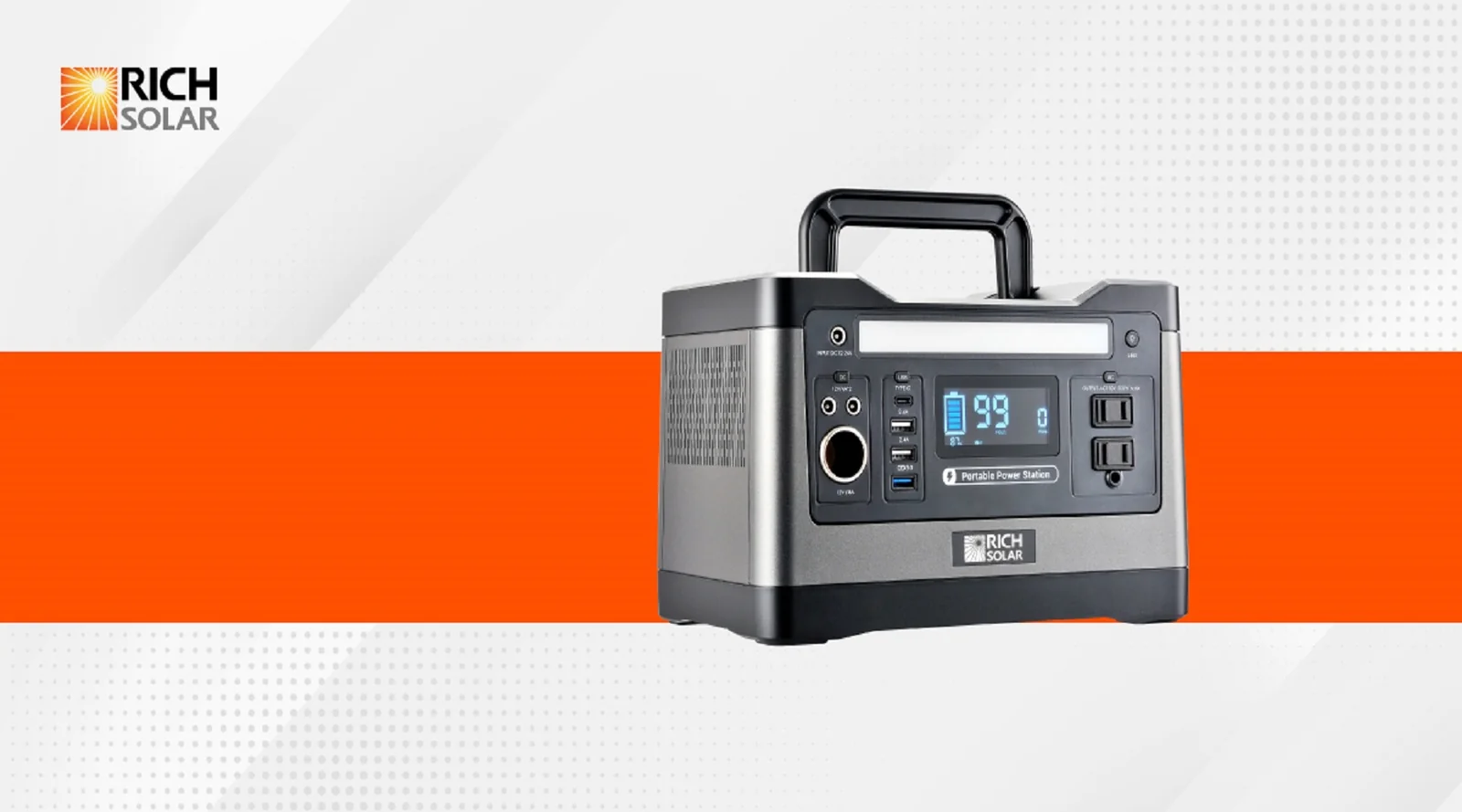
How to choose best portable solar generator
Start with the appliances you need to operate, then match the battery capacity, inverter output, solar input, and physical format to those loads.
Battery capacity
Capacity is measured in watt-hours, and it indicates how much stored energy the station has before conversion losses and device demand are considered. A 111Wh unit such as the MARBERO M82 MAX is aimed at personal electronics, while the 1, 070Wh Jackery stations provide a much deeper reserve.
A larger number does not automatically make a station better for every trip. It usually means more weight and a longer solar recharge. For phones, lights, and cameras, a compact unit can be easier to live with. For refrigeration, laptops, medical devices, or overnight use, the 220Wh to 296Wh class is a more useful starting point. Extended home backup calls for the 2, 042Wh or 3, 584Wh systems.
AC output
AC output determines which appliances the inverter can run. The compact stations here are rated from 80W to 300W, while the Jackery models reach 1, 500W, 2, 200W, or 3, 600W. Heating elements, motors, and compressors can draw more during startup, so the surge rating matters too.
Pure sine wave output is a useful feature for sensitive electronics and devices with motors. Do not assume that a 300W label means a coffee maker, hair dryer, pump, or refrigerator will work. The ZeroKor and MARBERO listings specifically warn against loads over their rated limits, and those limits should be treated as firm.
Buy for the appliance's startup demand, not just the wattage printed on its normal operating label.
Solar panel size
A panel's wattage affects how quickly it can restore the battery in strong sunlight. The compact kits include panels from 30W to 60W, while the Jackery bundles use 200W panels, with the Explorer 2000 v2 including two. A panel with higher stated conversion efficiency can make better use of limited light, but real output changes with cloud cover, angle, shade, and heat.
Check the connector and input requirements before adding a third-party panel. The Explorer 1000 v2 is listed as compatible only with Jackery solar panels, and the Explorer 2000 v2 requires the correct DC plug arrangement. The panel's junction box should also be protected from water when the product documentation calls that out.
Battery chemistry and cycle life
Battery chemistry affects expected longevity, weight, and how suitable the station is for frequent use. The Jackery 1000 v2 and Explorer 2000 v2 use LFP batteries, with the 1000 v2 specified for more than 4, 000 cycles and the HomePower 3600 Plus listed at 6, 000 cycles. The smaller EnginStar unit uses lithium-ion cells rated for more than 1, 000 cycles.
A station used every weekend benefits more from a long cycle rating than one kept for occasional emergencies. It is also wise to follow the maker's storage and maintenance directions. The ZeroKor 300W model recommends periodic charging and advises against fully draining the unit.
Portability and controls
Weight, handles, wheels, dimensions, and app controls affect how often a station is actually used. A five-pound unit can move from a car to a tent easily, while the 77.16-pound HomePower 3600 Plus needs its wheels and telescopic handle.
Apps can change charging modes, activate emergency charging, or reduce noise overnight. That flexibility is useful, but it adds a setup step. If a station's fastest charge requires an app setting, learn that process before an outage rather than discovering it when the battery is empty.
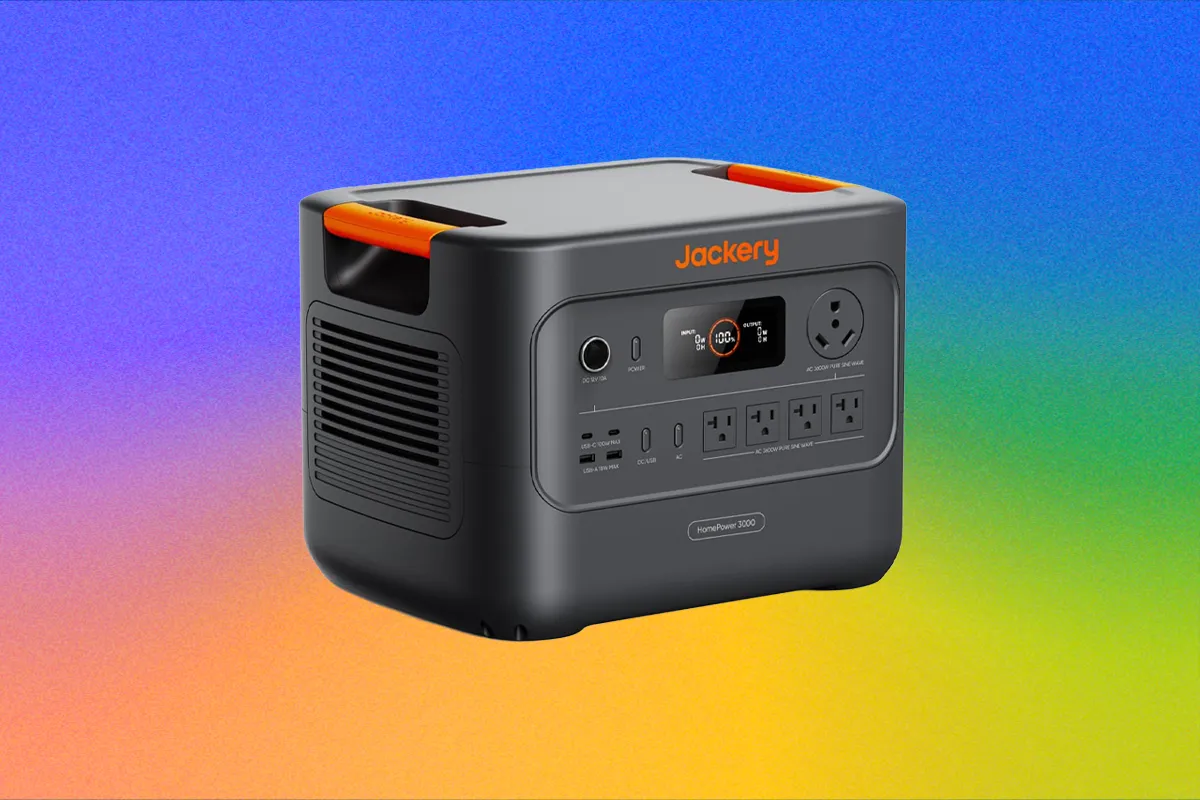
Frequently asked questions
What size portable solar generator do I need for camping?
For phones, lights, cameras, and tablets, a 111Wh to 237Wh station can be enough for a short trip. A 220Wh to 296Wh model gives more room for laptops, CPAP equipment, and several overnight devices. Choose a larger Jackery station when you need to run refrigeration or other higher-demand appliances.
Can a portable solar generator run a refrigerator?
Some can, but the refrigerator's running and startup wattage must stay within the station's AC output and surge limits. The Jackery 1000 v2, Explorer 2000 v2, and HomePower 3600 Plus provide much more inverter headroom than the compact 300W units. Check the refrigerator specifications before connecting it.
Are the included solar panels waterproof?
The supplied product information does not establish full waterproof protection for every panel. The ZeroKor 300W kit specifically says its panel junction box is not waterproof. Keep panels and connectors sheltered from rain unless the manufacturer clearly states a suitable weather rating.
Can these stations be used indoors?
The listed units are battery power stations that produce no gas fumes, making them more appropriate indoors than fuel generators. Keep ventilation around the station and follow the manufacturer's safety instructions. Never use a fuel-burning generator indoors or in an enclosed space.
How long does a portable solar generator last?
Runtime depends on battery capacity, device wattage, inverter losses, and whether the station is receiving solar input. A 3, 584Wh station can run much longer than a 111Wh unit, but a high-draw appliance can reduce either battery quickly. Use watt-hours and actual device demand to estimate runtime.
Do all portable solar generators include a solar panel?
No. The Jackery Explorer 1000 v2 station-only model does not include a panel, while the Jackery 1000 v2 Solar Kit does. Review the bundle contents carefully, since the same product family may be sold with or without solar equipment.
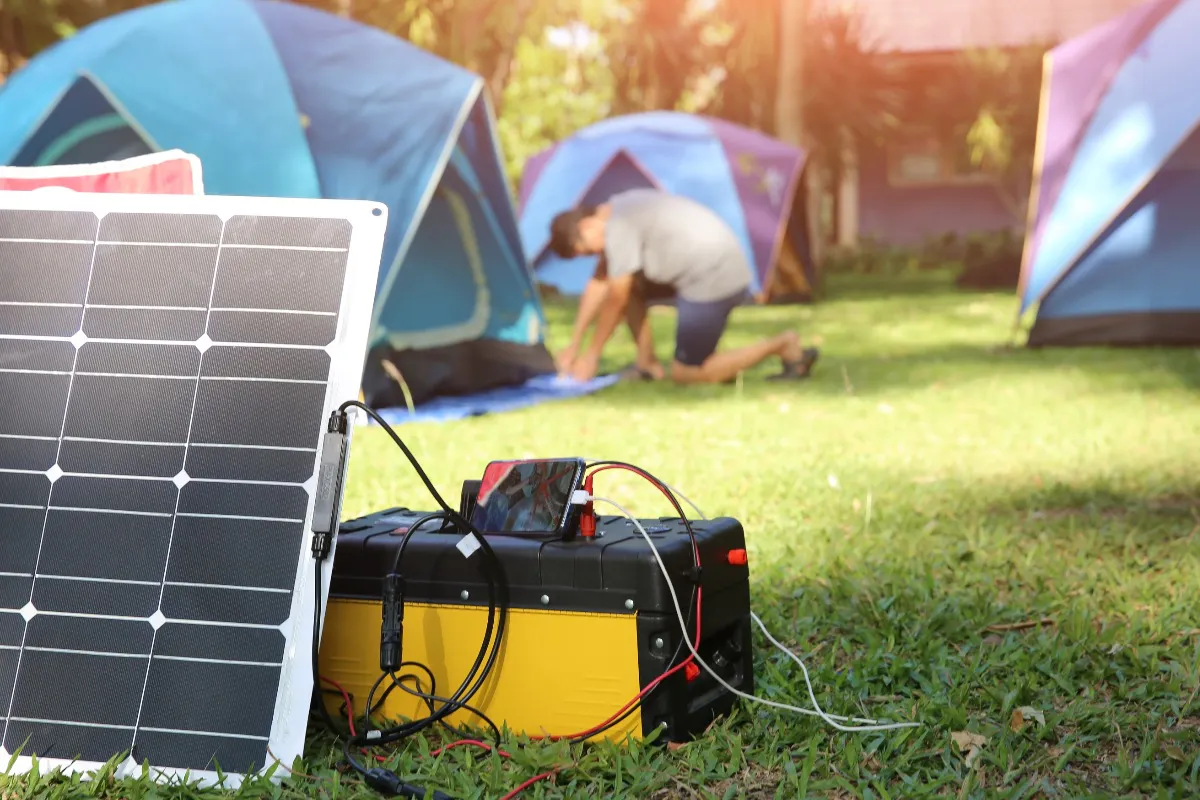
The bottom line
The Best portable solar generator for most camping trips and short outages is the Jackery 1000 v2 Solar Kit. It has a useful 1, 070Wh battery, 1, 500W AC output, durable LFP cells, app controls, and a 200W panel without becoming as difficult to move as the larger systems.
For heavier home backup, the Jackery Explorer 2000 v2 offers more capacity and output while remaining transportable. The Jackery HomePower 3600 Plus is the stronger choice for extended outages, pumps, heaters, and expandable household backup, but its weight makes it a poor fit for ordinary camping.
If you are undecided, choose the smallest station that comfortably handles your highest-demand appliance, then make sure its solar panel can replenish the battery in the conditions where you plan to use it.
As an Amazon Associate we earn from qualifying purchases.