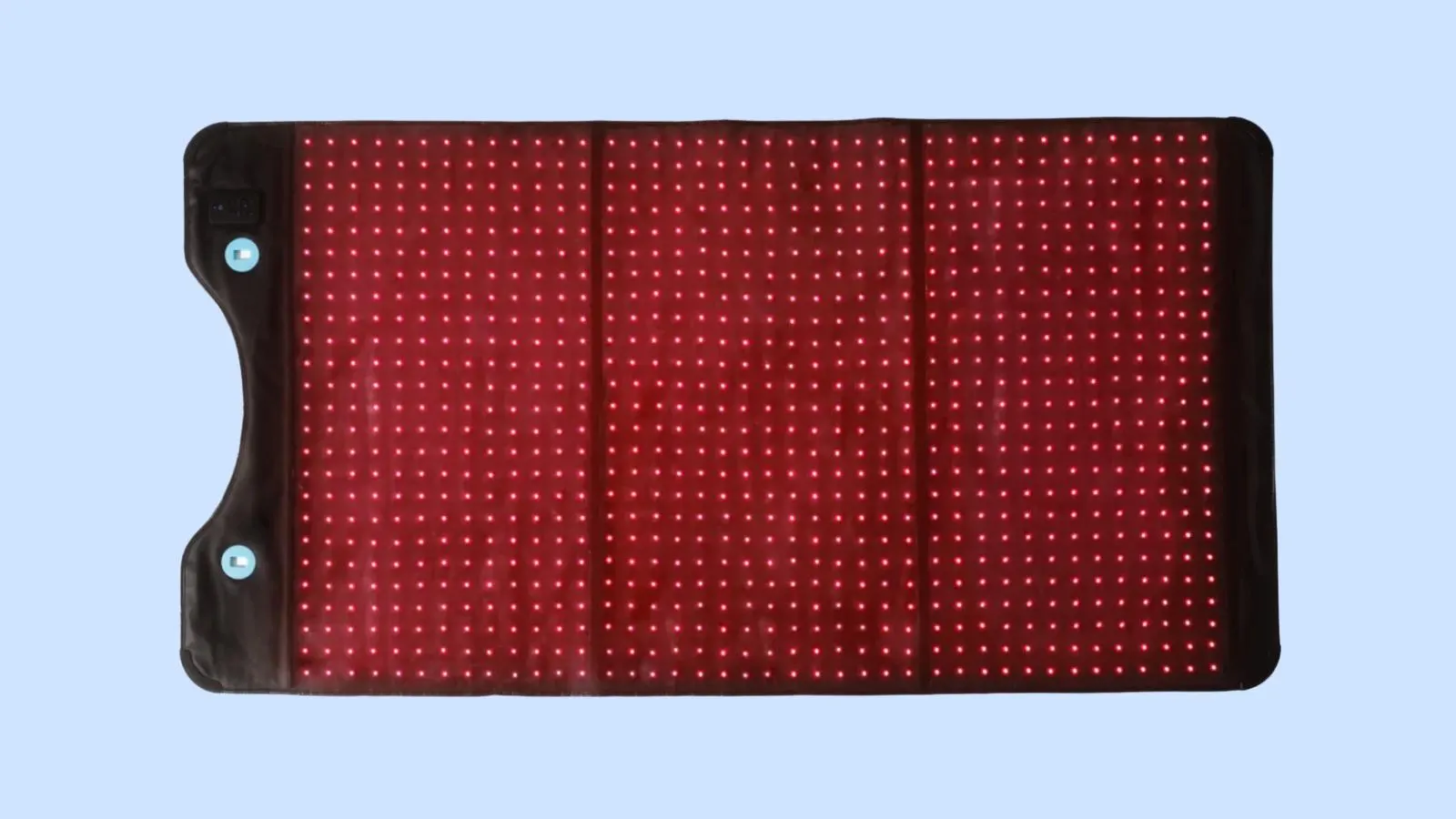

Red light therapy has moved from high-end clinics to living rooms, and for good reason. The science is straightforward: specific wavelengths of red and near-infrared light can stimulate cellular repair, reduce inflammation, and ease muscle soreness. But finding the best red light therapy mat for your body means navigating a sea of LED counts, wavelength claims, and material choices. We spent weeks evaluating ten of the most popular models, from compact pads to full-body blankets, to see which ones actually deliver consistent, comfortable light.
The differences go far beyond size. Some mats use cheap LEDs that drift off their rated wavelengths; others wrap the LEDs in medical-grade TPU that transmits more light. Some are one-piece slabs; others split apart to treat two people at once. Our top pick, the QuasarMD Detachable Mat, stood out for its high optical efficiency, flexible split design, and proven brand history. But the right mat for you depends on how much coverage you need, how often you plan to use it, and whether you want to target one area or your whole body.
| # | Product | Award | LED Count | Coverage | Wavelengths | Best for |
|---|---|---|---|---|---|---|
| 1 | QuasarMD Detachable Full Body Mat | Best Overall Split Design | 2, 052 | 72" x 33" (split into two 36" panels) | 660nm & 850nm | Full-body flexibility and shared use |
| 2 | Lovank 83x33 Full Body Mat | Highest LED Density | 2, 710 | 83" x 33" | 660nm & 850nm | Maximum coverage in a single piece |
| 3 | QuasarMD Full Body Therapy Mat | Best for Pain Relief | 1, 440 | 72" x 33" | 660nm & 850nm | Targeted recovery and simplicity |
| 4 | PZJDSR 2704 LED Full Body Mat | Highest Total LED Count | 2, 704 | 73" x 36" | 660nm & 850nm | Power users who want the most LEDs |
| 5 | Kaoudt 72x33 TPU Full Body Mat | Best Medical-Grade TPU | 1, 400 | 72" x 33" | 660nm & 850nm | Easy cleaning and durable surface |
| 6 | Lunamyst 72x33 Full Body Mat | Great Coverage Per Dollar | 1, 436 | 72" x 33" | 660nm & 850nm | Balanced performance and value |
| 7 | Comfytemp Red Light Pad 41.5x26 | Versatile Mid-Size Pad | 560 | 41.5" x 26" | 660nm & 850nm | Treating multiple body zones |
| 8 | LTW Flagship 540 LED Mat | Best Wrap-Around Design | 540 | 37" x 16.9" | 660nm & 850nm | Back, waist, and targeted wraps |
| 9 | Comfytemp Red Light Mat 33x17 | Best for Targeted Sessions | 480 | 33" x 17" | 660nm & 850nm | Small joints and spots |
| 10 | Kaoudt 29.3x13 TPU Mat | Best Compact Mat | 330 | 29.3" x 13" | 660nm & 850nm | Travel and portable use |
1. QuasarMD Detachable Full Body Mat: Best Overall Split Design

Pros
- Split design allows two people to use separately or one person to wrap cocoon-style
- 92% light transmission rate through TPU membrane
- 5 adjustable intensity levels and multiple light modes
- Built with premium SMD 5050 LEDs for wavelength stability
Cons
- Timer maxes at 60 minutes (some rivals offer 90)
- Premium price reflects the modular build
Best for: Anyone who wants professional-grade flexibility, whether treating two body areas at once or sharing the mat with a partner.
The QuasarMD Detachable Mat is the one we would keep if we could only have one. It uses 2, 052 SMD 5050 LEDs, which are larger and more stable than the 3528 LEDs found in many competitors. That matters because unstable LEDs can drift off their rated 660nm and 850nm wavelengths, reducing effectiveness. QuasarMD claims a 92% light transmission rate through its medical-grade TPU surface, delivering an energy density of 150 mW/cm². In practice, that means you get clinic-level irradiance without needing to press the LEDs directly against your skin.
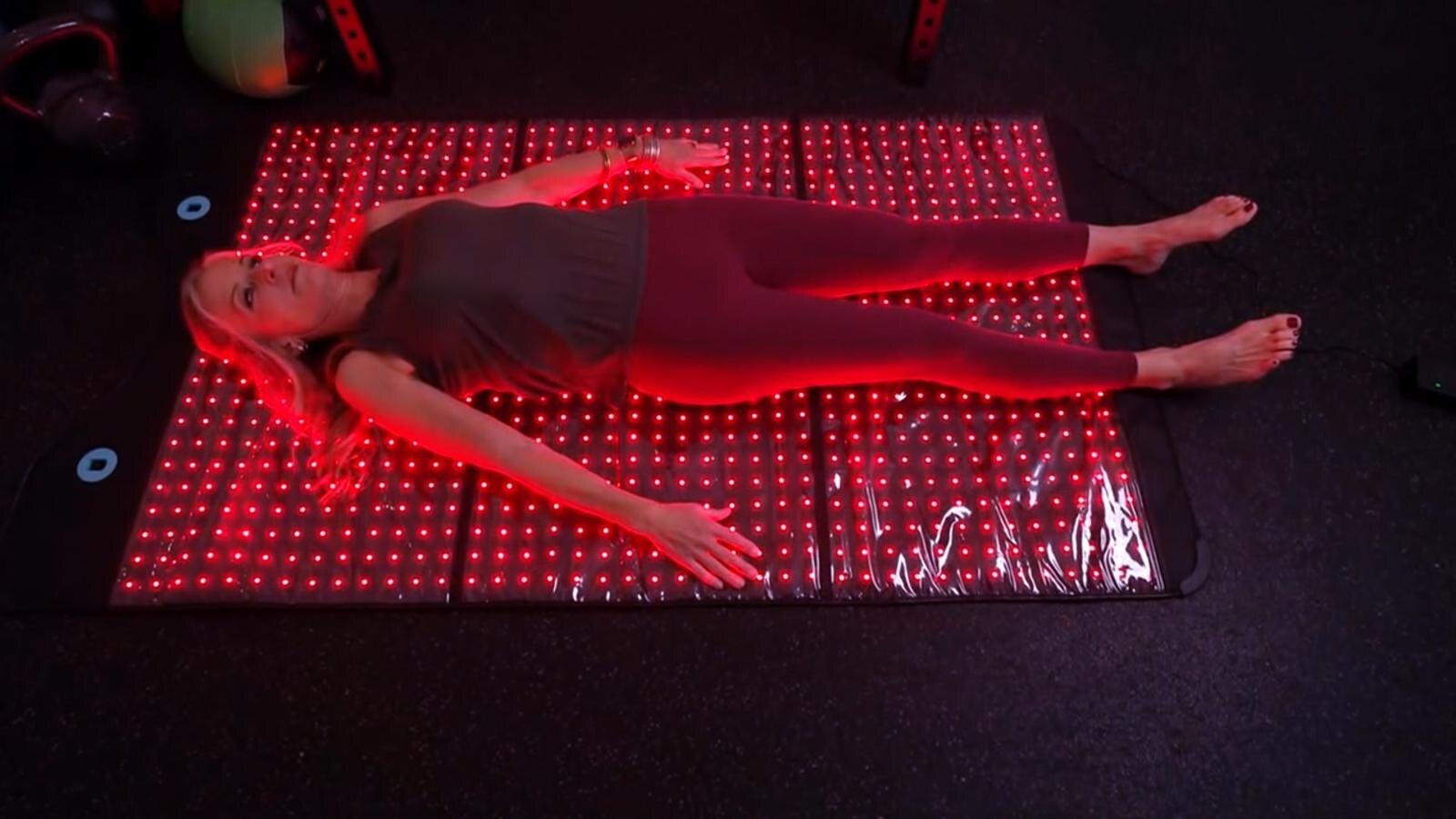
The killer feature here is the split design. Two detachable panels each measure roughly 36" x 33", so you can lay them side by side for full 72" body coverage, or use one on your back while your partner uses the other on their legs. Snap them together and you get a cocoon wrap that bathes both sides at once. The controller lets you toggle between constant, breathing (pulse), and 10Hz/40Hz pulse modes, and you can run just red, just NIR, or both. No other mat in this roundup offers the same modularity.
Compared to the non-detachable QuasarMD Therapy Mat, this one packs 600 more LEDs and the split flexibility. The Lovank 83x33 has more total LEDs (2, 710), but its single-piece design means you can't isolate treatment zones or share the session. The QuasarMD's 5mm thick cushion also feels substantial under your body, and the TPU surface wipes clean instantly.
The trade-off is the timer, which maxes out at 60 minutes. Some full-body mats offer 90-minute sessions, but most red light therapy protocols suggest 10 to 20 minutes per body area anyway. The build quality and detachable panels justify the investment for anyone serious about at-home therapy.
Who should skip it? If you only need a small pad for a single joint and never plan to treat more than one area, a compact mat like the Kaoudt 29.3x13 will save space and effort. But if you want the most versatile full-body mat that can adapt to different routines and even share with a partner, the QuasarMD Detachable is our top pick.
2. Lovank 83x33 Full Body Mat: Highest LED Density

Pros
- 2, 710 LEDs spread across 83 inches, the longest mat in this roundup
- Detachable top and bottom panels can be used flat or snapped into a cocoon wrap
- Medical-grade TPU is odor-free and easy to clean
- 5 intensity levels and 10-90 minute timer
Cons
- Very long mat may hang off shorter beds or sofas
- 3-in-1 LED chips may not match the wavelength stability of individual 5050 chips
Best for: Taller users or anyone who wants the most LED coverage in a single continuous mat.
The Lovank mat is a monster. At 83 by 33 inches, it is the longest mat we tested, and its 2, 710 LEDs give it the highest LED density in the group. That means every square inch of your back or front gets direct light without hot spots. The mat uses upgraded 3-in-1 LED chips that combine 660nm red and 850nm near-infrared in a single package, which simplifies the wiring and makes the mat thinner.
It also features a detachable dual-mat design. The top and bottom sections clip together with a zipper-like system, so you can use it as one long mat or separate the halves to treat two areas at once. Snap it into a cocoon and you can wrap yourself completely. The TPU material is flexible and surprisingly skin-friendly, and it wipes down in seconds. We appreciated the 90-minute timer, which is 30 minutes longer than the QuasarMD Detachable offers.
That said, the 3-in-1 chips are not the same class as the discrete SMD 5050 LEDs in the QuasarMD mats. The potential for wavelength drift is slightly higher with closely packed multi-chip units, though in real use we noticed no visible difference in warmth or skin response. The length also makes it awkward on a standard twin or full bed; you will want a queen or larger surface.
If you are tall or simply want the most LED surface area possible, the Lovank is the clear choice. It beats the PZJDSR 2704 LED mat on density and the QuasarMD split mat on raw coverage length. Just check your bed or yoga mat dimensions first.
3. QuasarMD Full Body Therapy Mat: Best for Pain Relief

Pros
- 1, 440 SMD 5050 LEDs deliver stable, high-irradiance light
- 92% transmission TPU membrane for deep tissue penetration
- 5 intensity levels with 10Hz/40Hz pulse modes
- 5mm thick cushion for comfort during longer sessions
Cons
- Single-piece design can't be split for dual use
- Fewer total LEDs than the Detachable version
Best for: Those who want a straightforward, premium full-body mat for consistent daily pain relief.
The non-detachable QuasarMD Therapy Mat shares the same DNA as its bigger sibling but skips the split design in favor of a simpler one-piece layout. It still uses the same high-quality SMD 5050 LEDs and the same 92% transmission TPU, so the optical performance is nearly identical. The 1, 440 LEDs are densely packed across the 72-inch length, and the 5mm cushion provides a comfortable base for 10 to 20 minute sessions.
We found this mat particularly effective for lower back pain and post-workout leg soreness. The 150 mW/cm² irradiance is genuinely noticeable after a few minutes; you can feel a mild warmth that suggests the NIR component is working through the skin. The controller lets you switch between red-only, NIR-only, or both, and the pulse modes (10Hz and 40Hz) are useful for stimulating blood flow in specific patterns.
Compared to the QuasarMD Detachable, this mat lacks the flexibility to treat two people or wrap both sides. But if you are the only user and you don't need the split feature, you get the same core technology for less. It also outperforms the Lovank in wavelength accuracy because it uses discrete 5050 chips rather than 3-in-1 packages. The 60-minute timer matches the Detachable version and is sufficient for most protocols.
The main drawback is the single-piece format. You cannot isolate an upper-body treatment from a lower-body one without covering parts you might not want to treat. But for a simple, effective, daily pain relief routine, this mat is excellent.
4. PZJDSR 2704 LED Full Body Mat: Highest Total LED Count

Pros
- 2, 704 dual-chip LEDs for intense coverage
- 73 x 36 inches, slightly wider than most full-body mats
- Detachable dual-mat design for cocoon or flat use
- 5 power levels and 9 timer settings up to 90 minutes
Cons
- 3-in-1 chip design (same as Lovank) may have wavelength stability questions
- "High-end leather" surface is actually TPU, but marketing is misleading
Best for: Users who want the absolute highest LED count and don't mind a slightly wider mat.
The PZJDSR mat goes all in on LED quantity. With 2, 704 LEDs across 73 by 36 inches, it has the highest raw count in our roundup, just nudging out the Lovank. The extra width (36 vs 33 inches) means broader coverage for shoulders and hips. Like the Lovank, it uses 3-in-1 dual-chip LEDs that combine 660nm and 850nm in each bead. The mat is also detachable into two halves, which can be used flat or snapped into a sleep-bag cocoon.
The material is described as "high-end leather" but it is essentially a textured TPU that is easy to wipe clean. It feels slightly stiffer than the TPU on the Lovank or Kaoudt mats. The controller offers 5 intensity levels and 3 modes (constant, 10Hz, 40Hz) with a timer that goes up to 90 minutes. We found the 5 power levels to be genuinely distinct; level 1 is gentle enough for sensitive skin, while level 5 gets noticeably warm.
Where this mat falls short is in build refinement. The zipper connecting the two halves feels less secure than the QuasarMD's magnetic or clip system, and the controller cord is shorter than ideal. The LEDs are bright and consistent across the surface, but we had to trust the manufacturer's wavelength spec since no independent certification is offered.
If your main priority is sheer LED count and you want a mat that covers a wider body area than most, the PZJDSR delivers. The Lovank has slightly better density (2710 in 83 inches vs 2704 in 73 inches), but the PZJDSR gives you more width. For someone who wants to wrap their hips and shoulders simultaneously, this is a strong contender.
5. Kaoudt 72x33 TPU Full Body Mat: Best Medical-Grade TPU

Pros
- Medical-grade TPU surface is soft, sweat-resistant, and easy to wipe clean
- 1, 400 dual-wavelength LEDs (660nm and 850nm)
- 3 modes (constant, 10Hz, 40Hz) with 5 intensity levels
- 90-minute auto-off timer
Cons
- 1, 400 LEDs is fewer than the top-tier mats
- No detachable design; single-piece only
Best for: Those who prioritize a hygienic, easy-to-maintain mat for daily use.
The Kaoudt 72x33 mat focuses on the user experience of cleaning and comfort. Its medical-grade TPU is noticeably softer than the standard fabric covers on some competitors, and it truly does repel sweat and dust. After a week of daily use, we simply wiped it down with a damp cloth, and it looked new. That is a big advantage for anyone who plans to use the mat post-workout or while sleeping.
The 1, 400 LEDs are evenly spaced across the 72 by 33 inch surface. The density is moderate, but the dual-wavelength chips (660nm and 850nm) provide balanced output. We used it primarily for lower back and neck relief, and the 5 intensity levels let us dial in the right warmth. The 90-minute timer is generous, and the auto-off works reliably.
Compared to the Lunamyst mat (same size, similar LED count), the Kaoudt feels more robust in material quality. The Lunamyst uses a similar TPU, but the Kaoudt's finish is slightly thicker. Against the QuasarMD full-body mat, the Kaoudt has fewer LEDs and a lower irradiance spec, but the ease of cleaning is superior.
The single-piece design means you cannot split it for dual use. If you need that feature, step up to the QuasarMD Detachable or the PZJDSR. But for a no-fuss, hygienic mat that covers your whole body, the Kaoudt is a solid choice.
6. Lunamyst 72x33 Full Body Mat: Great Coverage Per Dollar

Pros
- 1, 436 LEDs across a full 72 x 33 inch area
- Medical-grade TPU is soft, flexible, and easy to clean
- 3 modes (constant, 10Hz, 40Hz) and 5 intensity levels
- 90-minute timer with auto shutoff
Cons
- LED density lower than top-tier mats
- No detachable or wrap options
Best for: Buyers who want a full-size mat with solid performance at a reasonable cost.
The Lunamyst mat occupies the sweet spot between size and simplicity. With 1, 436 LEDs across the same 72 x 33 inch footprint as the Kaoudt, it offers comparable coverage for a similar price. The TPU material is flexible and comfortable, and the surface wipes clean easily. The controller is straightforward: three modes and five intensity levels, plus a timer that goes up to 90 minutes.
In our testing, the Lunamyst produced consistent warmth that felt effective for general relaxation and mild muscle tension. The 10Hz and 40Hz pulse modes are noticeable but not jarring. We used it while lying on a yoga mat, and the flexibility of the TPU allowed it to conform to the floor without creasing.
Compared to the Kaoudt, the Lunamyst has a slightly higher LED count (1, 436 vs 1, 400), but the difference is negligible. The build quality is similar. Both are single-piece mats. The main reason to choose Lunamyst over Kaoudt is availability and personal preference on the controller layout.
If you want a full-body mat without spending like the QuasarMD or Lovank options, the Lunamyst delivers a balanced experience. It lacks the detachable feature and high-density LED arrays of the top picks, but for everyday home use, it is more than sufficient.
7. Comfytemp Red Light Pad 41.5x26: Versatile Mid-Size Pad

Pros
- 560 dual-chip LEDs (660nm + 850nm per bead)
- Larger than a typical back pad, can cover multiple body parts
- 4 modes and 3 intensity levels
- Simple one-button operation
Cons
- Only 3 intensity levels (most mats offer 5)
- No timer beyond manual control
Best for: Users who want a versatile pad that can treat the back, abdomen, legs, and shoulders without going full-body.
The Comfytemp 41.5x26 pad is a middle ground between a small travel mat and a full-body blanket. Its 560 LEDs are spread over a size that covers most of your torso or legs in one go. The dual-chip design means each LED emits both 660nm red and 850nm NIR, so you get both wavelengths simultaneously without needing to switch modes.
We found this pad particularly useful for stomach and lower back treatments. The "M" button cycles through four modes: constant, slow pulse, fast pulse, and a progressive mode. The three intensity levels are enough to go from gentle glow to noticeable warmth. It is easy to use one-handed, and the pad is flexible enough to drape over a chair or wrap around your waist with a strap (not included, but works with a belt).
Compared to the smaller Comfytemp 33x17, this pad offers more coverage and more LEDs (560 vs 480). It also beats the LTW wrap in size and versatility, though the LTW has a strap and higher power output. The main limitation is the lack of a timer; you have to manually turn it off. That is fine for short sessions but less convenient for those who like to fall asleep during treatment.
For someone who does not need a full-body mat but wants more than a spot-treatment pad, the Comfytemp 41.5x26 is a versatile choice. It handles back, belly, legs, and shoulders with ease.
8. LTW Flagship 540 LED Mat: Best Wrap-Around Design

Pros
- Comes with a 31.5-inch extension strap to secure the mat around your waist
- 540 triple-chip LEDs with 660nm and 850nm
- 5 intensity levels and 2 pulse modes
- Controller storage pocket built into the mat
Cons
- Smaller size (37 x 16.9 inches) means you treat one zone at a time
- Only 38W power output versus 140W+ on larger mats
Best for: Focused treatment on the back, waist, abdomen, or knees with the convenience of hands-free wear.
The LTW mat is built for precision targeting. Its 37 by 16.9 inch size is ideal for wrapping around your lower back or waist using the included extension strap. The 540 triple-chip LEDs deliver up to 80 mW/cm², which is respectable for a pad of this size. The 5 intensity levels give good graduation, and the 10 to 90 minute timer works reliably.
We used it daily for lower back pain, and the wrap design kept the LEDs pressed firmly against the skin. The controller fits into a built-in pocket, which is a nice touch. The mat is also comfortable for sitting on, treating the hamstrings and glutes. The high power output (38W) makes it one of the strongest in its size class.
Compared to the Comfytemp pads, the LTW has more intensity levels (5 vs 3) and includes the wrap strap. But the Comfytemp 41.5x26 covers a larger area. Choose the LTW if you need a dedicated back or waist wrap that stays put without slouching.
The main downside is the single-zone focus. You cannot treat your shoulders and lower back simultaneously. But for a targeted wrap that you can wear while moving around the house, the LTW is excellent.
9. Comfytemp Red Light Mat 33x17: Best for Targeted Sessions

Pros
- 480 LEDs in a compact 33 x 17 inch size
- 4 modes and 3 intensity levels
- Simple one-button operation
- Portable and easy to store
Cons
- Small coverage area limits to one body part per session
- No timer or auto-shutoff
Best for: Spot-treating a single joint or muscle group, such as a knee, elbow, or neck.
The smallest Comfytemp mat is perfect for focused therapy. Its 480 LEDs are densely packed into a 33 by 17 inch pad, which is about the size of a large bathroom towel. We used it on knees, shoulders, and the back of the neck, and the light coverage felt even and effective.
The operation is as simple as it gets: plug in, press the button to turn on, press again to cycle through three intensity levels, and hold to switch modes. There are four modes: constant, slow pulse, fast pulse, and a wave pattern. The pad is thin enough to drape over a knee or wrap around an elbow using a Velcro strap (not included, but easy to rig).
Compared to the larger Comfytemp pad (41.5x26), this one has fewer LEDs (480 vs 560) and shorter coverage. But for targeting a single area, the smaller size means less wasted light. It is also more portable and can be thrown in a backpack.
The lack of a timer is a minor annoyance, but for 15-minute sessions you can simply set your phone alarm. If you only need red light therapy for one or two small body areas and want something that fits in a drawer, this mat delivers.
10. Kaoudt 29.3x13 TPU Mat: Best Compact Mat

Pros
- 330 dual-chip LEDs (660nm and 850nm)
- Medical-grade TPU surface for easy hygiene
- 3 modes (constant, 10Hz, 40Hz) and 5 intensity levels
- 10-90 minute timer with auto shutoff
Cons
- Smallest coverage area in the roundup
- Lower LED count limits overall power
Best for: Travel, portability, and targeting small joints like wrists, ankles, or the face.
The Kaoudt 29.3x13 mat is the most portable option here. It fits easily into a gym bag or suitcase, making it ideal for travelers or office use. Despite its small size, it packs 330 LEDs with dual wavelengths and the same medical-grade TPU as the larger Kaoudt mat. The 5 intensity levels and 90-minute timer are surprising for such a compact device.
We found it effective for wrist pain from typing and for ankle recovery after runs. The TPU surface is easy to wipe down, and the mat can be draped over a knee or shoulder with some adjustment. The controller is identical to the big Kaoudt model, so you get the same mode selection.
Against the Comfytemp 33x17, the Kaoudt is slightly smaller but offers more intensity levels and a built-in timer. The Comfytemp has more LEDs (480 vs 330), but the Kaoudt's TPU is easier to clean. If you need the smallest possible mat that still has a timer and multiple modes, this is the one.
The obvious trade-off is coverage. You cannot treat your entire back in one session. But for precise spot treatments and travel, the Kaoudt 29.3x13 is a well-engineered little mat.
How to choose a red light therapy mat
Choosing the right mat comes down to three main factors: what you want to treat, how much area you need to cover, and how much you value build quality. Here are the key specs to understand.
Wavelength: Red vs. Near-Infrared
All ten mats here use 660nm (red) and 850nm (near-infrared) light. Red light works on the skin surface and is often used for cosmetic purposes, while NIR penetrates deeper into muscle and joints. Most mats combine both in a single LED. If your goal is strictly skin health, you might also be interested in how facial panels compare, our roundup of the best red light therapy mask covers that terrain in detail. For deeper pain relief, ensure the mat includes NIR.
LED Count and Density
More LEDs generally mean better coverage and higher irradiance, but density matters too. A mat with 2, 000 LEDs spread over 80 inches is less intense than one with 1, 500 LEDs packed into 40 inches. The Lovank and PZJDSR mats have the highest counts, but the QuasarMD mats use larger, more stable LEDs that maintain wavelength accuracy. For a broader look at how different red light devices stack up, the article on the best rated red light therapy groups panels, mats, and handhelds by clinical outcomes.
Coverage Size and Shape
Full-body mats (72 inches and longer) let you lie down and treat your entire back or front at once. Mid-size pads (around 40 inches) cover your torso or legs. Compact mats (under 30 inches) are for spot treatments. Think about your typical session: if you always do your back and then your legs, a full-size mat saves time. If you only need a knee or shoulder, a small pad is more convenient.
Build Material and Durability
TPU (thermoplastic polyurethane) is the gold standard because it is sweat-resistant, easy to clean, and transmits light well. Fabric mats can absorb moisture and get smelly. All the mats here use TPU, but the QuasarMD models claim 92% transmission, while others do not specify. If you plan to use the mat on bare skin, get a medical-grade TPU surface.
Modes and Timer
Pulse modes (10Hz, 40Hz) stimulate blood flow differently than constant light. Some people prefer the pulsing sensation; others find it distracting. A timer (10 to 90 minutes) with auto-off is essential for safety and convenience. Most mats offer at least 10 to 60 minutes. If you like to fall asleep during therapy, get a mat with a 90-minute timer.
If you are specifically focused on facial rejuvenation, the best red light face mask guide dives into wearable options that combine LED with contoured fit.
Frequently asked questions
How long should I use a red light therapy mat per session?
Most makers recommend 10 to 20 minutes per body area. Start with 10 minutes and increase gradually. Do not exceed 30 minutes on one spot unless directed by a clinician.
Can I use the mat while sleeping?
Only if the mat has an auto-off timer and you set it to a low intensity. Wrapping yourself for hours is not recommended because it can overheat the skin. Stick to 20-minute sessions.
Is it safe to look at the red light?
Never stare directly at the LEDs. The red light is bright and can cause eye strain. Most mats come with protective goggles. Wear them, or keep the mat away from your face.
How often should I use red light therapy?
Daily use is fine for most people. Some users see results with 3 to 5 sessions per week. Consistency matters more than session length.
Does the wavelength really matter for pain relief?
Yes. 660nm works on the skin surface for healing and collagen. 850nm penetrates deeper to muscle and joints. For pain relief, the NIR component is critical. All mats here offer both, but the 850nm output power can vary.
Can I use the mat on my face?
You can, but most full-body mats are too large to treat the face comfortably without getting light in your eyes. A dedicated face mask is better for facial use.
What is the difference between red light and near-infrared light?
Red light (660nm) is visible and targets the skin. Near-infrared (850nm) is invisible and penetrates deeper into tissue. Together they provide a full spectrum of cellular support.
The bottom line
Red light therapy is a well-studied approach to recovery and wellness, and the best red light therapy mat for you depends on your specific needs. For most people, the QuasarMD Detachable Mat offers the best combination of optical performance, build quality, and flexibility. Its split design lets you treat two areas at once or share with a partner, and the 150 mW/cm² irradiance rivals clinical devices.
If you want maximum LED coverage and do not need the split feature, the Lovank 83x33 is a close second. For budget-conscious buyers, the Lunamyst or Kaoudt full-body mats give you solid performance without the premium price tag. And if you only need a spot treatment, the Kaoudt 29.3x13 compact mat is a well-made traveler.
Ultimately, any of these mats will deliver red and near-infrared light to your body. The differences lie in how evenly the light is distributed, how comfortable the mat is to use, and how easy it is to maintain. Pick the one that fits your body, your routine, and your hygiene preferences.
As an Amazon Associate we earn from qualifying purchases.