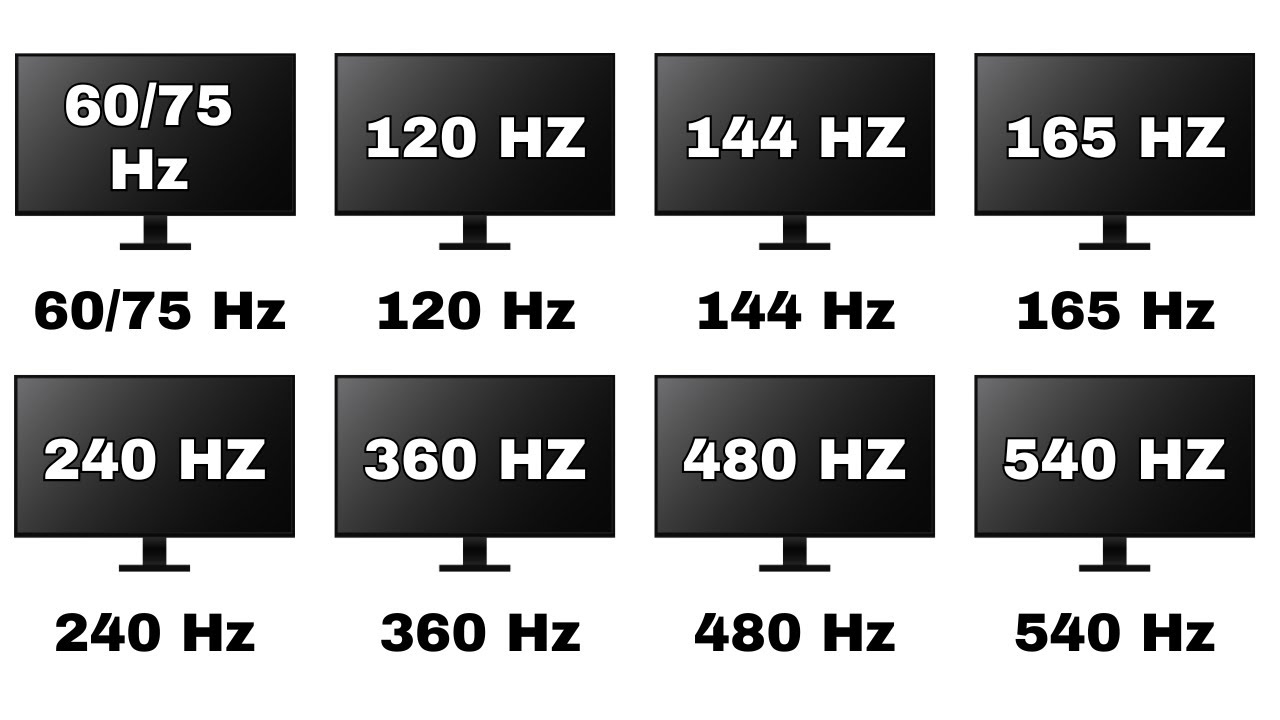

Fast games expose a weak monitor quickly. Camera pans judder, targets leave a soft trail, and a capable graphics card can spend its time generating frames the display cannot show. The right refresh rate matters, but panel type, resolution, sync support, and the connection feeding the screen matter just as much.
Our Best best refresh rate for gaming picks range from practical 24-inch IPS displays to very fast 300Hz and 240Hz screens. The strongest all-rounder is the Samsung Odyssey G5 G50F, while the Z-Edge 27-inch 300Hz is the specialist choice for competitive 1080p play.
Comparison table
| # | Product | Award | Refresh rate | Resolution | Panel or curve | Response time | Best for |
|---|---|---|---|---|---|---|---|
| 1 | Samsung Odyssey G5 G50F | Best overall | 180Hz | QHD 2560 x 1440 | IPS | 1ms GTG | Detailed gaming and flexible setup |
| 2 | Z-Edge 27-inch 300Hz | Best for esports | 300Hz | FHD 1920 x 1080 | Curved | 1ms | High-frame-rate competitive play |
| 3 | SANSUI 32-inch Curved 240Hz | Best large screen | 240Hz | FHD 1920 x 1080 | 1500R curved | 1ms MPRT | Immersive fast gaming |
| 4 | Pixio PX278 Wave | Best QHD speed | 180Hz | QHD 2560 x 1440 | Fast IPS | 1ms GTG | QHD PC gaming |
| 5 | Pixio PX248 Wave Pink | Best 200Hz IPS | 200Hz | FHD 1920 x 1080 | IPS | 1ms GTG | Bright, responsive 24-inch play |
| 6 | Pixio PXC248 Wave White | Best curved VA | 200Hz | FHD 1920 x 1080 | Fast VA, 1500R | 1ms GTG | Contrast-rich gaming |
| 7 | SANSUI 24-inch 180Hz | Best compact option | 180Hz | FHD 1920 x 1080 | Flat | 1ms MPRT | Small desks and general gaming |
| 8 | Pixio PXC248 Wave Pink | Best pink curved screen | 200Hz | FHD 1920 x 1080 | Fast VA, 1500R | 1ms GTG | Color-coordinated setups |
| 9 | Pixio PX246 Wave | Best simple IPS | 120Hz | FHD 1920 x 1080 | IPS | 4ms GTG | Everyday gaming and work |
1. Samsung Odyssey G5 G50F: Best Overall

Pros
- QHD resolution gives games noticeably finer detail
- 180Hz refresh rate suits fast PC gaming
- Height-adjustable stand pivots, tilts, and swivels
- G-Sync compatibility and HDR10 support
- Black Equalizer helps reveal dark areas
Cons
- It does not reach the extreme refresh rates of the fastest 1080p picks
- QHD demands more graphics power than FHD
- No built-in speakers are listed
Best for: PC players who want a balanced combination of sharp detail, speed, and adjustment.
The Samsung Odyssey G5 G50F is the easiest monitor here to recommend to a broad range of PC gamers. Its 27-inch screen gives you enough room for QHD detail without becoming unwieldy, and the 180Hz refresh rate is fast enough for serious competitive play while still making general desktop movement feel unusually fluid. It is less single-purpose than the Z-Edge 27-inch 300Hz, which focuses almost entirely on maximum frame rate at 1080p.
The key decision is the 2560 x 1440 resolution. Compared with the Full HD displays in this roundup, it puts more pixels into the same general screen size, so text looks cleaner and distant objects in games can appear more defined. That clarity comes with a demand on the graphics card. A system that produces very high frame rates at 1080p may not reach 180 frames per second at QHD, so buyers should pair this screen with a GPU that can make good use of its resolution.
Samsung combines the QHD IPS panel with a 1ms GTG response time, 180Hz refresh rate, and G-Sync compatibility. The sync support is useful when frame rates move around rather than staying locked, helping reduce tearing and uneven motion. HDR10 adds support for brighter highlights and more nuanced shadows, while Black Equalizer is aimed specifically at bringing detail out of dark scenes. Virtual Aim Point is a more specialized addition for players who want an on-screen aiming aid.
The stand makes the G50F more adaptable than most of the smaller displays here. It can be adjusted for height and can pivot, tilt, and swivel, which makes it easier to position the panel correctly rather than forcing you to stack books under it or accept a fixed viewing angle. Auto Source Switch+ also helps if you regularly move between connected devices.
The weakness is straightforward: this is not the pick for someone chasing the lowest possible motion latency at extreme frame rates. The Z-Edge 27-inch 300Hz and SANSUI 32-inch Curved 240Hz are faster on paper, while the Samsung asks more from the graphics card because of QHD. For almost everyone else, though, its blend of detail, refresh rate, sync support, and stand adjustment makes it the most complete choice.
2. Z-Edge 27-inch 300Hz: Best for Esports

Pros
- 300Hz refresh rate targets competitive gaming
- Both DisplayPort connections support up to 300Hz
- HDMI connections support up to 240Hz
- 1ms response time and flicker-free operation
- 100 x 100mm VESA compatibility
Cons
- Full HD resolution is less detailed on a 27-inch panel
- The extreme refresh rate needs a system capable of producing very high frame rates
- Curved design will not suit every desk or workflow
Best for: competitive players who prioritize fluid motion over QHD sharpness.
The Z-Edge 27-inch 300Hz is built around one clear idea: show fast action as smoothly as the connected PC can render it. A 300Hz ceiling gives it the highest refresh rate in this group, making it the natural choice for esports players with a high-frame-rate system and a preference for 1080p. It is a more focused tool than the Samsung Odyssey G5 G50F, not a general-purpose image-quality upgrade.
Its 1920 x 1080 resolution is easy for a gaming PC to drive compared with QHD, which is important when the goal is to reach very high frame rates. The trade-off is pixel density. On a 27-inch screen, Full HD will not look as crisp as the Samsung's 2560 x 1440 image, and desktop text or fine game details can appear less refined at close range. Competitive shooters may benefit from the lighter rendering load, while story-driven games may look better on a QHD display.
The monitor lists a 1ms response time and flicker-free operation. Those features address different parts of motion quality. The response-time claim concerns how quickly pixels change, while flicker-free operation is intended to make the image steadier during long sessions. The 300Hz rate matters only when the computer can feed the screen enough frames, so this monitor makes the most sense alongside a graphics card built for high frame rates in the games you play.
Connectivity is unusually well matched to the headline specification. It has two DisplayPort inputs, both supporting up to 300Hz, and two HDMI inputs that support up to 240Hz. That gives you more flexibility than a monitor whose fastest mode is limited to one connection. The 100 x 100mm VESA pattern also makes it suitable for a monitor arm or wall mount.
The 3000:1 contrast ratio and curved panel are designed to add depth to the image, but they do not change the central compromise. This is still a Full HD display at 27 inches. Players who want a competitive screen with a large physical image should look here; buyers who want a sharper desktop and game picture should move to the Samsung Odyssey G5 G50F or Pixio PX278 Wave.
3. SANSUI 32-inch Curved 240Hz: Best Large Screen

Pros
- Large 32-inch 1500R curved display
- 240Hz refresh rate with 1ms MPRT response
- HDMI and DisplayPort support up to 240Hz
- 125% sRGB coverage and HDR support
- VESA compatible with a 100 x 100mm pattern
Cons
- Full HD resolution is stretched across a large panel
- No built-in speakers
- Tilt is the only listed stand adjustment
Best for: players who want a large, enveloping screen for fast games.
The SANSUI 32-inch Curved 240Hz makes games feel physically bigger than the rest of this list. Its 1500R curve wraps the sides toward the viewer, and the 32-inch size creates an immersive view for racing games, shooters, and large open environments. It is a screen you choose for presence as much as speed.
A 240Hz refresh rate sits just below the Z-Edge's 300Hz figure but remains well above the 180Hz and 200Hz options here. The display also lists a 1ms MPRT response time, built-in FreeSync technology, anti-flicker support, and low blue light features. Together, those features target smooth motion, reduced tearing, and more comfortable long sessions. As with every high-refresh monitor, the benefit depends on the frame rate your system can sustain.
The biggest compromise is the 1920 x 1080 resolution. Full HD is relatively easy for a graphics card to render at high frame rates, which helps explain the monitor's fast target, but it is not as dense on a 32-inch panel as QHD on the Samsung Odyssey G5 G50F or Pixio PX278 Wave. Sit close and you may notice softer text and less fine detail. Sit farther back and the large curved image becomes more convincing.
SANSUI lists 125% sRGB coverage, 16.7 million display colors, 300 nits brightness, HDR technology, and a 3500:1 contrast ratio. Those specifications give the screen a broader color presentation and stronger contrast than a basic office display. They do not turn it into a high-resolution productivity monitor, but they support the large-screen gaming experience well.
The connection choices are sensible. HDMI and DisplayPort can both reach 240Hz, and an earphone jack is included. There are no built-in speakers, so audio must come from headphones, external speakers, or the connected device. The stand tilts from minus 5 to 15 degrees and supports VESA mounting, but there is no height, swivel, or pivot adjustment listed. Choose this over the Z-Edge if you want the larger 32-inch curve; skip it if sharp text and high pixel density matter more than screen scale.
4. Pixio PX278 Wave: Best QHD Speed

Pros
- QHD resolution on a 27-inch display
- 180Hz refresh rate and 1ms GTG response
- Fast IPS panel with wide viewing angles
- AMD FreeSync support
- DisplayPort reaches 1440p at 180Hz
Cons
- HDMI inputs are limited to 144Hz at QHD
- The stand adjustment details are limited in the listing
- Built-in speakers may not replace dedicated audio
Best for: gamers who want QHD detail with a genuinely fast refresh rate.
The Pixio PX278 Wave is the closest alternative to the Samsung Odyssey G5 G50F, and its appeal is easy to understand. It pairs a 27-inch QHD panel with 180Hz and a 1ms GTG response time, giving PC players a sharper image without dropping into ordinary office-monitor motion. The fast IPS panel is also suited to shared viewing because the listing specifies wide viewing angles.
Its 2560 x 1440 resolution is the star of the show. Compared with the 24-inch and 27-inch Full HD models, it gives games more visible detail and makes a 27-inch desktop feel less coarse. The higher resolution can put more load on the graphics card, however. If your system is tuned for very high frame rates at 1080p, the Z-Edge may make more sense. If it can drive QHD smoothly, the PX278 is the more satisfying image.
The 180Hz refresh rate is enough for fast competitive games, and AMD FreeSync is designed to match the monitor's refresh cycle to the GPU's frame output. That can reduce tearing and stuttering when frame rates vary. The 1ms GTG claim supports quick pixel transitions, although response time and refresh rate are separate characteristics. A fast refresh rate cannot fix slow pixel transitions, so having both specifications aimed at speed is useful.
Port limits deserve attention. DisplayPort 1.4 supports 1440p at 180Hz, while the two HDMI 2.0 inputs support 1440p at 144Hz. That makes DisplayPort the connection to use when you want the full refresh rate from a compatible PC. HDMI remains useful for other computers and consoles, but it does not unlock the panel's maximum rate in the listed configuration.
The PX278 also includes built-in speakers, which can simplify a secondary setup, though the data does not specify their output or tuning. It is a strong choice for a player who wants detail first and speed second, and a direct rival to the Samsung Odyssey G5 G50F. Samsung has the more extensively described ergonomic stand and extra gaming tools, while Pixio offers the same QHD and 180Hz combination with a fast IPS presentation. Readers comparing screens around this resolution may also want to consider how a graphics card affects QHD frame rates before choosing.
5. Pixio PX248 Wave Pink: Best 200Hz IPS

Pros
- 200Hz refresh rate on a compact 24-inch screen
- Fast IPS panel with wide viewing angles
- 1ms GTG response time
- Adaptive Sync support
- Built-in speakers
Cons
- Full HD resolution offers less workspace than QHD
- The listing gives limited port details
- Built-in audio may be basic
Best for: players who want a fast 24-inch IPS monitor with a distinctive setup design.
The Pixio PX248 Wave Pink is a compact, fast IPS display for buyers who do not need QHD. At 24 inches, its 1920 x 1080 resolution is a sensible match for the screen size, and the 200Hz refresh rate gives it a clear motion advantage over conventional 60Hz and 75Hz displays. It is easier to place on a smaller desk than the 27-inch and 32-inch options.
The fast IPS panel is the important distinction from Pixio's PXC248 models. IPS panels are generally chosen for consistent color and wide viewing angles, and those are the qualities Pixio highlights here. That makes the PX248 useful beyond gaming, particularly if the monitor will also serve for browsing, creative tasks, or watching content with someone else nearby.
A 1ms GTG response time and Adaptive Sync support round out the speed-focused specification. Adaptive Sync matches the monitor's refresh behavior to the GPU's frame rate, which can help prevent tearing when a game does not hold a perfectly steady output. The 200Hz ceiling is high enough to feel exceptionally smooth when the PC can reach it, though players with very high frame rates may still prefer the Z-Edge's 300Hz mode.
The monitor includes built-in speakers, a practical extra for a simple desk or a system that does not always use headphones. The listing does not provide speaker power or audio details, so they should be viewed as a convenience rather than a replacement for a dedicated headset or speaker set. It also does not specify the input limits in the supplied data, so check the connection requirements of your computer before ordering.
The main weakness is the fixed Full HD target. The Samsung Odyssey G5 G50F and Pixio PX278 Wave show more detail at QHD, but they need more desk space and more graphics power. The PX248 is the better fit for someone who wants quick motion, a smaller footprint, IPS viewing angles, and a monitor that can handle basic audio without additional hardware.
6. Pixio PXC248 Wave White: Best Curved VA

Pros
- 200Hz refresh rate and 1ms GTG response
- 1500R curve adds immersion at 24 inches
- Fast VA panel is designed for stronger contrast
- Adaptive Sync support
- HDR support
Cons
- Full HD is the only listed resolution
- VA characteristics may appeal less to buyers seeking IPS viewing consistency
- The listing provides few ergonomic adjustment details
Best for: gamers who prefer a curved screen and contrast-focused VA panel.
The Pixio PXC248 Wave White takes a different route from the PX248. Both are 24-inch Full HD displays with a 200Hz refresh rate, but the PXC248 uses a fast VA panel and a 1500R curve. That combination is aimed at players who want deeper-looking blacks and a more wrapped-in view rather than the broader viewing consistency associated with IPS.
The 200Hz refresh rate is a strong fit for fast PC gaming, particularly when paired with a system that can maintain high frame rates at 1080p. Pixio also lists a 1ms GTG response time and Adaptive Sync. The refresh rate governs how often the screen can update, while the response-time figure concerns pixel transitions. Both matter when you want moving objects to stay clear during quick camera movement.
The 1500R curve is more noticeable on a 24-inch display than on a large ultrawide, bringing the edges slightly into the viewer's field of vision. Some players find that more immersive, especially in racing and first-person games. Others prefer a flat panel for design work, documents, or a multi-monitor arrangement. The curve is not an automatic improvement, so desk position and personal preference should guide the choice.
Pixio also lists HDR support. HDR can add a wider range of brightness and color levels when the game and system support it, while the VA panel's contrast focus can help darker scenes look more substantial. The supplied data does not give a brightness figure or a detailed HDR certification, so buyers should not expect the same HDR performance as a dedicated high-brightness display.
The PXC248 Wave White is a close technical match for the PXC248 Wave Pink. The difference supplied in the product data is the finish, not the performance specification. Compared with the Pixio PX248 Wave Pink, this model trades the IPS panel and built-in speakers for a curved VA design and listed HDR support. Choose it when contrast and a compact curved screen matter more than speakers or IPS viewing behavior.
7. SANSUI 24-inch 180Hz: Best Compact Option

Pros
- 24-inch Full HD format fits smaller desks
- 180Hz refresh rate with Adaptive Sync
- DisplayPort 1.4 and HDMI 2.0 inputs
- 300 nits brightness and 110% sRGB
- 75 x 75mm VESA support
Cons
- No built-in speakers
- 1ms figure is listed as MPRT rather than GTG
- Stand offers tilt but limited listed adjustment
Best for: compact gaming desks that need high refresh without a large panel.
The SANSUI 24-inch 180Hz is the practical compact pick in this group. Its 24-inch Full HD format is familiar, easy to position, and well matched to the resolution. The 180Hz refresh rate is a substantial step above basic displays, while the smaller panel avoids the softer appearance that can come from stretching Full HD across 27 or 32 inches.
The specification combines 180Hz, 300 nits brightness, 110% sRGB coverage, and Adaptive Sync. That gives the monitor a sensible mix for games, everyday work, and media. Adaptive Sync can smooth out frame-rate fluctuations, while the brightness and color-gamut figures suggest a more vivid image than a basic office panel. The listing does not identify the underlying panel type, so buyers who specifically want IPS or VA should choose one of the Pixio models instead.
For connections, SANSUI provides DisplayPort 1.4 and HDMI 2.0. The monitor lists a 1ms MPRT response time, which is a motion-response measure distinct from the GTG figures listed on several Pixio displays. It is still relevant to fast play, but the different measurement methods mean the numbers should not be treated as a direct laboratory comparison.
The ergonomic setup is straightforward. The stand tilts from minus 5 to 15 degrees, supports a 75 x 75mm VESA mount, and has a stable design according to the listing. There are no built-in speakers, so headphones or external speakers are required for sound. SANSUI includes an HDMI cable, which makes initial setup easier, though the supplied information does not specify the maximum refresh rate for each input.
This monitor is less ambitious than the SANSUI 32-inch Curved 240Hz and less visually refined than the Samsung Odyssey G5 G50F. Its appeal is the compact footprint and uncomplicated 180Hz performance. If desk space is tight, a 24-inch screen is preferable, or the display will serve both work and gaming, this is a sensible straightforward option.
8. Pixio PXC248 Wave Pink: Best Pink Curved Screen

Pros
- 200Hz refresh rate for fast gameplay
- 1500R curved Fast VA panel
- 1ms GTG response time
- Adaptive Sync and HDR support
- Compact 24-inch Full HD format
Cons
- No resolution above Full HD
- Ergonomic adjustment details are limited
- Curved VA is not ideal for every multi-monitor workspace
Best for: players building a pink setup around a compact curved display.
The Pixio PXC248 Wave Pink has the same performance profile as the white PXC248, with the pink finish as its distinguishing detail in this list. That means the buying decision is mainly about the design of the setup, not a different refresh-rate tier. It is a 24-inch Full HD monitor with a 1500R curve, fast VA panel, 200Hz refresh rate, and 1ms GTG response time.
At 24 inches, 1080p keeps the image appropriately dense and does not place an excessive load on the graphics card. The 200Hz rate can be useful in competitive games when the system produces enough frames, while Adaptive Sync is intended to keep the display and GPU in step when output varies. That makes it more forgiving than a fixed-refresh screen during ordinary play.
The VA panel gives this model a different character from the Pixio PX248 Wave Pink. VA is the better fit for someone who wants the image to feel richer in dark scenes and likes the visual effect of a curve. The PX248's IPS panel is the more natural choice for wide viewing angles and a flat workspace. Both list a 1ms response time and high refresh rate, so panel behavior and desk preference are the meaningful differences.
HDR support is included, although the product data does not specify brightness or certification details. It should be treated as a compatibility feature rather than proof of dramatic HDR highlights. The 1500R curve can make the display feel more immersive from a centered seat, but it can also be awkward if you want to align several flat screens or work with straight lines all day.
The PXC248 Wave Pink is a good match for a coordinated gaming room where the visual identity matters as much as the core specification. It loses to the Samsung Odyssey G5 G50F and Pixio PX278 Wave on resolution, but it is easier to drive and has the compact curved shape that those displays lack. Choose it over the white version only if the finish is the one that belongs in your setup.
9. Pixio PX246 Wave: Best Simple IPS

Pros
- IPS panel with wide viewing angles
- 120Hz refresh rate improves motion smoothness
- Adaptive Sync reduces tearing and stuttering
- 24-inch Full HD format is easy to place
- Slim modern design
Cons
- 120Hz is the slowest refresh rate in this roundup
- 4ms GTG response is slower on paper than the 1ms alternatives
- No speakers or detailed port specifications are listed
Best for: everyday gaming where a clean IPS image matters more than extreme speed.
The Pixio PX246 Wave is the calmest and simplest monitor here. It does not chase the 180Hz, 200Hz, 240Hz, or 300Hz figures of the other picks. Instead, it uses a 24-inch Full HD IPS panel with a 120Hz refresh rate, a combination that suits casual gaming, general desktop work, and systems that cannot consistently push very high frame rates.
The IPS panel is the main reason to choose it. Pixio describes the screen as offering vivid colors and wide viewing angles, which helps when the monitor is not viewed perfectly straight on. The 1920 x 1080 resolution is a natural fit for 24 inches, keeping the image clear enough for ordinary desk use without demanding the rendering power required by the QHD Samsung Odyssey G5 G50F or Pixio PX278 Wave.
A 4ms GTG response time is listed, along with Adaptive Sync. The response figure is slower on paper than the 1ms GTG specifications on the faster Pixio screens, but it is still aimed at reducing ghosting and blur in moving scenes. Adaptive Sync can reduce tearing and stuttering when the GPU's frame rate does not match the monitor's refresh rate. For a player of slower-paced games, the difference from 200Hz may matter less than the panel's viewing consistency.
The 120Hz ceiling is the unavoidable limitation. It is smoother than 60Hz, but players focused on competitive shooters will see more headroom in the SANSUI 24-inch 180Hz, Pixio PX248 Wave Pink, or Z-Edge 27-inch 300Hz. The supplied data also does not list built-in speakers or detailed input limits, so this is not the most feature-rich option for a device-heavy setup.
The PX246 makes sense when restraint is a virtue. It is a clean, compact IPS display with adaptive synchronization and a refresh rate that covers everyday gaming well. Skip it if you already have a high-frame-rate competitive system; choose it if you want an uncomplicated screen for mixed use and do not need the maximum motion speed.
How to choose best refresh rate for gaming
The Best best refresh rate for gaming depends on the games you play, the frame rate your PC can produce, and whether you prefer sharper detail or easier motion.
Refresh rate
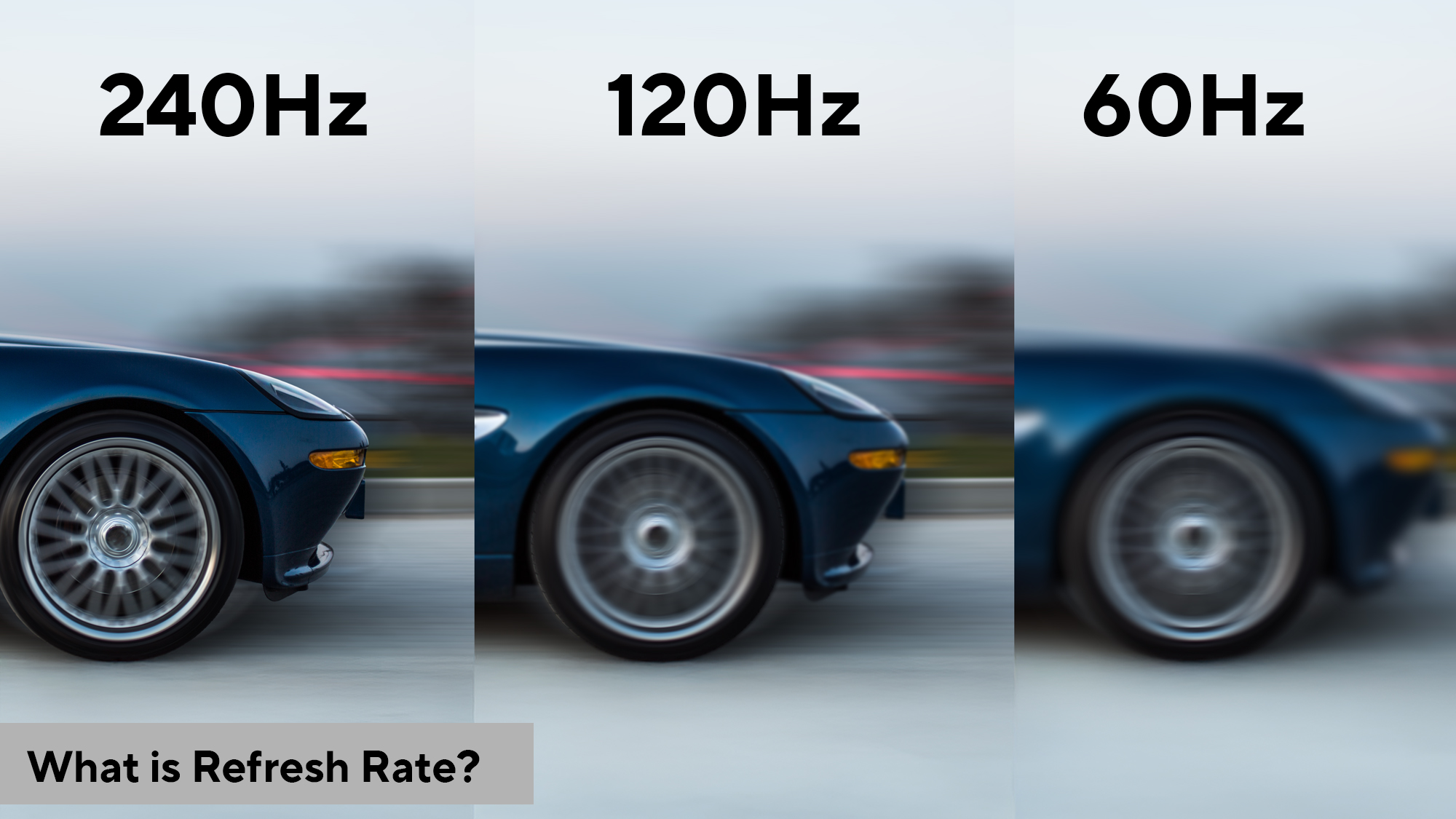
Refresh rate is the number of times a monitor can update its image each second. A 120Hz screen can show twice as many updates as a 60Hz screen, while 180Hz, 200Hz, 240Hz, and 300Hz offer progressively more motion headroom. The visible improvement becomes more specialized at the highest levels, so do not select a 300Hz display unless your system and games can produce frame rates that make use of it.
Resolution and graphics load
Full HD at 1920 x 1080 is easier to render at high frame rates than QHD at 2560 x 1440. That is why the Z-Edge 27-inch 300Hz and SANSUI 32-inch Curved 240Hz can focus on high refresh, while the Samsung Odyssey G5 G50F and Pixio PX278 Wave focus on detail at 180Hz. A monitor's maximum refresh rate does not help much if the graphics card cannot generate enough frames.
Panel type
IPS panels, such as those in the Samsung Odyssey G5 G50F, Pixio PX278 Wave, Pixio PX248 Wave Pink, and Pixio PX246 Wave, are a good fit when consistent color and wide viewing angles matter. VA panels, used by the PXC248 models, are aimed more at contrast and deeper-looking dark scenes. The Z-Edge and SANSUI 32-inch listings identify a curved design but do not specify a panel type, so do not assume they match the IPS or VA models.
Response time
Response time describes how quickly pixels transition between shades. The products here list 1ms MPRT, 1ms GTG, or 4ms GTG figures, and those measurement methods are not interchangeable. A lower number can help reduce visible trailing, but it should be considered alongside refresh rate, sync support, and the monitor's actual image behavior.
Sync technology and connections
Adaptive Sync, FreeSync, and G-Sync compatibility can reduce tearing when frame output changes. The connection also affects the refresh rate you can use. For example, the Pixio PX278 Wave reaches 1440p at 180Hz through DisplayPort 1.4, while its HDMI 2.0 inputs reach 144Hz at that resolution. Before buying, check which port your computer supports and what refresh rate that port can carry.
The fastest monitor is wasted when the graphics card cannot feed it, while a well-matched 180Hz screen can feel smoother in real play than an unused 300Hz specification.
For a second display or a multi-screen setup, how much desk depth a curved panel needs can matter more than another small jump in refresh rate. Players choosing QHD should also consider the practical distance from a screen of this size so the extra detail is easy to appreciate.
Frequently asked questions
Is 120Hz enough for gaming?
Yes. A 120Hz monitor is a clear improvement over 60Hz for most games, especially when the computer can maintain a frame rate near the display's refresh rate. The Pixio PX246 Wave is suitable for everyday gaming, but competitive players may prefer the extra headroom of 180Hz or more.
Is 180Hz better than 144Hz?
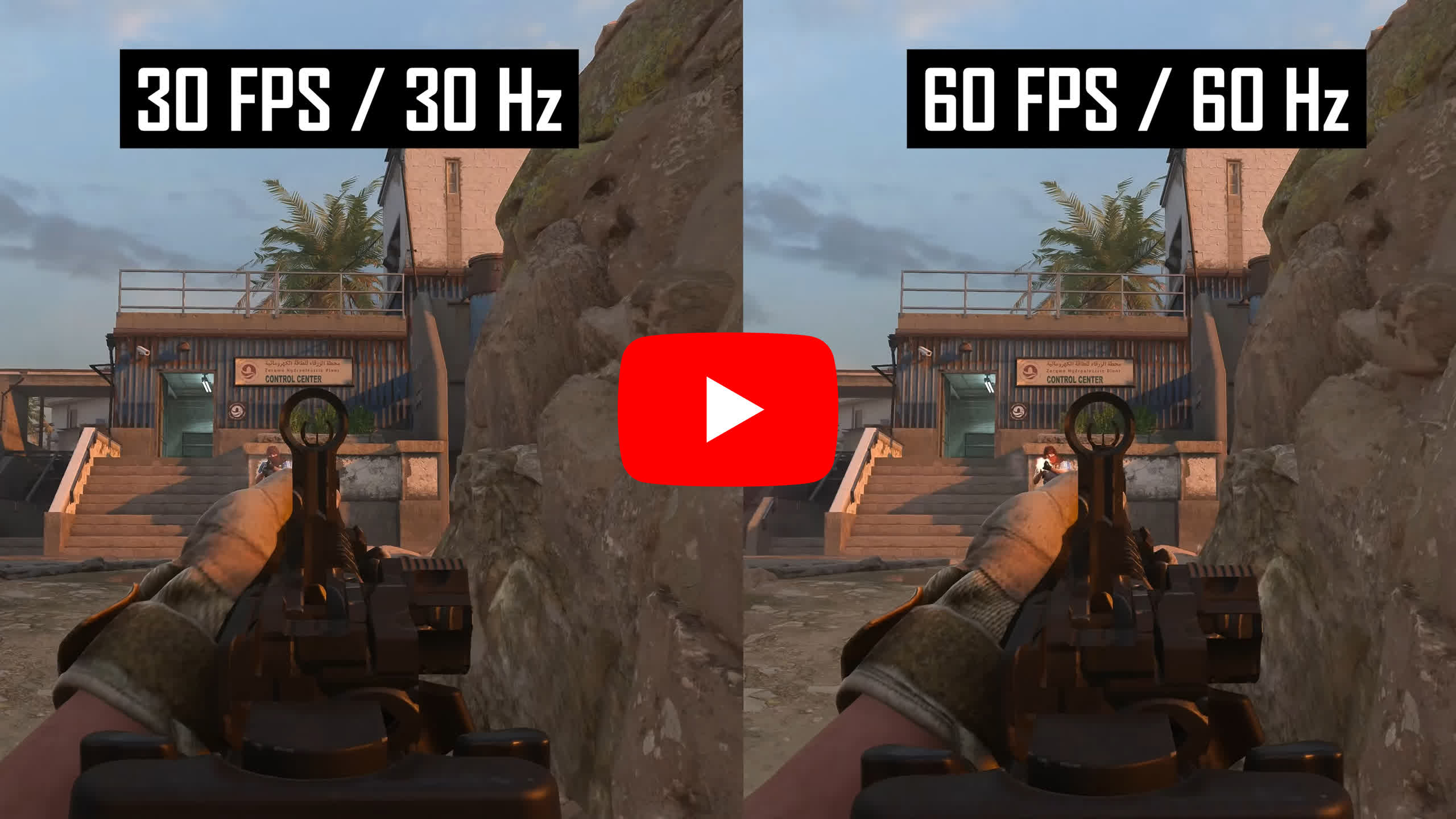
A 180Hz monitor can show updates more frequently than a 144Hz monitor, which may make fast motion feel a little smoother. The difference is smaller than the move from 60Hz to 120Hz, so resolution, response behavior, and sync support should also guide the choice.
Do I need 240Hz or 300Hz?
You need a 240Hz or 300Hz monitor only if your games and graphics card can produce very high frame rates. The SANSUI 32-inch Curved 240Hz and Z-Edge 27-inch 300Hz are aimed at players who prioritize competitive motion over QHD detail.
Is QHD better than a higher refresh rate?
QHD gives a sharper image than Full HD, particularly on a 27-inch display. A higher refresh rate can make movement feel smoother, but it requires enough frame output from the PC. The Samsung Odyssey G5 G50F and Pixio PX278 Wave are the strongest choices when QHD detail matters.
Does Adaptive Sync improve refresh rate?
Adaptive Sync does not raise the monitor's maximum refresh rate. It coordinates the display's refresh timing with the GPU's frame output, which can reduce tearing and stuttering when frame rates vary.
Is a curved gaming monitor better?
A curved monitor can make the image feel more immersive, especially when you sit centered in front of it. The 1500R curves on the SANSUI 32-inch Curved 240Hz and Pixio PXC248 models may be appealing for games, but flat panels are often easier to align in a multi-monitor workspace.
Which port should I use for high refresh gaming?
Use the connection that supports the monitor's highest specified refresh rate at its native resolution. On the Pixio PX278 Wave, DisplayPort 1.4 reaches QHD at 180Hz, while HDMI 2.0 reaches QHD at 144Hz. Other models have different limits, so check the product's connection details before setup.
The bottom line
The Samsung Odyssey G5 G50F is the strongest all-round pick in this Best best refresh rate for gaming roundup. Its QHD IPS panel, 180Hz refresh rate, adaptive graphics support, HDR10, and adjustable stand give it the widest appeal. Choose the Pixio PX278 Wave instead if you want a similar QHD and 180Hz direction with a fast IPS panel and built-in speakers.
For competitive players who care most about frame rate, the Z-Edge 27-inch 300Hz is the specialist choice, while the SANSUI 32-inch Curved 240Hz suits anyone who wants a much larger curved image. The Pixio PXC248 models are the compact curved alternatives, and the SANSUI 24-inch 180Hz or Pixio PX246 Wave make more sense on smaller desks.
If you are undecided, choose the highest refresh rate your graphics card can actually use, then prioritize resolution and panel type rather than chasing a larger number.
As an Amazon Associate we earn from qualifying purchases.