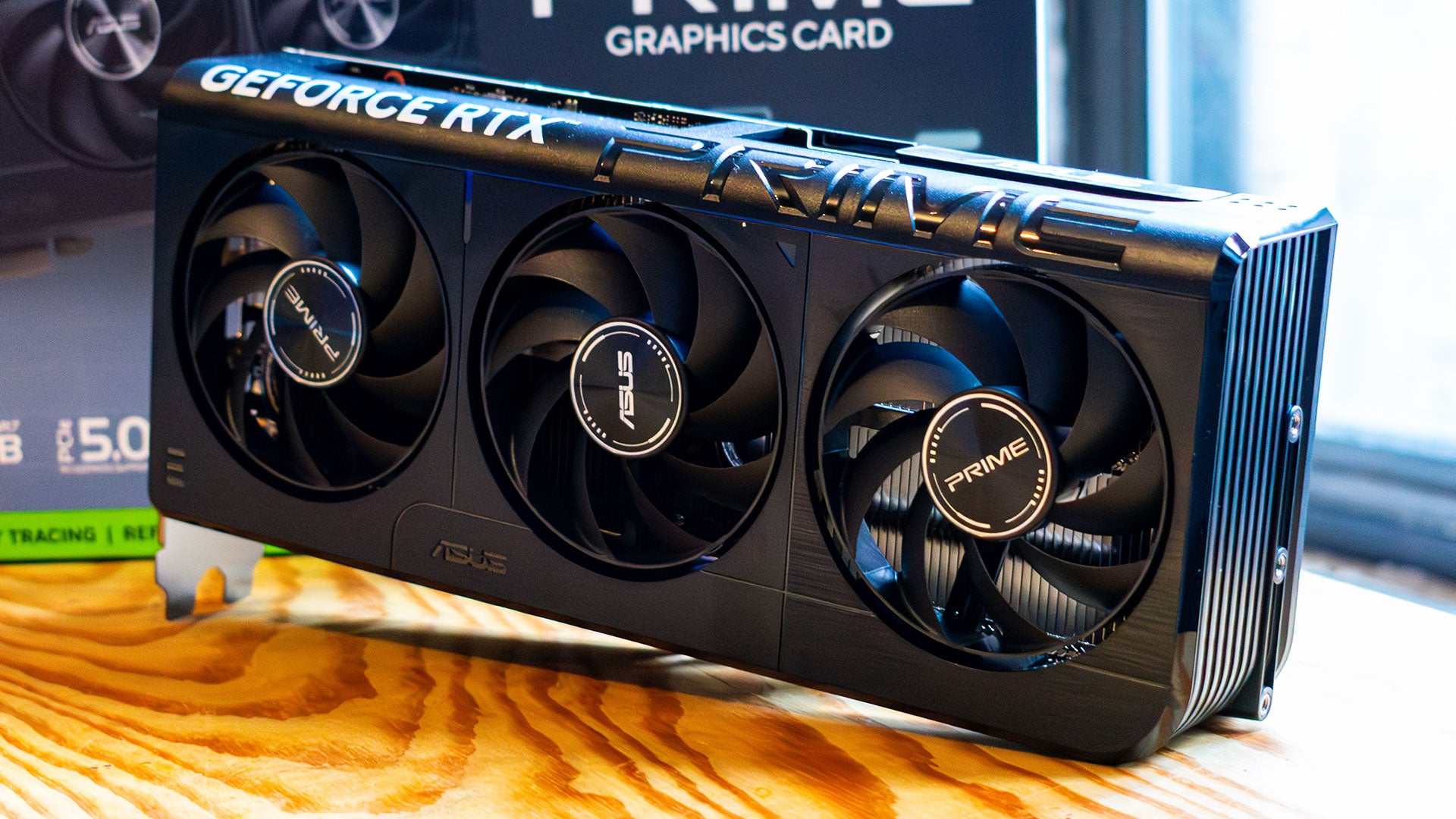

Choosing a graphics card is rarely just a matter of picking the newest GPU. A card that fits one desktop may be too long, too thick, or too demanding for another, while the right memory capacity can matter just as much as the model number. The Best best rtx graphics card depends on the games, case, and display you actually use.
This list covers ten current GeForce options, from compact RTX 3050 cards to full-size RTX 5080 designs. The ASUS TUF Gaming RTX 5080 is our top pick for its combination of Blackwell performance, cooling hardware, and rugged construction. The rest of the range includes quieter compact cards, SFF-ready choices, and alternatives for different performance targets.
| # | Product | Award | Architecture | VRAM | Form factor | Best for |
|---|---|---|---|---|---|---|
| 1 | ASUS TUF RTX 5080 | Best overall | Blackwell | 16GB GDDR7 | 3.6-slot, 13.7-inch | High-end gaming and creation |
| 2 | PNY Epic-X RTX 5080 | Best for AI features | Blackwell | Not specified | Triple fan, 12.9-inch | DLSS 4 and creative workloads |
| 3 | ASUS ROG Astral RTX 5080 | Best cooling design | Blackwell | 16GB GDDR7 | 3.8-slot, 14.1-inch | Sustained heavy loads |
| 4 | Gigabyte RTX 3050 Windforce | Best compact RTX 3050 | Ampere | 6GB GDDR6 | Dual fan, 7.5-inch | Smaller desktop upgrades |
| 5 | ASUS Prime RTX 5070 | Best SFF-ready RTX 5070 | Blackwell | 12GB GDDR7 | 2.5-slot, 12-inch | Compact enthusiast builds |
| 6 | Gigabyte RTX 5070 Ti Gaming | Best 16GB RTX 5070 Ti | Blackwell | 16GB GDDR7 | WINDFORCE, 13.46-inch | High-resolution gaming |
| 7 | MSI RTX 3050 Ventus | Best small dual-fan RTX 3050 | Ampere | 6GB GDDR6 | Dual fan, 7.4-inch | Entry-level upgrades |
| 8 | Gigabyte RTX 5080 Gaming | Best straightforward RTX 5080 | Blackwell | 16GB GDDR7 | WINDFORCE, 13.46-inch | Traditional full-size builds |
| 9 | ASUS Dual RTX 5060 Ti | Best compact 16GB card | Blackwell | 16GB GDDR7 | 2.5-slot, 9-inch | Quiet, space-conscious PCs |
| 10 | Gigabyte RTX 5070 Windforce | Best SFF-ready Windforce card | Blackwell | 12GB GDDR7 | SFF-ready, 11.1-inch | Compact RTX 5070 systems |
1. ASUS TUF RTX 5080: Best Overall

Pros
- Blackwell architecture with DLSS 4
- 16GB of GDDR7 memory
- Three Axial-tech fans and a large fin array
- Protective PCB coating and military-grade components
Cons
- Very large 3.6-slot design
- Five-pound construction requires careful case planning
- No compact-build advantage
Best for: someone building a powerful desktop for demanding games, rendering, or AI-assisted creative work.
The ASUS TUF RTX 5080 is the card we'd keep for a high-end desktop that has room to spare. It is not subtle. At 13.7 inches long, 5.7 inches wide, and 2.8 inches high, this is a substantial component, and its five-pound weight makes the support bracket or case mounting position worth considering before installation. In return, it has the physical presence and cooling hardware expected from a serious RTX 5080.
The important platform details are strong. It uses NVIDIA's Blackwell architecture, supports DLSS 4, and includes 16GB of GDDR7 memory. That combination gives it the right foundation for modern games that use ray tracing and AI-assisted rendering, while the memory capacity gives demanding applications more room than the RTX 3050 models here. The card's 3.6-slot layout leaves space for a massive fin array, and three Axial-tech fans are arranged to move air through that cooler rather than relying on a slim heatsink.
ASUS also uses a phase-change GPU thermal pad instead of conventional thermal paste. The supplied details describe it as designed to maintain heat transfer and longevity under heavy loads. A protective PCB coating is another practical touch, intended to guard against moisture, dust, and debris. Those features do not change the GPU class, but they make the TUF design feel better suited to a machine that will be used hard for years.
The Gigabyte RTX 5080 Gaming is the closest conventional alternative in this roundup, with the same 16GB GDDR7 capacity and Blackwell foundation. The TUF card stands out through its explicitly described durability features and three-fan cooler. The ASUS ROG Astral RTX 5080 goes even further with four fans and a vapor chamber, but it is longer and thicker still. For a more detailed look at how GPU tiers fit different gaming systems, the graphics hardware choices that shape a new gaming build are a useful place to continue.
The weakness is straightforward: this card can overwhelm a cramped case. Buyers with a small chassis should skip it unless they have confirmed clearance for its length, width, height, and 3.6-slot footprint. For everyone else, the ASUS TUF RTX 5080 is the most balanced premium pick here, combining a high-end GPU with cooling and protection features that make sense beyond the specification sheet.
2. PNY Epic-X RTX 5080: Best for AI Features

Pros
- Blackwell architecture and DLSS 4
- NVIDIA Reflex 2 support
- Designed for AI-assisted gaming and creative work
- Triple-fan cooler
Cons
- Memory capacity is not specified in the supplied details
- Large 12.9-inch card
- Fewer physical construction details are provided
Best for: gamers and creators who want an RTX 5080 with a strong emphasis on AI features and NVIDIA software.
The PNY Epic-X RTX 5080 takes a different route from the ASUS TUF card. Its product information spends less time describing materials and cooler geometry, and more time highlighting what the Blackwell platform can do with DLSS 4, Reflex 2, and NVIDIA's creator software. That makes it especially interesting for a user who sees the GPU as both a gaming component and an acceleration engine for creative or AI-assisted work.
DLSS 4 is the headline feature. The supplied description calls out Multi Frame Generation, enhanced Ray Reconstruction, and Super Resolution, all powered by the RTX 50-series hardware and fifth-generation Tensor Cores. Those technologies are designed to raise frame rates or improve image reconstruction in supported software. They are not a substitute for raw GPU capability, but they matter in games and applications that take advantage of them.
Reflex 2 gives this card another angle. The feature set is focused on graphics pipeline responsiveness, target acquisition, and input latency, with Frame Warp described as coming soon. That makes the PNY a natural fit for competitive players who care about responsiveness as much as visual quality. NVIDIA Studio support also broadens its role into video editing, 3D rendering, and graphic design.
The card measures about 12.9 inches long and 5.39 inches wide, with a triple-fan design. It is a little shorter than the ASUS TUF RTX 5080, though the supplied data does not identify its slot thickness or memory capacity. That missing information matters when planning a case and workload. The TUF is easier to recommend when durable construction and clearly documented cooling hardware are the priority, while the PNY makes more sense when Reflex, DLSS 4, and creator acceleration are central to the decision.
That limited physical documentation is the main reason this is not our top RTX 5080 pick. The card is still a compelling choice for someone who wants the Blackwell software stack in a triple-fan design, but buyers should confirm clearance and memory details before committing. If you are weighing NVIDIA features against other GPU platforms, the differences between current graphics architectures can help put that choice in context.
3. ASUS ROG Astral RTX 5080: Best Cooling Design

Pros
- Four Axial-tech fans
- Patented vapor chamber and milled heatspreader
- 16GB of GDDR7 memory
- Blackwell architecture with DLSS 4
Cons
- Largest card in the roundup
- 3.8-slot design limits compatibility
- Five-pound weight needs a sturdy installation
Best for: enthusiasts who want an RTX 5080 with unusually extensive air-cooling hardware and a large case.
The ASUS ROG Astral RTX 5080 is the extreme cooling option in this group. It uses four Axial-tech fans, a 3.8-slot design, and a large heatsink and fin array. That is not a sensible fit for every PC, but it tells you exactly what this card is trying to be: a substantial RTX 5080 built for sustained workloads rather than minimal case intrusion.
Its 14.1-inch length, 5.9-inch width, and 3-inch height make it the largest physical design among the three RTX 5080 cards listed near the top. The five-pound weight is equally significant. A case with limited GPU clearance or a weak support arrangement is not a good match. Measure the available space around the motherboard and power connectors before considering this model.
The cooling system has more detail than most cards in the roundup. ASUS describes a patented vapor chamber with a milled heatspreader, intended to lower GPU temperatures. The four-fan layout is said to increase airflow and pressure by up to 20 percent, while a phase-change thermal pad is used to improve heat transfer and long-term reliability. These are meaningful engineering choices for workloads that keep the GPU busy for extended periods.
Like the ASUS TUF RTX 5080, the Astral uses Blackwell, DLSS 4, and 16GB of GDDR7 memory. The difference is emphasis. The TUF is easier to fit and has a protective PCB coating plus military-grade components in its supplied feature list. The Astral gives up some compatibility to add a more ambitious cooler. The Gigabyte RTX 5070 Ti Gaming is a smaller step down in GPU class, but its 16GB GDDR7 capacity may appeal to buyers who need memory headroom without choosing this massive enclosure.
This is the card to buy when cooling capacity is the priority and the case can accommodate it. It is also the card to skip if you are building around a compact motherboard tray or a narrow case. The ROG Astral is impressive on paper, but its footprint means the buyer must plan around it rather than treat it like a routine component swap.
4. Gigabyte RTX 3050 Windforce: Best Compact RTX 3050

Pros
- Compact 7.5-inch length
- Dual WINDFORCE fans
- Ampere streaming multiprocessors
- Second-generation RT cores and third-generation Tensor cores
Cons
- 6GB memory capacity
- Older Ampere architecture
- Not suited to the performance targets of the RTX 50-series cards
Best for: upgrading a smaller desktop that needs RTX features without a long, heavy card.
The Gigabyte RTX 3050 Windforce is the practical small-case choice. At 7.5 inches long, 4.4 inches wide, and a listed 0.88 pounds, it is dramatically easier to place than every high-end card here. The two WINDFORCE fans also keep the design familiar and simple, making it a reasonable candidate for a compact desktop upgrade where a large triple-fan cooler would be impossible.
This card uses the Ampere architecture and includes NVIDIA's second-generation RT cores and third-generation Tensor cores. Its 6GB of GDDR6 memory runs across a 96-bit interface. Those specifications place it clearly below the Blackwell cards in this roundup, but they still provide the core RTX feature set for a system that is not targeting the heaviest modern workloads.
The size is the real story. A short card can make the difference between a clean installation and a case modification, particularly in an older office-style desktop or a small custom build. The listed dimensions are much easier to work with than the 12-inch-plus cards above, though buyers should still verify the case's available expansion-slot space and airflow.
The MSI RTX 3050 Ventus is the direct rival. It is even slightly shorter at 7.4 inches and lists a 1492 MHz boost clock, 14 Gbps memory speed, one DisplayPort 1.4a output, and two HDMI 2.1a outputs. Gigabyte gives this model a similarly compact footprint, but its listed feature set emphasizes the Ampere core design rather than specific output details. Either one makes more sense for a modest upgrade than the RTX 5070 or RTX 5080 cards.
The limitation is the 6GB memory capacity and older generation. Anyone building a new high-performance gaming system should look higher in the list. The Gigabyte RTX 3050 Windforce is for the reader whose first concern is fitting an RTX card into a small or aging desktop, not chasing the highest possible settings.
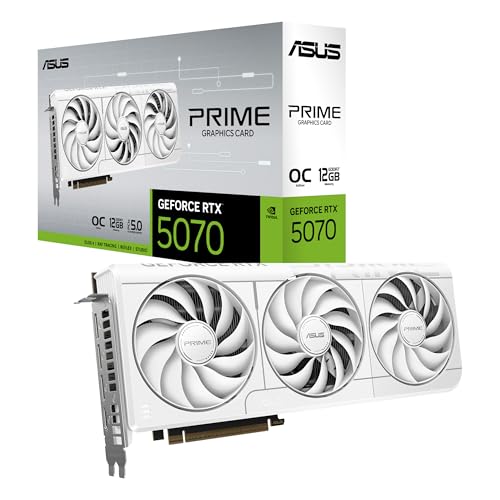
5. ASUS Prime RTX 5070: Best SFF-Ready RTX 5070
Pros
- SFF-ready design
- 12GB of GDDR7 memory
- 2.5-slot footprint
- Dual BIOS
- Blackwell architecture and DLSS 4
Cons
- Still 12 inches long
- 12GB is less memory than the 16GB cards here
- White finish may not suit every build
Best for: a compact enthusiast PC that needs a modern Blackwell GPU without a full-size 3-slot cooler.
The ASUS Prime RTX 5070 is the most convincing middle ground for a compact performance build. It is not tiny, but its 2.5-slot design is substantially more manageable than the 3.6-slot and 3.8-slot RTX 5080 cards. ASUS identifies it as SFF-ready, which gives buyers a useful starting point when planning around a smaller case.
The card uses Blackwell, DLSS 4, and 12GB of GDDR7 memory. ASUS lists an OC mode clock of 2587 MHz and a default mode clock of 2557 MHz. Those figures show that this is an overclocked board design, but the more important practical detail is the combination of current-generation architecture and a footprint that avoids the bulk of the premium RTX 5080 models.
The 12-inch length and 5-inch width still require a proper clearance check. Compact does not mean universal, particularly when the card is installed beside other expansion hardware or in a case with limited front-to-back room. The Axial-tech fans use a smaller hub and longer blades, with a barrier ring designed to increase downward air pressure. ASUS also includes a dual BIOS, giving the card a little more flexibility for different operating profiles.
The Gigabyte RTX 5070 Windforce is the closest alternative for a small system. It measures 11.1 inches long and 4.33 inches wide, so it has the shorter body. The ASUS card offers a narrower 2.5-slot design and explicitly lists dual BIOS, while the Gigabyte model lists an SFF-ready designation and a WINDFORCE cooling system. The decision comes down to the case's exact clearance and which board features matter more.
The main compromise is memory capacity. The 12GB GDDR7 configuration is less generous than the 16GB capacity in the Gigabyte RTX 5070 Ti Gaming and ASUS Dual RTX 5060 Ti, though those cards serve different performance and size priorities. Choose the ASUS Prime RTX 5070 when a compact case and current-generation features matter more than having the largest memory buffer.
6. Gigabyte RTX 5070 Ti Gaming: Best 16GB RTX 5070 Ti

Pros
- 16GB of GDDR7 memory
- 256-bit memory interface
- Blackwell architecture with DLSS 4
- PCIe 5.0 support
- WINDFORCE cooling system
Cons
- 13.46-inch length
- Almost four pounds
- Less suitable for compact cases
Best for: high-resolution gaming and graphics workloads that can use a 16GB memory configuration.
The Gigabyte RTX 5070 Ti Gaming is the memory-focused alternative to the RTX 5070 cards. It combines Blackwell architecture with 16GB of GDDR7 across a 256-bit interface, giving it more memory capacity and a wider interface than the 12GB RTX 5070 models in this list. That distinction matters for high-resolution textures, demanding creative applications, and games that are less comfortable with a smaller memory pool.
The card supports PCIe 5.0 and uses Gigabyte's WINDFORCE cooling system. The supplied details do not provide fan count or slot thickness, so it is better to think of this as a full-size card rather than assume a particular case fit. Its 13.46-inch length, 5.59-inch width, and 3.92-pound weight reinforce that point.
Against the ASUS Prime RTX 5070, this card gives up compactness for more memory and a wider interface. Against the ASUS TUF RTX 5080, it steps down from the RTX 5080 class while retaining 16GB of GDDR7. That makes it an appealing choice for a user who wants a generous memory configuration but does not need to move all the way to the largest GPU in the roundup.
The WINDFORCE system is a useful sign that Gigabyte has designed the board for sustained operation, but the listing does not provide a detailed cooler breakdown. Check the case's maximum GPU length and expansion-slot clearance before buying. The card's physical size is closer to the RTX 5080 choices than to the compact RTX 5060 Ti.
Its weakness is not a missing feature so much as its middle position. It is too large for many small builds and does not carry the top GPU tier of the RTX 5080 cards. For a desktop with room, though, the Gigabyte RTX 5070 Ti Gaming is the sensible pick for buyers who value 16GB of GDDR7 and a 256-bit interface more than the smallest possible installation.
7. MSI RTX 3050 Ventus: Best Small Dual-Fan RTX 3050

Pros
- 7.4-inch length
- Dual-fan Ventus design
- 6GB of GDDR6 memory
- Clearly listed display outputs
- 1492 MHz boost clock
Cons
- Ampere architecture
- 6GB memory capacity
- Not a match for the RTX 50-series performance tier
Best for: an entry-level desktop upgrade where short length and familiar display connectivity matter.
The MSI RTX 3050 Ventus is one of the easiest cards here to place in a small desktop. Its 7.4-inch length and 4.3-inch width are compact even beside the smaller RTX 50-series designs, and the dual-fan cooler avoids the bulk associated with the RTX 5070 and RTX 5080 models. The listed weight is about 1.28 pounds, which is still light enough for a straightforward installation in many cases.
MSI specifies a 1492 MHz boost clock, 14 Gbps memory speed, 6GB of GDDR6 memory, and a 96-bit memory interface. The output selection is unusually clear: one DisplayPort 1.4a connection and two HDMI 2.1a connections. That is useful for a basic multi-display setup, although the card's overall capabilities remain tied to the RTX 3050 and Ampere architecture.
The Gigabyte RTX 3050 Windforce is almost the same physical proposition at 7.5 inches long. Gigabyte lists second-generation RT cores, third-generation Tensor cores, and a pair of WINDFORCE fans, while MSI provides more detailed clock and output information. The choice between them is less about a dramatic class difference and more about which dimensions and connections fit the particular desktop.
Neither RTX 3050 model belongs in a new high-end gaming machine. The 6GB memory capacity can become a constraint in newer demanding games and heavier creative tasks, especially beside the 12GB and 16GB Blackwell cards. Readers deciding between an upgrade for an existing PC and a complete new build may find the trade-offs between compact and full-size graphics cards useful before settling on a case and power plan.
Skip this card if you expect it to serve a high-refresh, high-resolution system for years without compromise. Choose it when the goal is a small, uncomplicated RTX upgrade with specified display outputs and a short dual-fan body. That is where the MSI RTX 3050 Ventus makes the most sense.
8. Gigabyte RTX 5080 Gaming: Best Straightforward RTX 5080

Pros
- Blackwell architecture and DLSS 4
- 16GB of GDDR7 memory
- 256-bit memory interface
- PCIe 5.0 support
- WINDFORCE cooling system
Cons
- 13.46-inch length
- More than four pounds
- Fewer cooler details are supplied than for the ASUS models
Best for: a traditional large desktop that needs RTX 5080 performance without choosing the most elaborate cooler design.
The Gigabyte RTX 5080 Gaming is the clean, conventional RTX 5080 choice. Its feature list is short, but the important information is present: Blackwell architecture, DLSS 4, 16GB of GDDR7 memory, a 256-bit interface, PCIe 5.0, and a WINDFORCE cooling system. It avoids the extra design claims of the ASUS ROG Astral and the durability emphasis of the ASUS TUF.
This is still a large card. The listed dimensions are 13.46 inches long, 5.59 inches wide, and 2.76 inches high, with a weight of 4.03 pounds. Those numbers put it firmly in full-size desktop territory. A buyer should check the case's GPU clearance, adjacent-slot space, and support requirements before installation, especially if the motherboard has other large expansion cards nearby.
The 16GB GDDR7 memory and 256-bit interface give it the same core memory configuration as the ASUS TUF RTX 5080 and ASUS ROG Astral RTX 5080. The difference is the surrounding hardware. ASUS provides more detail about fan count, vapor chamber construction, phase-change thermal pads, or PCB protection. Gigabyte keeps the message focused on the GPU, memory, PCIe generation, and WINDFORCE cooling.
The PNY Epic-X RTX 5080 is another alternative with a shorter listed length and an emphasis on DLSS 4, Reflex 2, and creative software. The Gigabyte card is easier to understand for a buyer who wants a standard RTX 5080 configuration and does not need a feature-heavy product description. It is less compelling for someone who wants documented cooling innovations or a compact body.
The missing detail around fan count and slot thickness is the card's main weakness. That does not make it a poor choice, but it means the buyer must verify more of the installation requirements independently. For a roomy desktop with a conventional layout, the Gigabyte RTX 5080 Gaming is a direct path to the RTX 5080 platform without unnecessary complication.
9. ASUS Dual RTX 5060 Ti: Best Compact 16GB Card

Pros
- 16GB of GDDR7 memory
- Compact 9-inch length
- 2.5-slot design
- Blackwell architecture and DLSS 4
- 0dB technology
Cons
- Lower GPU tier than the RTX 5070 and RTX 5080 cards
- 2.5-slot width still needs clearance
- No dual BIOS listed
Best for: compact systems that need 16GB of current-generation graphics memory and a quiet idle profile.
The ASUS Dual RTX 5060 Ti is the most interesting small card for buyers who care about memory capacity. It measures 9 inches long, 4.7 inches wide, and 2 inches high, making it much easier to fit than the RTX 5070 and RTX 5080 models. Its 2.5-slot design is not ultra-thin, but it is a sensible compromise for a compact enthusiast system.
The card uses Blackwell architecture, DLSS 4, and 16GB of GDDR7 memory. ASUS lists an OC mode clock of 2632 MHz and a default mode clock of 2602 MHz, along with 767 AI TOPS. The 16GB configuration is the standout detail. It gives this smaller card more memory capacity than the 12GB RTX 5070 options, even though the RTX 5060 Ti sits lower in the product range.
The Axial-tech fan design uses a smaller hub, longer blades, and a barrier ring intended to increase downward air pressure. ASUS also lists 0dB technology, which points to a quieter idle or light-load experience when active cooling is not needed. That combination makes the card a natural fit for a compact PC that spends time doing ordinary desktop work as well as gaming.
Compared with the ASUS Prime RTX 5070, the Dual RTX 5060 Ti is shorter and carries 16GB rather than 12GB, but it is a lower GPU tier. The Gigabyte RTX 5070 Windforce is also longer at 11.1 inches and has 12GB of GDDR7. Choose the ASUS Dual when case space and memory capacity are more important than moving up to the RTX 5070 class.
This card is not the right answer for someone simply seeking maximum graphics performance. Its strength is balance: current-generation features, a 9-inch body, 16GB of memory, and a 2.5-slot cooler. If those priorities describe your build, the ASUS Dual RTX 5060 Ti is one of the most practical options in this roundup.
10. Gigabyte RTX 5070 Windforce: Best SFF-Ready Windforce Card

Pros
- SFF-ready design
- 11.1-inch length
- 12GB of GDDR7 memory
- PCIe 5.0 support
- WINDFORCE cooling system
Cons
- 12GB memory is below the 16GB cards here
- Less compact than the ASUS Dual RTX 5060 Ti
- Weight is not specified
Best for: a small-form-factor build that needs an RTX 5070 and a shorter WINDFORCE card.
The Gigabyte RTX 5070 Windforce is designed around the SFF problem rather than the showcase build. Its 11.1-inch length and 4.33-inch width are notably easier to accommodate than the 13-inch-plus cards, and Gigabyte explicitly identifies it as NVIDIA SFF-ready. That makes it a strong candidate for a small case that still has room for a modern RTX 5070.
The card uses Blackwell architecture, DLSS 4, and 12GB of GDDR7 memory on a 192-bit interface. PCIe 5.0 support keeps the platform current, while the WINDFORCE cooling system gives it a dedicated cooling design rather than a bare reference-style approach. The supplied information does not list a boost clock, fan count, or slot thickness, so those are details to confirm before installation.
The ASUS Prime RTX 5070 is the most direct comparison. ASUS is 12 inches long and 2.5 slots thick, with a listed OC mode clock of 2587 MHz, dual BIOS, and Axial-tech fans. Gigabyte is shorter and narrower, while ASUS provides more detail about its operating modes and cooler design. The right choice depends on whether the case is constrained more by length or by expansion-slot width.
The card's 12GB capacity is adequate for its position, but it does not offer the memory headroom of the Gigabyte RTX 5070 Ti Gaming or the ASUS Dual RTX 5060 Ti. The Ti card adds 16GB but is much larger, while the ASUS Dual is shorter but belongs to the RTX 5060 Ti class. That makes the Gigabyte RTX 5070 Windforce a useful middle path for compact systems that need the RTX 5070 platform specifically.
Skip it if your case can easily fit a large card and your priority is maximum cooler capacity. Buy it when the SFF designation, 11.1-inch body, and current-generation features solve a real space problem. It is a focused choice, not an attempt to be the biggest card in the room.
How to choose best rtx graphics card
The Best best rtx graphics card is the one whose GPU tier, memory, cooling, and physical dimensions match the rest of the PC.
GPU generation and class
The RTX 50-series cards in this list use NVIDIA's Blackwell architecture and support DLSS 4. The RTX 3050 models use Ampere, with second-generation RT cores and third-generation Tensor cores listed for the Gigabyte version. A newer architecture is not the only consideration, but it gives the RTX 5070, RTX 5070 Ti, RTX 5080, and RTX 5060 Ti cards access to newer platform features.
The GPU number still matters within a generation. An RTX 5080 is positioned above an RTX 5070, while the RTX 5060 Ti and RTX 3050 occupy lower tiers. Select by the workload first. Heavy ray-traced gaming and demanding creative applications need a different class of card than a compact desktop upgrade.
Video memory
Memory capacity affects how comfortably a card handles large textures, high-resolution output, and applications that keep substantial data on the GPU. The products here range from 6GB on both RTX 3050 cards to 12GB on the RTX 5070 models and 16GB on the RTX 5070 Ti, RTX 5060 Ti, and RTX 5080 models.
The memory interface matters too. The Gigabyte RTX 5070 Ti Gaming and both RTX 5080 products list a 256-bit interface, while the RTX 5070 cards list 192-bit and the RTX 3050 models list 96-bit. Capacity and interface describe different parts of the memory system, so do not judge a card from one figure alone.
More memory cannot turn a lower-tier GPU into a higher-tier one, but too little memory can limit an otherwise capable card.
Card length and slot thickness
Measure the case before choosing a GPU. The compact options range from 7.4 inches for the MSI RTX 3050 Ventus to 9 inches for the ASUS Dual RTX 5060 Ti. The larger RTX 5080 cards extend beyond 13 inches, and the ASUS ROG Astral reaches 3.8 slots in thickness.
Length is only one clearance measurement. Width, height, adjacent expansion slots, front fans, radiator placement, and power connectors can all affect installation. The ASUS Prime RTX 5070 is 2.5 slots thick, while the ASUS TUF RTX 5080 is 3.6 slots and the ROG Astral is 3.8 slots.
Cooling hardware
A large heatsink and multiple fans can help a GPU sustain demanding workloads, but they also increase case requirements. The ASUS TUF RTX 5080 uses three Axial-tech fans and a large fin array. The ROG Astral adds a fourth fan, a vapor chamber, and a milled heatspreader. Gigabyte's RTX 5070 and RTX 5080 cards use WINDFORCE cooling systems.
Compact cards use a different balance. The ASUS Dual RTX 5060 Ti uses Axial-tech fans and lists 0dB technology, while the two RTX 3050 cards use dual-fan designs. Look for a cooler that matches the case's airflow rather than assuming the largest cooler is always the right answer.
Outputs and platform features
Display connections can matter when the card will run several screens. The MSI RTX 3050 Ventus lists one DisplayPort 1.4a and two HDMI 2.1a outputs. The ASUS RTX 5070 lists HDMI and DisplayPort 2.1 support, while the ASUS RTX 5060 Ti lists HDMI 2.1b and DisplayPort 2.1b.
DLSS 4 is listed on the Blackwell cards, and NVIDIA Reflex 2 is specifically highlighted by PNY. ASUS lists dual BIOS on the Prime RTX 5070 and 0dB technology on the Dual RTX 5060 Ti. These features are most useful when they match the way you use the PC, not as isolated checklist items.
Frequently asked questions
Which RTX card is the strongest pick here?
The ASUS TUF RTX 5080 is our top pick because it combines Blackwell architecture, DLSS 4, 16GB of GDDR7 memory, and a substantial three-fan cooling design. It is a large card, so it needs a roomy case and careful support.
Which card is best for a small-form-factor PC?
The ASUS Dual RTX 5060 Ti is the shortest current-generation option here at 9 inches, while the Gigabyte RTX 5070 Windforce is an SFF-ready choice at 11.1 inches. The ASUS Prime RTX 5070 is also SFF-ready, but it is 12 inches long.
Are the RTX 3050 cards still useful?
The Gigabyte RTX 3050 Windforce and MSI RTX 3050 Ventus can make sense as upgrades for smaller or older desktops. Both use 6GB of GDDR6 memory and Ampere architecture, so they are better suited to modest systems than new high-performance builds.
Is 16GB of graphics memory better than 12GB?
A 16GB configuration provides more memory capacity for large textures and demanding applications, but it does not automatically make the GPU faster. The RTX 5070 Ti and RTX 5080 cards combine 16GB with a higher GPU class, while the ASUS Dual RTX 5060 Ti offers 16GB in a smaller, lower-tier card.
How much case space does an RTX 5080 need?
The RTX 5080 choices here are large. The ASUS TUF RTX 5080 is 13.7 inches long and 3.6 slots thick, the PNY card is about 12.9 inches long, the ASUS ROG Astral is 14.1 inches long and 3.8 slots thick, and the Gigabyte RTX 5080 Gaming is 13.46 inches long. Check all clearance dimensions before installation.
What does DLSS 4 do?
DLSS 4 is a group of AI-assisted rendering technologies listed for the Blackwell cards in this roundup. The PNY model specifically highlights Multi Frame Generation, Ray Reconstruction, and Super Resolution. Support and results depend on the game or application.
The bottom line
The Best best rtx graphics card in this roundup is the ASUS TUF RTX 5080. It has the right blend of Blackwell capability, 16GB GDDR7 memory, three-fan cooling, and protective construction for a powerful full-size desktop. The ASUS ROG Astral RTX 5080 is the more aggressive cooling choice, but its 3.8-slot footprint makes it harder to install.
For smaller systems, the ASUS Dual RTX 5060 Ti and ASUS Prime RTX 5070 are the more sensible picks. The Dual model is the compact 16GB option, while the Prime gives SFF builders a more capable RTX 5070 platform in a 2.5-slot design. The two RTX 3050 cards remain focused upgrades for short-clearance desktops, not replacements for the higher-tier cards.
If you are undecided, choose the fastest card your case can properly fit, then confirm its memory capacity before placing the order.
As an Amazon Associate we earn from qualifying purchases.