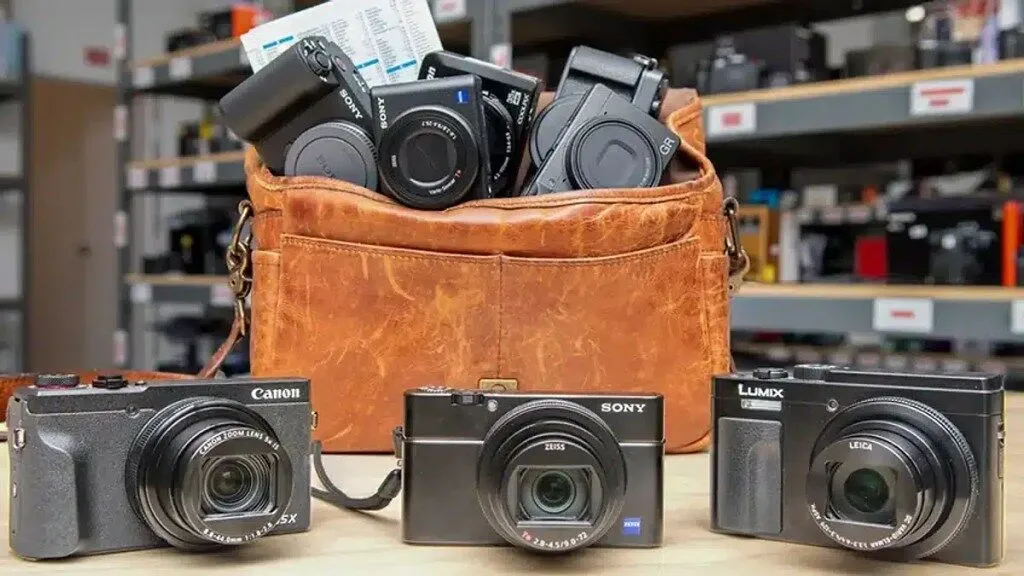

A safari camera has to solve two problems at once: getting close to an animal without approaching it, and staying ready when the animal suddenly moves. A small point-and-shoot can be easy to carry, while a long zoom or interchangeable-lens camera can preserve far more detail.
The Best safari camera depends on whether you are photographing from a vehicle, recording a water-heavy adventure, or leaving a camera outside to watch wildlife while you are away. We ranked these 10 options by reach, image-making control, durability, and monitoring features.
The Canon EOS Rebel T7 is our top pick for photographers, while the Nikon COOLPIX P950 is the better choice for extreme reach. The rest range from rugged compact cameras to solar trail cameras and a wired security camera for fixed observation.
Comparison table
| # | Product | Award | Sensor or resolution | Reach or coverage | Best for |
|---|---|---|---|---|---|
| 1 | Canon EOS Rebel T7 | Best overall | 24.1MP APS-C CMOS | 18 to 55mm lens | Travelers who want interchangeable-lens control |
| 2 | Nikon COOLPIX P950 | Best superzoom | 16MP | 83x optical zoom, 2000mm maximum focal length | Distant animals and birds |
| 3 | KODAK PIXPRO WPZ2 | Best rugged compact | 16MP BSI CMOS | 4x optical zoom | Rain, dust, and water sports |
| 4 | Tecglem 8K Digital Camera | Best creator kit | 88MP listed resolution | 16x digital zoom | Casual travel video and vlogging |
| 5 | KODAK PIXPRO AZ405 Black | Best simple long zoom | 20MP CMOS | 40x optical zoom | Straightforward wildlife framing |
| 6 | KODAK PIXPRO AZ405 White | Best AA-powered option | 20MP CMOS | 40x optical zoom | Travelers who carry spare AA batteries |
| 7 | Meidase P70 | Best no-glow trail camera | 64MP listed stills | 100-foot night vision | Nighttime wildlife monitoring |
| 8 | KJK Trail Camera | Best wide detection | 36MP listed stills | 130-degree detection range | Broad-area motion capture |
| 9 | Misstech Solar Trail Camera | Best solar monitoring | 64MP listed stills | 0.1-second activation | Longer unattended observation |
| 10 | REOLINK RLC-820A | Best fixed camera | 4K video | Wired network connection | Permanent property or enclosure monitoring |
1. Canon EOS Rebel T7: Best Overall

Pros
- Large 24.1MP APS-C sensor
- Interchangeable EF and EF-S lens compatibility
- Optical viewfinder and AI Servo autofocus
- Built-in Wi-Fi and NFC
- Familiar controls for new photographers
Cons
- Included 18 to 55mm lens has limited reach for distant animals
- Nine-point autofocus system is modest
- No weather protection is listed
Best for: travelers who want a proper camera body they can expand with longer lenses.
The Canon EOS Rebel T7 is the one we would hand to a first-time safari photographer who wants room to grow. It feels like a conventional camera rather than a phone with a large zoom, and that matters when the light changes quickly or an animal appears at the edge of a clearing. The included 18 to 55mm lens is useful for vehicle portraits, landscapes, and groups, but it is not a specialist wildlife lens.
Its 24.1MP CMOS sensor uses the APS-C format, giving the camera a larger imaging surface than the compact models here. That gives you more flexibility when cropping a distant subject, although the result still depends heavily on the lens attached. Canon lists an ISO range of 100 to 6400, expandable to 12800, which can help when a morning drive begins before the sun is high. The optical viewfinder covers approximately 95 percent of the frame, so the final image can include a little more around the edges than you see while composing.
Autofocus is handled by a nine-point system with AI Servo AF. That is a simpler arrangement than a modern mirrorless wildlife body, but AI Servo can keep adjusting focus while a moving subject travels through the frame. The T7 also records Full HD video and includes Wi-Fi and NFC for moving images to a compatible device. Its roughly 1.04-pound body is manageable in a vehicle, and the EF lens mount gives it a much wider upgrade path than the fixed-lens cameras below.
The weakness is reach. The Nikon COOLPIX P950 is much easier to use when the animal is far across a plain because its 83x optical zoom reaches a listed 2000mm maximum focal length. The T7 beats the Nikon for lens flexibility and the KODAK PIXPRO AZ405 models for sensor format, but only if you add a longer lens. It is also not the camera we would choose for a wet boat ride or dusty trek without suitable protection.
For readers comparing the lens reach needed for distant wildlife, the T7 makes sense as the flexible starting point. Choose it if you want to learn exposure, change lenses, and keep using the camera after the trip. Skip it if you want extreme zoom straight out of the box.
2. Nikon COOLPIX P950: Best Superzoom

Pros
- 83x optical zoom
- 2000mm listed maximum focal length
- Optical image stabilization
- 4K UHD video
- Bird and Moon scene modes
- RAW format support
Cons
- Smaller 16MP sensor than the Canon
- Large zoom range can be difficult to steady
- Physically larger than a pocket compact
Best for: photographing distant animals without carrying interchangeable lenses.
The Nikon COOLPIX P950 solves the most obvious safari problem: the lion, bird, or antelope is often much farther away than expected. Its 83x optical zoom is the standout feature in this group, and the listed 2000mm maximum focal length gives it a reach the Canon cannot match with its supplied lens. You can move from a broad view to a tight composition without changing lenses or carrying another camera.
That reach is optical rather than merely a crop, which preserves more useful detail than relying on digital magnification alone. The camera has a 16MP sensor, optical image stabilization, and built-in Bird and Moon modes. Stabilization is particularly important at the long end, where a small hand movement can shift the subject completely out of frame. A monopod or firm vehicle support would still make distant compositions easier, but the built-in system is a welcome layer of help.
The P950 also captures 4K UHD video and supports RAW format, giving experienced photographers more latitude when editing exposure and color. Its body weighs about one pound and measures approximately 5.6 inches long by 5.9 inches wide, so it is not a pocket camera. The rotating LCD screen can help when shooting from an awkward position, and the controls are less intimidating than a full interchangeable-lens setup.
Compared with the KODAK PIXPRO AZ405, the P950 offers dramatically more optical reach and 4K video, while the AZ405 is a simpler companion with a 40x zoom and AA battery operation. The Canon EOS Rebel T7 has the stronger upgrade path and larger sensor, but its included lens is nowhere near as useful for a faraway subject. The P950's compromise is sensor size. It is not the first choice for dim scenes or heavily cropped files where the Canon has more room to work.
If your safari is mainly about birds in treetops, animals across open plains, or subjects that cannot be approached, this is the strongest fit. The P950 is the Best safari camera for reach-first travelers who would rather compose immediately than build a lens kit.
3. KODAK PIXPRO WPZ2: Best Rugged Compact

Pros
- Waterproof to 15 meters
- Shockproof from two-meter drops
- Dustproof body
- 16MP BSI CMOS sensor
- Built-in Wi-Fi and 1080p video
- Lightweight body
Cons
- 4x zoom is short for distant animals
- Not intended to replace a dedicated long-zoom camera
- microSD and microSDHC support is more limited than full-size SD
Best for: active travelers who need a camera that can survive water, dust, and rough handling.
The KODAK PIXPRO WPZ2 is a very different proposition from the Canon and Nikon. It is the camera you can take into rain, onto a boat, or along a dusty trail without building a separate protective setup around it. The body is waterproof to 15 meters, shockproof from two-meter drops, and dustproof according to the supplied features. Its yellow finish is easy to spot in a bag or vehicle.
The 16MP BSI CMOS sensor is paired with a 4x optical zoom. That combination is suitable for nearby animals, environmental scenes, camp life, and quick snapshots, but the zoom is the limiting factor for a classic distant wildlife shot. A 4x optical range can frame a subject more tightly than a phone in some situations, yet it cannot compete with the Nikon P950 or either AZ405 when an animal remains far from the vehicle.
The WPZ2 records 1080p HD video and includes built-in Wi-Fi for transferring images or using a phone as a remote viewfinder. Its rechargeable lithium-ion battery avoids the need to carry loose cells, and the camera accepts microSD and microSDHC cards. At roughly 0.39 pounds, it is much lighter than the P950 and less demanding to carry all day.
The key trade-off is clear: this camera protects itself better than the T7, but it gives up the T7's sensor flexibility and the P950's reach. It is also not a substitute for a trail camera. It does not offer the motion-triggered, unattended operation of the Meidase P70 or KJK Trail Camera. Choose it for a photographer who will hold the camera and shoot in difficult weather, not for someone leaving it tied to a tree.
Our guide to protecting a camera during wet outdoor trips is useful if the WPZ2's rugged design appeals but your itinerary includes more than a vehicle safari. This is the Best safari camera here for water and impact resistance, provided your subjects are close enough for its short zoom.
4. Tecglem 8K Digital Camera: Best Creator Kit

Pros
- 8K video is listed
- 88MP listed still resolution
- Front and rear dual lenses
- 3.2-inch touch screen
- Wi-Fi transfer
- Two batteries and charging stand
Cons
- 16x digital zoom is not optical zoom
- Specifications are aimed more at casual creation than serious wildlife work
- No weather resistance is listed
Best for: beginners who want a compact travel camera for clips, selfies, and casual stills.
The Tecglem 8K Digital Camera is built around convenience and content creation rather than long-distance wildlife photography. Its front and rear lenses make it easy to switch between filming the scene and facing the camera, while the 3.2-inch IPS touch screen gives beginners a familiar way to frame and adjust shots. The kit includes two batteries, a charging stand, and a 32GB SD card, so it is ready for a travel bag without much extra setup.
The listing calls out 8K video and an 88MP sensor, along with a 16x digital zoom. Those figures should be read carefully for safari use. Digital zoom enlarges the captured image rather than providing the optical reach of the Nikon P950's 83x system or the AZ405's 40x lens. It can be useful for a quick clip when the subject is already reasonably close, but it is not the right tool for preserving fine detail on a faraway leopard.
Six-axis stabilization, autofocus, continuous shooting, slow motion, time-lapse, filters, and scene modes give it a broad menu of creative options. Wi-Fi works with the iSmart DV2 app for transfers, which is convenient when the group wants to share clips during a trip. The 360-degree mode dial and touch controls are approachable, though they do not give the same tactile control as the Canon's optical viewfinder and dedicated camera layout.
The biggest weakness is that the high headline resolution does not solve the reach problem. The Canon EOS Rebel T7 has a more established lens system, and the KODAK PIXPRO WPZ2 is better suited to water and dust. The Tecglem is also not a fixed wildlife monitor, so it cannot replace the solar or motion-triggered cameras later in this list.
Choose this model if your safari camera needs to record people, landscapes, and social clips as much as animals. For serious distant wildlife, spend your attention on optical reach and stabilization instead of the 8K label.
5. KODAK PIXPRO AZ405 Black: Best Simple Long Zoom
Pros
- 40x optical zoom
- 24mm wide-angle starting lens
- Optical image stabilization
- 20MP CMOS sensor
- Uses standard AA batteries
- Full HD video
Cons
- No 4K video listed
- Less reach than the Nikon P950
- Fixed-lens design limits future upgrades
Best for: travelers who want a straightforward bridge camera with useful reach and replaceable batteries.
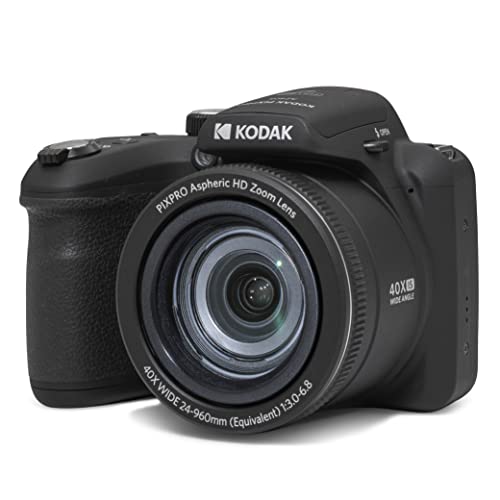
The KODAK PIXPRO AZ405 Black gets the basic safari formula right. It combines a 20MP CMOS sensor with a 40x optical zoom, giving you enough reach for animals across a reserve while retaining a 24mm wide-angle view for landscapes and groups. It is easier to understand than a DSLR and more practical at distance than a compact waterproof camera.
Optical image stabilization helps counter hand movement at the long end. That does not eliminate every blur problem, particularly when the animal itself is moving, but it can make a meaningful difference when the camera is held from a vehicle or viewing platform. Automatic scene detection and multiple shooting modes keep the operation accessible, while Full HD video covers ordinary travel clips.
The use of standard AA batteries is a real field advantage. You can carry spares and replace them without depending on a proprietary charger, which is useful when access to a wall outlet is uncertain. The camera accepts SD, SDHC, and SDXC cards up to a listed 512GB capacity. Those practical details make the AZ405 less demanding than the Canon EOS Rebel T7, which becomes more capable only after adding a longer lens.
The Nikon COOLPIX P950 remains the better choice when maximum reach is the priority, thanks to its 83x optical zoom, 4K video, and 2000mm listed maximum focal length. The AZ405 is easier to justify for someone who wants a smaller set of controls and does not need extreme magnification. Its weakness is the fixed lens and the lack of 4K, not the basic usability.
The black version and the white version have the same listed imaging features and dimensions. Select this one if you prefer the black finish, want AA convenience, and need a reliable all-purpose zoom without changing lenses.
6. KODAK PIXPRO AZ405 White: Best AA-Powered Option

Pros
- 40x optical zoom
- 20MP CMOS sensor
- Optical image stabilization
- 24mm wide-angle lens
- Standard AA battery operation
- Full HD video
Cons
- No meaningful feature difference from the black model
- No 4K video listed
- Fixed lens cannot be upgraded
Best for: travelers who want the AZ405 features in a white finish and carry spare AA batteries.
The KODAK PIXPRO AZ405 White is the same practical bridge-camera idea as the black AZ405, with the finish as the visible distinction. It has a 20MP CMOS sensor, a 40x optical zoom, and a 24mm wide-angle view. For a safari itinerary, that means one camera can handle a broad landscape at one moment and a distant animal at the next.
Optical image stabilization is useful because long zooms magnify camera shake as well as the subject. Automatic scene detection reduces the number of settings a beginner has to manage, and Full HD recording is available for moving moments. The AZ405 is designed for direct, uncomplicated shooting rather than extensive manual customization or interchangeable lenses.
Its AA battery design is especially easy to understand in the field. Spare batteries can travel separately from the camera, and you are not tied to the camera's charging cable during a long day. It supports SD, SDHC, and SDXC cards up to 512GB according to the supplied features. The roughly 0.96-pound body is not ultra-light, but it remains manageable for a bridge camera with this zoom range.
The P950 is the superior long-distance tool, and the Canon EOS Rebel T7 produces a more expandable system when paired with suitable lenses. The AZ405 White wins only on simplicity and the ability to keep the power plan uncomplicated. It also duplicates the black AZ405's capabilities, so there is no imaging reason to pick one over the other.
Choose the white model when visibility, finish, or personal preference matters to you. It is a sensible safari camera for someone who wants 40x optical reach, stabilization, and easily replaceable power without learning a more complex system.
7. Meidase P70: Best No-Glow Trail Camera

Pros
- 64MP listed still images
- 1296p video
- 0.1-second trigger speed
- 940nm no-glow infrared LEDs
- Night vision rated to 100 feet
- Built-in 2.4-inch color display
Cons
- Non-cellular and non-Wi-Fi design
- Eight AA batteries are sold separately
- Solar panel is sold separately
Best for: unattended nighttime monitoring where visible illumination could disturb animals.
The Meidase P70 is not a handheld safari camera. It is meant to be mounted, left in place, and checked later. That makes it a better fit for a campsite perimeter, private reserve, farm, or wildlife observation point than for photographing animals from a moving vehicle.
Its 0.1-second trigger speed is designed to record an animal as it enters the detection area. The 940nm no-glow infrared LEDs provide night vision to a listed 100 feet without the visible red illumination that can attract attention or alter an animal's behavior. The camera records 64MP listed stills and 1296p video, with H.264 compression for smaller MP4 or MOV files.
A 2.4-inch color display lets you review footage and navigate the controls on site. The camera is motion activated and waterproof, while the f/1.6 aperture lens is intended to help gather light in darker conditions. It is explicitly non-cellular and non-Wi-Fi, so you must retrieve the camera or its storage rather than check it remotely from a distant location.
The power arrangement needs planning. It uses eight AA batteries as backup, and the compatible Meidase SP350 solar panel is sold separately. That is less self-contained than the Misstech Solar Trail Camera, which includes a built-in rechargeable battery and solar panel, but the Meidase's no-glow 940nm system is more discreet than the KJK's 850nm low-glow LEDs.
For readers deciding between a camera that watches wildlife unattended and a handheld model, the distinction matters more than the megapixel claims. Pick the P70 for quiet, fixed nighttime observation. Skip it if you need live access or want to frame the shot yourself.
8. KJK Trail Camera: Best Wide Detection

Pros
- 36MP listed still images
- 2.7K video with sound
- Less than 0.1-second trigger time
- 130-degree detection range
- 75-foot night vision
- IP66 waterproof design
Cons
- SD card is not included
- 850nm LEDs are low glow rather than no glow
- No Wi-Fi or app control
Best for: monitoring a broad area where fast motion detection matters more than remote access.
The KJK Trail Camera is a compact motion monitor with unusually broad detection coverage. Its 130-degree detection range can watch more of a path, clearing, or property edge than a narrower sensor, and the trigger time is listed as less than 0.1 seconds. That combination is useful when animals cross the frame rather than pause directly in front of the camera.
The camera records 36MP listed stills and 2.7K video with sound. At night, its 22 low-glow 850nm infrared LEDs provide visibility up to 75 feet. Adaptive illumination is intended to avoid images that are too bright or too dark, though low glow is not the same as the Meidase P70's no-glow 940nm system. A wary animal may react differently to the two approaches.
An integrated 2-inch HD TFT color screen and physical controls make setup and playback possible without Wi-Fi or an app. The included mounting strap and stand offer two ways to position it, and the IP66 waterproof design is specified for operation from minus 22 to 158 degrees Fahrenheit. The listing also claims a 17, 000-image battery life, though actual endurance will depend on trigger frequency, video use, and conditions.
The absence of an included SD card is an easy detail to miss, so plan for storage before mounting it. The Meidase P70 has a larger screen and no-glow night illumination, while the Misstech Solar Trail Camera offers solar power and app playback. The KJK counters with a wider 130-degree detection field and a smaller body.
This is the Best safari camera in the group for broad, local motion coverage rather than distant photographic composition. Pick it for a trail, garden, or reserve boundary where you can retrieve the card and do not need cellular or Wi-Fi access.
9. Misstech Solar Trail Camera: Best Solar Monitoring

Pros
- Built-in solar panel and rechargeable battery
- 4K video and 64MP listed stills
- 0.1-second activation
- Five-frame sequence mode
- App playback within 30 to 50 meters in open areas
- Included 8GB card
Cons
- App range is local, not cellular
- Solar performance depends on placement and sunlight
- Not a handheld camera for composed safari photographs
Best for: leaving a camera outside for extended wildlife observation with fewer battery changes.
The Misstech Solar Trail Camera is the most self-sufficient monitoring option here. Its built-in solar panel works with a rechargeable battery, allowing the camera to remain outside without the regular battery swaps required by the Meidase P70 and KJK Trail Camera. That does not make placement irrelevant, since shade, weather, and seasonal sunlight still affect operation, but it reduces routine maintenance.
It records 4K video and 64MP listed still images through an f/1.6 wide-aperture lens. The 0.1-second activation speed and five-frame sequence mode are aimed at fast-moving animals such as birds, deer, raccoons, and foxes. The camera also stamps moon phase, temperature, and time on recordings, which can help reveal patterns rather than just capture isolated visits.
Playback is available on the camera's built-in screen or through the Trailcam Go app within a listed 30 to 50 meters in open areas. This is a local connection, not a cellular feed, so it will not let you watch a remote reserve from another city. The included 8GB card supports loop recording, with expansion listed up to 128GB. A location pin in the app can also help you find the camera after it has been mounted.
The KJK Trail Camera has a wider 130-degree detection range, and the Meidase P70 has 100-foot no-glow night vision. The Misstech is more appealing when power and convenient nearby playback matter most. It is also less suitable than the Canon EOS Rebel T7 or Nikon COOLPIX P950 for deliberate, handheld wildlife photography.
Choose it for a garden, farm, campsite, or private observation area where the camera can receive useful sunlight and remain within local app range. It is the strongest unattended option for reducing maintenance without adding cellular service.
10. REOLINK RLC-820A: Best Fixed Camera

Pros
- 4K video
- Human and vehicle detection
- Power over Ethernet connection
- Continuous, motion, and scheduled recording
- Audio recording
- App and client alerts
Cons
- Requires a wired Ethernet installation
- microSD card is not included
- Better for fixed surveillance than free-form wildlife photography
Best for: a permanent outdoor observation point with network power and recording.
The REOLINK RLC-820A belongs in this roundup only for a specific safari use case: permanent monitoring around a lodge, enclosure, outbuilding, or private property. It is not a camera to carry on a game drive. Its dome design and wired installation point toward a fixed position where reliability and ongoing recording matter more than portability.
The camera records 4K video and includes audio recording. On-device detection distinguishes people and vehicles from other objects, helping reduce irrelevant alerts around a property. Motion alerts can arrive through push notifications or email, and the Reolink app or client supports live viewing and playback.
Power over Ethernet carries both power and video over one network cable. That creates a cleaner installation than running separate power and data lines, but it also means you need a suitable Ethernet network and a route for the cable. Recording options include continuous, motion-triggered, or scheduled capture. Footage can be saved to a microSD card up to 256GB, a Reolink NVR, or an FTP server, with the card sold separately.
The Misstech Solar Trail Camera is much easier to deploy away from a wired network, while the REOLINK offers a more structured surveillance system once installed. It lacks the handheld framing control of the Nikon COOLPIX P950 and does not use a wildlife-specific trigger arrangement in the supplied features. Its strength is dependable fixed coverage, not safari photography.
Select this model when the camera will stay in one place and you can provide Ethernet infrastructure. For a temporary trip or remote trail, choose a trail camera instead. For a person carrying one camera through a reserve, the Best safari camera remains the Canon EOS Rebel T7 or Nikon COOLPIX P950.
How to choose best safari camera
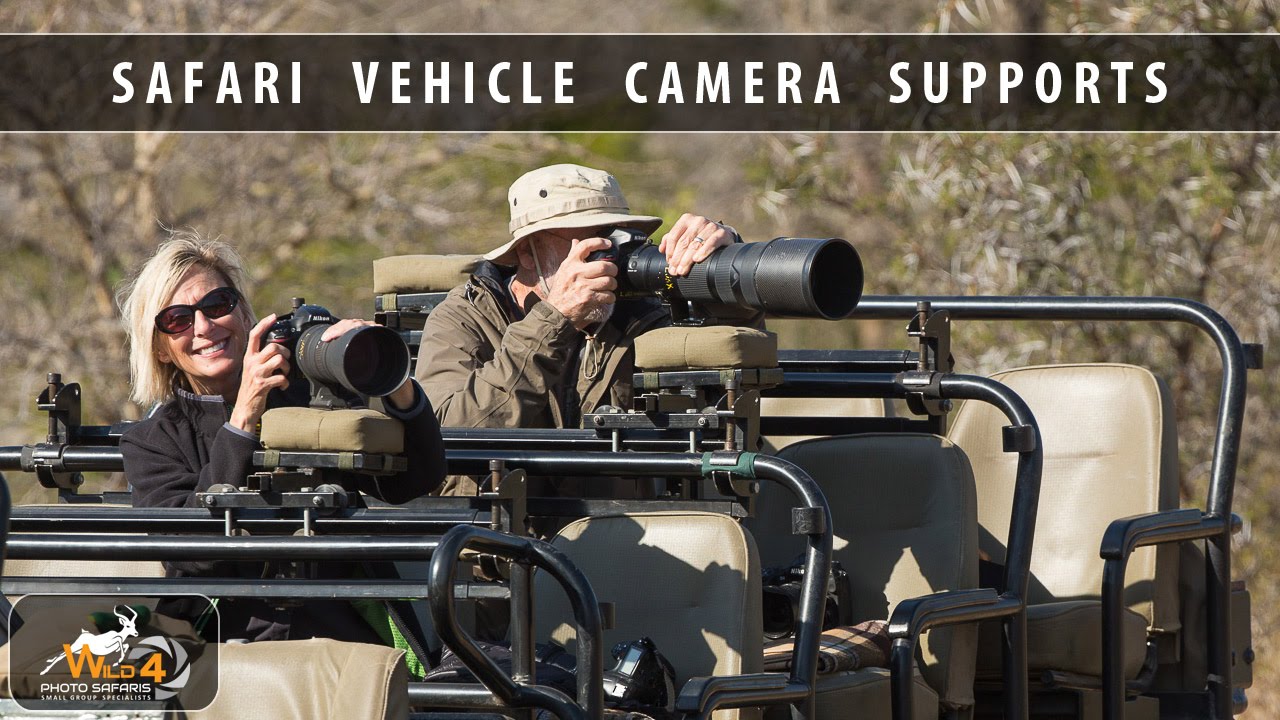
Start with the distance and environment you actually expect. A handheld camera for animals across open grassland needs different capabilities from a solar unit watching a watering hole overnight.
Optical reach
Optical zoom uses the lens to magnify a distant subject before the image is captured. The Nikon COOLPIX P950's 83x optical zoom and the KODAK PIXPRO AZ405's 40x optical zoom are far more relevant to distant wildlife than the Tecglem's 16x digital zoom.
A long zoom is useful only if it can remain steady. Look for image stabilization, support the camera against a vehicle or monopod when possible, and remember that a moving animal can still blur even when the camera is stable.
For distant wildlife, optical reach and steady framing matter more than a large resolution number printed on the box.
Sensor and image control
The Canon EOS Rebel T7 uses a 24.1MP APS-C CMOS sensor and supports interchangeable Canon EF and EF-S lenses. That gives it a more adaptable photographic system than the fixed-lens bridge cameras, especially when you later add a lens designed for wildlife.
Compact cameras can be easier to operate, but their smaller sensors may offer less flexibility in dim conditions or heavy crops. For casual daylight observation, reach and handling can matter more than sensor size. For images you plan to edit seriously, sensor format and RAW support deserve more attention.
Stabilization and autofocus
Stabilization counters movement from your hands or the vehicle. The Nikon P950 and KODAK AZ405 list image stabilization, while the Canon T7 provides a nine-point autofocus system with AI Servo AF for tracking moving subjects.
Trail cameras use a different approach. Their trigger speed and detection field determine whether an animal is recorded at all. A listed 0.1-second trigger is useful for fast movement, but placement still controls what the sensor can see.
Weather and field durability
Rain, dust, drops, and water exposure can ruin an ordinary camera. The KODAK PIXPRO WPZ2 is waterproof to 15 meters, shockproof from two meters, and dustproof. The KJK Trail Camera has an IP66 waterproof design, while the other handheld cameras do not list equivalent protection in the supplied data.
Do not treat a fixed trail camera as automatically indestructible. Check the mounting position, keep seals clean, and avoid placing any camera where runoff can collect around its openings.
Power and storage
Handheld cameras may use rechargeable batteries, while the KODAK AZ405 uses standard AA batteries. Trail cameras add more choices: the Meidase P70 uses eight AA batteries as backup and can pair with a separate solar panel, while the Misstech includes a solar panel and rechargeable battery.
Storage is just as important. The WPZ2 uses microSD and microSDHC cards, the Misstech includes an 8GB card, and the KJK does not include an SD card. The REOLINK RLC-820A supports microSD up to 256GB, but the card is not included.

Frequently asked questions
What is the best safari camera for distant animals?
The Nikon COOLPIX P950 is the strongest option when distance is the main concern. Its 83x optical zoom reaches a listed 2000mm maximum focal length, far beyond the supplied lens on the Canon EOS Rebel T7.
Is a DSLR better than a superzoom for safari photography?
A DSLR offers a larger APS-C sensor and the ability to change lenses, which can produce more adaptable results as your skills develop. A superzoom is simpler and gives you extreme reach immediately, so the better choice depends on whether you prioritize system flexibility or convenience.
Are trail cameras suitable for a safari trip?
Trail cameras are useful when you want to leave a camera in one place and record motion automatically. They are not a replacement for a handheld camera because they do not provide the same control over composition, timing, or lens reach.
What does optical zoom mean?
Optical zoom changes the lens's magnification before the image reaches the sensor. It generally preserves more useful detail than digital zoom, which enlarges or crops the captured image after the fact.
Which camera is best for rain and water?
The KODAK PIXPRO WPZ2 is the clearest fit because its supplied features specify waterproofing to 15 meters, shock resistance from two meters, and dustproof construction. The other handheld cameras in this list do not include the same stated protection.
Do trail cameras need Wi-Fi?
No. The Meidase P70 and KJK Trail Camera are designed to operate without Wi-Fi, though footage must be checked on the camera or retrieved from storage. The Misstech adds local app playback within a listed 30 to 50 meters in open areas.
What should I use for permanent wildlife monitoring?
The REOLINK RLC-820A suits a fixed installation with Ethernet because it supports PoE, 4K video, motion detection, and several recording methods. For a location without wired infrastructure, the solar-powered Misstech is easier to deploy.

The bottom line
The Best safari camera for most photographers is the Canon EOS Rebel T7, provided you understand that its included 18 to 55mm lens is not a long-range wildlife lens. It offers the strongest path into serious photography through its APS-C sensor, optical viewfinder, AI Servo autofocus, and interchangeable EF and EF-S lens compatibility.
Choose the Nikon COOLPIX P950 when the animals will be far away and you want 83x optical reach without assembling a lens kit. For unattended observation, the Misstech Solar Trail Camera is the more practical pick, while the KODAK PIXPRO WPZ2 is the one to pack when water, dust, and drops are the real threats.
If you are undecided, choose the Nikon for distance and the Canon for long-term photographic control.
As an Amazon Associate we earn from qualifying purchases.