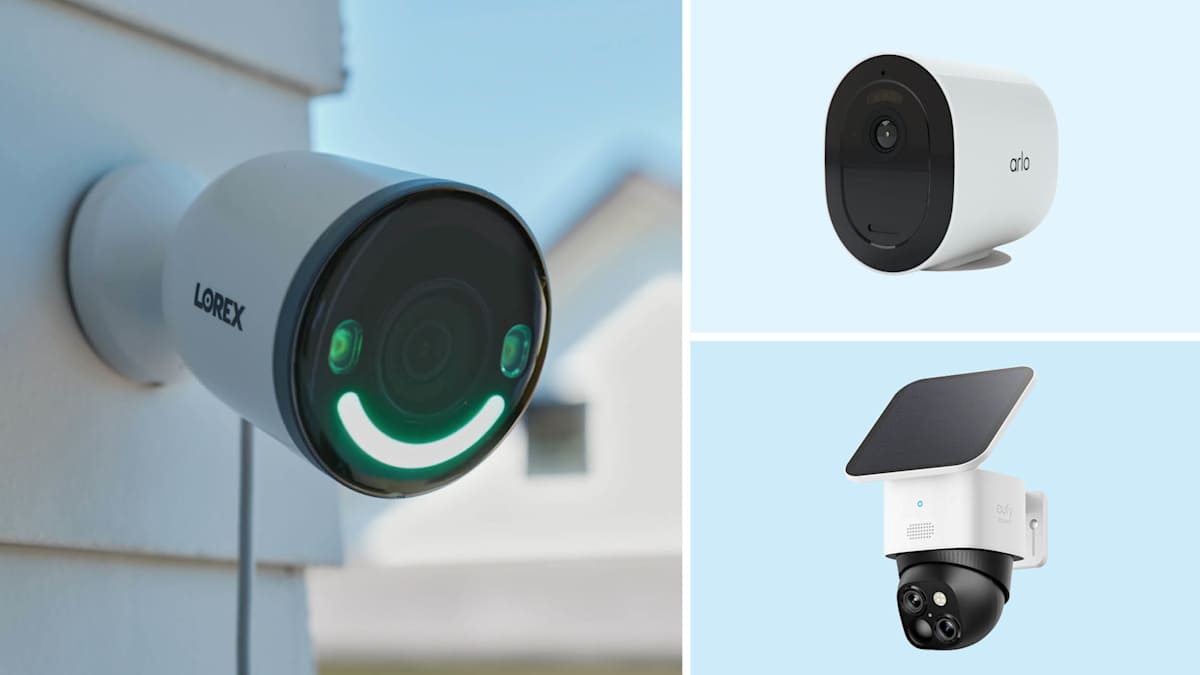

A camera that misses motion, runs out of battery, or buries useful clips behind a complicated app is not much help when something happens. The right system has to match the property: a porch camera needs a different setup from an eight-camera wired recorder covering a large yard.
Our Best best security cameras picks include compact battery cameras, solar-powered pan and tilt models, local-storage systems, and a traditional wired DVR kit. Blink Outdoor 2K+ is the strongest all-round choice for buyers who want sharp video, a five-camera bundle, and very little maintenance, while the other picks make better sense for continuous recording, solar power, or lower setup complexity.
| # | Product | Award | Resolution | Power | Coverage | Storage | Best for |
|---|---|---|---|---|---|---|---|
| 1 | Blink Outdoor 2K+ | Best overall | 2K | AA lithium batteries | 5 cameras | Cloud plan or compatible local setup | Most wireless multi-camera systems |
| 2 | ANNKE 3K Lite | Best wired system | 1080p cameras, 3K DVR | Wired | 8 cameras | 1TB HDD | Continuous recording |
| 3 | aosu D1 Classic | Best solar coverage | 3MP | Solar powered | 4 cameras, 360 degree pan and tilt | 32GB local storage | Wide property coverage |
| 4 | eufy SoloCam E30 | Best solar tracking | 2K | Removable solar panel | 4 cameras, 360 degree view | microSD up to 128GB | Local storage and tracking |
| 5 | ANSQUE Home Security System | Best whole-home solar kit | 2K | Solar powered | 4 cameras, one PTZ | 32GB local storage | Large properties |
| 6 | SEHMUA Solar Camera Kit | Best two-camera solar kit | 2K | Solar powered | 2 cameras, 360 degree pan and tilt | microSD up to 128GB | Small outdoor areas |
| 7 | Blink Outdoor 4 | Best simple battery system | 1080p | AA lithium batteries | 3 cameras | Cloud plan or compatible local setup | Easy app-based monitoring |
| 8 | GMK 4 Pack Camera System | Best alert features | 2K, 3MP | Rechargeable batteries or plug-in | 4 cameras | microSD or cloud | Siren and light alerts |
| 9 | HITELLARCAM 2K Wireless Camera | Best dual-band option | 2K | Rechargeable battery | Single camera | Cloud or microSD up to 256GB | Flexible Wi-Fi placement |
| 10 | VISION WELL 2K Camera | Best compact single camera | 2K | Rechargeable battery | Single camera | Cloud or microSD up to 128GB | Basic indoor or outdoor monitoring |
1. Blink Outdoor 2K+: Best Overall

Pros
- Sharp 2K video with low-light color
- Five-camera bundle covers several parts of a property
- Two-year battery claim reduces maintenance
- Noise cancellation improves two-way conversations
- Four-times zoom helps inspect distant details
Cons
- Smart person and vehicle alerts require an optional subscription
- Core module does not provide the most flexible local-storage setup
- Requires 2.4GHz or 5GHz Wi-Fi depending on the connected network
Best for: households that want a polished wireless system with several cameras and strong everyday image quality.
The first thing to know about Blink Outdoor 2K+ is that the five-camera bundle changes how you plan coverage. Instead of protecting one entrance and leaving the rest of the property to guesswork, it gives you cameras for a front door, driveway, side path, backyard, or garage approach. The cameras are battery powered, and the included Sync Module Core, mounting kits, batteries, USB-C cable, and power adapter make this a coherent system rather than a collection of unrelated devices.
The 2K resolution is the meaningful upgrade over Blink Outdoor 4. It gives small details such as package edges, clothing, and vehicle features more definition, while the four-times zoom provides a closer look when the live view is already pointed in the right direction. Color Vision works in low light before the camera switches to infrared black and white, so a dim porch should look more informative than a monochrome image from the start. The IP65 weather-resistant design is suitable for exposed outdoor placement.
Audio is another strong point. Two-way talk includes noise cancellation, which should make conversations with visitors easier when there is wind, traffic, or general outdoor noise. Smart notifications for people and vehicles are available with an optional Blink subscription, so the camera can be more selective than a basic motion sensor. Alexa support also allows multi-camera live view and voice control through a compatible Alexa-enabled device.
Its biggest weakness is storage flexibility. The included Sync Module Core does not offer local storage, and the cloud trial is not the same as having a permanent local archive. A compatible Sync Module and storage device can expand the options, but that adds another decision to a system that is otherwise refreshingly direct. Buyers who need continuous recording should choose ANNKE 3K Lite instead, while those who want subscription-free solar operation should look at eufy SoloCam E30.
For a modern wireless setup with five cameras, strong video, useful zoom, and a long stated battery life, Blink Outdoor 2K+ is the one we'd keep. It is the most balanced pick here, provided you are comfortable with event-based recording and the limits of the included module.
2. ANNKE 3K Lite: Best Wired System
Pros
- Eight cameras cover a broad property
- Pre-installed 1TB hard drive
- 24/7 continuous recording
- Human and vehicle detection with smart search
- IP67 weatherproof cameras
Cons
- Wired installation takes more planning
- Included cameras are 1080p despite the DVR supporting higher resolution
- Night color range is shorter than black-and-white infrared range
Best for: property owners who prefer a recorder-based system and continuous footage over battery convenience.
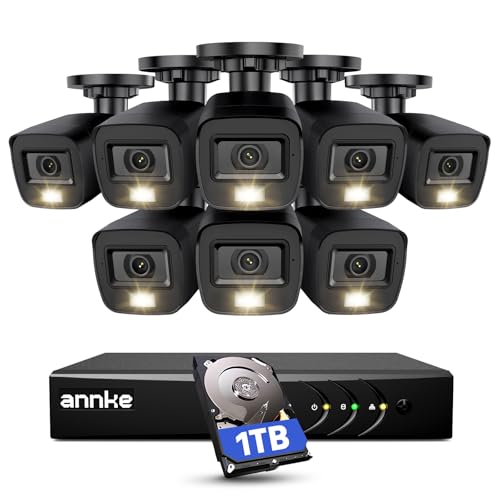
ANNKE 3K Lite is the right answer when “wireless” sounds less like convenience and more like a compromise. This is a conventional wired surveillance system with eight bullet cameras, an eight-channel DVR, and a pre-installed 1TB hard drive. It needs cable runs and a suitable place for the recorder, but once installed it is designed to keep recording instead of waking only when motion occurs.
The cameras capture 1080p footage, while the 3K Lite DVR can handle 1080p at 30 frames per second or 3K and 5MP cameras at 20 frames per second. That makes the recorder a more adaptable foundation than the included camera resolution suggests. H.265+ compression helps use the hard drive more efficiently, which matters when the system is recording around the clock and you may need to search back through several days of footage.
AI Motion Detection 2.0 identifies people and vehicles and supports flexible detection areas. Smart searching for people and vehicles is particularly useful on a recorder system because it cuts down the time spent scrubbing through uneventful video. At night, the cameras can switch between infrared and color night vision. Infrared reaches up to 100 feet in black and white, while color night vision is specified up to 66 feet.
The IP67 rating gives these cameras a stronger weatherproofing claim than the IP65 models from GMK 4 Pack Camera System and SEHMUA Solar Camera Kit. The trade-off is physical installation. You cannot casually move an ANNKE camera to another part of the property, and the 6.5-pound system package reflects hardware that is meant to be installed rather than carried from room to room. For a deeper look at this installation style, the planning trade-offs of a recorder-based setup are worth considering before drilling.
Choose ANNKE 3K Lite if footage must be available even when a camera misses a motion event. It is less friendly than Blink Outdoor 2K+, but its eight-camera layout, hard drive, and continuous recording make it the more serious security system for a larger property.
3. aosu D1 Classic: Best Solar Coverage

Pros
- Four cameras with 360 degree pan and tilt
- Solar power with three hours of daily sunlight claim
- 32GB local storage included
- Cross-camera tracking and four-view live display
- Automatic motion tracking
Cons
- Supports 2.4GHz Wi-Fi only
- Pan and tilt coverage depends on mounting position
- Four months of loop recording is an estimate that changes with activity
Best for: buyers who want broad wireless coverage without regularly charging camera batteries.
The appeal of aosu D1 Classic is simple: four cameras can look around rather than merely point in one direction. Each camera offers 360 degree coverage through pan and tilt, with automatic motion tracking to follow activity within its target area. That makes it especially useful for open spaces such as a driveway, backyard, or broad side yard where a fixed lens could leave a large blind spot.
Its 3MP image is described as 2K resolution, and four LED lights provide color night vision. The lights are intended to increase the available light compared with a two-LED arrangement, so this system is aimed at seeing more than a basic infrared-only camera. The camera can also show four live streams at once, which is a practical feature when you need a quick view of the whole property rather than opening feeds one at a time.
The included aosuBase stores recordings locally in encrypted form. Its 32GB capacity is specified for up to four months of loop recording, though busy scenes will fill storage faster than quiet ones. Cross-camera tracking connects recordings from the same period, helping reconstruct an event as it moves from one camera to another. That is a more thoughtful approach to multi-camera review than simply placing four independent feeds in an app.
Solar power is the other major reason to choose it. The product states that three hours of sunlight per day can keep the cameras running, including on rainy and cloudy days. That is convenient, but mounting direction still matters. A shaded wall or poorly angled panel can make any solar claim less useful. The cameras support 2.4GHz Wi-Fi only, unlike ANSQUE Home Security System, which supports dual-band Wi-Fi through its base.
For a property where camera movement and local recording matter more than maximum resolution, aosu D1 Classic is a compelling solar kit. It is less suitable for buyers who need a wired archive or who have a network built around 5GHz-only coverage.
4. eufy SoloCam E30: Best Solar Tracking

Pros
- Four-camera kit with 360 degree vision
- 2K video and f/1.6 aperture
- AI detection and automatic tracking
- Removable solar panel
- Local microSD storage up to 128GB
Cons
- Supports 2.4GHz Wi-Fi only
- microSD card is not included
- Advanced storage and AI options depend on compatible HomeBase hardware
Best for: households that want solar charging, automatic tracking, and control over local footage.
eufy SoloCam E30 takes the solar pan and tilt concept and gives it a more storage-focused design. The four-camera kit offers 360 degree vision, reducing the need to install several fixed cameras around one open area. AI motion detection identifies people and vehicles and can automatically track them, which is useful when a subject moves across a wide field of view.
The 2K image uses an f/1.6 aperture, a detail that matters most in low light. A wider aperture can help the camera gather more light before night vision takes over, and eufy specifies 2K clarity for both day and night use. The result should be more useful than a camera that relies only on a narrow, fixed view, although tracking is still dependent on the subject remaining within the camera's coverage.
SolarPlus power uses a removable solar panel, and the stated requirement is two hours of daily sunlight to keep the camera charged. That is less demanding on paper than the three-hour figure listed for aosu D1 Classic, but both systems depend on panel placement and local weather. The removable design gives you more freedom to place the panel where the light is strongest rather than accepting the camera's mounting position as the only option.
Local storage is a clear advantage. The camera supports a microSD card up to 128GB, and compatible HomeBase S380 or S280 systems can add broader storage and control options. The card is not included, and the camera supports only 2.4GHz Wi-Fi. Buyers who want a simpler two-camera solar setup should consider SEHMUA Solar Camera Kit, while those needing four cameras and a more structured local-storage path should choose this one.
eufy SoloCam E30 is a strong fit for people who dislike recurring cloud dependence but still want automatic tracking. Its main limitation is that the best expansion route involves understanding the HomeBase choices, so it is not the simplest camera here.
5. ANSQUE Home Security System: Best Whole-Home Solar Kit

Pros
- Four-camera system with one 360 degree PTZ camera
- 32GB encrypted local storage
- Dual-band 2.4GHz and 5GHz Wi-Fi
- Person tracking and cross-camera tracking
- Solar charging with two hours of sunlight claim
Cons
- Only one camera is specified as PTZ
- The system package is relatively bulky
- Eight-times digital zoom cannot create detail absent from the original image
Best for: larger homes that need several solar cameras and a base designed to coordinate them.
ANSQUE Home Security System is built around whole-property coverage rather than a single clever camera. The four-camera system includes one PTZ camera with a 360 degree panoramic view, while the base coordinates feeds, storage, and alerts. It is a sensible layout for a driveway, porch, pool area, garage, and side path, especially when the cameras need to communicate across a larger home.
The cameras use 2K video, color night vision, and a seven-layer glass lens. The system also specifies eight-times digital zoom, which can enlarge a license plate or package label in the live view, but digital zoom is best treated as a framing aid rather than a substitute for optical detail. Four LEDs and a PIR sensor are intended to detect activity up to 40 feet at night, while Smart IR helps prevent nearby faces from becoming overexposed.
AnsqueBase includes 32GB of local storage with AES-128 encryption and up to 120 days of event loop recording. The event-based wording matters: this is not the same as the continuous recording approach of ANNKE 3K Lite. Cross-camera tracking can connect clips from the same period, and the app provides simultaneous four-area viewing. Scheduled modes, custom detection zones, and a claimed 0.5-second wake-up time give the system more control than a basic battery camera.
Network flexibility is one of its better practical features. AnsqueBase supports both 2.4GHz and 5GHz Wi-Fi and is described as a signal booster and interference reducer. Solar charging is specified at two hours of sunlight per day, even with charging support in rain, clouds, or tree shade. Those claims still depend on installation, and the 8.5-pound system package suggests a more involved setup than Blink Outdoor 2K+.
Choose ANSQUE Home Security System when the property is large enough to justify a coordinated solar kit and dual-band base. It is not the pick for a renter or anyone who wants one small camera with minimal configuration.
6. SEHMUA Solar Camera Kit: Best Two-Camera Solar Kit

Pros
- Two 2K cameras with pan and tilt
- Removable solar panels
- Color and infrared night vision
- PIR motion sensing
- microSD support up to 128GB
Cons
- 2.4GHz Wi-Fi only
- Cloud storage trial is limited
- Pan and tilt cameras need a clear mounting position to cover effectively
Best for: smaller properties that need two solar-powered cameras with movable views.
The SEHMUA Solar Camera Kit is a straightforward two-camera answer for a front entrance and backyard, or two sides of a small property. Each camera uses pan and tilt to look around a wider area than a fixed bullet camera. The system promises five-minute installation, and the cameras can mount to a wall or ceiling.
Video is captured at 2K resolution, with a white spotlight and infrared LEDs for night viewing. That gives you a choice between color footage when there is enough illumination and infrared footage when the scene is dark. PIR sensing is intended to reduce false alarms compared with a basic software-only motion trigger, while two-way audio lets you speak with a visitor through the app.
The removable solar panel is the key feature. It can be positioned for better sunlight instead of being locked to the exact angle of the camera, and the product describes the setup as continuously solar powered. A camera mounted under a deep overhang may still struggle to receive enough light, so the panel's cable and mounting position deserve attention during installation.
Footage can be stored on a microSD card up to 128GB, though the card is not included. Optional cloud storage includes a 30-day trial, and the IP65 design is intended for rain, snow, and strong sun. Compared with eufy SoloCam E30, this kit has fewer cameras and less developed base-station expansion, but it is easier to understand if all you need is two movable views. It also does not support 5GHz Wi-Fi.
If you are deciding between a small solar setup and broader outdoor coverage, start with the number of locations you need to watch. SEHMUA Solar Camera Kit is the right size for a compact property, but larger homes will quickly outgrow two cameras.
7. Blink Outdoor 4: Best Simple Battery System
Pros
- Three-camera bundle
- Two-year battery claim
- 1080p live view and infrared night vision
- Enhanced dual-zone motion detection
- Compact 0.24-pound camera design
Cons
- Lower resolution than Blink Outdoor 2K+
- Person detection requires an optional subscription
- Included Sync Module Core has no local storage
Best for: buyers who want a compact three-camera setup and a familiar app-based experience.
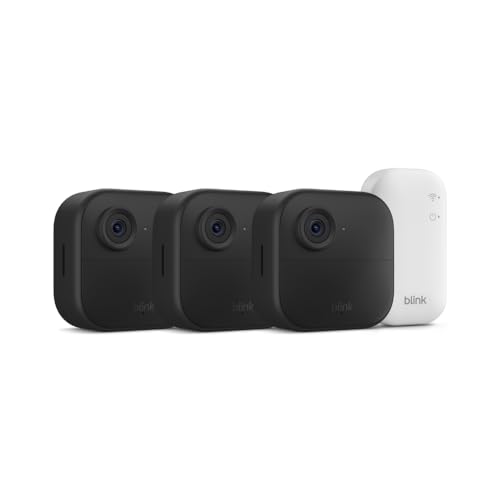
Blink Outdoor 4 remains an appealingly uncomplicated system. The bundle includes three cameras, a Sync Module Core, six AA Energizer lithium batteries, mounting kits, a USB-C cable, and a power adapter. Each camera weighs 0.24 pounds and measures 2.76 inches high by 2.76 inches wide, so it is easy to place without making a porch or side gate look like a commercial installation.
Its 1080p live view is adequate for checking movement, visitors, and general activity, while infrared night vision handles dark scenes. Two-way audio works through the Blink app, and enhanced dual-zone motion detection is designed to send alerts faster. Optional person detection can separate people from other movement, but it requires a Blink subscription plan.
Battery life is stated at up to two years with the included lithium batteries. Real use will vary with motion frequency, live-view time, temperature, and network conditions, but the low-maintenance design is the point. Alexa integration supports multi-camera live view, arming, and disarming through voice commands on compatible devices.
The main reason to choose it over Blink Outdoor 2K+ is not image quality. The newer Blink has sharper video, low-light color, enhanced audio, and four-times zoom. Outdoor 4 makes more sense when 1080p is sufficient and you want a smaller three-camera package. Its storage limitation is the same important caveat: the included Sync Module Core does not offer local storage, so footage is tied to cloud options unless you add compatible hardware.
For a compact wireless system from a recognizable platform, Blink Outdoor 4 is easy to recommend. Skip it if identifying distant details is important, or if you want local recording without buying another module.
8. GMK 4 Pack Camera System: Best Alert Features

Pros
- Four-camera 2K system
- Color and infrared night vision
- AI PIR motion detection
- Flashing light and siren
- Local microSD and cloud storage options
Cons
- 2.4GHz Wi-Fi only
- Battery life varies from one to six months by use
- microSD and cloud features require separate storage decisions
Best for: households that want visible light and siren deterrence across four camera locations.
GMK 4 Pack Camera System puts deterrence at the center of its design. Four cameras capture 2K, 3MP video through a 3.3mm lens, and each combines color night vision with infrared mode. That makes the system suitable for a front door, driveway, garage, and backyard where you want more than a phone alert after motion has already happened.
AI cloud analysis works with PIR motion detection and can send alerts to the app. Detection zones can narrow the watched area, which is useful when a sidewalk or road would otherwise trigger constant notifications. The built-in microphone and speaker support two-way talk, while a flashing white light and siren can warn visitors or deter unwanted activity.
The cameras are rechargeable and rated for one to six months of standby time, with support for more than 3, 000 motion triggers on a charge. A six to eight hour charging time is specified. That range is broad because a busy entrance will consume power much faster than a quiet side yard. There is also a constant plug-in option for high-traffic locations, giving you a way to avoid frequent charging where a cable is practical.
Installation is designed to be quick, and the cameras can be used outdoors or indoors. IP65 weather resistance protects against ordinary exposure, while the app supports family sharing and privacy sleep schedules. The important networking limitation is that the cameras support 2.4GHz Wi-Fi only. Compared with HITELLARCAM 2K Wireless Camera, GMK gives you three more cameras and a stronger deterrence package, but it is less flexible on Wi-Fi bands.
Choose GMK 4 Pack Camera System when a siren, flashing light, and four-camera layout matter more than long battery intervals. It is a practical alert-focused kit, though people who want solar charging should look at aosu D1 Classic or SEHMUA Solar Camera Kit.
9. HITELLARCAM 2K Wireless Camera: Best Dual-Band Option

Pros
- 2K video with full-color night vision
- Supports 2.4GHz and 5GHz Wi-Fi
- AI motion detection
- Free cloud storage option
- microSD support up to 256GB
Cons
- Battery claim ranges from one to six months
- Free cloud plan stores footage at SD quality
- Single-camera coverage requires additional units for a full property
Best for: buyers who need one flexible camera and a dual-band wireless connection.
The HITELLARCAM 2K Wireless Camera is the most flexible single-camera option in this group when network compatibility is the main concern. It supports both 2.4GHz and 5GHz Wi-Fi, unlike most of the smaller wireless models here. That can make setup easier in homes where the router is busy or where the strongest practical connection is on the 5GHz band.
Video is captured at 2K, and the camera combines full-color night vision with built-in LED lighting. AI motion detection is intended to identify relevant movement and send phone alerts, while two-way audio handles conversations with delivery drivers or visitors. A spotlight and siren add an active deterrence option rather than leaving the camera as a passive observer.
Storage is unusually flexible for this type of camera. The product specifies free cloud storage, with the important qualification that the free plan offers SD-quality footage while HD storage requires a paid plan. Local storage supports a microSD card up to 256GB, but the card is not included. That gives you a route around cloud dependence, provided you are comfortable managing the card yourself.
Battery life is listed as one to six months, and the product notes that motion frequency, recording mode, and temperature affect performance. The recommended detection distance is 5 to 8 meters. That makes it better suited to a doorway, patio, or other defined area than a distant driveway. Compared with VISION WELL 2K Camera, HITELLARCAM has better Wi-Fi compatibility and more local storage capacity, while VISION WELL offers similar alert features in a smaller single-camera package.
Pick HITELLARCAM 2K Wireless Camera when you need one camera that can join either common Wi-Fi band and you want both cloud and local recording choices. It is not the right solution for a large property unless you plan to add more cameras.
10. VISION WELL 2K Camera: Best Compact Single Camera

Pros
- 2K video and wide-angle view
- Color and infrared night vision
- Person, vehicle, pet, and package recognition
- Two-way talk with siren and flashing light
- Compact 0.7-pound body
Cons
- 2.4GHz Wi-Fi only
- Battery life is listed at one to five months
- 15 frames per second is modest for fast movement
Best for: monitoring one defined area indoors or outdoors with smart alerts and deterrence.
VISION WELL 2K Camera is a compact single-camera choice for an apartment entrance, nursery, hallway, or small outdoor area. The camera weighs 0.7 pounds and can be mounted without a power or network cable. Its 2K video and wide-angle view are enough for general monitoring, while the 33-foot night-vision range gives a useful boundary for a porch or short driveway.
Color night vision and infrared night vision provide two ways to handle darkness. AI analysis can recognize people, vehicles, pets, and packages, then send alerts through the app. The camera also supports multiple users, which is useful when more than one household member needs access to a feed.
Two-way audio, a siren, and a flashing white light give you several responses to an alert. You can speak to someone at the door, activate a warning, or use the light as a visible deterrent. Storage supports either cloud recording or a microSD card up to 128GB, though the card is not included.
The limitations are clear. The camera supports 2.4GHz Wi-Fi only, battery life is listed at one to five months, and video capture is specified at 15 frames per second. That frame rate is fine for ordinary activity but less suited to quickly moving subjects than a system designed around continuous higher-frame-rate recording. HITELLARCAM 2K Wireless Camera is the better single-camera alternative if dual-band Wi-Fi or a 256GB card is important.
For one defined area, VISION WELL 2K Camera covers the essentials without the complexity of a multi-camera base station. Choose it for a small installation, not as the foundation for comprehensive property coverage.
How to choose best security cameras
The right camera system depends on how much property must be covered, how footage should be stored, and whether you can run cables or maintain batteries.
Resolution and night vision
Resolution affects how much detail remains when you crop into a live view or recording. The 1080p cameras in Blink Outdoor 4 are suitable for general awareness, while 2K and 3MP models such as Blink Outdoor 2K+, GMK 4 Pack Camera System, and aosu D1 Classic preserve more detail.
Night vision needs equal attention. Infrared produces black-and-white footage, while color night vision uses visible LEDs or available ambient light to retain color. Check the stated range and remember that color requires more usable light than infrared. A camera with a spotlight may show more identifying detail, but it also makes its presence obvious.
Power and installation
Wired cameras such as ANNKE 3K Lite are the best fit for continuous recording, but they require cable runs and a permanent installation. Battery cameras are easier to place but need periodic charging, and their battery life changes with motion frequency, temperature, and live-view use.
Solar cameras reduce that maintenance when the panel receives enough sunlight. Removable panels are easier to position than fixed panels, but shade and roof overhangs can still undermine charging. Before choosing solar, identify a mounting position that receives dependable daylight.
A camera is only as reliable as its power plan, network path, and access to recorded footage.
Field of view and pan and tilt
A fixed camera is predictable and works well when it points directly at a door, gate, or driveway. Pan and tilt cameras cover more of an open area and can track movement, but they need a clear mounting position and may not watch every direction at once.
The aosu D1 Classic, eufy SoloCam E30, and SEHMUA Solar Camera Kit use 360 degree movement to reduce blind spots. A fixed multi-camera system can still be more dependable for simultaneous coverage because every camera keeps its assigned view.
Storage and recording
Cloud storage is convenient for remote access, but plans and video quality can vary. Some cameras provide free cloud storage with limitations, while others include a trial or require an optional subscription for person detection and saved clips.
Local storage keeps footage on a microSD card or base station. ANNKE 3K Lite is the clearest choice for continuous recording because it includes a 1TB hard drive. aosu D1 Classic, eufy SoloCam E30, and ANSQUE Home Security System offer local storage for event-based systems. Confirm whether the card is included, the maximum capacity, and whether the camera records continuously or only after motion.
Motion detection and alerts
Basic motion detection can generate alerts from animals, branches, headlights, and passing traffic. PIR sensors detect heat movement, while AI analysis can classify people, vehicles, pets, or packages. Detection zones help exclude sidewalks and roads from the watched area.
Siren and spotlight features are useful for active deterrence, but they should be treated as additions to a reliable alert system. A camera that identifies the right event and saves the clip is more useful than one that simply makes noise after the fact.
Frequently asked questions
Are wireless security cameras reliable outdoors?
They can be reliable when the Wi-Fi signal, battery plan, and mounting location are suitable. Look for weather resistance such as IP65 or IP67, and confirm that the camera supports the Wi-Fi band available where it will be installed. Solar models also need enough direct or usable sunlight to maintain charge.
Do security cameras need a subscription?
Not always. ANNKE 3K Lite, aosu D1 Classic, eufy SoloCam E30, and ANSQUE Home Security System provide local-storage options, while several other cameras support microSD cards. Some cloud plans are optional, but advanced recognition or HD cloud storage may require a paid plan.
Is 2K noticeably better than 1080p?
2K generally preserves more detail, especially when viewing a crop of a person, package, or vehicle. The difference is most useful when the camera has a clear view and adequate lighting. A well-positioned 1080p camera can still be more useful than a higher-resolution camera pointed at the wrong area.
Are solar security cameras truly maintenance free?
They can reduce charging, but they are not maintenance free in every installation. The panel must receive enough light, and dirt, shade, seasonal weather, and heavy motion activity can affect charging. A removable panel gives you more freedom to find a suitable position.
Should I choose wired or battery-powered cameras?
Choose wired cameras when continuous recording and a permanent installation are priorities. Battery-powered cameras are easier to install and move, but they record mainly around motion events and require charging or battery replacement. The ANNKE 3K Lite and Blink Outdoor 2K+ represent the clearest versions of those two approaches.
How many cameras do I need for a house?
Start with the locations that need protection, such as the front door, driveway, backyard, garage, and side path. A single camera can cover one defined area, while a four or five-camera kit is better for several entrances and approaches. Pan and tilt can widen coverage, but multiple fixed views may provide more consistent simultaneous monitoring.
The bottom line
The Best best security cameras pick is Blink Outdoor 2K+ because it combines five-camera coverage, 2K video, low-light color, noise-canceling two-way audio, zoom, and a two-year battery claim in a coherent wireless package. Its cloud and local-storage limitations are real, but it is the easiest all-round system for many homes.
Choose ANNKE 3K Lite when continuous recording and eight-camera coverage matter more than simple installation. For solar systems, eufy SoloCam E30 is the strongest local-storage option, while aosu D1 Classic offers especially broad pan and tilt coverage.
If you are undecided, choose the system whose power and storage plan you can maintain after installation, not the camera with the longest feature list.
As an Amazon Associate we earn from qualifying purchases.