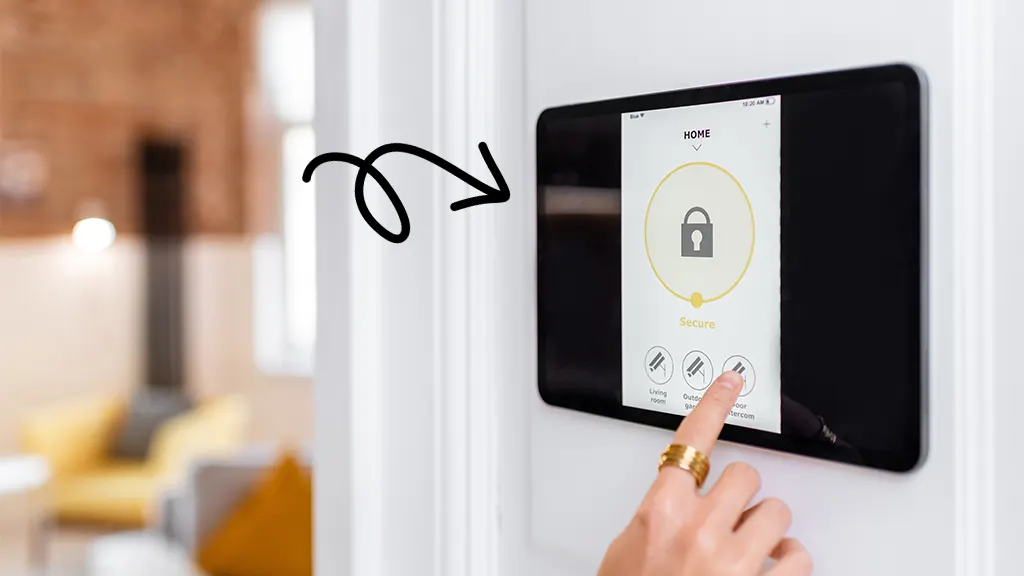

A front door sensor is useful, but it cannot tell you much about an open window upstairs, a detached garage, or a network outage. Choosing a home security system means matching the number and type of sensors to the property, then deciding how much you want an app, voice control, cameras, or professional response to handle.
Our Best security systems for home recommendations range from compact Ring kits for apartments to the sensor-heavy Ring Alarm 14-Piece Kit and the wired ANNKE camera system. The systems differ sharply in connectivity and monitoring, so the right choice depends on whether you need intrusion alerts, recorded video, or both.
Ring Alarm 8-Piece Kit is our top pick, with the other options covering larger homes, subscription-free setups, combined Wi-Fi and cellular connections, and continuous outdoor video recording.
Comparison table
| # | Product | Award | Included coverage | Connectivity | Best for |
|---|---|---|---|---|---|
| 1 | Ring Alarm 8-Piece | Best overall | 4 contact sensors, motion detector | Ring app, Wi-Fi | 1 to 2 bedroom homes |
| 2 | Ring Alarm 14-Piece | Best for larger homes | 8 contact sensors, 2 motion detectors | Ring app, Wi-Fi | 2 to 4 bedroom homes |
| 3 | Ring Alarm 5-Piece | Best for apartments | 1 contact sensor, motion detector | Ring app, Wi-Fi | Condos and apartments |
| 4 | PGST 7-Piece Alarm | Best Wi-Fi and 4G backup | 4 door or window sensors, 2 motion detectors | 2.4GHz Wi-Fi, 4G | Small homes needing backup connectivity |
| 5 | SimpliSafe 8-Piece | Best simple setup | Entry sensors, motion sensor, panic button | SimpliSafe app | Straightforward DIY installation |
| 6 | RenseCum 24-Piece Alarm | Best touchscreen control | 24-piece kit | 2.4GHz Wi-Fi, 2G/4G | Large sensor deployments |
| 7 | Arlo SS1501 | Best integrated sensor hub | 5 8-in-1 sensors | Arlo SecureLink | Multi-function sensing |
| 8 | YISEELE Smart Alarm | Best expandable DIY kit | 4 door or window sensors, remote | 2.4GHz Wi-Fi, 433MHz wireless | Apartments and small businesses |
| 9 | ANNKE 3K Lite DVR | Best for recorded video | 8 cameras, 1TB HDD | Wired DVR system | Outdoor surveillance |
1. Ring Alarm 8-Piece: Best Overall

Pros
- Balanced sensor mix for a 1 to 2 bedroom home
- Includes a keypad, base station, range extender, and motion detector
- Ring app sends mobile alerts when the system is triggered
- Expandable with additional sensors and accessories
Cons
- Only one motion detector and four contact sensors are included
- Wi-Fi backup and professional monitoring require a compatible Ring Protect Plan
- It does not provide video recording in the base kit
Best for: someone who wants a polished alarm starter kit that can grow with a Ring smart home.
The Ring Alarm 8-Piece Kit gets the basic layout right. It includes one base station, one keypad, four contact sensors, one motion detector, and one range extender, which is a sensible spread for a smaller home rather than a box full of parts you have nowhere to put. The keypad handles everyday arming and disarming, while the contact sensors focus on the doors and windows most likely to be used as entry points.
The range extender matters in a real house because a sensor at the far end of a floor plan should not have to compete with every wall between it and the base station. Ring does not give this kit a camera, so it is an alarm system first. The Ring app sends mobile notifications when the system is triggered and lets you monitor Ring devices from one place. That makes the kit easier to build around if you already use Ring hardware.
The system is expandable with additional Alarm Sensors and accessories. A compatible Ring Protect Plan adds remote arming, a way to keep the system online if Wi-Fi goes down, and 24/7 professional monitoring for police, fire, and medical response. Alexa voice control for arming and disarming also requires that subscription. Those conditions are important because the core kit and the connected service are separate parts of the experience.
Compared with the Ring Alarm 5-Piece Kit, this version gives a small home much better starting coverage. The Ring Alarm 14-Piece Kit is the stronger choice for a larger floor plan because it includes eight contact sensors and two motion detectors, but it is more equipment than many apartments need. The 8-Piece Kit sits in the useful middle, with enough coverage to avoid an immediate accessory shopping list.
Its weakness is the limited camera and service story. If you need recorded views of a driveway or want the alarm to keep operating through a Wi-Fi outage, the optional plan becomes part of the decision. Buyers who want a self-contained wired video recorder should skip it for the ANNKE 3K Lite DVR. For most people who want a recognizable app, simple expansion, and a practical sensor mix, this is the Ring system we would keep.
2. Ring Alarm 14-Piece: Best for Larger Homes

Pros
- Eight contact sensors cover many doors and windows
- Two keypads suit larger or multi-level homes
- Two motion detectors broaden interior coverage
- Includes a range extender and supports expansion
Cons
- More equipment to place and manage
- Remote control, Wi-Fi backup, and professional monitoring require a compatible Ring Protect Plan
- No cameras are included
Best for: households with multiple entry points across two to four bedrooms.
The Ring Alarm 14-Piece Kit is the obvious step up when one keypad and a handful of sensors are not enough. Its package includes one base station, two keypads, eight contact sensors, two motion detectors, and one range extender. That distribution is more useful than simply adding duplicate alarm hardware because it addresses the two things larger homes tend to need: entry-point coverage and convenient control from more than one location.
Eight contact sensors can cover a meaningful collection of exterior doors and accessible windows. The two motion detectors help watch open interior areas, while the two keypads make arming and disarming less dependent on walking back to a single hallway. The kit is described as suitable for 2 to 4 bedroom homes, and that guidance matches the included sensor count better than trying to stretch the smaller Ring packages across a larger layout.
Ring’s app sends mobile notifications when the alarm is triggered and provides a central place to monitor Ring devices. The system can be expanded with more Alarm Sensors and accessories, so the initial kit does not lock you into one fixed arrangement. Alexa compatibility permits voice arming and disarming when used with a compatible Ring Protect subscription.
That subscription also changes what the system can do away from home. A compatible Ring Protect Plan adds remote arming, continued operation if Wi-Fi goes down, and 24/7 professional monitoring for emergency police, fire, and medical response. Those are meaningful additions, but they are not simply features to assume come with the hardware.
The Ring Alarm 8-Piece Kit is easier to place in a smaller house and has a less imposing setup. The Ring Alarm 5-Piece Kit makes more sense for a condo with one main entrance. This 14-Piece Kit earns its place when the property has multiple exterior openings, two floors, or more than one natural spot for a keypad.
The drawback is that this is still an alarm kit without cameras. It can notify you that a sensor was triggered, but it does not show what happened outside. Readers who want visual confirmation should look at a dedicated camera system such as the ANNKE 3K Lite DVR or a separate camera setup. Choose this Ring kit when sensor coverage is the priority and the house is large enough to justify the additional keypads and detectors.
3. Ring Alarm 5-Piece: Best for Apartments

Pros
- Compact kit for condos and apartments
- Includes a base station, keypad, contact sensor, motion detector, and range extender
- Ring app provides mobile trigger notifications
- Can expand with more sensors later
Cons
- Only one contact sensor is included
- Optional remote features and professional monitoring require a Ring Protect Plan
- No cameras are included
Best for: renters and condo owners securing one main door and a compact living space.
The Ring Alarm 5-Piece Kit is the least complicated Ring option here, and that is its appeal. The package contains one base station, one keypad, one contact sensor, one motion detector, and one range extender. Ring positions it for condos and apartments, where the main challenge is often covering a front door and the central living space without filling a small home with hardware.
The single contact sensor is best used on the entry point that matters most. The motion detector adds a second layer inside, while the keypad offers a physical way to arm and disarm the alarm. The range extender helps the wireless pieces reach the base station across the apartment or condo layout. If you later need more door or window coverage, Ring supports adding sensors and accessories separately.
The Ring app sends mobile notifications when the system is triggered and lets you monitor Ring devices in the same app. Alexa can arm and disarm the system with voice commands when a compatible Ring Protect subscription is active. That arrangement works well for people already using Ring devices, though someone building a camera-free alarm should understand that the app does not turn these sensors into a video system.
A compatible Ring Protect Plan also enables remote arming, a way to keep the system online if Wi-Fi goes down, and 24/7 professional monitoring for emergency police, fire, and medical response. These optional services may be central to your decision, particularly if you spend long stretches away from the apartment.
The Ring Alarm 8-Piece Kit is a better fit if your home has several windows or more than one obvious entry point. The 14-Piece version adds two keypads, eight contact sensors, and two motion detectors for a much larger property. This 5-Piece model wins through restraint, but its limited contact-sensor count is a genuine constraint.
Skip it if you already know you need to protect many openings on day one. For a small apartment with one main entrance, this is an approachable starting point that leaves room to expand.
4. PGST 7-Piece Alarm: Best Wi-Fi and 4G Backup

Pros
- Includes four door or window sensors and two motion detectors
- Switches between 2.4GHz Wi-Fi and 4G when Wi-Fi disconnects
- Smart Life and Tuya app control
- Includes two remote controls and supports expansion
Cons
- The system supports 2.4GHz Wi-Fi, not 5GHz
- The product listing does not provide detailed sensor range information
- Professional monitoring is listed, but its service terms are not detailed
Best for: a 1 to 2 bedroom home where cellular backup is a priority.
The PGST 7-Piece Alarm stands out because it treats the network connection as part of the security system. The kit includes one base station, one keypad, four door or window sensors, two motion detectors, and two remote controls. It is intended for 1 to 2 bedroom homes, with enough sensors to cover several entry points and more than one interior zone.
The key feature is automatic switching between 2.4GHz Wi-Fi and 4G when Wi-Fi disconnects. That does not make the system immune to every outage, but it gives the alarm another communications path when the home network is unavailable. The listing does not spell out the cellular service conditions in detail, so buyers should confirm how 4G connectivity and professional monitoring operate before relying on them for emergency response.
Control runs through the Smart Life or Tuya app. When the system is triggered, the app can send mobile notifications, and the keypad supports different defense modes including stay, away, and emergency. Alexa compatibility allows voice arming and disarming. PGST also says the system can be expanded with additional sensors, so the seven-piece package is not the final limit of the platform.
The PGST setup has more interior motion coverage than the Ring Alarm 8-Piece Kit, while Ring offers a more familiar ecosystem for people already using Ring devices. The SimpliSafe 8-Piece system is the more straightforward choice if you want a clearly described installation process and a panic button. PGST is the more interesting pick when connection resilience matters more than brand ecosystem.
There are limits to the available information. The listing does not give a sensor detection distance or explain the professional monitoring arrangement with the same detail as the features for app control and network switching. It also uses 2.4GHz Wi-Fi, so homes that rely only on a 5GHz network will need to account for that.
Choose the PGST 7-Piece Alarm for a small property with a suitable 2.4GHz network and a strong reason to have 4G fallback. Skip it if you want a fully documented monitoring service or a mature camera ecosystem.
5. SimpliSafe 8-Piece: Best Simple Setup

Pros
- No wiring or drilling is required for the stated setup
- Motion sensor covers up to 35 feet with a 90-degree field of view
- Motion sensor is designed to work with pets under 60 pounds
- Includes a panic button and backlit wireless keypad
- Works with Alexa and Google Assistant
Cons
- Professional response through the panic button requires 24/7 monitoring
- The listed package is not a camera system
- The product is supported for sale and service in the US
Best for: someone who wants a clear DIY alarm installation with optional professional monitoring.
SimpliSafe’s strongest advantage is that the setup instructions are easy to understand. The stated process is to plug in the base station, download the SimpliSafe app, place the sensors, and start protecting the home. No wiring or drilling is required, which is especially useful for renters or anyone who does not want to route cable through walls.
The motion sensor is one of the more clearly specified parts in this group. It detects motion within 35 feet and has a 90-degree field of view, so corner placement can cover a broad room. It is also designed to work with pets under 60 pounds. Those details make it easier to decide where the detector belongs instead of treating its placement as guesswork.
Entry sensors cover doors, windows, and cabinets, and the system supports Secret Alerts for quiet notifications when a private area is accessed. The wireless keypad has backlit buttons and is described as smash-safe. A panic button can trigger the alarm, with a silent panic option for discreetly signaling for help. Dispatch through that panic feature requires a 24/7 professional monitoring subscription.
The SimpliSafe app handles arming and disarming from anywhere, while Alexa and Google Assistant can arm the system at home. Optional professional monitoring has no long-term contract according to the listing, and the system includes a one-year manufacturer limited warranty. Warranty extensions are available with a professional monitoring plan, while purchases from unauthorized third parties may affect warranty protections.
Compared with the Ring Alarm 8-Piece Kit, SimpliSafe gives more concrete information about motion coverage and adds a panic button. Ring has the stronger fit for someone already invested in Ring devices and Alexa, while the PGST 7-Piece Alarm is the more unusual option if Wi-Fi and 4G switching is essential. SimpliSafe keeps the basic alarm experience more focused.
The missing piece is video. This kit can tell you that an entry sensor or motion sensor has been triggered, but it does not provide the visual record of a camera system. For a wider look at how alarm sensors and cameras divide the job, consider the type of evidence you want after an alert. SimpliSafe is the right pick for a clean, low-friction alarm installation, not for whole-property video surveillance.
6. RenseCum 24-Piece Alarm: Best Touchscreen Control

Pros
- 4.3-inch color touchscreen
- Factory-paired accessories simplify setup
- Supports app push alerts, phone calls, and SMS alerts
- Uses 2.4GHz Wi-Fi and 2G or 4G connectivity
- Includes an SOS button on the base station, remote, and separate SOS button
Cons
- 5G is not supported
- Voice call alerts require a GSM card
- The listing does not identify every component in the 24-piece package
Best for: households that want a central touchscreen and a large collection of wireless sensors.
The RenseCum 24-Piece Alarm takes a different approach from the compact starter kits. Its 4.3-inch color touchscreen shows the alarm status, time, and alerts at a glance, and the menu supports multiple languages. That physical display can be helpful for family members who would rather tap an Arm or Disarm control than manage everything through a phone.
The system uses factory-paired accessories, with a stated three-step tuning process in the menu. The listing also describes an SOS button on the base station, remote, and separate SOS button. A single press triggers the siren, making this system relevant not only to intrusion alerts but also to households that want a conspicuous emergency control.
Connectivity combines 2.4GHz Wi-Fi with 2G or 4G. The system can send push alerts through the app, along with SMS or voice calls, though a GSM card is needed for voice call alerts. It does not support 5G. That mix gives it more communication options than a Wi-Fi-only alarm, but the extra setup requirements mean it needs more careful configuration than the SimpliSafe system.
RenseCum says the system works with the Smart Life or Tuya app and can send instant alerts when motion or doors trigger the alarm. The 24-piece format should suit a property with many rooms or entry points, though the listing does not provide a complete item-by-item breakdown of everything inside the package. Buyers should verify that the included sensor mix matches their floor plan before ordering.
The PGST 7-Piece Alarm has a similar focus on 2.4GHz Wi-Fi, cellular fallback, and Smart Life or Tuya control, but PGST clearly identifies four door or window sensors and two motion detectors. RenseCum counters with its touchscreen, SOS controls, and larger stated package. The Ring Alarm 14-Piece Kit has a more clearly defined sensor layout and two keypads, but it depends more heavily on Ring’s optional services for its advanced remote features.
This is not the system for someone who wants the least possible configuration. The GSM card requirement for voice calls and the lack of 5G support are real considerations. Pick it when a physical touchscreen, broad wireless coverage, and multiple alert routes matter more than a streamlined ecosystem.
7. Arlo SS1501: Best Integrated Sensor Hub

Pros
- Five 8-in-1 sensors combine several sensing functions
- Keypad sensor hub includes motion detection and an integrated siren
- One-tap emergency buttons support fire, police, and medical response
- Wire-free sensors and DIY installation
- Arlo SecureLink is designed for extended range and longer battery life
Cons
- The keypad is wired
- Premium features require a paid Arlo Secure subscription after the trial
- The listing does not provide a room-by-room sensor layout
Best for: households already interested in Arlo’s multi-function sensors and app.
The Arlo SS1501 is built around a sensor hub rather than a collection of single-purpose contact sensors. The kit includes a wired keypad sensor hub, five 8-in-1 sensors, and a yard sign. Arlo says each sensor can cover functions such as motion sensing and door alarms, which gives you more flexibility when deciding where to place them.
The keypad hub itself includes an integrated siren, motion detection, and smoke and carbon monoxide alarm listening. It also has one-tap emergency response buttons for fire, police, and medical responders. That combination makes the hub more than a keypad, though the wired design means you need to choose its location near power rather than treating it like a fully wire-free control panel.
The sensors are wire-free, and Arlo’s SecureLink technology is intended to provide extended range, a more secure connection, and longer battery life for paired devices. The Arlo Secure app manages the alarm system. The product also includes a trial of Arlo Secure features such as 30-day video cloud storage, object detection, professional monitoring, 24/7 emergency response, and Arlo Safe.
Those premium features require a paid subscription after the trial. This is a different service model from the Ring Alarm 5-Piece Kit, where the optional Ring Protect Plan adds remote and monitoring features, and from the YISEELE Smart Alarm, which emphasizes app alerts without a monthly fee. The Arlo system makes the most sense when its broader sensor and camera-related capabilities are useful to you.
Compared with the SimpliSafe 8-Piece system, Arlo gives each sensor more potential functions, while SimpliSafe provides clearer information about its motion sensor’s 35-foot range and 90-degree field of view. Ring’s systems are easier to distinguish by home size because their included contact-sensor counts are explicit. Arlo is more about flexible sensor roles than a simple room-by-room count.
The main weakness is the wired keypad and the subscription dependence for several of the more advanced features. It is also not a substitute for a full outdoor camera installation. If your priority is seeing which camera features matter around driveways and entrances, look beyond this alarm kit. Choose Arlo when the multi-function sensors and Arlo app are the reason you are shopping.
8. YISEELE Smart Alarm: Best Expandable DIY Kit

Pros
- Includes four door or window sensors and a remote control
- Supports up to 100 accessories
- 120dB siren and one-touch SOS control
- Smart Life app provides event records and instant alerts
- Works with Alexa and Google Home
Cons
- 2.4GHz Wi-Fi only
- The starter kit does not include motion detectors
- It does not include cameras
Best for: a DIY apartment, house, garage, or small business that may grow its sensor network.
The YISEELE Smart Alarm is a straightforward wireless starter system with a clear expansion path. The package includes one alarm hub with a built-in rechargeable backup battery, four door and window sensors, and one remote control. It does not include motion detectors in the starter kit, so its initial protection is concentrated on entry points rather than open rooms.
The magnetic sensors use a 433MHz wireless signal and are intended for doors, windows, safes, storage rooms, and other access points. The hub has a stated 120dB siren, and the remote includes a one-touch SOS function. Alexa and Google Home support voice-controlled Away Arm, Home Arm, and Disarm modes, giving the system a useful role in a connected home.
Setup uses the Smart Life app over 2.4GHz Wi-Fi. The app can arm or disarm the system remotely, show event records, and send push notifications when a sensor is triggered. YISEELE says installation takes about 15 minutes and requires no wiring. The hub’s rechargeable backup battery is another practical detail for a system that may need to remain active during a brief power interruption.
The expansion limit is unusually clear: the system supports up to 100 accessories. Those additions can include motion detectors, smoke detectors, water leak sensors, wireless keypads, remote controls, outdoor sirens, and more door or window sensors. That makes the starter kit more adaptable than its initial contents suggest, but buyers should factor in the need to add motion detection if they want room coverage.
The PGST 7-Piece Alarm includes two motion detectors from the start and adds 4G fallback, so it is better prepared for a small home that needs interior sensing and a second connection route immediately. The YISEELE system is more appealing when you want a simple entry alarm that can expand gradually. Ring’s 5-Piece Kit is the stronger ecosystem choice, while YISEELE supports both Alexa and Google Home.
Its limitations are clear. The system is 2.4GHz only, and the base package has no camera or motion sensor. YISEELE lists 24/7 technical assistance and a two-year replacement warranty, but this is still a DIY alarm rather than a professionally installed surveillance system. For readers comparing wireless setups with different installation demands, the absence of wiring is a real advantage. Choose YISEELE if expandability matters more than a fully populated starter kit.
9. ANNKE 3K Lite DVR: Best for Recorded Video
Pros
- Eight outdoor cameras and an 8-channel DVR
- Includes a pre-installed 1TB hard drive
- AI motion detection identifies people and vehicles
- Continuous recording with H.265+ compression
- IP67 weatherproof cameras with color night vision
Cons
- Wired installation is more involved than wireless alarm kits
- It is a camera recorder rather than a contact-sensor alarm
- Night vision range varies by mode
Best for: homeowners who need a recorded view of multiple outdoor areas.
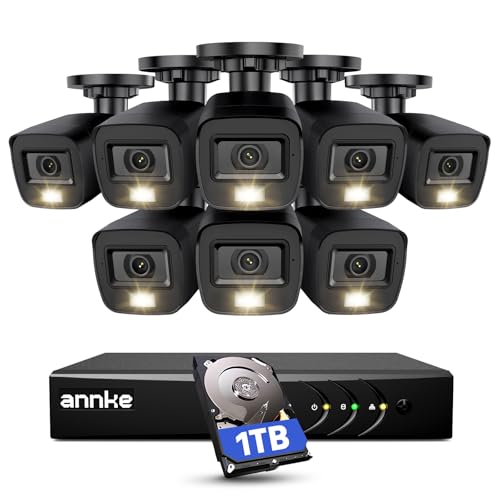
The ANNKE 3K Lite DVR is the outlier in this roundup, but it solves a problem the alarm kits do not. It is designed to record what is happening around the property, using eight outdoor cameras connected to an 8-channel DVR. The system includes a pre-installed 1TB hard drive for continuous recording, so it can preserve video rather than merely sending an alert when a door opens.
The cameras are 1080p, while the 8-channel 3K Lite DVR can connect with 1080p cameras at 30 frames per second or 3K and 5MP cameras at 20 frames per second. That compatibility gives the recorder room to work with other camera types later. H.265+ compression is intended to save storage space and bandwidth, which matters when recording continuously across several channels.
AI Motion Detection 2.0 can identify people and vehicles, and the system supports smart searching for those categories in recordings. That is more useful than scrolling through every motion event when you are trying to find a particular arrival. The cameras also have flexible night modes, with black-and-white infrared vision up to 100 feet and full-color night vision up to 66 feet.
For outdoor installation, the cameras are rated IP67 weatherproof. Their dual-light design uses infrared and white lights, and the system can send phone pushes when intruders are detected. These capabilities make the ANNKE a surveillance system, not a conventional alarm panel. It does not replace the immediate entry alerts and keypad controls provided by Ring Alarm or SimpliSafe.
The Ring Alarm 14-Piece Kit is the better choice for many doors and windows inside a larger home. SimpliSafe is easier to install if you want a wireless alarm with a panic button. ANNKE wins when the main question is not simply whether a sensor was triggered, but what a person or vehicle did around the property and when it happened.
The cost of that visibility is installation complexity. Eight wired cameras require planning cable routes and camera positions, and the DVR needs a suitable indoor location. The system is also less appropriate for someone who wants a compact apartment alarm. Pick ANNKE for a house, driveway, yard, or business where continuous recorded video matters more than a wireless sensor network.

How to choose best security systems for home
The right system starts with the threats and entry points you actually need to cover. These are the factors that separate a useful alarm from a box of disconnected sensors.
Entry-point coverage
Count the exterior doors, accessible windows, garage doors, and other openings before choosing a kit. Contact sensors are best for telling you that a specific door or window has opened, while a motion detector covers a broader interior area after someone is inside.
The Ring Alarm 5-Piece Kit includes only one contact sensor, while the Ring Alarm 8-Piece Kit includes four. The 14-Piece Kit includes eight, making it much better suited to a larger home. YISEELE also starts with four entry sensors, but it does not include motion detectors in its base kit.
Motion detection
Motion sensors cover rooms that do not have a contact sensor on every possible opening. Look for a stated detection range and field of view when available, then consider placement, pets, and the room’s shape.
SimpliSafe specifies a 35-foot range and a 90-degree field of view, with support for pets under 60 pounds. PGST includes two motion detectors in its seven-piece package. Arlo takes a different approach with 8-in-1 sensors that can serve several roles.
A door sensor tells you where an opening occurred. A motion sensor tells you that someone moved beyond the entry point.
Network and backup connection
A system that relies on an app needs a reliable path to the internet. Check whether it uses 2.4GHz Wi-Fi, whether it supports 5GHz, and whether it has cellular fallback.
PGST switches between 2.4GHz Wi-Fi and 4G when Wi-Fi disconnects. RenseCum supports 2.4GHz Wi-Fi and 2G or 4G, with a GSM card needed for voice call alerts. YISEELE uses 2.4GHz Wi-Fi and has a rechargeable backup battery in its hub. The Ring systems can add a way to keep the system online if Wi-Fi goes down through a compatible Ring Protect Plan.
Monitoring and emergency controls
App alerts tell you what the system detected, but they do not automatically mean a professional will respond. Check which functions require a subscription and whether the system includes a panic or SOS control.
Ring and SimpliSafe offer optional professional monitoring. Arlo lists professional monitoring and 24/7 emergency response among features that require a paid plan after its trial. SimpliSafe includes a panic button and silent panic option, while Arlo provides one-tap fire, police, and medical response buttons. PGST lists professional monitoring, but the available product information does not explain its service terms in detail.
Video and recording
Alarm kits and camera systems answer different questions. An alarm tells you that a sensor detected an opening or motion. A camera can show who or what caused the event, and a recorder can preserve that footage for later review.
ANNKE is the dedicated video option here, with eight cameras, an 8-channel DVR, a 1TB hard drive, AI person and vehicle detection, and continuous recording. The other products are primarily alarm systems. If you need both immediate alerts and visual evidence, plan to combine an alarm kit with a compatible camera system.

Frequently asked questions
Do home security systems need Wi-Fi?
Many smart alarm systems use Wi-Fi for app alerts and remote control, but not every product depends on Wi-Fi alone. PGST switches to 4G when its 2.4GHz Wi-Fi connection disconnects, while RenseCum supports 2G or 4G as well as Wi-Fi. Wired camera systems such as ANNKE use a DVR and camera cabling instead of operating like a Wi-Fi alarm.
Which system is best for a small apartment?
The Ring Alarm 5-Piece Kit is specifically positioned for condos and apartments, with a base station, keypad, one contact sensor, one motion detector, and a range extender. The YISEELE Smart Alarm is another compact wireless option with four door or window sensors and app alerts. Choose Ring if its ecosystem matters, or YISEELE if you want a larger starting set of entry sensors and future expansion.
Can these systems call emergency services?
Some products offer professional monitoring or emergency response, but the conditions vary. Ring requires a compatible Ring Protect Plan for 24/7 professional monitoring, while SimpliSafe requires 24/7 professional monitoring for dispatch through its panic button. Arlo lists professional monitoring and emergency response among subscription features. Confirm the current service terms before relying on any system for emergency response.
Are security cameras included with these alarm kits?
Most of the products in this roundup are alarm systems with sensors, keypads, hubs, and app alerts, not camera kits. The ANNKE 3K Lite DVR is the exception, with eight cameras, a DVR, a hard drive, and continuous recording. A sensor alarm and a camera recorder can complement each other, but they do not perform the same job.
Can renters install these systems?
Wireless kits are generally the easiest option for renters because several products use adhesive mounting or do not require wiring or drilling. SimpliSafe specifically describes a setup with no wiring or drilling, and YISEELE says its system requires no wiring. Check your lease and mounting rules before attaching sensors or cameras.
Do these systems work with voice assistants?
Ring Alarm supports Alexa for arming and disarming with a compatible Ring Protect subscription. PGST works with Alexa, while SimpliSafe works with Alexa and Google Assistant. YISEELE supports Alexa and Google Home. Voice commands should be treated as a convenience, not as a substitute for a keypad or emergency control.
The bottom line
The Best security systems for home need to match the property, not just the number of pieces on the box. Ring Alarm 8-Piece is the strongest all-around alarm for a smaller home because it combines a practical sensor mix, a keypad, a range extender, app alerts, and room to expand. Ring Alarm 14-Piece is the better choice for a larger house with more doors, windows, and floors to cover.
Choose SimpliSafe 8-Piece if clear DIY installation, a panic button, and optional monitoring matter most. Choose ANNKE 3K Lite DVR when recorded outdoor video is the central requirement, since none of the wireless alarm kits provides the same eight-camera coverage and continuous recording.
If you are undecided, map every entry point first, then decide whether you need an alarm notification, a professional response, recorded video, or all three.
As an Amazon Associate we earn from qualifying purchases.