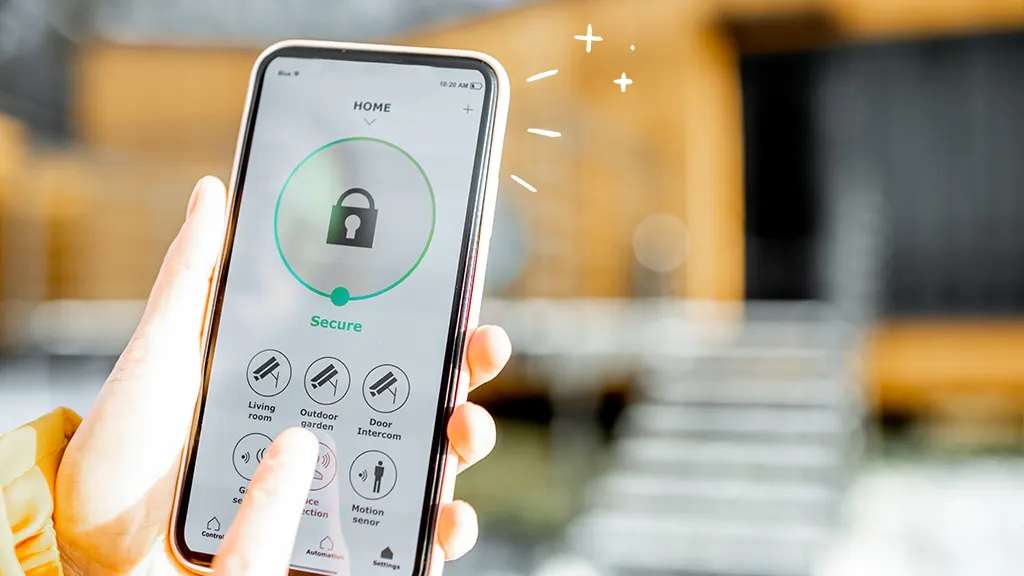

A security system is only useful when the doors are covered, everyone in the home can arm it, and an alert reaches you when something happens. That sounds simple until you compare tiny starter kits with systems designed for every window in a larger house.
The Best smart home security systems in this list range from compact apartment kits to expandable setups with cellular backup, touchscreens, motion detectors, and optional professional monitoring. Ring has the strongest all-around ecosystem, while several less familiar systems offer more included sensors and local control.
Ring Alarm 14-Piece is our top pick, with the other seven covering small homes, apartments, touchscreen control, cellular backup, and flexible DIY expansion.
Comparison table
| # | Product | Award | Kit and sensors | Connectivity | Best for |
|---|---|---|---|---|---|
| 1 | Ring Alarm 14-Piece | Best overall | 8 contact sensors, 2 motion detectors, 2 keypads | Ring app, Wi-Fi | Two to four bedroom homes |
| 2 | RenseCum 24-Piece Alarm | Best touchscreen starter kit | 24-piece kit, touchscreen, SOS controls | 2.4 GHz Wi-Fi, 2G/4G | Homes needing a simple central panel |
| 3 | PGST 7-Piece Alarm | Best compact cellular kit | 4 contact sensors, 2 motion detectors | 2.4 GHz Wi-Fi, 4G | One to two bedroom homes |
| 4 | YISEELE Wireless Alarm | Best loud-siren system | 4 contact sensors, remote, 120dB siren | 2.4 GHz Wi-Fi | DIY homes and apartments |
| 5 | Ring Alarm 8-Piece | Best Ring kit for small homes | 4 contact sensors, motion detector | Ring app, Wi-Fi | One to two bedroom homes |
| 6 | XUK 24-Piece Alarm | Best large-home coverage | 10 contact sensors, 5 motion detectors | 2.4 GHz Wi-Fi, 2G/4G | Large and multistory homes |
| 7 | X-Sense AS05 | Best minimalist kit | 2 contact sensors, motion detector, keypad | 2.4 GHz Wi-Fi, X-Sense app | Apartments and rentals |
| 8 | Ring Alarm 5-Piece | Best apartment starter kit | Contact sensor, motion detector, keypad | Ring app, Wi-Fi | Condos and apartments |
1. Ring Alarm 14-Piece: Best Overall

Pros
- Eight contact sensors cover many entry points
- Two keypads make access easier in larger homes
- Two motion detectors and a range extender are included
- Ring app provides mobile trigger notifications
- Expandable with additional Ring sensors and accessories
Cons
- Remote arming and cellular backup require a compatible Ring Protect Plan
- Alexa voice control also requires a Ring Protect subscription
- The larger kit may be more equipment than a small apartment needs
Best for: homeowners who want a polished, expandable alarm system for a two to four bedroom home.
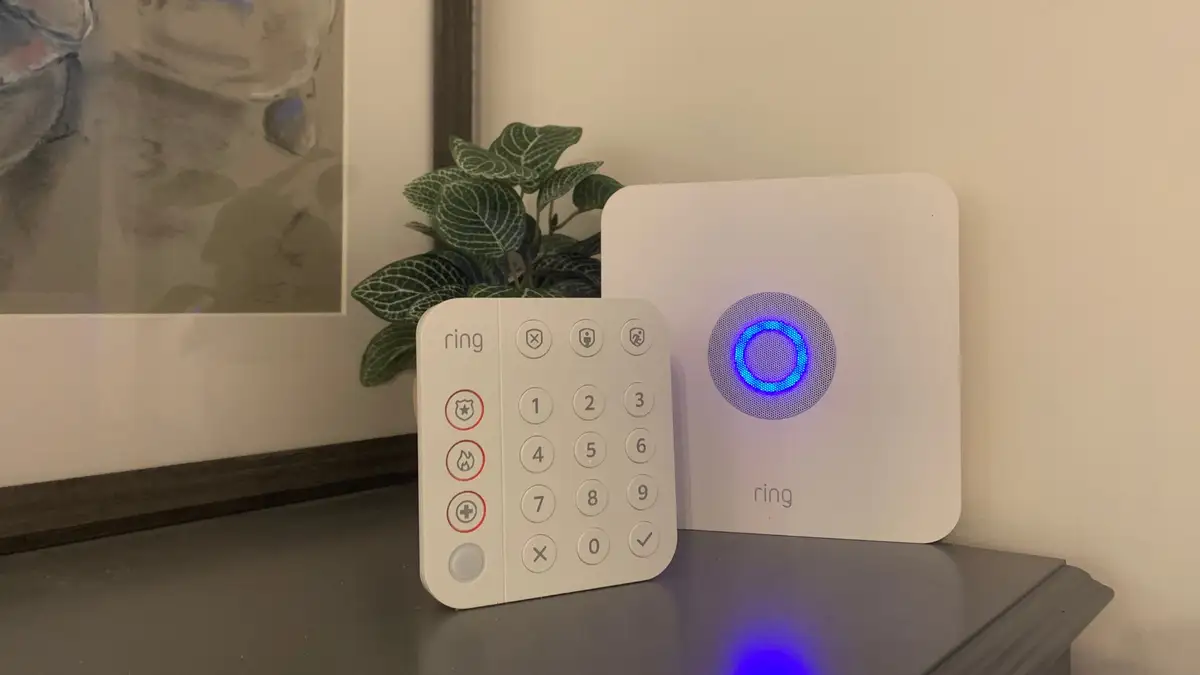
The Ring Alarm 14-Piece is the system we would choose for the widest range of ordinary homes. It arrives with one base station, two keypads, eight contact sensors, two motion detectors, and one range extender. That combination matters more than the headline piece count. Eight contact sensors let you cover exterior doors and a useful number of windows without immediately adding accessories, while two keypads make sense when the main entrance and another frequently used entry point are far apart.
Ring keeps the daily interaction straightforward. The keypad handles arming and disarming, and the contact sensors report when a protected door or window opens. The Ring app sends mobile notifications when the system is triggered and lets you monitor Ring devices from one place. Its base station is compact, measuring 4.13 inches long, 4.41 inches wide, and 0.75 inches high, so it does not need to dominate a shelf or entry table.
The important catch is the service model. Basic app notifications are listed as part of the system, but arming the alarm from anywhere, keeping it online if Wi-Fi fails, and 24/7 professional monitoring require a compatible Ring Protect Plan sold separately. Alexa voice arming and disarming also require that subscription. That makes Ring less self-contained than PGST, RenseCum, or XUK if you want cellular features without an added plan.
Compared with the Ring Alarm 8-Piece, this kit is a much better fit for homes with several exterior openings. The 8-Piece is tidier for one or two bedrooms, while the 5-Piece is more sensible for a condo or apartment. Ring also has a clear expansion path, with additional Alarm sensors and accessories available separately, which is useful if you move or add rooms.
Skip this model if your priority is a one-time setup with no subscription-dependent features, or if you only need to protect one entry door and a small living space. For a homeowner who wants a familiar app, multiple keypads, broad entry coverage, and room to grow, Ring Alarm 14-Piece is the most balanced choice in the roundup.
2. RenseCum 24-Piece Alarm: Best Touchscreen Starter Kit

Pros
- 4.3-inch color touchscreen shows status and alerts
- Factory-paired accessories simplify setup
- Supports app push alerts, phone calls, and SMS
- 2.4 GHz Wi-Fi and 2G/4G connectivity are supported
- SOS controls are placed on the base station, remote, and SOS button
Cons
- 5G networks are not supported
- GSM alerts require a GSM card
- The product information does not identify the individual sensor count
Best for: families who want a visible touchscreen panel and several ways to receive alerts.
The RenseCum 24-Piece Alarm takes a different approach from Ring. Its main attraction is not a broad ecosystem, but a central control panel that looks and behaves more like a dedicated home alarm. The 4.3-inch color touchscreen displays the system status, time, and alerts at a glance. A family member can tap Arm or Disarm without opening an app, which is useful for children, older adults, or anyone who does not want to manage security from a phone.
The accessories are factory-paired, and the setup is described as a three-step process through the system menu. That should make the first installation less intimidating than pairing every sensor individually. The kit supports Smart Life or Tuya App control, with push alerts or phone calls when motion or doors trigger the alarm. The base station, remote, and SOS button each provide an SOS control, giving this system a more explicit emergency interface than the compact Ring kits.
Connectivity is one of its stronger features. It supports 2.4 GHz Wi-Fi plus 2G/4G connectivity, and the listing says it can send app, SMS, or voice-call alerts when the home network goes down. A GSM card is needed for GSM-based communication. There is no 5G support, so buyers should confirm that the relevant cellular service works in their area before relying on the backup connection.
The 24-piece designation suggests a substantial bundle, but the supplied feature data does not spell out every individual component. That makes it harder to plan exact coverage than with Ring Alarm 14-Piece or XUK 24-Piece, whose sensor counts are clearly stated. Still, the touchscreen and multi-channel alert support make the RenseCum more approachable for a household that wants an alarm panel in a visible location.
The weakness is the limited information about the included accessories and the dependence on a compatible cellular card for some alerts. It is not the pick for someone building a highly documented, camera-centered ecosystem. Choose RenseCum 24-Piece Alarm when a simple local touchscreen, family-friendly controls, and Wi-Fi plus 4G connectivity matter most.
3. PGST 7-Piece Alarm: Best Compact Cellular Kit

Pros
- Includes four door and window sensors
- Two motion detectors suit a compact home
- Wi-Fi can switch to 4G when disconnected
- Supports Smart Life and Tuya app control
- Alexa compatibility and expandable sensors
Cons
- The kit is intended for one to two bedroom homes
- 2.4 GHz Wi-Fi is required
- Additional cameras and sensors are separate accessories
Best for: apartment and small-home owners who want cellular fallback in a compact kit.
The PGST 7-Piece Alarm is a small system with an unusually ambitious connectivity pitch. Its bundle includes one base station, one keypad, four door or window sensors, two motion detectors, and two remote controls. That is a practical split for a one to two bedroom home: contact sensors cover the main openings, while motion detectors add protection in rooms where a sensor cannot be mounted conveniently.
The keypad supports different defense modes, including stay, away, and emergency modes. Those modes are more useful than they may sound. Stay mode can protect entry points while people remain inside, while away mode can cover the home when everyone leaves. The Smart Life or Tuya app supplies mobile notifications and remote control, with no extra charge stated for those functions. Alexa compatibility adds voice control for arming and disarming.
PGST supports 2.4 GHz Wi-Fi and 4G, with automatic switching to 4G when Wi-Fi disconnects. The feature list also says the system provides 24/7 professional monitoring. Buyers should read the current service terms carefully, because the same listing describes no subscriptions or monthly charges while also using professional-monitoring language. The product is better understood as a self-managed alarm with a claimed cellular fallback unless the exact monitoring arrangement is confirmed.
The compact dimensions and 0.45-pound listed weight make the base hardware easy to place, though the listing does not provide a detailed base-station size breakdown. The system can expand with additional sensors, and PGST cameras can be added to create a visual monitoring setup. That gives it more growth potential than the fixed-feeling starter kits, although it does not offer Ring's more established app ecosystem.
Ring Alarm 5-Piece is simpler for a condo with one principal entrance, and X-Sense AS05 has a cleaner minimalist kit with a dedicated keypad. PGST wins when four contact sensors and two motion detectors are the more important starting point. Skip it if your home needs a large number of covered windows immediately, or if you want a clearly documented professional-monitoring plan. For a small home needing Wi-Fi and cellular connectivity, PGST 7-Piece Alarm is a capable compact option.
4. YISEELE Wireless Alarm: Best Loud-Siren System

Pros
- 120dB siren is designed for a strong local warning
- Supports Smart Life app alerts and event records
- Works with Alexa and Google Home
- Includes four door and window sensors
- Supports up to 100 accessories
Cons
- Only 2.4 GHz Wi-Fi is supported
- The kit includes one remote control
- Remote control and app functions depend on the wireless network
Best for: DIY users who want a loud local alarm and broad accessory expansion.
The YISEELE Wireless Alarm makes the siren its headline feature, and the 120dB rating gives this system a clear identity. A loud local alarm can alert people inside the home quickly and may discourage an intruder from lingering. The kit includes one alarm hub with a built-in rechargeable backup battery, four door and window sensors, and one remote control. It is a straightforward starting layout for an apartment, house, garage, office, or small business.
Setup is designed around the Smart Life app and a direct 2.4 GHz Wi-Fi connection. The app can arm or disarm the system, show event records, and send an instant push notification when a sensor is triggered. The remote has a one-touch SOS function, and Alexa or Google Home can be used for Away Arm, Home Arm, and Disarm modes. Voice control is convenient, but physical controls remain important when a phone is unavailable or an emergency is unfolding.
The 433 MHz wireless signal used by the magnetic sensors is described as stable and suitable for doors, windows, safes, and storage rooms. That is a useful distinction from the hub's Wi-Fi connection. The sensors communicate with the alarm system locally, while the app requires 2.4 GHz Wi-Fi. The hub also supports up to 100 accessories, including more contact sensors, motion detectors, smoke detectors, water leak sensors, wireless keypads, remote controls, and outdoor sirens.
YISEELE is more flexible than Ring Alarm 5-Piece if you expect the system to grow beyond basic entry protection. Its built-in backup battery is another useful detail, particularly for a hub placed in a home where short power interruptions are possible. It does not, however, provide the same stated Wi-Fi plus 4G fallback as PGST, RenseCum, or XUK. If your internet connection drops, you should not assume app alerts will continue without a cellular feature.
The 120dB siren is also the reason some people should skip this model. In a small apartment, a very loud alarm may be unpleasant for occupants and neighbors, and the product does not include the broad collection of sensors found in the XUK 24-Piece Alarm. For people who want a powerful local deterrent, Smart Life control, and room to add accessories, YISEELE Wireless Alarm is the strongest fit.
5. Ring Alarm 8-Piece: Best Ring Kit for Small Homes

Pros
- Four contact sensors cover the main openings in a small home
- Includes a motion detector and range extender
- Ring app provides mobile trigger notifications
- Optional 24/7 professional monitoring is available
- Expandable with additional Alarm accessories
Cons
- Remote arming and Wi-Fi fallback require a Ring Protect Plan
- Alexa control requires a compatible subscription
- Less suitable for homes with many exterior windows
Best for: one to two bedroom homes already using Ring devices.
The Ring Alarm 8-Piece is the sensible middle ground in Ring's lineup here. It includes one base station, one keypad, four contact sensors, one motion detector, and one range extender. Ring describes it as a fit for one to two bedroom homes, and that sizing is persuasive. It gives a small house or apartment enough entry coverage to be useful without placing a large collection of unused hardware in a drawer.
The keypad provides the physical control point, while contact sensors detect doors and windows opening. The motion detector covers a room or passage where an entry sensor is not practical. The range extender can help the wireless system reach farther through the home. Ring does not list a detailed range figure in the supplied data, so placement still matters, especially in older homes with dense walls.
The Ring app is the main advantage over many generic alarm kits. It sends mobile notifications when the system is triggered and lets users monitor Ring devices in the same app. A compatible Ring Protect Plan adds remote arming, connectivity if Wi-Fi goes down, and 24/7 professional monitoring for emergency police, fire, and medical response. Alexa arming and disarming also require a Ring Protect subscription.
Compared with Ring Alarm 14-Piece, this kit gives up four contact sensors, one motion detector, and a second keypad. That is a meaningful difference for larger houses, but it is exactly why the 8-Piece works better in a compact floor plan. The Ring Alarm 5-Piece is even smaller and targets condos and apartments, though the 8-Piece provides more useful coverage for a small detached home.
The main limitation is the same service dependency that affects the other Ring kits. If you want cellular backup and remote features without subscribing, PGST 7-Piece or XUK 24-Piece is a better match on paper. Choose Ring Alarm 8-Piece for a tidy small-home installation, especially when other Ring products are already part of the household.
6. XUK 24-Piece Alarm: Best Large-Home Coverage

Pros
- Ten door and window alarms cover many entry points
- Five PIR motion detectors suit larger rooms and multiple floors
- 4.3-inch color touchscreen offers clear local control
- Wi-Fi and 2G/4G connectivity are supported
- Supports up to 100 sensors and 10 RFID keychains
Cons
- SMS and voice intercom require a SIM card
- 5G is not supported
- The large bundle may be excessive for a small apartment
Best for: homeowners who need extensive sensor coverage across a large or multistory property.
The XUK 24-Piece Alarm is the most fully populated kit in this group for a large home. Its bundle includes a central unit with a 4.3-inch color touchscreen, five PIR motion detectors, ten door and window alarms, one 120dB siren, one SOS emergency button, three remote controls, and three RFID keychains. That combination is aimed at houses with many openings, multiple rooms, or more than one floor.
The touchscreen displays system status, time, and alerts, while the app, remote controls, and RFID cards provide other ways to manage the alarm. Having four control methods is useful in a busy household. A resident can use the panel at home, a remote at an entry point, the app when away, or an RFID keychain for quick access. Alexa and Google Assistant integration add voice management, although voice commands should not replace a physical control method in an emergency.
XUK supports 2.4 GHz Wi-Fi and 2G/4G connections. The feature list says app notifications, SMS, or voice calls can continue through a cellular connection, but SMS notifications and voice intercom require a SIM card. The system also includes integrated battery backup, which is helpful for keeping the alarm active during a power interruption. As with other cellular alarm systems, local network and carrier compatibility should be checked before installation.
The expansion ceiling is unusually high. XUK says the system supports up to 100 sensors and 10 RFID keychains, leaving room to add coverage later. It is a better starting point than Ring Alarm 14-Piece when the immediate need is ten entry sensors and five motion detectors, rather than a branded ecosystem. Ring remains the easier recommendation for users already invested in Ring devices or who want a more familiar app.
The compromise is physical scale and setup complexity. Ten sensors, five motion detectors, remotes, RFID tags, and a separate siren require careful planning so the motion detectors do not create unnecessary alerts. The touchscreen is also much more hardware than a small apartment needs. Pick XUK 24-Piece Alarm when broad multiroom coverage is the priority and you are comfortable managing a more involved DIY installation.
7. X-Sense AS05: Best Minimalist Kit

Pros
- Compact five-piece layout is easy to plan
- Includes a keypad and base station
- App supports Home, Away, and Disarm modes
- Automatic schedules and Alexa routines are supported
- Expandable with up to six keypads and 44 additional devices
Cons
- Only 2.4 GHz Wi-Fi is supported
- The starter set has just two door sensors
- App operation depends on the included base station
Best for: renters, dorm rooms, bedrooms, and small apartments that need a simple alarm foundation.
The X-Sense AS05 is the least intimidating system here. The five-piece set contains one base station, two door sensors, one motion sensor, and one keypad. That is enough to protect a main door, another opening, and a central room without turning a small apartment into a sensor installation project.
The X-Sense Home Security App handles remote monitoring and control. Users can switch between Home, Away, and Disarm modes, and automatic schedules can make the system protect the home at predictable times. The keypad includes a panic button, and the feature list says multiple passwords are supported. Those details make the AS05 more practical for shared homes than a system controlled only from one person's phone.
Installation can use the included adhesive tape or screws. Tape is convenient for rentals and temporary rooms, while screws provide a more permanent mounting option. The system connects through the included base station and works only with 2.4 GHz Wi-Fi, not 5 GHz. That is common among these DIY alarms, but it is worth checking the router before choosing a location.
X-Sense says the system can expand with door and window sensors, motion detectors, keypads, water leak sensors, and thermo-hygrometers. It supports up to six keypads and 44 additional devices, so the modest starter kit does not force a replacement when the home changes. Alexa integration can switch security modes, check device status, and trigger motion sensor schedules through Alexa Routines.
Ring Alarm 5-Piece is a direct rival with a similar compact footprint, plus Ring's wider device ecosystem and optional professional monitoring. X-Sense is more appealing if you prefer automatic schedules and a simple dedicated kit, but it does not list cellular backup. Skip it if you need extensive window coverage immediately or want the alarm to remain connected during an internet outage.
For a rental, dormitory, bedroom, or small apartment, X-Sense AS05 keeps the essentials visible and manageable. It is the system to choose when a low-complexity installation matters more than a large initial sensor bundle.
8. Ring Alarm 5-Piece: Best Apartment Starter Kit

Pros
- Compact kit is designed for condos and apartments
- Includes a keypad, contact sensor, motion detector, and range extender
- Ring app provides mobile notifications
- Optional professional monitoring is available
- Additional Ring Alarm accessories can be added later
Cons
- Only one contact sensor is included
- Remote features depend on a Ring Protect Plan
- Alexa voice control requires a compatible subscription
Best for: condo and apartment residents protecting a small number of key entry points.
The Ring Alarm 5-Piece is the cleanest starting point for a compact living space. The bundle includes one base station, one keypad, one contact sensor, one motion detector, and one range extender. Ring specifically positions it for condos and apartments, where there may be one main entry door and limited control over windows or exterior access points.
The kit's small footprint makes planning easy. Put the keypad near the entrance, use the contact sensor on the principal door, and position the motion detector in a central area. The range extender helps the wireless components communicate across the home. The supplied data does not specify sensor range, so avoid assuming the extender eliminates every placement concern in a large or heavily partitioned apartment.
The Ring app sends mobile notifications when the system is triggered and brings Ring devices together in one interface. A compatible Ring Protect Plan can add remote arming, connectivity when Wi-Fi goes down, and 24/7 professional monitoring for police, fire, and medical response. Alexa voice arming and disarming also require the plan. The system therefore works as a basic local and app-controlled alarm, but its more advanced features are subscription-linked.
The limitation is obvious when compared with the rest of this list: one contact sensor cannot cover many doors and windows. X-Sense AS05 includes two door sensors, while PGST 7-Piece includes four contact sensors and two motion detectors. The Ring 5-Piece makes sense only when the apartment's layout is genuinely compact or when you expect to add Ring accessories soon.
Its expansion path and approachable app are the reasons to consider it. Its narrow initial coverage is the reason to skip it for a house or a larger apartment. If your main need is a keypad and one protected entrance in a condo, Ring Alarm 5-Piece is the neatest Ring starting point.

How to choose best smart home security systems
The right alarm system is determined by the home's entry points, the way people will arm it, and what happens when Wi-Fi or power fails. Start with coverage, then decide how much app control, cellular backup, and expansion you genuinely need.
Entry sensors and motion coverage
Contact sensors are the first line of protection for exterior doors and accessible windows. Count those openings before choosing a kit. Ring Alarm 5-Piece has one contact sensor, while Ring Alarm 14-Piece has eight, and XUK 24-Piece has ten.
Motion detectors fill gaps in rooms where a sensor is impractical. They are especially useful in hallways, living rooms, and large spaces, but placement matters around pets, heating vents, and frequently occupied areas. A kit with more sensors is not automatically better if the home has nowhere sensible to install them.
Keypads and local controls
A keypad gives everyone in the household a physical way to arm or disarm the system. The RenseCum and XUK systems add 4.3-inch touchscreens, while X-Sense AS05 and the Ring kits use more conventional keypad control.
Remote controls, RFID keychains, and SOS buttons can make an alarm easier for children, older adults, and guests to use. App-only control is convenient when away from home, but a physical control point remains important when a phone is misplaced or unavailable.
A system that nobody can arm quickly is not secure, no matter how many sensors are in the box.
Wi-Fi and cellular backup
Most systems here use 2.4 GHz Wi-Fi, and several explicitly do not support 5 GHz. Cellular backup is available in the PGST, RenseCum, and XUK feature sets through 2G/4G connections. XUK and RenseCum specify that a SIM or GSM card is needed for some SMS and voice functions.
Check the carrier support and signal at the installation address before relying on cellular alerts. Ring's Wi-Fi fallback and related remote features require a compatible Ring Protect Plan, so the system's service terms matter as much as its hardware.
App alerts and smart-home control
An app should make status checks and alarm notifications clear rather than burying them in menus. Ring uses the Ring app, X-Sense uses the X-Sense Home Security App, and PGST and YISEELE reference Smart Life or Tuya App control.
Alexa compatibility appears across several systems, while YISEELE and XUK also list Google Home or Google Assistant support. Voice commands are useful for ordinary arm and disarm routines, but keep a keypad or remote available for emergencies.
Expansion and system boundaries
Expansion determines whether a starter kit can follow you to a larger home. YISEELE supports up to 100 accessories, XUK supports up to 100 sensors and 10 RFID keychains, and X-Sense AS05 supports up to six keypads and 44 additional devices.
Ring also supports additional Alarm sensors and accessories, with a broader branded ecosystem. If you expect to add cameras, leak sensors, smoke detectors, or more entry sensors, confirm that the accessories you want are supported before installing the hub.
For homes where cameras matter as much as alarms, consider how the system will pair with cameras that provide a wider view of the property. A door sensor can tell you that an entry opened, but a camera may provide useful visual context.
Frequently asked questions
Do these systems include security cameras?
No. The listed kits are alarm systems built around hubs, keypads, contact sensors, motion detectors, remotes, or sirens. PGST says compatible cameras can be added separately, and YISEELE lists several additional accessory types, but no camera is included in these bundles.
Do all of these alarms require a monthly subscription?
No. The product features for PGST, RenseCum, YISEELE, XUK, and X-Sense describe app functions without a monthly charge or subscription. Ring lists optional Ring Protect Plans for features such as remote arming, Wi-Fi fallback, professional monitoring, and Alexa voice control.
Which system is suitable for a large house?
XUK 24-Piece has the broadest stated starting coverage, with ten door and window alarms and five PIR motion detectors. Ring Alarm 14-Piece is another strong fit, with eight contact sensors, two motion detectors, two keypads, and a range extender.
Can these systems work if home Wi-Fi fails?
PGST, RenseCum, and XUK list 2G/4G connectivity for backup or additional alerts, though some functions require a SIM or GSM card. Ring lists keeping the system online if Wi-Fi goes down as a Ring Protect Plan feature. YISEELE and X-Sense use 2.4 GHz Wi-Fi in the supplied product information and do not list cellular backup.
Are these systems suitable for apartments?
Yes, but the right kit depends on the number of entry points. Ring Alarm 5-Piece and X-Sense AS05 are compact choices, while Ring Alarm 8-Piece suits a larger apartment or one to two bedroom home. A system with a 120dB siren, such as YISEELE Wireless Alarm, may be more disruptive in a building with close neighbors.
Can I expand a starter kit later?
Several can be expanded. Ring supports additional Alarm sensors and accessories, YISEELE supports up to 100 accessories, XUK supports up to 100 sensors and 10 RFID keychains, and X-Sense AS05 supports up to 44 additional devices plus six keypads.
What should I add if I need outdoor monitoring?
These alarm kits focus on indoor entry and motion detection. Outdoor coverage usually requires a compatible camera or dedicated outdoor sensor, so compare the features that matter for cameras outside before extending the system beyond doors and windows.
The bottom line
The Best smart home security systems pick is Ring Alarm 14-Piece because its eight contact sensors, two motion detectors, two keypads, app control, and expansion path suit the broadest range of homes. Its weakness is the Ring Protect subscription requirement for remote arming, Wi-Fi fallback, professional monitoring, and Alexa voice control.
Choose XUK 24-Piece Alarm for a large or multistory home that needs extensive sensor coverage and several control methods. For a smaller home, Ring Alarm 8-Piece is the more manageable Ring option, while X-Sense AS05 is a tidy choice for renters and apartments.
If you are undecided, count the doors and windows first, then choose the smallest kit that covers them with room to expand.
As an Amazon Associate we earn from qualifying purchases.