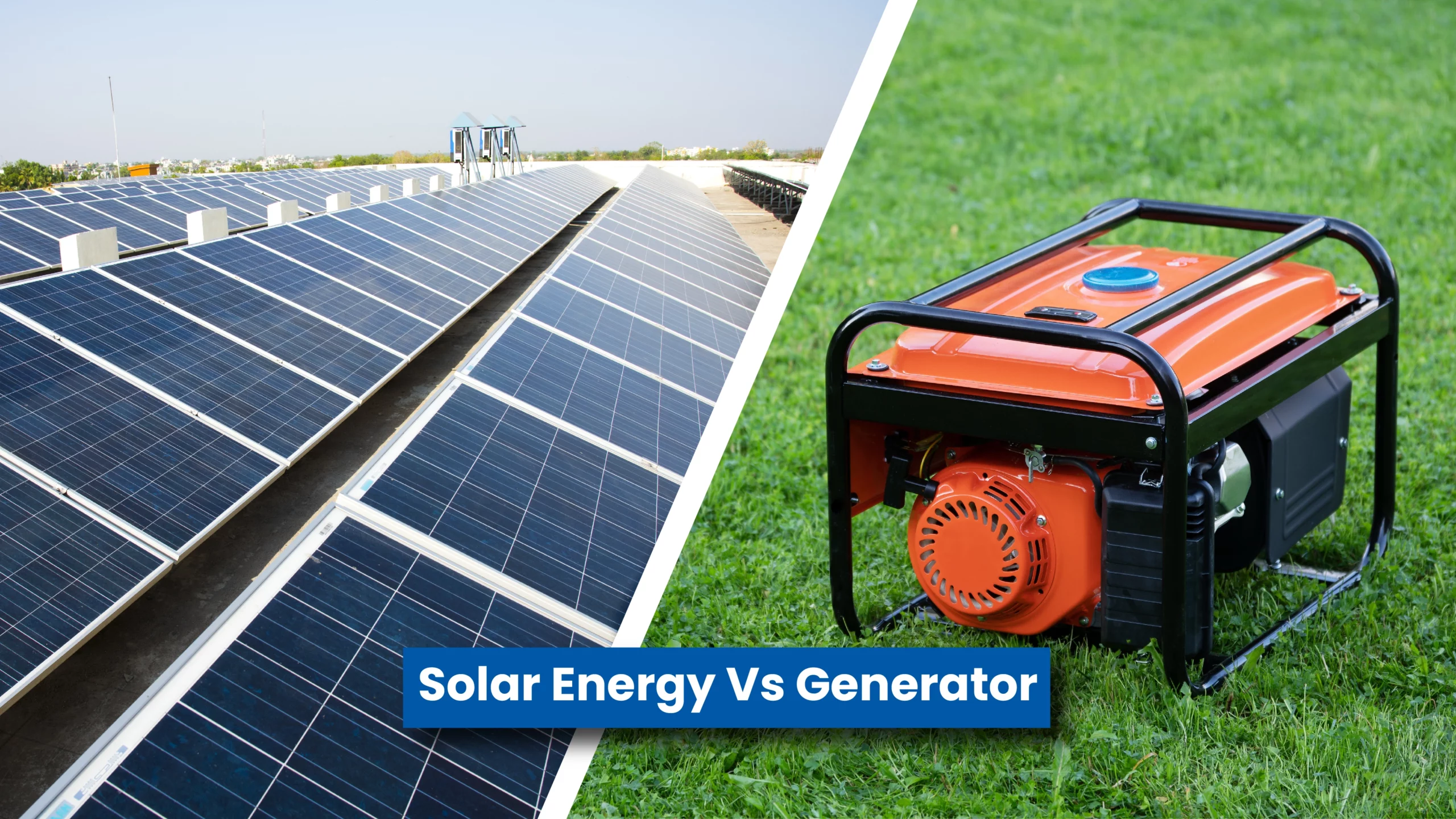

A solar generator has one job that small battery packs cannot handle: keeping useful equipment running after the outlets go dark. The challenge is separating a genuinely capable power station from a compact charger with a solar panel attached. The output rating, battery capacity, inverter type, panel size, and carrying weight all matter, and they matter in different ways.
Our Best solar powered generators picks range from the 23.8-pound Jackery for serious backup power to tiny MARBERO stations intended for phones, lights, and other small electronics. There are also several 200W and 300W middleweights suited to camping and short outages.
The Jackery Explorer 1000 v2 is the best all-around choice, while the ten picks below cover everything from lightweight emergency charging to high-output home backup.
| # | Product | Award | Battery capacity | AC output | Best for |
|---|---|---|---|---|---|
| 1 | Jackery Explorer 1000 v2 | Best overall | 1, 070Wh | 1, 500W, 3, 000W surge | Home backup and serious camping |
| 2 | MARBERO M82MAX 111Wh | Best lightweight kit | 111Wh | 80W, 120W peak | Phones and small electronics |
| 3 | ZeroKor 300W Generator | Best 60W panel bundle | Not stated | 300W maximum | Flexible camping charging |
| 4 | MARBERO M823 237Wh | Best pure sine wave midrange | 237Wh | 300W, 375W peak | Sensitive electronics and overnight trips |
| 5 | Apowking 100W Generator | Best compact 100W station | 146Wh | 100W, 200W peak | Backpacking and basic backup |
| 6 | BLAVOR S1600 | Best high-output backup | 1, 024Wh | 1, 600W, 3, 200W surge | Appliances and outages |
| 7 | Apowking HP200L | Best quiet 300W station | 220Wh | 300W, 600W peak | Tents, CPAP, and small appliances |
| 8 | Powkey 200W Generator | Best portable pure sine wave option | 146Wh | 200W | Cameras, laptops, and phones |
| 9 | MARBERO M822MAX 172Wh | Best compact 200W station | 172Wh | 200W, 270W peak | Overnight trips |
| 10 | MARBERO M82 88Wh | Best ultra-light emergency kit | 88.8Wh | 80W, 120W peak | Hiking and emergency lighting |
1. Jackery Explorer 1000 v2: Best Overall

Pros
- 1, 500W AC output handles substantially more than small stations
- 1, 070Wh LFP battery
- Fast charging modes and useful app control
- Three pure sine wave AC outlets
- 23.8-pound body with a foldable handle
Cons
- Larger and heavier than the compact picks
- The solar panel reaches only 80 percent after six hours under the stated charging conditions
- One-hour charging requires emergency mode in the app
Best for: someone who wants one power station for outages, appliances, and extended camping.
The Jackery Explorer 1000 v2 is the one that feels like a proper backup battery rather than an emergency phone charger. Its 1, 070Wh capacity gives it a much wider range of jobs than the MARBERO M823 or either Apowking 300W model. It is still portable enough for a campsite, but the 23.8-pound body makes clear that this is aimed at equipment and appliances, not just handheld electronics.
The 1, 500W AC output, with a 3, 000W surge peak, is the key distinction. That gives it room for appliances such as refrigerators, air conditioners, and electric pots, provided their actual startup and running demands fit within those limits. Three pure sine wave AC outlets are useful for sensitive electronics, and the station also has two USB-C ports, one USB-A port, and a DC car port. One USB-C connection supports 100W power delivery, which is enough to charge many laptops without carrying a separate brick.
Charging flexibility is unusually strong here. The included 200W solar panel can bring the station to 80 percent in six hours under the stated conditions. Wall charging defaults to a 1.7-hour mode, or the Jackery app can enable a one-hour emergency charge. That faster mode is useful when a storm is approaching, but it is not the station's default, and the app must be set before each charge. A 30 dB quiet overnight mode is a thoughtful touch for bedrooms and tents.
The LFP battery is rated to retain more than 70 percent of its original capacity after 4, 000 charge cycles. That is a meaningful durability claim for a station expected to sit ready for emergencies and then work hard during an outage. The weakness is straightforward: this is considerably less convenient to carry than the 5-pound Apowking HP200L, and the included panel and station ship separately according to the listing.
Choose the Explorer 1000 v2 when you want high output, a large battery, and controls that make the station easier to manage. For phones and lights, it is more machine than most people need. For keeping several meaningful loads alive, it is the clearest top pick.
2. MARBERO M82MAX 111Wh: Best Lightweight Kit

Pros
- Extremely small station and foldable panel
- Four USB-A ports plus USB-C
- Two AC outlets for light loads
- 21.5 to 23.5 percent stated panel conversion rate
- Includes car and wall charging accessories
Cons
- AC output is limited to 80W
- 111Wh capacity is modest
- The listed station weight differs between the features and product information
Best for: campers and travelers who mainly need to recharge phones, tablets, lights, and other small electronics.
The MARBERO M82MAX 111Wh is built around portability. The listing gives the station dimensions as 6.5 by 3.2 by 4.6 inches and the folded panel dimensions as 8.3 by 12 by 1.18 inches. That makes this a much easier kit to tuck into a day bag than the Jackery or BLAVOR. The feature list says the station weighs 2.3 pounds, while the product information lists 3.5 pounds, so buyers should expect a small but noticeable discrepancy.
Its 111Wh lithium battery is suited to personal electronics rather than appliances. Four USB-A ports and one USB-C port let a group charge phones or lights at once, while the two 110V AC outlets provide 80W of rated output and 120W at peak. That is enough for modest chargers and small loads, but not for heating elements, coffee makers, hair dryers, or other demanding equipment. The 120W DC port gives the station another route for compatible gear.
The included 30W foldable panel has a stated conversion range of 21.5 to 23.5 percent and uses a smart chip to manage charging and protection. It can recharge the station away from an outlet, though a panel this size is intended for topping up a small battery, not rapidly refilling a large one. The kit includes an AC adapter, a cigarette lighter output, and the panel, so it is ready for car travel and simple campsite use.
Compared with the MARBERO M82 at number ten, this model has more battery capacity, a stronger DC output, and a larger solar panel. The Powkey 200W Generator is a better fit for laptop and camera users who need pure sine wave AC, but it is a larger design. The M82MAX is the more natural choice when the station itself must disappear into a backpack.
The limitation is its low AC ceiling. The two outlets may look reassuring, but their combined capability remains firmly in the small-electronics class. Pick the M82MAX for charging several personal devices and running small lights, not for home backup or appliance use.
3. ZeroKor 300W Generator: Best 60W Panel Bundle

Pros
- Includes a 60W monocrystalline solar panel
- 300W AC capability
- Multiple AC, USB, and DC outputs
- Built-in MPPT solar charging
- Flashlight includes reading and SOS modes
Cons
- The battery capacity is not stated in the supplied information
- Devices above 300W should not be connected
- The panel junction box must be kept dry
Best for: campers who want a broad selection of charging ports and a larger panel without moving to a heavy power station.
ZeroKor's 300W Generator is an appealing middle ground because the package includes a 60W panel rather than the smaller panels bundled with several compact stations. The station measures 8.5 by 6.7 by 4.1 inches and weighs 5.08 pounds. That remains manageable for car camping, while the 60W panel gives solar charging a better chance of keeping up with regular small-device use.
The output selection is generous. There are two 300W maximum AC outlets, a DC port rated at 9V to 12.6V and up to 10A, three standard USB ports, and a quick-charge USB port. That arrangement works well for phones, tablets, cameras, headphones, lights, and laptops. The listing specifically warns against loads above 300W, especially devices with heating elements or built-in compressors, so this is not a coffee-maker or hair-dryer station.
Solar charging uses the station's built-in MPPT controller, and the panel is a 60W monocrystalline design with a stated 20.5 percent conversion efficiency. It also has USB-A, USB-C, and DC outputs, which means the panel can charge smaller devices directly. The junction box is not waterproof, however, so the panel needs careful placement in damp conditions. That is a practical detail easy to overlook when planning outdoor use.
The built-in battery management system covers short circuit, over-current, over-voltage, overload, and overheating protection. A cooling fan starts and stops according to internal temperature. The ZeroKor therefore offers more active protection and output flexibility than the 111Wh MARBERO M82MAX, while the MARBERO M823 provides a stated battery capacity and pure sine wave AC.
The largest omission is the lack of a supplied battery capacity figure. That makes it harder to predict runtime than with the other stations here. It is still a sensible choice for buyers who care most about a 60W solar input package, broad port selection, and a 300W output ceiling.
4. MARBERO M823 237Wh: Best Pure Sine Wave Midrange

Pros
- 237Wh battery gives it useful overnight capacity
- 300W pure sine wave AC output
- 60W foldable solar panel included
- USB-C and QC3.0 charging ports
- Flashlight has flashlight, strobe, and SOS modes
Cons
- The listed product dimensions are unusually large for this class
- Output above 300W can damage the station
- Solar setup requires choosing the correct DC adapter
Best for: overnight camping and sensitive electronics that need clean AC power.
The MARBERO M823 is the most capable of the smaller MARBERO stations in this group. Its 237Wh battery gives it more breathing room than the M82MAX 111Wh and M822MAX 172Wh, especially when a trip extends beyond a single day. The listing describes it as a station for phones, tablets, laptops, headphones, and similar equipment, which is the right way to think about it.
Its two AC outlets use a pure sine wave inverter rated for 300W, with a 375W peak. That matters for sensitive electronics and makes the M823 a more reassuring laptop and camera companion than a station whose inverter type is not stated. Two QC3.0 USB-A ports can provide up to 18W each, two more USB-A ports provide up to 15W, and the USB-C port supports up to 18W PD. The DC output is rated up to 14A and 200W, giving compatible 12V equipment a useful alternative to AC.
The included foldable panel is rated at 60W and claims 21.5 to 23.5 percent conversion efficiency. A smart chip is intended to recognize the connected device and manage charging, while the setup instructions call for connecting the panel, selecting the correct DC adapter, and placing the panel in direct sunlight. That is not difficult, but it is less plug-and-play than the ZeroKor's simpler panel arrangement.
MARBERO lists three flashlight modes, which are useful during a campsite setup or an outage. The station's quoted product dimensions are 16 by 12 by 10 inches, an unusual figure for a 237Wh unit and one that makes it difficult to compare physically with the compact 5-pound stations. The listing does not provide a product weight, so this is not the model to choose when exact carry weight is a deciding factor.
The M823 beats the smaller MARBERO units on runtime and inverter capability. The Apowking HP200L is lighter and includes a brighter area light, while the M823 offers more battery capacity and a larger panel. Skip the M823 if you need to run heating appliances or if a compact, clearly documented physical design matters more than pure sine wave AC.
5. Apowking 100W Generator: Best Compact 100W Station

Pros
- 146Wh battery in a 3.3-pound body
- 40W monocrystalline panel included
- Seven output connections
- Dual LED flashlight with three modes
- Ten DC connectors supplied with the panel
Cons
- AC output is limited to 100W
- 200W peak leaves little room for demanding startup loads
- The panel is not a fast match for the battery's full capacity
Best for: anyone who wants a light kit for phones, cameras, laptops, fans, and small lights.
The Apowking 100W Generator is a straightforward small station with a useful battery-to-weight ratio. Its 146Wh capacity is larger than the MARBERO M82MAX's 111Wh, while the station weighs 3.3 pounds and measures 7.5 by 3.7 by 6.1 inches. It is a practical size for a backpack, emergency drawer, or vehicle kit.
Two 110V AC outlets support devices within 100W, with 200W peak output. The other connections are better suited to everyday electronics: two USB outputs, a quick-charge USB 3.0 connection, a USB-C connection, and a 12V DC output rated up to 10A. Phones, tablets, cameras, drones, GPS units, and lights fit the intended workload. A laptop charger is also plausible if its draw stays below the AC limit.
The bundled 40W panel uses monocrystalline cells with a stated 20.5 percent conversion efficiency. Ten DC connectors expand compatibility with other portable stations, although the buyer should still verify voltage and connector fit before using it with another device. The station can also recharge from a wall outlet or car connection, and the dual LED flashlight adds strobe and SOS modes for nighttime use.
Battery management covers voltage and temperature control, while rear cooling vents help manage heat. Those are sensible protections for a small enclosure, but the 100W ceiling remains the defining limitation. The Powkey 200W Generator offers twice the stated AC output and pure sine wave power, while the Apowking is easier to carry and has the larger listed battery.
This is not a home backup station. It is a lightweight personal power kit that can keep essential electronics going and provide light when an outlet is unavailable. Choose it when portability matters more than running larger equipment.
6. BLAVOR S1600: Best High-Output Backup

Pros
- 1, 024Wh LiFePO4 battery
- 1, 600W rated output and 3, 200W surge
- Built-in 40W foldable solar panel
- 100W two-way USB-C port
- Four charging methods and LCD status display
Cons
- 26-pound weight limits portability
- The built-in panel is relatively small for the battery
- The station has a tall 17.2-inch listed dimension
Best for: home outage backup, RV use, and camping with appliances that exceed small-station limits.
The BLAVOR S1600 is the other serious backup option in this lineup. Its 1, 024Wh LiFePO4 battery is close to the Jackery's capacity, but the 1, 600W rated output gives it a little more headroom for appliances. The 3, 200W surge rating is designed to handle short startup demands, which is important for equipment such as refrigerators. It weighs 26 pounds, so it belongs in a vehicle, RV, or fixed backup spot more than a hiking pack.
BLAVOR says the station can power coffee makers, CPAP machines, refrigerators, and other household equipment. Eight outlets support simultaneous use, and the 100W USB-C port can both charge devices and accept power into the station. The LCD display shows input, output, and remaining battery information, giving the user a much clearer picture of what is happening than a basic row of indicator lights.
The standout physical feature is the built-in 40W foldable solar panel. It means solar charging is always available without carrying a separate panel, and the station can also accept external solar panels for faster charging. Wall, car, built-in panel, and external solar charging give it more options than the Jackery package, although the small built-in panel will not rapidly refill a battery of this size.
The LiFePO4 cells are rated for more than 3, 500 charge cycles, with the listing claiming 80 percent capacity after 4, 000 or more cycles. A smart battery management system protects against overheating, overload, and short circuits. The fixed handle and foldable stand make setup easier, but the 26-pound weight and tall listed dimensions are genuine obstacles for anyone who moves camp frequently.
The Jackery Explorer 1000 v2 is lighter and has a larger separate solar panel, while the BLAVOR offers higher AC output and an integrated panel. That makes the choice fairly clear. Pick BLAVOR for appliance capability and built-in solar convenience. Skip it if your main loads are phones and laptops, where a smaller station is much easier to carry.
7. Apowking HP200L: Best Quiet 300W Station

Pros
- 220Wh battery in a 5-pound station
- 300W rated output and 600W peak
- Two pure sine wave AC outlets
- Seven ports can operate at once
- Large-area LED light with stated 30-plus-hour runtime
Cons
- The 40W panel is modest for extended high-use charging
- Output remains unsuitable for large appliances
- Battery capacity is lower than the MARBERO M823
Best for: quiet tent use, CPAP backup, and small groups charging several devices.
The Apowking HP200L gets the fundamentals right for a compact 300W station. It weighs 5 pounds and measures 8.5 by 6.7 by 4.1 inches, so it is easy to carry without feeling like a tiny phone battery. Its 220Wh high-density lithium-ion battery is rated by the listing for up to 15 phone charges, five hours of laptop backup, or six to eight hours for CPAP, though actual runtime depends on each device's draw.
Two 110V AC outlets use pure sine wave power and support 300W rated output with a 600W peak. Four USB connections, including USB-C, and a DC car port bring the total to seven ports. The listing says all seven can operate together without interference. That is a useful distinction for a group campsite, where the station may be charging phones, a camera, a laptop, and a light at the same time.
The included 40W panel uses monocrystalline cells with a stated 24 percent efficiency and ten DC connectors. It is designed as a plug-and-play accessory, and the station can also charge from a wall outlet or car. The panel is not large enough to make this a rapid solar replenishment system, but it is well matched to topping up a portable station during a day outside.
The integrated LED is more useful than a token flashlight. The listing describes a broad 300-lumen, 5000K floodlight that illuminates up to 100 square feet and can run for more than 30 hours. A multi-layer battery management system monitors voltage, current, and temperature, with automatic shutdown described as occurring in less than 0.1 seconds when an anomaly is detected.
Compared with the ZeroKor 300W Generator, the HP200L has a stated battery capacity, pure sine wave AC, a larger area light, and a higher peak rating. ZeroKor counters with a 60W panel and a more explicit range of panel outputs. The HP200L is the better fit for quiet personal use and CPAP, provided its 220Wh battery meets the runtime requirement.
8. Powkey 200W Generator: Best Portable Pure Sine Wave Option

Pros
- Pure sine wave AC output
- 146Wh battery in a 3-pound body
- Seven charging outlets
- 40W solar panel included
- Three charging methods
Cons
- 200W maximum limits appliance use
- Solar replenishment is dependent on strong sunlight
- The panel is not as powerful as the ZeroKor bundle
Best for: travelers carrying cameras, laptops, phones, and other sensitive electronics.
The Powkey 200W Generator is one of the easiest stations here to justify for everyday travel. The 146Wh battery sits in a 3-pound body measuring 10 by 4.98 by 5 inches according to the product information. It is not the smallest station in every dimension, but its weight makes it a comfortable car-camping and emergency-kit option.
Its two 110V AC outlets provide pure sine wave output up to 200W. Four USB outlets and one 12V DC outlet bring the total to seven, so the Powkey can handle a mixture of phones, cameras, tablets, laptops, and small accessories. The listing gives example charge counts for phones, cameras, and laptops, but those figures depend heavily on device battery size and should be treated as usage estimates rather than guarantees.
There are three recharge routes: wall power, a car lighter socket, and the included 40W solar panel. The station takes roughly five to six hours to recharge from a wall outlet according to the listing. Four built-in LED indicators show remaining or charging status, while the AC output indicator helps confirm when the inverter is active.
The upgraded battery management system covers overload, over-current, over-voltage, short circuit, and automatic power-off protection. Pure sine wave AC is the main reason to choose it over similarly sized basic stations. It gives laptops and other sensitive electronics a cleaner electrical supply, though it does not change the 200W ceiling.
The Apowking 100W Generator weighs a little more but has the same listed battery capacity and a 40W panel, while the Powkey provides twice the AC output and pure sine wave power. The Apowking HP200L is a stronger choice for CPAP or more simultaneous equipment. For a light travel kit centered on cameras and laptops, Powkey is the more focused option.
9. MARBERO M822MAX 172Wh: Best Compact 200W Station

Pros
- 172Wh battery with 200W AC output
- 40W foldable panel included
- Eight listed output connections
- 3.3-pound station
- Three ways to recharge
Cons
- USB-C output is limited to 18W
- Solar charging needs direct sunlight and an adapter connection
- It is less powerful than the 300W options
Best for: compact overnight kits that need more capacity than a basic phone charger.
The MARBERO M822MAX occupies a useful space between tiny emergency stations and full 300W models. Its 172Wh capacity is enough for a night of personal electronics and lighting, while the 3.3-pound station measures 7.6 by 3.6 by 5.4 inches. The included 40W panel weighs 2.3 pounds, so the entire kit remains reasonable for car camping or a short trip.
Two AC outlets provide 200W rated output and 270W peak output. That is enough for light laptop and accessory loads, but it does not provide the margin needed for heating appliances or compressor-heavy equipment. Two QC3.0 USB-A ports support up to 18W, two standard USB-A ports support up to 15W, and USB-C provides up to 18W PD. A DC port is rated up to 200W for compatible equipment.
The foldable panel claims a 21.5 to 23.5 percent conversion rate and includes a smart chip intended to optimize charging and prevent overload. The M822MAX can also recharge from a standard 110V wall outlet in approximately seven to eight hours or from a car lighter outlet. The solar setup uses a DC cable and the included connector, so it is simple but requires paying attention to the adapter.
Against the Powkey 200W Generator, the M822MAX offers more stated battery capacity and a smaller listed station, while Powkey has pure sine wave AC and a lighter body. The MARBERO M823 gives you another 65Wh and a 300W inverter, but the M822MAX is easier to carry. Its output layout also makes it practical for several small devices at once.
The weakness is that its 18W USB-C port is no match for the 100W USB-C connection on the Jackery or BLAVOR. Buyers with a modern laptop should check the laptop's charging requirements before relying on USB-C alone. For phones, cameras, tablets, and lights, the M822MAX is a neatly balanced compact kit.
10. MARBERO M82 88Wh: Best Ultra-Light Emergency Kit

Pros
- 2.3-pound station
- 25W foldable panel included
- Eight-device charging layout
- Three flashlight brightness modes plus SOS
- Solar panel claims 24.3 percent efficiency
Cons
- 88.8Wh capacity is the smallest here
- AC output is rated at only 80W
- The included panel is designed for slow replenishment
Best for: hikers and emergency kits focused on phones, lights, and very small electronics.
The MARBERO M82 is the smallest and lightest station in this group. The station weighs 2.3 pounds and measures 6.5 by 3.1 by 4.6 inches, while the 25W foldable panel weighs 1.15 pounds. That combination is easy to justify in a hiking pack or emergency drawer where a larger battery would simply be left behind.
The 88.8Wh battery supports two AC outlets with 80W rated output and 120W peak. There is also an 18W USB-C port, four USB-A ports, two of which support QC3.0, and a 12V DC port. The listing says up to eight devices can be charged simultaneously, but the total available power remains modest. Phones, tablets, lights, and small chargers are the sensible workload.
The 25W monocrystalline panel claims 24.3 percent conversion efficiency and uses a smart IC to adjust output while protecting against overload and overheating. The station can recharge from a wall outlet, car, or solar panel. The listing states that wall charging can reach 80 percent in three hours and solar charging can reach 80 percent in four hours under its stated conditions, though sunlight and panel positioning will affect real use.
The built-in light has low, medium, and high brightness modes, with a stated runtime of 68 hours on low and 37 hours on high, plus an SOS strobe. The solar panel is described as IP65 rated, which gives it more environmental protection than the ZeroKor panel's junction box. MARBERO also lists a six-layer protection system and a two-year warranty.
The M82MAX has more battery, a larger panel, and stronger DC output, so it is the better MARBERO choice for extended trips. The M82 wins on minimum carry weight and emergency lighting. Anyone needing AC power for a laptop or appliance should skip both and move to the Powkey, Apowking, Jackery, or BLAVOR options.
How to choose Best solar powered generators
Start with the equipment you need to run, then work backward through output, battery capacity, solar input, and portability. A solar panel does not make a small power station suitable for large appliances.
Battery capacity
Battery capacity is measured in watt-hours and gives a rough indication of how long a station can run a load. A 1, 024Wh or 1, 070Wh station such as the BLAVOR S1600 or Jackery Explorer 1000 v2 is built for longer outages and larger equipment. Stations below 250Wh are better for electronics, lights, and short camping trips.
Capacity is not the same as usable runtime. Inverter losses and the device's own charging behavior reduce the energy available at the outlet. Leave room for those losses when matching a station to a CPAP machine, refrigerator, laptop, or medical device.
AC output and surge
The rated AC output tells you how much continuous power the inverter can supply. The surge figure covers a short startup demand, which matters for refrigerators and equipment with motors. The Jackery's 1, 500W output and BLAVOR's 1, 600W output are in a different class from the 80W to 200W stations.
Do not treat a peak figure as continuous capability. A station rated for 100W should not be used with a 150W appliance simply because its peak number is higher.
Match the generator to the appliance's running watts first, then check its startup surge.
Pure sine wave power
Pure sine wave AC is a useful feature for sensitive electronics and equipment with motors or medical components. The MARBERO M823, Apowking HP200L, and Powkey 200W Generator explicitly identify pure sine wave output. It is not a substitute for sufficient wattage, but it can make the power supply more suitable for laptops, CPAP machines, and other demanding electronics.
If the listing does not state the inverter type, do not assume it is pure sine wave. That distinction is more important than having an extra AC outlet.
Solar panel size
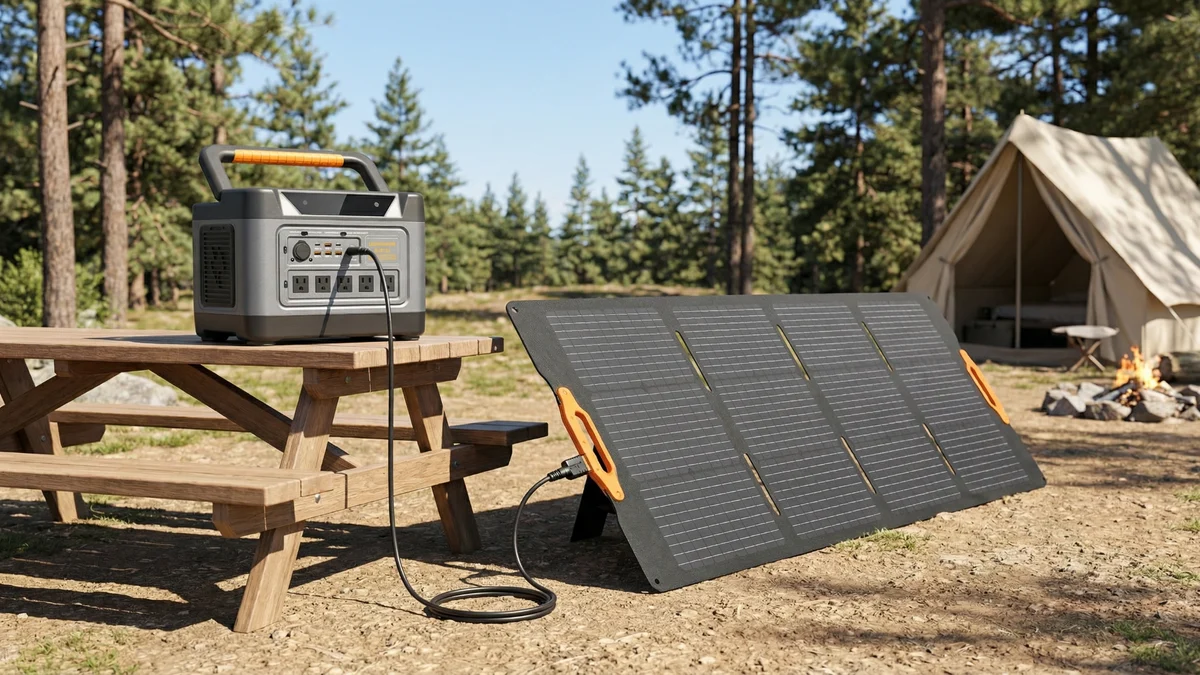
Panel wattage affects how quickly the battery can be replenished in good sunlight. The 60W panel bundled with the ZeroKor and MARBERO M823 has a better chance of keeping a mid-sized station topped up than the 25W panel with the MARBERO M82. The Jackery includes a 200W panel, while BLAVOR builds a 40W panel into its station and accepts external panels.
Solar charging is variable. Shade, clouds, panel angle, heat, and cable losses all reduce the actual input. If solar recovery matters during a long outage, choose a station that supports a larger panel or additional panels.
Readers comparing separate panels should also consider how portable panels balance wattage and packability before choosing a bundle.
Weight and physical design
A 2.3-pound MARBERO M82 is easy to carry, but its battery and AC output are limited. A 26-pound BLAVOR S1600 can run far more equipment, but it is better suited to a vehicle or a fixed emergency location. Handles, foldable stands, built-in lights, and panel storage all affect how often the station will actually be used.
For home outages, weight matters less than output and capacity. For hiking, every pound matters, and a station with unused AC capability is unnecessary bulk.
Frequently asked questions
Can a solar generator run a refrigerator?
The Jackery Explorer 1000 v2 and BLAVOR S1600 have the output and surge ratings intended for larger appliances such as refrigerators, provided the appliance's actual running and startup demands fit. The 80W to 300W stations should not be assumed to handle a refrigerator. Check the refrigerator's wattage label before connecting it.
Are these solar generators safe for laptops?
Stations with stated pure sine wave output, including the MARBERO M823, Apowking HP200L, and Powkey 200W Generator, are the clearest choices for laptops. USB-C charging can be even simpler when the port supplies enough wattage for the computer. Always compare the laptop's required input with the station's USB-C or AC capability.
How long will a solar generator run?
Runtime depends on battery capacity and the connected load. A 1, 070Wh station can run substantially longer than an 88.8Wh station, but a refrigerator, laptop, light, and phone each consume power at different rates. Use the device's wattage and allow for inverter losses when estimating runtime.
Can these stations charge from a car?
Most of the products in this roundup list a car charging method or include a car charging cable. The exact cable and input arrangement vary, so check the included accessories and connection instructions. Car charging is useful for recovery while driving, but it is not the same as solar charging.
Do solar panels work in cloudy weather?
They can produce power in cloudy conditions, but output will usually be lower than in direct sunlight. Panel efficiency claims do not guarantee a particular charging speed in shade or overcast weather. Position the panel carefully and keep the station's input limits in mind.
Can a small solar generator run a heater or coffee maker?
The compact stations are generally not suitable for heating appliances. A heater or coffee maker usually requires more continuous power than the 80W, 100W, 200W, or 300W stations can provide. Even the Jackery and BLAVOR should be matched against the appliance's actual running and surge requirements.
What is the difference between a solar generator and a fuel generator?
These products are battery power stations that can recharge from solar panels, wall outlets, or vehicles. They produce no exhaust while operating and are quiet compared with fuel-powered equipment. They also have finite battery capacity, so a solar panel or another charging source is needed to restore energy after extended use.
The bottom line
The Jackery Explorer 1000 v2 is the top pick among the Best solar powered generators here because it combines a 1, 070Wh LFP battery, 1, 500W output, a 200W solar panel, and useful app controls without reaching the BLAVOR's 26-pound weight. It is the station we'd choose for mixed home backup, camping, and appliance use.
The BLAVOR S1600 is the stronger alternative when 1, 600W output, a 3, 200W surge rating, and a built-in panel matter more than portability. For smaller loads, the Apowking HP200L and Powkey 200W Generator are easier to carry, while the MARBERO M82 is the sensible choice for a hiking kit centered on phones and lighting.
If you are undecided, choose the smallest station whose continuous output comfortably exceeds your most demanding device.
As an Amazon Associate we earn from qualifying purchases.