

A solder joint can fail before you notice it. Wire that is too thick floods a small circuit board, while a fine strand disappears quickly when you are repairing a cable. The alloy and flux matter just as much as the diameter.
This guide to the Best best soldering wire covers ten tin-lead wires plus one separate rosin flux product for electronics work. The range includes compact 50g spools, larger 100g options, diameters from 0.3mm to 1.2mm, and flux for jobs where the core alone is not enough.
For most electronic repairs, MAIYUM 0.8mm 50g is the one to buy. The rest of the list gives you finer control, more wire, a thicker bead, a different alloy, or extra flux.
| # | Product | Award | Alloy | Diameter or size | Flux | Best for |
|---|---|---|---|---|---|---|
| 1 | MAIYUM 0.8mm 50g | Best overall | 63/37 tin-lead | 0.8mm, 50g | 1.8% rosin core | General electronics repair |
| 2 | TOWOT 1.0mm 50g | Best for larger joints | 63/37 tin-lead | 1.0mm, 50g | 1.8% | Wires and appliance repair |
| 3 | HGMZZQ 0.8mm 50g | Best higher-flux option | 60/40 tin-lead | 0.8mm, 50g | 2.2% rosin core | Fast wetting and general repairs |
| 4 | HengTianMei 0.3mm | Best for fine work | 63/37 tin-lead | 0.3mm, 50g | 1.8% rosin core | Small pads and delicate work |
| 5 | Twocorn 0.8mm 50g | Best no-wash wire | 63/37 tin-lead | 0.8mm, 50g | 1.8% rosin core | Routine electronic repairs |
| 6 | MAIYUM 0.6mm 100g | Best fine-spool pick | 63/37 tin-lead | 0.6mm, 100g | 1.8% rosin core | Boards and repeated repairs |
| 7 | SRA 135 Rosin Flux | Best supplemental flux | Rosin paste | 2oz jar | Active from 200 to 600°F | Oxidized wires and PCBs |
| 8 | MAIYUM 0.8mm 100g | Best large spool | 63/37 tin-lead | 0.8mm, 100g | 1.8% rosin core | Frequent general soldering |
| 9 | TOWOT 0.8mm 50g | Best 60/40 option | 60/40 tin-lead | 0.8mm, 50g | 1.8% | General appliance repair |
| 10 | HengTianMei 1.2mm | Best for broad joints | 60/40 tin-lead | 1.2mm, 50g | 1.8% rosin core | Larger terminals and wires |
1. MAIYUM 0.8mm 50g: Best Overall

Pros
- 63/37 tin-lead alloy
- 0.8mm diameter suits many electronic repairs
- 1.8% rosin core flux
- Melting point listed at 361°F or 183°C
Cons
- Contains lead
- The 50g spool is smaller than the larger MAIYUM options
- 0.8mm is not as precise as a fine wire for tiny pads
Best for: general circuit boards, cable repairs, and household electronic work.
This is the spool we would reach for first because its diameter is easy to control without being so thin that it vanishes into every joint. The 0.8mm wire gives a useful middle ground for circuit boards, wires, radios, toys, and other electrical repairs. It is compact enough to keep near a small soldering station.
The 63/37 tin-lead alloy is the important detail here. MAIYUM lists a melting point of 361°F, or 183°C, and says the wire flows smoothly and forms strong joints. That composition is a practical fit for hand soldering because the wire transitions cleanly at a single listed melting temperature rather than requiring the wider working range associated with some other blends.
Its 1.8% rosin core means the wire carries flux into the joint as it melts. That makes the spool simpler to use on reasonably clean electrical surfaces. For severely oxidized wire, a separate flux product can still help, but routine board and cable work should not need a complicated setup.
Compared with HGMZZQ 0.8mm 50g, this wire uses less listed flux and a 63/37 alloy rather than 60/40. HengTianMei 0.3mm is more precise for tiny pads, while MAIYUM 0.8mm 100g is the better fit for someone who expects to solder often. Skip this one if you specifically need lead-free material or a very fine strand.
2. TOWOT 1.0mm 50g: Best for Larger Joints

Pros
- 63/37 tin-lead alloy
- 1.0mm diameter feeds more material into a joint
- 1.8% flux content
- Listed for circuit boards and appliance repair
Cons
- Less delicate than 0.8mm wire
- Contains lead
- 50g spool is not the largest option here
Best for: terminals, wires, and repairs where 0.8mm wire feels too slow.
The TOWOT 1.0mm 50g has a noticeably more purposeful feel than the thinner wires in this roundup. A millimeter of solder feeds a little more metal per touch, which is useful on larger wire ends and broad terminals. It is still manageable on ordinary boards, but it asks for more restraint around small pads.
Its Sn63/Pb37 alloy and 1.8% flux content put it close to the MAIYUM 0.8mm 50g in basic behavior. TOWOT lists a low melting point and smooth flow, though it does not provide a numerical melting temperature in the supplied details. The 63/37 composition remains the main reason to choose it over the TOWOT 0.8mm, which uses Sn60/Pb40.
The extra diameter is the real distinction. A larger wire can shorten the time needed to build a joint on a wire splice, connector, or appliance terminal, but it can also make it easier to add too much solder. A beginner working on crowded circuit boards may find 0.8mm more forgiving.
For PCB-specific work, the solder characteristics that matter most on small pads are more relevant than simply choosing the thickest wire. Pick TOWOT 1.0mm when your work includes larger conductors and you want a solid feed rate. Choose MAIYUM 0.8mm when one spool must cover a wider mix of jobs.
3. HGMZZQ 0.8mm 50g: Best Higher-Flux Option

Pros
- 0.8mm diameter is versatile
- 60/40 tin-lead alloy
- 2.2% flux content
- Listed melting point of 361°F or 183°C
Cons
- Contains lead
- 60/40 alloy differs from the 63/37 options
- 50g spool offers less material than the 100g MAIYUM wires
Best for: users who want a standard diameter with a higher listed flux content.
HGMZZQ takes the familiar 0.8mm format and changes two variables: the alloy is 60/40 tin-lead, and the listed flux content rises to 2.2%. That makes it an interesting alternative to the many 63/37 wires here, especially for someone who wants a little more flux carried inside the wire.
The listed melting point is 361°F or 183°C, matching the numerical figure supplied for several other products in this group. HGMZZQ also describes the flow as even and clean, with less smoke and reliable joints. Those are product claims rather than a substitute for technique, but the underlying specification is useful: the wire is intended for household appliances, stereos, headsets, toys, and circuit board maintenance.
The 0.8mm diameter keeps it from becoming a specialist product. It is narrow enough for many board repairs and substantial enough for ordinary wires. The 2.2% flux content may be helpful when the surfaces are not perfectly fresh, although flux cannot compensate for dirty metal or poor heating.
Compared with MAIYUM 0.8mm 50g, HGMZZQ gives you 60/40 alloy and more listed flux. Twocorn 0.8mm 50g uses the same broad diameter and a 63/37 alloy with 1.8% flux. Choose HGMZZQ if that higher flux specification is the feature you care about, and skip it if you want the 63/37 formulation used by the top pick.
4. HengTianMei 0.3mm: Best for Fine Work

Pros
- Very fine 0.3mm diameter
- 63/37 tin-lead alloy
- 1.8% rosin flux
- Useful for circuit boards and electronic devices
Cons
- Fine wire adds material slowly
- Contains lead
- Less suitable for large terminals and thick wires
Best for: delicate board work where a 0.8mm strand is difficult to control.
The HengTianMei 0.3mm is the specialist pick in a list otherwise dominated by 0.8mm wire. Its narrow strand lets you add tiny amounts of solder without fighting a large blob. That is exactly what you want around small pads, closely spaced connections, and other fine electronic work.
The wire uses a 63/37 tin-lead ratio, 1.8% flux, and a listed melting point of 361°F or 183°C. HengTianMei lists applications including radios, televisions, stereo systems, motors, wires, and circuit boards. The diameter, rather than the alloy, is what separates it from MAIYUM 0.8mm 50g.
A fine strand does require patience. It takes more feeding to build a substantial joint, and a user repairing large cable ends may burn time reaching the required volume. It is also easier to lose or bend on a busy bench. For small pads, though, the control is worth the trade-off.
If your projects include both delicate boards and larger wires, this is better as a second spool than as your only solder. Choosing an iron that gives a beginner steady heat control can make more difference with 0.3mm wire than moving between similar alloy formulas. Choose it for precision, not speed.
5. Twocorn 0.8mm 50g: Best No-Wash Wire
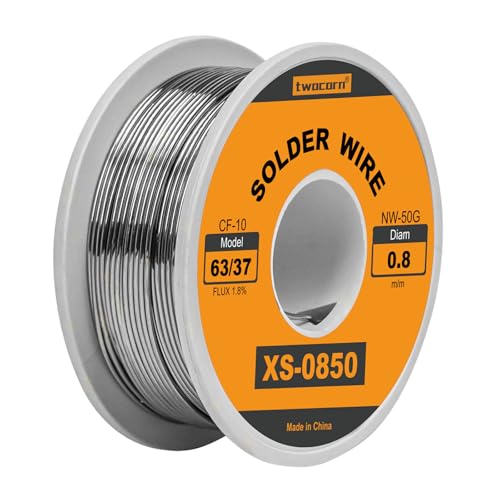
Pros
- 63/37 tin-lead alloy
- 0.8mm diameter suits general repairs
- 1.8% flux content
- Described as no-wash
Cons
- Contains lead
- 50g spool is smaller than the large MAIYUM options
- No numerical melting point is supplied in the product details
Best for: routine electrical repairs where a no-wash rosin core is preferred.
Twocorn is a straightforward general-purpose wire with one useful distinction in its name: no-wash. It uses a 0.8mm strand, 63/37 tin-lead alloy, and 1.8% flux, so its basic format is close to MAIYUM 0.8mm 50g. The no-wash description is the reason to consider it rather than treating the two as interchangeable.
The product details describe low melting point, good fluidity, fast soldering, strong adhesion, and solid joints. They do not give a numerical melting temperature, so there is less hard temperature information here than with the MAIYUM and HGMZZQ wires. The intended applications include circuit boards, radios, televisions, refrigerators, air conditioners, and other electronic products.
At 0.8mm, the wire is neither a tiny-pad specialist nor a large-joint feed. That makes it a sensible middle size for a mixed repair box. The no-wash formulation may reduce the cleanup burden in the jobs it is designed for, but users should still inspect joints and follow appropriate handling practices.
Twocorn loses to MAIYUM 0.8mm 50g if you want a listed 183°C melting point, and it loses to MAIYUM 0.8mm 100g if you need a longer-running spool. It makes sense for someone who specifically wants the no-wash description and a conventional 63/37 wire.
6. MAIYUM 0.6mm 100g: Best Fine-Spool Pick

Pros
- 0.6mm diameter offers finer control
- 100g spool
- 63/37 tin-lead alloy
- 1.8% rosin flux
- Listed melting point of 361°F or 183°C
Cons
- Contains lead
- Slower to feed than 0.8mm on larger joints
- More wire than occasional users may need
Best for: frequent board work that benefits from a fine but not ultra-thin strand.
The MAIYUM 0.6mm 100g is a strong compromise between the precision of HengTianMei 0.3mm and the faster feed of a 0.8mm spool. That difference of 0.2mm sounds small, but it gives better control when you are working close to neighboring pads while still adding solder at a reasonable rate.
It uses the same 63/37 tin-lead alloy found in the top MAIYUM pick, with 1.8% flux and a listed low melting point of 361°F or 183°C. The product is described for circuit boards, cables, radios, televisions, toys, and other electrical devices. The 100g quantity makes it more suitable for a repair bench that sees regular use.
Compared with HengTianMei 0.3mm, the 0.6mm wire is less exact but much more practical for mixed work. Compared with MAIYUM 0.8mm 100g, it gives up some feed speed in exchange for more control. This is the spool we would choose for someone who handles small boards often but does not want the extreme delicacy of 0.3mm wire.
Its weakness is the same feature that makes it attractive. A larger joint takes more passes than it would with TOWOT 1.0mm or HengTianMei 1.2mm. Skip it if most of your work is thick wire or broad terminals. Choose it when board repair is the center of your bench.
7. SRA 135 Rosin Flux: Best Supplemental Flux

Pros
- Rosin paste for lead and lead-free solder
- Semi-solid consistency for controlled application
- Acid-free formulation for electrical and electronic work
- Active temperature range listed as 200 to 600°F
- 2oz jar
Cons
- This is flux, not solder wire
- Adds a separate application step
- Rosin flux residue may still need inspection
Best for: adding controlled flux to oxidized wires, PCBs, and difficult electronic joints.
SRA 135 is the outlier here, and it earns its place because solder wire is not always enough. This is a 2oz jar of rosin paste flux rather than a spool of metal wire. Use it alongside one of the solder products when a wire or board is resisting wetting.
The semi-solid wax-like consistency is designed to stay where it is applied instead of turning into a runny mess. SRA lists an active temperature range from 200 to 600°F and describes the flux as acid-free for electrical and electronic applications. It is intended for copper wire, PCBs, car audio, computers, RC vehicles, drones, musical instruments, game consoles, and small development boards.
The advantage over relying only on rosin core is control. You can apply a small amount directly to a particular joint before bringing in MAIYUM, TOWOT, or another wire. That can be useful when the existing surface is oxidized or when a joint needs more flux than the wire core supplies.
This product cannot replace solder wire, so it is not the right first purchase for someone starting from nothing. It pairs especially well with HengTianMei 0.3mm for delicate work or with a thicker wire for copper conductors. Choose it when difficult surfaces, rather than alloy selection alone, are causing the trouble.
8. MAIYUM 0.8mm 100g: Best Large Spool

Pros
- Familiar 0.8mm general-purpose diameter
- 100g spool
- 63/37 tin-lead alloy
- 1.8% rosin flux
- Listed melting point of 361°F or 183°C
Cons
- Contains lead
- More material than occasional users need
- Not as fine as 0.6mm or 0.3mm wire
Best for: repair benches and hobbyists who use 0.8mm wire regularly.
The MAIYUM 0.8mm 100g is the larger, longer-running version of the top pick. Its main appeal is simple: you get the same useful middle diameter and the same advertised alloy and flux specifications, but with more wire on the spool. That matters when soldering is a regular part of your work rather than an occasional repair.
The wire is 63/37 tin-lead with 1.8% flux and a listed melting point of 361°F or 183°C. MAIYUM describes it as smooth-flowing, fast to solder, and suitable for circuit boards, cables, televisions, radios, toys, and other electrical devices. Those applications cover the same broad territory as the 50g version.
The 0.8mm size is still the key reason to choose it. It can handle ordinary board joints without feeling overly delicate, yet it does not feed as aggressively as the 1.0mm and 1.2mm options. For someone building a dependable electronics drawer, that balance is more useful than choosing a very thin wire that only excels at one kind of repair.
It is not the better pick for a first-time user who only expects to make a few joints, and it is not the precision choice for tiny pads. MAIYUM 0.6mm 100g offers more control, while TOWOT 1.0mm 50g is better for larger conductors. Choose this one when 0.8mm is already the diameter you know works.
9. TOWOT 0.8mm 50g: Best 60/40 Option

Pros
- 0.8mm diameter
- 60/40 tin-lead alloy
- 1.8% flux content
- Suited to boards and appliance repair
Cons
- Contains lead
- 50g spool
- Less fine than the 0.3mm and 0.6mm options
Best for: general electronic repairs when you specifically want Sn60/Pb40 wire.
The TOWOT 0.8mm 50g is the direct alternative to the many 63/37 wires in this roundup. It keeps the practical middle diameter and 1.8% flux content, but changes the alloy to 60% tin and 40% lead. That gives buyers a clear reason to choose it rather than simply picking another similar spool.
TOWOT lists a low melting point, smooth flow, fast soldering, and strong joints, though the supplied details do not state a numerical melting temperature. The product is aimed at circuit boards, televisions, radios, home appliance repair, DIY work, and home decoration.
The 0.8mm strand remains versatile. It is less likely to overwhelm an ordinary board than the 1.2mm HengTianMei, while it feeds more readily than the 0.3mm HengTianMei. The choice between this and HGMZZQ 0.8mm 50g comes down chiefly to alloy and flux content, since HGMZZQ lists 2.2% flux and TOWOT lists 1.8%.
Choose TOWOT if Sn60/Pb40 is the formulation you want and your jobs are mixed. Skip it if you prefer the 63/37 alloy used by MAIYUM, Twocorn, and several other picks. It is a capable general spool, but its appeal depends on that alloy preference.
10. HengTianMei 1.2mm: Best for Broad Joints

Pros
- Thick 1.2mm diameter
- 60/40 tin-lead alloy
- 1.8% rosin flux
- Listed melting point of 361°C or 183°C
- Intended for electronic devices and manual DIY work
Cons
- Too thick for many small pads
- Contains lead
- 50g spool
Best for: larger terminals, broad joints, and wire work that benefits from a heavy feed.
HengTianMei 1.2mm is the largest wire in this group, and it behaves like a specialist tool rather than an all-purpose answer. A thicker strand puts more solder into a joint with each feed, which can be useful on broad terminals and larger conductors. It is not the strand we would use around tightly packed board pads.
The specification is 60/40 tin-lead, 1.8% rosin flux, and 50g. The product lists a melting point around 183°C, or 361°F, and describes the flow as excellent. It is intended for electronic components and manual DIY operations.
Its size creates a clear divide from MAIYUM 0.8mm 50g and MAIYUM 0.6mm 100g. Those wires are easier to meter on ordinary circuit boards. HengTianMei 1.2mm makes more sense when the joint is physically broad enough to accept the extra material without spilling into nearby areas.
The weakness is not subtle: this wire is easy to overfeed on small work. Beginners should start with a thinner strand unless their projects are mainly large wires or terminals. Choose it for fast, substantial joints, and choose TOWOT 1.0mm if you want a slightly less aggressive diameter.
How to choose best soldering wire
The right solder wire comes down to alloy, diameter, flux, and the size of the joint you can heat cleanly.
Alloy composition
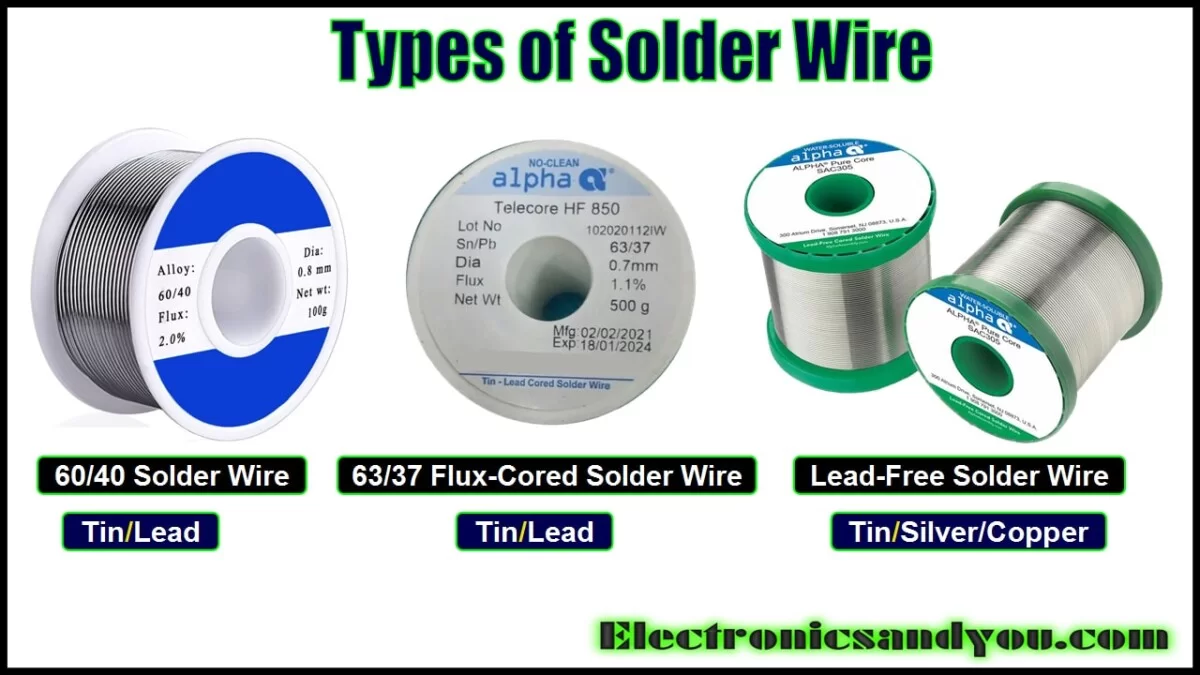
The 63/37 tin-lead wires in this roundup include MAIYUM, TOWOT 1.0mm, HengTianMei 0.3mm, Twocorn, and both larger MAIYUM spools. The 60/40 options include HGMZZQ, TOWOT 0.8mm, and HengTianMei 1.2mm. The ratio changes how the solder behaves as it melts, so choose the formulation required by your repair or preferred technique.
Every wire product here contains lead. Use suitable ventilation, avoid eating or drinking while handling it, and wash your hands after soldering. Keep lead solder away from children and food preparation areas.
Wire diameter
Diameter controls how much solder arrives with each feed. The 0.3mm HengTianMei is for tiny amounts and close pad spacing. The 0.6mm MAIYUM adds control without becoming extremely slow. Most users will find 0.8mm the most adaptable size, while 1.0mm and 1.2mm are better for larger joints.
Choose the diameter by the joint, not by the spool. Thick wire is not an advantage when it floods a small pad.
Flux content
Rosin core flux helps the solder wet a clean metal surface as the wire melts. The products here list 1.8% flux except HGMZZQ, which lists 2.2%. That difference may matter when comparing otherwise similar wires, but flux does not remove heavy contamination or replace proper surface preparation.
SRA 135 adds a separate acid-free rosin paste for cases where more controlled application is useful. Its semi-solid form is easier to place on a particular wire or board area than liquid flux.
Spool quantity
The 50g spools are compact and practical for occasional work. The MAIYUM 0.6mm and 0.8mm products are 100g, making them better for a repair bench that uses the same diameter repeatedly. More wire is only useful if the diameter and alloy fit your projects.
Joint size and heat
A soldering iron must heat the joint, not just melt the end of the wire. Fine wire works well around small pads, while thicker wire suits broad terminals and larger conductors. If the joint cannot reach the required temperature evenly, changing the wire alone will not solve the problem.
Frequently asked questions
Is 63/37 solder better for electronics?
63/37 tin-lead solder is a common choice in this roundup because several products list it with a 361°F or 183°C melting point. It is well suited to hand soldering when lead-containing solder is allowed for the project. Always check the requirements of the device, workplace, and local rules.
What diameter solder wire should a beginner use?
A 0.8mm wire is the most flexible starting point among these products. It is easier to control on ordinary circuit boards than 1.0mm or 1.2mm wire, while it feeds faster than 0.3mm wire. The MAIYUM 0.8mm 50g and Twocorn 0.8mm 50g are examples of this middle size.
Is rosin core flux enough for every joint?
No. Rosin core flux is often enough for reasonably clean electronic surfaces, but oxidized or difficult joints may need carefully applied supplemental flux. SRA 135 is a separate rosin paste intended for electrical and electronic work.
Should I choose 0.3mm or 0.6mm solder wire?
Choose 0.3mm for very small pads and precise material control. Choose 0.6mm if you need fine work but also want a more practical feed rate for mixed board repairs. The MAIYUM 0.6mm 100g is the more flexible of the two.
Can these solder wires be used for wire connections?
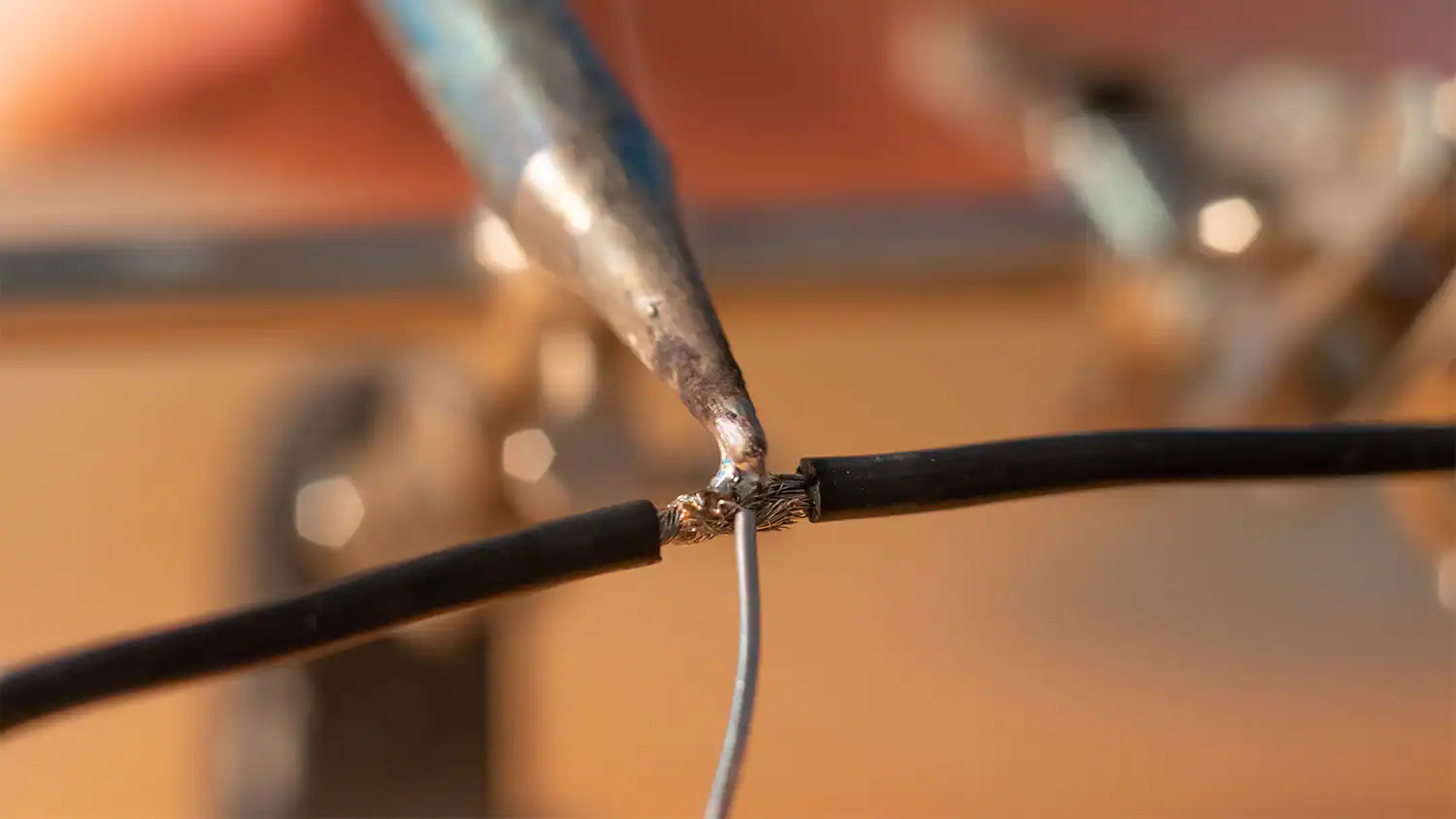
The listed products are described for electrical devices, cables, wires, and household appliance repair. Diameter matters: 1.0mm or 1.2mm can build a larger wire joint more quickly, while 0.6mm or 0.8mm gives better control on smaller conductors. For a dedicated wire-repair setup, the joint size and flux choices for joining wires deserve separate attention.
Do I need to clean rosin flux residue?
Inspect the finished joint and follow the requirements of the circuit or project. The Twocorn product is described as no-wash, while the other solder wires are described as rosin core without the same no-wash wording. Supplemental flux can also leave residue, so do not assume every surface should be left untreated.
Is the SRA 135 product solder wire?
No. SRA 135 is a 2oz jar of rosin paste flux. It is an accessory for applying extra flux to a joint and should be paired with a solder wire rather than used alone.
The bottom line
The Best best soldering wire for most mixed electronics work is MAIYUM 0.8mm 50g. Its 63/37 alloy, 0.8mm diameter, 1.8% rosin core, and listed 183°C melting point make it the most balanced starting point in this group.
For frequent work, MAIYUM 0.8mm 100g keeps that same useful format with a larger spool. Choose HengTianMei 0.3mm for fine pads, TOWOT 1.0mm for larger joints, or SRA 135 Rosin Flux when a solder wire needs extra help wetting a difficult surface.
If you are undecided, start with a 0.8mm 63/37 wire and add a finer or thicker spool only when your actual joints show you need one.
As an Amazon Associate we earn from qualifying purchases.