

A portable speaker can be waterproof, rugged, and loud, yet still make vocals sound thin or bass turn muddy when the volume rises. The right choice depends on the kind of listening you do, not just the size of the enclosure.
Our Best best sounding bluetooth speaker picks range from compact speakers for a desk or day bag to plug-in home models with proper stereo drivers. We also included speakers that can handle pools, beaches, drops, and long days away from an outlet.
The Klipsch The One Plus is our top pick for the best balance of stereo detail, bass, and room-filling sound. The rest of the list covers outdoor volume, extreme portability, long battery life, and speakers designed mainly for the home.
Comparison table
| # | Product | Award | Battery | Protection | Standout audio feature | Best for |
|---|---|---|---|---|---|---|
| 1 | Klipsch The One Plus | Best overall | Not specified | Not specified | Two full-range drivers and a woofer | Detailed home listening |
| 2 | JBL Charge 6 | Best outdoor all-rounder | Up to 28 hours | IP68 | AI Sound Boost | Long outdoor sessions |
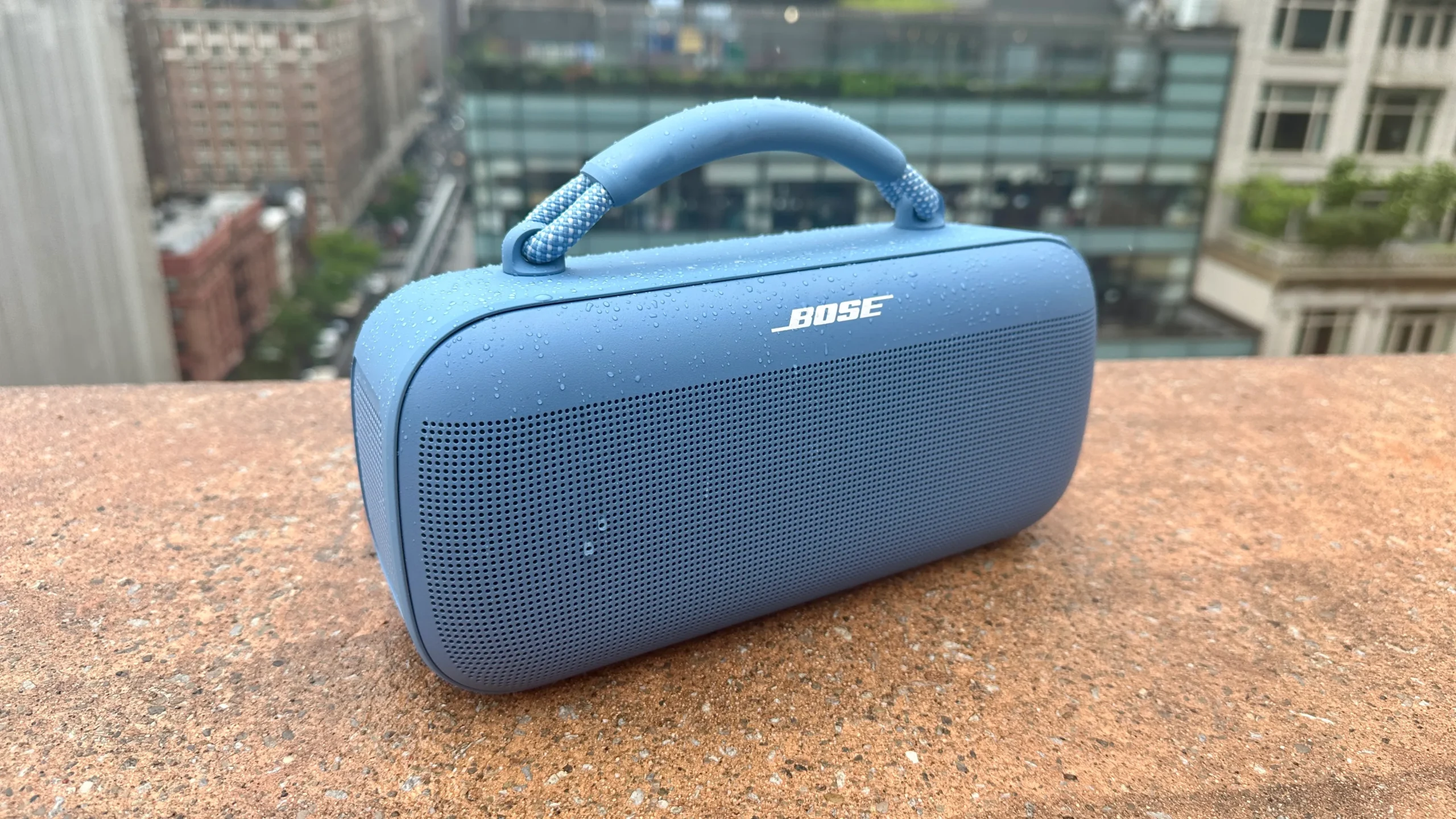
| 3 | Bose SoundLink Flex Blue Dusk | Best compact sound | Up to 12 hours | IP67 | PositionIQ orientation adjustment | Portable everyday listening |
| 4 | Soundcore Boom 2 | Best bass-forward outdoor speaker | Up to 24 hours | IPX7, floatable | Dedicated subwoofer and BassUp 2.0 | Parties and open spaces |
| 5 | JBL Flip 7 | Best rugged portable speaker | Up to 16 hours | IP68 | AI Sound Boost and lossless USB-C playback | Travel and poolside use |
| 6 | Marshall Acton III | Best home soundstage | Plug-in powered | Indoor speaker | Wider room-filling sound | Living rooms |
| 7 | Bose SoundLink Flex Black | Best flexible placement | Up to 12 hours | IP67 | PositionIQ and multipoint | Speakers used in changing locations |
| 8 | JBL FLIP 5 | Best simple JBL speaker | Up to 12 hours | IPX7 | PartyBoost pairing | Straightforward portable listening |
| 9 | Anker Soundcore 2 | Best basic outdoor speaker | Up to 24 hours | IPX7 | BassUp and dual neodymium drivers | Casual outdoor use |
| 10 | JBL Go 4 | Best ultra-portable speaker | Up to 7 hours, or 9 with Playtime Boost | IP67 | Punchy sound from a tiny body | Day bags and small spaces |
1. Klipsch The One Plus: Best Overall

Pros
- Proper two-driver stereo presentation
- Dedicated woofer adds convincing low-end weight
- Real wood veneer and tactile controls
- EQ adjustment through the Klipsch Connect app
- USB-C playback and reverse charging
Cons
- Heavy at nearly 8 pounds
- Designed for indoor use rather than wet environments
- Up to 40 feet of Bluetooth range is less flexible than some portable rivals
Best for: listeners who want the most convincing home sound in a compact single-speaker system.
The Klipsch The One Plus is the speaker here that most clearly sounds like a small stereo system rather than a single portable box. It is wide, weighty, and composed, with enough low-end authority to make acoustic instruments and electronic tracks feel properly grounded. Its 12-inch width also gives the stereo channels room to separate, something cylindrical outdoor speakers cannot match as easily.
The hardware explains the difference. Klipsch uses two 2.25-inch full-range drivers and a 4.5-inch high-excursion woofer in a biamplified 2.1 arrangement. That combination gives vocals a distinct center image while the woofer handles bass without asking the smaller drivers to do everything. The result should appeal to listeners who want detail without giving up the physical impact of a kick drum.
It is also unusually pleasant to operate. The tactile switches and knobs make volume and tone adjustments immediate, while the Klipsch Connect app provides EQ changes, saved presets, and firmware updates. Bluetooth 5.3 supports a connection from up to 40 feet, and USB-C adds playback from compatible devices along with reverse charging. Those inputs make it more useful on a shelf than a speaker that only accepts wireless streams.
The weakness is portability. At nearly 8 pounds and measuring 12 inches wide, this is not the speaker to toss into a day bag. It also has no stated water or dust protection, so the JBL Charge 6 and Bose SoundLink Flex Blue Dusk are safer choices near a pool or on a trail. The Klipsch wins when sound quality and home presence matter more than weather resistance.
Choose it if you want one speaker for a bedroom, office, kitchen, or living room and care about separation, bass texture, and physical controls. It is the clearest choice for readers who want the best sounding bluetooth speaker experience without building a full stereo system.
2. JBL Charge 6: Best Outdoor All-Rounder

Pros
- Up to 28 hours of playtime
- IP68 waterproof and dustproof construction
- Drop-proof from 1 meter in lab conditions
- Built-in power bank
- Auracast multi-speaker support
Cons
- Heavier than the smaller JBL models
- Its rugged construction takes up more bag space
- Playtime Boost trades some listening time for extra endurance
Best for: outdoor listeners who want strong bass, long battery life, and serious protection in one speaker.
The JBL Charge 6 is the practical pick for long days outside. It is large enough to make music feel substantial on a patio or campsite, but it remains portable enough to carry without treating it like home audio equipment. Its blend of endurance, protection, and useful charging features makes it more versatile than a speaker focused only on maximum loudness.
JBL says the Charge 6 provides 24 hours on a charge, with another four hours available through Playtime Boost. A ten-minute fast-charge session can provide up to 150 minutes of playback, and the built-in power bank can keep a phone running while the speaker continues playing. Those features matter when the speaker is being used away from a wall outlet for an entire day.
The IP68 design is a major advantage over the JBL FLIP 5, whose IPX7 rating covers water but does not offer the same dust protection. The Charge 6 is also described as drop-proof from 1 meter and able to survive submersion up to 1.5 meters in lab conditions. Its AI Sound Boost analyzes music in real time to increase bass and clarity while limiting distortion, giving it a stronger claim to controlled high-volume playback than basic portable models.
The compromise is its 2.18-pound body and wider 9-inch shape. The Bose SoundLink Flex Blue Dusk is easier to hold, and the JBL Go 4 disappears into a small bag, but neither has the Charge 6's stamina or power-bank function. The Charge 6 also favors energetic, forward sound over the more relaxed presentation of the Bose.
For beach trips, backyard gatherings, and camping, this is the speaker we'd choose when the forecast is uncertain and the playlist cannot stop. It is a particularly good fit for anyone who wants a durable portable speaker that still puts bass and vocal clarity ahead of mere noise.
3. Bose SoundLink Flex Blue Dusk: Best Compact Sound

Pros
- Clear, balanced hi-fi audio
- Deep bass from a compact body
- IP67 waterproof and dustproof protection
- PositionIQ adjusts sound for speaker orientation
- Multipoint Bluetooth pairing
Cons
- Battery life is shorter than the Charge 6 and Boom 2
- Not designed for the biggest outdoor spaces
- Stereo pairing requires a second compatible Bose speaker
Best for: listeners who want refined sound from a speaker that fits easily in one hand.
The Bose SoundLink Flex Blue Dusk is small enough to carry casually but does not sound small in the way many compact speakers do. It gives voices a clean, natural presence and adds enough bass to keep pop and rock from feeling lightweight. For a speaker that measures 8.6 inches long and weighs about 1.3 pounds, that balance is the main attraction.
Bose rates battery life at up to 12 hours. That is less than the Soundcore Boom 2, but it is sufficient for a day at the park, a few rooms of house listening, or an afternoon by the pool. The utility loop makes it easy to clip onto a bag, and the silicone-wrapped body is built to handle drops, shocks, rust, dust, and water with an IP67 rating.
PositionIQ is the feature that makes this Flex easier to live with than a speaker that must always face one direction. Stand it upright, lay it back, or hang it, and the speaker senses its orientation and adjusts the sound. Multipoint Bluetooth also lets it pair with multiple devices, which is convenient in a shared home. Two compatible Bose speakers can be linked for stereo or Party Mode.
Compared with the JBL Flip 7, the Flex sounds more deliberately balanced, while the JBL offers longer playtime, greater protection, and lossless playback through USB-C. The Bose is also not the choice for a large party. Its compact enclosure cannot move as much air as the Charge 6 or Boom 2, especially in an open yard.
The Flex is right for a listener who values clarity and portability over maximum volume. It is also one of the easiest choices for people who move a speaker from desk to shower to backpack and do not want to think about its orientation each time.
4. Soundcore Boom 2: Best Bass-Forward Outdoor Speaker

Pros
- Dedicated subwoofer and BassUp 2.0
- Up to 24 hours of playtime
- Floatable IPX7 design
- Customizable Pro EQ
- Built-in power bank and RGB lighting
Cons
- About 3.66 pounds before anything else is packed
- Bass-forward tuning is not the most neutral
- Large body is less convenient for casual carrying
Best for: outdoor gatherings where bass impact and volume matter more than a compact footprint.
The Soundcore Boom 2 is built around physical impact. Its dedicated subwoofer and BassUp 2.0 system give dance tracks, hip-hop, and bass-heavy pop a low-end push that smaller speakers cannot reproduce. It is the most obvious choice in this list for a poolside playlist or backyard gathering where the sound needs to travel across open space.
The speaker measures about 11.65 inches long, 7.28 inches high, and nearly 3.98 inches wide, with a weight of about 3.66 pounds. That is a lot more speaker than the Bose Flex, but the larger enclosure gives the Boom 2 room for deeper bass and greater output. Soundcore also describes its tuning as balancing crisp highs, detailed mids, and rich bass rather than simply adding low-end energy.
Up to 24 hours of playtime is useful for trips where charging is inconvenient, though actual endurance varies with volume and content. The built-in power bank can help recharge a phone, while fast charging gets the speaker ready more quickly. IPX7 protection and a floatable design make it a natural companion for pools, beaches, and wet weather.
The Soundcore app adds a Pro EQ, which gives the listener more control than the fixed tuning on the JBL FLIP 5. RGB lights are built into the speaker as well, though they are a mood feature rather than a sound-quality reason to buy it. The JBL Charge 6 is easier to carry and offers stronger dust protection, while the Boom 2 has the more party-oriented bass profile.
Skip it if you want a speaker for a quiet desk or a neutral, intimate presentation. Pick it if the words “deep bass” describe what you want to hear first, and if carrying a larger box is a fair trade for a fuller outdoor sound.
5. JBL Flip 7: Best Rugged Portable Speaker

Pros
- AI Sound Boost helps control distortion
- Up to 16 hours of playtime
- IP68 waterproof and dustproof rating
- Drop-proof from 1 meter in lab conditions
- Lossless audio playback through USB-C
Cons
- A USB-C charging cable is not included
- Not as bass-heavy as the Boom 2
- No battery figure beyond JBL's stated maximum is provided
Best for: travelers who want a compact speaker with stronger protection and more playback flexibility.
The JBL Flip 7 improves on the familiar portable-speaker formula without making the body much harder to carry. It weighs about 1.23 pounds and is roughly 7.19 inches wide, so it remains a sensible choice for a suitcase, picnic basket, or day bag. Its sound aims for more bass authority and cleaner highs than a tiny speaker, while the enclosure is ready for rougher treatment.
JBL says the Flip 7 offers 14 hours of playtime, with up to two additional hours through Playtime Boost. It has an IP68 rating for water and dust resistance and is designed to survive a 1-meter drop in lab conditions. The PushLock accessory system lets users attach the included loop or carabiner, which makes the speaker easier to secure than a smooth box with no carry point.
AI Sound Boost analyzes music in real time and adjusts performance to provide clearer bass at high volume with less distortion. The new tweeter dome is intended to add depth to higher frequencies, while the speaker can play lossless audio from a compatible source through USB-C. That wired feature separates it from the Bose SoundLink Flex, which concentrates on wireless convenience.
There are small annoyances. JBL does not include a charging cable, so buyers need a compatible USB-C cable already available. The Flip 7 also cannot match the low-end weight of the Soundcore Boom 2, and listeners seeking a broad stereo presentation should move up to the Klipsch The One Plus.
This is the right JBL for someone who wants a travel-friendly speaker with unusually strong protection and more control over sound quality. It is a better fit than the older Flip 5 when dust resistance, drop protection, and USB-C lossless playback matter.
6. Marshall Acton III: Best Home Soundstage

Pros
- Wide, room-filling sound
- Bass and treble controls on the cabinet
- Bluetooth 5.2 and 3.5 mm input
- Plug-in design avoids battery management
- Distinctive recycled and vegan-material construction
Cons
- Not battery powered
- Heavy at 6.28 pounds
- No water or dust protection is specified
Best for: home listeners who want a substantial speaker with simple controls and a broad presentation.
The Marshall Acton III makes sense when “portable” really means movable between shelves, not carried to the beach. It is a plug-in home speaker with a wider soundstage and enough output to fill a room. The cabinet's familiar Marshall styling is not subtle, but the design gives it a more considered presence than a fabric-covered travel speaker.
Its dimensions are about 10.24 inches wide, 6.69 inches high, and 5.91 inches deep, while its weight is 6.28 pounds. That mass is inconvenient for travel but useful on a shelf, where the speaker can stay planted as bass builds. Marshall says the Acton III has an even wider soundstage than its predecessor and delivers room-filling signature sound.
Control is one of its strongest points. Bass and treble can be adjusted directly, so the listener does not have to open an app for every change. Bluetooth 5.2 handles wireless listening, and a 3.5mm input supports wired sources. That makes it more adaptable at home than the battery-only JBL Charge 6, although the JBL is far better suited to outdoor use.
The Acton III is not a neutral product in the same way as the Bose SoundLink Flex. Its appeal is a lively, expansive home presentation and a tactile interface. It also lacks a stated weather-resistance rating, so it should remain indoors and away from damp rooms or uncovered patios.
Choose it for a living room, office, or bedroom where the speaker will stay connected to power. If your listening is mainly at home and you want sound that spreads beyond a narrow point in front of the cabinet, the Acton III is more appropriate than almost every battery speaker here.
7. Bose SoundLink Flex Black: Best Flexible Placement

Pros
- Clear, balanced hi-fi audio
- PositionIQ works in upright, flat, or hanging positions
- IP67 waterproof and dustproof construction
- Multipoint Bluetooth support
- Can link with another compatible Bose speaker
Cons
- Up to 12 hours of battery life
- Compact output is not suited to large outdoor areas
- The Black version has the same core limitations as the other Flex listing
Best for: people who place a speaker in different positions and want it to keep sounding consistent.
The Bose SoundLink Flex Black is the same second-generation Flex concept as the Blue Dusk model above, with the black finish as the distinguishing detail in this listing. Its strength is not raw output. It is the way the speaker maintains a balanced sound when it is standing on a counter, lying on a table, or hanging from its utility loop.
Bose's PositionIQ technology senses orientation and adjusts the sound automatically. That removes a common portable-speaker irritation: a speaker that sounds good only when it is placed in one exact position. The body is about 8.6 inches long and weighs roughly 1.3 pounds, so moving it from room to room or clipping it to a bag takes little effort.
The Flex supports up to 12 hours of battery life, Bluetooth 5.3, connections from up to 30 feet away, and multipoint pairing with multiple devices. Its IP67 rating protects against water and dust, while the silicone-wrapped construction is intended to withstand drops, shocks, and rust. Two compatible Bose speakers can be combined in stereo or Party Mode when one unit is not enough.
The JBL Flip 7 is the more capable choice for dust, drops, battery life, and wired lossless playback. The Flex counters with a smoother portable listening experience and better behavior when its position changes. For more help weighing size against output, the trade-offs between compact and room-filling speakers are worth considering before choosing.
Buy this version when the black finish suits your space and you want the Flex's placement-aware sound. It is an easy recommendation for bedrooms, kitchens, balconies, and travel where the speaker will not always face the listener directly.
8. JBL FLIP 5: Best Simple JBL Speaker

Pros
- Compact 1.2-pound design
- Up to 12 hours of playtime
- IPX7 waterproof construction
- PartyBoost can pair multiple speakers
- Simple wireless streaming
Cons
- Older design than the Flip 7
- No dust rating is specified
- No USB-C lossless playback feature is listed
Best for: listeners who want a small, uncomplicated waterproof speaker for everyday use.
The JBL FLIP 5 remains a straightforward portable speaker with no elaborate setup. It weighs about 1.2 pounds and measures roughly 7.1 inches long, making it easy to carry from a kitchen counter to a backyard chair. JBL's sound is energetic and familiar, with enough punch for casual music and podcasts without the speaker feeling bulky.
Battery life is rated at up to 12 hours, and IPX7 waterproofing allows it to handle splashes and temporary submersion. The protection is useful around a pool or sink, though it does not make the same dust-resistance claim as the newer Flip 7. PartyBoost allows multiple compatible JBL speakers to be paired when one speaker does not provide enough coverage.
The simplicity is both its appeal and its limitation. The feature list centers on Bluetooth streaming, battery power, waterproofing, and JBL's sound tuning. The JBL Flip 7 adds IP68 protection, AI Sound Boost, a longer stated maximum playtime, a carry-accessory system, and USB-C lossless playback. Those additions make the newer model more flexible, but the Flip 5 stays easier to understand.
The Bose Flex sounds more balanced and adapts better to different positions, while the Flip 5 has a more direct, lively character. It also lacks the Boom 2's dedicated subwoofer, so bass fans should look elsewhere. Readers comparing several travel-friendly models may also want to see what makes a portable speaker easier to carry and place.
Choose the Flip 5 if you need a compact JBL speaker for everyday wireless listening and do not need the newest durability or connection features. It is a sensible uncomplicated option, especially for listeners who value easy controls over customization.
9. Anker Soundcore 2: Best Basic Outdoor Speaker

Pros
- Up to 24 hours of playtime
- IPX7 waterproofing
- Dual neodymium drivers
- BassUp technology and spiral bass port
- Simple portable design
Cons
- Basic feature set
- No app EQ or multi-speaker system is listed
- The narrow body is not intended for room-filling sound
Best for: casual listeners who want long battery life and extra bass in a simple waterproof speaker.
The Anker Soundcore 2 is a no-fuss speaker for kitchens, porches, campsites, and other places where music needs to be convenient rather than elaborate. Its slim body is easy to grab, and the controls are designed around immediate playback. The speaker does not try to compete with the Klipsch or Marshall on stereo scale, but it does offer a sturdy set of basics.
Soundcore lists 12W power, dual neodymium drivers, a digital signal processor, BassUp technology, and a patented spiral bass port. Those features are aimed at keeping bass present in a small enclosure and limiting distortion as the volume changes. The sound should suit podcasts, pop, and casual background music better than delicate, wide stereo recordings.
A 5, 200mAh lithium-ion battery supports up to 24 hours of music, while IPX7 protection covers splashes and water exposure. That battery figure puts it alongside the larger Boom 2, though the Boom 2 has a dedicated subwoofer, a floatable build, an app-based Pro EQ, and a power bank. The Soundcore 2 is slimmer and simpler, but it cannot create the same sense of scale.
The JBL Go 4 is even easier to carry, but its maximum playtime is much shorter. The JBL FLIP 5 sounds more substantial and offers PartyBoost pairing. Soundcore 2 sits between those choices as a practical long-running speaker with a bass emphasis, though it lacks the newer connection and customization features found higher on this list.
This is the one to choose when you want a basic speaker that can last through a long day without adding a complicated app or a large cabinet. Skip it if you want detailed stereo imaging, strong output across an open yard, or the ability to fine-tune the sound.
10. JBL Go 4: Best Ultra-Portable Speaker

Pros
- Extremely light at about 0.42 pounds
- IP67 waterproof and dustproof design
- Punchy sound from a very small body
- Auracast multi-speaker connection
- Recycled plastic and fabric in the construction
Cons
- Up to 7 hours of standard playtime
- Small enclosure cannot match larger speakers for bass
- Playtime Boost changes the listening profile while extending endurance
Best for: day bags, desks, bathrooms, and anyone who values minimum size above room-filling output.
The JBL Go 4 is tiny enough to carry without planning around it. At about 0.42 pounds and 3.7 inches long, it is the easiest speaker here to slip into a small bag or leave on a crowded desk. The sound has a punchy character that is impressive for the enclosure, but the physical limits are clear when compared with the larger JBL and Bose speakers.
JBL rates standard playtime at up to seven hours, with Playtime Boost adding up to two more hours. That is enough for a workday or a short outing, but it is nowhere near the endurance of the Charge 6 or Soundcore 2. IP67 protection gives it both water and dust resistance, so its small size does not require treating it delicately.
Auracast lets two Go 4 speakers be paired for stereo or multiple compatible JBL speakers be linked for wider coverage. The speaker also uses post-consumer recycled plastic and fabric in part of its construction, with FSC-certified paper packaging and soy ink. Those details do not change the sound, but they make the design choices more considered than a purely disposable mini speaker.
The Bose SoundLink Flex produces fuller bass and more mature vocal balance, while the JBL FLIP 5 offers longer standard playtime and a larger presentation. The Go 4 wins on weight and convenience. It is not the right tool for a party, but it is a strong answer when the alternative is carrying no speaker at all.
Pick it for personal listening, travel, showers, desks, and short outdoor trips. If your priority is the best sounding bluetooth speaker in a very small body, this is the compact JBL to consider, with the understanding that portability comes before scale.
How to choose best sounding bluetooth speaker
The right speaker starts with where it will live, how much bass and volume you need, and whether battery convenience matters more than stereo detail.
Driver design and enclosure size
A larger enclosure gives drivers more room to produce bass and maintain composure at higher volume. The Klipsch The One Plus uses two 2.25-inch full-range drivers and a 4.5-inch woofer, while the Soundcore Boom 2 adds a dedicated subwoofer for outdoor low-end impact.
Small speakers can still sound clear, but they generally cannot produce the same depth or room-filling scale. Look for a larger body when you listen to bass-heavy music or need sound to travel across an open area.
Sound balance and bass control
A bass-forward speaker can make pop and electronic music feel exciting, but too much low-end energy can obscure vocals and acoustic instruments. The Bose SoundLink Flex emphasizes clear, balanced audio, while the Soundcore Boom 2 gives listeners a stronger bass-first presentation.
EQ controls are useful when a speaker will play different types of music. The Klipsch Connect app, Soundcore Pro EQ, Marshall's cabinet controls, and JBL's app-based controls provide more ways to adjust the result than a speaker with fixed tuning.
A speaker that stays clear at your usual listening volume is more useful than one that only sounds impressive for a few minutes at maximum volume.
Battery endurance
Battery figures are maximum claims, and actual listening time changes with volume and content. Up to 12 hours is suitable for many afternoons, while the Charge 6, Boom 2, and Soundcore 2 are better suited to long trips or repeated outdoor use.
Consider charging features as well. The Charge 6 and Boom 2 include power-bank functions, and the Charge 6 can add up to 150 minutes of playback after a short fast-charge session. A plug-in model such as the Marshall Acton III avoids battery management entirely, but it cannot follow you outside.
Water, dust, and drop protection
IP ratings describe specific resistance levels. IPX7 covers water resistance without specifying dust protection, while IP67 and IP68 add dust protection. The JBL Flip 7 and Charge 6 also include drop-protection claims under stated lab conditions.
For pools, beaches, and camping, protection should be treated as a core feature rather than a bonus. The Marshall Acton III has no stated weather-resistance rating, so it belongs indoors. For more outdoor-specific comparisons, the protection features that matter near water and dirt are a useful place to focus.
Portability and placement
Weight, shape, and carry points affect whether a speaker gets used. The JBL Go 4 weighs about 0.42 pounds, while the Klipsch The One Plus weighs nearly 8 pounds and is better treated as a movable home system.
Placement also changes sound. Bose's PositionIQ technology adjusts the Flex when it is standing, lying down, or hanging. A speaker without that feature may need more careful positioning to sound consistent across a room.

Frequently asked questions
What makes a Bluetooth speaker sound good?
A good speaker balances clear mids and highs with bass that has weight without masking vocals. Driver arrangement, enclosure size, tuning, and the speaker's ability to avoid distortion at higher volume all matter. A model with EQ controls can also be adapted to different rooms and music styles.
Is a larger Bluetooth speaker always better sounding?
No. A larger body generally makes deep bass and high output easier, but tuning and driver design still matter. The compact Bose SoundLink Flex can sound more balanced than a larger speaker with an overly aggressive bass profile.
Which speaker is best for bass?
The Soundcore Boom 2 is the strongest bass-focused choice here because it uses a dedicated subwoofer and BassUp 2.0. The JBL Charge 6 and JBL Flip 7 also offer reinforced bass, but they place more emphasis on portability and ruggedness.
Can any of these speakers create true stereo sound?
The Klipsch The One Plus has two full-range drivers in one biamplified 2.1 system, giving it a more stereo-like presentation from a single cabinet. Several portable models can pair two compatible speakers for left and right channels, including the Bose SoundLink Flex, JBL Go 4, JBL Charge 6, and JBL Flip 7.
Which speaker is best for outdoor use?
The JBL Charge 6 is the most complete outdoor option because it combines IP68 protection, long battery life, drop resistance, a power bank, and AI Sound Boost. The Soundcore Boom 2 is better if bass and floatable poolside use matter more than carrying weight.
Is IPX7 enough for a portable speaker?
IPX7 is suitable for water exposure, including temporary submersion under the rating's conditions. It does not provide a dust-protection rating. If the speaker will be used at a beach, campsite, or dusty yard, IP67 or IP68 models such as the Bose Flex and JBL Flip 7 offer a more complete protection specification.
Is a home Bluetooth speaker better than a portable speaker?
A plug-in home model can use a larger cabinet and avoid battery limits, which helps with room-filling sound. The Marshall Acton III and Klipsch The One Plus are better suited to fixed indoor listening, while portable speakers make more sense when the listening position changes often.
The bottom line
The Klipsch The One Plus is our top recommendation for the Best best sounding bluetooth speaker because its two full-range drivers and dedicated woofer create the most convincing home presentation in this group. It is heavy and not weather resistant, but its stereo separation, bass weight, and physical controls make it the speaker we'd keep for everyday listening.
For outdoor use, the JBL Charge 6 is the stronger choice, with IP68 protection, up to 28 hours of stated playtime, a power bank, and AI Sound Boost. The Bose SoundLink Flex is the better compact alternative when balanced sound and flexible placement matter more than maximum output.
If you are undecided, choose the Klipsch for home listening, the Charge 6 for outdoor endurance, or the Bose SoundLink Flex when one small speaker needs to work almost anywhere.
As an Amazon Associate we earn from qualifying purchases.