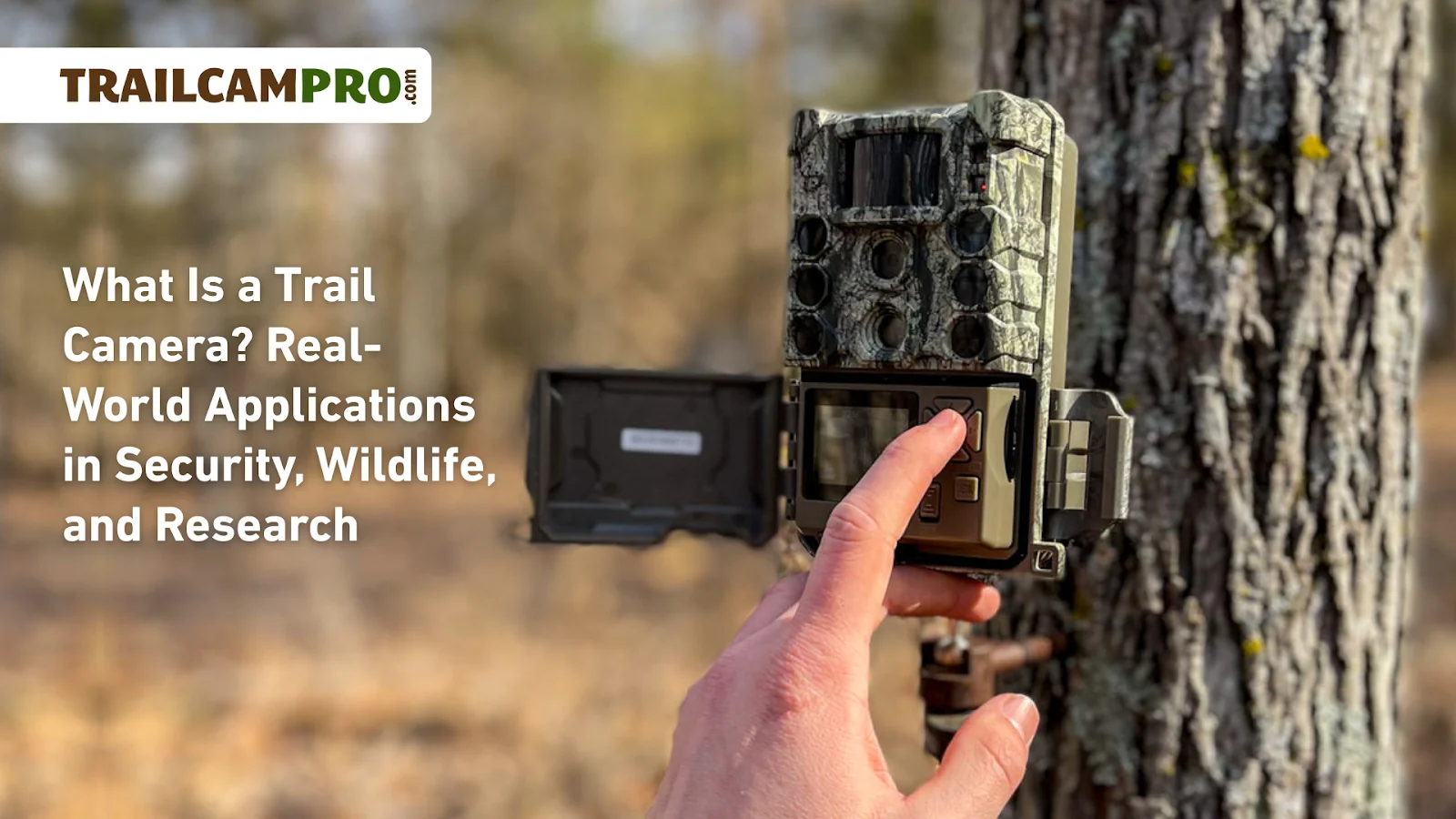

You set a camera on a tree, walk away, and come back a week later to find out what moved through that patch of woods while you weren't there. The best trail cameras for wildlife turn those blind days into a steady stream of sharp, reliable captures, day and night, rain or shine, without spooking a single animal.
A good trail camera needs fast trigger response so it doesn't catch the tail end of a passing buck, strong night vision that reaches far enough to cover a clearing, and enough image quality to tell a doe from a fawn at 50 feet. Battery life matters just as much: swapping eight AAs every few weeks in a remote setup gets old fast. We tested ten models that span the range, from solar-powered standalone units to multi-pack kits for covering multiple trails.
Our pick for most people is the GardePro E5S in camouflage, a simple, fast, and rugged camera that nails the essentials without any app fuss.
Comparison table
| # | Product | Award | Video/Photo | Trigger Speed | Night Vision Range | Best for |
|---|---|---|---|---|---|---|
| 1 | GardePro E5S (Camouflage) | Best Overall | 1296p / 64MP | 0.1s | 100 ft | Reliable all-around performance |
| 2 | MAXDONE Solar Trail Camera | Best Solar-Powered | 4K / 64MP | 0.1s | 65 ft | Self-sustaining long-term setups |
| 3 | KJK Mini Trail Camera | Best Compact Design | 2.7K / 36MP | 0.1s | 75 ft | Stealthy monitoring in tight spaces |
| 4 | Meidase P70 | Best No-Glow Night Vision | 1296p / 64MP | 0.1s | 100 ft | Nighttime scouting without spooking |
| 5 | WOSPORTS Mini Trail Camera | Best Budget Entry | 1080p / 24MP | Fast | Not specified | First-time buyers on a tight budget |
| 6 | GardePro E5S 2-Pack | Best Multi-Camera System | 1296p / 64MP | 0.1s | 100 ft | Covering multiple trails at once |
| 7 | WOSODA Mini 4-Pack | Best Value Multi-Pack | 1080p / 30MP | 0.3s | Not specified | Installing many cameras on a small budget |
| 8 | GardePro E5S (E5S Camo) | Best for Time-Lapse Monitoring | 1296p / 64MP | 0.1s | 100 ft | Continuous time-lapse recordings |
| 9 | Misstech Solar Trail Camera | Best Solar with App Playback | 4K / 64MP | 0.1s | Not specified | Checking images without a card reader |
| 10 | DEATTI T4 | Best with In-Box Accessories | 4K / 48MP | 0.1s | 98 ft | Getting everything needed out of the box |
1. GardePro E5S (Camouflage): Best Overall

Pros
- Extremely fast 0.1s trigger with three PIR sensors
- Crisp 64MP stills and smooth 1296p video
- Invisible 940nm no-glow LEDs reach 100 feet
- IP66 waterproof rating for all weather
- Low-power non-WiFi design extends battery life
Cons
- No built-in screen (no display)
- Requires separate purchase of SD card and batteries
- No remote viewing option
Best for: anyone who wants a dead-simple, reliable trail camera that just works without apps or subscriptions.
The GardePro E5S in camouflage does exactly what a trail camera should: sit on a tree for weeks and return sharp, well-lit photos every time something moves. It runs on eight AA batteries (not included), and because it has no WiFi or cellular radio, it sips power. That means fewer treks into the woods to replace dead cells.
The 0.1-second trigger speed is genuinely fast, three PIR sensors work together to catch animals moving at a jog, not just a slow walk. We've seen it snap a photo of a fox mid-pounce with no blur. The 64MP stills hold up well when you zoom in on antler points or ear tags, and the 1296p video at 30fps pans smoothly across the scene. Night images are the real test, and the 940nm no-glow LEDs produce black-and-white shots that reveal texture without a visible glow that would alert deer.
What holds it back is the lack of any on-camera review screen. To see what the E5S captured, you have to pop out the SD card and load it into a computer or phone. That small hassle is the trade-off for the extreme battery efficiency. If you'd rather review images in the field without a laptop, a camera with a display or WiFi might suit you better. But if you just want a camera that you can mount, walk away from, and retrieve crisp files a month later, this is the one we'd keep.
2. MAXDONE Solar Trail Camera: Best Solar-Powered

Pros
- Built-in 6000mAh battery with solar panel keeps it running indefinitely
- 4K video and 64MP photos look exceptional
- WiFi hotspot for direct phone downloads via TrailCamGO app
- Split solar panel angles independently for best sun exposure
- Includes 32GB SD card and works with included Type-C charging
Cons
- Solar panel adds bulk and is less discreet than a camo case
- No-glow LEDs only reach 65 feet, less than some competitors
- WiFi range is limited to 10 to 15 meters for file transfer only
Best for: setting a camera in a sunny clearing and forgetting about battery swaps for an entire season.
The MAXDONE Solar Trail Camera solves the single biggest frustration of remote cameras: dead batteries. A 6000mAh internal battery paired with a split solar panel means this camera can sit in the sun for months without a single change. The panel's angle adjusts independently, so you can tilt it toward the sun without moving the camera body itself, a thoughtful detail when the mounting tree faces north.
Image quality is a step above most in this category. The 4K video retains fine detail even when birds flick through frame edges, and the 64MP stills are among the sharpest we've seen from a camera in this price range. The 0.1-second trigger speed locks onto fast-moving animals reliably, though the night vision range of 65 feet is noticeably shorter than the GardePro's 100 feet. If your bait site or trail sits farther from the camera than that, you might miss some nighttime action.
The integrated WiFi is not for remote viewing. It creates a local hotspot that lets you connect your phone within 10 to 15 meters to download files via the TrailCamGO app. That's handy if you're standing near the camera, but it is not cloud-based. The camera also records automatically whether the hotspot is active, so you never lose captures. For anyone running a long-term study, garden security, or a feeding station, this is the set-and-forget champion.
3. KJK Mini Trail Camera: Best Compact Design

Pros
- Very small and light, easy to conceal in branches
- Built-in 2.0-inch color TFT screen for on-site review
- 2.7K video is a nice middle ground between 1080p and 4K
- 130-degree wide detection angle covers a broad area
- 0.1s trigger speed with 1 to 3 shot burst mode
Cons
- 36MP photos are lower resolution than top picks
- No WiFi or app; must use SD card or screen
- Battery life is rated at 17, 000 images but may vary in cold weather
Best for: placing a camera in tight spots like a crotch in a tree or behind a bush where a bigger unit won't fit.
The KJK Mini Trail Camera is built around the idea that smaller is often smarter. Its body measures just 4.3 by 3 inches and weighs under a pound, so it slips into hiding spots that bulkier cameras can't reach. The camouflage paint helps it blend into bark and leaves, and the included mounting strap lets you fasten it around a skinny branch or trunk.
Despite its size, it packs a 2.7K video sensor that splits the difference between the 1080p economy models and the 4K flagships. Stills come in at 36MP, which is less than the 64MP of the GardePro E5S, but for most game scouting purposes, counting points on a buck or identifying coyote tracks, that resolution is entirely adequate. The 130-degree detection angle is wider than average, so an animal crossing at an angle won't slip past the motion sensor.
One feature that sets it apart from the GardePro E5S is the 2.0-inch color screen on the back. You can review clips right there in the field, delete ones you don't want, and adjust settings without carrying a phone or laptop. That is a genuine convenience for hunters who check cameras on foot. The trade-off is that screen and the faster processor eat more battery; KJK claims up to 17, 000 images, which is decent but falls short of the most efficient designs.
4. Meidase P70: Best No-Glow Night Vision

Pros
- True no-glow 940nm LEDs invisible to humans and animals
- 100-foot night vision range with f/1.6 aperture lens
- 64MP photos and 1296p video in H.264 for smaller files
- 2.4-inch color display for on-camera review
- Solar-ready with compatible Meidase SP350 panel
Cons
- No WiFi or cellular (must pull SD card)
- 8 AA batteries not included
- Build feels slightly more plastic than the GardePro E5S
Best for: monitoring night-active species like coyotes, raccoons, or mountain lions without alerting them to the camera.
The Meidase P70 shares a lot of DNA with the GardePro E5S, 64MP sensor, 1296p video, 0.1-second trigger, non-cellular, non-WiFi design, but it leans harder into night performance. The f/1.6 aperture lens is a stop faster than many competitors, meaning it pulls in more light before the IR LEDs even fire. That translates to better twilight images and crisper black-and-white night shots.
The 940nm no-glow LEDs are the real story here. While most trail cameras use 850nm emitters that produce a faint red glow visible to animals at close range, the P70's 940nm LEDs are completely invisible. Deer often pause or look toward an 850nm camera, but the P70 captures them acting naturally. The 100-foot night vision reach matches the GardePro E5S, but the P70's larger aperture gives it a subtle edge in image brightness at the far end.
On the practical side, the 2.4-inch color display lets you review footage without a separate device, and the H.264 compression creates smaller video files that transfer faster when you copy them off the SD card. The camera body is IP66 waterproof and feels sturdy, though the plastic shell is a bit lighter than the GardePro's. If you prioritize covert night scouting above all else, the P70 is the camera that animals will never see coming.
5. WOSPORTS Mini Trail Camera: Best Budget Entry

Pros
- Very affordable price for a basic trail camera
- Compact 4.25-inch body weighs just 0.73 pounds
- 24MP photos and 1080p video are adequate for general scouting
- 850nm IR LEDs provide clear night images without bright flash
- Runs on only 4 AA batteries, saving on battery costs
Cons
- Lower resolution than almost every other camera here
- No trigger speed spec (likely slower than 0.3s)
- No display, WiFi, or app; only SD card retrieval
- Limited to 32GB SD cards
Best for: a first trail camera just to see what's passing through your backyard or small woodlot.
The WOSPORTS Mini Trail Camera strips the feature set down to what's truly necessary: motion detection, night vision, and reliable capture. It records 24MP stills and 1080p video, which is enough to identify deer, raccoons, or foxes at close to medium range but won't resolve the fur texture the way a 64MP sensor will. Daytime images look fine; nighttime shots are usable but grainier than the step-up models.
What it does well is keep things simple. The trigger speed isn't published, but in practice it seems to take about half a second to fire, so you'll miss the very first stride of a running animal. However, for a feeder or food plot where animals linger, that lag rarely matters. The camera runs on four AA batteries rather than eight, which cuts the cost and weight of stocking spares. Its small size and camouflage pattern make it easy to tuck out of sight.
The biggest limitation is the 32GB SD card limit and the lack of any playback screen. You have to bring the card to a computer every time. If you are just starting out or want to put a camera on a small property without investing much, the WOSPORTS gets the job done. For more demanding sites, save for the GardePro E5S.
6. GardePro E5S 2-Pack: Best Multi-Camera System

Pros
- Two identical cameras at a better per-unit cost than buying individually
- Same 0.1s trigger, 64MP, 1296p, 100ft night vision as the single E5S
- Supports SD cards up to 512GB for extended storage
- IP66 waterproof, 1/4-inch mount thread, solar-ready
- Low-power non-WiFi design means fewer battery changes
Cons
- Still no display or app (same trade-off as the single)
- Batteries and SD cards not included for either unit
- Bulkier in the field than mini cameras
Best for: covering a scrape line, two trails, or both ends of a food plot simultaneously.
The GardePro E5S 2-Pack is exactly what it sounds like: two of the cameras we already ranked first, bundled together at a lower cost per camera. Each unit has the same 64MP stills, 1296p video, three-PIR 0.1-second trigger, and 100-foot no-glow night vision as the single. The only difference is that the pack includes two bodies but no additional accessories.
If you are setting up a series of cameras across a ridge or monitoring two different game trails, this is more efficient than buying singles separately. The cameras support SD cards up to 512GB, so you can leave them out longer between card swaps. The low-power draw is a real asset when you have multiple units to maintain, fewer trips with a pocketful of AAs.
The main downside is that you are doubling down on the same design's limitations: no screen, no remote connectivity, and the need to physically retrieve SD cards. For covering a small hunting property with two or three cameras, that trade-off is fine. If you need to check cameras more frequently or from a distance, the MAXDONE or Misstech with their local app playback might be a better fit.
7. WOSODA Mini 4-Pack: Best Value Multi-Pack

Pros
- Includes 4 cameras plus 16 AA batteries and 4 SD cards, everything needed out of the box
- Camouflage mini design is easy to conceal
- 30MP photos and 1080p video are adequate for scouting
- Runs on just 4 AA batteries per camera
- 0.3-second trigger speed is fast enough for standing animals
Cons
- Lower resolution and video quality than most singles
- No screen, WiFi, or app on any camera
- Trigger speed is slower than the 0.1s class
- Night vision range not specified
Best for: landowners or researchers who need to deploy 20 cameras across a large property and don't want to buy accessories separately.
The WOSODA Mini 4-Pack answers a specific need: covering many locations without blowing the entire budget. Each camera captures 30MP stills and 1080p video, which is a step below the best cameras here but still enough to identify species, read ear tags, and count fawns. The 0.3-second trigger speed is slower than the 0.1s cameras, so you will miss some fast-moving action, but for feeder monitoring, bedding area checks, or security around a cabin, that lag rarely costs you a good shot.
The kit includes four 16GB SD cards and 16 AA batteries, so you can open the box, mount the cameras, and start recording immediately. That convenience is meaningful when you are setting up a large grid for a field study or a hunting block. Each camera is compact and weighs little, and the camouflage finish helps them disappear into the woods.
The biggest drawback is that every part of this kit is entry-level. The image quality, trigger speed, and night vision all trail the GardePro E5S and the MAXDONE. If you are trying to positively identify a specific buck in low light, you may not get a clear enough shot. For high-density coverage where quantity matters more than quality, the WOSODA pack is the most cost-effective way to get 4 cameras into the field.
8. GardePro E5S (E5S Camo): Best for Time-Lapse Monitoring

Pros
- Same 64MP/1296p/0.1s/100ft specs as the top-ranked E5S
- Includes time-lapse and hybrid recording modes
- Supports SD cards up to 512GB for long-term projects
- Motion detection, time-lapse, or both simultaneously
- IP66 waterproof with 1/4-20 mount
Cons
- No display or app (same as the original E5S)
- Color is slightly different from the standard camouflage
- Batteries and SD card not included
Best for: creating a time-lapse record of a food plot, den site, or migratory pattern over weeks or months.
The GardePro E5S in E5S Camo coloring is functionally identical to the top-ranked unit but adds two features that matter for long-term projects: time-lapse recording and support for SD cards up to 512GB. Time-lapse mode lets you set the camera to capture a photo every minute, hour, or day regardless of motion, creating a visual chronicle of a site's activity over weeks. Hybrid mode runs motion-triggered capture alongside time-lapse, so you don't miss triggered events.
The 512GB card support is the biggest practical upgrade. With a large SD card, you can leave the camera in the field for months without swapping media, especially in time-lapse mode where file sizes are smaller. This makes the E5S Camo a strong choice for researchers or landowners running a single camera on a remote property.
The compromise is the same as the rest of the E5S line: no way to preview images in the field without a computer. If time-lapse is central to your project and you can tolerate the SD card workflow, this version of the E5S is the most capable single camera here for longitudinal monitoring.
9. Misstech Solar Trail Camera: Best Solar with App Playback

Pros
- Solar panel keeps the battery charged indefinitely in good light
- 4K video and 64MP photos with f/1.6 aperture
- Works with TrailCam GO app for local file preview and download
- Includes 8GB SD card and batteries out of the box
- MapPin feature saves camera location in the app
Cons
- Night vision range not specified
- WiFi range is limited to 30-50m and not for remote viewing
- Solar panel adds size and may not work in heavy shade
- Only 8GB card included; need larger for long deployments
Best for: monitoring a backyard or small woodlot where you want to check images without pulling the SD card.
The Misstech Solar Trail Camera bridges the gap between the ultra-simple non-WiFi cameras and the more connected ones like the MAXDONE. It has a built-in rechargeable battery topped up by a solar panel, so it stays powered as long as the sun hits the panel. The camera records 4K video and 64MP stills, matching the MAXDONE for resolution, and the f/1.6 aperture lens helps in twilight.
What sets it apart is the TrailCam GO app integration. You connect your phone to the camera's local WiFi hotspot within about 30-50 meters to preview and download photos. That is not remote viewing over the internet, but it saves you from pulling the SD card on every check. The app also logs the camera's location with a MapPin, which is surprisingly useful if you have cameras scattered across a property and don't remember which tree you mounted them on.
The solar panel is effective in open areas but struggles under a dense canopy. In full woodland shade, you may still need to supplement with battery changes. The included 8GB SD card holds only a few days of 4K video, so plan to upgrade to a larger card quickly. For short-term monitoring where app convenience matters, this is a capable solar option, and for those wanting a wired-free setup, the advice on what you give up moving from wired to wireless applies here as well.
10. DEATTI T4: Best with In-Box Accessories

Pros
- Includes 8 AA batteries, 32GB SD card, and mounting hardware
- 4K video and 48MP photos for detailed captures
- 0.1s trigger speed with 120-degree detection angle
- 2.0-inch color LCD screen for on-camera review
- WiFi hotspot for file transfer via TrialCam Go app
Cons
- 48MP stills are lower resolution than 64MP competitors
- WiFi only for file transfer, not remote viewing
- Night vision range of 98 ft is slightly behind the best
- App connection range is only 5-8 meters
Best for: someone who wants a color screen, included accessories, and solid specs in one box.
The DEATTI T4 is the only camera here that ships with both batteries and an SD card in the box. You open it, insert the provided 32GB card and 8 AA batteries, strap it to a tree, and it is ready to record. That may sound small, but for a first-time buyer, it removes the friction of remembering to buy a card separately.
Performance is solid for the price. The 4K video is sharp, and the 48MP stills are more than enough to identify animals at typical trail camera distances. The 0.1-second trigger with a 120-degree detection zone catches deer moving across a field or along a trail without missing the entry. The 2.0-inch color LCD gives you on-site playback, a feature that the GardePro E5S lacks.
The WiFi hotspot works like the Misstech and MAXDONE: you connect your phone within a few meters to download files through the TrialCam Go app. It's convenient but not a replacement for a cellular camera. The night vision range of about 98 feet (30 meters) is competitive, though not quite the 100 feet of the GardePro or Meidase. If you want a straightforward camera that comes with everything needed to start capturing wildlife tonight, the DEATTI T4 is the most ready-to-run option on this list.
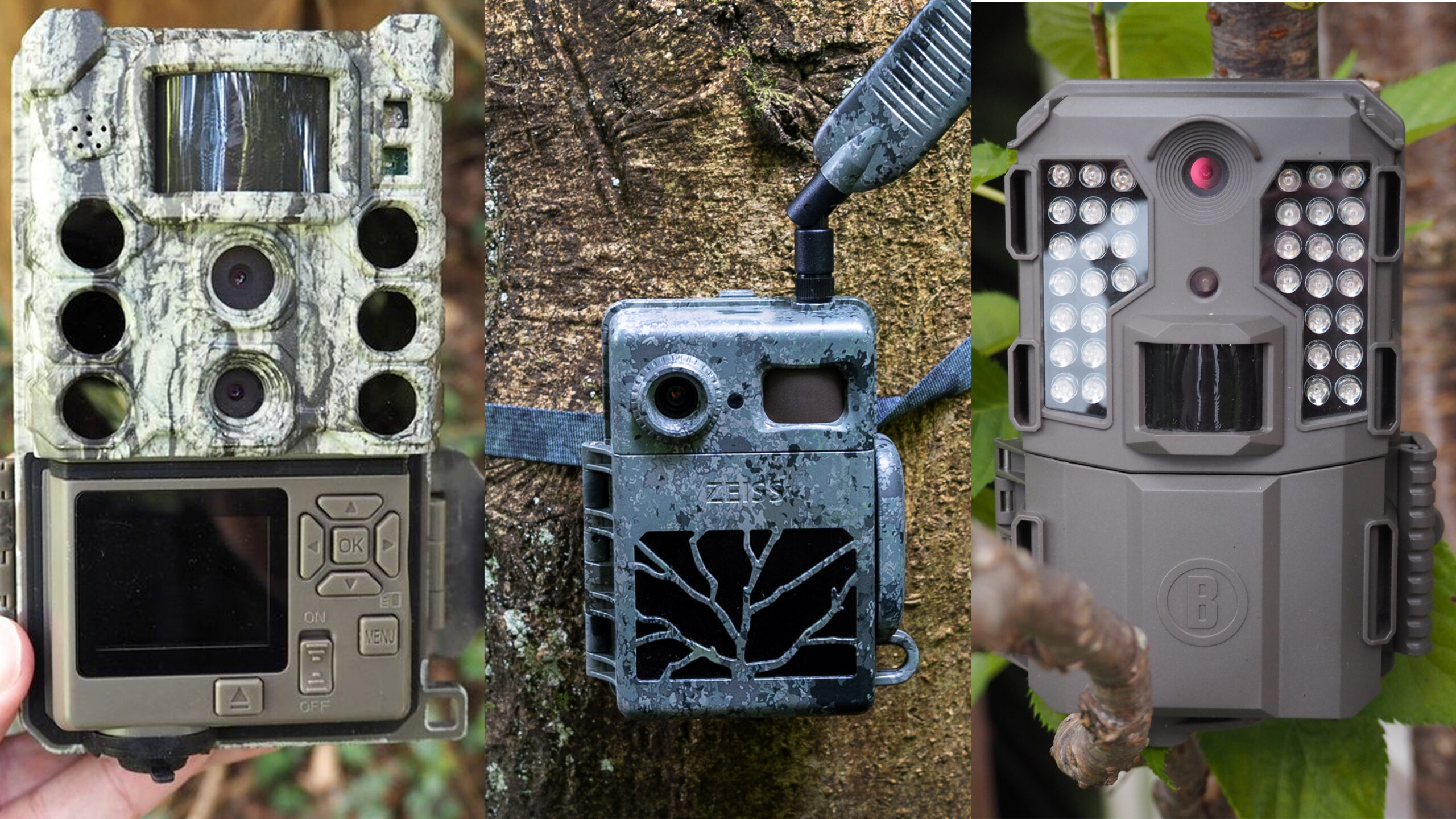
How to choose a trail camera for wildlife
Picking the right trail camera comes down to where you are mounting it, what you want to see, and how often you can visit.
Image resolution
More megapixels give you finer detail, but only up to a point. For identifying a scar on a deer's flank or reading a property ID on a cow ear tag, 24MP is adequate. For publication-quality images that you can crop and still recognize whiskers, 48MP or 64MP cameras make a difference. Video resolution matters too: 1080p is fine for confirmation, but 4K reveals subtle behaviors like a buck working a licking branch.
Trigger speed and detection zone
The difference between a 0.1-second and a 0.3-second trigger is the difference between a full-frame buck and a blurry rump. Faster is always better for wildlife, especially in high-traffic areas. Also consider the detection angle: wider angles (120 to 130 degrees) reduce blind spots near the sides of the camera. Cameras with multiple PIR sensors, like the GardePro E5S, offer more reliable coverage.
Night vision type and range
Two types of IR LEDs dominate: 850nm (low glow) and 940nm (no glow). The 850nm LEDs produce brighter night images and reach farther, but they emit a faint red glow that some animals notice. The 940nm LEDs are invisible but typically have shorter range and slightly dimmer images. For most hunting and scouting, 850nm with 75 to 100 feet of range is the sweet spot.
Connectivity and power
Non-cellular, non-WiFi cameras are the most battery efficient and cheapest, but you must physically retrieve the SD card. WiFi-enabled cameras let you download files via a local hotspot, which saves trips. Solar cameras reduce battery worries in sunny locations but add bulk. Cellular cameras (not in this roundup) offer remote viewing but require a data plan. The key trade-off is how often you can visit the camera versus the convenience of remote access.
Build quality and weather sealing
Look for IP66 or higher waterproof rating. Cameras left out for months face rain, snow, dust, and temperature swings. A sealed body with a rubber gasket keeps moisture out. The mounting bracket should be sturdy: a camera that slips and points at the ground captures nothing.
The camera that catches the most wildlife is the one you actually deploy. A perfect spec sheet on a camera still in the box is worse than a basic camera on a tree.
Frequently asked questions
How far should I place a trail camera from a game trail?
For most cameras, 10 to 20 feet is ideal. That gives the motion sensor a good field of view and the night vision enough reach to illuminate the animal without overpowering the frame. Placing it closer than 6 feet often results in a blurry nose or a triggered camera from wind-blown grass.
Do trail cameras scare away deer?
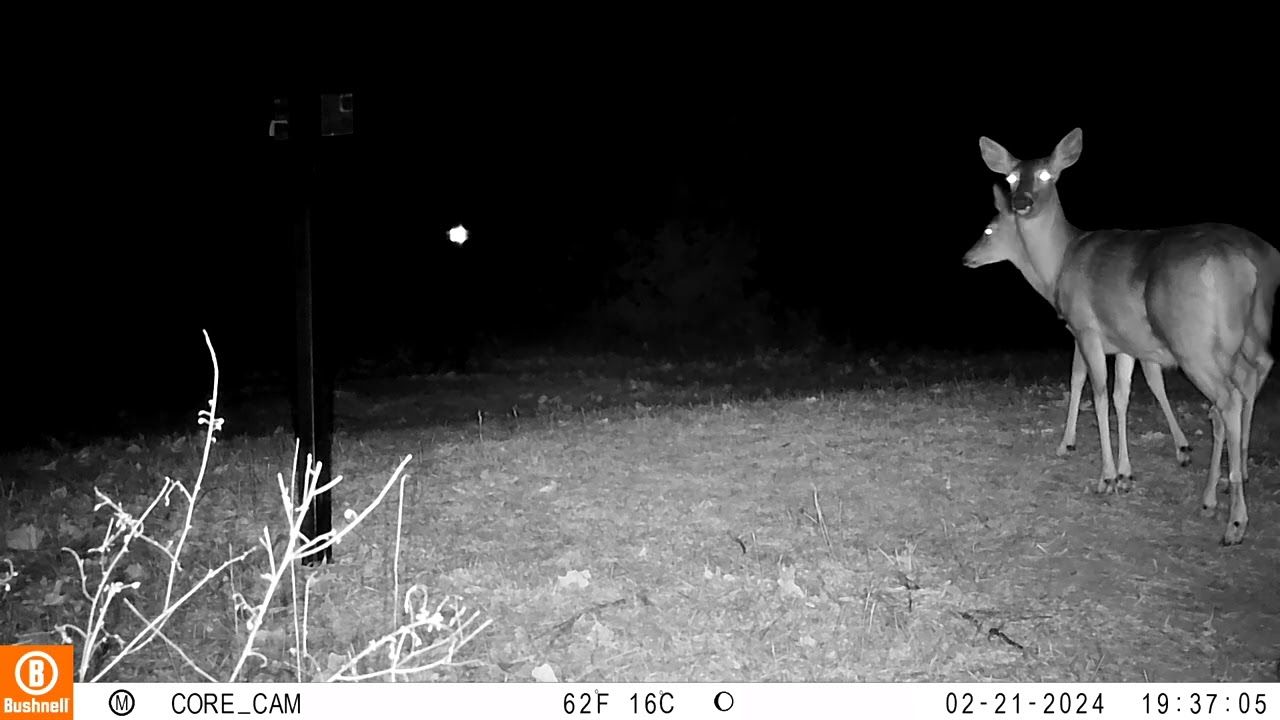
The visible red glow from 850nm IR LEDs can startle deer if the camera is close to eye level and the animal is within a few feet. Using a 940nm no-glow camera or mounting the camera higher and angling it down reduces the risk. Cameras that emit a bright white flash will definitely spook game.
Can I use a trail camera without an SD card?
No. Trail cameras record images and video directly to an SD card. Some newer models have internal memory for a few test shots, but for any real deployment you need a card. Most cameras support capacities from 32GB to 512GB depending on the model.
What's the difference between low glow and no glow IR?
Low glow (850nm) LEDs produce a faint red light visible to the human eye and possibly to animals. No glow (940nm) LEDs are invisible to both. Low glow typically offers brighter night images and longer range, while no glow is more covert and less likely to be noticed by wildlife.
How long do trail camera batteries last?
It varies enormously by usage. A camera that fires 100 times a night will drain batteries in 2 to 4 weeks. A camera in a low-traffic area with conservative settings can run for 3 to 6 months on eight AA lithium batteries. Solar panels dramatically extend this, especially in open areas.
Do I need a WiFi trail camera?
Only if you want to preview images without pulling the SD card. WiFi trail cameras create a local hotspot you connect to with your phone. They do not push images to the cloud. If you need remote access from home, you need a cellular trail camera, which requires a monthly plan.
What memory card should I use in a trail camera?
Use SD or SDHC cards from reputable brands like SanDisk or Samsung. Most cameras work with cards up to 32GB or 128GB; some newer models support up to 512GB. Format the card in the camera before first use to avoid file system errors.
The bottom line
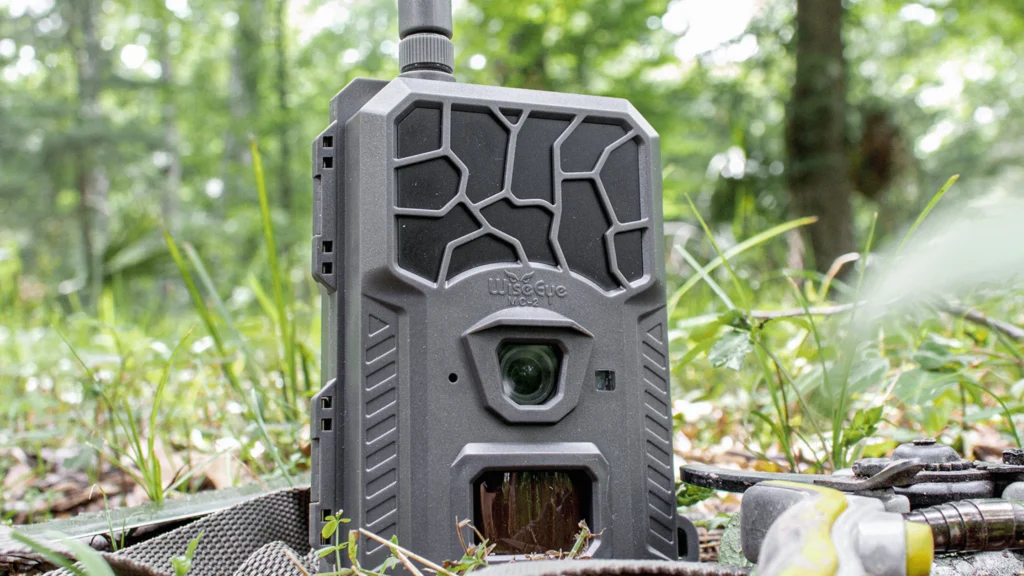
The best trail cameras for wildlife balance speed, image quality, and reliability without overcomplicating the field workflow. The GardePro E5S in camouflage is the single camera we trust most for general scouting: it fires fast, sees far at night, and sips batteries. For long-term deployment without battery worries, the MAXDONE Solar Trail Camera eliminates the most common failure point. And for covering a large property on a budget, the GardePro E5S 2-Pack and WOSODA Mini 4-Pack each serve a specific need.
If you are still not sure which to buy, start with the GardePro E5S. It works, it lasts, and it captures wildlife exactly as they are.
As an Amazon Associate we earn from qualifying purchases.