

A television can have a sharp panel and still feel frustrating when its built-in software is slow, its app selection is limited, or it cannot receive modern over-the-air broadcasts. The right box can add Google TV, voice search, local channels, DVR recording, or a simpler way to play files from USB storage.
The Best best tv box choice depends on what you mean by “TV box.” Xiaomi’s Google TV model is the strongest all-around streaming pick, while ADTH is the more capable antenna tuner for NextGen broadcasts. The rest range from basic ATSC converters to Android boxes with large storage and high-resolution decoding.
Our single best pick is the Xiaomi TV Box S 3rd Gen. The list covers Google TV streamers, Android media boxes, compact antenna tuners, and a built-in DVR receiver.
Best TV Boxes Compared
| # | Product | Award | Output | Storage | Best for |
|---|---|---|---|---|---|
| 1 | Xiaomi TV Box S 3rd Gen | Best overall | 4K UHD, HDR10+, Dolby Vision | 2GB + 32GB | Google TV streaming |
| 2 | ZJBOX ATSC Converter | Best basic tuner | 1080p HDMI | External USB storage | Antenna TV and recording |
| 3 | RINGREAT 8K Android Box | Best storage capacity | 8K HDR decoding | 4GB + 128GB | Apps, files, and local media |
| 4 | RINGREAT Android 14 Box | Best Android 14 storage | 4K at 60Hz, HDR | 4GB + 64GB | General Android use |
| 5 | Sidiwen H618 Android Box | Best wired connectivity | 6K, H.265, 3D playback | 4GB + 64GB | Local playback and Ethernet |
| 6 | ZJBOX Mini Converter | Best hidden tuner | 1080p HDMI, RCA, component | External USB storage | Wall-mounted TVs |
| 7 | OWERSLYN ATSC Converter | Best compact converter | 1080p HDMI, AV, RCA | External USB storage | Small installations |
| 8 | KICKPI KP1 | Best certified Android TV option | 4K HDR | 2GB + 16GB | Google Assistant and casting |
| 9 | ADDCOLOR R69PLUS | Best high-resolution decoder | Up to 8K, 4K at 25fps | 4GB + 32GB | Android apps and USB devices |
| 10 | ADTH NextGen TV Box | Best OTA DVR | Up to 4K HDR | 64GB built-in | ATSC 3.0 and ATSC 1.0 |
1. Xiaomi TV Box S 3rd Gen: Best Overall

Pros
- Google TV interface with cross-app search
- 4K output with HDR10+ and Dolby Vision
- Dolby Atmos and DTS:X support
- Wi-Fi 6 and Google Cast
- Voice control through a 360-degree Bluetooth remote
Cons
- Only 2GB of RAM
- Requires a Wi-Fi 6 router to use its newest wireless features
- Designed for authorized apps and legitimate streaming services
Best for: anyone who wants a polished Google TV upgrade with strong picture and audio support.
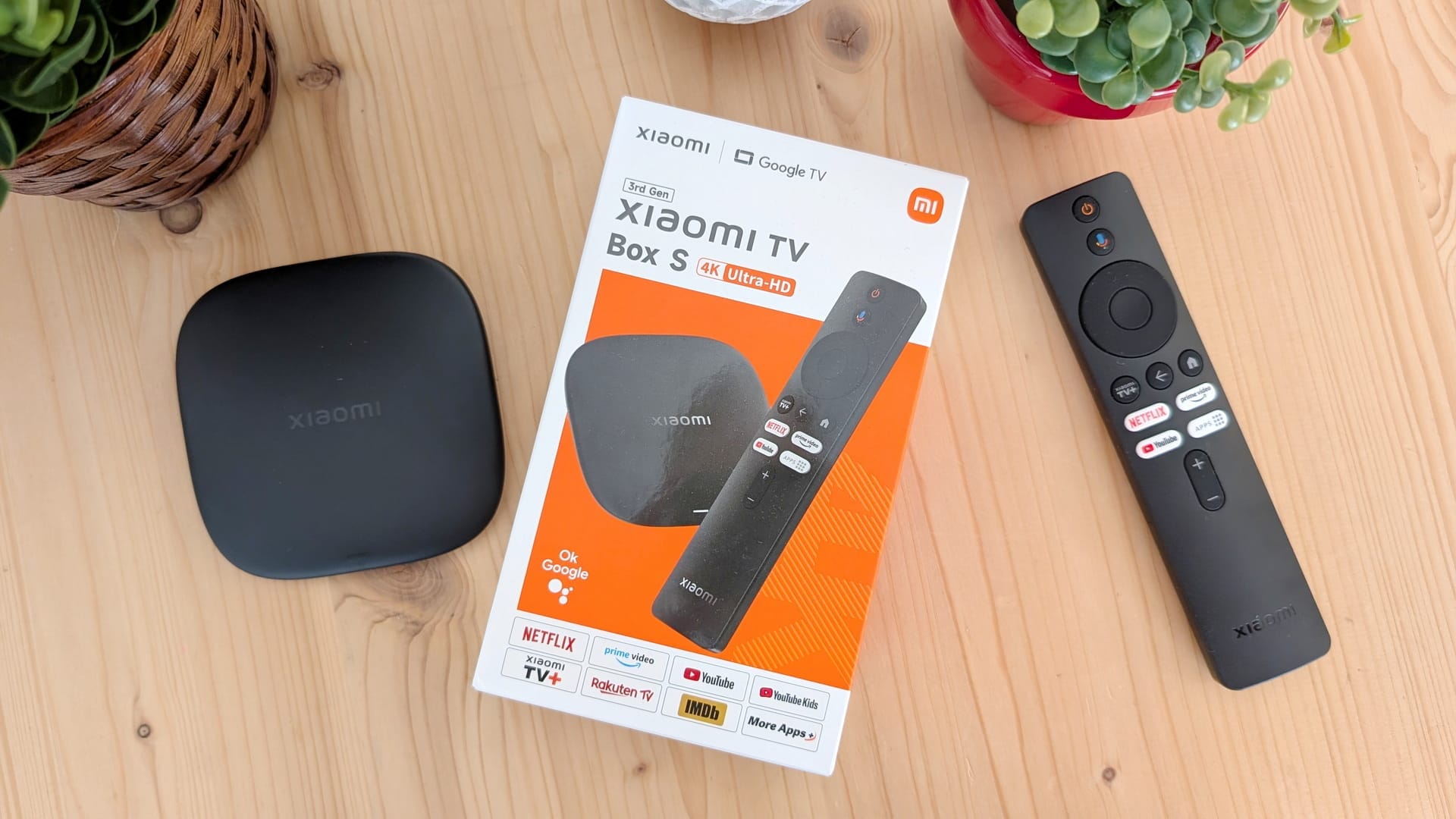
The Xiaomi TV Box S 3rd Gen is the one that makes the most sense for a typical living room. Its Google TV home screen puts recommendations and app search in one place, and the voice button on the 360-degree Bluetooth remote saves the slow process of entering long titles with an on-screen keyboard. Google Cast is also built in, so a phone or tablet can send compatible content directly to the television.
Picture support is unusually complete for this group. The box outputs 4K UHD and supports HDR10+ and Dolby Vision, giving compatible televisions more information for contrast and color. That does not turn ordinary HD programming into native 4K, but it gives supported films and shows the right path to the screen. Dolby Atmos and DTS:X support also make it a better match for a compatible soundbar or receiver than most of the generic Android boxes here.
The hardware uses a 64-bit 6nm platform with a quad-core A55 CPU running up to 2.5GHz, plus 2GB of memory and 32GB of storage. Those figures matter less than the software around them, but they should be enough for normal app use while leaving room for downloads. Wi-Fi 6, including OFDMA and MU-MIMO, can help keep streaming traffic responsive on a suitable router. Readers comparing other software platforms may also want to see how different Android TV interfaces handle streaming and apps.
The weakness is that Xiaomi does not give you the largest memory pool in this roundup, and the experience depends on the apps and subscriptions you use. The box is also not an antenna tuner, so it cannot replace the ZJBOX converters or ADTH for live broadcast reception. Choose it over the RINGREAT 8K Android Box when a familiar, organized TV interface matters more than raw storage. It is the pick for viewers who want a small, capable streamer rather than an experimental media computer.
2. ZJBOX ATSC Converter: Best Basic Tuner

Pros
- Receives ATSC broadcasts through an external antenna
- 1080p HDMI output
- Records to USB storage
- Supports scheduled recording and playback
- Includes HDMI and composite cables
Cons
- No built-in storage
- Requires an external antenna
- Offline design means firmware updates are infrequent
Best for: older TVs that need a straightforward ATSC tuner and USB recording.
The ZJBOX ATSC Converter is a traditional converter box, not a streaming player. Connect an antenna to receive over-the-air digital broadcasts, then send the picture to an analog or digital television, projector, or computer monitor. That distinction is important. It will not provide Netflix, Google TV, or a cable replacement experience, but it can give an older display access to local broadcast channels.
Its HDMI output reaches 1080p, subject to the quality of the incoming signal and the display. The box includes auto tuning, a favorite channel list, parental controls, closed captions, and timer-based startup and shutdown. Those are practical features for a bedroom or secondary television where the goal is reliable channel access rather than a large app ecosystem.
Recording works through an external USB drive or flash drive because there is no built-in storage. The specifications call for FAT32 external hard drives up to 4TB or flash drives up to 32GB. That limitation shapes the buying decision: the ZJBOX can record and play back programs, but you must supply compatible storage and manage the files yourself. It can also play photos, MP3 music, and movie files from USB.
Compared with the ZJBOX Mini Converter, this model is less focused on disappearing behind a wall-mounted television, while the Mini has a more compact stick-like shape and a learning remote. The larger question is whether you want an offline tuner at all. People seeking app streaming should choose Xiaomi or KICKPI instead. For antenna households with a 1080p screen and a spare USB drive, this is the simpler route.
3. RINGREAT 8K Android Box: Best Storage Capacity

Pros
- 4GB of RAM and 128GB of storage
- Android 14 operating system
- 8K UHD decoding with HDR
- Wi-Fi 6 and Bluetooth 5.0
- USB 2.0, USB 3.0, and LAN ports
Cons
- Not presented as a Google-certified TV device
- 8K support is decoding capability, not a guarantee of native 8K content
- No built-in antenna tuner
Best for: users who need generous local storage for apps, games, and media files.
The RINGREAT 8K Android Box is built around capacity. Its 128GB of storage is the largest in the Android group here, and 4GB of RAM gives it more room for switching among apps than the Xiaomi and KICKPI models. That makes it a natural choice for a household that treats a TV box as a small media hub, with downloaded apps, games, and locally stored files sharing the same device.
RINGREAT pairs that memory with Android 14 and a quad-core chipset. The listing says it can decode 8K UHD video and apply HDR color optimization. Those capabilities are useful when the source file and television support them, but the box should not be bought on the assumption that every streaming service will supply 8K video. For most viewers, the bigger day-to-day advantage is having storage available instead of constantly removing apps or moving files.
Connectivity is well considered. Wi-Fi 6 is included, provided the home router supports it, and Bluetooth 5.0 can pair with wireless speakers, headphones, and game peripherals. USB 2.0 and USB 3.0 provide two different connection speeds for accessories or storage, while the LAN port offers a wired alternative when wireless performance is inconsistent. The box measures about 4.06 inches square and 0.71 inches high, so it can sit unobtrusively near a television.
The compromise is software confidence. Xiaomi and KICKPI offer more clearly defined Google TV features, including Google Cast on Xiaomi and Google certification on KICKPI. RINGREAT is more compelling when storage and file playback are the priority. Skip it if you mainly want the cleanest streaming interface or live antenna channels. Pick it when the television is also a place for apps, games, and a substantial local library.
4. RINGREAT Android 14 Box: Best Android 14 Storage

Pros
- Android 14 operating system
- 4GB RAM and 64GB storage
- 4K output at 60Hz with HDR
- H.265 hardware decoding
- USB 3.0, HDMI, and LAN connections
Cons
- Bluetooth 4.2 is older than several alternatives here
- No Google certification is specified
- Requires an antenna-free streaming setup, not broadcast reception
Best for: people who want a roomy Android box for 4K media and everyday apps.
The RINGREAT Android 14 Box is the more restrained sibling to the brand’s 128GB model. It keeps 4GB of RAM but cuts storage to 64GB, which is still enough room for a substantial collection of apps without making the box physically larger. The Android 14 interface is designed for general app use, browsing, games, and media playback rather than the tightly curated experience found on Google TV devices.
Its 4K support runs at 60Hz, an important detail for sports, menus, and fast-moving video. HDR can improve compatible content, while H.265 hardware decoding helps the box handle compressed high-definition files without placing all the work on software. These features make it a sensible fit for a modern television, though the result still depends on the source and the display.
Dual-band 2.4GHz and 5GHz Wi-Fi gives the box flexibility around a busy home network. Bluetooth 4.2 can connect a remote, speaker, gamepad, or other accessory, but it is not as current as the Bluetooth 5.0 radios in the RINGREAT 8K model, Sidiwen, and KICKPI. USB 3.0 is useful for faster external storage, and the LAN port is the better option for a television located close to a router.
This box sits between the high-capacity RINGREAT 8K Android Box and the more entertainment-focused Xiaomi. It has more RAM than Xiaomi, but Xiaomi has a clearer Google TV experience and stronger stated HDR and audio compatibility. The RINGREAT Android 14 Box is a better fit for someone who wants an Android device with room for apps and files, and a weaker fit for viewers who want the fewest interface decisions.
5. Sidiwen H618 Android Box: Best Wired Connectivity

Pros
- Allwinner H618 quad-core processor
- 4GB RAM and 64GB storage
- 100M Ethernet connection
- Dual-band Wi-Fi and Bluetooth 5.0
- H.265, 6K, and 3D playback support
Cons
- Runs Android 12 rather than Android 14
- No Google TV interface is specified
- Larger and heavier than the smallest boxes here
Best for: local media playback where Ethernet and broad format support matter.
The Sidiwen H618 Android Box makes its strongest case with connections and file playback. It includes a 100M Ethernet port alongside dual-band Wi-Fi, so it can use a wired network when a television sits near the router. That is useful for a media room where a stable connection matters more than hiding every cable.
Inside, the Allwinner H618 is a quad-core processor paired with 4GB of RAM and 64GB of storage. Sidiwen says the box supports 6K decoding, 3D playback, and H.265 processing. Those figures describe what the hardware can decode, not the resolution of every app or file, but H.265 support can be especially useful for handling modern compressed video files without unnecessary conversion.
Bluetooth 5.0 gives it a practical advantage for wireless headphones, speakers, and a mini keyboard. The package includes a remote, power adapter, HDMI cable, and user manual. The box measures about 4 by 4 by 1 inch and weighs roughly 0.82 pounds, making it less featherweight than Xiaomi or the compact tuner boxes but still easy to place in an entertainment center.
The trade-off is its older Android 12 software. The newer RINGREAT boxes use Android 14, and Xiaomi has the more coherent Google TV structure. Sidiwen is the pick for people who care about USB and network playback, not for someone who wants a polished recommendation screen. If your main question is how a streaming box differs from a simple TV tuner, this distinction is exactly where Sidiwen belongs.
6. ZJBOX Mini Converter: Best Hidden Tuner

Pros
- Compact design for hiding behind a TV
- ATSC reception through an antenna or cable source
- 1080p HDMI output
- HDMI, RCA, and component outputs
- Learning remote can control the box and TV
Cons
- AAA batteries are not included
- Recordings require external storage
- Remote uses infrared rather than Bluetooth
Best for: wall-mounted televisions that need antenna channels and DVR functions.
The ZJBOX Mini Converter is designed around a physical problem: the television is mounted on a wall, and a full-size box would be awkward to place. Its body is about 4 inches long, 1.4 inches wide, and 0.7 inches high, allowing it to tuck behind the display. A 5V USB adapter is included, which gives installations more flexibility around the television’s available power.
This is an ATSC tuner, not an Android streamer. It takes broadcast signals from an antenna or cable source and sends them to a TV, projector, or monitor. HDMI output supports 1080p, while RCA and component outputs give it compatibility with older displays. The included HDMI and 3RCA cables make the initial connection easier, but the television still needs to support the selected signal.
Its recording system uses an external hard drive or flash drive. The listing states that FAT32 hard drives up to 4TB or flash drives up to 32GB are supported. You can schedule recordings, use an electronic program guide, save favorite channels, enable parental controls, and play local movies, music, and photos from USB. That is a useful set of functions for a secondary screen, even though it requires more hands-on file management than ADTH’s built-in storage.
The two-in-one remote is a genuine convenience, with four programmable buttons for basic TV control, but it requires pairing and AAA batteries that are not supplied. The OWERSLYN converter is another compact alternative, while this ZJBOX offers more clearly described output choices and media functions. Choose it for a tidy antenna setup behind a TV. Skip it if you want apps, voice search, or internet streaming.
7. OWERSLYN ATSC Converter: Best Compact Converter

Pros
- Compact tuner can sit behind a TV
- 1080p HDMI output
- HDMI, AV, and component output options
- USB recording and media playback
- Includes a learning remote and cables
Cons
- Does not support CH3 or CH4 switching
- Requires an external antenna
- Recordings are not intended for streaming programs
Best for: a small, uncomplicated OTA setup with scheduled recording.
The OWERSLYN ATSC Converter is one of the smallest ways to add antenna television to a display. Its design is described as 75 percent smaller than a normal ATSC tuner, and it can connect through HDMI while drawing power from a TV USB port or a 5V USB charger. An infrared receiver with a display helps the remote work even when the main unit is tucked behind the television.
The tuner receives ATSC broadcasts from an external antenna and outputs them to a TV, projector, or monitor. HDMI supports 1080p, and AV, RCA, and component options broaden compatibility with older equipment. It is not compatible with a television that has only an RF input, so check the display’s connections before choosing it.
Recording works in real time or through scheduled timers, with programs stored on USB storage. The box can also play video, music, photos, and recorded programs from that device. The included two-in-one remote can learn basic television commands, while the package includes HDMI, 3RCA, USB-to-DC, and infrared receiver cables.
OWERSLYN is appealing when physical size is the main concern, but its limitations are clear. It does not support CH3 or CH4 channel switching, and it cannot record streaming programs. ZJBOX’s Mini Converter is a close alternative with a similarly tidy installation, while ADTH is the much stronger choice for ATSC 3.0 and built-in storage. Pick OWERSLYN for an older or secondary display that needs local channels without a large enclosure.
8. KICKPI KP1: Best Certified Android TV Option

Pros
- Google certified Android TV device
- Android TV 14
- 4K HDR and Dolby Digital Plus
- Built-in Chromecast
- Google Assistant voice remote
Cons
- 2GB RAM and 16GB storage
- Uses Wi-Fi 5 rather than Wi-Fi 6
- No antenna tuner or built-in DVR
Best for: viewers who want Google services, casting, and a familiar voice-controlled interface.
The KICKPI KP1 is the Android box here that most directly resembles a conventional living-room streamer. It is Google certified, runs Android TV 14, and includes Google Chromecast. That combination matters because the interface, app access, casting behavior, and voice search are more central to the product than headline decoding numbers.
It supports 4K HDR video and Dolby Digital Plus audio. Compatible services and a compatible television are still required to see and hear those formats, but the hardware is prepared for a modern home theater setup. Google Assistant on the voice remote can search for programs, offer recommendations, and control compatible smart home devices without typing through an on-screen keyboard.
The memory configuration is more modest than the generic RINGREAT models. KICKPI has 2GB of RAM and 16GB of storage, with storage expansion through USB for additional apps and games. Dual-band Wi-Fi and 100Mbps Ethernet give you both wireless and wired networking, while Bluetooth 5.0 can connect headphones and gamepads. The built-in HDMI cable makes the physical setup especially simple.
That smaller storage pool is the reason KICKPI does not take the top spot from Xiaomi. Xiaomi offers 32GB of storage, Wi-Fi 6, Dolby Atmos, DTS:X, and Google TV, while KICKPI counters with explicit Google certification and Chromecast. The choice comes down to the interface you prefer and how many apps you plan to keep installed. KICKPI is the safer fit for a viewer who wants a recognizable Android TV experience without experimenting with generic Android software.
9. ADDCOLOR R69PLUS: Best High-Resolution Decoder

Pros
- Android 14 operating system
- 4GB RAM and 32GB storage
- Dual-band 2.4GHz and 5.8GHz Wi-Fi
- Bluetooth 5.0
- USB 2.0 and USB 3.0 ports
Cons
- 8K support is limited by the source and display
- The listing specifies 4K decoding at 25fps
- No Google certification or live tuner is specified
Best for: Android users who want high-resolution decoding and two USB ports.
The ADDCOLOR R69PLUS is a generic Android media box with a focus on resolution and connectivity. It runs Android 14 and uses an Allwinner H728 chipset with Mali G57-MC1 graphics, according to the listing. With 4GB of RAM and 32GB of storage, it has enough room for a useful set of apps while remaining less storage-focused than the RINGREAT 8K model.
The advertised video capability reaches up to 8K by 8K resolution, while the listing also specifies a 4K decoder at 25fps. That combination needs careful interpretation. A television, app, or video file may impose lower limits, and 25fps is not the same as the 60Hz 4K output listed for RINGREAT’s Android 14 box. This makes ADDCOLOR more interesting for file playback and resolution support than for viewers comparing motion handling.
Dual-band 2.4GHz and 5.8GHz Wi-Fi helps the box work across different wireless conditions, and Bluetooth 5.0 supports accessories. Two USB ports, including USB 3.0, can connect storage, wired headphones, or game controllers. The body is about 5.9 inches long, 4.33 inches wide, and 1.18 inches high, so it is noticeably larger than Xiaomi or KICKPI.
ADDCOLOR is not the obvious choice for mainstream streaming. Xiaomi and KICKPI offer clearer Google-oriented features, while Sidiwen is more explicit about Ethernet and local media formats. Choose R69PLUS when Android 14, USB connectivity, and decoder flexibility are the priorities. Skip it if you want a polished service interface, built-in voice search, or antenna reception.
10. ADTH NextGen TV Box: Best OTA DVR

Pros
- Supports ATSC 3.0 and ATSC 1.0
- 4K HDR output for compatible broadcasts
- 64GB built-in storage
- DVR recording with pause, rewind, and replay
- Wi-Fi and Bluetooth connectivity
Cons
- Requires a TV antenna
- NextGen channel availability varies by location
- Some advanced audio features require a compatible smart TV or audio system
Best for: antenna viewers who want modern broadcast support and built-in DVR storage.
The ADTH NextGen TV Box is the specialist pick for over-the-air television. Unlike the three basic converters here, it supports both ATSC 3.0 and legacy ATSC 1.0 broadcasts. That lets it serve current antenna systems while remaining compatible with the older broadcast standard that many local stations still use.
It can output up to 4K HDR when the broadcast and television support those formats. Availability varies by location, so the box cannot create NextGen channels that are not transmitted in your area. Still, it gives a compatible 4K display a route to sharper broadcast detail and richer contrast than a basic 1080p converter. Dolby Digital Plus and AC-4 audio support can also improve sound when the television or audio system supports them.
The built-in 64GB storage is the biggest practical advantage. ZJBOX and OWERSLYN require external USB storage for DVR use, while ADTH can record immediately and supports pause, rewind, replay, and playback. External storage can expand the recording capacity through a USB flash drive or microSD card, both sold separately. Guided on-screen channel scanning should make the antenna setup easier to follow.
ADTH is not a replacement for Xiaomi or KICKPI because it is an antenna receiver rather than a general streaming platform. It is also more capable than the basic ZJBOX models, but its benefits only matter to homes with suitable local broadcasts. The lack of an antenna in the box is another detail to plan around. Choose ADTH when live OTA television and DVR control are central, especially if you want one receiver to handle both ATSC generations.
How to choose the best tv box
Start by deciding whether you need internet streaming, antenna reception, or both. The important differences are not just resolution labels. They are the operating system, tuner standard, storage method, connections, and recording workflow.
Operating system and app access
Google TV and Android TV are designed for a television screen, with remote-friendly menus, voice search, and access to compatible streaming apps. Xiaomi has Google TV, while KICKPI is Google certified Android TV. The other Android models list Android versions but do not specify the same certification or interface.
If you want recommendations, casting, and voice control to feel integrated, choose a clearly defined TV platform. Generic Android boxes can offer more storage and USB flexibility, but their software experience may require more patience.
Broadcast tuner standard
An Android streaming box does not receive antenna channels simply because it connects to a television. For local broadcasts, you need an ATSC tuner and an external antenna. Basic converters such as OWERSLYN and ZJBOX handle ATSC broadcasts, while ADTH adds ATSC 3.0 support alongside ATSC 1.0.
Check the channels available in your area before buying around NextGen TV. A tuner can support a broadcast standard, but local station availability still determines what you can watch.
A box with 8K decoding cannot replace an antenna tuner, and an ATSC converter cannot install streaming apps.
Resolution and HDR
Look beyond the largest number in the product title. Xiaomi supports 4K UHD, HDR10+, and Dolby Vision. KICKPI supports 4K HDR, RINGREAT lists 4K at 60Hz, and several generic Android boxes advertise 6K or 8K decoding. Those are not interchangeable claims.
The source file, streaming app, HDMI connection, and television all affect the final image. For normal streaming, a well-supported 4K platform is usually more useful than an uncertified box with a higher decoding headline.
Storage and recording
Storage serves two different purposes. Android boxes use it for apps, games, and local files, while tuner boxes use it for recorded television. RINGREAT’s 128GB capacity is the largest Android option here. ADTH includes 64GB for DVR recording, whereas ZJBOX and OWERSLYN require external USB storage.
Think about how you will use the space. A viewer installing a few streaming apps may prefer Google TV simplicity. Someone keeping local video files or recording broadcasts should pay closer attention to built-in capacity, USB support, and file-system limits.
Network and accessory connections
Dual-band Wi-Fi is useful when a router is nearby but crowded networks can still affect playback. Ethernet is the steadier choice for a fixed entertainment center, and Sidiwen, RINGREAT, and KICKPI list wired networking. Bluetooth matters for headphones, speakers, gamepads, and keyboards.
USB 3.0 is more useful than USB 2.0 for moving larger local files or connecting external storage. Also check the included remote. Voice search and Google Cast make Xiaomi and KICKPI easier to operate from a sofa, while converter remotes focus on channel and recording control.

Frequently asked questions
Do these TV boxes include live channels?
Only the converter boxes are designed to receive live over-the-air broadcasts. ZJBOX, OWERSLYN, and ADTH require an external antenna, and the available channels depend on local signals. The Android streaming boxes are intended for apps and local media rather than antenna reception.
Can an Android TV box record antenna channels?
The Android models listed here do not specify an ATSC tuner or built-in broadcast recording. ADTH includes a tuner and 64GB of storage for DVR recording. The ZJBOX and OWERSLYN converters can record to compatible external USB storage.
Is 8K support useful with a 4K television?
An 8K decoding claim does not make a 4K television display 8K detail. It may matter for certain local files and compatible hardware, but most viewers should give more weight to app support, reliable 4K output, and a suitable interface. Xiaomi, KICKPI, and the 4K-focused RINGREAT model are easier choices for mainstream 4K streaming.
Which model works best with a wall-mounted TV?
The ZJBOX Mini Converter and OWERSLYN ATSC Converter are designed to hide behind a television. Both are antenna tuners rather than streaming boxes. For internet streaming behind a wall-mounted TV, the compact Xiaomi and KICKPI units are more suitable, provided there is room for their power and HDMI connections.
Do I need an antenna for the ADTH box?
Yes. ADTH receives over-the-air broadcasts through an antenna, and the box does not replace the antenna itself. It supports both ATSC 3.0 and ATSC 1.0, but your local stations determine which channels and formats are available.
Can these boxes replace cable television?
The Android models can provide access to compatible streaming services, but they do not automatically include paid channels or subscriptions. The tuner models receive antenna broadcasts and can record them, but they do not provide cable channels. Your available services, apps, and local broadcasts determine what each box can replace.
The bottom line
The Best best tv box for most people is the Xiaomi TV Box S 3rd Gen. It combines Google TV, 4K output, HDR10+, Dolby Vision, Dolby Atmos, DTS:X, Wi-Fi 6, Google Cast, and voice control in a compact streamer. KICKPI KP1 is the alternative for anyone who specifically wants a Google certified Android TV device with built-in Chromecast.
For antenna viewing, choose ADTH NextGen TV Box when ATSC 3.0, 4K HDR broadcasts, and built-in DVR storage matter. The ZJBOX Mini Converter and OWERSLYN ATSC Converter make more sense for basic 1080p antenna setups, especially behind wall-mounted TVs.
If you are undecided, choose Xiaomi for streaming apps and ADTH for live antenna television with recording.