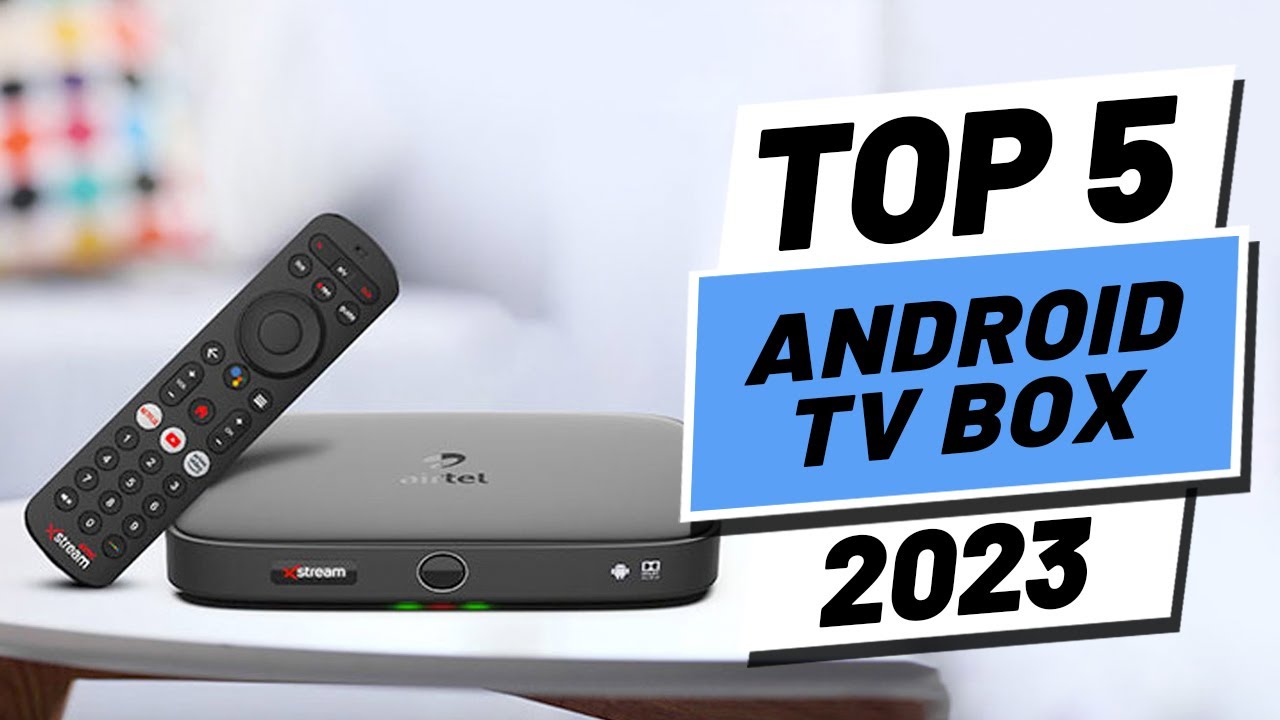

A streaming box can make an older television feel current, but the wrong one creates a new set of problems: sluggish menus, limited storage, weak wireless performance, or an awkward remote. The Best best android tv box options range from serious home-theater hardware to compact Android boxes with generous storage claims.
The NVIDIA Shield TV Pro is our top pick because it combines strong processing, excellent format support, expandable storage, Ethernet, and a genuinely thoughtful remote. The rest of this list covers Google TV simplicity, Roku's cleaner interface, large local storage, and smaller Android boxes for buyers with more specific needs.
Comparison table
| # | Product | Award | Resolution | Storage | Connectivity | Best for |
|---|---|---|---|---|---|---|
| 1 | NVIDIA Shield TV Pro | Best overall | 4K HDR, Dolby Vision | 16GB, expandable | Gigabit Ethernet, Wi-Fi, 2 USB 3.0 | Home theater and gaming |
| 2 | Xiaomi TV Box S 3rd Gen | Best Google TV alternative | 4K, HDR10+, Dolby Vision | 32GB | Wi-Fi 6, HDMI 2.1, Bluetooth | 4K streaming and casting |
| 3 | ADDCOLOR R69PLUS | Best for flexible Android apps | Up to 8K, 4K at 25fps | 32GB | Dual-band Wi-Fi, Bluetooth 5.0, USB 2.0 and 3.0 | App storage and accessories |
| 4 | RINGREAT 128GB TV Box | Best storage | 8K HDR | 128GB | Wi-Fi 6, Bluetooth 5.0, LAN | Large app and file libraries |
| 5 | Google TV Streamer 4K Hazel | Best Google TV experience | 4K HDR, Dolby Vision | 32GB | Google TV, voice remote | Households using Google services |
| 6 | RINGREAT Mini Keyboard Box | Best with a mini keyboard | 4K at 60Hz, HDR | 64GB | Dual-band Wi-Fi, Bluetooth 4.2, USB 3.0 | Browsing and app-heavy use |
| 7 | Sidiwen H618 TV Box | Best for format support | 6K, 3D, H.265 | 64GB | Dual-band Wi-Fi, Bluetooth 5.0, Ethernet | Local media playback |
| 8 | Google TV Streamer 4K Porcelain | Best for a clean interface | 4K HDR, Dolby Vision | 32GB | Google TV, voice remote | Simple streaming |
| 9 | RUPA PRO14 | Best compact Android box | 4K at 60fps, HDR10+ | 16GB, microSD support up to 64GB | Wi-Fi 6, Ethernet, Bluetooth 5.0 | Small entertainment setups |
| 10 | Roku Ultra | Best non-Android option | 4K, HDR10+, Dolby Vision | Not specified | Wi-Fi 6, Ethernet, Bluetooth headphones | Straightforward streaming |
1. NVIDIA Shield TV Pro: Best Overall

Pros
- Tegra X1+ processing and AI upscaling
- Dolby Vision and Dolby Atmos support
- Two USB 3.0 ports for expansion
- Gigabit Ethernet and dual-band Wi-Fi
- Backlit remote with a locator
Cons
- Only 16GB of built-in storage
- Larger and heavier than the compact boxes
- Controller is sold separately for gaming
Best for: home theater users who want expandability and strong performance.
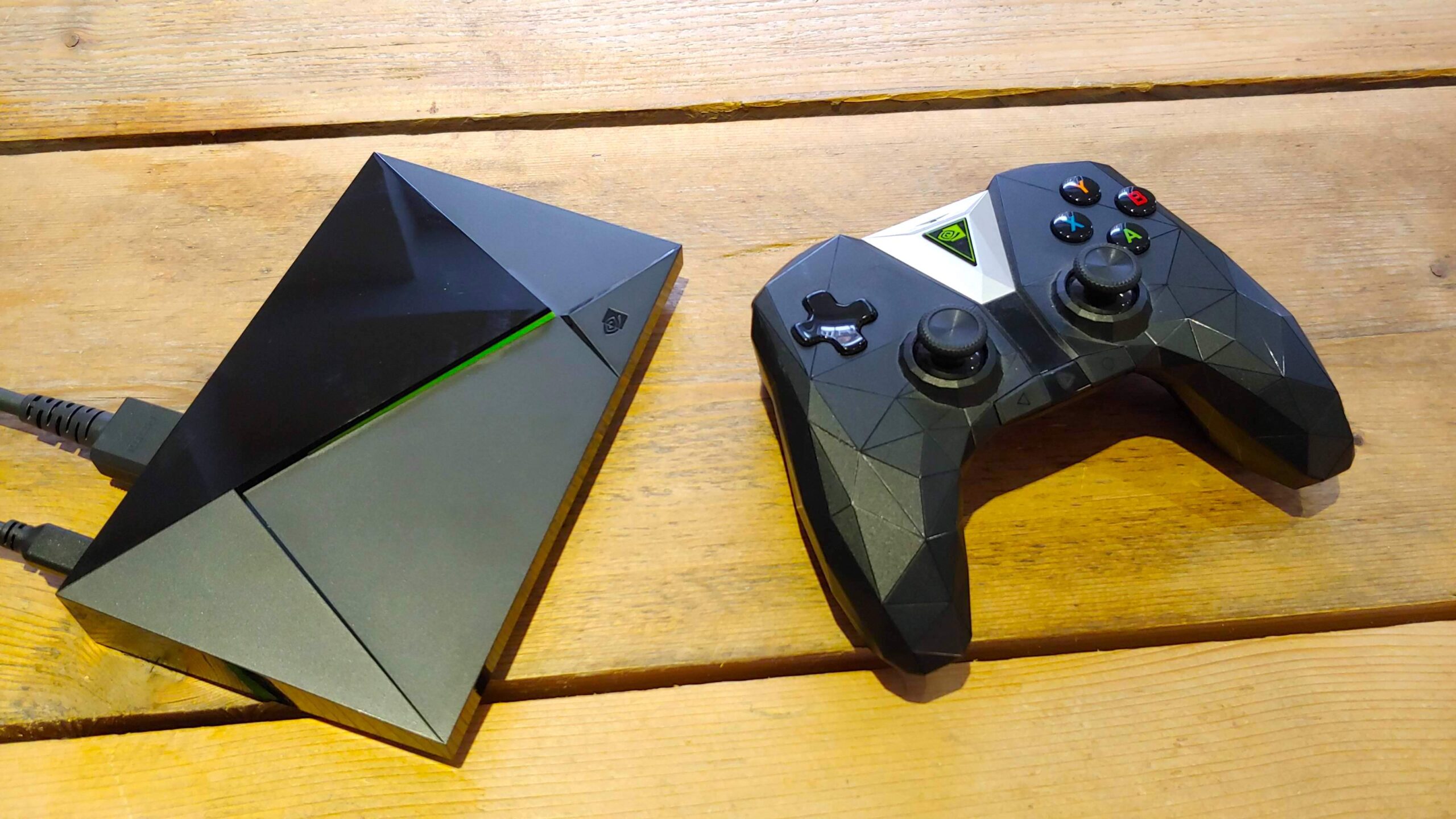
The NVIDIA Shield TV Pro is the box we'd keep for a serious living-room setup. It feels less like a disposable streaming puck and more like a small media computer, with enough connectivity to support external storage, a USB camera, a keyboard, or a controller. Its black enclosure measures 6.26 by 3.86 by 1.02 inches and weighs 2.1 pounds, so it needs a proper shelf rather than a hidden spot behind a television.
Its Tegra X1+ chip is the key reason it leads this group. NVIDIA pairs it with 3GB of RAM, 16GB of storage, and real-time AI upscaling that can enhance HD video toward 4K. Upscaling cannot turn ordinary video into native 4K, but it can make the Shield a more convincing partner for a modern television than generic Android hardware that simply advertises a higher output resolution. Dolby Vision, Dolby Atmos, and Dolby Digital Plus support also make it a natural fit for a compatible soundbar or receiver.
The two USB 3.0 ports change how the box can be used over time. The Xiaomi TV Box S 3rd Gen has 32GB of storage and a newer Wi-Fi 6 connection, but the Shield is much more accommodating when a library, controller, keyboard, or USB accessory enters the picture. Its built-in Plex Media Server, Gigabit Ethernet, dual-band AC Wi-Fi, and Bluetooth 5.0 give it a stronger foundation for local media and networked playback.
The weakness is its age and its built-in storage. The 2019 release date means the Shield is not the newest hardware here, and 16GB can fill quickly if you install games or media-heavy apps. The box is also overkill for someone who only wants Netflix and a few mainstream services. For those buyers, the Google TV Streamer 4K Hazel is easier to live with. Choose the Shield when processing headroom, ports, and long-term flexibility matter more than compactness.
2. Xiaomi TV Box S 3rd Gen: Best Google TV Alternative

Pros
- 4K output with HDR10+ and Dolby Vision
- Dolby Atmos and DTS:X support
- Wi-Fi 6 and HDMI 2.1
- 32GB of storage
- Google Cast and voice control
Cons
- Requires a Wi-Fi 6 router to use that standard
- Lacks the Shield's USB expansion
- App support depends on authorized services
Best for: viewers who want a compact Google TV box with modern wireless hardware.
The Xiaomi TV Box S 3rd Gen is the most balanced compact Android option in this group. Its 3.82-inch square footprint and 0.67-inch height make it easy to place beside a television, while the 0.2-pound weight means it disappears behind most displays. The small enclosure does mean fewer expansion options than the NVIDIA Shield TV Pro, but Xiaomi focuses this model on current streaming standards rather than accessories.
A 64-bit 6nm platform with a quad-core A55 CPU running up to 2.5GHz sits behind the interface. The box has 2GB of RAM and 32GB of storage. That is a sensible arrangement for streaming applications, Google TV recommendations, and phone casting, though it gives less multitasking headroom than the larger-memory generic boxes in this list. Google Cast is especially useful if the household already moves video from phones and tablets to the television.
Picture and sound support are strong for a compact player. The Xiaomi handles 4K UHD, HDR10+, Dolby Vision, Dolby Atmos, and DTS:X. Those formats only matter when the television, receiver, content, and service support them, but the broad compatibility gives this box room to fit into a more capable home theater. HDMI 2.1 is another current feature, although the dataset does not specify every video mode supported through that connection.
Wi-Fi 6 uses OFDMA and MU-MIMO to improve traffic handling, but the benefit depends on having a Wi-Fi 6-enabled router. The remote is a 360-degree Bluetooth model with a voice button for Google Assistant, and it can also manage smart-home functions. Compared with the Google TV Streamer 4K Hazel, the Xiaomi offers a similarly familiar software direction in a smaller body. Its real limitation is the lack of the Shield's USB ports and Plex-oriented flexibility. It suits viewers who want modern 4K streaming without building a media server around the box.
3. ADDCOLOR R69PLUS: Best for Flexible Android Apps

Pros
- Android 14 operating system
- 4GB of RAM and 32GB of storage
- Dual-band 2.4GHz and 5.8GHz Wi-Fi
- Two USB ports, including USB 3.0
- Bluetooth 5.0
Cons
- 8K support is paired with 4K at 25fps decoding
- No Dolby Vision or Dolby Atmos claim in the supplied details
- Generic Android hardware has fewer clearly defined media features
Best for: users who need broad app and accessory flexibility from an Android box.
The ADDCOLOR R69PLUS takes a more open Android-box approach than the polished Google TV products. It measures 5.9 by 4.33 by 1.18 inches, making it one of the larger units here, and its two USB ports give it a practical advantage over compact streaming devices. A USB 2.0 port and USB 3.0 port can accommodate accessories such as a game controller or wired headset.
Android 14 is paired with an Allwinner H728 chipset and Mali G57-MC1 graphics. The box includes 4GB of RAM and 32GB of storage, which gives installed applications more room than the 2GB Xiaomi. That does not automatically make every app faster, but it is useful for people who want to experiment with Android applications rather than stay inside a tightly curated streaming interface.
The R69PLUS advertises support up to 8K by 8K and specifies 4K decoding at 25 frames per second. That distinction matters. A headline resolution figure describes what the hardware may decode or output under particular conditions, while the stated 4K frame rate gives a more useful clue about how certain video will behave. The supplied details do not list Dolby Vision or Atmos support, so buyers building around those formats should choose the Xiaomi or Shield instead.
Dual-band 2.4GHz and 5.8GHz Wi-Fi and Bluetooth 5.0 cover the expected wireless connections. The R69PLUS is more interesting than the RINGREAT 128GB TV Box if USB accessories matter, but the RINGREAT has substantially more built-in storage. Its real attraction is the combination of Android 14, 4GB of RAM, and two USB ports. Skip it if your priority is a refined cross-service home screen, and consider how different streaming platforms organize your television before choosing between open Android hardware and a dedicated streaming system.
4. RINGREAT 128GB TV Box: Best Storage

Pros
- 128GB of built-in storage
- Android 14 and quad-core processing
- 8K decoding with HDR
- Wi-Fi 6 and Bluetooth 5.0
- USB 2.0, USB 3.0, and LAN connections
Cons
- Streaming app certification is not specified
- 8K support does not describe every playback mode
- The red and black design is less discreet
Best for: households that need substantial local space for apps and files.
The RINGREAT 128GB TV Box is the obvious choice when storage is the defining requirement. Its 128GB capacity is four times the Xiaomi's 32GB and much larger than the Shield's 16GB. That space can accommodate a larger collection of applications, games, and files without immediately reaching the storage ceiling. It measures 4.06 by 4.06 by 0.71 inches and weighs about 0.21 pounds, so it remains easy to position despite the generous capacity.
The hardware combines Android 14 with a quad-core processor and 4GB of RAM. RINGREAT describes it as suitable for streaming software and offline games, with a focus on steady everyday operation. This is a better match for someone who wants a general Android media box than for a viewer who wants the most carefully integrated recommendations across streaming services.
Its video claim is 8K UHD decoding with HDR color optimization. The description also mentions USB 2.0, USB 3.0, and a LAN interface, giving it a useful mix of wireless and wired possibilities. Wi-Fi 6 can improve transmission and reduce interference on a compatible network, while Bluetooth 5.0 can connect speakers, headphones, and game peripherals.
The main question is not storage. It is software confidence. The supplied product details do not specify Dolby Vision, Dolby Atmos, Google Cast, or certification for individual streaming services. That makes the Google TV Streamer 4K Hazel a safer recommendation for a household centered on mainstream streaming, even though it offers less storage. Pick the RINGREAT when the box is also a file and app storage device, and avoid it if you want a clearly documented, appliance-like streaming experience.
5. Google TV Streamer 4K Hazel: Best Google TV Experience

Pros
- Personalized Google TV home screen
- 4K HDR with Dolby Vision
- Dolby Atmos support with compatible speakers
- 32GB of storage
- Voice search and smart-home control
Cons
- HDMI 2.1 cable is required and sold separately
- No USB expansion is specified
- Wired networking is not listed in the supplied details
Best for: households that want simple navigation and Google-connected recommendations.
The Google TV Streamer 4K Hazel is the easiest recommendation for a family that wants the television to organize entertainment rather than expose a large Android app environment. Its home screen brings movies and shows from different services together, then adds recommendations based on household interests and viewing habits. That reduces the familiar routine of opening several apps just to decide what to watch.
Google lists up to 4K HDR playback with Dolby Vision. With compatible speakers, the streamer can also support Dolby Atmos for more immersive sound. It includes 32GB of storage, enough to give applications and the system more breathing room than the NVIDIA Shield TV Pro's built-in capacity, though Google does not specify USB expansion here.
The voice search remote is central to the experience. Searching for a title, checking live programming, or adding something to a watchlist is faster when the remote can accept spoken requests. Google TV also offers access to more than 800 free channels from services including Pluto TV and Tubi, according to the supplied details. The broader experience works best for households already using Google search, Google Cast, and smart-home control.
The physical unit measures 6.4 by 3 by 1 inches and weighs about 0.36 pounds. It is still compact, but the NVIDIA Shield TV Pro is more versatile for USB accessories, Ethernet, and gaming. The Google box is the better fit for people who want less tinkering. Remember that an HDMI 2.1 cable is required and is not included, a small setup detail that can interrupt an otherwise simple installation.
6. RINGREAT Mini Keyboard Box: Best with a Mini Keyboard

Pros
- Mini keyboard included
- 4GB of RAM and 64GB of storage
- 4K at 60Hz with HDR
- H.265 hardware decoding
- USB 3.0 and LAN ports
Cons
- Bluetooth is version 4.2
- No Dolby Vision or Atmos support is specified
- The interface is less clearly defined than Google TV
Best for: viewers who browse, search, and use apps more like a small computer.
The RINGREAT Mini Keyboard Box is aimed at a different kind of living-room user. It includes a mini keyboard, which is useful when typing searches, entering passwords, browsing, or navigating applications that are awkward with a conventional directional remote. The box itself measures 4 by 4 by 0.78 inches and weighs about 0.2 pounds, so the hardware stays unobtrusive even if the keyboard takes a little more space on the coffee table.
Its quad-core processor works with 4GB of RAM and 64GB of storage. That combination leaves more room for apps, games, videos, and files than the Xiaomi TV Box S 3rd Gen. The box supports 4K Ultra HD at 60Hz, HDR, and H.265 hardware decoding. The 60Hz figure is more useful than a vague 8K headline for everyday 4K television because it indicates support for a common smooth playback mode.
Connectivity includes dual-band 2.4GHz and 5GHz Wi-Fi, Bluetooth 4.2, USB 3.0, HDMI, and LAN. Bluetooth 4.2 is older than the Bluetooth 5.0 connections used by the Shield, Xiaomi, and several other entries, but it still covers common remotes, speakers, gamepads, and other accessories. Wired LAN is helpful when the television is far from a strong wireless access point.
This box does not have the Google TV Streamer's polished cross-service home screen, and the supplied details do not mention Dolby Vision or Dolby Atmos. The mini keyboard is the reason to choose it, not a premium cinematic format list. If your household spends more time typing and browsing than jumping between a few major services, it is more practical than the Google models. For a conventional sofa-first experience, the Roku Ultra or Google TV Streamer 4K is easier to operate.
7. Sidiwen H618 TV Box: Best for Format Support

Pros
- Allwinner H618 quad-core processor
- 6K decoding and 3D playback support
- H.265 processing
- 64GB of storage
- Bluetooth 5.0 and wired Ethernet
Cons
- Runs Android 12
- The supplied details do not specify Dolby Vision
- Ethernet is described as 100M
Best for: users with varied local media formats and a wired network connection.
The Sidiwen H618 TV Box makes its case through playback flexibility. It uses an Allwinner H618 quad-core processor and supports 6K decoding, 3D playback, and H.265 processing. That combination is more relevant to a personal media collection than to someone who only opens a few mainstream streaming applications. The box measures 4 by 4 by 1 inch and weighs about 0.82 pounds, making it notably heavier than most of the compact options here.
Sidiwen provides 4GB of RAM and 64GB of storage. The capacity is enough to install a broad set of apps and keep files locally, while H.265 processing can handle compatible video more efficiently than older codecs. The description says the box supports almost all popular audio and video formats, but it does not identify each format, so buyers with a very specific library should check compatibility before committing.
Wireless connections include 2.4GHz and 5GHz Wi-Fi, with Bluetooth 5.0 for headphones, a mini keyboard, or other peripherals. The product description also identifies a 100M Ethernet connection. Wired networking can still be useful for stable playback, though the NVIDIA Shield TV Pro's Gigabit Ethernet is the stronger choice for large network transfers or a Plex-centered system.
Android 12 is older than Android 14 on the ADDCOLOR R69PLUS and RINGREAT boxes. The supplied details also do not mention Dolby Vision or Atmos, so the Sidiwen is not our first recommendation for a new Dolby-focused theater. It makes more sense for a local-media enthusiast who values codec and format coverage, storage, and a wired connection. If the television is mainly for services and recommendations, the differences between compact streaming hardware are more useful than the Sidiwen's broad decoding claims.
8. Google TV Streamer 4K Porcelain: Best for a Clean Interface

Pros
- Personalized Google TV recommendations
- 4K HDR with Dolby Vision
- Voice search remote
- 32GB of storage
- Smart-home control and watchlists
Cons
- HDMI 2.1 cable is required separately
- No USB expansion is specified
- The Porcelain version has the same feature set as the Hazel version
Best for: viewers who want a simple Google TV interface and a lighter setup process.
The Google TV Streamer 4K Porcelain is functionally the same kind of product as the Hazel model above, with the finish being the distinguishing detail in this list. It measures 6.4 by 3 by 1 inch and weighs about 0.36 pounds. The low-profile shape is easy to place near a television, and the design feels more like a dedicated appliance than a generic Android box.
Its main strength is the Google TV software layer. Movies and shows from different services appear on one home screen, recommendations are tailored to people in the household, and watchlists can be updated from a television, mobile app, or Google search. The product also provides access to more than 800 free channels from Pluto TV, Tubi, and other services listed in the supplied details.
Playback reaches 4K HDR with Dolby Vision, and compatible speakers can use Dolby Atmos. The streamer includes 32GB of storage, which is ample for a focused streaming setup. It does not offer the Shield TV Pro's two USB 3.0 ports, and the supplied information does not list Ethernet, so this is not the box for a user planning extensive wired accessories or local-server expansion.
The Porcelain version is easy to recommend when you prefer its finish, but there is no performance advantage over the Google TV Streamer 4K Hazel in this dataset. Both are better suited to mainstream viewing than the RINGREAT Mini Keyboard Box, while the Shield remains more capable for gaming and local media. Before buying, consider how many inputs and smart features a television really needs so the streamer complements rather than duplicates the television's existing software.
9. RUPA PRO14: Best Compact Android Box

Pros
- Very small 2.5-inch square enclosure
- Android 14
- 4K at 60fps and HDR10+
- Wi-Fi 6 and Bluetooth 5.0
- USB ports and Ethernet
Cons
- Only 2GB of RAM and 16GB of storage
- RK3518 uses a 32-bit Cortex-A53 design
- No Dolby Vision or Dolby Atmos claim is listed
Best for: small setups that need modern wireless connections and a compact box.
The RUPA PRO14 is the smallest box in this roundup. Its enclosure measures 2.5 by 2.5 by 0.5 inches, making it easy to hide behind a television or fit into a crowded media cabinet. That compactness is its clearest advantage, especially for a second television, dorm room, or small entertainment area where a full-sized box would be unnecessary.
It uses an RK3518 quad-core 32-bit Cortex-A53 chipset with 2GB of RAM and 16GB of storage. The modest memory configuration is enough for a focused collection of streaming applications, but it gives the RUPA less room than the 4GB models from ADDCOLOR and RINGREAT. The product supports microSD cards up to 64GB, according to the supplied details, which provides a way to add capacity without relying on internal storage alone.
The PRO14 supports 4K at 60fps, HDR10+, and advertised playback through 8K. That 4K at 60fps specification is the useful everyday detail. It indicates a familiar smooth 4K mode, while HDR10+ can improve compatible content on compatible televisions. The supplied information does not mention Dolby Vision or Dolby Atmos, so the Xiaomi or Shield is a better match for a theater built around those formats.
Wi-Fi 6 operates on 2.4GHz and 5.8GHz bands, and Bluetooth 5.0 handles wireless accessories. HDMI, LAN, and multiple USB ports make setup straightforward, while the voice remote and phone mirroring add convenience. The RUPA is more compact than the Sidiwen H618 TV Box and more current in its Android version, but it cannot match the Sidiwen's 64GB capacity or the Shield's processing headroom. Choose it when physical size matters most and your app collection is restrained.
10. Roku Ultra: Best Non-Android Option

Pros
- Simple Roku home screen
- 4K, HDR10+, and Dolby Vision
- Rechargeable backlit voice remote
- Remote finder and hands-free voice control
- Wi-Fi 6, Ethernet, and Bluetooth headphone mode
Cons
- Not an Android TV box
- Storage capacity is not specified
- Less open to Android apps and accessories
Best for: households that prioritize simple streaming over Android flexibility.
The Roku Ultra is the deliberate outlier here. It is not an Android product, but it belongs in this comparison because many buyers searching for an Android TV box are really trying to replace a slow television interface with something quick and uncomplicated. Roku's home screen, short setup process, and straightforward remote make it the least demanding device in the group.
The Ultra supports 4K, HDR10+, Dolby Vision, and Dolby Atmos. Those capabilities put it in the same broad picture and sound class as the Xiaomi TV Box S 3rd Gen, Google TV Streamer 4K, and NVIDIA Shield TV Pro. Roku also says the Ultra is 30% faster than other Roku players, with apps designed to launch quickly. The supplied details do not specify its internal storage capacity, so it is better treated as a streaming appliance than a local app library.
The rechargeable Roku Voice Remote Pro is unusually well equipped. It has backlit buttons, hands-free voice controls, a lost-remote finder, and a battery designed to last for months on a charge. Bluetooth Headphone Mode sends television audio to paired headphones, a useful feature for late-night viewing. Wi-Fi 6 and Ethernet offer both wireless and wired network paths.
The trade-off is platform freedom. The Roku Ultra cannot run Android applications, and it does not offer the Shield's USB ports or the generic boxes' broad Android storage options. It is a stronger recommendation than the RUPA PRO14 for someone who wants a finished, family-friendly interface, but it is the wrong choice for someone specifically needing Android apps or Google Cast. Pick Roku when uncomplicated streaming is the goal, not when Android compatibility is the deciding requirement.
How to choose best android tv box
The right box depends less on a headline resolution claim than on the way you watch television. Focus on software, video formats, network hardware, storage, and the remote before comparing processor labels.
Streaming platform
Google TV organizes recommendations and services in one place, while Roku uses a simpler channel-based interface. Generic Android boxes can offer broader app flexibility, but the supplied details do not always identify certification or support for specific streaming services. A polished platform is usually easier for a shared family television, while open Android hardware suits people willing to manage apps themselves.
Video and audio formats
Look for the formats your television and sound system actually support. 4K at 60Hz or 60fps is a useful everyday specification, while HDR10+, Dolby Vision, Dolby Atmos, and DTS:X matter only when the rest of the system can use them. An 8K claim without a clear frame rate or codec list tells you less about ordinary 4K streaming than a well-defined 4K mode.
Network connections
Dual-band Wi-Fi helps separate a box from older wireless devices, and Wi-Fi 6 can improve throughput and traffic handling when paired with a compatible router. Ethernet is valuable for a distant television, congested wireless network, or local media server. The NVIDIA Shield TV Pro goes furthest here with Gigabit Ethernet, while several other boxes list Wi-Fi and LAN without the same level of network detail.
A box with clear 4K at 60Hz support and stable networking is more useful than one that advertises 8K without explaining how it plays everyday video.
Storage and expansion
Storage affects how many applications, games, and local files you can keep installed. The RINGREAT 128GB TV Box has the largest internal capacity in this group, while the Shield adds flexibility through two USB 3.0 ports. The RUPA PRO14 supports a microSD card up to 64GB, and the compact Xiaomi relies more heavily on its 32GB internal storage.
Remote and controls
Voice search reduces typing, especially for long film titles and app searches. The Google TV remotes are a natural fit for Google services, the Roku Voice Remote Pro adds backlighting and a locator, and the Shield remote includes motion activation, voice control, IR control, and a locator. A mini keyboard is useful when the box will be used for browsing, not just selecting films from a sofa.
Frequently asked questions
Do all of these devices run Android TV?
No. The Roku Ultra runs Roku's own platform, and the Google TV Streamer models use Google's Google TV interface rather than a generic Android box interface. The remaining products are Android-based devices, but the supplied details do not establish identical software certification or user interfaces.
Is 8K support important for a 4K television?
Usually not. A 4K television benefits more from reliable 4K playback, a suitable frame rate, HDR compatibility, and a stable network connection. The stated 4K at 60Hz or 60fps modes on some products are more informative for everyday viewing than an unsupported or poorly defined 8K claim.
Which box is best for Dolby Vision?
The NVIDIA Shield TV Pro, Xiaomi TV Box S 3rd Gen, Google TV Streamer 4K Hazel, Google TV Streamer 4K Porcelain, and Roku Ultra list Dolby Vision support. The other products in this roundup do not list it in the supplied details, so they should not be chosen for a Dolby Vision system without confirming compatibility.
Can these boxes connect to Ethernet?
The NVIDIA Shield TV Pro lists Gigabit Ethernet. The RINGREAT 128GB TV Box, RINGREAT Mini Keyboard Box, Sidiwen H618 TV Box, RUPA PRO14, and Roku Ultra list LAN or Ethernet connections. The supplied details for the Xiaomi and Google TV Streamer models do not list wired networking.
Which model has the most storage?
The RINGREAT 128GB TV Box has the largest internal storage listed here. The RINGREAT Mini Keyboard Box and Sidiwen H618 TV Box each list 64GB, while the Xiaomi and Google TV Streamer models list 32GB. The NVIDIA Shield TV Pro lists 16GB but adds two USB 3.0 ports for expansion.
Is the NVIDIA Shield TV Pro still a good choice?
Yes, especially for home theater users, local media, gaming, and external accessories. Its 3GB of RAM, Tegra X1+ processor, AI upscaling, Dolby Vision, Dolby Atmos, Gigabit Ethernet, and USB expansion make it more versatile than most of the compact boxes. Its older release date and 16GB internal storage are the main reasons to choose another model.
The bottom line
The Best best android tv box for most demanding setups is the NVIDIA Shield TV Pro. It has the strongest combination of processing, AI upscaling, Dolby formats, USB expansion, Ethernet, Plex support, and a well-designed remote. The Xiaomi TV Box S 3rd Gen is the better compact alternative for 4K Google TV-style streaming with Wi-Fi 6 and 32GB of storage.
Choose the Google TV Streamer 4K Hazel or Google TV Streamer 4K Porcelain if a clean cross-service interface matters most. Choose the RINGREAT 128GB TV Box for internal storage, the RUPA PRO14 for a very small Android box, or the Roku Ultra if you would rather have a simple non-Android interface.
If you are undecided, buy the NVIDIA Shield TV Pro for flexibility, or the Google TV Streamer 4K for the easiest everyday streaming experience.
As an Amazon Associate we earn from qualifying purchases.