
A sunny living room can expose a television's weaknesses in minutes. Reflections wash out dark scenes, ordinary LED panels lose impact, and a screen that looks fine at night can become tiring to watch beside a window. The Best TV for bright room viewing needs more than a 4K label. It needs useful brightness, sensible reflection control, strong contrast, and a smart interface you will not fight every evening.
This list covers everything from a compact 50-inch Fire TV to an 85-inch screen, with OLED, Mini LED, QLED, and standard LED options. The Hisense U6 Pro 65-Inch is our top pick for its glare-free display, Mini LED contrast, high refresh rate, and wide HDR support. The other picks make better sense for specific priorities, including a huge screen, a simple Roku interface, or a lower-complexity television for casual viewing.
Comparison table
| # | Product | Award | Panel and picture | Motion | Best for |
|---|---|---|---|---|---|
| 1 | Hisense U6 Pro 65-Inch | Best overall | Mini LED, Hi-QLED, glare-free | Native 144Hz | Bright rooms and gaming |
| 2 | Samsung M80H 65-Inch | Best Samsung Mini LED | Mini LED, AI picture mode | 144Hz | Sports and mixed viewing |
| 3 | LG C5 OLED 65-Inch | Best OLED | OLED evo, self-lit pixels | Up to 144Hz | Contrast and gaming |
| 4 | Samsung M70H 55-Inch | Best compact Mini LED | Mini LED, HDR | DLG 120Hz | Smaller bright rooms |
| 5 | Hisense E6 65-Inch | Best adaptive picture | Hi-QLED, HDR10+ Adaptive | Motion Rate 120 | Day-to-night viewing |
| 6 | Samsung U8000H 65-Inch | Best straightforward Samsung | Crystal UHD, 4K upscaling | Up to 4K 60Hz | Everyday TV |
| 7 | Roku Select 55-Inch | Best simple interface | QLED, HDR10 | Not specified | Easy streaming |
| 8 | Insignia F50 85-Inch | Best large screen | LED, HDR10 | Not specified | Big open-plan rooms |
| 9 | Insignia F50 70-Inch | Best large Fire TV | LED, HDR10 | Not specified | Wall-mounted viewing |
| 10 | Insignia F50 50-Inch | Best small Fire TV | LED, HDR10 | Not specified | Bedrooms and offices |
1. Hisense U6 Pro 65-Inch: Best Overall

Pros
- Glare-free, anti-reflection screen
- Mini LED backlight with precise light zones
- Native 144Hz refresh rate
- Dolby Vision IQ and HDR10+ Adaptive
- Built-in subwoofer
Cons
- Fire TV interface is busier than Roku
- Heavier than several similarly sized models
- Advanced features may be more than casual viewers need
Best for: anyone who wants a bright-room screen that also handles sports, movies, and serious gaming.
The first thing that separates the Hisense U6 Pro 65-Inch is that its bright-room features are not an afterthought. The display is described as both anti-reflection and glare-free, which directly addresses the distracting white patches and mirror-like reflections that make daytime viewing unpleasant. Its 65-inch size gives movies and sports enough scale for a main living room without becoming as physically imposing as the 85-inch Insignia F50 85-Inch.
The Mini LED backlight uses hundreds of precise light zones, while Hi-QLED technology handles color. That combination gives the screen a stronger foundation for bright highlights and darker areas than the standard LED panels used by the Insignia models. The TV also supports Dolby Vision IQ, HDR10+ Adaptive, HDR10, and HLG, so compatible content has room to show more highlight and shadow detail. An AI engine adjusts the picture for movies, sports, and games, although viewers who prefer absolute manual control may want to spend time tuning the modes.
Motion is a major reason to choose this model over the Hisense E6 65-Inch. The U6 Pro has a native 144Hz refresh rate, which can make fast sports action and compatible games look cleaner and more responsive. It also has a built-in subwoofer, a useful advantage over the ordinary two-speaker designs in the Insignia range. The LG C5 OLED 65-Inch remains the more compelling choice for perfect black and premium gaming features, but the Hisense is better suited to a room where reflections are a constant concern.
The weakness is complexity. Fire TV, AI picture processing, several HDR formats, and gaming controls create more settings than a casual viewer may want. The 40.8-pound body also deserves a sturdy stand or careful wall installation. Skip it if all you want is a simple screen for occasional broadcast viewing. For a living room with direct daylight, though, this is the most complete answer in the group.
2. Samsung M80H 65-Inch: Best Samsung Mini LED

Pros
- Mini LED backlighting
- AI picture mode and 4K upscaling
- 144Hz motion performance
- One billion color claim through Pure Color Spectrum
- Variable Refresh Rate support
Cons
- No glare-free feature is listed
- Samsung picture processing can look aggressive
- Feature set favors active viewers over minimalists
Best for: sports fans and gamers who want a bright, fast Samsung television.
The Samsung M80H 65-Inch is the Samsung television to choose when motion and backlight control matter more than a basic smart-TV experience. Mini LED technology gives it a more capable lighting system than the Samsung U8000H 65-Inch, and the NQ4 AI Gen2 processor is designed to analyze content in real time. That should help lower-quality streaming sources look cleaner, especially when the television is large enough to reveal soft edges.
Samsung lists Motion Xcelerator at 144Hz with Variable Refresh Rate support. That is a meaningful advantage for PC gaming and fast console titles, while sports benefit from the same effort to keep movement smooth. The television also includes Auto HDR Remastering, which attempts to give standard dynamic range material a more vivid presentation. It can make older shows and ordinary broadcasts look livelier, though viewers who want the most faithful image may prefer to disable processing that changes the source.
Pure Color Spectrum is intended to produce a broad range of vivid colors, and Supreme Mini LED Dimming is meant to improve the separation between bright highlights and dark areas. The M80H therefore sits closer to the Hisense U6 Pro than to the standard LED sets in this roundup. The Hisense has the clearer advantage for direct reflections because its listing specifically calls out an anti-reflection and glare-free display. The M80H answers with Samsung's motion processing and a strong set of AI image tools.
This is not the best pick for someone who wants a quiet, cinema-first screen with minimal intervention. Samsung's processing can make some content look overly vivid, and the provided information does not specify a glare-free coating. Buyers with a window directly opposite the screen should favor the Hisense U6 Pro. Buyers who want a bright, energetic picture for sports and games should keep the M80H near the top of the list.
3. LG C5 OLED 65-Inch: Best OLED

Pros
- OLED evo panel with self-lit pixels
- Verified discomfort glare-free performance
- Brightness Booster technology
- Up to 144Hz with 0.1ms response time
- Four HDMI 2.1 inputs
Cons
- OLED is not the right fit for every static-content routine
- Fewer backlight-based bright-room claims than Mini LED
- WebOS and AI features may take adjustment
Best for: movie lovers and gamers who want OLED contrast without giving up bright-room usability.
The LG C5 OLED 65-Inch is the most convincing choice here for picture quality in a room that is bright but not dominated by uncontrolled sunlight. OLED's 8.3 million self-lit pixels can switch off individually, creating the kind of deep black that LED televisions, including the Mini LED models, approximate through local dimming. Brightness Booster technology then increases the impact of lit areas without sacrificing that pixel-level control.
LG specifically describes this model as bright-room ready and lists UL verification for discomfort glare-free performance with UGR less than 22. That is more useful than simply calling a television bright. It suggests the screen is designed to reduce the visual discomfort caused by reflections, although placement still matters. If the main problem is a strong window reflection across the panel, the Hisense U6 Pro remains the safer recommendation because its listing explicitly names anti-reflection and glare-free treatment.
The C5 is also the strongest gaming television in the group on paper. It supports up to 144Hz, a 0.1ms response time, VRR, NVIDIA G-Sync, and AMD FreeSync Premium. Four HDMI 2.1 inputs provide room for several current consoles and a gaming PC. Dolby Vision, Dolby Atmos, and Filmmaker Mode round out a feature set that suits both carefully mastered films and fast games. For a deeper look at how HDR and OLED traits affect film viewing, the differences between cinematic HDR formats are useful context.
The trade-off is that OLED is not automatically the strongest tool for a room flooded with daylight all day. Mini LED can produce a forceful bright-room presentation, while OLED's advantage is its control over black and contrast. Buyers who watch news channels for long periods or leave static interfaces on screen should also think carefully about their routine. Choose the C5 for controlled daylight, film quality, and gaming responsiveness, not simply because OLED sounds more advanced.
4. Samsung M70H 55-Inch: Best Compact Mini LED

Pros
- Mini LED processing
- Supreme Mini LED Dimming
- Pure Color Spectrum
- DLG 120Hz motion
- Gaming Hub
Cons
- Smaller screen than most picks here
- No explicit glare-free claim
- Motion specification is less advanced than the M80H
Best for: a smaller room that needs strong brightness and contrast without a 65-inch screen.
The Samsung M70H 55-Inch makes sense when the room is bright but the viewing distance or furniture does not suit a 65-inch television. Its 55-inch screen is easier to place in an apartment, bedroom, or compact living room, and the 48.2-inch width is relatively manageable. The smaller format also keeps the picture from feeling overwhelming when viewers sit closer.
Mini LED processing and Supreme Mini LED Dimming give this Samsung a more deliberate approach to contrast than the Samsung U8000H 65-Inch. Pure Color Spectrum is designed to produce one billion colors, while Color Booster increases color intensity. HDR content should therefore look more dimensional than it would on a conventional LED set, particularly in scenes with bright highlights against darker backgrounds.
For motion, Samsung lists Motion Xcelerator plus DLG 120Hz. That is well suited to sports and ordinary console gaming, and the dedicated Soccer Mode is designed to improve motion clarity and green tones on the field. The M80H 65-Inch moves up to 144Hz with VRR, so it is the better choice for high-frame-rate PC play. The M70H is the more sensible shape for a tight room, where a larger panel could create as many placement problems as it solves.
The main omission is a specific anti-reflection or glare-free claim. That makes the M70H less certain for a screen directly opposite a bright window than the Hisense U6 Pro. Its smart features also lean toward Samsung's connected ecosystem and Gaming Hub rather than Roku's spare interface. Pick it when screen size is the limiting factor and you still want Mini LED contrast, bright color, and smooth sports motion.
5. Hisense E6 65-Inch: Best Adaptive Picture

Pros
- AI Light Sensor adjusts brightness to room conditions
- Hi-QLED color
- Dolby Vision and HDR10+ Adaptive
- Filmmaker Mode
- Wi-Fi 6
Cons
- Not a Mini LED television
- Motion specification is below the U6 Pro
- AI adjustments may not suit purists
Best for: households where the room changes from sunny afternoon to dim evening viewing.
The Hisense E6 65-Inch takes a practical approach to changing light. Its AI Light Sensor detects ambient conditions and adjusts screen brightness automatically, so the image does not stay unnecessarily intense after sunset or become too subdued as daylight enters the room. That is a useful feature for a television used from morning through late evening.
Its Hi-QLED Color system is intended to produce vivid, natural-looking color, and the Total HDR Solution supports Dolby Vision, HDR10+ Adaptive, HDR10, and HLG. The adaptive formats can respond more intelligently to viewing conditions than a fixed HDR presentation. Filmmaker Mode provides a counterpoint by showing compatible movies with the original aspect ratio, frame rate, color, and audio settings.
The E6 also includes AI 4K upscaling and AI Smooth Motion with MEMC and noise reduction. Motion Rate 120 should be adequate for sports and general television, but the U6 Pro's native 144Hz panel is the better fit for competitive gaming. The E6 does gain Wi-Fi 6, which can help a busy smart home handle more connected devices with lower latency. Its Fire TV interface places live channels and apps together, with Alexa voice control available from the remote.
The limitation is its ordinary backlight architecture compared with the U6 Pro's Mini LED system. The E6 can adapt to the room, but it does not offer the same listed glare-free treatment or the same local-lighting sophistication. For a bright room that changes throughout the day, it is a balanced pick. For direct glare or demanding gaming, move up to the U6 Pro.
6. Samsung U8000H 65-Inch: Best Straightforward Samsung
Pros
- Crystal Processor for color and upscaling
- Color Booster
- 4K upscaling for lower-resolution sources
- Samsung TV Plus free content
- Large 65-inch screen
Cons
- Standard LED backlight
- Motion tops out at 4K 60Hz
- No listed glare-free treatment
Best for: everyday streaming, broadcasts, sports, and Samsung TV Plus users.
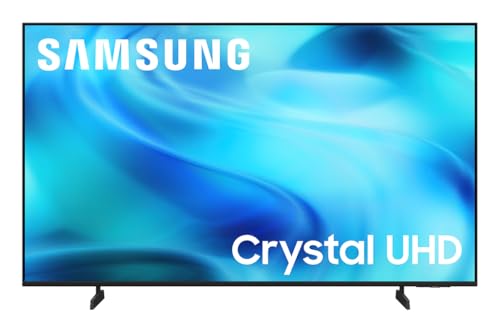
The Samsung U8000H 65-Inch is the uncomplicated Samsung option in this lineup. It uses a Crystal Processor to sharpen details and improve colors, with 4K upscaling intended to make HD broadcasts and older streams look cleaner. That matters in a bright room because much of the content people watch is not native 4K, and soft source material can look especially flat on a large screen.
Color Booster gives the picture extra intensity, while Motion Xcelerator estimates frame transitions for smoother games and sports. The listed performance reaches up to 4K 60Hz, so this is not a high-refresh gaming display. It is better suited to conventional television viewing than the Samsung M80H 65-Inch or Samsung M70H 55-Inch, both of which offer more ambitious motion hardware.
The 65-inch screen measures 56.9 inches wide and weighs 31.8 pounds. That is a manageable physical footprint for a main room, although buyers should still check wall and stand clearance before installation. Samsung TV Plus adds more than 2, 700 free streaming options, including more than 750 subscription-free channels according to the listing. People who want more ways to watch live channels without adding another box may appreciate the extra built-in choices.
Its biggest weakness for this category is the lack of a stated glare-free surface or Mini LED backlight. It can produce a colorful, clear picture, but it is less prepared for severe reflections than the Hisense U6 Pro. Choose the U8000H when you want a roomy Samsung smart TV for ordinary viewing and do not need advanced gaming or the strongest possible contrast.
7. Roku Select 55-Inch: Best Simple Interface

Pros
- QLED screen with HDR10
- Simple Roku home screen
- Voice remote with personal shortcuts
- AirPlay support
- Bluetooth Headphone Mode
Cons
- No listed glare-control treatment
- Motion specification is not provided
- Smaller screen than the large-format choices
Best for: households that prioritize easy streaming and a clean interface.
The Roku Select 55-Inch is the least intimidating television here. Its home screen is designed around straightforward navigation, quick app launches, personalized recommendations, and voice search. The enhanced remote can set shortcuts for favorite apps and includes a lost remote finder, details that sound minor until the television is used daily by several people.
Its QLED screen supports HDR10 and 4K resolution, while Roku Smart Picture cleans up incoming signals and chooses a picture mode. That should help the TV make sensible adjustments across streaming shows, broadcasts, and movies without requiring constant menu diving. The picture technology is less elaborate than the Mini LED systems in the Samsung M80H 65-Inch and Hisense U6 Pro 65-Inch, and the listing does not specify a glare-free screen.
Roku includes clear-speech and louder-sound claims, plus Bluetooth Headphone Mode for quiet viewing. Apple AirPlay works for sharing photos, videos, and music from Apple devices, and voice control can work through Roku Voice, Siri, Alexa, or Google Assistant. For a streaming-focused household, that combination is more convenient than a television with a technically stronger panel but a frustrating interface. A separate audio upgrade can also help, and the right speaker setup for clearer TV dialogue is worth considering before installation.
The limitation is bright-room performance specifically. QLED can produce lively color, but there is no listed anti-reflection coating, local dimming system, or motion refresh specification to make this a specialist daytime screen. Put it away from direct window glare and it becomes a pleasant, easy television. Choose it for the software and remote, not for the most forceful picture in the roundup.
8. Insignia F50 85-Inch: Best Large Screen

Pros
- Very large 85-inch display
- 4K resolution and HDR10
- Fire TV app selection
- Three HDMI ports
- eARC and optical audio output
Cons
- Standard LED-backlit LCD
- Large physical footprint
- No listed glare-control feature
Best for: a spacious living room where screen scale matters most.
The Insignia F50 85-Inch solves a different problem from the Hisense and Samsung Mini LED models. Its appeal is scale. The 85-inch panel is 74.41 inches wide and 42.61 inches high before accounting for installation clearance, so it can make a large open-plan room feel more like a dedicated viewing space. A big screen can also help daytime viewing by making details easier to see from the back of the room.
The picture uses an LED-backlit LCD panel with 4K resolution and HDR10. High Dynamic Range is intended to preserve more color detail and contrast between bright whites and darker areas, while 4K upscaling improves older content. It will not offer the zone-based contrast of the Hisense U6 Pro, but the larger image has a clear advantage for group viewing and sports parties.
Fire TV provides access to major streaming apps, free ad-supported services, live content, and smart-home controls. The connections are unusually practical for a large home theater: three HDMI ports, composite AV, digital optical output, USB, a headphone jack, coaxial, Ethernet, and Wi-Fi. HDMI ARC and eARC can send audio to a compatible receiver or soundbar, while DTS Studio Sound expands the sense of space from the built-in speakers.
Brightness is not the same as reflection resistance, and this model has no listed glare-free treatment. A window opposite the screen can still be distracting, even on an 85-inch panel. The body also requires careful transport and a wide stand or properly planned wall mount. Choose this Insignia when size is the defining requirement and the room can be arranged to keep direct reflections off the screen.
9. Insignia F50 70-Inch: Best Large Fire TV

Pros
- Large 70-inch 4K screen
- Fire TV with Alexa voice control
- Three HDMI ports and eARC
- VESA 300 by 300 wall-mount compatibility
- Parental controls
Cons
- Standard LED-backlit LCD
- No listed glare-free coating
- Motion specification is not provided
Best for: wall-mounted family viewing with Fire TV built in.
The Insignia F50 70-Inch occupies the practical middle ground between a conventional large television and an oversized 85-inch display. Its 61.82-inch width is substantial, but easier to accommodate than the largest Insignia. That makes it a sensible choice for a family room where viewers sit well back and want a bigger picture for sports, movies, and streaming.
The LED-backlit LCD panel supports 4K resolution and HDR10. Insignia also lists upscaling for existing content, which is useful when broadcast channels and older shows make up much of the viewing schedule. High Dynamic Range can improve separation between bright and dark areas, but the screen does not have the Mini LED zone control found in the Hisense U6 Pro or Samsung M80H.
Fire TV brings apps, live content, ad-supported channels, Alexa voice search, and smart-home controls together. Three HDMI ports leave room for a console, disc player, and sound system, while eARC passes full-resolution audio to a compatible device. DTS Virtual-X attempts to create a more three-dimensional sound field from the TV speakers. The 70-inch model is also VESA 300 by 300 wall-mount compatible, a useful detail for keeping a large panel away from furniture.
The F50's weakness is image refinement. There is no listed anti-reflection treatment, advanced refresh rate, or local dimming system. If daylight reflections are your central complaint, the Hisense E6 65-Inch with its AI Light Sensor is a more targeted option. Choose the Insignia when you want a generous wall-mounted screen and Fire TV convenience without needing premium picture controls.
10. Insignia F50 50-Inch: Best Small Fire TV
Pros
- Compact 50-inch size
- 4K resolution and HDR10
- Fire TV and Alexa voice remote
- Three HDMI ports
- VESA 200 by 200 wall-mount compatibility
Cons
- Standard LED panel
- No listed glare-control treatment
- Less immersive in a large room
Best for: bedrooms, offices, kitchens, and smaller sitting areas.
The Insignia F50 50-Inch is the sensible small-room choice. Its 43.8-inch width makes it easier to place on a modest console or wall, and the 50-inch format suits bedrooms, offices, and secondary rooms where a 65-inch panel would dominate. In a smaller bright room, keeping the television away from a window may matter more than chasing a higher peak brightness figure.
The panel provides 4K resolution and HDR10, with upscaling for lower-quality sources. That gives streaming shows and broadcast channels a familiar sharp presentation, while High Dynamic Range adds more color detail and contrast to compatible content. As with the larger F50 models, this is a standard LED-backlit LCD design rather than a Mini LED or OLED panel.
Fire TV supplies access to major streaming apps, free ad-supported channels, and live-TV navigation. Alexa voice control can find content and operate compatible smart-home devices, while DTS Virtual-X gives the built-in speakers a wider presentation. Three HDMI ports, eARC, optical audio, USB, Ethernet, Wi-Fi, and a headphone jack make it flexible for a bedroom console or a simple living-room setup.
The F50 50-Inch is not a specialist bright-window television. It lacks the U6 Pro's glare-free claim and the E6's ambient-light sensor, so placement will do much of the work. It is also less involving from across a large room than the 70-inch and 85-inch options. Pick it when the room is compact and Fire TV simplicity matters more than high-end contrast or gaming performance.

How to choose best tv for bright room
A bright-room television should be judged by how it handles reflections and preserves contrast during actual daytime viewing, not by resolution alone.
Reflection control
Reflection control is the first specification to investigate when a window, lamp, or glass door faces the screen. A glare-free or anti-reflection surface can reduce distracting patches across the image, while a glossy panel may produce stronger contrast in controlled lighting but behave like a mirror in direct sun.
The Hisense U6 Pro specifically lists anti-reflection and glare-free performance. The LG C5 lists UL verification for discomfort glare-free performance. Those claims make both more reassuring than models that only describe themselves as bright.
A bright screen cannot fix a reflection that sits directly over the face of the picture.
Backlight and contrast
Standard LED panels use a broad backlight, while Mini LED models divide that light into many smaller zones. More precise zones can keep bright highlights forceful while limiting light spill into darker parts of the image. OLED goes further by allowing each pixel to light itself, which creates exceptionally deep black.
The Hisense U6 Pro and Samsung M80H are the strongest backlight choices here. The LG C5 has the most precise pixel-level contrast, while the Insignia F50 models are simpler LED designs without listed local-dimming technology.
Brightness adaptation
A room may be bright at lunchtime and subdued after sunset. An ambient-light sensor can adjust the picture to suit those changes instead of forcing you to change modes manually. The Hisense E6 includes an AI Light Sensor that responds to the room's ambient light.
Adaptive brightness is not a replacement for reflection control, but it can make a television more comfortable across a full day. It is especially useful in rooms that receive changing daylight rather than constant direct glare.
Motion performance
Sports and games reveal weak motion handling quickly. Refresh rates of 120Hz or 144Hz can make rapid camera pans, players, and game movement look smoother than a 60Hz panel. Variable Refresh Rate is important for gaming because it helps the display match the source and reduce stutter or tearing.
The Hisense U6 Pro and Samsung M80H have the strongest motion specifications in this group. The LG C5 adds a 0.1ms response time, VRR, G-Sync, and FreeSync Premium. The Samsung U8000H is fine for ordinary viewing but is limited to up to 4K 60Hz.
Screen size and placement
A larger screen is not automatically easier to see in daylight. It needs more wall width, a deeper installation plan, and enough viewing distance for the image to feel comfortable. The 85-inch Insignia is 74.41 inches wide, while the 50-inch model is 43.8 inches wide, a difference that changes the whole room layout.
Measure the wall, stand, viewing position, and window angles before choosing. If the screen will face a bright opening, changing its position by a few degrees may help more than moving from one ordinary LED model to another.
Frequently asked questions
Is Mini LED better than OLED for a bright room?
Mini LED is often the safer choice when the room is very bright because it can produce strong highlights across a large screen and uses local dimming for contrast. OLED can still work well, especially when it has brightness-enhancing technology and reflection control, as the LG C5 does. The best choice depends on the severity and direction of the room's light.
What is the best TV for bright room gaming?
The Hisense U6 Pro 65-Inch is the strongest all-round gaming choice here because it combines a glare-free display with a native 144Hz refresh rate. The LG C5 OLED 65-Inch is better for players who prioritize OLED black levels, a 0.1ms response time, VRR, and four HDMI 2.1 inputs.
Does 4K make a television brighter?
No. 4K describes image resolution, not light output or reflection handling. A 4K television can still look washed out if it has poor contrast or strong reflections, so check the panel technology and bright-room features separately.
Is QLED good for daylight viewing?
QLED can produce vivid color and a lively picture in daylight. It is not a guarantee of strong reflection control, however, so look for a stated anti-reflection or glare-free feature as well. The Roku Select 55-Inch uses QLED, while the Hisense models add different approaches to adaptive picture and glare management.
Should I buy an 85-inch TV for a sunny living room?
An 85-inch model makes sense when the room is large and viewers sit far enough away to appreciate the scale. It does not automatically resist glare better than a smaller television, and its wide panel may catch more reflected light. Plan placement carefully before choosing the Insignia F50 85-Inch.
Can a soundbar improve bright-room TV viewing?
A soundbar cannot change reflections or panel brightness, but clearer dialogue can make daytime viewing easier when ambient noise is high. The Insignia models support ARC or eARC, and the Hisense U6 Pro includes a built-in subwoofer, so check audio connections before buying an external speaker.

The bottom line
The Best TV for bright room use is the Hisense U6 Pro 65-Inch. Its glare-free, anti-reflection display directly addresses the main problem, while Mini LED lighting, Hi-QLED color, native 144Hz motion, and broad HDR support make it capable beyond daytime streaming. The Samsung M80H 65-Inch is the alternative for viewers who prefer Samsung processing, sports features, and a fast Mini LED display.
Choose the LG C5 OLED 65-Inch when deep black, film presentation, and advanced gaming matter more than maximum daylight headroom. For a simpler experience, the Roku Select 55-Inch is easier to navigate, while the Insignia F50 models make sense when screen size and Fire TV access matter most.
If you are undecided, choose the Hisense U6 Pro unless your room has controlled light or your main priority is OLED contrast.
As an Amazon Associate we earn from qualifying purchases.