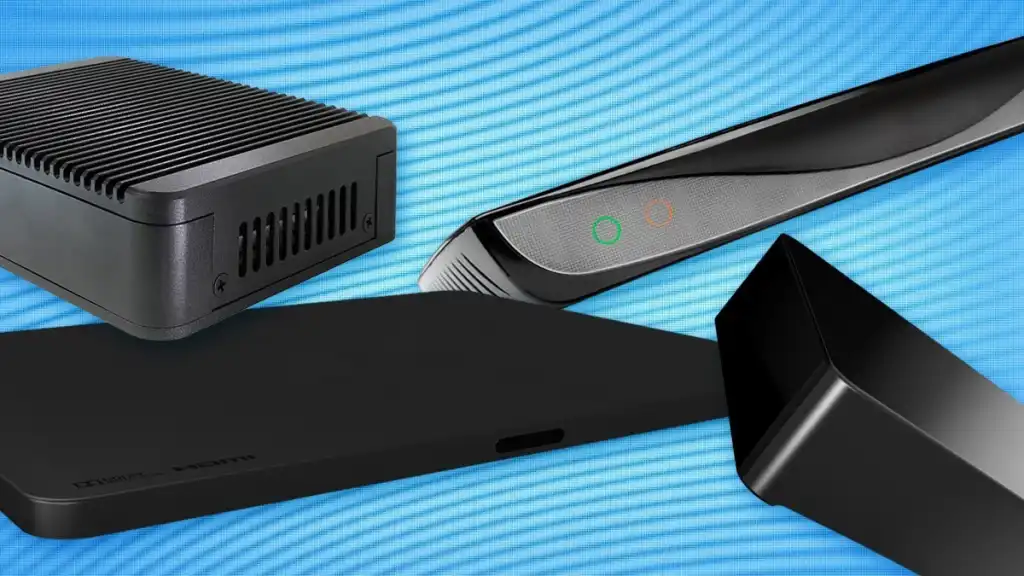

Cutting the cord gets complicated when a live local broadcast starts while another show is already recording. A good DVR for antenna TV should handle that conflict, send channels to the rooms you actually use, and avoid turning free broadcasts into another monthly commitment.
This list includes networked DVRs, a traditional converter box, an ATSC 3.0 tuner, and two antennas that cannot record by themselves. The Best DVR for antenna TV for most homes is the Tablo 4-Tuner DVR, while the rest make sense for smaller households, older televisions, advanced network setups, or antenna upgrades.
Comparison table
| # | Product | Award | Tuners | Storage | Antenna included | Best for |
|---|---|---|---|---|---|---|
| 1 | Tablo 4-Tuner DVR | Best overall | 4 | 50+ hours onboard | No | Families recording several channels |
| 2 | Tablo 2-Tuner DVR | Best for smaller homes | 2 | 50+ hours onboard | No | One or two viewers |
| 3 | Tablo 4-Tuner DVR + Antenna | Best complete setup | 4 | Not specified | 35-mile indoor antenna | New cord-cutting setups |
| 4 | Tablo 2-Tuner DVR + Antenna | Best simple bundle | 2 | Not specified | 35-mile indoor antenna | Smaller homes starting from scratch |
| 5 | iView 3300STB | Best for older TVs | Not specified | USB storage | No | Analog TVs and local recording |
| 6 | HDHomeRun Flex 4K | Best for ATSC 3.0 | 4 | USB drive required | No | Networked NextGen TV systems |
| 7 | Tablo 2-Tuner Renewed | Best renewed two-tuner kit | 2 | 128GB, 50+ hours | 35-mile indoor antenna | Compact homes wanting a bundle |
| 8 | Tablo 4-Tuner Renewed | Best renewed family kit | 4 | 128GB, 50+ hours | 35-mile indoor antenna | Multiple simultaneous recordings |
| 9 | JM NEXLOV Indoor Antenna | Best long-cable antenna | Not applicable | Not applicable | Built in | Flexible antenna placement |
| 10 | HIDB Indoor Antenna | Best compact antenna | Not applicable | Not applicable | Built in | Small spaces and basic reception |
1. Tablo 4-Tuner DVR: Best Overall

Pros
- Four tuners handle several recordings at once
- 50+ hours of onboard recording storage
- Wi-Fi and Ethernet network connections
- Works with many smart TVs and streaming players
- No ongoing subscription required
Cons
- Antenna and HDMI cable are not included
- Not compatible with non-smart TVs or PCs
- Requires a consistent high-speed internet connection
Best for: families that record several live channels and watch across multiple rooms.
The Tablo 4-Tuner DVR is the easiest recommendation here because it solves the conflict that makes basic antenna recording frustrating. Four tuners let the household record up to four channels at once, or record while someone watches another live channel. That matters more than a long feature list when sports, news, and evening programming overlap.
Its 50+ hours of onboard storage gives the system a useful starting point without requiring a separate drive. The unit connects to the antenna with the included 6-foot coaxial cable, then reaches the home network over Wi-Fi or Ethernet. The Tablo app extends viewing to compatible smartphones, tablets, smart TVs, and streaming players from Roku, Amazon Fire TV, Android TV, Chromecast with Google TV, Apple TV, Samsung, and LG.
The whole-home design is the main distinction between this and the iView 3300STB. iView is better suited to one television, especially an older analog set, while Tablo is designed to move live and recorded television around a smart home. It also includes access to free streaming channels alongside antenna programming, although some streaming channels may not support recording because of licensing restrictions.
The weakness is the setup boundary. This is not a direct replacement for a traditional cable box connected to a non-smart TV, and PCs are not supported. You supply the antenna and HDMI cable, and the network must be reliable enough for the app-based viewing experience. Buyers who want ATSC 3.0 should look at the HDHomeRun Flex 4K instead, since this Tablo uses four ATSC 1.0 tuners.
For a household with several viewers, this is the most capable uncomplicated pick. It has enough tuners to prevent scheduling headaches, enough local storage for regular use, and a broad device list. If you want a clearer picture of the reception side before choosing a DVR, how antenna placement affects local channel reception is a useful place to start.
2. Tablo 2-Tuner DVR: Best for Smaller Homes
Pros
- Two tuners cover the basic watch-and-record scenario
- 50+ hours of onboard storage
- Includes Wi-Fi and Ethernet networking
- Supports viewing on compatible mobile and TV devices
- No ongoing subscription required
Cons
- Cannot handle four simultaneous tuner tasks
- Antenna and HDMI cable are not included
- Smart TV, streaming player, and network compatibility matter
Best for: one or two viewers who usually record one program while watching another.
The Tablo 2-Tuner DVR keeps the same basic experience as the top pick while trimming the tuner count to what many smaller homes actually need. One tuner can record while the other handles live viewing, which covers the everyday use case of saving a program and watching something else at the same time. It also supports pausing and replaying live TV.
The 50+ hours of onboard storage is a practical fit for a modest recording schedule. Tablo connects to an antenna through the included 6-foot coaxial cable, then uses Wi-Fi or the included Ethernet cable to join the home network. The app can serve compatible phones, tablets, smart TVs, and streaming players, but the compatibility list should be checked before purchase.
Compared with the Tablo 4-Tuner DVR, this version gives up simultaneous recording capacity rather than changing the core interface. That makes it less suitable for a family with overlapping series and live sports, but it remains a cleaner choice for a couple or a single viewer. The Tablo 2-Tuner DVR + Antenna adds a 35-mile indoor antenna, so this standalone model makes more sense when an antenna is already installed or reception planning requires a different antenna.
The main limitation is the same networked approach that makes Tablo convenient. It does not support non-smart TVs, PCs, or certain TV models, and it needs a consistent high-speed internet connection. It also uses ATSC 1.0 tuners, so it is not the forward-looking choice for households specifically seeking NextGen TV support.
This is the sensible smaller-home option. It offers the important DVR functions without making a two-person household manage more tuners than it can use. For reception planning, the distance and obstacles that shape indoor antenna performance matter far more than a claimed range printed on an antenna box.
3. Tablo 4-Tuner DVR + Antenna: Best Complete Setup

Pros
- Four ATSC 1.0 tuners
- Includes a 35-mile indoor antenna
- Supports simultaneous viewing and recording
- Wi-Fi and Ethernet connectivity
- No ongoing subscription required
Cons
- Antenna performance depends heavily on location
- HDMI cable is not included
- Smart TV or compatible streaming hardware is required
Best for: households that want one box to start recording local channels immediately.
The Tablo 4-Tuner DVR + Antenna removes the most obvious missing piece from the standalone Tablo package. The included 35-mile indoor antenna gives a new cord-cutter a complete path from broadcast signal to recorded program, while the four tuners preserve the flexibility of the top pick. It can record one live channel while another is being watched, with the extra tuners handling additional recording conflicts.
The included antenna connects through the supplied 6-foot coaxial cable. Tablo then joins the home network by Wi-Fi or Ethernet and uses its app to distribute live and recorded channels to compatible smart TVs, phones, tablets, and streaming players. The setup is designed for a networked home rather than a single old television, and the device does not include an HDMI cable.
This bundle beats the standalone Tablo 4-Tuner DVR when the buyer has no antenna yet. It is less attractive for someone who already owns a strong rooftop or indoor antenna, since the included unit may simply sit unused. The Tablo 2-Tuner DVR + Antenna is the more focused option for a home that rarely records overlapping programs.
The antenna's 35-mile description should not be treated as a guarantee. Walls, terrain, broadcast tower direction, and interference all affect reception, and the listing itself warns that range varies. The Tablo also uses ATSC 1.0 tuners, so it will not provide the ATSC 3.0 capability found in the HDHomeRun Flex 4K.
For a first installation, this is the most convenient package in the standard Tablo range. It gives a busy household four tuners and an antenna without forcing the buyer to assemble the system piece by piece. It is the right fit when simplicity matters, but reception should still be checked before assuming the bundled antenna will work in every room.
4. Tablo 2-Tuner DVR + Antenna: Best Simple Bundle
Pros
- Includes a 35-mile indoor antenna
- Two ATSC 1.0 tuners
- Supports watching, pausing, recording, and replaying
- Wi-Fi and Ethernet networking
- No ongoing subscription required
Cons
- Two tuners limit simultaneous recordings
- Reception varies with room and location
- HDMI cable is not included
Best for: smaller homes that need a DVR and antenna in one straightforward package.
The Tablo 2-Tuner DVR + Antenna is the uncomplicated starter kit. It combines the networked Tablo box with a 35-mile indoor antenna, so the buyer does not need to figure out a separate signal source before getting started. Two ATSC 1.0 tuners cover the common pattern of recording one channel while watching another.
The device supports live TV, pause, replay, and recording, with viewing distributed through the Tablo app. Wi-Fi or Ethernet handles the network connection, and the supported device list includes many Roku, Fire TV, Android TV, Chromecast with Google TV, Apple TV, Samsung TV, and LG TV products. Compatibility is not universal, so checking the exact television or streaming player is important.
The Tablo 4-Tuner DVR + Antenna is clearly stronger for a family with several recording schedules. This two-tuner model is a better match for a smaller household where four simultaneous tuner jobs would rarely be useful. It also makes more sense than the standalone Tablo 2-Tuner DVR when there is no existing antenna to connect.
The indoor antenna is the part that needs the most caution. A 35-mile label cannot account for apartment walls, hills, trees, or the position of local towers. Moving the antenna can change the channel scan, and Tablo's network features cannot compensate for a weak signal arriving at the coaxial input.
Choose this bundle when the goal is a clean first step into antenna television, not a highly expandable system. It has the basic recording and whole-home features, but viewers who need ATSC 3.0, a large external library, or more than two simultaneous tuner tasks should move up to a different design.
5. iView 3300STB: Best for Older TVs

Pros
- Converts digital broadcasts for analog TVs
- ClearQAM support for unscrambled cable channels
- USB media playback
- Supports portable hard drives up to 4TB
- Built-in digital clock
Cons
- Not a whole-home network DVR
- Recording storage requires USB media
- Region support is limited to the USA, Canada, and Mexico
Best for: a single older television that needs digital broadcast reception and local recording.
The iView 3300STB takes a very different approach from the Tablo products. It is a traditional digital converter box that turns over-the-air digital channels into a signal an analog TV can use. That makes it the most relevant pick for an older set in a bedroom, workshop, or spare room where smart TV apps and whole-home streaming are not priorities.
Its recording function saves programs for later viewing, but the listing does not specify onboard recording capacity. Instead, the box uses USB storage, and it supports portable hard drives up to 4TB. The USB port also serves as a media player for videos, music, and photos. That is useful for a television that has no modern streaming platform, though it requires managing the external drive yourself.
ClearQAM support gives the iView a second role. It can receive unscrambled cable channels from a compatible provider as well as digital over-the-air broadcasts. The built-in clock is a small but helpful touch for a conventional set-top box. The listed dimensions are 6 by 3.75 by 1.75 inches, giving it a compact footprint near the television.
The trade-off is isolation. Unlike the Tablo 2-Tuner DVR, the iView is not intended to send recordings to multiple smart TVs, phones, or tablets. It also does not provide a stated tuner count, so it is not the right choice for recording several channels at once. Its regional support is limited to the USA, Canada, and Mexico, and the manufacturer points buyers toward a firmware update for existing issues and performance improvements.
This is the pick for a specific problem, not a general replacement for a network DVR. If the television is analog and the goal is to watch and save local broadcasts on that one screen, the iView's direct setup makes sense. For a modern home with several screens, Tablo is much easier to live with.
6. HDHomeRun Flex 4K: Best for ATSC 3.0

Pros
- Two ATSC 3.0 tuners
- Four ATSC 1.0 tuners
- Whole-home network tuner design
- Works with a wide range of platforms
- Supports USB hard drives for DVR storage
Cons
- USB hard drive is required for whole-home DVR use
- Some ATSC 3.0 DRM-protected channels are unsupported
- Advanced automatic recording features may require a paid TV guide
Best for: technically confident viewers who want NextGen TV and network tuner flexibility.
The HDHomeRun Flex 4K is the most capable tuner here for a home that is deliberately building around network television. It combines two ATSC 3.0 tuners with four ATSC 1.0 tuners, allowing it to handle current broadcasts while preparing for NextGen TV services. The unit sends live television across the home network rather than connecting directly to a single screen.
It works with Android, Fire TV, Apple TV, Roku, Sony, Xbox, iPhone, iPad, Windows 10 and 11, and Mac for ATSC 1.0 content. ATSC 3.0 support is narrower, with the listing naming Android, Fire TV, Apple TV, Roku Ultra 4800X and newer, iPhone, iPad, Windows 10 and 11, and Mac. That platform detail matters because a device can support ATSC 3.0 in principle while a particular television or streaming box does not.
The DVR architecture also differs from Tablo. A USB hard drive is needed for whole-home recording, rather than relying on the 50-plus hours of onboard storage found in the standard Tablo models. The product does not require a subscription for the basic whole-home DVR function, but its paid TV guide can add advanced automatic recording features. That is a meaningful distinction for buyers who want season recording and guide-driven scheduling.
The largest catch is DRM. The listing says ATSC 3.0 DRM-free content is supported but DRM-protected channels are not. Buyers in an area where key NextGen broadcasts use protection may find that the headline feature is less useful than expected. The unit is also 7 by 5 by 2.2 inches, larger than the compact Tablo boxes, and it asks more of the user's network and storage setup.
This is not the easiest Best DVR for antenna TV for a casual viewer. It is the stronger technical platform for someone who understands network tuners, external storage, supported clients, and local broadcast formats. Choose it over Tablo when ATSC 3.0 is the central requirement, and choose Tablo when a simpler ready-to-use recording experience matters more.
7. Tablo 2-Tuner Renewed: Best Renewed Two-Tuner Kit
Pros
- Two ATSC 1.0 tuners
- Includes a 35-mile indoor antenna
- 128GB onboard storage
- Records 50+ hours
- Supports external USB storage up to 8TB
Cons
- Renewed condition may not suit every buyer
- Two tuners limit simultaneous recordings
- Compatibility excludes PCs and some TVs
Best for: smaller households that want a bundled Tablo system with expandable storage.
The Tablo 2-Tuner Renewed is notable because its storage details are more specific than those of the standard two-tuner listing. It has 128GB of onboard recording storage, rated for 50 or more hours, and it can accept up to 8TB of external USB storage. That gives a smaller household room to build a larger library without moving to four tuners.
The included 35-mile indoor antenna makes this a complete installation. Tablo uses the supplied 6-foot coaxial cable for the antenna connection, then links to the home network over Wi-Fi or Ethernet. The app supports compatible smart TVs, streaming players, phones, and tablets, while the product listing warns that non-smart TVs and PCs are not supported.
The Tablo 2-Tuner DVR + Antenna is the closest new-equipment comparison in capability. This renewed model adds clearly stated 128GB storage and external expansion, while its two tuners retain the same basic limit. The Tablo 4-Tuner Renewed is the better fit for a family that regularly records several programs at once.
The antenna remains subject to the same reception variables as every indoor model. Its stated 35-mile range does not guarantee a stable signal through walls or in a difficult terrain. Buyers should also be comfortable with renewed equipment and should inspect the listing's condition and included accessories before ordering.
This is a useful combination for a compact home that wants local recordings, free streaming channels, and a defined storage upgrade path. It is less compelling for buyers who already own an antenna or who want the confidence of new equipment. For broader antenna guidance, the trade-offs between indoor and outdoor signal placement can prevent an otherwise good DVR from being paired with the wrong signal source.
8. Tablo 4-Tuner Renewed: Best Renewed Family Kit
Pros
- Four ATSC 1.0 tuners
- 128GB onboard storage
- 50+ hours of recording
- External USB storage up to 8TB
- Includes a 35-mile indoor antenna
Cons
- Renewed condition is not for every buyer
- Antenna range depends on local conditions
- Not compatible with PCs and some TV models
Best for: families that want four tuners, local storage, and an included antenna.
The Tablo 4-Tuner Renewed brings the most useful features of the top Tablo pick into a bundled, storage-focused package. Four ATSC 1.0 tuners let the system record multiple channels while another household member watches live television. That extra headroom is valuable when several people set recordings independently.
Storage is one of its clearest strengths. The 128GB internal capacity is rated for 50 or more hours, and the device supports an external USB drive up to 8TB. The result is a more comfortable long-term recording setup than a box whose internal space is the only option. It still uses the Tablo app and can send television to compatible phones, tablets, smart TVs, and streaming players.
Compared with the Tablo 4-Tuner DVR + Antenna, this renewed package makes the storage expansion path explicit. The new standard bundle remains the simpler recommendation for a buyer who wants new equipment, while this version is more interesting for someone who plans to keep a large library. The HDHomeRun Flex 4K remains the more advanced choice for ATSC 3.0, but it requires a separate USB drive and a more involved network setup.
The product uses a 35-mile indoor antenna, and that is the part most likely to determine whether the installation feels successful. Broadcast distance, walls, terrain, weather, and interference all affect reception. The device also excludes PCs and some TV models, so app compatibility should be confirmed before purchase, especially in a mixed-brand household.
For families that want four tuners and expandable storage in one package, this is the strongest renewed option. Its limitations are practical rather than mysterious: it is ATSC 1.0, the antenna may need careful placement, and renewed hardware requires a different level of buyer comfort. Those conditions suit an experienced cord-cutter more than someone expecting a plug-and-play cable box.
9. JM NEXLOV Indoor Antenna: Best Long-Cable Antenna

Pros
- 18-foot coaxial cable
- Built-in amplifier booster
- Supports indoor or outdoor installation
- Lists support for 720p, 1080i, 1080p, 2K, and 4K HDR
- Works with smart TVs
Cons
- Does not record or pause television
- Reception depends on location and obstructions
- Requires a channel rescan after moving
Best for: pairing with a DVR when the antenna needs to sit well away from the television.
The JM NEXLOV Indoor Antenna is not a DVR, but it addresses a problem that can undermine any DVR setup: the television is often not the best place for the antenna. Its included 18-foot coaxial cable gives more freedom to move the antenna toward a window or a higher position, which can be more useful than simply adding another tuner.
The listing describes a built-in amplifier booster and a smart IC chip intended to strengthen weak broadcast signals and reduce cellular and RF interference. It also lists support for 720p, 1080i, 1080p, 2K, and 4K HDR signals. Those formats describe the signal the antenna can pass to the TV, not a guarantee that every local channel will arrive reliably.
This antenna pairs naturally with the Tablo 2-Tuner DVR or HDHomeRun Flex 4K, neither of which includes an antenna. The long cable can be especially useful when the network tuner sits near a router or television but the strongest reception point is across the room. Buyers should still scan channels after moving the antenna, since a new position can change the available lineup.
The weakness is that no amplifier can fix every local reception problem. Buildings, hills, weather, tower direction, and interference remain decisive, and the listing acknowledges that reception varies by location. The antenna also does not pause, record, or distribute channels on its own, so it is an accessory rather than a standalone DVR replacement.
Choose this model when placement flexibility is the priority. It can make an existing DVR more practical in a difficult room, but buyers should treat the advertised range and format support as starting points rather than promises. A signal survey and careful placement matter more than the antenna's marketing language.
10. HIDB Indoor Antenna: Best Compact Antenna

Pros
- Compact design
- 10-foot coaxial cable
- Magnetic base
- Passive antenna requires no active transmission
- Can be positioned vertically or horizontally
Cons
- Does not record or pause live TV
- Reception varies with location and obstructions
- Needs a channel rescan after repositioning
Best for: small rooms where a compact antenna is needed alongside a separate DVR.
The HIDB Indoor Antenna is the smallest and simplest signal source in this roundup. Its compact design makes it easy to hide behind or beside a television, and the magnetic base gives it a stable way to sit on a metal surface. A 10-foot coaxial cable provides enough reach for basic placement experiments without making the installation cumbersome.
The listing recommends testing both vertical and horizontal positioning, placing the antenna high and near a window, and facing local broadcast towers when possible. Those instructions are more useful than the broad promise of clear reception because indoor antenna performance is dominated by the room and the tower path. The included cable is described as having enhanced copper wiring to reduce signal loss.
Unlike the JM NEXLOV Indoor Antenna, this model emphasizes compactness rather than a longer cable and built-in amplifier booster. It can pair with a tuner such as the Tablo 4-Tuner DVR, but it cannot provide DVR functions itself. It is also a passive antenna, so it does not actively transmit radio frequency signals.
The main concern is placement flexibility in a difficult building. Ten feet may not be enough to reach a better window, and a compact passive antenna can struggle where walls or terrain block broadcasts. The manufacturer also notes that the channel scan should be repeated after the antenna moves, a step many first-time antenna buyers overlook.
This is a reasonable supporting antenna for a strong-signal area or a small room. It is not the right answer for someone whose main problem is weak reception across a large home. Pair it with a DVR only after identifying a location where local broadcasts arrive cleanly.
How to choose best dvr for antenna tv
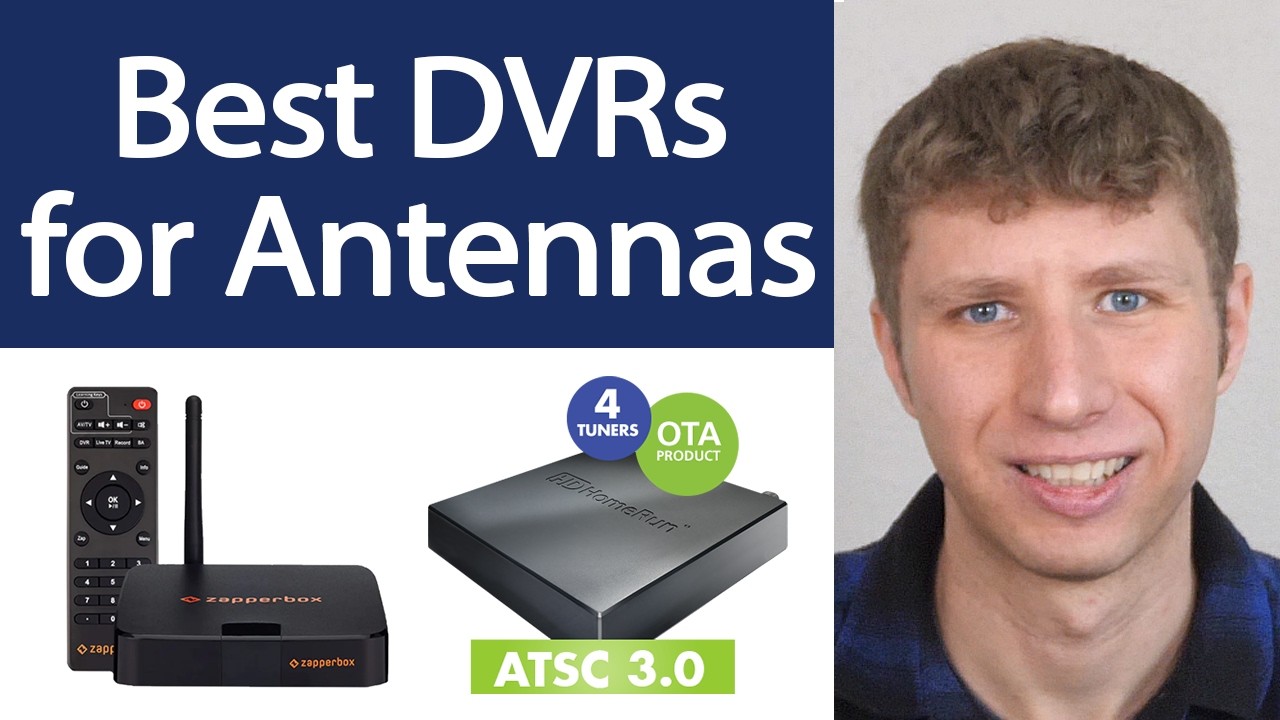
The right antenna DVR depends on tuner conflicts, storage, signal quality, and how many screens need access to recordings. Start with the way your household watches, then match the hardware to the signal and television equipment already in place.
Tuner count
A tuner handles one live channel task. Two tuners usually allow one program to record while another is watched, while four tuners give a family more room for overlapping recordings and live viewing.
Do not assume more tuners improve reception. They improve scheduling flexibility. The Tablo four-tuner models and the HDHomeRun Flex 4K are the strongest choices when several people record independently.
Buy extra tuners for recording conflicts, not as a substitute for a stronger antenna signal.
ATSC broadcast support
ATSC 1.0 remains the format used by the Tablo models in this list. The HDHomeRun Flex 4K adds two ATSC 3.0 tuners alongside four ATSC 1.0 tuners, making it the only pick here designed around NextGen TV.
ATSC 3.0 support is not universal across televisions and streaming devices, and DRM-protected channels may not work with the HDHomeRun. Confirm local channel formats and client compatibility before choosing it for future-proofing alone.
Recording storage
Onboard storage is convenient because the DVR works without another drive. Standard Tablo listings specify 50 or more hours, while the renewed Tablo models specify 128GB and support external USB storage up to 8TB.
The HDHomeRun Flex 4K requires a USB hard drive for whole-home DVR use. That approach can be more flexible, but it adds another component and makes storage selection part of the setup.
Network and device compatibility
Networked DVRs distribute television through an app instead of sending a signal directly to one screen. Tablo supports many Roku, Fire TV, Android TV, Chromecast with Google TV, Apple TV, Samsung, and LG devices, but it does not support PCs, non-smart TVs, or every model.
The iView 3300STB is the opposite approach. It is designed for a direct connection to an older television and uses USB storage locally. Decide first if you need a single-screen box or whole-home access.
Antenna placement
A DVR cannot recover channels that the antenna does not receive. Indoor antennas should be tested near a window or higher on a wall, and a channel scan should be repeated after moving them. Cable length can make this easier, which is why the JM NEXLOV's 18-foot cable is useful in rooms where the television is not near the best signal position.
For difficult locations, the reception factors that determine antenna performance are a better guide than a headline range claim. Outdoor placement may be necessary when walls, terrain, or distance create persistent dropouts.
Frequently asked questions
Can these DVRs record free antenna channels?
The Tablo models and iView 3300STB support recording over-the-air television. The HDHomeRun Flex 4K supports whole-home DVR recording when connected to a USB hard drive. The JM NEXLOV and HIDB products are antennas only, so they need a separate tuner and DVR.
Is a four-tuner DVR better than a two-tuner DVR?
It is better when several recordings overlap or multiple viewers want live television at the same time. Two tuners are sufficient for the common situation of recording one channel while watching another. Four tuners add scheduling room, not stronger reception.
Do Tablo DVRs include an antenna?
The standalone Tablo 2-Tuner DVR and Tablo 4-Tuner DVR do not include an antenna. The bundle versions include a 35-mile indoor antenna. The renewed two-tuner and four-tuner bundles also include a 35-mile indoor antenna.
Does the HDHomeRun Flex 4K need a hard drive?
Yes, the listing says a USB hard drive is needed for whole-home DVR use. The device can tune live television across a network without the same onboard storage approach as the Tablo models. Advanced automatic recording features may also depend on a paid TV guide.
Can an antenna DVR work with an older analog TV?
The iView 3300STB is the clearest fit because it converts digital broadcasts for analog televisions. The Tablo products are not compatible with non-smart TVs according to their listings. A separate compatible streaming device may be needed for other networked systems.
Will an indoor antenna receive every local channel?
No. Reception depends on broadcast tower distance, building materials, terrain, interference, weather, and antenna placement. Rescan after moving the antenna, and consider an outdoor installation if indoor placement cannot produce a stable signal.
Do these DVRs require ongoing subscriptions?
The Tablo models state that no ongoing subscription is required for their core live TV and recording features. The HDHomeRun Flex 4K also supports whole-home DVR use without a subscription, though its listing identifies a paid TV guide for advanced automatic recording features. The iView 3300STB records to USB storage without a listed ongoing service.
The bottom line
The Best DVR for antenna TV for most busy households is the Tablo 4-Tuner DVR. It combines four tuners, 50 or more hours of onboard storage, broad app support, and network access without requiring a separate hard drive. The Tablo 2-Tuner DVR is the better fit for a smaller home, while the bundled Tablo versions make sense when an antenna is still needed.
Choose the HDHomeRun Flex 4K for ATSC 3.0 and a more configurable network setup, or the iView 3300STB for a single older analog television. The JM NEXLOV and HIDB antennas are useful accessories, but neither can replace a tuner and recorder.
If you are undecided, choose the four-tuner Tablo unless ATSC 3.0 or an analog television is the reason you are shopping.
As an Amazon Associate we earn from qualifying purchases.