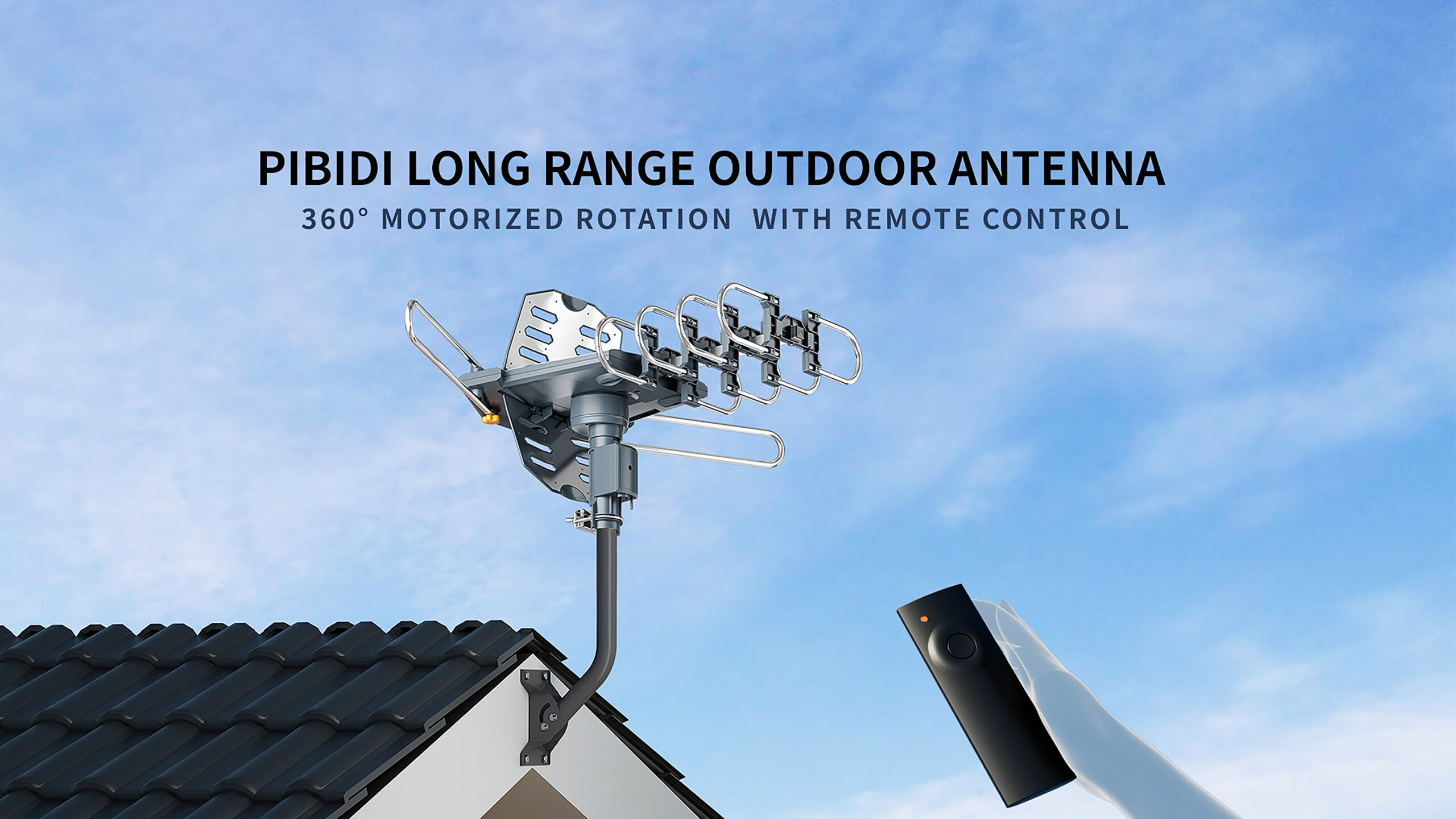

A weak over-the-air signal usually is not a television problem. Trees, walls, distance from broadcast towers, and a poorly aimed antenna can turn local channels into a mosaic of frozen frames. The right outdoor model puts the receiving elements in a better position and gives you a much better chance of a stable picture.
We compared ten antennas with different approaches, from the straightforward GE 29884 to motorized models that can turn toward towers in different directions. The Best outdoor antenna for tv for most households is the GE 29884, while the lineup also includes a strong multi-directional option, several multi-TV kits, and compact choices for attic installation.
Comparison table
| # | Product | Award | Range | Reception and connections | Best for |
|---|---|---|---|---|---|
| 1 | GE 29884 | Best overall | 70+ miles | VHF and UHF, ATSC 3.0 | Most homes |
| 2 | PBD 360 Motorized Antenna | Best motorized setup | 150 miles | VHF and UHF, two TVs | Homes with towers in different directions |
| 3 | ClearStream 4V | Best multi-directional design | 70+ miles | UHF and VHF, 4K, 8K, ATSC 3.0 | Challenging suburban reception |
| 4 | 1byone Omni Antenna | Best no-rotation option | 100+ miles | Omni-directional, one TV | Simple single-TV installations |
| 5 | Five Star Yagi Antenna | Best Yagi kit | Up to 200 miles | VHF, UHF, FM | Attic or roof mounting |
| 6 | PBD 59FT Amplified | Best long-cable kit | 150 miles | VHF and UHF, two TVs | Large homes |
| 7 | PBD 40FT Motorized | Best complete rotating kit | 150 miles | VHF and UHF, two TVs | Buyers who need a full kit |
| 8 | Five Star 4-TV Antenna | Best four-TV setup | Up to 200 miles | VHF, UHF, ATSC 3.0 | Whole-home installations |
| 9 | UltraPro 65000 | Best compact mount | 70 miles | VHF and UHF, ATSC 3.0 | Attics and smaller exterior spaces |
| 10 | Five Star 5-TV Motorized | Best five-TV kit | Up to 200 miles | VHF, UHF, FM, 360-degree rotation | Large households with varied tower locations |
1. GE 29884: Best Overall

Pros
- Supports VHF and UHF broadcasts
- 70+ mile stated reception range
- Weather-resistant attic or outdoor design
- J mount included
- ATSC 3.0 ready
Cons
- No motorized rotation
- One antenna output is specified
- Larger than compact indoor-style designs
Best for: households that want a simple outdoor antenna with broad TV compatibility.
The GE 29884 is the antenna we would start with for most homes because it avoids the two complications that often make outdoor installations frustrating: unnecessary motor controls and an unclear mounting plan. It has a conventional outdoor shape, includes a J mount, and can also go in an attic. That flexibility matters when a roof installation is not practical or when you want to keep the antenna out of sight.
Its stated 70+ mile range covers the needs of many suburban and rural locations, though distance alone never predicts reception. The antenna handles both VHF and UHF signals, so it is not limited to one part of the broadcast spectrum. It is also designed for 1080p, 4K, and 8K television use, which describes the display formats it can feed rather than guaranteeing that a local station broadcasts at those resolutions. ATSC 3.0 compatibility gives it a path to newer over-the-air broadcasts where they are available.
The 16.6-inch width and 3-pound listed weight make this a manageable installation without making it a tiny compromise antenna. The weather-resistant design is suitable for outdoor placement, while the included J mount makes the hardware plan clearer than it is with bare antennas. For advice on tower distance and terrain before mounting, the factors that determine reception at your address are more useful than any headline range number.
Compared with the PBD 360 Motorized Antenna, the GE gives up remote-controlled aiming and the ability to connect two TVs directly. Compared with the ClearStream 4V, it has a less elaborate multi-directional design. Its strength is restraint: there is less to configure, and no motor to position or power. Skip it if stations around your home are spread across opposite directions and a fixed orientation cannot cover them.
The GE 29884 is the right pick for someone who wants a conventional VHF and UHF antenna, a supplied mount, outdoor weather resistance, and ATSC 3.0 readiness without turning installation into a project.
2. PBD 360 Motorized Antenna: Best Motorized Setup

Pros
- 360-degree motorized rotation
- Wireless remote control
- Supports two TVs directly
- 40-foot RG6 cable included
- ATSC 3.0 ready
Cons
- Requires motor and amplifier setup
- Direction changes take more planning than a fixed antenna
- The claimed range depends heavily on local conditions
Best for: homes where broadcast towers are not clustered in one direction.
The PBD 360 Motorized Antenna solves a specific problem well. If one group of stations is north of the house and another is west, a fixed antenna forces you to choose a compromise position. This model lets you change its direction with a wireless remote instead of climbing to the mast every time you want to try another alignment.
PBD lists a 150-mile reception range and describes the antenna as amplified, weatherproof, and compatible with VHF and UHF signals. Those claims should be treated as installation-dependent, but the useful parts are clear: the model is designed for outdoor placement, includes a high-gain low-noise amplifier, and has a rotating mechanism intended to improve alignment. It supports 4K and 1080p displays and is marked ready for ATSC 3.0 broadcasts where available.
The two TV outputs are a meaningful distinction. You can connect two televisions simultaneously without adding a separate splitter, and the included 40-foot RG6 coaxial cable gives some freedom when routing from a roof, wall, or attic location. The mounting hardware and guide also make it a more complete starting package than an antenna that arrives with the receiving unit alone.
The tradeoff is complexity. A motor, remote, amplifier, and power arrangement create more parts to install than the GE 29884 has. The ClearStream 4V is a better fit when you want a multi-directional receiving design without a rotating assembly, while the PBD makes more sense when aiming at different tower groups is the central issue. It is also worth checking how signal amplifiers affect weak broadcast reception before assuming that amplification alone will overcome a blocked path.
Choose the PBD 360 Motorized Antenna when remote alignment and two-TV support matter more than a minimal setup. It is especially suitable for properties where tower directions make a fixed antenna difficult to aim.
3. Antennas Direct ClearStream 4V: Best Multi-Directional Design

Pros
- Four patented receiving loops
- Reflectors focus incoming signals
- Multi-directional design
- 20-inch mast included
- Indoor, attic, or outdoor installation
Cons
- Broad 27.8-inch width
- No motorized rotation
- Mast installation requires careful placement
Best for: suburban and rural locations dealing with interference or signals from more than one direction.
The ClearStream 4V takes a more engineered approach than the small directional antennas in this roundup. Its four patented loops and reflectors are designed to receive signals from multiple directions while focusing the antenna's power forward enough to help protect against interference. That makes it a particularly interesting choice for homes where a single narrow aim is not dependable.
The antenna is rated for signals more than 70 miles away and covers UHF and VHF. Antennas Direct also lists support for 4K, 8K UHD, Full HD 1080p, and NEXTGEN TV. Again, the antenna does not create those broadcast formats, but it can pass compatible over-the-air signals to a suitable television. The product information lists dimensions of 17.4 inches high, 27.8 inches wide, and 6 inches deep, with a 4.1-pound weight. That wide footprint helps explain why it is not as discreet as the GE 29884 or UltraPro 65000.
The included 20-inch mast has a pivoting base, so it can be mounted on vertical or horizontal surfaces. That detail gives installers more freedom around a wall, attic beam, or other support. The unit can also be installed indoors, although attic and outdoor placement generally give an antenna a clearer path than a room surrounded by building materials.
Its biggest weakness is physical size. The PBD 360 Motorized Antenna can point toward a distant tower group, while the ClearStream 4V relies on its multi-directional design and careful placement. It also does not provide the direct two-TV arrangement found on several PBD models. If your home is close to a clear broadcast path and you want a smaller, simpler antenna, the GE 29884 is easier to live with.
The ClearStream 4V is the serious fixed-installation pick for people who want reflectors, multiple receiving loops, and flexible mounting rather than a motorized mechanism. It deserves attention when interference and tower direction are more concerning than concealment.
4. 1byone Omni Antenna: Best No-Rotation Option

Pros
- 360-degree omni-directional reception
- No remote or manual rotation
- Built-in pre-amplifier
- 4G LTE filter
- 32-foot RG6U cable included
Cons
- Designed for one TV
- Splitting can reduce available signal
- No specified ATSC 3.0 support
Best for: a single television where broadcast towers come from several directions.
The 1byone Omni Antenna is built around convenience. Instead of aiming a directional antenna or using a motor, it receives UHF and VHF signals from all directions. That is useful for a single-TV installation where you do not want a remote, a rotation controller, or repeated adjustments after mounting.
Its listed range is 100+ miles, and the antenna includes a built-in pre-amplifier plus a 4G LTE filter. The amplifier is intended to help compensate for signal loss from long cable runs, while the filter is designed to reduce interference associated with 4G mobile signals. Those features can help in a marginal installation, but they cannot remove obstructions between a home and a broadcast tower.
The antenna is described as moisture-proof and flame-retardant, and it can be used outdoors, in an attic, in an RV, or in a marine setting. The supplied 32-foot RG6U coaxial cable makes it easier to place the antenna where reception is stronger instead of right beside the television. The product is designed for one TV, and the listing specifically cautions that adding a splitter divides signal strength and may reduce the channels received.
That one-TV limit separates it sharply from the PBD 360 Motorized Antenna and Five Star 4-TV Antenna. The PBD is more suitable when directional control matters, while the Five Star models make more sense for whole-home distribution. The GE 29884 is a better choice if ATSC 3.0 readiness is important because that capability is explicitly listed for the GE and not for this 1byone model. For a room-based installation, the practical differences between indoor and outdoor placement can help determine whether this form factor fits your plan.
The 1byone Omni Antenna is a good match for a single television, multiple tower directions, and an installer who values fewer adjustments. Skip it for a household that needs several TVs connected from one antenna.
5. Five Star Yagi Antenna: Best Yagi Kit

Pros
- Yagi design for VHF and UHF
- 40-foot coax cable included
- 20-inch mounting pole included
- Supports FM reception
- Indoor, attic, chimney, or roof mounting
Cons
- Full assembly is required
- Directional design needs careful aiming
- Range claim depends on obstructions and tower distance
Best for: hands-on installations that need a traditional directional antenna and mounting pole.
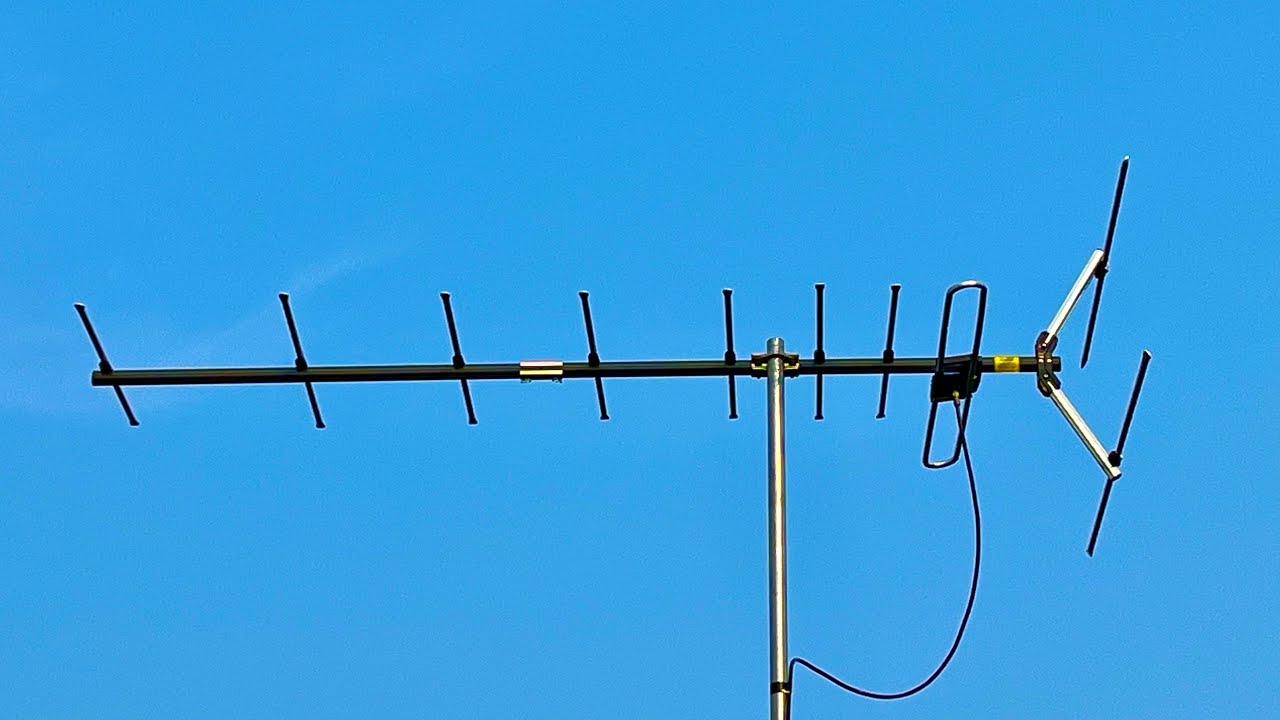
The Five Star Yagi Antenna is a conventional roof or attic antenna for buyers who want a directional receiving design and a fairly complete installation package. Its extended receiving elements are intended to improve stability, and the Yagi layout is familiar to anyone who has installed a traditional broadcast antenna before.
Five Star states that the antenna receives both VHF and UHF channels and can handle 4K, 1080p, 1080i, and 720p local broadcasts. It also supports FM reception, which gives it a capability the GE 29884 and UltraPro 65000 do not explicitly list. The claimed range reaches up to 200 miles, but the product's own description acknowledges that actual reception varies with tower distance and obstructions. That caveat is important for every antenna in this roundup.
The package includes a 40-foot coax cable and a 20-inch mounting pole. It can be mounted on a roof, in an attic, on a chimney, at an eave, or on a mast. Weatherproof construction and lightning protection are listed for outdoor use. The product arrives partly assembled, but full assembly is still required, so this is not the choice for someone hoping to attach a bracket and finish in minutes.
The directional layout is both its strength and its limitation. The PBD 40FT Motorized Antenna can rotate from inside the house, while the 1byone Omni Antenna avoids aiming altogether. The Five Star Yagi is better when the broadcast towers are reasonably grouped and you want a straightforward fixed direction with a long cable and pole included. It is less appealing when towers surround the property or when the antenna will be difficult to access after installation.
Choose this model when you understand where the local towers are and want a traditional Yagi antenna with FM capability and useful mounting hardware. It is a practical fit for an attic or roof project that does not require multi-TV distribution built into the box.
6. PBD 59FT Amplified: Best Long-Cable Kit

Pros
- 59-foot RG6 coax cable included
- 360-degree motorized rotation
- Wireless remote control
- Supports two TVs
- Coaxial grounding block included
Cons
- Long cable runs still need careful routing
- Motorized hardware adds installation complexity
- No mounting pole length is specified
Best for: larger homes where the antenna must sit well away from the televisions.
The standout feature of this PBD model is the included 59-foot RG6 coaxial cable. That extra reach gives you more freedom to put the antenna on a roofline, exterior wall, or high attic position instead of settling for the nearest convenient point. With antennas, placement often matters more than a dramatic range claim, so a longer cable can be genuinely useful when it enables a clearer path.
The antenna is amplified and uses a motorized 360-degree rotation system controlled by a wireless remote. PBD lists a 150-mile range and support for VHF, UHF, 1080p, and 4K signals. It is also described as weatherproof and ready for ATSC 3.0. These capabilities make it a flexible installation, but they do not guarantee reception through dense trees, hills, or building materials.
Two TV outputs let the antenna feed two televisions without a separate splitter. The kit also includes a coaxial grounding block, which is an important installation component for an outdoor antenna. The remote is useful when testing alignment or switching between tower directions, although the system will require a suitable power arrangement for its amplifier and motor.
The GE 29884 is simpler and less dependent on powered accessories. The PBD 360 Motorized Antenna is similar in concept but includes a shorter 40-foot cable, making this 59-foot version the better fit when distance from the antenna to the distribution point is the deciding factor. The Five Star 5-TV Motorized model goes further for larger households, but it is a more elaborate multi-TV package.
The PBD 59FT Amplified is the sensible choice for a high mounting position and a long cable route. Pick it when two-TV support and remote direction control matter, and when you have a clear plan for grounding, cable routing, and power.
7. PBD 40FT Motorized: Best Complete Rotating Kit

Pros
- 360-degree directional rotation
- Wireless remote control
- 40-foot RG6 cable included
- 17-inch mounting pole included
- Supports two TVs
Cons
- Directional aiming still takes experimentation
- Motor and amplifier require more setup
- No explicit ATSC 3.0 claim in the listed features
Best for: buyers who want the core hardware for a rotating two-TV installation.
The PBD 40FT Motorized is a complete-feeling kit for a household that wants remote alignment without assembling a separate list of accessories. The box includes the antenna, wireless remote, power adapter, 40-foot RG6 coaxial cable, and a 17-inch mounting pole. That combination is well suited to a roof, eave, or attic installation where the antenna needs some height and the television is not immediately below it.
PBD describes this model as an amplified outdoor antenna with a 150-mile range and coverage for both UHF and VHF. Its 360-degree motor can be adjusted from inside the home, and the selectable direction is meant to help align the receiving elements with different tower groups. The weatherproof and wind-resistant construction is intended for outdoor use, while the stated 4K and 1080p support refers to compatible over-the-air signals passed to the TV.
The two-TV support is useful for a bedroom and living room or two separate viewing areas. The 40-foot cable is shorter than the PBD 59FT Amplified's cable but should suit many standard installations. The 17-inch pole is also a concrete advantage over packages that require you to source a mast separately.
The PBD 59FT Amplified is the better choice when cable distance is the main concern, and the PBD 360 Motorized Antenna is the closer alternative if you prefer its listed ATSC 3.0 readiness. The GE 29884 remains easier to install for a single direction because it has no motor, remote, or powered rotation system. This PBD model is not ideal for someone who wants a tiny attic antenna or a completely passive setup.
The PBD 40FT Motorized earns its place as the complete rotating kit for two TVs. It suits buyers who want the mast, cable, remote, and motorized alignment in one package and are comfortable with a more involved installation.
8. Five Star 4-TV Antenna: Best Four-TV Setup

Pros
- Supports four TVs
- VHF and UHF reception
- ATSC 3.0 ready
- J-pole and mounting bracket included
- Splitter included
Cons
- Whole-home wiring takes planning
- No motorized rotation
- Actual range depends on terrain and obstructions
Best for: households distributing one antenna signal to four televisions.
The Five Star 4-TV Antenna is aimed at a different buyer from the compact GE and UltraPro models. Its main advantage is not a unique receiving shape, but the included hardware for distributing one antenna to several rooms. A mounting bracket, J-pole, TV splitter, and assembly instructions are included, which gives a four-TV installation a clearer starting point.
Five Star lists reception for VHF and UHF signals, along with 1080p and 4K support. The stated range reaches up to 200 miles, and the antenna is described as multi-directional. The product is also ATSC 3.0 ready. As with the other long-range claims here, nearby terrain, trees, buildings, and tower location will determine how well those capabilities translate to your home.
The extended antenna elements are intended to provide more stable reception, while the J-pole supports roof, attic, chimney, eave, or exterior mounting. The listing says the antenna can be installed with or without line of sight, although a clear path remains preferable whenever possible. After installation, the instructions recommend running a channel scan and refreshing the lineup periodically or when a channel disappears.
The four-TV arrangement is the reason to choose this over the Five Star Yagi Antenna. The Yagi includes a 40-foot cable and pole but does not list the same four-TV installation package. The Five Star 5-TV Motorized model is a better fit for five screens or tower directions that require rotation, while the PBD two-TV models are less suited to a larger distribution network.
The Five Star 4-TV Antenna is a good whole-home starting point for a family connecting up to four televisions. Choose it when the wiring plan is more important than remote aiming, and when you want a supplied splitter and J-pole rather than a bare antenna.
9. UltraPro 65000: Best Compact Mount

Pros
- Weather-resistant outdoor and attic design
- VHF and UHF reception
- J mount and mast clamp included
- ATSC 3.0 compatible
- Limited-lifetime replacement pledge listed
Cons
- 70-mile stated range is lower than several rivals
- Splitter and extra coax cables are separate
- No motorized direction control
Best for: smaller mounting spaces and discreet attic installations.
The UltraPro 65000 is a compact alternative to the broad, multi-element antennas in this group. Its listed dimensions are 17 inches high, 7.9 inches wide, and 2.75 inches long, with a design intended for attic or outdoor installation. The included mounting bracket, mast clamp, and J-mount give you several ways to place it without hunting for basic hardware.
UltraPro rates it for 70-mile reception and lists support for VHF and UHF signals. It is designed for 1080p, 4K, and 8K television use, and it is compatible with ATSC 3.0 broadcasts where available. The modest stated range is not necessarily a flaw for a home within a reasonable distance of towers, especially when a smaller antenna can be placed higher or in a clearer location.
This model is also intended for whole-home use with a splitter and coax cables, although those accessories are sold separately. That makes it less complete than the Five Star 4-TV Antenna, which includes a splitter, and less convenient than the PBD models for a two-TV setup. On the other hand, its simpler fixed design avoids the motor, remote, and power requirements of the rotating antennas.
The GE 29884 is the stronger all-around option when its supplied J mount and 70+ mile claim fit your needs, while the UltraPro is easier to justify when the mounting space is narrow or an attic installation needs a slimmer profile. It lacks the 1byone's omni-directional design, so careful orientation still matters. Buyers in difficult terrain should consult ways to improve reception for local broadcasts before choosing a smaller fixed antenna.
The UltraPro 65000 is best for a straightforward, space-conscious installation. It is a good fit for someone who wants VHF, UHF, ATSC 3.0 compatibility, and supplied mounting hardware without a large rotating assembly.
10. Five Star 5-TV Motorized: Best Five-TV Kit

Pros
- Supports up to five TVs
- 360-degree rotation
- 40-foot coax cable and four-way splitter included
- FM reception supported
- J-pole and cable clips included
Cons
- Largest installation scope in the roundup
- Motorized system adds moving parts
- One-year limited warranty listed
Best for: large households that need multi-TV distribution and remote aiming.
The Five Star 5-TV Motorized is the most ambitious kit here. It combines a rotating outdoor antenna with the accessories needed to distribute its signal around a larger home. The package includes a 40-foot coax cable, four-way splitter, 15 cable clips, one J-pole, and an installation kit. Supporting up to five TVs makes it a clear step beyond the two-TV PBD models and the four-TV Five Star package.
Five Star lists up to 200 miles of reception, VHF reception from 40 to 230 MHz, and UHF reception from 470 to 860 MHz. It also supports 4K, 1080p, 1080i, 720p, and FM broadcasts. The built-in auto gain control chip is described as providing a gain range of 15 to 35 dB, while six reflector elements are intended to improve UHF reception and a V band to improve VHF performance.
The 360-degree rotation is controlled with a button, allowing the antenna to cover different directions rather than staying fixed toward one tower group. That is useful when the televisions share a single antenna but local stations are scattered around the property. The outdoor construction includes durable reflectors, and the package is designed for a roof or other elevated mount.
The scale of the kit is also its weakness. Running coax to five rooms, placing a splitter, securing the J-pole, and setting up the motor takes more planning than the GE 29884 or UltraPro 65000. The Five Star 4-TV Antenna is a better fit if four screens are enough and you do not need rotation. The PBD 59FT Amplified is more suitable when you need a longer cable run but only two TV outputs.
Choose the Five Star 5-TV Motorized when the household really needs broad distribution and remote directional control. It is overbuilt for a single television, but the strongest match here for a large property with several viewing areas and towers in different directions.
How to choose best outdoor antenna for tv
The right outdoor antenna depends less on the largest number in the title than on tower direction, mounting height, cable routing, and how many televisions share the signal.
Tower direction
A directional antenna concentrates its reception toward a particular area, while an omni-directional model receives from all directions. Motorized designs add the ability to change the antenna's aim from inside the home. Find the approximate tower locations first, then decide whether a fixed, multi-directional, or rotating design makes sense.
VHF and UHF reception
VHF and UHF are different broadcast bands, and local stations may use either one. An antenna that explicitly supports both gives you broader coverage than a model designed around one band. The GE 29884, ClearStream 4V, and PBD models all list VHF and UHF reception.
Range and obstructions
The advertised range is a rough capability statement, not a guarantee. Trees, hills, nearby buildings, roof materials, and distance from the towers can reduce reception or cause pixelation. A higher outdoor position may help more than choosing an antenna with a larger headline range.
A clear mounting location usually matters more than another ambitious number on the antenna box.
Amplification
A pre-amplifier can help compensate for signal loss from long coaxial runs or splitters, but it cannot create a missing broadcast signal. Amplification is useful for a distant antenna feeding multiple rooms, while a strong nearby signal may not need it. Models such as the PBD antennas and 1byone include amplification, while the GE 29884 is presented as a simpler fixed antenna.
TV distribution
One TV, two TVs, four TVs, and five TVs require different wiring plans. Check whether the antenna includes direct outputs, a splitter, cable, or only the receiving unit. The 1byone is specifically designed for one TV, the PBD models list two-TV support, and the Five Star multi-TV kits include distribution hardware.
Mounting and weather protection
Outdoor antennas need a stable mount, weather-resistant construction, and a sensible cable route. A supplied J-pole or mast can simplify the installation, but you still need to secure the antenna properly and consider grounding. Attic mounting protects the antenna from weather, though the roof and surrounding materials can affect reception.
Frequently asked questions
Do outdoor TV antennas receive 4K channels?
An antenna passes broadcast signals to the television, but it does not determine the resolution a station transmits. Several models in this roundup list 4K compatibility, which means they can work with compatible over-the-air broadcasts and televisions. Actual 4K availability depends on local stations and broadcast standards.
Is a 200-mile antenna always better than a 70-mile antenna?
No. Range claims depend on line of sight, terrain, trees, buildings, and tower power. A well-placed 70-mile antenna can outperform a larger model mounted in a poor location.
Should I choose a motorized antenna?
Choose a motorized model when important stations are located in different directions and a fixed position cannot serve them well. It adds a remote, motor, and power requirements, so it is unnecessary for homes with towers clustered in one direction.
Can one outdoor antenna feed multiple TVs?
Yes, but the antenna needs a suitable splitter or multiple outputs, and signal loss can increase as more televisions share the line. The PBD models listed here support two TVs, while the Five Star 4-TV and Five Star 5-TV Motorized include broader distribution hardware.
Is attic installation as good as roof installation?
An attic antenna can work well when the roof materials and surrounding structures do not block too much signal. Outdoor mounting usually gives the antenna a clearer path and greater height, but attic placement can be easier to maintain and less exposed to weather.
Do I need an amplifier for a long coaxial cable?
Not always. A long cable run and several splitters can weaken a signal, which is where a pre-amplifier may help. If the original signal is blocked or extremely weak, amplification will not solve the underlying reception problem.
Do I need to scan for channels after installing an antenna?
Yes. Run a channel scan after connecting and positioning the antenna. It is also sensible to scan again after changing its direction or moving it to a different mounting location.
The bottom line
The Best outdoor antenna for tv for most buyers is the GE 29884. It supports VHF and UHF, includes a J mount, works in an attic or outdoors, and lists ATSC 3.0 compatibility without requiring a motorized installation.
Choose the PBD 360 Motorized Antenna when towers are spread across different directions or two televisions need to share the antenna. For four or five TVs, the Five Star 4-TV Antenna and Five Star 5-TV Motorized provide the more suitable distribution hardware.
If you are undecided, identify your tower directions and mounting location first, then choose the simplest antenna that covers those requirements.
As an Amazon Associate we earn from qualifying purchases.