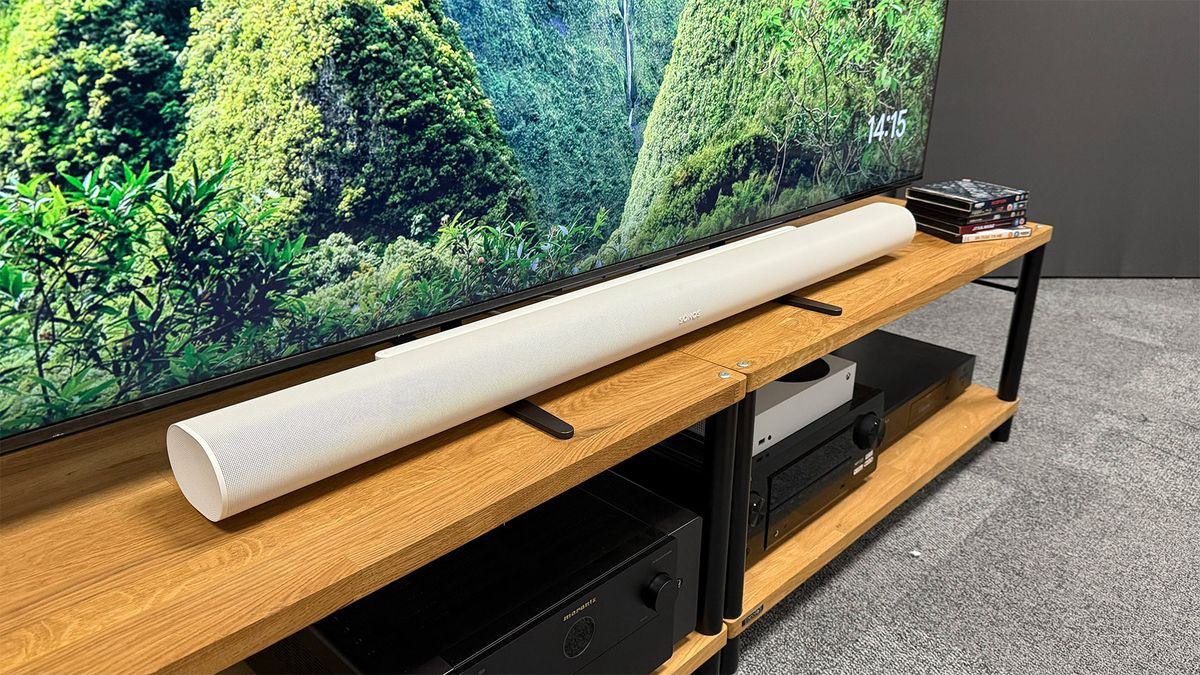

A thin television can make voices sound thin too, while explosions and music flatten into the same narrow strip of audio. The Best Dolby Atmos Soundbar options solve that problem in very different ways, from a compact all-in-one speaker to a full system with rear and upward-firing channels.
We compared the ten models here by their speaker layouts, bass hardware, dialogue features, connections, tuning controls, and practical fit beneath a TV. The choices range from simple 2.0 bars to large systems designed to fill a room with serious low-end energy.
Our top pick is the ULTIMEA Poseidon M60, but the list also includes the most convincing true surround setup, the cleanest all-in-one design, the best compact smart speaker, and several strong choices for smaller rooms.
Comparison table
| # | Product | Award | Channels | Subwoofer | Best for |
|---|---|---|---|---|---|
| 1 | ULTIMEA Poseidon M60 | Best overall | 5.1 | Wired, 5.3L cabinet | Full sound with simple setup |
| 2 | TCL S55H | Best wireless subwoofer system | 2.1 | Wireless | Small to medium rooms |
| 3 | ULTIMEA 5.1.2ch Atmos System | Best true Atmos layout | 5.1.2 | Included system subwoofer | Height effects and rear surround |
| 4 | Samsung S60D | Best all-in-one Samsung bar | 5.0 | Built in | Samsung TV owners |
| 5 | TCL S45H | Best slim setup | 2.0 | None listed | Bedrooms and apartments |
| 6 | GEOYEAO 2.1 Soundbar | Best compact bass package | 2.1 | 5.25-inch | Basic TV and music use |
| 7 | LG S70TY | Best for LG QNED TVs | 3.1.1 | Wireless | LG TV integration |
| 8 | Amazon Fire TV Soundbar Plus | Best Fire TV pairing | 3.1 | Built in | Clear TV dialogue |
| 9 | Sonos Beam Gen 2 | Best compact smart speaker | Not listed | None listed | Music and multiroom audio |
| 10 | JBL Bar 500MK2 | Best big-bass system | 5.1 | Wireless, 10-inch | Large rooms and action movies |
1. ULTIMEA Poseidon M60: Best Overall

Pros
- Five built-in speakers create a wide front soundstage
- VoiceMX processing gives dialogue its own emphasis
- HDMI eARC supports lossless Dolby Atmos
- App includes a 10-band equalizer and 121 presets
- Bluetooth 5.4 supports wireless music playback
Cons
- The subwoofer uses a wire
- There are no rear speakers in the package
- Full system dimensions may be restrictive on a shallow stand
Best for: someone who wants a substantial cinematic system without dealing with rear-speaker placement.
The ULTIMEA Poseidon M60 is the most complete answer here for a living room that needs bigger sound without turning setup into a weekend project. Its five built-in speakers include two side-firing drivers, so the soundbar can spread effects beyond the screen without requiring separate rear speakers. The company says setup takes less than one minute, and the claimed latency is under 0.5 ms, which should help dialogue and on-screen action stay together.
The system is rated as 5.1-channel audio and includes a dedicated wired wooden subwoofer. Its 5.3-liter tuned cabinet and 18 mm high-excursion driver give the low end more physical room to develop than a bar-only design. ULTIMEA lists a 45 Hz to 18 kHz frequency response, up to 300 watts of peak power, and a maximum SPL of 99 dB. Those figures do not turn it into a substitute for a large separate receiver system, but they explain why it is better suited to cinematic effects than a small 2.0 bar.
HDMI eARC is the important connection for Atmos. The M60 supports up to 37 Mbps through eARC and uses CEC for unified TV and soundbar control. Its VoiceMX DSP focuses on vocal frequencies, while the companion app offers a 10-band graphic EQ, 121 sound presets, 13 surround-level settings, and over-the-air updates. Bluetooth 5.4 rounds out the feature set for music from a phone or tablet.
Compared with the TCL S55H, the M60 has a more ambitious speaker arrangement and much deeper control over the sound field, although the TCL's wireless subwoofer is easier to position. The ULTIMEA 5.1.2ch Atmos System goes further for genuine rear and height effects, but it requires more components and more careful placement. The M60's weakness is that its subwoofer is wired and its Atmos effect still comes from the soundbar's front and side channels rather than ceiling or rear speakers. Skip it if you specifically want discrete speakers behind the sofa. For everyone else, it is the pick we'd keep for movies, games, and dialogue-heavy shows.
2. TCL S55H: Best Wireless Subwoofer System

Pros
- Wireless subwoofer adds flexible bass placement
- Dolby Atmos and DTS Virtual:X support
- AI Sonic automatically calibrates the room
- HDMI eARC, optical, Bluetooth, and AUX inputs
- Low 2.36-inch profile fits under many TVs
Cons
- 2.1-channel layout cannot match discrete rear speakers
- No separate center channel is listed
- Subwoofer still takes up floor space
Best for: TV owners who want punchier bass and easy placement in a small or medium room.
The TCL S55H makes a sensible middle ground between a basic television speaker upgrade and a full surround system. The wireless subwoofer is its main practical advantage. You can place it beside a cabinet or closer to a seating position without running a speaker cable from the bar, which makes the room easier to arrange than the Poseidon M60's wired-subwoofer setup.
TCL gives the S55H a 2.1-channel layout with Dolby Atmos and DTS Virtual:X processing. That means it can create a sense of width and height from the bar and subwoofer, but it does not have the dedicated rear speakers or up-firing channels found in the ULTIMEA 5.1.2ch Atmos System. Its listed output is up to 220 watts, and the wireless subwoofer handles the low rumble so the soundbar can concentrate on speech and midrange detail.
The bar measures 31.89 inches wide, 2.36 inches high, and 3.86 inches deep. That low profile is useful if a TV stand leaves little clearance beneath the screen. HDMI eARC and ARC are available alongside optical, Bluetooth, and AUX, so it can work with older TVs as well as newer displays. TCL's AI Sonic room calibration adjusts the audio to the listening space through the app, and the included remote keeps daily volume changes straightforward.
The TCL S55H is a better fit than the TCL S45H when bass matters, since the S45H does not list a subwoofer. It is also easier to integrate than the M60 if exposed speaker wiring bothers you. Its limitation is straightforward: simulated height and surround effects cannot produce the same directional precision as a system with actual rear channels. Buyers wanting to understand how a separate subwoofer changes TV sound should start here, especially if the room is compact and the system needs to stay simple.
3. ULTIMEA 5.1.2ch Atmos System: Best True Atmos Layout

Pros
- 5.1.2-channel design includes rear and upward-firing speakers
- HDMI eARC supports lossless Atmos transmission
- 13-step surround adjustment
- App includes 10-band EQ and 121 presets
- CEC links TV and soundbar controls
Cons
- Not compatible with DTS
- Requires more placement and cable management
- The system is less compact than a single-bar solution
Best for: viewers who want the clearest physical separation between front, rear, and height effects.
If the goal is to hear Atmos as a genuine room effect rather than as a virtual expansion, the ULTIMEA 5.1.2ch Atmos System is the most ambitious design in this group. It combines a 5.1.2-channel layout with two rear surround speakers and dual up-firing Atmos drivers. That gives it a physical advantage over the TCL bars and the all-in-one Samsung S60D when a movie soundtrack places sound behind or above the listener.
The up-firing channels use neodymium internal magnets and 18-core voice coils, according to the product details. Those components are intended to produce a more focused upward throw, while ULTIMEA's SurroundX processing positions effects around the room. The practical result depends heavily on ceiling height, speaker placement, and the listening position, but the hardware is better equipped for height information than a bar that only simulates it from the front.
HDMI eARC supports up to 37 Mbps for lossless 5.1.2-channel Atmos, and CEC lets the TV and soundbar share power and volume control. The app is unusually adjustable for this category, with a 10-band graphic EQ, 121 sound presets, and surround control from minus 6 to plus 6. That gives you room to tame aggressive effects or raise the rear channels when the default balance does not suit the room.
The major catch is DTS compatibility. The product details explicitly say the system is not compatible with DTS, so buyers with a large library of DTS-encoded discs or files should consider the JBL Bar 500MK2 instead. This system also asks more of the room than the ULTIMEA Poseidon M60, which is easier to arrange because its surround effect comes from the main bar. If you want the strongest physical Atmos layout and can place rear speakers correctly, this is the one to choose.
4. Samsung S60D: Best All-in-One Samsung Bar

Pros
- Five-channel all-in-one design
- Built-in subwoofers avoid a separate bass unit
- Wireless Dolby Atmos support
- Q-Symphony works with compatible Samsung TVs
- Built-in Alexa, Chromecast, and AirPlay 2
Cons
- No separate subwoofer is included
- Compact cabinet cannot produce the deepest bass here
- Some of its strongest features require a Samsung TV
Best for: Samsung TV owners who want a clean setup with strong ecosystem features.
The Samsung S60D takes the opposite approach from the ULTIMEA systems. It puts five channels and the bass hardware into one compact cabinet, so there is no subwoofer to position and no rear speaker cable to hide. That makes it particularly appealing for a living room where visual simplicity matters as much as impact.
Samsung lists built-in up-firing speakers, acoustic beam technology, and wireless Dolby Atmos. Its SpaceFit Sound Pro analyzes the room and adjusts the sound, while Adaptive Sound changes the presentation based on the content. The Active Voice Analyzer is designed to keep dialogue and commentary from disappearing into background noise. Those features make the S60D well suited to sports, news, and shows where speech matters more than deep effects.
The S60D is 26.3 inches wide, 2.4 inches high, and 4.1 inches deep, with a listed weight of 6 pounds. It also includes Game Mode Pro for a wider gaming presentation. Samsung's Q-Symphony can combine the soundbar with compatible Samsung TV speakers, and built-in Alexa, Chromecast, and AirPlay 2 give it a wider smart-home and streaming role than most of the simpler bars here.
The Samsung S60D is tidier than the LG S70TY, which needs a wireless subwoofer, and more capable as a standalone smart speaker than the TCL S45H. The trade-off is bass. A separate subwoofer such as the one in the TCL S55H or the large JBL system will create more weight in action scenes. If your TV is Samsung, the controls that work across the TV and soundbar make this a particularly coherent choice. Buyers with another TV should make sure they actually need the Samsung-specific features before choosing it.
5. TCL S45H: Best Slim Setup

Pros
- Slim 2.0-channel design
- Dolby Atmos and DTS Virtual:X processing
- AI Sonic room calibration
- HDMI eARC, optical, Bluetooth, and AUX
- Wall-mount kit and HDMI cable included
Cons
- No subwoofer is listed
- Virtual surround cannot match a multichannel system
- Bass has less physical authority than the TCL S55H
Best for: bedrooms, apartments, and small spaces that need clearer TV audio without extra boxes.
The TCL S45H is the uncomplicated choice in this roundup. It is a 2.0-channel bar with no listed subwoofer, so it does not try to compete with the JBL Bar 500MK2 for bass or the ULTIMEA 5.1.2ch Atmos System for physical surround. Its job is to improve the TV's basic sound while keeping the furniture clear and the installation quick.
Dolby Atmos and DTS Virtual:X processing create a wider presentation from the two-channel hardware. That can make a film feel less constrained to the screen, although the effect will be more dependent on the room than it would be with rear speakers or a dedicated bass unit. TCL also includes AI Sonic auto room calibration, which adjusts the sound to the listening space through the app.
The bar measures 31.89 inches wide, 2.36 inches high, and 3.86 inches deep. It can connect through HDMI eARC or ARC, optical, Bluetooth, or AUX, giving it broad compatibility with TVs and projectors. The included HDMI cable, remote, and wall-mount kit remove several small setup hurdles, while the low height helps it sit below a screen without blocking the picture.
The TCL S45H makes more sense than the GEOYEAO 2.1 Soundbar when a compact, clean installation is the priority. The GEOYEAO has a subwoofer and should produce more bass, but it takes up considerably more space. This TCL also gives you DTS Virtual:X, which the ULTIMEA 5.1.2 system does not support. Choose it for dialogue, everyday shows, and moderate listening levels, but skip it if movie soundtracks need room-shaking low frequencies.
6. GEOYEAO 2.1 Soundbar: Best Compact Bass Package

Pros
- Includes a dedicated 5.25-inch subwoofer
- Dolby Atmos and 3D sound enhancement
- Bluetooth supports phone, tablet, and laptop playback
- Physical buttons and remote control
- LED display shows mode and volume
Cons
- The product is much less compact once the subwoofer is included
- Connectivity details are less extensive than TCL and JBL models
- Surround processing is virtual rather than discrete rear audio
Best for: listeners who want a simple two-piece system with a more pronounced bass presence.
The GEOYEAO 2.1 Soundbar is built around a basic but sensible idea: pair a straightforward soundbar with a real subwoofer instead of asking a small cabinet to create all the bass. Its 5.25-inch subwoofer should give music and movie effects more depth than a bar-only design, and the manufacturer says the driver is intended to maintain clarity during loud or rapidly changing material.
Dolby Atmos and 3D Sound Enhancement handle the spatial side. This is a 2.1-channel system, so the Atmos effect is processed rather than produced by separate height or rear speakers. The distinction matters. It can make sound seem wider and more enveloping, but it will not position a helicopter overhead with the same physical separation as the ULTIMEA 5.1.2ch Atmos System.
Bluetooth lets you stream from a phone, tablet, laptop, or smart TV. The unit also has an LED display that shows the current mode and volume, with a stated maximum volume level of 32. The remote can activate 3D effects, adjust bass and treble, and turn off the display by holding the 3D button for 10 seconds. Those controls are useful if you prefer direct adjustments instead of an app.
The dimensions listed for the product are 18 inches high, 8 inches wide, and 14 inches long, which appear to describe the package or combined product information rather than a conventional low soundbar footprint. Check the available cabinet and floor space carefully. The TCL S45H is easier to fit, while the TCL S55H offers more clearly documented connections and room calibration. Choose GEOYEAO when a separate bass unit matters more than a polished ecosystem or advanced installation features.
7. LG S70TY: Best for LG QNED TVs

Pros
- 3.1.1-channel layout with up-firing center channel
- Wireless subwoofer included
- WOW Orchestra combines compatible LG TV and soundbar speakers
- Rear speaker expansion is supported
- Up to 120Hz passthrough for gaming
Cons
- Best integration is tied to compatible LG TVs
- Wider cabinet needs more space beneath the screen
- Rear speakers are an optional expansion, not listed as included
Best for: owners of LG QNED TVs who want integrated controls and a matching design.
The LG S70TY is the system to consider when the TV itself is an important part of the audio setup. LG designed it to match QNED televisions, with a slim profile, a metal grille, and a crest-shaped design. More importantly, WOW Orchestra lets the compatible TV and soundbar play together instead of forcing you to choose one speaker system.
Its 3.1.1-channel layout includes a subwoofer and an up-firing center channel. That center channel is aimed at dialogue clarity, while Dolby Atmos creates the spatial layer around it. The wireless subwoofer means you can place bass separately from the 37.4-inch-wide soundbar, and rear surround speakers can be added later through the system's wireless expansion support.
WOW Interface lets you use the TV remote to adjust sound modes, volume, and connection status. The soundbar also supports a passthrough refresh rate up to 120Hz, which is relevant for compatible gaming setups. LG says its surround expansion can convert two-channel audio into a multichannel presentation, though that does not replace the discrete channels in a complete rear-speaker package.
The LG S70TY is more expandable than the Samsung S60D, but the Samsung is smaller and keeps the subwoofer inside the main cabinet. The Amazon Fire TV Soundbar Plus is simpler for dialogue and streaming, while the LG is the more convincing choice for an LG-centered room. Buyers with a non-LG TV can still use the soundbar, but they should not choose it primarily for WOW Orchestra or the single-remote experience.
8. Amazon Fire TV Soundbar Plus: Best Fire TV Pairing

Pros
- All-in-one 3.1-channel design
- Built-in bass avoids a separate subwoofer
- Dedicated center dialogue channel
- Dolby Atmos and DTS:X support
- Movie, Music, Sports, and Night modes
Cons
- No separate rear speakers are included
- Built-in bass has less flexibility than a wireless subwoofer
- Fire TV controls are most useful with compatible equipment
Best for: Fire TV households that want clear dialogue and a simple one-remote setup.
The Amazon Fire TV Soundbar Plus is a clean all-in-one design with a useful emphasis on speech. Its 3.1-channel layout includes a dedicated center dialogue channel, so voices have their own place in the mix instead of competing with the left and right channels. That makes it a strong fit for television shows, news, and films where missing a line is more irritating than missing a bass drop.
Bass is built into the main cabinet, which keeps the installation simple. Dolby Atmos and DTS:X provide the spatial processing, while Movie, Music, Sports, and Night modes adjust the presentation for different content. The system connects to a TV through the included HDMI cable and an HDMI eARC or ARC port, and Bluetooth handles music from a phone or tablet.
The bar measures 37.07 inches wide, 2.5 inches high, and 5.16 inches deep, with a listed weight of 8.82 pounds. That width suits a larger television but may look oversized beneath a smaller screen. Fire TV users can control the TV and soundbar with one remote and adjust sound settings through Fire TV audio menus on compatible models.
Compared with the Samsung S60D, the Fire TV Soundbar Plus has a more explicit center-channel focus but fewer smart-platform features listed. The LG S70TY offers a wireless subwoofer and rear expansion, while the Amazon keeps everything in one bar. It is a sensible choice for a Fire TV setup, but buyers seeking the largest sound should choose the JBL Bar 500MK2 or ULTIMEA Poseidon M60 instead. For a deeper look at why integrated bass suits a clean TV cabinet, this style of design is the one to examine.
9. Sonos Beam Gen 2: Best Compact Smart Speaker

Pros
- Compact 25.6-inch cabinet
- Dolby Atmos support
- Smart Trueplay tuning
- Sonos app, TV remote, AirPlay 2, and voice control
- Can expand into surround and multiroom audio
Cons
- No subwoofer is listed
- No channel count or connection details are provided here
- Physical bass and surround scale are limited by the compact design
Best for: listeners who want a small bar that can also become part of a broader multiroom system.
The Sonos Beam Gen 2 is the smallest-feeling product in this group, and that is its defining strength. At 25.6 inches wide and 2.7 inches high, it can sit beneath a smaller TV without dominating the furniture. Sonos focuses less on a long specification list and more on the experience of a compact speaker that handles television, music, podcasts, radio, and audiobooks from one app.
Dolby Atmos creates the 3D surround effect, while Sonos's Trueplay tuning adapts the sound to the room. The product details do not list a channel count or a separate subwoofer, so this is not the right choice for shoppers who want the most hardware per system. Its bass and spatial scale will not equal the JBL Bar 500MK2, whose wireless subwoofer has a 10-inch driver.
The Beam can be controlled with the Sonos app, a TV remote, Apple AirPlay 2, and voice control. That broad control scheme makes it useful even when the TV is off. The ability to expand into true surround sound and multiroom listening is a major differentiator, although the additional speakers are not listed as part of this product.
The Sonos Beam Gen 2 is more refined as a connected music speaker than the Amazon Fire TV Soundbar Plus, while the Amazon is more explicit about its center dialogue channel and TV modes. The Beam also lacks the immediate bass impact of the TCL S55H. Choose it for a small room, a clean design, and a future Sonos system. Skip it if the priority is maximum cinematic scale from a single purchase.
10. JBL Bar 500MK2: Best Big-Bass System

Pros
- 5.1-channel system with 10-inch wireless subwoofer
- Dolby Atmos and MultiBeam 3.0
- PureVoice 2.0 dialogue processing
- HDMI eARC and 4K Dolby Vision passthrough
- AirPlay, Google Cast, Spotify Connect, and Tidal Connect
Cons
- Large and heavy system
- No rear speakers are listed as included
- May overwhelm a small room
Best for: large rooms, action films, and listeners who want powerful bass without a receiver.
The JBL Bar 500MK2 is the heavyweight of this roundup. Its wireless 10-inch subwoofer is the clearest signal that this system is built for impact. JBL lists 750 watts of maximum system output, and the dedicated bass unit should give crashes, engines, music, and game effects more scale than any of the compact all-in-one bars here.
Its 5.1-channel layout works with Dolby Atmos and JBL's MultiBeam 3.0 processing. MultiBeam is designed to create a wide soundstage from the front of the room, while the system's calibration listens to how sound reflects off the walls and furniture. The result should be a larger presentation than the Sonos Beam Gen 2 or TCL S45H, although the product does not list separate rear speakers in the package.
JBL adds PureVoice 2.0, which automatically optimizes dialogue based on ambient sound in the scene and the soundbar's volume. SmartDetails is intended to preserve smaller effects such as a creaking door or distant shout. HDMI eARC supports uncompressed Dolby Atmos, and the HDMI input supports 4K Dolby Vision passthrough for a compatible player or console.
The JBL ONE app provides equalizer controls, music browsing, and software upgrades. Streaming options include AirPlay, Google Cast, Spotify Connect, Tidal Connect, and Roon Ready, while compatible voice assistant-enabled speakers can control playback. The system measures 37 inches wide and weighs 24.3 pounds, so it needs a sturdy, suitably wide setup. Choose it over the ULTIMEA Poseidon M60 when bass scale matters most, but choose the ULTIMEA when a smaller footprint and more extensive sound presets are more useful.
How to choose the best dolby atmos soundbar
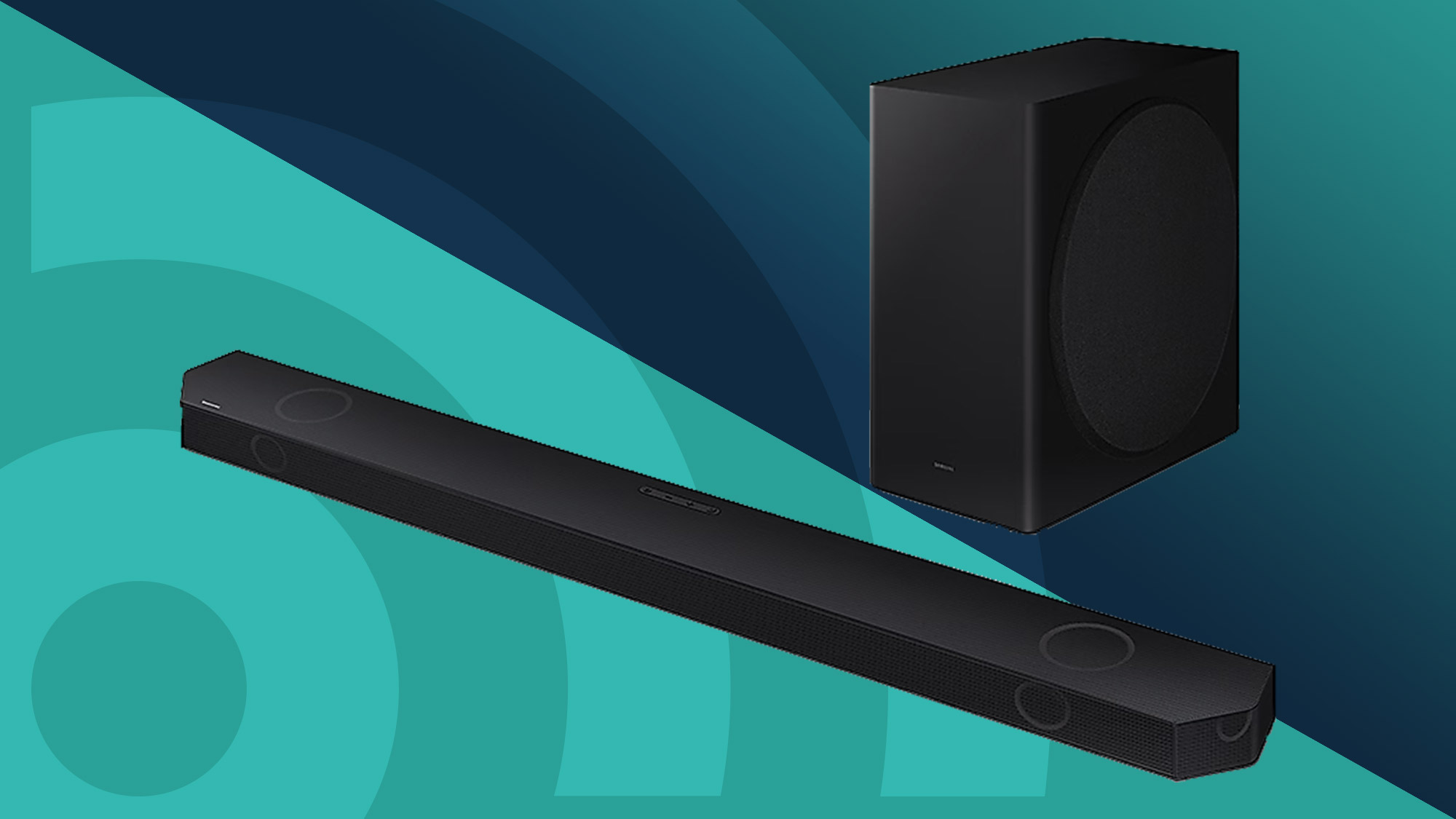
The Best Dolby Atmos Soundbar for one room may be the wrong one for another. Start with the speaker layout, then match the bass hardware, connections, room calibration, and TV ecosystem to the way you actually watch.
Speaker layout
A 2.0 bar such as the TCL S45H uses two main channels and processing to simulate width and height. A 2.1 model adds a subwoofer, while 3.1 and 5.1 systems add more separation for dialogue and effects. A 5.1.2 layout such as the ULTIMEA 5.1.2ch Atmos System adds physical rear and upward-firing channels, which gives Atmos sound a stronger hardware foundation.
Virtual Atmos can still sound spacious, but it depends on the room, walls, ceiling, and listening position. Discrete rear speakers are the better choice when sounds behind the listener matter most.
Bass hardware
A dedicated subwoofer usually creates deeper and more forceful low frequencies than a compact bar alone. Wireless models such as the TCL S55H, LG S70TY, and JBL Bar 500MK2 offer more placement flexibility, while the ULTIMEA Poseidon M60 uses a wired subwoofer. Built-in bass, as found in the Samsung S60D and Amazon Fire TV Soundbar Plus, keeps the room cleaner but leaves less flexibility for positioning.
The JBL's 10-inch subwoofer is designed for the largest bass response in this group. The GEOYEAO uses a 5.25-inch subwoofer for a simpler two-piece setup.
Dialogue handling
A dedicated center channel gives speech a clear home in the mix. The Amazon Fire TV Soundbar Plus has a dedicated center dialogue channel, the LG S70TY has an up-firing center channel, and the JBL Bar 500MK2 uses PureVoice 2.0 to optimize voices. The ULTIMEA Poseidon M60 uses VoiceMX DSP to isolate vocal frequencies.
Dialogue modes are useful at lower listening levels, but they cannot fix poor placement. Keep the bar facing the seating position and avoid covering it with the TV stand.
Atmos effects are only as convincing as the speaker placement and room geometry allow.
HDMI eARC and format support
HDMI eARC is the most useful connection for lossless Atmos from a compatible TV. The ULTIMEA systems list support up to 37 Mbps, while the JBL Bar 500MK2 specifically supports uncompressed Dolby Atmos through eARC. HDMI ARC, optical, Bluetooth, and AUX broaden compatibility with older TVs and other devices.
Format support also matters. The ULTIMEA 5.1.2ch system is explicitly not compatible with DTS, while the TCL S45H, TCL S55H, Amazon Fire TV Soundbar Plus, and JBL Bar 500MK2 list DTS-related support.
Room calibration and ecosystem
Calibration can help a soundbar compensate for reflective walls, furniture, and listening position. TCL uses AI Sonic, Samsung uses SpaceFit Sound Pro, Sonos uses Trueplay, and JBL provides automatic sound calibration through the JBL ONE app.
Your TV platform matters too. Samsung's Q-Symphony is designed for compatible Samsung TVs, LG's WOW Orchestra is built around compatible LG models, and Fire TV integration gives Amazon's bar one-remote control on supported equipment. If you are still deciding between a compact bar and a larger system, the difference between simple TV audio and fuller room sound is the key trade-off to settle first.

Frequently asked questions
Does every Dolby Atmos soundbar need rear speakers?
No. The TCL S45H, Samsung S60D, and Amazon Fire TV Soundbar Plus use front-facing hardware and processing to create a wider or taller sound field. Rear speakers provide more physical separation, but they also require extra placement and room for wiring or wireless modules.
Is a 5.1.2 soundbar better than a 2.1 soundbar?
A 5.1.2 system has more physical channels, including rear and height channels, so it is better suited to directional surround effects. A 2.1 system is easier to install and may be the better fit for a small room or a listener who mainly watches television.
Do I need HDMI eARC for Dolby Atmos?
HDMI eARC is the most dependable connection for lossless Dolby Atmos from a compatible TV. Some systems can receive Atmos through other methods, but the products here specifically highlight eARC for full-bandwidth or uncompressed audio.
Can a soundbar improve dialogue at low volume?
Yes, several models include dialogue-focused processing. The ULTIMEA Poseidon M60 uses VoiceMX, the Samsung S60D uses Adaptive Sound and Active Voice Analyzer, the Amazon Fire TV Soundbar Plus has a dedicated center channel, and the JBL Bar 500MK2 uses PureVoice 2.0.
Does room size affect which soundbar I should choose?
It does. A compact bar such as the Sonos Beam Gen 2 or TCL S45H is easier to balance in a bedroom or small apartment. Larger systems such as the JBL Bar 500MK2 and ULTIMEA Poseidon M60 are better suited to rooms where their wider soundstage and stronger bass have space to spread.
Can these soundbars play music from a phone?
Most of them can. Bluetooth is listed for the TCL S55H, TCL S45H, GEOYEAO 2.1 Soundbar, and Amazon Fire TV Soundbar Plus. The Samsung S60D, Sonos Beam Gen 2, and JBL Bar 500MK2 also support broader smart or network streaming features.

The bottom line
The ULTIMEA Poseidon M60 is the Best Dolby Atmos Soundbar choice for most people who want a wide, powerful system with useful dialogue processing and unusually deep app control. Its wired subwoofer and lack of physical rear speakers are real compromises, but the five-driver bar, HDMI eARC, and strong bass hardware make it the most balanced pick here.
Choose the ULTIMEA 5.1.2ch Atmos System when genuine rear and height channels matter more than easy placement. For a smaller all-in-one setup, the Samsung S60D is the cleanest choice for Samsung TV owners, while the Sonos Beam Gen 2 is the better connected speaker for compact rooms and multiroom listening.
If you are undecided, choose the Poseidon M60 for movies, the 5.1.2 system for physical surround, or the TCL S45H when a slim bar is all your room can accommodate.
As an Amazon Associate we earn from qualifying purchases.