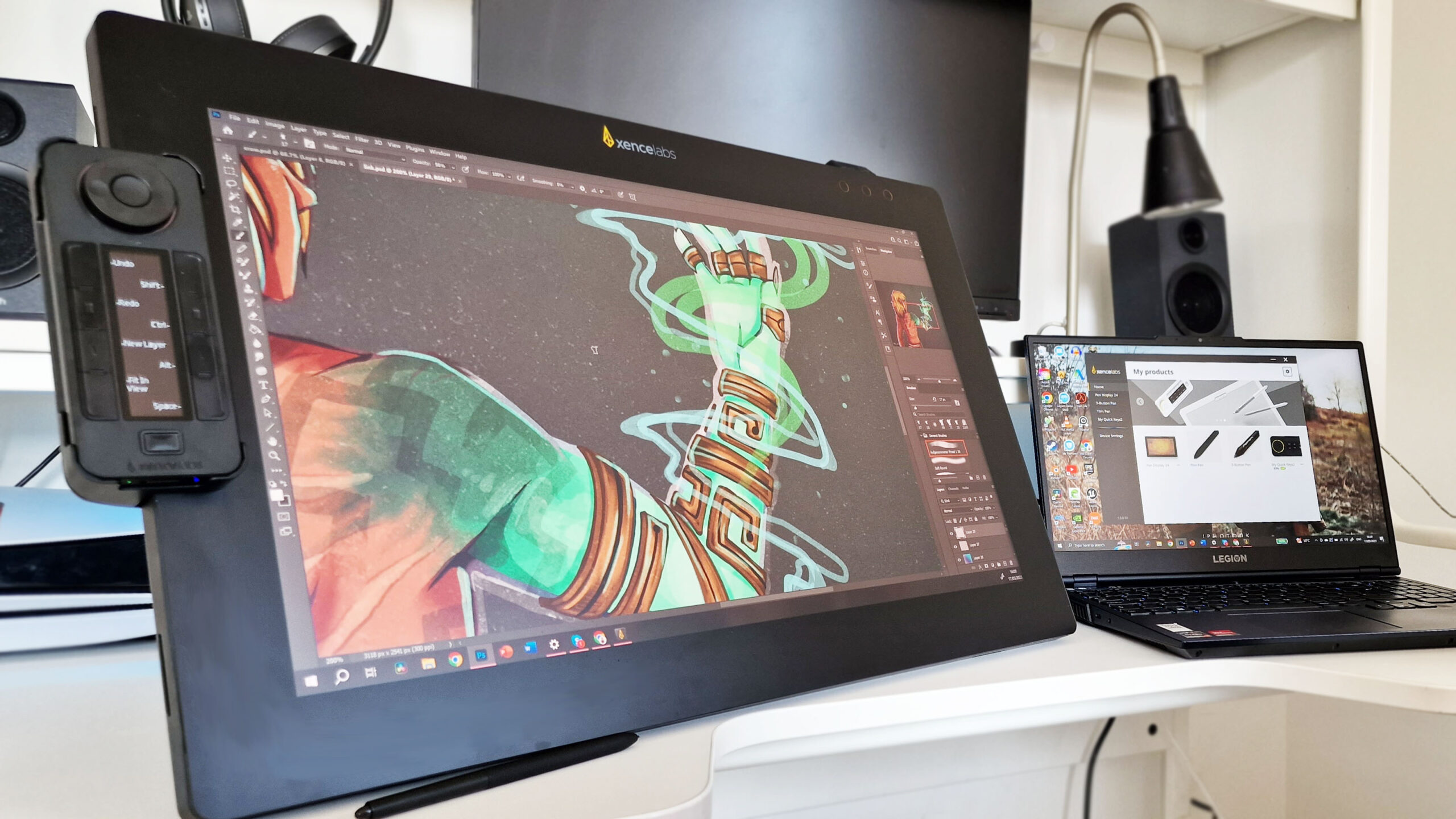

A drawing tablet can either feel like a natural extension of your hand or like a layer of hardware between you and the canvas. The first decision is not screen size. It is whether you want a standalone Android tablet or a pen display that depends on a computer.
Our Best best tablet for drawing picks cover both camps, with screen tablets, compact graphics pads, and portable all-in-one models. The best choice for most computer-based artists is the XP-Pen Artist 13.3 Pro, while the Wacom MovinkPad 11 is the standout for drawing away from a desk.
Comparison
| # | Product | Award | Screen or active area | Pen | Best for |
|---|---|---|---|---|---|
| 1 | XP-Pen Artist 13.3 Pro | Best overall | 13.3-inch full-laminated FHD | 16, 384 pressure levels, 60-degree tilt | Computer-based artists |
| 2 | Frunsi RubensTab T11 Pro | Best standalone starter | 10.1-inch FHD, 1920 by 1200 | Battery-free pressure-sensitive pen | Beginners and students |
| 3 | PicassoTab X11 | Best standalone screen | 11-inch laminated 2K | 4, 096 pressure levels | Portable creative work |
| 4 | Wacom MovinkPad 11 | Best premium portable | 11.45-inch matte etched glass | Pro Pen 3, 8, 192 pressure levels | Serious mobile sketching |
| 5 | HUION Kamvas 13 Gen 3 | Best color accuracy | 13.3-inch laminated display | 16, 384 pressure levels, 60-degree tilt | Color-sensitive illustration |
| 6 | PicassoTab A10 | Best compact standalone | 10-inch laminated screen | 4, 096 pressure levels | Casual drawing and learning |
| 7 | Wacom Intuos Small | Best compact pen tablet | Small wired active area | Battery-free EMR pen | Desk use and photo editing |
| 8 | Callsky-Kids 12-Inch | Best connected standalone | 12-inch IPS, 2000 by 1200 | 4, 096 pressure levels, 60-degree tilt | Mobile app flexibility |
| 9 | XP-Pen Deco 01 V3 | Best large pen tablet | 10 by 6.25-inch area | 16, 384 pressure levels, 60-degree tilt | Shortcut-heavy workflows |
| 10 | HUION Kamvas Pro 16 | Best large display | 15.6-inch full-laminated screen | Battery-free pen, 60-degree tilt | Large-canvas desktop work |
1. XP-Pen Artist 13.3 Pro: Best Overall

Pros
- Full-laminated screen keeps the cursor close to the nib
- Dial and eight shortcut keys speed up common commands
- Battery-free pen supports tilt and 16, 384 pressure levels
- Broad operating system and software compatibility
Cons
- Requires a Windows, Mac, Chrome OS, or Linux computer
- 13.3-inch screen can feel tight beside a large desktop monitor
- The listed dimensions make it a substantial desk accessory
Best for: artists who want a capable screen tablet connected to a computer.
The XP-Pen Artist 13.3 Pro gets the central experience right. You draw directly on a 13.3-inch screen, so brush placement feels much more immediate than it does on a conventional pad where your hand is on the tablet and your eyes are on a separate monitor. The fully laminated construction also reduces the visible gap between glass and image, which matters when making small marks or tracing a loose sketch.
Its FHD display uses an 88% NTSC color gamut, with the product information also citing at least 91% Adobe RGB and 123% sRGB coverage. Those figures point to a vivid canvas with useful color range for illustration and photo work. A 178-degree viewing angle helps keep the image consistent when the tablet is tilted on its stand, although a wide gamut is not the same thing as a calibrated color workflow.
The pen is the reason this model leads the computer-connected group. It is battery-free, recognizes up to 60 degrees of tilt, and offers 16, 384 pressure levels. Tilt can change shading or brush direction without forcing you to repeatedly adjust software settings. The low initial activation force should also help with delicate lines. A red dial handles zoom, brush size, and canvas rotation, while eight customizable keys keep the keyboard out of reach.
The important catch is that this is not a standalone tablet. The included three-in-one cable connects it to a computer or laptop, and your creative apps run there. The HUION Kamvas 13 Gen 3 is a close alternative with stronger stated color accuracy and a dual dial, while the HUION Kamvas Pro 16 gives you a larger canvas. The Artist 13.3 Pro remains the more balanced pick for most desks because its size, controls, pen, and software support do not pull too far in any one direction.
Skip it if you want to draw on the sofa without another device. For everyone with a compatible computer and a preference for drawing directly on screen, this is the first model we would consider.
2. Frunsi RubensTab T11 Pro: Best Standalone Starter

Pros
- Runs without a computer
- 10.1-inch FHD IPS display has 1920 by 1200 resolution
- Built-in drawing apps and tutorials reduce setup friction
- 5, 800mAh battery supports up to five hours of continuous use
- Includes an adjustable stand case
Cons
- Shorter stated runtime than some larger standalone models
- Smaller screen than the PicassoTab X11 and Callsky-Kids tablet
- App and system performance are tied to its built-in Android hardware
Best for: beginners and students who want an all-in-one drawing device.
The Frunsi RubensTab T11 Pro makes the standalone format approachable. There is no monitor cable or separate computer to arrange. Turn it on, open one of the included creative apps, and the drawing surface is ready. That simplicity is especially useful for a student learning digital art, since the first session is about drawing rather than configuring drivers and mapping a pen.
The 10.1-inch Full HD IPS display has a 1920 by 1200 resolution. It is not the largest canvas here, but that resolution is dense enough for clear menus and detailed line work at this size. Its IPS construction is also suited to viewing from different angles. Multi-touch support adds familiar gestures for zooming, panning, and scrolling, though artists who prefer a completely locked canvas may want to disable touch while working.
A battery-free pressure-sensitive pen keeps charging out of the workflow. The tablet includes pre-installed drawing software, tutorials, and Wi-Fi access for online resources or cloud storage. An adjustable stand case makes more sense than a bare slab for a device intended to move between a desk, classroom, and travel bag. The 5, 800mAh battery is rated for up to five hours of continuous use, and USB-C charging can be supplemented with a power bank.
The PicassoTab A10 offers a similar standalone concept in a smaller package, while the PicassoTab X11 gives you a laminated 2K screen and more storage. The Frunsi is a better first step than either if guided learning is the priority, but it is not the strongest pick for a professional who needs a broad canvas or a desktop-class art setup. Readers comparing entry-level options may also want to consider the features that make drawing hardware easier for new artists.
This is the model to choose when the tablet needs to be ready for a child, student, or first-time digital artist with minimal fuss. More demanding users should move up to the Wacom or XP-Pen options.
3. PicassoTab X11: Best Standalone Screen

Pros
- Standalone 11-inch design needs no computer
- Laminated 2K display reduces parallax and glare
- 6GB RAM and 128GB storage support broader app use
- Storage can expand up to 1TB
- Includes beginner tutorials and a case
Cons
- 4, 096 pressure levels are below the leading pen displays here
- Larger than the 10-inch standalone alternatives
- Performance still depends on Android app support
Best for: artists who want a portable standalone tablet with a more spacious canvas.
The PicassoTab X11 is the standalone model that feels least cramped for actual illustration. Its 11-inch screen gives the canvas a little more breathing room than the Frunsi RubensTab T11 Pro and PicassoTab A10, while the fully laminated construction keeps the pen tip visually close to the artwork. That reduction in parallax is one of the details you notice most when making precise strokes.
The 2K display should make small interface elements and fine artwork clearer than a lower-resolution panel. The screen is described as paper-like, with reduced glare, so it is intended to feel more like a drawing surface than a glossy general-purpose tablet. The 4, 096-level stylus is capable of expressive line variation, but it does not offer the same pressure granularity as the 16, 384-level pens in the XP-Pen and HUION pen displays.
Inside, an octa-core processor works with 6GB of RAM and 128GB of storage. That gives the X11 more room for artwork, tutorials, and general tablet use than the PicassoTab A10, which has 64GB of storage. Expansion up to 1TB is useful if the tablet becomes a portable library for layered files and reference material. Five creative apps are preloaded, and the included Concepts and Artixo upgrades make the learning path unusually visible for a standalone device.
The trade-off is that Android remains the platform underneath. That is convenient for drawing away from a computer, but it does not replace the deeper desktop workflows available through Photoshop, Illustrator, Blender, or similar software on the XP-Pen Artist 13.3 Pro. If you are deciding between a self-contained sketchbook and a computer-linked display, how a standalone canvas changes the rest of your setup is the useful question.
Choose the X11 when portability and screen space matter more than maximum pen sensitivity. It is a strong fit for students, travelers, and hobbyists who want a complete drawing environment in one device.
4. Wacom MovinkPad 11: Best Premium Portable

Pros
- Lightweight 1.3-pound standalone design
- Matte etched glass gives the surface a paper-like texture
- Pro Pen 3 has 8, 192 pressure levels and three buttons
- Android 14 and 128GB storage support mobile creative apps
- Quick draw shortcut opens Wacom Canvas
Cons
- 11.45-inch canvas is smaller than the HUION Kamvas Pro 16
- Android software is not a substitute for every desktop workflow
- Its portability comes with a smaller working area
Best for: experienced artists who want a refined standalone sketching companion.
The Wacom MovinkPad 11 is the most convincing sketchbook replacement in this group. At 1.3 pounds, it is light enough to carry without making the tablet feel like a small laptop. The matte etched glass is the key physical detail. It adds subtle texture, cuts reflections, and reduces fingerprints, so the surface feels less like a glossy screen during long drawing sessions.
Wacom pairs that surface with a slim Pro Pen 3 designed for this tablet. It is battery-free, has 8, 192 pressure levels, and provides three buttons. Replacement nibs are stored in the back of the pen, a small but practical choice for mobile artists. The quick draw function launches Wacom Canvas when you tap and hold the pen on the screen, turning a passing idea into an immediate sketch instead of a sequence of menus.
This is an Android 14 tablet with 8GB of memory and 128GB of storage. Wacom Canvas is included, along with two years of Clip Studio Paint Debut and trials of Ibis Paint, Magma, and ArtWod training. The tablet also supports popular digital pens from Dr. Grip, LAMY, and STAEDTLER. That flexibility makes it more personal than the bundled-pen approach used by many alternatives.
The PicassoTab X11 provides a larger 2K canvas and expandable storage, but the MovinkPad feels more deliberately designed around the act of drawing. The Frunsi RubensTab T11 Pro is easier to recommend for a first-time user who wants tutorials, while the MovinkPad is the better companion for someone who already knows which apps and pen feel they prefer. Its weakness is the same as its strength: the 11-inch format travels well, but it cannot provide the broad workspace of the HUION Kamvas Pro 16.
Buy this one if your drawing habit moves from desk to couch to train table. Skip it if your work depends on desktop-only software or demands a large canvas.
5. HUION Kamvas 13 Gen 3: Best Color Accuracy

Pros
- 13.3-inch fully laminated display
- 99% sRGB coverage and stated Delta E below 1.5
- Dual dial buttons and five programmable shortcuts
- 16, 384 pressure levels with 60-degree tilt
- Adjustable ST300 stand included
Cons
- Must connect to a computer or laptop
- More controls take time to configure
- Single-cable operation depends on a compatible USB-C connection
Best for: illustrators who need dependable color and fast physical controls.
The HUION Kamvas 13 Gen 3 is a disciplined computer-connected display. It does not try to be a tablet, media player, and sketchbook at the same time. Instead, it puts a laminated 13.3-inch canvas in front of your computer and concentrates on accuracy, pen response, and controls that reduce trips to the keyboard.
Color is its strongest argument. HUION lists 99% sRGB coverage, 16.7 million display colors, Rec.709 support, and an average Delta E below 1.5, along with a factory calibration report. Those details matter when a red, skin tone, or shadow needs to remain close to the intended color during an illustration workflow. The anti-sparkle Canvas Glass 2.0 is designed to reduce glare without making the surface distracting.
The PenTech 4.0 stylus recognizes 16, 384 pressure levels and 60 degrees of tilt, with a stated initial activation force of 2g. Three pen side buttons add more command options. On the tablet itself, five programmable shortcut keys sit beside two dial buttons. That combination is more flexible than the single dial on the XP-Pen Artist 13.3 Pro, though the XP-Pen's layout may feel faster for users who want fewer choices.
This display supports Windows 10 or later, Mac OS 10.12 or later, compatible Android devices, and Linux Ubuntu 20.04 LTS. A USB-C single-cable connection can simplify a clean desk, provided the computer supports the required video and data connection. The HUION Kamvas Pro 16 offers a larger screen and a touch bar, but its color specification is expressed differently. The Kamvas 13 Gen 3 is the more targeted pick when color consistency matters more than canvas size.
It is not a travel sketchbook, and buyers who expect it to work independently should avoid it. For a desktop artist who wants a precise, well-controlled display without moving to a 16-inch footprint, this is the HUION to choose.
6. PicassoTab A10: Best Compact Standalone

Pros
- Standalone operation needs no computer
- Compact 10-inch laminated screen
- Preloaded creative apps and guided lessons
- Octa-core processor with 6GB RAM
- Storage expands up to 1TB
Cons
- 64GB internal storage is less than the PicassoTab X11
- Smaller canvas than most screen tablets here
- 4, 096 pressure levels are modest beside the 16K pen models
Best for: casual artists and learners who want a small all-in-one device.
The PicassoTab A10 is built around convenience. Its 10-inch screen is small enough for a travel bag, and the tablet runs its drawing apps without a computer. That makes it easier to use in a bedroom, classroom, or on a trip than a conventional pen display with a cable trailing back to a laptop.
The laminated screen reduces glare and parallax, two common distractions on inexpensive drawing hardware. Its active pen supports 4, 096 pressure levels, enough to distinguish lighter sketch marks from firmer strokes. It will not offer the same fine pressure range as the XP-Pen Deco 01 V3 or XP-Pen Artist 13.3 Pro, but the basic interaction is still more expressive than drawing with a finger or passive stylus.
An octa-core processor and 6GB of RAM give it the hardware needed for the included drawing, painting, animation, and tutorial apps. Storage is 64GB and can expand up to 1TB, which helps if the tablet accumulates reference images, lesson files, and exported artwork. The included case, glove, power adapter, and screen protector make it ready to use without assembling a separate accessory kit.
The Frunsi RubensTab T11 Pro has a higher-resolution 10.1-inch display and a stated 5, 800mAh battery with up to five hours of continuous use. The A10 counters with the PicassoTab software and tutorial ecosystem, while the PicassoTab X11 gives you a larger 2K canvas and 128GB of internal storage. The A10 is the straightforward choice when smaller size matters more than those upgrades.
This is a sensible first standalone tablet, particularly for casual drawing and guided practice. Professional artists, large-canvas illustrators, and anyone committed to desktop software should look at the XP-Pen or HUION displays instead.
7. Wacom Intuos Small: Best Compact Pen Tablet

Pros
- Battery-free EMR pen has a pen-on-paper feel
- Works across drawing, design, photo, video, and document software
- Compact 0.506-pound body
- Software and online training are included after registration
- Established compatibility with creative workflows
Cons
- No built-in screen
- Requires a computer
- Small working area can feel restrictive for broad gestures
Best for: newcomers and desk users who do not need to draw directly on glass.
The Wacom Intuos Small takes the opposite approach from the Artist and Kamvas displays. Your eyes stay on the computer monitor while your hand works on a compact pad. That hand-eye separation takes a little adjustment, but it is still a productive way to draw, edit photos, mark documents, and control creative software without placing another screen on the desk.
Wacom's EMR pen is battery-free and designed to feel like a pen on paper. The product data does not provide a pressure-level figure, so it would be misleading to compare its sensitivity numerically with the other models. What is clear is the pen technology, the broad software compatibility, and the fact that the tablet is designed for more than illustration.
The small body weighs about 0.51 pounds and measures 7.87 inches wide by 6.3 inches long. That makes it easy to carry, but the compact active area also means larger arm movements are compressed into a smaller surface. Users who sketch with wrist movements may prefer it. Artists who like long sweeping strokes will find the 10 by 6.25-inch area of the XP-Pen Deco 01 V3 more accommodating.
This is a wired tablet, so it needs a computer and does not provide the immediate visual feedback of the XP-Pen Artist 13.3 Pro. On the other hand, it takes less desk space and can sit in front of an existing monitor without changing the display arrangement. Wacom also provides access to creative software and online training after registration, which gives a beginner a clear place to start.
Choose the Intuos Small if you want reliable pen control and a simple desk setup. Skip it if drawing directly on the image is essential, or if you want a standalone tablet for working away from a computer.
8. Callsky-Kids 12-Inch: Best Connected Standalone

Pros
- Standalone Android 15 design
- 12-inch IPS screen with 2000 by 1200 resolution
- 16GB RAM and 256GB storage
- Storage expands up to 2TB
- 4G LTE dual SIM and reverse charging
- Anti-glare protector included
Cons
- 4, 096 pressure levels trail the leading pen displays
- The product is less established as a dedicated art platform
- Larger feature set may distract from a simple drawing workflow
Best for: mobile creators who want drawing, connectivity, and general tablet functions.
The Callsky-Kids 12-Inch is the most general-purpose standalone device here. It is not just a drawing surface with Android behind it. The feature set includes 4G LTE dual SIM support, reverse charging for a phone, a large battery, and enough storage for apps, artwork, tutorials, and media. That makes it attractive to someone who wants one mobile device to handle more than sketching.
Its 12-inch IPS display uses a 2000 by 1200 resolution and claims 100% sRGB coverage. Full lamination places the pen tip close to the image, while an anti-glare screen protector is pre-applied to reduce reflections and fingerprints. The larger canvas is useful for layered work and reference images, though the resolution is not as dense as the 2K screen on the PicassoTab X11.
The included stylus supports 4, 096 pressure levels and 60 degrees of tilt. The tilt support can make shading feel more natural, and the magnetic attachment gives the pen a defined place when the tablet is moving between locations. Android 15, 16GB of RAM, and 256GB of storage give the Callsky-Kids tablet a much broader app platform than the smaller standalone models. Storage expansion up to 2TB is a notable advantage for creators who keep large files locally.
The Wacom MovinkPad 11 is lighter and more focused on the drawing surface, while the PicassoTab X11 makes a stronger case as a guided art tablet. The Callsky-Kids model wins when mobile connectivity and general tablet duties matter just as much as drawing. Its weaker point is the less specialized pen specification, so artists who obsess over stroke control should choose a dedicated display.
It suits a creator who wants to draw, download apps, share work, and stay connected without Wi-Fi. For a pure sketching tool, the Wacom is more purposeful.
9. XP-Pen Deco 01 V3: Best Large Pen Tablet
Pros
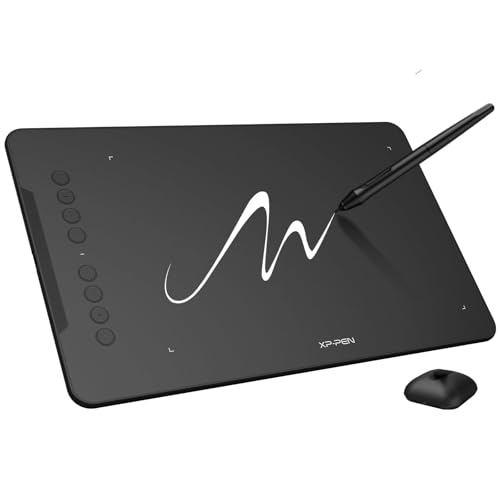
- 10 by 6.25-inch active area
- 16, 384 pressure levels and 60-degree tilt
- Eight customizable shortcut keys
- Battery-free pen needs no charging
- Supports Windows, Mac, Chrome OS, Linux, and Android
- USB-C connectivity and adapters included
Cons
- No built-in display
- Requires a compatible computer or Android device
- Roughly 2.2 pounds, so it is less light than the smallest pads
Best for: artists who want a broad working area and lots of physical shortcuts.
The XP-Pen Deco 01 V3 is the practical choice for artists who prefer a conventional graphics tablet but do not want a cramped surface. Its 10 by 6.25-inch drawing area leaves room for sweeping strokes and keeps eight shortcut keys within reach. There is no screen to add visual clutter, but you do need to learn the relationship between the pad and the monitor.
The battery-free stylus supports 16, 384 pressure levels and up to 60 degrees of tilt. That gives the Deco a specification profile close to the XP-Pen Artist 13.3 Pro, despite the very different form. Tilt can assist with shading, while pressure variation helps distinguish a light construction line from a finished stroke. Ten replacement nibs and a pen stand are included, which is useful for a device likely to see regular practice.
The eight customizable keys can be assigned to commands such as undo, zoom, brush size, or canvas rotation. The tablet supports right and left-handed use, and USB-C connectivity is supplemented by adapters for different devices. Android 10 or later is supported, along with Windows 7 or later, Mac OS 10.13 or later, Chrome OS 88 or later, and Linux. Compatibility with major creative software makes it a flexible desk tool.
Compared with the Wacom Intuos Small, the Deco gives you a much larger active area and more explicit shortcut control. Compared with the XP-Pen Artist 13.3 Pro, it lacks the direct-on-screen experience. The Deco is also listed at about 8mm thick and weighs around 2.2 pounds, so it is portable but not as effortless to carry as the Wacom MovinkPad 11.
Buy it if you already have a good monitor and want more room for hand movement. If seeing the nib touch the artwork is non-negotiable, choose a screen tablet instead.
10. HUION Kamvas Pro 16: Best Large Display

Pros
- Spacious 15.6-inch full-laminated screen
- 120% sRGB and 92% Adobe RGB gamut volume
- Six shortcut keys and a touch bar
- Adjustable ST200 stand from 20 to 60 degrees
- Battery-free pen with tilt support
- Compatible with Windows, Mac, Linux, and major creative apps
Cons
- Requires a computer
- Larger and heavier than the 13.3-inch displays
- Connection uses a three-in-one cable
Best for: desktop artists who want a large canvas and direct pen control.
The HUION Kamvas Pro 16 gives drawing room to breathe. Its 15.6-inch full-laminated screen is the largest display in this roundup, which makes a difference when a reference image, layers panel, and broad canvas all need to coexist. The anti-glare glass has a slight texture intended to make the surface feel less slippery than a standard glossy display.
Color is presented with a wide gamut specification of 120% sRGB and 92% Adobe RGB, alongside 16.7 million colors and a 1000:1 contrast ratio. That combination should produce saturated artwork and clearer shadow detail. Artists working for the web should still keep a calibrated monitor in the workflow, but the Kamvas Pro 16 is clearly aimed at people who care about the appearance of their canvas.
The battery-free pen recognizes 60 degrees of tilt and provides virtually lag-free tracking according to the product description. Two programmable side buttons cover common commands. Six express keys and a touch bar add physical control for zooming, brush size, or other software functions. The ST200 stand adjusts between 20 and 60 degrees, helping position the broad panel without forcing the artist to work flat on the desk.
This is not a standalone tablet. It connects to a Windows 7 or later, Mac OS 10.12 or later, or Linux computer through a three-in-one USB-C cable with HDMI signal. The HUION Kamvas 13 Gen 3 is easier to place on a small desk and gives more specific color accuracy claims, while the XP-Pen Artist 13.3 Pro is a better balanced choice for a smaller setup. The Kamvas Pro 16 wins when the extra canvas is the feature that matters most.
Choose it for a permanent workstation and large illustrations. Avoid it if you need a portable, self-contained device.
How to choose best tablet for drawing
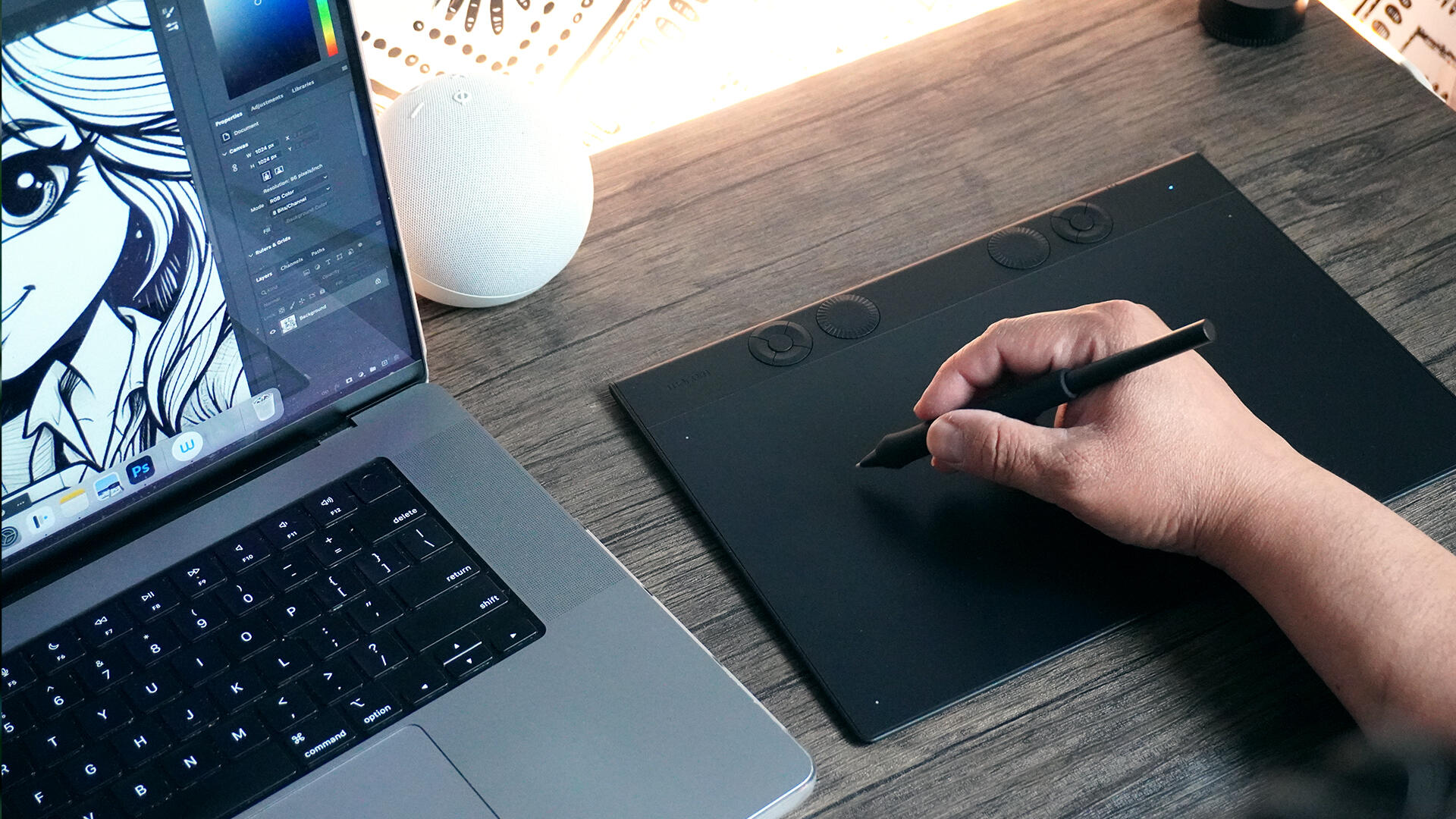
The right tablet depends on where the artwork runs, how directly you want to draw on it, and how much physical control you want close to your hand.
Standalone or computer-connected design
Standalone tablets contain their own operating system, apps, storage, and battery. The Frunsi, PicassoTab, Wacom MovinkPad, and Callsky-Kids models can work without a computer. Pen displays such as the XP-Pen Artist and HUION Kamvas models need a computer, but they can use more powerful desktop software and a larger system display.
A screen tablet is not automatically portable, and a standalone tablet is not automatically a professional workstation.
Screen size and active area
A 10-inch standalone display is easier to carry but leaves less room for a large canvas and tool panels. An 11-inch or 12-inch tablet gives a little more working space without becoming a full desktop panel. The 13.3-inch displays are a middle ground, while the 15.6-inch HUION Kamvas Pro 16 is best suited to a fixed desk.
For screenless pads, compare the active area rather than the outside dimensions. The XP-Pen Deco 01 V3 has a 10 by 6.25-inch area, which is much more generous for arm movement than the Wacom Intuos Small.
Lamination and surface texture
Full lamination reduces the visible gap between the pen tip and the image. That can make precise lines feel more predictable, particularly near the edges of a screen. Matte or textured surfaces, such as the Wacom MovinkPad's etched glass, can reduce reflections and add resistance that resembles paper.
A screen protector can also change the feel, but it is not equivalent to a factory-textured surface. Look for an anti-glare treatment if you draw near windows or under bright overhead lighting.
Pen pressure and tilt
Pressure sensitivity controls how line weight, opacity, or brush size responds to force. The 16, 384-level pens in the XP-Pen Artist, HUION Kamvas 13 Gen 3, and XP-Pen Deco 01 V3 offer more stated granularity than the 4, 096-level pens in the PicassoTab models. That number does not determine artistic ability, but it can help with subtle marks.
Tilt support can change shading behavior when the software recognizes it. A battery-free pen avoids charging interruptions, while programmable side buttons can move undo or modifier commands closer to the hand.
Shortcuts and software
Physical keys, dials, and touch bars are useful when the artist repeats zoom, undo, brush-size, and canvas-rotation commands. The XP-Pen Artist has a dial and eight keys. The HUION Kamvas 13 Gen 3 uses dual dial buttons and five keys, while the Kamvas Pro 16 has six keys and a touch bar.
Compatibility matters just as much. Check the operating system and application support before choosing a tablet, especially if you use Linux, Android, Clip Studio Paint, Krita, Photoshop, Blender, or a specialized illustration program.
Frequently asked questions
Do drawing tablets need a computer?
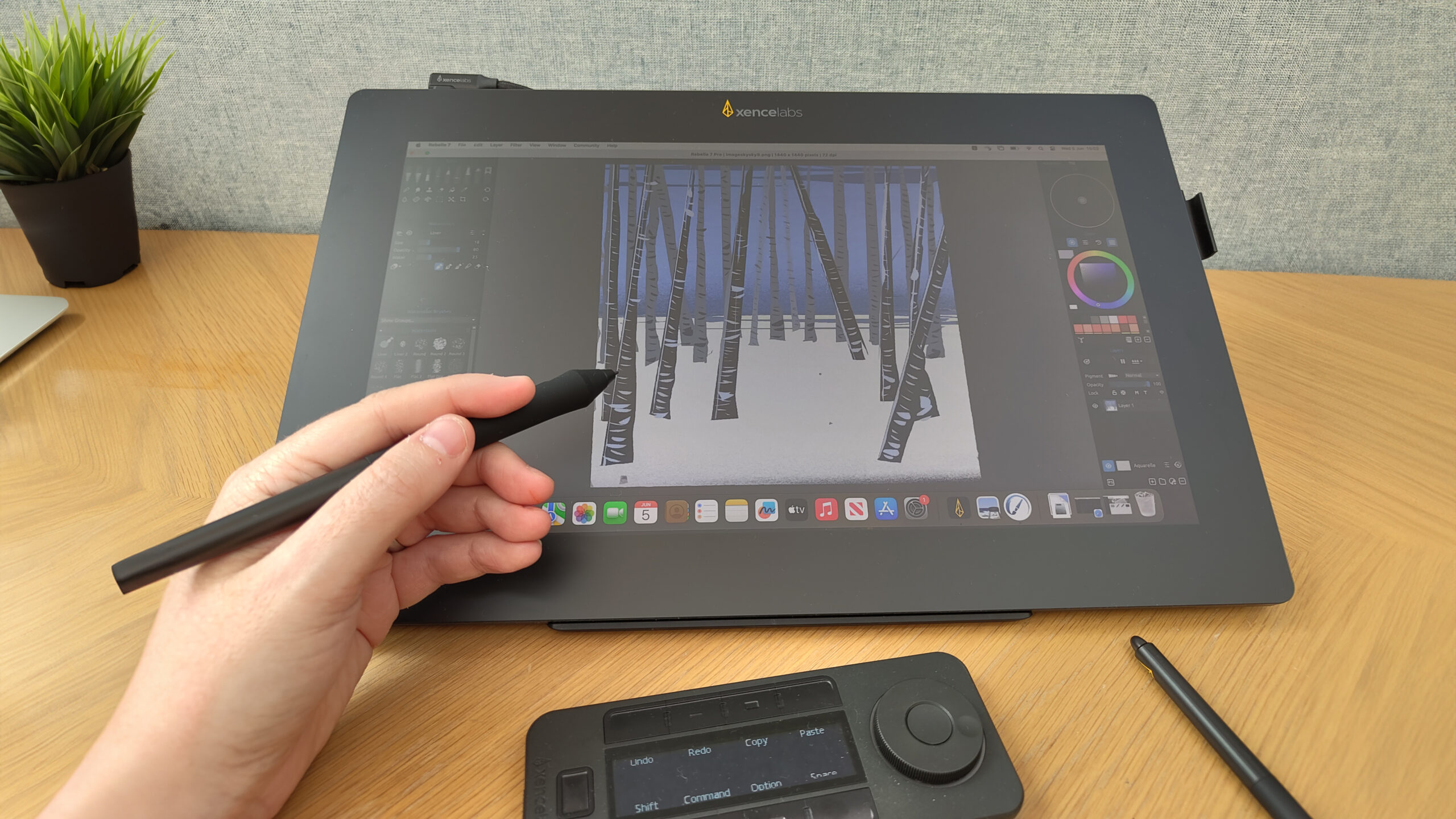
Some do and some do not. The XP-Pen Artist, HUION Kamvas displays, Wacom Intuos Small, and XP-Pen Deco 01 V3 need a computer or compatible host device. The Frunsi, PicassoTab, Wacom MovinkPad, and Callsky-Kids models are standalone tablets.
Is a screen tablet easier to learn than a screenless tablet?
Many beginners find a screen tablet intuitive because the pen touches the artwork directly. A screenless tablet can take longer to learn because your hand is on one surface while your eyes are on another, but it can work very well with practice.
Are standalone Android tablets suitable for professional drawing?
They can handle sketching, illustration, and mobile creative work, depending on the apps you use. Desktop-connected displays remain the safer choice for workflows that depend on full desktop versions of creative software, complex files, or a larger monitor.
Does a higher pressure-level count guarantee better pen performance?
No. Pressure-level figures describe the pen's sensitivity range, not the entire drawing experience. Surface texture, initial activation force, tilt behavior, software support, and the quality of the pen driver also affect how strokes feel.
Which drawing tablet is easiest to carry?
The Wacom MovinkPad 11 is listed at about 1.3 pounds and is designed as a portable standalone tablet. The Wacom Intuos Small is even lighter as a pen pad, but it requires a computer. The larger standalone and screen display models take more space or need more equipment.
Can a drawing tablet also be used for notes?
Yes. The Frunsi RubensTab T11 Pro specifically supports note-taking, classroom work, and meeting notes. The standalone Android models can also run general productivity apps, while computer-connected tablets can be used for document markup within compatible software.
The bottom line
The Best best tablet for drawing for most computer users is the XP-Pen Artist 13.3 Pro. Its fully laminated 13.3-inch screen, battery-free tilt pen, dial, eight shortcut keys, and broad software compatibility make it the most balanced display in the group. Choose the HUION Kamvas 13 Gen 3 instead if stated color accuracy and dual-dial controls matter more than a simpler layout.
For drawing away from a computer, the Wacom MovinkPad 11 is the refined pick. It is light, has a matte etched surface, and launches Wacom Canvas quickly, while the PicassoTab X11 is a better fit for beginners who want a larger standalone canvas and guided lessons.
If you are undecided, choose the XP-Pen Artist for a desk and the Wacom MovinkPad for a bag.
As an Amazon Associate we earn from qualifying purchases.