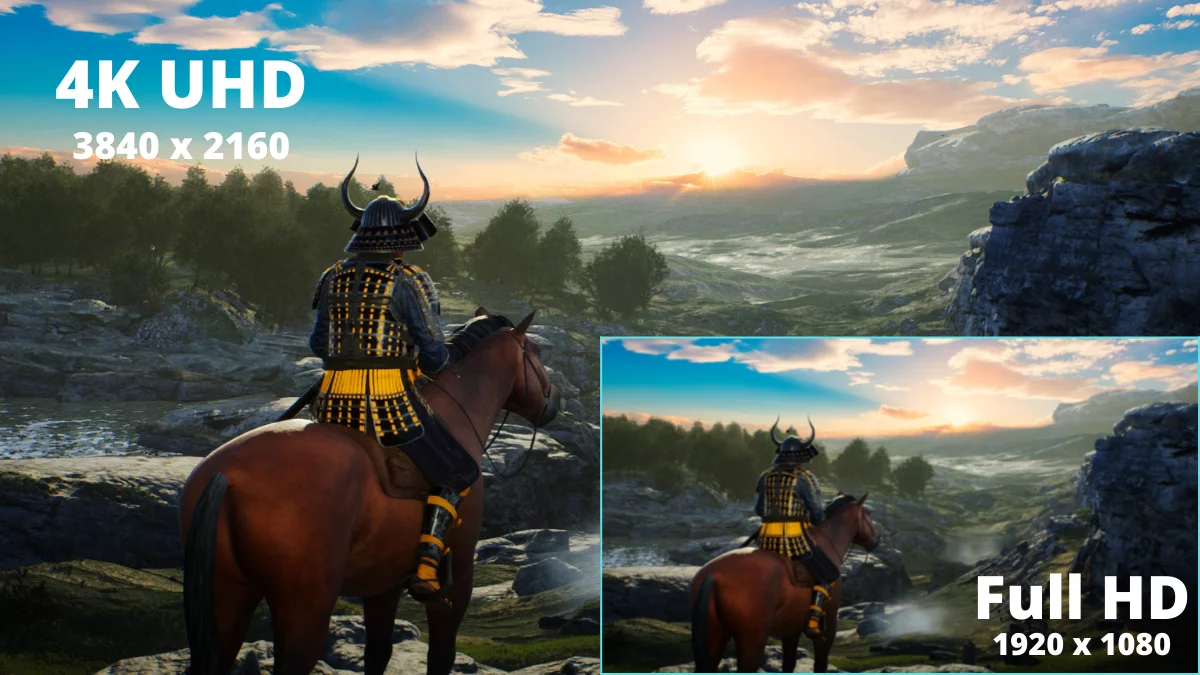

A monitor can make a powerful gaming PC feel ordinary when its resolution, refresh rate, and graphics hardware are badly matched. A 4K panel can look spectacular, but a fast 1080p screen may be the smarter tool for competitive play, while ultrawide 1440p sits between the two with a wider view and a substantial GPU workload.
Our Best best resolution for gaming picks cover that full spread, from dual-mode 4K and FHD displays to compact 120Hz screens and a 34-inch curved ultrawide. The Alienware AW2725QF is the single best pick for most serious players, while the range below gives you clearer alternatives for high frame rates, desk space, color, and immersion.
Comparison table
| # | Product | Award | Resolution | Refresh rate | Panel and size | Best for |
|---|---|---|---|---|---|---|
| 1 | Alienware AW2725QF | Best overall | 3840 x 2160 or 1920 x 1080 | 180Hz or 360Hz | IPS, 27-inch | Players who want one screen for detail and speed |
| 2 | Pixio PX246 Wave | Best simple 1080p screen | 1920 x 1080 | 120Hz | IPS, 24-inch | Everyday gaming on a compact desk |
| 3 | Pixio PXC248 Wave Pink | Best curved 1080p screen | 1920 x 1080 | 200Hz | Fast VA, 24-inch, 1500R curve | High frame rates with stronger contrast |
| 4 | Pixio PX248 Wave Pink | Best fast IPS compact screen | 1920 x 1080 | 200Hz | Fast IPS, 24-inch | Competitive gaming and wide viewing angles |
| 5 | Samsung Odyssey G8 G80HF | Best high-resolution dual mode | 5120 x 2880 or 2560 x 1440 | 180Hz or 360Hz | Fast IPS, 27-inch | Maximum desktop detail and fast action |
| 6 | Pixio PX278 Wave | Best 1440p midrange screen | 2560 x 1440 | 180Hz | Fast IPS, 27-inch | Sharp gaming at a practical size |
| 7 | Pixio PXC248 Wave White | Best white curved screen | 1920 x 1080 | 200Hz | Fast VA, 24-inch, 1500R curve | A clean-looking immersive setup |
| 8 | Pixio PXC348C Neo | Best ultrawide screen | 3440 x 1440 | 180Hz | Fast VA, 34-inch, 1000R curve | Racing, cinematic games, and multitasking |
1. Alienware AW2725QF: Best Overall

Pros
- Switches between detailed 4K and fast FHD modes
- 180Hz and 360Hz modes cover very different game types
- IPS panel has 95% DCI-P3 coverage
- Dolby Vision and DisplayHDR 600 support
- G-SYNC Compatible and AdaptiveSync support
Cons
- The highest refresh modes are tied to lower resolutions
- Its feature set demands a capable gaming PC
- No ultrawide view for simulation or multitasking
Best for: players who want one 27-inch monitor that can handle both cinematic games and competitive shooters.
The first thing to understand about the Alienware AW2725QF is that it is not trying to make one mode do everything. Its dual-resolution design lets you use native 3840 x 2160 for detailed single-player games, then switch to native 1920 x 1080 when the priority is motion speed. That makes it unusually adaptable. A demanding adventure game gets the sharp 4K presentation, while a competitive shooter can use the FHD mode at up to 360Hz.
The 4K mode runs at 180Hz when overclocked, with a native refresh rate of 165Hz. The FHD mode reaches 360Hz when overclocked and 330Hz natively. Those are meaningful distinctions rather than cosmetic numbers. The higher-resolution mode gives small environmental details and text more definition, while the FHD mode asks the graphics card to render far fewer pixels and is much easier to drive at very high frame rates. If you are comparing how refresh rate changes the feel of fast games, this is the kind of monitor that makes the difference easy to see.
The IPS panel also has 95% DCI-P3 coverage and a claimed Delta E below 2 calibration, which points to a screen that can serve beyond gaming. Dolby Vision and VESA DisplayHDR 600 support add a richer range between dark and bright areas when compatible content is available. Those features do not turn the panel into an OLED, and they cannot erase the fundamental compromise between 4K detail and FHD speed, but they give this display a more convincing image than a plain high-refresh esports panel.
AdaptiveSync and NVIDIA G-SYNC Compatible support help the display follow the GPU's frame output in both modes. That is useful because frame rates will vary much more in 4K than in FHD. The monitor also provides HDMI, DisplayPort, and USB 3.2 Gen 1 connectivity. It is a stronger all-rounder than the Pixio PX278 Wave, which stays at 1440p, and more flexible than the Samsung Odyssey G8 G80HF in the sense that its two modes are aimed squarely at 4K and FHD.
The weakness is the same feature that makes it distinctive. You are choosing between two resolutions, not getting 4K at 360Hz. Players who mostly enjoy slow-paced games may never use the FHD mode, while dedicated esports players may prefer a native high-refresh display without paying for pixels they will not use. For everyone else, the AW2725QF is the one we'd keep because it handles the widest mix of games without forcing a permanent compromise.
2. Pixio PX246 Wave: Best Simple 1080p Screen

Pros
- Compact 24-inch format suits smaller desks
- IPS panel offers wide viewing angles
- 120Hz is a clear step up from standard office displays
- Adaptive Sync reduces tearing and stutter
- Slim, modern design
Cons
- 1080p has less workspace and detail than 1440p
- 4ms response time is slower on paper than the faster Pixio models
- No curved panel or HDR feature listed
Best for: a first gaming monitor or a straightforward compact screen for mixed use.
The Pixio PX246 Wave is the uncomplicated option in this group. It gives you a 24-inch IPS panel, FHD 1920 x 1080 resolution, and a 120Hz refresh rate without asking you to build an entire setup around extreme frame rates. That combination makes sense for a smaller desk, a mainstream gaming PC, or anyone moving up from a basic display and wanting smoother movement without a large screen.
At 24 inches, 1080p remains a sensible pairing. The pixel density is not as high as the 27-inch 1440p models here, but the image is less stretched across the panel than it would be on a larger FHD display. The IPS technology should also keep colors and contrast more consistent when you are not sitting directly in front of the screen. That matters when the monitor doubles as a general desktop display or when someone else is watching from the side.
The 120Hz refresh rate gives games a more fluid feel than a conventional 60Hz screen, especially during camera movement and quick turns. It is not in the same speed class as the 200Hz Pixio models or the 360Hz modes on the Alienware AW2725QF, but it is enough to make motion feel less sluggish in many games. Its 4ms gray-to-gray response time is similarly sensible rather than extreme. Players chasing the cleanest possible motion in competitive shooters should look at the Pixio PX248 Wave Pink instead, with its stated 1ms response time and 200Hz refresh rate.
Adaptive Sync matches the display's refresh behavior to the GPU's frame output, helping reduce tearing and stutter when a game does not hold a perfectly steady frame rate. The feature is particularly helpful on a modest setup, where frame output may fluctuate more often. The PX246 Wave does not list HDR support, built-in speakers, or a curved panel, so its appeal rests on getting the fundamentals right rather than adding immersion features.
That restraint is also its limitation. The screen will not give you the fine detail of the Pixio PX278 Wave, and its 120Hz ceiling leaves less room for high-frame-rate play than the faster options. It is a good fit for someone who wants a compact, wide-viewing-angle IPS display and has no need for 1440p or 200Hz. If that sounds like your setup, this is the least complicated route into smoother gaming.
3. Pixio PXC248 Wave Pink: Best Curved 1080p Screen

Pros
- 200Hz refresh rate supports quick competitive play
- 1500R curve adds a more enveloping view
- Fast VA panel emphasizes deeper contrast
- 1ms GTG response time
- Adaptive Sync and HDR support
Cons
- 1080p is less crisp on a 24-inch screen than higher resolutions
- VA panels can have different motion behavior from IPS panels
- Curve is less useful for users who prefer a flat screen
Best for: players who want a fast 24-inch display with curved immersion and VA contrast.
The Pixio PXC248 Wave Pink takes the compact 24-inch format and gives it a more dramatic personality. Its 1500R curve wraps the screen toward the viewer, which can make racing games, shooters, and dark exploration titles feel more contained. On a desk where a 34-inch ultrawide would be impractical, this is a reasonable way to add some immersion without moving to a much larger panel.
Its 1920 x 1080 resolution is paired with a 200Hz refresh rate and a stated 1ms GTG response time. That is a sensible performance profile for players who want smooth motion but do not want a high pixel load. FHD is much easier for a graphics card to render at high frame rates than 1440p or 4K, so the monitor's speed is not merely theoretical. Adaptive Sync can also smooth out the moments when the GPU falls short of the panel's maximum refresh rate.
The fast VA panel changes the image character compared with the IPS models. VA technology is generally chosen for stronger contrast, and the product listing specifically emphasizes vibrant colors and deeper contrasts. HDR support expands the range of brightness and color the monitor can display with compatible games and video. HDR on a monitor still depends on the panel's brightness and local control, neither of which is specified here, so treat it as a useful compatibility feature rather than a guarantee of a dramatic HDR presentation.
The big comparison is with the closely related Pixio PX248 Wave Pink. That model is flat and uses Fast IPS, while the PXC248 uses Fast VA and a 1500R curve. Choose the PXC248 if you care more about enveloping shape and contrast. Choose the PX248 if you want the more familiar IPS presentation, wider viewing behavior, and built-in speakers. Both target fast FHD gaming, but they make different visual trade-offs.
The weakness is that the curved design cannot compensate for the lower resolution. Text and fine scenery will not look as spacious or as sharply defined as they do on the Samsung Odyssey G8 G80HF or Pixio PXC348C Neo. The PXC248 Wave Pink is for someone who wants speed and a more intimate view, not someone shopping for maximum desktop clarity. It makes the most sense for a high-frame-rate player who likes a curved screen and spends much of the time directly in front of it.
4. Pixio PX248 Wave Pink: Best Fast IPS Compact Screen

Pros
- 200Hz refresh rate is suited to competitive games
- Fast IPS panel provides wide viewing angles
- 1ms GTG response time
- Adaptive Sync helps limit tearing
- Built-in speakers add convenience
Cons
- FHD resolution is not as detailed as the 1440p choices
- Flat 24-inch screen is less immersive than the curved alternatives
- Built-in speakers are not a replacement for dedicated audio
Best for: competitive players who want a compact fast IPS display with basic audio built in.
The Pixio PX248 Wave Pink is the speed-focused companion to the simpler PX246 Wave. It keeps the 24-inch FHD format but raises the refresh rate to 200Hz and lists a 1ms GTG response time. That makes it a better fit for games where quick camera movement and rapid target tracking matter more than a large canvas or maximum resolution.
The Fast IPS panel is the main reason to choose it over the PXC248 Wave Pink. IPS gives you broad viewing angles and the kind of consistent color behavior that works well when the monitor is also used for browsing, creative work, or shared viewing. The 1920 x 1080 resolution is easy for a gaming PC to drive at high frame rates, so the 200Hz mode is a practical match for players with a suitably fast system.
Adaptive Sync allows the monitor to follow changes in GPU frame rate, reducing tearing and stutter when the game is not locked to 200 frames per second. The 1ms GTG claim supports the monitor's competitive focus, although response-time figures do not tell the whole story about motion quality. Panel tuning, game settings, and the actual frame rate all matter. Those trying to understand which screen resolution fits a particular display size should remember that 24 inches is where FHD remains easiest to justify in this group.
Built-in speakers are a useful extra for system sounds, casual games, and video calls. They save you from needing separate desktop speakers immediately, though the listing does not provide audio specifications, so they should not be treated as a serious replacement for headphones or a dedicated sound system. The monitor's flat shape also keeps the image familiar and predictable, unlike the curved Pixio PXC248 models.
The compromise is straightforward. The PX248 gives up the stronger contrast and wraparound feel of the PXC248, and it gives up the extra detail of the Pixio PX278 Wave. It is the better tool for a player who wants fast, direct motion and an IPS panel in a compact footprint. Skip it if story-driven games and desktop workspace are more important than high frame rates.
5. Samsung Odyssey G8 G80HF: Best High-Resolution Dual Mode

Pros
- 5K resolution provides exceptional desktop detail
- Switches to QHD at 360Hz for fast action
- Fast IPS panel with a 178-degree viewing angle
- HDR10+ Gaming support
- G-SYNC compatibility and AMD FreeSync Premium
- Height-adjustable stand with pivot, tilt, and swivel
Cons
- 5K gaming requires substantial graphics performance
- QHD mode gives up the headline resolution
- Larger and heavier than the compact Pixio displays
Best for: demanding PC users who want a very sharp work display and a high-refresh gaming mode in one screen.
The Samsung Odyssey G8 G80HF is the specialist pick for people who want their monitor to serve as a high-detail desktop canvas as well as a fast gaming display. Its 27-inch Fast IPS panel runs at 5120 x 2880 in its high-resolution mode, a level of density that makes small text, fine interface elements, and detailed game environments look exceptionally defined. Samsung lists a pixel density of 218 pixels per inch, which explains why the image can look so clean at this size.
The dual-mode design switches between 5K at 180Hz and QHD 2560 x 1440 at 360Hz. This is a more ambitious version of the same basic idea found in the Alienware AW2725QF. The 5K mode is for image detail and a broad, sharp desktop, while QHD cuts the rendering load so competitive games can run at a much higher refresh rate. The stated near-instant 1ms response time supports the action-oriented mode, although the graphics card still determines whether a game can make practical use of those frame rates.
Samsung adds HDR10+ Gaming, NVIDIA G-SYNC compatibility, and AMD FreeSync Premium. The two synchronization ecosystems give owners more flexibility across graphics hardware, while adaptive refresh helps control tearing and uneven motion. The 178-degree viewing angle is useful for the occasional off-axis glance, but this is still a conventional 16:9 display rather than the expansive horizontal workspace of the Pixio PXC348C Neo.
Connectivity is unusually complete for a gaming monitor. There is DisplayPort 2.1, HDMI 2.1, and a USB hub, which can reduce cable clutter around a desktop or make it easier to connect different gaming systems. The stand is height adjustable and supports pivot, tilt, and swivel. Those ergonomic adjustments matter on a 27-inch panel that may spend part of the day showing documents and part of the day showing games.
The main issue is that its most distinctive capability is also demanding. A 5K gaming image puts a heavy workload on the GPU, and switching to QHD means accepting a lower resolution when speed is the priority. The Alienware AW2725QF is the more balanced choice for many gamers because 4K is less demanding and its FHD mode is especially suited to esports. The Samsung is the right pick for someone who values extreme desktop sharpness first and is comfortable treating QHD at 360Hz as the action mode.
6. Pixio PX278 Wave: Best 1440p Midrange Screen

Pros
- 2560 x 1440 resolution suits a 27-inch screen
- 180Hz refresh rate keeps motion fluid
- Fast IPS panel with wide viewing angles
- 1ms GTG response time
- DisplayPort and HDMI inputs
- Built-in speakers
Cons
- Not as flexible as a dual-resolution monitor
- AMD FreeSync is the listed sync feature
- Pink finish will not suit every setup
Best for: players who want the balance of 27-inch 1440p detail and high-refresh gaming.
The Pixio PX278 Wave lands in the middle of this list for a good reason. Its 27-inch Fast IPS panel uses 2560 x 1440 resolution, giving games more fine detail and workspace than the 24-inch FHD models without moving all the way to 4K. For many PC players, that is the most comfortable balance between image sharpness and the graphics power needed to keep games moving smoothly.
The 180Hz refresh rate is high enough for quick shooters and racing games, while still making ordinary desktop scrolling feel fluid. Its 1ms GTG response time is intended to minimize ghosting and trailing during fast movement. AMD FreeSync matches refresh behavior to the GPU's output, which is most helpful when the frame rate varies around the monitor's operating range rather than staying perfectly fixed.
Connectivity is simple but useful. The monitor supports DisplayPort 1.4 at 1440p and 180Hz, plus two HDMI 2.0 inputs at 1440p and 144Hz. That gives a PC connected through DisplayPort access to the maximum listed refresh rate, while HDMI remains suitable for other compatible devices. The built-in speakers can handle basic audio without adding another piece of equipment, though the product data does not specify their output or tuning.
The 27-inch size is an important part of the appeal. FHD can look stretched on a 27-inch gaming monitor, while 1440p fills the panel with noticeably finer detail. The Pixio PX246 Wave is easier to drive and takes up less space, but the PX278 produces a more spacious image. The Alienware AW2725QF goes further with 4K and dual modes, while the PX278 keeps its priorities clear and avoids asking you to switch resolutions mid-session.
There are limits. The listing names AMD FreeSync rather than the broader combination of sync standards used by the Alienware and Samsung models, and there is no dual-mode option for players who alternate between detail and esports speed. This is a 1440p monitor for someone who already knows that 27 inches is the right size and wants a fast, sharp, conventional screen. It is the sensible middle ground when 1080p feels too coarse and 4K feels unnecessary.
7. Pixio PXC248 Wave White: Best White Curved Screen

Pros
- 200Hz refresh rate for fast gameplay
- 1500R curve creates a more immersive view
- Fast VA panel emphasizes contrast
- 1ms GTG response time
- Adaptive Sync and HDR support
- White finish suits a light-colored setup
Cons
- FHD resolution limits fine detail
- VA panel is a different visual choice from Fast IPS
- The curved design favors a centered seating position
Best for: gamers building a white-themed desk who want a fast curved display.
The Pixio PXC248 Wave White is the same kind of display as the pink PXC248, but the finish changes how it fits into a setup. Its white exterior works naturally with lighter desks and accessories, while the 24-inch panel keeps the physical footprint manageable. The 1500R curvature adds shape to an otherwise compact screen and is most noticeable when you sit centered and close enough for the edges to enter your peripheral vision.
The core gaming specification is strong for FHD. The panel runs at 200Hz and lists a 1ms GTG response time, giving fast games a responsive presentation when the PC can produce the necessary frame rate. Adaptive Sync helps when that output fluctuates. Because the monitor remains at 1920 x 1080, the GPU has a lighter rendering task than it would with the Pixio PX278 Wave at 1440p or the higher-resolution Alienware and Samsung displays.
Its Fast VA panel is intended to provide vibrant color and deeper contrast, and the listing includes HDR support. That makes the PXC248 White better suited to dark scenes than a basic office IPS display on paper, though the available data does not give a brightness rating or local dimming information. HDR compatibility is useful, but it should not be confused with the kind of controlled highlight and shadow performance associated with more advanced display hardware.
The comparison with the Pixio PX248 Wave Pink comes down to priorities. The PX248 uses Fast IPS and stays flat, which is the safer choice for broad viewing angles and a consistent image from different seating positions. The PXC248 White gives you the curved VA presentation, stronger stated contrast characteristics, and a more enveloping shape. Both offer 200Hz and 1ms GTG, so panel type and form are the deciding factors.
The real weakness is the resolution ceiling. A 24-inch FHD monitor can look clean enough for gaming, but it will not show the same amount of detail or workspace as a 1440p panel. The curve also makes less sense if you regularly move around the room or share the screen. Pick this model for a centered gaming station where the white design and curved VA image are part of the point.
8. Pixio PXC348C Neo: Best Ultrawide Screen

Pros
- 34-inch UWQHD resolution gives a wide field of view
- 1000R curve increases immersion
- 180Hz refresh rate supports fast games
- 1ms response time
- USB-C carries display and up to 65W charging
- AMD FreeSync Premium and HDR support
Cons
- Ultrawide games need compatible software and hardware
- 1000R curve is a strong design choice
- VA panel may not suit people who prefer IPS viewing behavior
Best for: racing, simulation, cinematic games, and laptop users who want one expansive display.
The Pixio PXC348C Neo changes the question from how sharp a standard gaming screen can be to how much of the game world can fit in front of you. Its 34-inch ultrawide panel uses 3440 x 1440 UWQHD resolution, adding horizontal space without dropping the vertical detail expected from a 1440p display. That extra width is especially effective in racing games, flight and space simulations, strategy games, and cinematic titles that support ultrawide layouts.
The 1000R curve is much stronger than the 1500R curve on the smaller PXC248 models. It pulls the edges toward the viewer, helping a large panel sit within a more natural field of view when you are centered at the desk. The trade-off is that a 1000R display can look unusual for ordinary flat-screen work, especially if you frequently move between windows or need perfectly straight lines. The format rewards a dedicated gaming position.
Motion is handled by a 180Hz refresh rate and a listed 1ms response time. That gives the screen enough speed for competitive play, although rendering 3440 x 1440 frames is more demanding than rendering FHD. AMD FreeSync Premium helps synchronize the display with compatible GPU output, and HDR support is intended to add richer contrast and color in supported content. The product data does not specify a brightness figure, so the HDR feature should be viewed as part of the compatibility set rather than a promise of a particular HDR impact.
The USB-C connection is a practical advantage. It supports DisplayPort Alt input and up to 65W charging, allowing a compatible laptop to send video and receive power through one cable. That makes the PXC348C Neo useful as a combined gaming and work display. It also gives it a role that the Pixio PX278 Wave and compact FHD models cannot match. Before choosing an ultrawide, it is sensible to consider how much desk depth a larger screen really needs, although the ideal viewing distance also depends on your chair and desk layout.
The weakness is compatibility and workload. Not every game uses the full ultrawide width properly, and the GPU has to render substantially more pixels than it would for 2560 x 1440. The Alienware AW2725QF is a safer choice for conventional 16:9 gaming and dual-resolution flexibility. Choose the PXC348C Neo when the wider view is central to the experience, not as an incidental bonus.
How to choose best resolution for gaming
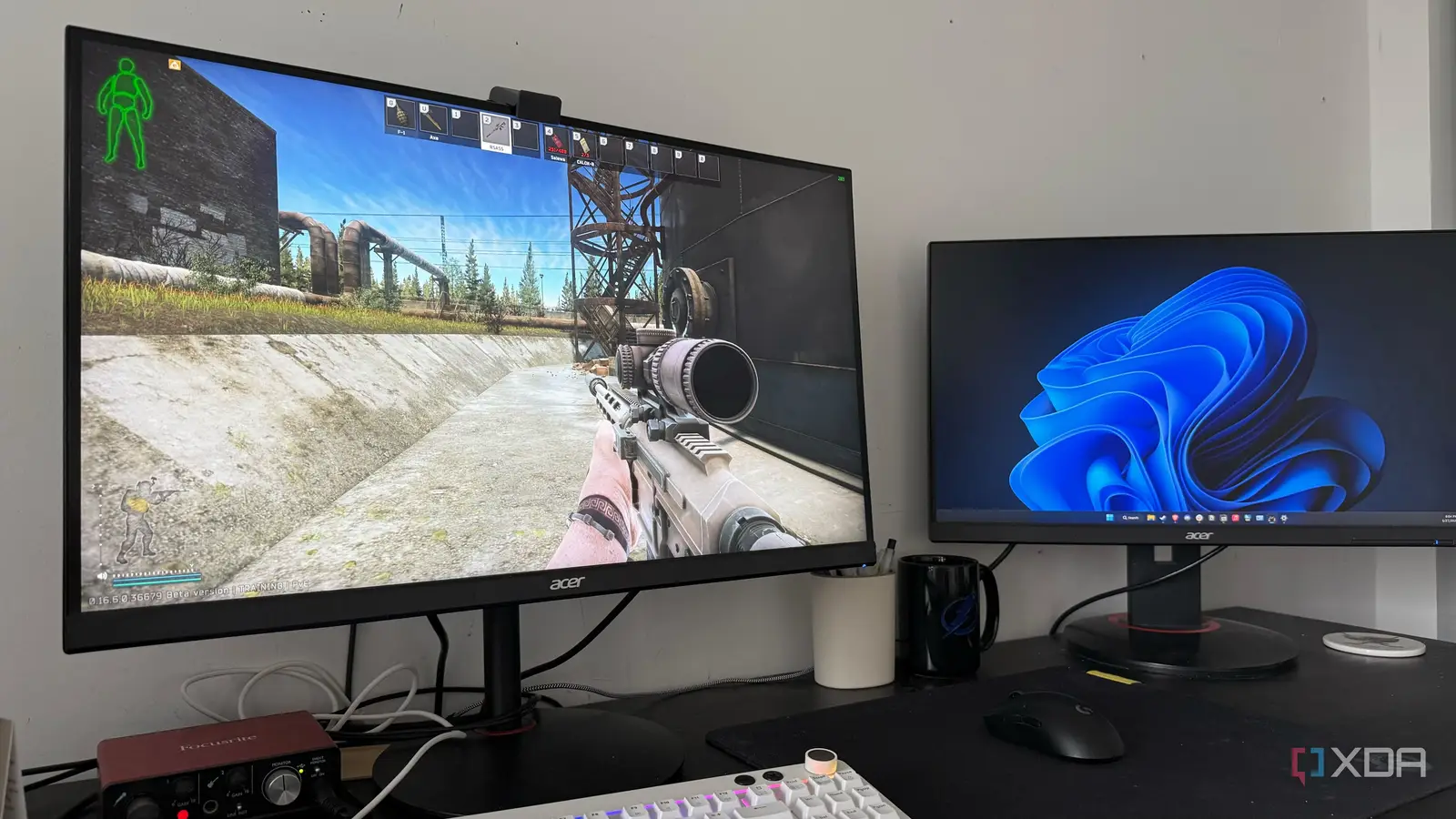
The right gaming monitor resolution depends on the games you play, the GPU driving the screen, the physical size of the panel, and whether speed or visual detail comes first.
Resolution and screen size
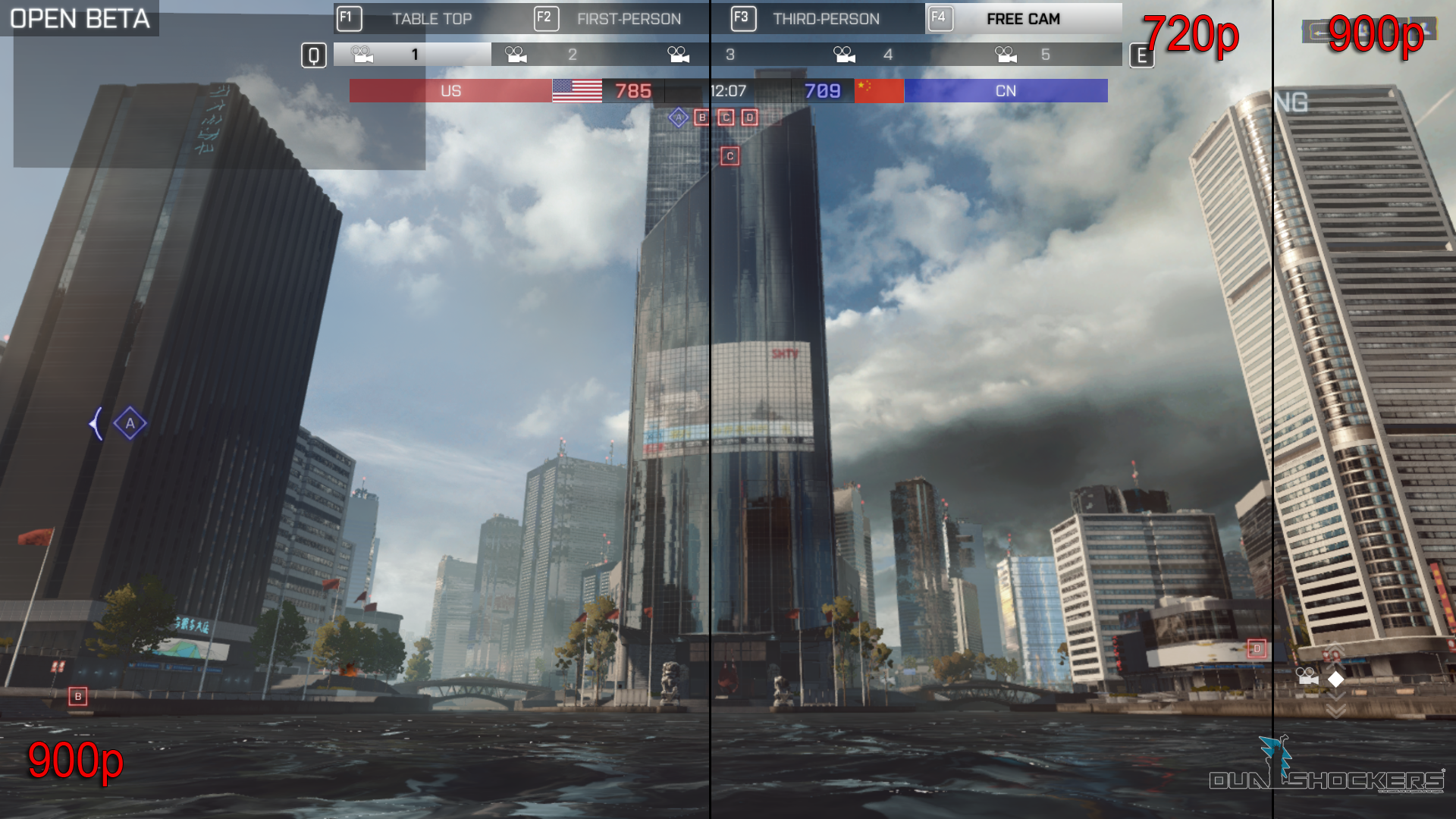
Resolution determines how many pixels the monitor uses to create its image. FHD at 1920 x 1080 is a natural fit for compact 24-inch displays, while 2560 x 1440 generally looks more defined on a 27-inch screen. 4K and 5K offer finer detail, but they also demand more graphics performance and may require lower settings or a lower-resolution gaming mode.
Match the resolution to the panel size and GPU, not to the biggest number printed on the box.
A large ultrawide uses a different calculation. The PXC348C Neo's 3440 x 1440 image adds width for a broader view, but it still asks the graphics card to render considerably more than a standard 1440p monitor. Look at the practical trade-offs between panel size and pixel density before choosing a screen based only on resolution.
Refresh rate
Refresh rate is the number of times the panel can update each second. A 120Hz screen already makes motion feel smoother than a standard 60Hz display, while 180Hz and 200Hz are better suited to players who can sustain high frame rates. The 330Hz and 360Hz modes on dual-resolution screens are aimed at competitive play where quick updates matter more than maximum detail.
A high refresh rate is useful only when the computer can produce enough frames to take advantage of it. A 4K display running a demanding game at a low frame rate will not feel like a 180Hz esports monitor. Look for a resolution and refresh pairing your GPU can realistically sustain.
Panel type
IPS panels are known for broad viewing angles and consistent color across the screen. Fast IPS models such as the Pixio PX248 Wave Pink and PX278 Wave are natural choices for mixed gaming and desktop use. VA panels, including the PXC248 and PXC348C Neo, are often selected for stronger contrast and deeper-looking blacks, though their motion presentation can differ from IPS.
Neither panel type is automatically right for every player. Choose IPS when viewing consistency and color are priorities. Choose VA when contrast and a curved, more immersive presentation matter more.
Adaptive sync
Adaptive Sync, G-SYNC Compatible, and FreeSync technologies coordinate the monitor's refresh behavior with the GPU's frame output. They reduce tearing and can make fluctuating frame rates look smoother. This is particularly useful at higher resolutions, where a game may not hold a fixed frame rate.
Check which sync technology is listed for the monitor and match it with your graphics hardware. The Alienware AW2725QF and Samsung Odyssey G8 G80HF offer support across major GPU ecosystems, while the Pixio PX278 Wave specifically lists AMD FreeSync.
Response time and motion
Response time describes how quickly pixels change from one shade to another. The listed 1ms figures on the faster Pixio models and the Samsung monitor are intended to reduce visible trailing, while the PX246 Wave lists 4ms GTG. A lower figure can help in fast games, but it is not a complete measure of motion quality.
The refresh rate, response tuning, frame rate, and game settings work together. A monitor that supports 200Hz but receives inconsistent frames may not look as clean as its specification suggests. Treat response time as one part of the decision rather than the sole measure of responsiveness.
Connectivity and ergonomics
DisplayPort is often the connection used for the highest PC refresh modes, as shown by the PX278 Wave's 1440p at 180Hz support. HDMI can be useful for consoles and additional devices. USB-C with 65W charging makes the PXC348C Neo especially convenient for a compatible laptop, while the Samsung adds DisplayPort 2.1, HDMI 2.1, and a USB hub.
A stand also affects daily use. Height adjustment, tilt, swivel, and pivot make it easier to position a large screen correctly. If the monitor will serve as a work display as well as a gaming screen, ergonomic adjustment can matter as much as another small increase in refresh rate.
Frequently asked questions
Is 1080p still good for gaming?
Yes. FHD remains a practical resolution for 24-inch monitors, especially when the goal is a high refresh rate and the graphics card is not built for 1440p or 4K. The Pixio PX246 Wave, PX248 Wave Pink, and PXC248 models pair 1080p with smooth gaming-focused refresh rates.
Is 1440p better than 4K for gaming?
Neither is universally better. 1440p is easier to run at high frame rates and looks sharp on a 27-inch display, while 4K provides more fine detail but places a heavier workload on the GPU. The Alienware AW2725QF is useful for players who want to switch between detailed 4K and faster FHD modes.
What resolution is best for a 27-inch gaming monitor?
1440p is a strong fit for a 27-inch screen because it provides more detail than FHD without the rendering demands of 4K. The Pixio PX278 Wave uses 2560 x 1440 at 27 inches. The Samsung Odyssey G8 G80HF takes the same general size to 5K, but its QHD mode is the higher-speed option for gaming.
Is a curved monitor better for gaming?
A curved monitor can make the image feel more enveloping, particularly when you sit centered and close to the screen. It is not automatically better for every game or work task. The PXC248 models use a 1500R curve, while the PXC348C Neo uses a more pronounced 1000R curve for its 34-inch ultrawide format.
Do I need 200Hz for gaming?
You do not need 200Hz for every type of game. It is most useful when your computer can produce high frame rates and you play quick competitive titles where smooth motion and rapid updates matter. A 120Hz or 180Hz display can be a better match for mixed gaming, story-driven games, or a less powerful system.
Does 4K make games look better?
4K can make game environments, text, and fine textures look sharper, especially on a suitable screen size. The improvement comes with a much higher rendering workload, so you may need a powerful GPU or a monitor with a lower-resolution performance mode. The Alienware AW2725QF and Samsung Odyssey G8 G80HF both use dual-mode designs for this reason.
The bottom line
The Alienware AW2725QF is our top recommendation for Best best resolution for gaming because its dual-resolution design covers two genuinely different needs. Use 4K at 180Hz for detail, or switch to FHD at up to 360Hz for competitive speed. Its IPS panel, HDR support, and broad adaptive-sync compatibility make it more flexible than any of the single-resolution displays here.
The Pixio PX278 Wave is the better focused choice for someone who wants a conventional 27-inch 1440p monitor, while the Pixio PXC348C Neo is the standout for ultrawide immersion and USB-C laptop connectivity. The Samsung Odyssey G8 G80HF is the sharper specialist option for users who want 5K desktop detail and can make good use of its QHD high-refresh mode.
If you are undecided, choose the resolution your graphics card can sustain at the refresh rate you will actually use, then choose the panel size that fits your desk.
As an Amazon Associate we earn from qualifying purchases.