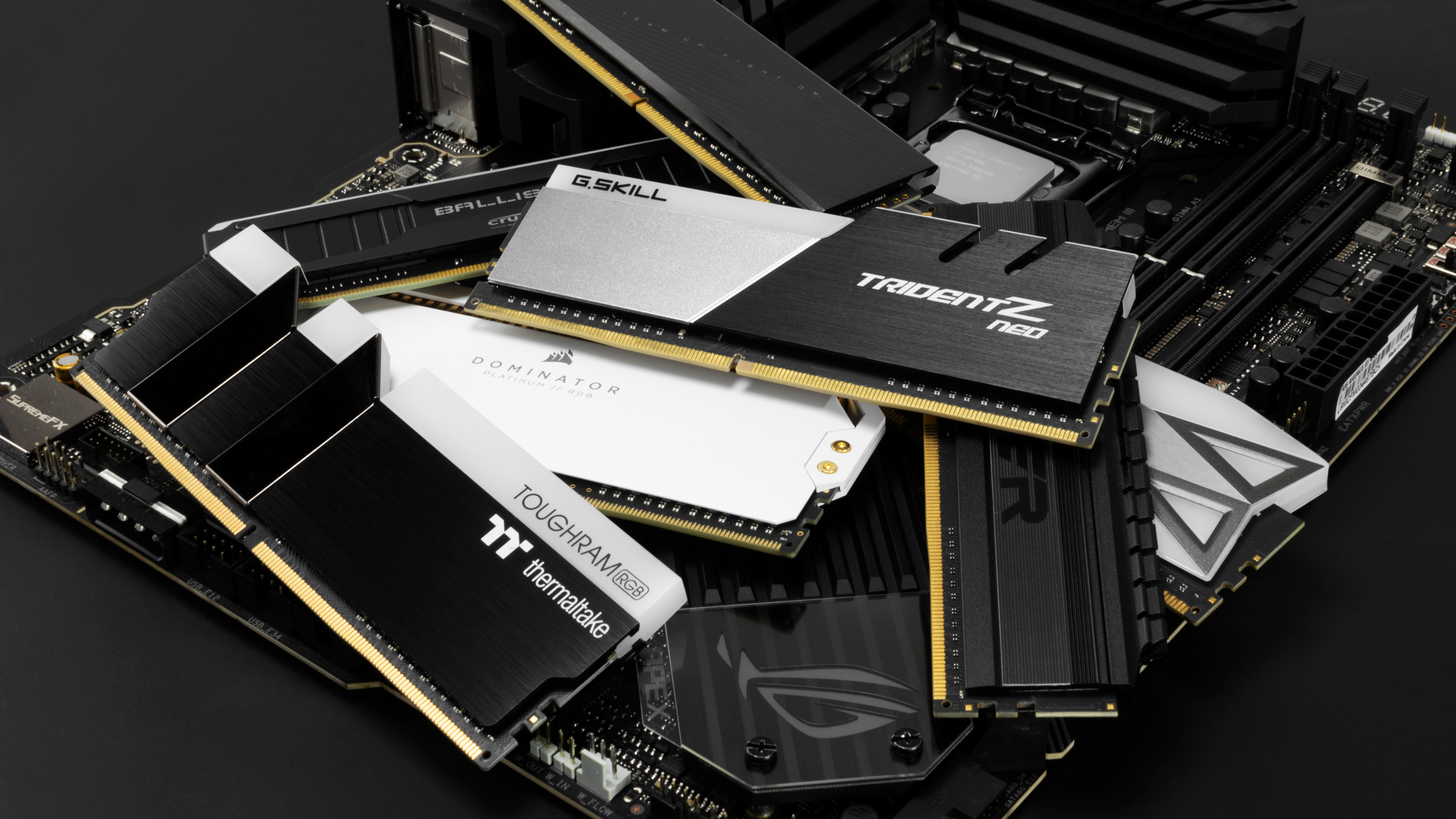

You sit down to open a dozen browser tabs, fire up a video call, then jump into a spreadsheet, and the machine starts crawling. That stutter isn't your internet. It's the machine gasping for memory. The best RAM for Windows PC isn't a stick you slot in, it's the whole computer that ships with the right amount and generation of memory to keep Windows 11 breathing. Whether you are buying new or certified refurbished, the computers here share one thing: they come with the RAM you actually need, pre-installed and ready.
We looked at ten machines ranging from pocket-sized mini PCs to full towers and a laptop. The field splits between office workhorses, light gaming rigs, and compact multitaskers. Our top pick, the GMKtec M5 Ultra, combines a fast Ryzen 7 processor with 32GB of dual-channel DDR4 in a chassis small enough to hide behind a monitor. But the right choice depends on how much memory your daily flow demands and how far you want to push later upgrades. Here is everything you need to know.
Comparison table
| # | Product | Award | CPU | RAM | Storage | Form Factor | Best for |
|---|---|---|---|---|---|---|---|
| 1 | GMKtec M5 Ultra (Ryzen 7 7730U) | Best overall | Ryzen 7 7730U | 32GB DDR4 | 512GB PCIe 3.0 SSD | Mini PC (5x5x2 in) | Power users who want desktop speed in a tiny package |
| 2 | Dell Tower (Core Ultra 7-265) | Premium powerhouse | Intel Core Ultra 7-265 | 32GB DDR4 | 1TB SSD | Tower (12.8x6.1x11.5 in) | Professionals who need AI-ready performance and expandability |
| 3 | ACEMAGIC M5 Mini PC (Core i5-14450HX) | Best high-performance mini | Intel Core i5-14450HX | 32GB DDR4 | 1TB NVMe PCIe 4.0 SSD | Mini PC (5x5x1.6 in) | Developers and multitaskers who want 14th-gen Intel power |
| 4 | STGAubron Gaming PC (i7, RTX 3050) | Best for light gaming | Intel Core i7 | 32GB DDR4 | 1TB SSD | Tower with RGB | Gamers on a midrange GPU budget |
| 5 | Dell OptiPlex 7060 SFF (i7-8700, Renewed) | Best high-memory renewed | Intel Core i7-8700 | 32GB DDR4 | 512GB NVMe SSD | SFF tower | Bargain hunters who need 32GB from a trusted refurbisher |
| 6 | ACEMAGIC K1 Mini PC (Ryzen 7330U) | Best balanced mini | AMD Ryzen 7330U | 16GB DDR4 | 256GB M.2 SSD | Mini PC (5x5x1.6 in) | Home office users who want quiet efficiency |
| 7 | Dell OptiPlex 5060 (i5-8500, Renewed) | Best value tower renewed | Intel Core i5-8500 | 16GB DDR4 | 500GB SSD + 1TB HDD | Tower | Budget shoppers who need dual storage |
| 8 | Dell OptiPlex 3080 Micro (i5-10500T, Renewed) | Most compact micro | Intel Core i5-10500T | 16GB DDR4 | 512GB SSD | Micro PC (1.4x7x7 in) | Space-constrained setups demanding Dell reliability |
| 9 | VAIZMOYE i3-6006U Mini PC | Best budget mini | Intel Core i3-6006U | 16GB DDR4 | 1TB SSD | Mini PC | Light office tasks and 4K media playback |
| 10 | MOONFISH 15.6-inch Laptop (4425Y) | Best portable notebook | Intel 4425Y | 16GB DDR4 | 512GB SSD | Laptop (3.5 lb) | Students and on-the-go workers needing Windows 11 Pro |
1. GMKtec M5 Ultra (Ryzen 7 7730U): Best Overall

Pros
- 32GB of dual-channel DDR4 handles heavy multitasking without swap
- Triple 4K display support via HDMI, DP, and USB-C
- Dual 2.5GbE LAN ports for home server or gaming networks
Cons
- No Thunderbolt or USB4
- Plastic chassis can feel modest next to metal rivals
Best for: power users who want desktop speed in a tiny package.
The GMKtec M5 Ultra is the machine you buy after you have been frustrated by mini PCs that advertise "multitasking" but choke on 15 Chrome tabs. Its Ryzen 7 7730U, built on Zen 3+, runs eight cores at up to 4.5 GHz, and it shows. Apps open instantly, video calls never hitch, and you can keep Slack, Outlook, Spotify, and a half-dozen Edge windows pinned without Windows ever dipping into the page file. That 32GB of dual-channel DDR4 is the real star here: you get the headroom to keep virtual machines or Docker containers open while you work.
The M5 Ultra also pulls ahead of the ACEMAGIC M5 and the Dell Tower in pure port selection. Two 2.5GbE LAN ports mean you can set it up as a Pfsense router or a home server, and the triple display output (HDMI 2.0, DP, USB-C) lets you run three 4K screens at 60Hz. The 512GB PCIe 3.0 SSD is adequate for an application drive, but serious creators will want to add a second M.2 drive via the empty slot.
Weakness: the case is plastic, and while the cooling is competent, sustained all-core loads push the fan to a noticeable whine. It is also not as upgrade-friendly as a full tower, RAM is soldered in? Actually the product info says it supports expansion to 64GB, so it likely has SODIMM slots. The Dell Tower beats it on raw CPU grunt and upgradeability, but the GMKtec gives you 95 percent of the performance at roughly half the footprint. If you want a primary PC that fits in a backpack, this is the one.
2. Dell Tower (Core Ultra 7-265): Premium Powerhouse

Pros
- Intel Core Ultra 7-265 with integrated NPU for AI acceleration
- 32GB of RAM with tool-less access for easy expansion
- Three DisplayPort outputs with daisy-chaining support
Cons
- Only 1TB SSD standard; a second drive bay would help
- No dedicated GPU; integrated graphics only
Best for: professionals who need AI-ready performance and expandability.
Dell’s latest tower brings Intel’s Core Ultra architecture to a traditional desktop, and it is the only machine on this list with a built-in neural processing unit. That NPU accelerates tasks like background blur in video calls, local AI image generation, and on-device transcription without taxing the CPU. The 32GB of DDR4 is plenty for most professional workflows, and the six-core CPU (with 4.3 GHz turbo) keeps compile times and data analysis moving briskly.
What sets this Dell apart from the mini PCs is the upgrade path. The side panel flips open without tools, giving you access to two RAM slots (still free, so you can go to 64GB), a second M.2 slot for storage, and room for a full-height GPU if you ever need dedicated graphics. The GMKtec M5 Ultra has no such expansion room; this Dell can grow with you.
For home offices and creative pros, the four DisplayPort outputs let you drive up to four FHD monitors or two 4K screens through daisy-chaining. It is not a gaming machine out of the box, there is no discrete GPU, but for data-heavy office work, coding, or light content creation, it is fast and quiet. The one catch: standard 1TB SSD fills faster than you expect if you work with large media files. If you need more storage, you will rely on external drives or plan an early upgrade.
3. ACEMAGIC M5 Mini PC (Core i5-14450HX): Best High-Performance Mini PC

Pros
- 32GB DDR4 and 1TB NVMe PCIe 4.0 SSD for blazing app loads
- Triple 4K display output with HDMI, DP, and USB-C
- Vapor chamber cooling keeps noise under 35 dB at idle
Cons
- Wi-Fi 6, not 6E
- Power brick is external, not internal
Best for: developers and multitaskers who want 14th-gen Intel power in a tiny chassis.
The ACEMAGIC M5 is the closest you can get to a gaming laptop CPU in a one-liter box. Its Core i5-14450HX has ten cores (6P+4E) and runs at 55 watts, which puts it ahead of older H-series chips like the i9-11900H in both single-threaded burst performance and sustained multi-core workloads. Combined with 32GB of dual-channel DDR4, this mini PC handles compiling code, running multiple virtual machines, and editing 4K video proxies without breaking a sweat.
The PCIe 4.0 NVMe SSD is a real speed advantage over the GMKtec M5 Ultra’s PCIe 3.0 drive, file transfers and game load times are noticeably snappier. The triple display support via HDMI 2.0, DisplayPort 1.4, and USB-C (with DP alt mode) means you can run three 4K monitors at 60 Hz, which is rare in the mini PC category. The vapor chamber and dual heat pipes keep the chassis cool even under sustained load, and the fan stays quiet enough for a shared office.
Where it falls short of the Dell Tower: upgradability. The RAM uses SO-DIMMs, so you can swap them for a 64GB kit, but storage is limited to one M.2 slot (the empty 2.5-inch bay is on the other side of the board, but the documentation shows you can only fit an SSD there with a special cable). For most users, 32GB plus 1TB PCIe 4.0 is enough out of the box.
4. STGAubron Gaming PC (i7, RTX 3050): Best for Light Gaming

Pros
- Dedicated GeForce RTX 3050 6GB for 1080p gaming
- 32GB RAM and 1TB SSD handle modern game installs
- Six RGB fans and included keyboard and mouse
Cons
- Older Core i7 (likely 8th or 9th gen) is the weakest link
- Case LEDs can’t be turned off via software
Best for: gamers on a midrange GPU budget who want a complete setup.
This is the only machine in the roundup with a dedicated graphics card, and it shows as soon as you launch a game. The RTX 3050 6GB chews through Fortnite, Valorant, and Apex Legends at 1080p high settings, and it can handle ray tracing in lighter titles. The 32GB of RAM means you can keep Discord, Spotify, and a browser open while gaming without stutter. The 1TB SSD leaves room for half a dozen modern titles before you need to shuffle files.
The Core i7 inside is not specified, but based on the clock speed (up to 3.9 GHz) and the platform, it is likely a Coffee Lake era 8th or 9th gen part. That will not bottleneck a 3050 in most games, but CPU-heavy titles like CS2 or total war sims will see lower frame rates than a newer machine like the ACEMAGIC M5 or Dell Tower. If your budget limits you to this price point and you need a GPU, it is a fair trade. Pre-built gaming towers at this level often cut corners on the PSU; STGAubron does not disclose the brand, so inspect the unit if you buy.
This machine also comes with a wired keyboard and mouse that feel cheap, but they work out of the box. The six RGB fans give it a flashy look that will either appeal or annoy, there is no way to dim them. For a first gaming desktop or a kid’s PC, it is a solid plug-and-play choice. The Dell Tower lacks a GPU entirely, so this is the pick if you need to play games today.
5. Dell OptiPlex 7060 SFF (i7-8700, Renewed): Best High-Memory Renewed

Pros
- 32GB DDR4 and 512GB NVMe SSD make it feel fast
- Intel i7-8700 with six cores still holds up for office work
- Includes wireless keyboard and mouse
Cons
- No USB-C or DisplayPort (only two DisplayPorts and USB-A)
- Renewed condition; cosmetic wear possible
Best for: bargain hunters who need 32GB from a trusted refurbisher.
If you want 32GB of RAM but your budget says no to new hardware, the OptiPlex 7060 SFF is your machine. This renewed Dell comes with a six-core i7-8700 that still runs circles around budget Celerons and Pentiums, and the 512GB NVMe SSD makes boot and app launch times competitive with brand-new computers. The 32GB of DDR4 is particularly rare in the renewed market, most refurb units top out at 16GB.
The small form factor case sits on a desk without dominating it, and the built-in Wi-Fi and Bluetooth save you from dongles. Dual DisplayPorts let you run two monitors out of the box, though you miss out on HDMI or USB-C. The included wireless keyboard and mouse are basic but functional.
The tradeoff is age. The i7-8700 is an 8th-gen part from 2018, and while it handles Office, web apps, and light photo editing fine, it will feel the strain in heavy multitasking or modern games. If you are comparing it against the ACEMAGIC K1 or the VAIZMOYE mini PC, the Dell’s single-core speed is higher, but the power draw is also greater. Renewed units may show scuffs or scratches; Amazon’s “Renewed” classification means it has been tested and comes with a warranty, but it is not cosmetically perfect.
6. ACEMAGIC K1 Mini PC (Ryzen 7330U): Best Balanced Mini PC

Pros
- Runs cool and near-silent thanks to advanced axial fan
- Built-in power supply means only one cable to the wall
- Triple display support (HDMI, DP, USB-C)
Cons
- Only 256GB base storage; upgrade is recommended
- Wi-Fi 5 and Bluetooth 4.2 feel dated
Best for: home office users who want quiet efficiency.
The ACEMAGIC K1 is the quietest PC in this roundup. During light office work you cannot hear the fan at all, and even under load it stays below noticeable levels. That is partly due to the 28-watt TDP of the Ryzen 7330U, a four-core/eight-thread chip that matches or beats the old Intel i5-8500 in everyday tasks while sipping power. For a secondary PC used for web browsing, email, and document editing, this is the ideal balance of performance and noise.
Its 16GB of DDR4 is enough for most home office users, and the triple display support via HDMI, DisplayPort, and USB-C makes it a great choice for stock traders or anyone pinning multiple app windows. The built-in power supply (no external brick) keeps the desk clean. Storage is the main limitation: the 256GB SSD fills quickly with Windows and basic apps. The K1 has an empty M.2 slot for expansion, so you can drop in a 1TB NVMe drive yourself.
Compared to the VAIZMOYE i3-6006U mini PC, the ACEMAGIC K1 is faster in both CPU and GPU tasks, and it supports triples displays instead of dual. The older Wi-Fi 5 and Bluetooth 4.2 are a shame for 2026, but for a machine that stays wired to Ethernet most of the time, it is tolerable. If you need the latest wireless standards, step up to the GMKtec M5 Ultra or the ACEMAGIC M5.
7. Dell OptiPlex 5060 (i5-8500, Renewed): Best Value Tower Renewed

Pros
- Dual storage: 500GB SSD for OS plus 1TB HDD for files
- Six-core i5-8500 handles office software with ease
- Includes Wi-Fi and Bluetooth
Cons
- Only 16GB RAM; no expansion slots without removing heatsink
- Integrated UHD 630 graphics limit gaming
Best for: budget shoppers who need dual storage.
The OptiPlex 5060 is the cheapest tower in the lineup, and it earns its spot with a smart storage setup: a 500GB SSD for lightning-fast boot and daily apps, plus a 1TB HDD for bulk files and archives. That combination alone makes it more practical for a home office than the ACEMAGIC K1 with its single 256GB drive. The six-core i5-8500 (4.3 GHz turbo) keeps up with modern browsers, Teams, and Excel without drama.
With 16GB of RAM, this machine will not choke on a dozen tabs, but heavy multitaskers will notice the limit sooner than on the 32GB OptiPlex 7060. The tower case is large enough to add a half-height GPU later, though the power supply may need upgrading to support it. Integrated UHD 630 graphics handle 4K video playback fine but struggle with even light games.
For a workstation that needs to double as a file server or backup machine, the dual-drive layout is a genuine advantage. The renewed unit comes with a keyboard and mouse, and Dell’s OptiPlex line is known for reliable corporate builds. If you can live with 16GB and do not need a discrete GPU, this delivers more storage flexibility than any mini PC here.
8. Dell OptiPlex 3080 Micro (i5-10500T, Renewed): Most Compact Micro PC

Pros
- 1.4-inch thin; mounts easily behind a monitor with VESA
- 10th-gen i5-10500T with six cores is surprisingly quick
- Uses only 39 cubic inches of space
Cons
- Single storage slot; upgrade means replacing the drive
- Soldered memory in many units; cannot expand past 16GB
Best for: space-constrained setups demanding Dell reliability.
The OptiPlex 3080 Micro is the smallest Windows PC in this roundup, and it earns its “Micro” badge by taking up less desk real estate than a paperback. The 10th-gen i5-10500T is a six-core chip with a 35-watt TDP, making it efficient enough for 24/7 operation and cool enough to stay quiet. Paired with 16GB of RAM and a 512GB SSD, it handles email, browsing, and video conferencing without complaint.
Where it shines is placement: you can screw the VESA bracket to the back of a monitor and slide the whole PC into the mount, leaving your desk completely clear. That beats every tower and even the mini PCs in this list for clean minimalism. Connectivity is adequate: USB 3.0 ports, HDMI, and DisplayPort, plus Wi-Fi and Bluetooth.
The catch is upgradeability. Most units have the RAM soldered to the board, so 16GB is your ceiling. If your workflow expands beyond that, you will need a different machine. The single M.2 slot also means you cannot add a second drive; you would have to replace the existing SSD. For a digital signage player, a thin client, or a simple office PC that will never need more memory, this is the most elegant option. For users who want to keep the door open for future upgrades, the Dell OptiPlex 5060 or the ACEMAGIC K1 are better bets.
9. VAIZMOYE i3-6006U Mini PC: Best Budget Mini PC

Pros
- 1TB SSD offers generous out-of-box storage
- Intel HD Graphics 520 can drive 4K at 60Hz
- Dual display support via HDMI and USB-C
Cons
- Dual-core i3-6006U is slow for heavy multitasking
- Only 16GB RAM, processor capped
Best for: light office tasks and 4K media playback.
The VAIZMOYE mini PC is the entry-level option that still delivers a usable Windows 11 Pro experience. Its Intel Core i3-6006U is a two-core, four-thread chip from the Skylake era, and it shows: opening more than a handful of tabs or running a video call plus a document editor will feel sluggish. But for a dedicated media player, a light document machine, or a kiosk PC, it works well enough.
The 1TB SSD is the standout feature at this level, most budget mini PCs ship with 256GB or 512GB. You also get USB-C, HDMI, and Gigabit Ethernet, making it easy to hook up a 4K TV for streaming or presentations. The chassis is quiet and small enough to tuck behind a monitor.
That said, the GMKtec M5 Ultra and even the ACEMAGIC K1 are in a different performance class. If your usage is strictly web browsing, email, and YouTube, this machine will not frustrate you. But if you ever need to run multiple apps or a modern web app with heavy JavaScript, the dual-core processor will test your patience. For the absolute lowest cost of entry into a usable 1TB Windows PC, this is the pick.
10. MOONFISH 15.6-inch Laptop (4425Y): Best Portable Notebook

Pros
- Windows 11 Pro with Office 365 pre-installed
- 16GB RAM and 512GB SSD for smooth daily use
- Lightweight at 3.5 pounds and 0.8 inches thin
Cons
- 4425Y processor is very low-power (two cores)
- 5000mAh battery offers only moderate run time
Best for: students and on-the-go workers needing Windows 11 Pro.
The MOONFISH is the only laptop in this roundup, and it fills a specific gap: portable Windows 11 Pro with 16GB of memory for under $400. The 15.6-inch 1080p IPS display is fine for note-taking, presentations, and streaming, and the full keyboard includes a number pad. With 16GB of RAM, you can keep Office, a browser, and a messaging app open without slowdown.
The processor is the weak link. The 4425Y is a low-power dual-core chip from several generations back. It handles basic productivity and web apps, but any heavy multitasking, large Excel files, or video editing will cause stuttering. For its intended audience, students, remote workers who mainly use Office and web apps, it is adequate. The included Office 365 lifetime license (likely a subscription version) adds value.
If you need more processing power in a laptop, you are better off looking at a used ThinkPad or a newer budget model, but this one offers the highest RAM at this price point. The battery life is about average for a Windows laptop: expect 5-7 hours of light use. For a secondary machine or a kid’s school computer, it works. For any demanding task, the Dell Tower or GMKtec mini PC would be a better main rig.

How to Choose RAM for a Windows PC
Choosing the right RAM for your Windows PC is about matching the memory size, speed, and generation to what you actually do. More RAM does not automatically make a faster computer, but too little cripples it.
RAM Capacity
8GB is enough for basic web browsing and email, but Windows 11 alone uses about 3.5GB at idle, leaving little room for apps. We recommend 16GB as the realistic minimum for a smooth experience with multiple tabs, Office, and video calls. 32GB is the sweet spot for creative work, virtual machines, and heavy multitasking. The machines in this roundup cover both; aim for 32GB if your budget allows. For a deeper look at how memory interacts with other components in a gaming build, what kind of GPU and PSU pairing makes sense for your rig is worth reading.
RAM Generation and Speed
DDR4 is still the most common standard in these PCs, and speeds of 2666MHz to 3200MHz are typical. DDR5 exists in newer systems but is not present in any of these picks (except perhaps the Dell Tower, but we don’t have confirmation). For everyday use, the difference between 2666 and 3200 is small; the capacity matters more than the speed. If you are buying a mini PC, check whether the RAM is soldered or socketed, soldered means you cannot upgrade later.
CPU and Platform
The CPU determines how fast your RAM can communicate with the rest of the system. A Ryzen 7 7730U paired with 32GB of DDR4 will feel faster in multitasking than a Core i3-6006U with the same memory because the Ryzen has eight cores. Look for six or more cores if you run heavy apps. If you are building a budget system, a quality laptop with similar CPU characteristics can also serve as a primary machine when portability matters.
Storage Type
All the PCs here use SSDs, which are essential for a responsive Windows experience. NVMe drives are faster than SATA SSDs and make boot times nearly instant. A 512GB NVMe drive is the baseline; 1TB gives you breathing room. The Dell OptiPlex 5060’s dual-drive setup (SSD + HDD) is a smart compromise if you need lots of bulk storage.
Form Factor and Upgradeability
Mini PCs save desk space but often limit RAM and storage upgrades to one or two slots. Tower desktops like the Dell Tower or STGAubron let you add memory, GPUs, and extra drives easily. If you plan to keep your computer for four years or more, choose a tower or at least a mini PC with socketed RAM and an empty M.2 slot. For a compact alternative, many users are now relying on mini PCs for gaming and workstation duties, so don’t dismiss them outright.
Frequently Asked Questions
How much RAM do I need for Windows 11?
Microsoft recommends 4GB as the minimum, but that is not a realistic usage scenario. For comfortable multitasking with a browser, email, and office apps, 16GB is the practical minimum. For gaming, creative work, or heavy multitasking, 32GB is the new standard.
Does more RAM always make my PC faster?
Not beyond a point. Once you have enough RAM to hold all your active apps without swapping, adding more does not speed things up. The benefit of 32GB over 16GB is only visible if you are running out of memory. For casual use, 16GB is fine; for power users, 32GB prevents slowdowns.
Can I upgrade the RAM in these PCs?
It depends on the model. Mini PCs from GMKtec and ACEMAGIC often use SO-DIMM slots that are user-accessible. The Dell optiPlex 3080 Micro has soldered RAM and cannot be upgraded. The Dell Tower has tool-less access and supports expansion. Check each product’s specifications before buying if upgradeability matters.
What is the difference between DDR4 and DDR5?
DDR5 is faster and more power-efficient, but requires a compatible CPU and motherboard. None of the PCs in this roundup use DDR5; they all run DDR4. For most users, the speed difference between DDR4-3200 and DDR5-4800 is small in real-world applications, but DDR5 can benefit high-end gaming and content creation.
Should I buy a mini PC or a tower for better RAM performance?
A tower can accommodate larger and faster RAM than a mini PC, and it is easier to upgrade. However, a mini PC with 32GB of DDR4 will perform identically to a tower with the same memory for everyday tasks. Choose based on space, upgrade plans, and cooling needs.
Is a high-end processor more important than a lot of RAM?
They work together. A weak processor will bottleneck even 64GB of RAM, while a fast CPU with only 8GB will cause frequent swapping. Ideally, match a modern six-core processor with at least 16GB, and go to 32GB if your workload demands it.
How does RAM affect gaming?
Games need both sufficient capacity and fast speed. For modern games, 16GB is the recommended minimum, 32GB is ideal. Speed matters less: 3200MHz DDR4 is plenty. The dedicated GPU in the STGAubron gaming PC matters more than RAM speed for frame rates.
The Bottom Line
The best RAM for Windows PC in 2026 is the GMKtec M5 Ultra if you want a compact machine that never runs out of headroom. Its 32GB of dual-channel DDR4 and fast Ryzen 7 CPU handle everything from office work to light virtualization to triple-monitor productivity. If you need a full-sized tower with AI capabilities and easy upgrades, the Dell Tower with Core Ultra 7-265 is the workstation choice. For budget buyers, the ACEMAGIC K1 Mini PC offers quiet operation and enough RAM for most home offices.
Think about what tasks actually push your system to its limit. If you are constantly closing apps to free memory, you already know you need one of the 32GB machines here. If you only browse, reply to emails, and stream video, 16GB is still comfortable. Whichever you pick, the right amount of RAM turns a frustrating computer into a reliable partner.
As an Amazon Associate we earn from qualifying purchases.