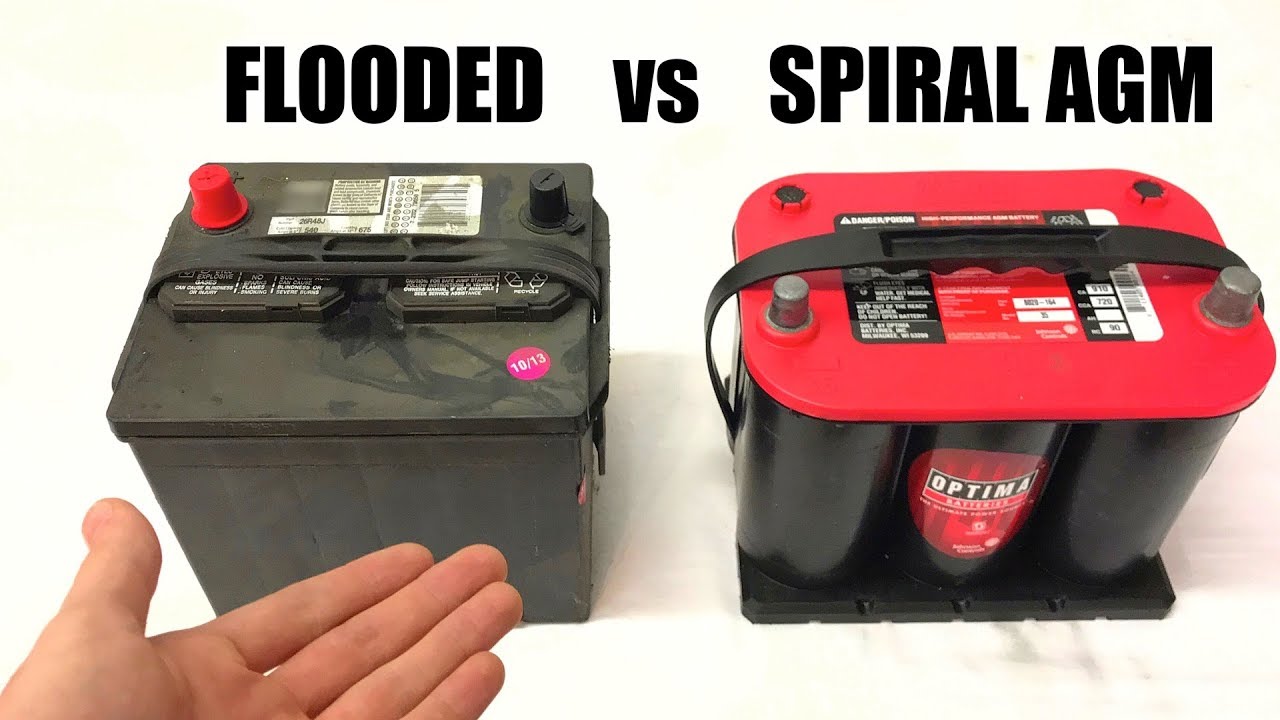

A dead battery is rarely just an inconvenience. It can strand a car with start-stop electronics, leave an RV without usable power, or turn a cold morning into a long wait for roadside assistance. The right AGM battery needs to match the vehicle's group size, terminal layout, starting demand, and electrical load.
The Best AGM Battery for most standard automotive applications is the ACDelco Gold 48AGM, while the Weize Platinum Group 48 is the strongest alternative for drivers who need a clearly specified start-stop battery. The list also includes Group 24F, Group 35, Group 47, Group 94R, Group 31M marine, and several other Group 48 options.
Comparison table
| # | Product | Award | Group size | Starting or capacity details | Dimensions | Best for |
|---|---|---|---|---|---|---|
| 1 | ACDelco Gold 48AGM | Best overall | 48 | AGM | 11.9 x 7.5 x 7.6 inches | Standard automotive replacement |
| 2 | Weize Platinum Group 48 | Best for start-stop cars | 48, H6 | 70Ah, 760 CCA, 120RC | 10.94 x 6.89 x 7.48 inches | High electrical loads |
| 3 | Weize Platinum Group 24F | Best Group 24F | 24F | 70Ah, 710 CCA, 120RC | 10.75 x 6.81 x 8.98 inches | Larger vehicles using 24F |
| 4 | Optima RedTop 34/78 | Best for dual terminals | 34/78 | 50Ah, 800 CCA, 100RC | 10.06 x 6.94 x 7.88 inches | Starting power and flexible fitment |
| 5 | Interstate Group 31M AGM | Best marine and RV option | 31M | 100Ah, 825 CCA | Weight 64.5 pounds | Boats and RVs |
| 6 | ACDelco Gold 94RAGM | Best heavy-duty automotive fit | 94R | AGM | 12.4 x 6.9 x 7.5 inches | Vehicles requiring Group 94R |
| 7 | Weize Platinum Group 35 | Best compact AGM | 35 | 55Ah, 650 CCA, 100RC | 9.06 x 6.89 x 8.82 inches | Smaller engine bays |
| 8 | Mighty Max MM-H6 | Best flexible-mount Group 48 | 48 | 70Ah, 760 CCA, 120RC | 10.94 x 6.88 x 7.48 inches | Group 48 vehicles needing mounting flexibility |
| 9 | Daakmax Platinum Group 48 | Best vibration-resistant Group 48 | 48, H6 | 70Ah, 760 CCA, 120RC | 10.94 x 6.89 x 7.48 inches | Rough roads and start-stop use |
| 10 | Weize Platinum Group 47 | Best Group 47 | 47, H5 | 60Ah, 680 CCA, 100RC | 9.52 x 6.89 x 7.48 inches | Vehicles specified for Group 47 |
1. ACDelco Gold 48AGM: Best Overall

Pros
- Robust envelope separator helps resist shorts
- Silver calcium alloy is designed for cycle life
- Leak-resistant vent cap design
- Strong fit for conventional Group 48 applications
Cons
- Exact starting and reserve figures are not listed
- Larger and heavier than some Group 48 alternatives
- Terminal position still needs to match the original battery
Best for: drivers who want a well-built Group 48 AGM replacement from an established automotive battery line.
The ACDelco Gold 48AGM is the least fussy pick in this group. It is a conventional-looking replacement, but the details inside the case are aimed at the problems that shorten battery life: vibration, heat, internal shorts, and repeated cycling. That makes it a sensible starting point for a car that already calls for a Group 48 AGM and does not need a specialty marine design.
ACDelco uses a high-density negative paste and a silver calcium stamped alloy. Those materials are intended to improve conductivity, cycle life, and performance as the battery is repeatedly charged and discharged. The calcium lead positive grid also aims to keep resistance low. The product is 11.9 inches long, 7.5 inches wide, and 7.6 inches high, with a listed weight of 45.5 pounds. Confirm those measurements against the battery tray rather than assuming every Group 48 case is identical.
The separator design is one of the more convincing parts of this battery's construction. Its puncture-resistant back supports acid circulation and helps prevent shorts, while the vent cap is designed to resist acid leakage. That does not remove the need for correct installation, charging, and terminal cleaning, but it gives the case a more deliberate protection strategy than a bare specification sheet would suggest.
Compared with the Weize Platinum Group 48, the ACDelco has fewer published output figures, so it is harder to compare directly on cold-weather starting power. The Weize wins when 760 CCA, 70Ah, and 120RC are the deciding numbers. The ACDelco makes more sense for someone who prioritizes its internal construction and a familiar replacement format over a long list of published ratings.
Skip this one if your vehicle requires a different group size, reversed terminals, or verified start-stop output that the listing does not specify. For a standard Group 48 AGM application, though, this is the one we'd keep. It is a restrained, well-rounded choice for a daily driver, crossover, or SUV that needs dependable replacement power without a marine or specialty focus.
2. Weize Platinum Group 48: Best for Start-Stop Cars

Pros
- 760 CCA gives the output figure a cold-starting car needs
- 120RC supports extended electrical use
- Designed for start-stop vehicles
- Leak-proof, non-spillable construction
- Three-year warranty is listed
Cons
- Terminal location must be checked carefully
- Published capacity details are inconsistent in the listing
- Not intended for deep-cycle solar or marine use
Best for: a Group 48 or H6 vehicle with start-stop operation and substantial accessory demand.
The Weize Platinum Group 48 is the most straightforward pick when you want the core output figures in front of you. It is specified at 760 CCA, 120 minutes of reserve capacity, and a 70Ah capacity in the title and features. That combination suits vehicles that restart frequently at traffic lights or keep lights, screens, heated equipment, and other accessories active when the engine is not running.
Its case measures 10.94 inches long, 6.89 inches wide, and 7.48 inches high. The listing identifies it as Group 48 and H6, with a tapered terminal layout showing negative on the left and positive on the right. That orientation matters as much as the case dimensions. A battery can slide into the tray and still be unusable if the cables cannot reach the correct posts without strain.
The listed operating range is -22°F to 158°F, and the recommended charging voltage is 14.4 to 15.0 volts. Those figures are useful for checking charger compatibility and understanding the intended environment, though the vehicle's charging system remains the authority. The battery is described as maintenance-free, leak-proof, and vibration-resistant, with a self-discharge figure of less than 8 percent after 90 days of storage.
This is the stronger technical match than the ACDelco Gold 48AGM when a buyer needs clearly stated CCA and reserve capacity. The Mighty Max MM-H6 and Daakmax Platinum Group 48 publish similar output figures, so the choice among them comes down to fitment details, construction claims, and the support terms attached to each listing. The Weize has the advantage of a very clear Group 48 specification.
One caution deserves attention: the listing contains conflicting capacity and output wording in different feature lines. The title and the main specification language identify 70Ah and 760 CCA, while another line mentions 60Ah and 680A. That is a reason to verify the current listing and your original battery before ordering. Choose this battery for a confirmed Group 48 start-stop application, not simply because the numbers look attractive.
3. Weize Platinum Group 24F: Best Group 24F

Pros
- 710 CCA supports confident starting
- 120RC gives useful reserve capacity
- 70Ah capacity suits accessory-heavy vehicles
- AGM construction resists spills and leaks
- Three-year warranty is listed
Cons
- Taller case needs careful tray clearance
- Group 24F is not interchangeable with Group 24
- Not designed for deep-cycle applications
Best for: vehicles that specifically require a Group 24F AGM battery with substantial starting output.
The Weize Platinum Group 24F is the pick for a very specific fitment, and that specificity is its strength. It is not a general substitute for the Group 48 models here. The 24F designation, terminal arrangement, and taller case all need to correspond with the vehicle's original battery. If they do, its 710 CCA and 120RC give it a useful balance for a vehicle with frequent starts and meaningful electrical demand.
The advertised dimensions are 10.75 inches long, 6.81 inches wide, and 8.98 inches high. That height is the detail most likely to cause trouble during installation. Measure from the tray to the hood or any retaining hardware, and confirm the cable path before ordering. The listing specifies tapered terminals with negative on the left and positive on the right.
The battery is rated at 70Ah and 710 CCA, with a charging voltage of 14.4 to 15.0 volts and an acceptable charging current of 0 to 21 amps. In practical terms, the capacity supports accessory use while the CCA figure addresses the brief high-current demand of engine starting. The listed operating range of -22°F to 158°F also makes it suitable for vehicles exposed to substantial seasonal temperature changes.
The Weize Platinum Group 48 has a higher listed CCA figure, but it is the wrong choice if the vehicle needs the taller Group 24F case. The Weize Platinum Group 35 is physically smaller, while the Interstate Group 31M AGM is built for a very different marine and RV role. This Group 24F sits between those designs as a dedicated automotive replacement rather than a universal battery.
The main reason to skip it is simple: uncertain fitment. Group numbers are not suggestions, and a similar-looking case can still have the wrong hold-down, terminal direction, or height. Buyers whose vehicles are confirmed for Group 24F and whose original battery is AGM should find this a capable daily-use replacement, especially when reserve capacity matters as much as the initial crank.
4. Optima RedTop 34/78: Best for Dual Terminals

Pros
- 800 CCA is the highest automotive starting figure here
- Dual SAE and GM posts expand fitment options
- 100 minutes of reserve capacity
- SpiralCell design and pure lead construction
- Maintenance-free sealed case
Cons
- C20 capacity is listed at 50Ah
- 34/78 fitment is not the same as Group 48
- It is heavier than the compact Group 35 model
Best for: cars, trucks, and SUVs that require a 34/78 battery or benefit from both SAE and GM terminal formats.
The Optima RedTop 34/78 is the specialist starting battery in this roundup. Its main appeal is not a giant reserve-capacity figure. It is the combination of 800 CCA, dual SAE and GM posts, a sealed case, and a spiral-cell construction that is intended to tolerate vibration. That makes it especially interesting for vehicles with unusual terminal requirements or rougher operating conditions.
Optima lists a 12-volt design, 800 CCA, 100 minutes of reserve capacity, and a C20 capacity of 50Ah. The case measures about 10.06 inches long, 6.94 inches wide, and 7.88 inches tall, with a listed weight of 38.8 pounds. The comparatively manageable weight is useful during installation, but the dimensions and terminal layout still have to match the original battery and hold-down system.
The dual terminal arrangement is the feature that separates it from nearly every other product here. SAE and GM posts give the installer more connection options, but they do not make the battery universal. The vehicle still needs the correct physical case and mounting arrangement. Optima also describes the battery as maintenance-free and says its spiral-cell technology uses 99.99 percent pure lead.
The Weize Platinum Group 48 offers more listed capacity and reserve capacity, while the Optima counters with a higher 800 CCA starting figure and more flexible terminal hardware. The ACDelco Gold 48AGM is a better match for a straightforward Group 48 replacement, but the RedTop becomes the more compelling choice when the 34/78 format and dual posts are part of the requirement.
This is not the battery to choose by brand familiarity alone. It is a starting battery, and its 50Ah C20 capacity does not make it a substitute for a dedicated deep-cycle design. Buyers who need a confirmed 34/78 replacement, strong starting output, and dual terminal options should put it near the top. Everyone else should begin with group size and terminal position before considering the construction story.
5. Interstate Group 31M AGM: Best Marine and RV Option

Pros
- 100Ah capacity supports extended accessory use
- 825 CCA handles engine starting
- Designed for cranking and deep-cycle duty
- Group 31M format suits marine and RV installations
- Pure lead AGM construction
Cons
- Listed weight is a substantial 64.5 pounds
- Not a typical passenger-car replacement
- Case dimensions are not provided in the listing
Best for: boats and RVs that need one AGM battery for starting and extended accessory operation.
The Interstate Group 31M AGM belongs in this list because it solves a different problem from the automotive batteries above. It is designed as a dual-purpose marine and RV battery, with enough starting output to crank an engine and enough capacity for lights, pumps, televisions, appliances, and other equipment. A car owner should not treat it as a larger replacement simply because its electrical figures are impressive.
Its published specifications include 12 volts, 100Ah, and 825 CCA. The 100Ah capacity is the meaningful distinction here. It gives the battery a deeper reserve for equipment running while the engine or motor is off, while 825 CCA keeps starting performance in view. Interstate also describes thick plates intended for repeated discharge and recharging.
At 64.5 pounds, this is the heaviest product in the roundup by a clear margin. That weight is a practical installation concern in a boat compartment or RV battery bay, especially when access is awkward. The listing does not provide the full case dimensions, so measure the existing Group 31M compartment and hold-down rather than relying on the group designation alone.
The Optima RedTop 34/78 is the better fit for a starting-focused car, while this Interstate is the obvious choice for a setup that must operate accessories for longer periods. Readers outfitting an RV should also consider how much battery capacity an RV actually needs before choosing a single large battery or planning a bank. For a boat with a trolling motor, the question of how sustained motor use changes battery requirements matters just as much.
There is one important boundary: this is not a compact automotive AGM, and it may be excessive for a vehicle built around a smaller group size. The benefit appears when both cranking and deep-cycle duties matter. Choose it for marine or RV equipment that needs a two-purpose battery, and skip it for ordinary passenger-car replacement work.
6. ACDelco Gold 94RAGM: Best Heavy-Duty Automotive Fit

Pros
- Reinforced case is pressure tested
- High-density plate oxide supports power delivery
- Robust separator helps prevent shorts
- Leak-resistant vent cap
- Electrical short testing is listed
Cons
- Large and heavy at 51.6 pounds
- Output figures are not listed
- Only suitable for vehicles that specify Group 94R
Best for: a vehicle that requires a Group 94R AGM battery and has enough tray space for its larger case.
The ACDelco Gold 94RAGM is the substantial automotive replacement here. Its 94R format is longer and heavier than the Group 48 models, and that extra case size should be treated as a fitment requirement rather than a performance upgrade anyone can use. When the vehicle specifies Group 94R, the construction details make this a credible choice.
The battery measures 12.4 inches long, 6.9 inches wide, and 7.5 inches high, with a listed weight of 51.6 pounds. That makes it noticeably less convenient to lift into a cramped engine bay than the Optima RedTop or Weize Group 35. It also means the hold-down and cable reach deserve a careful check before installation.
ACDelco uses a silver calcium stamped alloy, high-density negative paste, and a calcium lead positive grid. The product information says the plate oxide is designed for power per pound and high cycling service. A ribbed case is described as 100 percent pressure tested, and the listing also mentions electrical short testing. These are meaningful build details for a battery expected to endure vibration and repeated charge cycles.
The ACDelco Gold 48AGM is the more versatile recommendation for ordinary Group 48 vehicles, but it cannot replace a 94R battery when the tray and terminal arrangement call for the larger format. The Weize Platinum Group 24F has more published starting figures, yet its dimensions and group size place it in a different class. The 94RAGM is about matching the required case and choosing a robust construction within that fitment.
Skip it if the vehicle manual or original battery does not identify Group 94R. It is also a poor choice for anyone who expects published CCA and reserve figures to make the comparison easy, because those details are absent here. For the correct 94R application, this ACDelco is a serious, sturdily built replacement.
7. Weize Platinum Group 35: Best Compact AGM

Pros
- Shorter case suits tighter engine bays
- 650 CCA supports reliable starting
- 100RC provides useful reserve capacity
- 55Ah capacity for accessory demand
- Three-year warranty is listed
Cons
- Lower output than the Group 48 alternatives
- Group 35 fitment must be confirmed
- Not a deep-cycle marine or solar battery
Best for: vehicles specified for Group 35 that need a compact AGM case with clear starting and reserve figures.
The Weize Platinum Group 35 is the sensible small-case option. Its dimensions are 9.06 inches long, 6.89 inches wide, and 8.82 inches high, so it takes up less length than the Group 48 and Group 94R choices. That can simplify installation in an engine bay designed around a shorter battery, though the nearly nine-inch height still calls for a clearance check.
The listing gives this battery a 55Ah capacity, 650 CCA, and 100RC. Those figures are lower than the Group 48 Weize's 70Ah, 760 CCA, and 120RC, but the comparison only matters after confirming the vehicle's required group size. A smaller battery with the correct case and terminal arrangement is preferable to a more powerful battery that cannot be secured correctly.
The AGM construction is described as leak-resistant and non-spillable, with lower self-discharge than a flooded battery. The product is also listed for start-stop vehicles and accessory-heavy applications. Its stated operating temperature range is -22°F to 158°F, and the acceptable charging current is 0 to 17 amps.
The Weize Platinum Group 47 is close in footprint but has a different group designation and a 680 CCA rating. The Optima RedTop 34/78 is lighter and offers more CCA, yet it is not a Group 35 replacement. Those distinctions show why the group number, terminal direction, and hold-down matter before output figures.
This battery is not for a vehicle that needs the reserve and starting headroom of a larger case. It is also not intended for deep-cycle use in solar or marine systems. Choose it when Group 35 is the confirmed fit and the compact dimensions solve a real installation problem.
8. Mighty Max MM-H6: Best Flexible-Mount Group 48

Pros
- 70Ah, 760 CCA, and 120RC
- Mounts in multiple positions except upside down
- Positive terminal is listed on the right
- Shock and vibration-resistant construction
- Mounting screws are included
Cons
- Harness and other mounting accessories are not included
- Listed product weight conflicts with the battery's substantial format
- Group 48 fitment still needs confirmation
Best for: a Group 48 vehicle where mounting flexibility and clearly listed output figures matter.
The Mighty Max MM-H6 takes a familiar Group 48 specification and adds installation flexibility. It is rated at 70Ah, 760 CCA, and 120 minutes of reserve capacity, putting it in the same output class as the Weize and Daakmax Group 48 batteries. The standout feature is the claim that it can be mounted in multiple positions, excluding upside down.
The stated dimensions are 10.94 inches long, 6.88 inches wide, and 7.48 inches high. The positive terminal is on the right and the negative on the left. Those details make it easier to compare with the original battery, but the flexible-mount claim does not eliminate the need for a proper hold-down. The included mounting screws are useful, while the wiring harness and other mounting accessories are not included.
The battery is described as sealed and spill-proof, with resistance to shock, vibration, and harsh conditions. It is also rechargeable and intended for start-stop automotive use. That profile makes it a practical fit for a vehicle that needs a Group 48 AGM but has an awkward battery compartment or a mounting arrangement that benefits from more positioning options.
The Weize Platinum Group 48 matches the published 70Ah, 760 CCA, and 120RC figures, while the Daakmax Platinum Group 48 emphasizes vibration resistance and a three-year warranty. The Mighty Max separates itself with the mounting language rather than a higher output number. For a conventional tray, the three are closer competitors than the table's award labels might suggest.
There is a data point to treat cautiously: the product information lists a 12-pound weight, which does not align with the substantial construction suggested by the rest of the listing. That inconsistency is a reason to confirm the current product details before ordering. Choose this model when its mounting flexibility solves a specific fitment issue, not merely because the case shares a Group 48 label.
9. Daakmax Platinum Group 48: Best Vibration-Resistant Group 48

Pros
- 760 CCA and 120RC
- 70Ah capacity for start-stop vehicles
- Vibration resistance is a central design claim
- Non-spillable construction
- Three-year warranty is listed
Cons
- Not designed for marine or solar deep-cycle work
- Terminal location must match the original
- Less established fitment information than some alternatives
Best for: a Group 48 H6 vehicle that faces vibration, start-stop cycling, or heavy accessory use.
The Daakmax Platinum Group 48 is another H6 battery built around the numbers many modern vehicles need. It lists 70Ah, 760 CCA, and 120RC, along with a 12-volt design. That combination makes it suitable on paper for start-stop systems and cars that place more demand on the battery than a basic commuter vehicle.
Its case measures 10.94 inches long, 6.89 inches wide, and 7.48 inches high. The listed terminal layout is negative on the left and positive on the right, with tapered terminals. Confirm the measurement and orientation against the old battery before ordering. A Group 48 label alone is not enough if the vehicle uses a different hold-down or cable arrangement.
Daakmax highlights high-density negative paste, faster recharge performance, and up to twice the cycle life of conventional batteries. It also claims 18 times more vibration resistance than standard batteries and describes the case as leak-proof and non-spillable. Those claims matter most in vehicles that spend time on rough roads or repeatedly cycle accessories and engine restarts.
The Mighty Max MM-H6 offers the same headline capacity and output, but it focuses more on flexible mounting. The Weize Platinum Group 48 is the more direct alternative for buyers who want a familiar H6 listing and a clearly described charging range. Daakmax is the one to consider when vibration protection is more important than mounting flexibility.
This is still a starting battery, not a substitute for a dedicated deep-cycle unit. The listing specifically warns against solar and marine deep-cycle use. It is also worth verifying warranty handling and fitment information before installation. For the right Group 48 vehicle, this is a sensible choice when road vibration and start-stop use are the main concerns.
10. Weize Platinum Group 47: Best Group 47

Pros
- 680 CCA for dependable starting
- 100RC reserve capacity
- 60Ah capacity
- Compact Group 47 footprint
- Three-year warranty is listed
Cons
- Lower output than the Group 48 models
- Group 47 fitment is not interchangeable with Group 48
- Not intended for deep-cycle use
Best for: vehicles that specify a Group 47 or H5 AGM battery and need a compact start-stop replacement.
The Weize Platinum Group 47 is the right answer when a vehicle calls for the H5 format. It is shorter than the Group 48 batteries, measuring 9.52 inches long, 6.89 inches wide, and 7.48 inches high. That compact footprint can make a meaningful difference in a tight battery tray, but only if the terminal placement and hold-down match.
The published figures are 60Ah, 680 CCA, and 100 minutes of reserve capacity. That is a step below the Group 48 models in both starting output and reserve capacity, yet it is not a weakness when the vehicle is designed around Group 47. The correct case has to fit securely, and a larger battery is not automatically a better replacement.
Weize lists a charging voltage of 14.4 to 15.0 volts and an acceptable charging current of 0 to 18 amps. The battery is also described as leak-proof, non-spillable, and resistant to vibration. Its tapered terminal layout places negative on the left and positive on the right, a detail that should be checked against the original battery before installation.
The Weize Platinum Group 35 has a similar compact purpose but a different case shape and group designation. The Weize Platinum Group 48 is the stronger choice for a vehicle that can accept H6, with 760 CCA and 120RC, but it should not be forced into an H5 application. These batteries are close enough in appearance to invite a mistake, which is precisely why the group number deserves attention.
Skip this battery if your vehicle needs more reserve capacity or a different group size. For confirmed Group 47 fitment, though, it provides the relevant starting figures and a construction suited to modern start-stop use. It is the practical choice for a smaller battery bay where the H5 format is specified.
How to choose best agm battery
The right AGM battery is chosen by fitment first, then by starting output, reserve capacity, and the kind of work the battery must perform.
Group size and terminal layout
The group number identifies more than approximate length. It also relates to case height, width, hold-down arrangements, and common terminal placement. Group 48 and Group 47 batteries may look similar, but they are not interchangeable by default. Group 24F and Group 94R are different again.
Check the old battery, vehicle manual, and battery tray. Measure length, width, and height, then confirm which side carries the positive terminal. The tapered terminal arrangement listed for several Weize and Daakmax models is useful only when it matches the vehicle's cable routing.
Cold cranking amps
Cold cranking amps, or CCA, describe starting output in cold conditions. A higher figure can help with a larger engine, colder weather, or a vehicle with demanding start-stop operation, but it does not make a battery compatible with every vehicle.
The Optima RedTop lists 800 CCA, while the Interstate Group 31M lists 825 CCA. The Group 48 Weize, Mighty Max, and Daakmax models list 760 CCA. Compare those figures with the vehicle's original requirement rather than selecting the largest number automatically.
Reserve capacity and amp-hours
Reserve capacity indicates how long a battery can support a specified electrical load, while amp-hours describe stored capacity under a stated testing condition. They matter when accessories run with the engine off or when a vehicle's charging system frequently cycles the battery.
The Group 48 models with 120RC have more listed reserve than the Group 35 and Group 47 models with 100RC. The Interstate Group 31M stands apart with 100Ah because it is designed for marine and RV accessory use. A car battery and a deep-cycle battery should not be judged by the same duty cycle.
A battery that starts the engine easily can still be the wrong battery if the tray, terminal direction, and duty cycle do not match.
AGM charging requirements
AGM batteries use absorbed glass mat construction and are generally sealed and non-spillable. They still need the correct charging voltage and a compatible vehicle charging system. Several batteries here list charging voltage around 14.4 to 15.0 volts, but the vehicle manufacturer’s charging strategy remains the final reference.
If a car originally uses AGM, replacing it with a different battery type can affect start-stop behavior and charging control. The battery should also be fully charged before installation when the seller's instructions require it.
Starting versus deep-cycle use
Most automotive AGM batteries in this roundup are starting batteries. They are designed to provide a strong burst of current and tolerate repeated engine starts, but they are not automatically suitable for solar banks, trolling motors, or long accessory sessions.
The Interstate Group 31M is the exception because it is explicitly designed for cranking and deep-cycle marine and RV work. If you are building around an RV, the difference between starting power and sustained RV use deserves attention. For a boat, consider whether the battery must run a trolling motor, since trolling motor duty demands sustained discharge rather than only engine starting.
Frequently asked questions
What does AGM mean in a car battery?
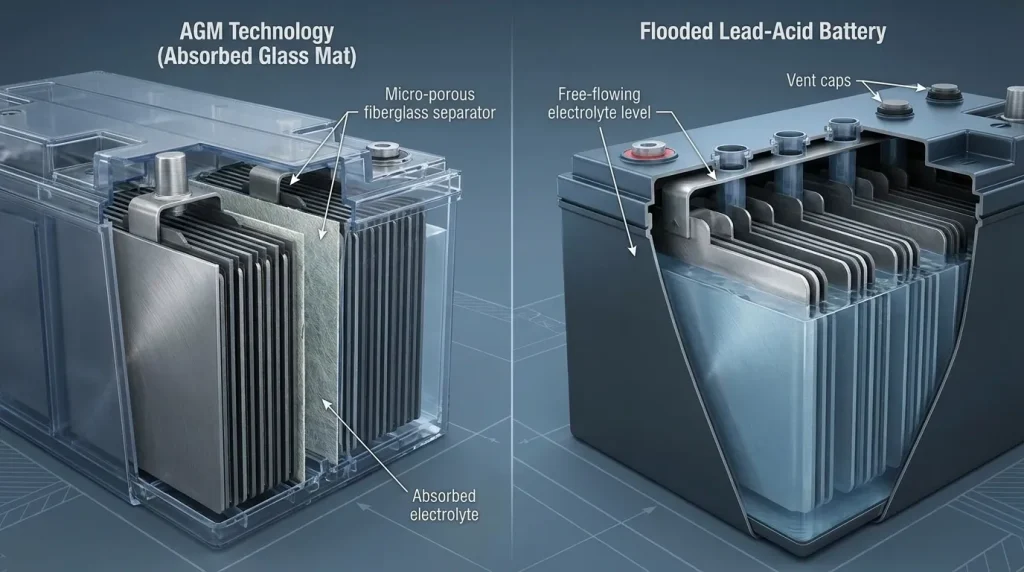
AGM stands for absorbed glass mat. The electrolyte is held in glass mat separators instead of freely pooling inside the case, which supports a sealed, spill-resistant design and can improve resistance to vibration and repeated cycling.
Can I replace a flooded battery with an AGM battery?
The vehicle must support the battery type and charging requirements. If the vehicle originally specifies AGM, staying with AGM is important, especially when the car uses start-stop technology or intelligent charging control.
Is a higher CCA rating always better?
No. Higher CCA can help with cold starts and demanding engines, but the battery still needs the correct group size, terminal arrangement, and charging compatibility. A battery with more CCA is not a valid replacement if it cannot be secured or connected correctly.
Are Group 47 and Group 48 batteries interchangeable?
Not automatically. They have different group designations and can differ in case dimensions, hold-down details, and terminal positioning. Compare the original battery and the vehicle's fitment information before choosing between the Weize Group 47 and the Group 48 models.
Can an automotive AGM battery power a trolling motor?
Most automotive AGM batteries in this roundup are intended for starting and start-stop use, not sustained deep-cycle discharge. A marine dual-purpose battery such as the Interstate Group 31M is more appropriate when a battery must both start an engine and power a trolling motor.
How should I confirm a battery will fit?
Check the group size, case length, width, and height, then confirm terminal polarity and hold-down style. Measure the tray and compare the cable reach with the original battery. Do not rely on the group number alone when the engine bay is tight.
Do AGM batteries need maintenance?
They are generally described as maintenance-free and do not require adding water. They still need clean terminals, secure mounting, and a compatible charging system. A sealed case does not protect a battery from being damaged by overcharging or incorrect installation.
The bottom line
The ACDelco Gold 48AGM is the Best AGM Battery for a standard Group 48 replacement when robust internal construction matters more than a long list of output figures. For start-stop cars that need published capacity, CCA, and reserve numbers, the Weize Platinum Group 48 is the more informative choice.
The Interstate Group 31M AGM is the clear specialist pick for marine and RV use because it combines starting output with deep-cycle capability. Buyers with Group 24F, 35, 47, or 94R vehicles should stay with the exact required format rather than trying to adapt a stronger-looking Group 48 battery.
When undecided, match the group size and terminal position first, then choose the AGM with the starting and reserve figures that fit the vehicle's actual duty.
As an Amazon Associate we earn from qualifying purchases.