

A processor choice can lock in the motherboard, memory, cooler, and upgrade path for an entire PC. The wrong pick may leave a gaming build with more cores than it can use, or force a serious creator to compromise every time a large project opens.
Our Best AMD processor picks cover current Zen 5 chips, gaming-focused 3D V-Cache models, and older AM4 options that still make sense for an existing system. The AMD Ryzen 9 9950X3D is our top pick, while the rest range from focused gaming CPUs to sensible upgrades for established AM4 builds.
Comparison table
| # | Product | Award | Cores and threads | Platform | Best for |
|---|---|---|---|---|---|
| 1 | AMD Ryzen 9 9950X3D | Best overall | 16 cores, 32 threads | AM5, Zen 5 | Gaming and content creation |
| 2 | AMD Ryzen 7 9800X3D | Best for gaming | 8 cores, 16 threads | AM5, Zen 5 | High-end gaming |
| 3 | AMD Ryzen 9 9950X3D2 | Most unusual design | Not specified | Not specified | Buyers seeking the Dual Edition |
| 4 | AMD Ryzen 9 9950X | Best for sustained workloads | 16 cores, 32 threads | AM5, Zen 5 | Rendering and multitasking |
| 5 | AMD Ryzen 7 7800X3D | Best previous-generation gaming pick | 8 cores, 16 threads | AM5 | Gaming upgrades |
| 6 | AMD Ryzen 7 9850X3D | Newest listed gaming model | Not specified | Not specified | Early adopters |
| 7 | AMD Ryzen 7 5800X3D | Best AM4 gaming upgrade | 8 cores, 16 threads | AM4 | Extending an AM4 PC |
| 8 | AMD Ryzen 5 9600X | Best six-core AM5 pick | 6 cores, 12 threads | AM5, Zen 5 | Mainstream gaming |
| 9 | AMD Ryzen 7 9700X | Best all-purpose eight-core | 8 cores, 16 threads | AM5, Zen 5 | Balanced desktop builds |
| 10 | AMD Ryzen 5 5500 | Best with included cooler | 6 cores, 12 threads | AM4 | Basic AM4 builds |
1. AMD Ryzen 9 9950X3D: Best Overall

Pros
- 16 cores and 32 threads suit demanding multitasking
- Zen 5 architecture
- Up to 5.7 GHz boost clock
- Designed for gaming and content creation
Cons
- Requires an AM5 desktop platform
- No cooler is specified in the listing
- Its capabilities exceed ordinary office workloads
Best for: a new high-end desktop that must handle games and serious creation work.
The AMD Ryzen 9 9950X3D is the easiest processor here to recommend when one machine has to do nearly everything. It has the broad workload range that an eight-core gaming specialist cannot match, yet the X3D designation keeps it aimed at people who also care about game performance. The useful distinction is not simply that it has a large model number. It is that AMD positions this chip for both gaming and content creation rather than making it a narrowly focused workstation part.
Its 16 cores and 32 threads give the CPU enough parallel capacity for demanding desktop work, compiling, rendering, streaming, and heavy multitasking. The Zen 5 architecture is the current foundation listed for the processor, and its boost clock reaches up to 5.7 GHz. That combination means the chip is built for both bursts of lightly threaded activity and workloads that can keep many cores busy. The 4.3 GHz base clock also gives a clearer picture of its substantial sustained operating level, though cooling and motherboard settings still matter.
Compared with the Ryzen 7 9800X3D, this is the more complete choice for a creator who also games. The 9800X3D is the sharper specialist when the main task is gaming, while the 9950X3D adds twice as many cores and twice as many threads for work that scales across the processor. The regular Ryzen 9 9950X is another serious alternative, but the 9950X3D is the one we'd keep when game performance matters alongside production work.
The weakness is the platform commitment. This is a desktop boxed processor for the AM5, Zen 5 generation, and the listing does not include cooler information. A buyer needs a compatible motherboard and an appropriate cooling plan, not just a free CPU socket. It is also unnecessary for a PC that mainly runs browsers, documents, and occasional light games.
For a workstation-gaming hybrid, this is the Best AMD processor in the group. Choose it when you want one powerful foundation and do not want to divide the build between a gaming machine and a separate content-creation system.
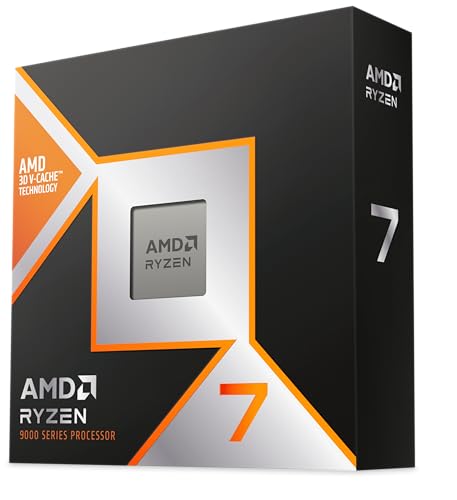
2. AMD Ryzen 7 9800X3D: Best for Gaming
Pros
- Zen 5 architecture
- 96MB L3 cache
- Up to 5.2 GHz clock speed
- Eight cores and 16 threads
- AM5 drop-in design
Cons
- Cooler not included
- Less suited to heavily threaded creator workloads than Ryzen 9 models
- Requires an AM5 motherboard
Best for: a gaming-first desktop where frame-rate consistency matters more than maximum core count.
The AMD Ryzen 7 9800X3D has a much clearer job than the top pick. It is a gaming specialist, and the eight-core, 16-thread layout is enough for a modern gaming desktop without dragging the build toward the complexity of a 16-core workstation. This is the processor we'd point to when the graphics card and monitor are the center of the system.
The key number is its 96MB of L3 cache. Cache keeps more frequently needed game data close to the processor, which can help a game engine avoid waiting on slower memory access. The result is not that every title behaves identically, but that the CPU has the kind of cache-heavy design gaming buyers seek. Its Zen 5 architecture and boost speed of up to 5.2 GHz give it a strong combination of newer processing behavior and high clock speed.
The Ryzen 9 9950X3D is more versatile because its 16 cores and 32 threads are a major advantage in production software. It is the better fit for a creator who renders or exports frequently. For a gaming-only machine, the 9800X3D is easier to justify because its eight cores keep the focus on the game rather than on unused workstation capacity. The Ryzen 7 7800X3D remains a notable alternative for an AM5 owner, but this Zen 5 model is the more current direction.
There are two practical omissions to plan around. The listing says a cooler is not included, and the chip needs a proven Socket AM5 infrastructure. That means the processor itself is only one part of the build decision. Someone moving from an AM4 system cannot treat this as a simple drop-in replacement.
For players building around a strong discrete graphics card, this is the Best AMD processor to choose first. Skip it only if your desktop will spend as much time rendering, compiling, or encoding as it does running games.
3. AMD Ryzen 9 9950X3D2: Most Unusual Design

Pros
- Ryzen 9 9950X3D2 Dual Edition designation
- Distinct from the standard 9950X3D
- Desktop processor form factor
Cons
- The listing provides almost no technical detail
- Platform information is not specified
- Clock, core, thread, and cache information are not listed
Best for: an informed buyer who specifically wants the Dual Edition and can verify platform details before building.
The AMD Ryzen 9 9950X3D2 is the difficult entry in this roundup because its name makes a substantial promise while the available listing provides only the product designation. “Dual Edition” is the meaningful differentiator here, but there is no accompanying specification in the supplied information that explains what the dual design changes in practice.
That lack of detail matters more for a CPU than it would for a simple accessory. A builder needs to know the socket, core layout, thread count, clock behavior, cache arrangement, memory support, and cooling requirements before planning a motherboard and case. None of those details are specified in this listing, so we will not fill the gaps with assumptions based on the standard 9950X3D.
That makes the comparison with the regular Ryzen 9 9950X3D especially important. The standard model gives a buyer clear Zen 5, 16-core, 32-thread, and clock information. The Ryzen 9 9950X also provides a defined 16-core, 32-thread design with AM5 support and a 5.7 GHz maximum boost. The Dual Edition may interest a reader looking for something distinct, but the other two are much easier to evaluate as parts of a complete build.
The weakness is not necessarily performance. It is uncertainty. A product page that does not specify the core and platform details leaves too much responsibility with the buyer, particularly if the processor is intended for a new system rather than a known compatible upgrade. We would not make this the first choice for a build with tightly matched components.
If you are considering it, confirm the technical specifications and motherboard compatibility before ordering. Readers who want a clearly documented Best AMD processor should choose the standard 9950X3D or another model in this list instead.
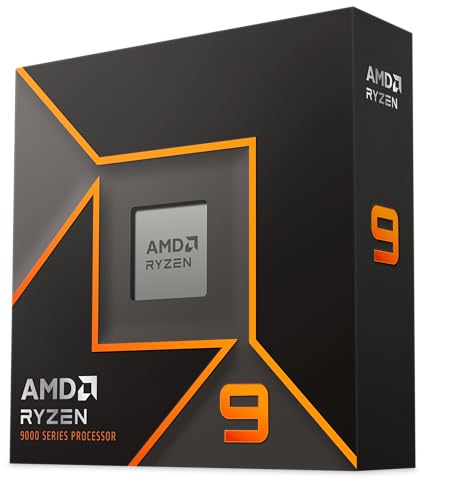
4. AMD Ryzen 9 9950X: Best for Sustained Workloads
Pros
- 16 cores and 32 threads
- Zen 5 architecture
- Up to 5.7 GHz boost
- 80MB cache
- Unlocked for overclocking
Cons
- Cooler not included
- Liquid cooler recommended
- AM5 platform required
Best for: creators and power users whose desktop routinely runs heavily threaded workloads.
The AMD Ryzen 9 9950X is the straightforward high-core-count option. It does not need a complicated pitch: 16 cores and 32 processing threads make it a natural fit for work that can occupy many parts of the CPU at once. If your desktop is often exporting video, compiling large projects, running virtual machines, or handling several demanding applications together, this is the kind of headroom that feels useful rather than ornamental.
Its Zen 5 architecture supports a maximum boost of 5.7 GHz, while the 80MB cache helps keep frequently accessed data close to the cores. The chip is unlocked for overclocking, which gives an experienced builder more control, although that flexibility also makes cooling and motherboard selection more important. The listing says a liquid cooler is recommended, and a cooler is not included.
For creator work, the 9950X can be a more sensible choice than the Ryzen 7 9800X3D. The 9800X3D is aimed at gaming and has 96MB of L3 cache, but its eight cores and 16 threads leave less parallel capacity for production tasks. The Ryzen 9 9950X3D is the more attractive crossover pick when gaming is equally important. The 9950X earns its place when sustained compute work is the priority.
This is an AM5 processor with support for DDR5-5600 and PCIe 5.0 on select motherboards. Those platform details affect the whole build, especially if you are carrying over parts from an older PC. The cooling recommendation is the real constraint, and someone seeking a quiet, simple desktop should look at a lower-power setup instead.
The 9950X is the Best AMD processor here for a workstation that also needs strong general desktop responsiveness. Choose it over the 9950X3D when your applications benefit more from all-core throughput than from a gaming-focused cache design.
A useful graphics card and display still matter for a complete workstation or gaming build. If the processor is only one part of a rendering system, how the graphics card changes the workload balance can help you decide where the next upgrade belongs.
5. AMD Ryzen 7 7800X3D: Best Previous-Generation Gaming Pick

Pros
- Eight cores and 16 threads
- 96MB L3 cache
- AM5 platform
- Integrated AMD Radeon graphics controller
- 5nm process technology
Cons
- Cooler is not specified
- Older generation than the Ryzen 7 9800X3D
- Listed base clock is 4.20 GHz
Best for: an AM5 gaming build that does not need the newest processor generation.
The AMD Ryzen 7 7800X3D remains an appealing gaming processor because its design is focused and easy to understand. Eight cores and 16 threads cover the needs of a modern gaming desktop, while 96MB of L3 cache gives game engines a generous pool of nearby data. It is not trying to be a 16-core production CPU, and that clarity is part of its appeal.
The listing identifies a 5nm process, a 4.20 GHz clock speed, and a maximum operating temperature of 89°C. It also lists 8MB of L2 cache and 96MB of L3 cache. Those figures describe a processor built around cache-sensitive gaming behavior, rather than one that depends only on high clock speed. AMD Radeon graphics are included in the listed processor details, though a discrete graphics card remains the sensible choice for demanding games.
The newer Ryzen 7 9800X3D is the stronger pick for a fresh high-end gaming build because it uses Zen 5 and reaches up to 5.2 GHz. The 7800X3D still makes sense for someone already choosing an AM5 motherboard or finding a system built around this generation. It is also a better fit than the six-core Ryzen 5 9600X when the goal is to leave more CPU capacity available for background tasks.
The important limitation is its age relative to newer AM5 choices. The listing does not specify a bundled cooler, so the build still needs a cooling solution. Buyers starting from an AM4 motherboard should also remember that AM5 is not a socket-only upgrade.
For a current AM5 gaming system built around this processor, the balance between CPU choice and game-focused graphics hardware is the next decision to make. The 7800X3D is still a strong Best AMD processor for a buyer who wants 3D V-Cache gaming performance without moving to a Ryzen 9 class chip.
6. AMD Ryzen 7 9850X3D: Newest Listed Gaming Model

Pros
- Ryzen 7 9850X3D model designation
- Desktop processor format
- Newer listed model than the Ryzen 7 7800X3D
Cons
- The listing provides no core or thread count
- Clock and cache information are not specified
- Platform and cooler details are not listed
Best for: readers specifically seeking the newer 9850X3D model who are prepared to verify its specifications.
The AMD Ryzen 7 9850X3D stands out by name as the newer Ryzen 7 X3D entry in this set. That makes it potentially interesting to gaming builders, but the available product information is unusually thin. The listing identifies the model and desktop processor category without giving a core count, thread count, cache size, clock speed, socket, or cooling requirement.
We will not infer those details from the 7800X3D or 9800X3D. A similar name does not guarantee identical specifications, and a CPU purchase has consequences for the motherboard, memory, BIOS support, and cooler. The absence of those details makes this a model to investigate rather than an automatic recommendation.
The contrast with the Ryzen 7 9800X3D is sharp. That processor has a documented eight-core, 16-thread design, 96MB of L3 cache, Zen 5 architecture, and boost speed up to 5.2 GHz. The Ryzen 7 7800X3D is also more transparent about its cache, process technology, and platform generation. Both give a builder enough information to start planning a system.
The 9850X3D's weakness is therefore purchase confidence, not a confirmed performance flaw. Someone who wants a clearly documented processor should avoid making an expensive system depend on unspecified details. Someone already tracking the model can use the listing as a starting point, but should confirm the full technical sheet and motherboard support first.
This is not the model we'd choose for a blind recommendation. It belongs in the roundup because the product itself is a distinct AMD desktop processor listing, but the 9800X3D is the safer Best AMD processor for a gaming buyer who wants known specifications.
7. AMD Ryzen 7 5800X3D: Best AM4 Gaming Upgrade

Pros
- Eight cores and 16 threads
- 100MB cache
- AMD 3D V-Cache technology
- AM4 compatibility
- DDR4-3200 support
Cons
- Older AM4 platform
- Cooler not included
- High-performance cooler recommended
Best for: an existing AM4 gaming desktop that needs a substantial processor upgrade.
The AMD Ryzen 7 5800X3D is the upgrade specialist in this roundup. Its significance is not that it competes directly with every new AM5 chip. It is that an owner of an AM4 desktop may be able to move to a gaming-focused eight-core processor without replacing the entire platform. That makes this a very different purchase from the Ryzen 7 9800X3D.
The chip has eight cores, 16 threads, and AMD 3D V-Cache technology. Its listed maximum boost is 4.5 GHz, and the 100MB cache gives it the same broad cache-first identity that makes X3D processors attractive for games. It supports DDR4-3200 and can use PCIe 4.0 on X570 and B550 motherboards. Those details are valuable because they describe an upgrade path that can preserve more of an existing PC.
The Ryzen 7 7800X3D is the newer platform choice, with AM5 support and 96MB of L3 cache, but choosing it means moving to AM5. The Ryzen 5 5500 keeps the AM4 socket and includes a Wraith Stealth cooler, yet it is a much less ambitious gaming CPU. The 5800X3D occupies the useful middle ground for an established AM4 gaming system.
The limitations are clear. This is not a new-platform processor, and the listing recommends a high-performance cooler without including one. Compatibility also depends on the motherboard, BIOS, and the rest of the existing system. It is a poor choice for someone assembling a completely new high-end desktop who wants the longest forward path.
For that existing AM4 owner, though, it is the Best AMD processor in the list. Before replacing a motherboard, check whether your current board supports the chip and whether the graphics card is strong enough to make the upgrade visible in the games you play.
8. AMD Ryzen 5 9600X: Best Six-Core AM5 Pick

Pros
- Six cores and 12 threads
- Zen 5 architecture
- Up to 5.4 GHz boost
- 38MB cache
- AM5 and DDR5-5600 support
Cons
- Cooler not included
- Fewer cores than the Ryzen 7 options
- PCIe 5.0 depends on the motherboard
Best for: a mainstream AM5 desktop focused on gaming and everyday responsiveness.
The AMD Ryzen 5 9600X is the sensible center of the Zen 5 range. Six cores and 12 threads keep it more focused than the Ryzen 9 processors, while the listed boost speed of up to 5.4 GHz gives it plenty of burst performance for games and ordinary desktop work. This is the kind of CPU that fits a capable gaming build without turning every component decision into a workstation exercise.
Its 38MB cache is smaller than the X3D models' cache pools, so it is not designed around the same gaming specialization as the 9800X3D. Instead, the 9600X combines Zen 5 with a high boost clock and an unlocked design. That gives an experienced builder room to tune the processor, while DDR5-5600 support and the AM5 socket establish a current platform foundation.
The Ryzen 7 9700X is the direct step up in the list, adding two cores and four threads along with 40MB of cache and a boost speed of up to 5.5 GHz. It is better suited to heavier multitasking. The 9600X is the sharper fit for a gaming-first desktop where six strong cores are enough and the graphics card will carry most of the game workload.
The trade-offs are straightforward. There are fewer cores than in the Ryzen 7 and Ryzen 9 models, and the cooler is not included. PCIe 5.0 support is also dependent on the motherboard, so the processor does not guarantee every feature of the platform by itself. Buyers moving from AM4 need a new AM5 board and compatible memory.
For a new mainstream system, this is a strong Best AMD processor candidate. Pick it when you want Zen 5, a high boost clock, and an upgradeable AM5 base without paying for core capacity your software will rarely use.
9. AMD Ryzen 7 9700X: Best All-Purpose Eight-Core

Pros
- Eight cores and 16 threads
- Zen 5 architecture
- Up to 5.5 GHz boost
- 40MB cache
- Unlocked AM5 design
Cons
- Cooler not included
- Less gaming-focused than X3D models
- PCIe 5.0 depends on the motherboard
Best for: a balanced AM5 desktop that mixes games, creative applications, and everyday work.
The AMD Ryzen 7 9700X is the generalist of the newer eight-core options. Its eight cores and 16 threads provide more multitasking room than the Ryzen 5 9600X, while its Zen 5 architecture keeps the design current. It does not lean as hard into gaming cache as the X3D models, which makes its identity clearer for buyers who want one processor for a varied desktop.
The processor reaches up to 5.5 GHz and has 40MB of cache. It supports DDR5-5600, uses the AM5 platform, and is unlocked for overclocking. PCIe 5.0 is available on select motherboards, so the motherboard remains part of the feature decision. These details create a flexible base for a desktop that may spend one day in a game and the next handling photo work, code, or heavier office applications.
The Ryzen 5 9600X is a more compact six-core alternative, while the Ryzen 7 9800X3D is the more targeted gaming choice. The 9700X sits between them in purpose. It has enough cores for more demanding multitasking than the 9600X, but it avoids making 3D V-Cache the central reason to buy. The Ryzen 9 9950X remains the obvious choice for sustained, heavily threaded production work.
Its weakness is specialization. A gaming buyer who wants the strongest cache-focused design should look at the 9800X3D, and a creator who regularly renders large projects may want the 9950X's 16 cores. The 9700X also arrives without a cooler, so the system still needs a cooling solution.
Choose this Best AMD processor when your desktop workload changes often. It is the right middle ground for someone who wants eight Zen 5 cores and does not want to optimize the entire machine around only games or only production software.
10. AMD Ryzen 5 5500: Best With Included Cooler

Pros
- Six cores and 12 threads
- Wraith Stealth cooler included
- AM4 platform
- Unlocked for overclocking
- DDR4-3200 support
Cons
- Older AM4 platform
- 4.2 GHz maximum boost
- Discrete graphics card required for listed gaming use
Best for: a basic AM4 desktop where an included cooler and existing DDR4 parts simplify the build.
The AMD Ryzen 5 5500 is the least ambitious processor here, but it has one practical advantage that several more powerful entries lack: the listing includes AMD's Wraith Stealth cooler. That makes it easier to plan a basic AM4 desktop, especially when the builder already has a compatible motherboard and DDR4 memory.
It has six cores and 12 processing threads, a maximum boost of 4.2 GHz, and 19MB of cache. The chip supports DDR4-3200, is unlocked for overclocking, and uses the AM4 platform. AMD's listing says a discrete graphics card is required for its stated gaming performance, so this is not the processor to choose for a graphics-card-free desktop.
The Ryzen 5 9600X is much newer, with Zen 5, a boost speed up to 5.4 GHz, and AM5 support, but it does not include a cooler. The 5500 also sits below the Ryzen 7 5800X3D for gaming-focused performance, although both use AM4. Its natural audience is therefore someone extending or assembling an older platform, not someone beginning a high-end system from scratch.
The limitations are the reason it ranks last. AM4 is an older platform, the clock speed is lower than the newer chips, and the CPU lacks the large cache focus of the X3D processors. A builder who expects demanding modern games or heavy production work should choose a stronger processor and plan the cooling accordingly.
For a simple AM4 desktop with an existing graphics card, this remains a practical Best AMD processor option. Choose it when platform compatibility and the included Wraith Stealth cooler matter more than chasing newer architecture.

How to choose best amd processor
Start with the software you actually run, then match the processor to the motherboard, memory, graphics card, and cooler it requires.
Cores and threads
Cores handle separate streams of work, while threads let compatible software keep more tasks moving through those cores. Six cores and 12 threads, as found in the Ryzen 5 9600X and Ryzen 5 5500, are suitable for mainstream gaming and everyday use. Eight cores and 16 threads give a more comfortable margin for streaming and multitasking, while 16 cores and 32 threads are aimed at rendering, compiling, and other heavily parallel work.
3D V-Cache
The X3D models use a large cache design intended to keep more game data close to the CPU. The Ryzen 7 9800X3D lists 96MB of L3 cache, while the Ryzen 7 5800X3D lists 100MB of total cache and uses AMD 3D V-Cache technology. Cache does not replace core count, but it can make a gaming-focused processor a better fit than a higher-core generalist in some games.
Choose X3D for a gaming-first build, but choose extra cores when the desktop earns its keep outside games.
Clock speed and architecture
Boost clock describes the higher speed the processor can reach under suitable conditions. The newer Zen 5 models in this list reach between 5.4 GHz and 5.7 GHz, while the Ryzen 7 7800X3D and Ryzen 5 5500 list lower speeds. Clock speed is only one part of performance, so compare it alongside architecture, cache, and core count rather than treating the biggest number as a complete verdict.
Socket and memory
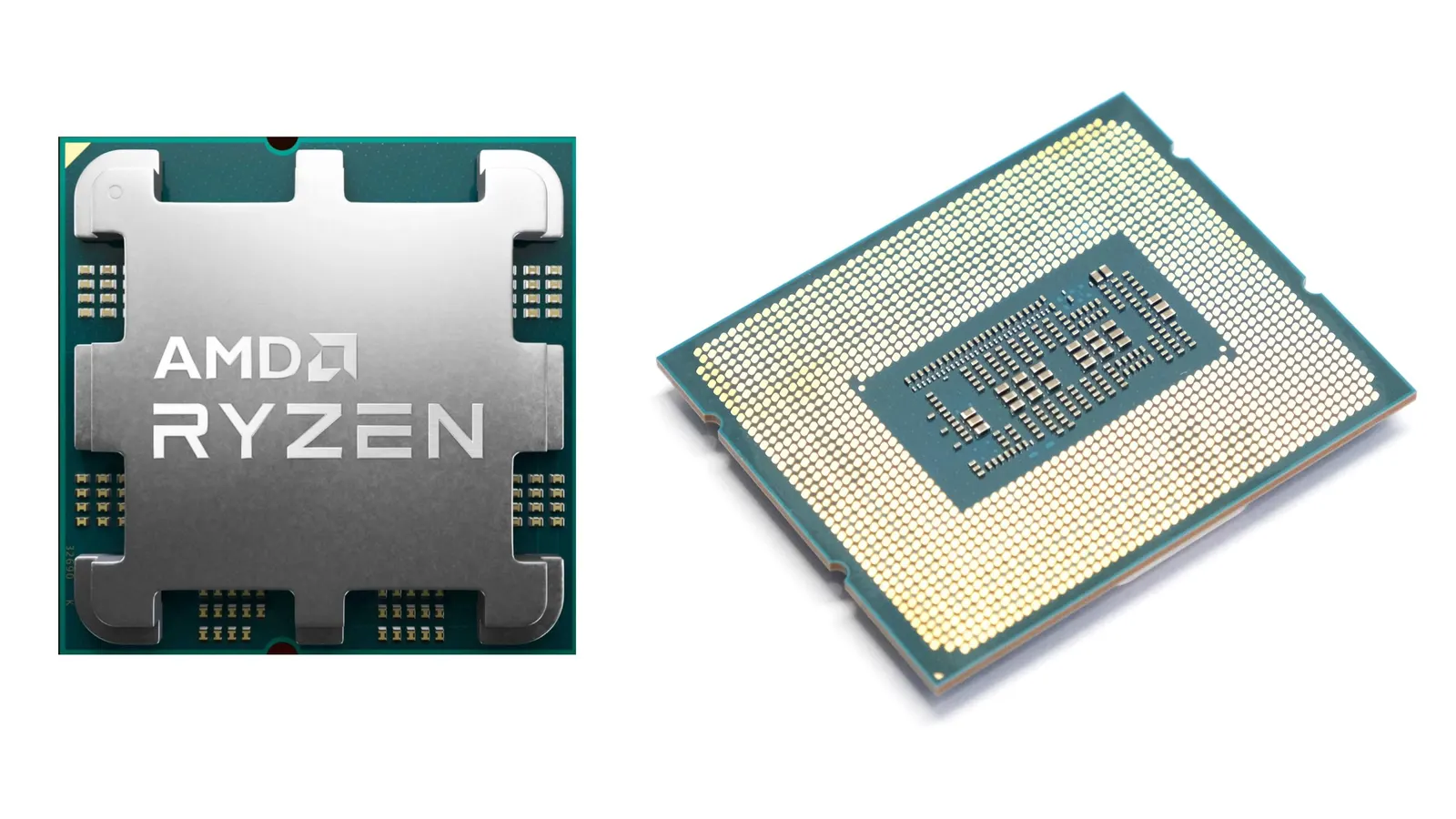
AM5 processors such as the Ryzen 9 9950X, Ryzen 7 9700X, and Ryzen 5 9600X use the newer platform and support DDR5-5600 in their listings. AM4 processors such as the Ryzen 7 5800X3D and Ryzen 5 5500 support DDR4, which can make them practical upgrades for an existing system. A processor is not a universal drop-in part, so confirm the motherboard socket and BIOS support before ordering.
Cooling requirements
Several CPUs in this roundup do not include a cooler. The Ryzen 9 9950X listing recommends a liquid cooler, the Ryzen 7 9800X3D explicitly excludes a cooler, and the Ryzen 5 5500 includes a Wraith Stealth cooler. A high-core-count or unlocked processor needs a cooling plan that matches the workload, case airflow, and motherboard settings.
Frequently asked questions
Is the Ryzen 9 9950X3D good for gaming and content creation?
Yes. It is listed with 16 cores, 32 threads, Zen 5 architecture, and a boost clock up to 5.7 GHz, while its X3D designation targets gaming as well. That combination makes it the broadest fit in this group for someone who alternates between games and demanding creator applications.
Which AMD processor is best for a gaming-only PC?
The Ryzen 7 9800X3D is the clearest gaming-first choice among the fully specified models. It has eight cores, 16 threads, 96MB of L3 cache, and Zen 5 architecture, while the Ryzen 7 7800X3D is a strong older AM5 alternative.
Can an AM4 motherboard use an AM5 processor?
No. AM4 and AM5 are different platforms, and the compatible memory also differs in this group. The Ryzen 7 5800X3D and Ryzen 5 5500 are AM4 choices, while the Ryzen 9 9950X3D, Ryzen 7 9800X3D, Ryzen 5 9600X, and Ryzen 7 9700X use AM5.
Do these AMD processors include a cooler?
Not all of them. The Ryzen 5 5500 is listed with a Wraith Stealth cooler, while the Ryzen 7 9800X3D says a cooler is not included. The Ryzen 9 9950X listing recommends a liquid cooler, so check the individual listing and plan the cooling system before building.
Is six cores enough for a gaming PC?
Six cores and 12 threads can suit a mainstream gaming PC, especially when paired with an appropriate discrete graphics card. The Ryzen 5 9600X offers a newer Zen 5 AM5 foundation, while the Ryzen 5 5500 is an older AM4 option. Choose eight cores if you stream, record, or keep many demanding applications active while playing.
Should an existing AM4 owner upgrade to the Ryzen 7 5800X3D?
It can make sense if the motherboard supports the processor and the rest of the system is suitable. The 5800X3D provides eight cores, 16 threads, and 3D V-Cache while retaining AM4 and DDR4-3200 support. It is less attractive for a completely new high-end build, where AM5 offers a newer platform direction.
The bottom line
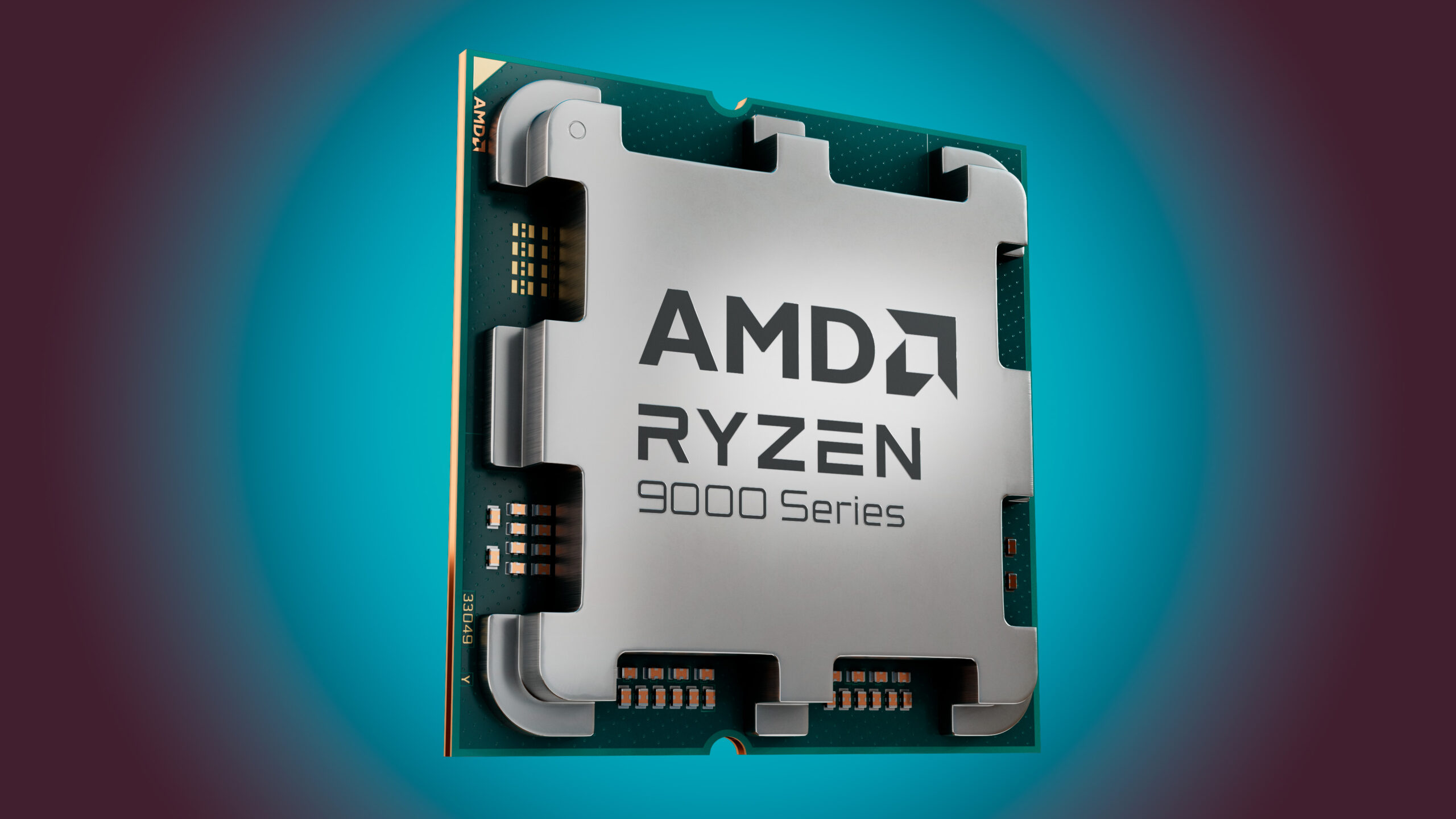
The AMD Ryzen 9 9950X3D is the Best AMD processor for a new high-end desktop that must handle both games and serious content creation. The AMD Ryzen 7 9800X3D is the better focused choice for gaming, with eight cores, 16 threads, and a large 96MB L3 cache on the AM5 platform.
For an existing AM4 system, the AMD Ryzen 7 5800X3D is the standout upgrade, while the Ryzen 5 9600X and Ryzen 7 9700X make more sense for balanced new AM5 builds. If you are undecided, choose the processor that matches your motherboard plan first, then select the core count your software can actually use.
As an Amazon Associate we earn from qualifying purchases.