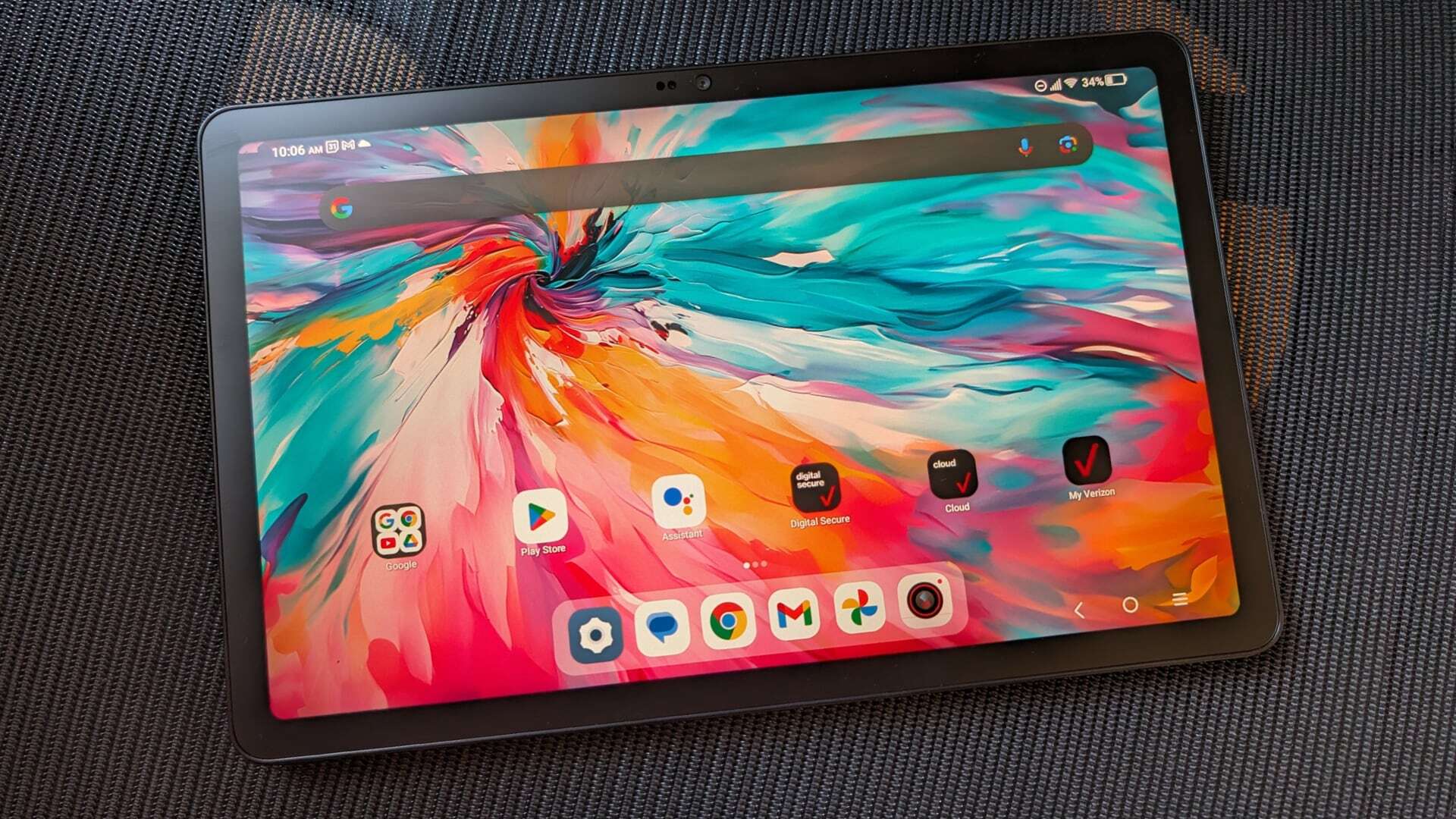

A tablet can be awkwardly slow, cramped for reading, or overloaded with storage claims that do not translate into better everyday use. The right pick depends on whether you need a pen for class notes, a small screen for travel, or a simple device for streaming and video calls.
Our Best budget android tablet picks range from the sharp, 90Hz Lenovo Idea Tab to compact Samsung and Lenovo models, along with several inexpensive 10 and 11-inch tablets from lesser-known brands. The Lenovo Idea Tab with 4GB of memory is the best starting point, while the larger models make sense for families and heavier multitasking.
Quick comparison
| # | Product | Award | Display | Memory and storage | Best for |
|---|---|---|---|---|---|
| 1 | Lenovo Idea Tab 128GB | Best overall | 11-inch 2.5K IPS, 90Hz | 4GB, 128GB | Students and streaming |
| 2 | Lenovo Idea Tab 256GB | Best for multitasking | 11-inch 2.5K IPS, 90Hz | 8GB, 256GB | Notes, apps, and media |
| 3 | URAO 10.1-inch Tablet | Best feature list | 10.1-inch 1280 by 800 IPS | 6GB plus virtual memory, 128GB | Connectivity and family use |
| 4 | Samsung Galaxy Tab A11+ | Best big-screen Samsung | 11-inch, up to 90Hz | 6GB, 128GB | Family entertainment |
| 5 | Lenovo Tab One | Best compact tablet | 8.7-inch HD, 60Hz | 4GB, 64GB | Travel and kids |
| 6 | Evermyth 10-inch Tablet | Best for Wi-Fi 6 | 10-inch 1280 by 800 IPS | 3GB plus virtual memory, 64GB | Basic home use |
| 7 | COLORROOM 11-inch Tablet | Best battery claim | 11-inch 1280 by 800 | 4GB plus virtual memory, 128GB | Long viewing sessions |
| 8 | ECOPAD 10.1-inch Tablet | Best for simple media | 10.1-inch 1280 by 800 IPS | 4GB plus virtual memory, 64GB | Reading and video |
| 9 | Samsung Galaxy Tab A11 WiFi | Best compact Samsung | 8.7-inch 1340 by 800 TFT, 90Hz | 4GB, 64GB | Portable Samsung access |
1. Lenovo Idea Tab 128GB: Best Overall

Pros
- Sharp 11-inch 2.5K display with 90Hz refresh rate
- Tab Pen and folio case are included
- Dimensity 6300 processor and 128GB storage
- Quad Dolby Atmos-tuned speakers
- Up to 12 hours of YouTube streaming
Cons
- 4GB of memory leaves less room for heavy multitasking
- Larger than the compact Lenovo Tab One
- The included pen adds usefulness mainly for note-taking and markup
Best for: students and home users who want the strongest mix of screen quality, accessories, and everyday performance.
The Lenovo Idea Tab 128GB is the tablet in this group that feels designed around a real routine rather than a list of inflated numbers. Its 11-inch screen gives lecture notes, web pages, and streaming room to breathe, and the bundled Tab Pen and folio case mean it is ready for those jobs without immediately needing extra accessories. The 1.05-pound body is not ultralight, but it is manageable in a backpack and comfortable on a desk.
The display is the main reason this Lenovo rises above the smaller tablets. Its 2.5K IPS panel is substantially sharper than the 1280 by 800 screens used by the URAO 10.1-inch Tablet, Evermyth 10-inch Tablet, COLORROOM 11-inch Tablet, and ECOPAD 10.1-inch Tablet. The 90Hz refresh rate also makes scrolling and pen movement look more fluid than on the 60Hz Lenovo Tab One. Lenovo lists 72% NTSC color coverage and hardware-based TÜV Rheinland Low Blue Light protection, so the panel has a more useful mix of detail, color, and reading comfort than the basic HD displays here.
The MediaTek Dimensity 6300 gives this model a more credible foundation for switching between a browser, notes, streaming, and ordinary apps. It has 4GB of memory and 128GB of storage, which is enough for a typical student or household tablet, though the 8GB Lenovo Idea Tab 256GB is the better choice if you regularly keep many apps open. Four Dolby Atmos-tuned speakers should also make this more satisfying for video than the dual-speaker arrangements on several lower-ranked models.
Lenovo adds four learning apps, including Lenovo AI Note, Squid, Nebo, and MyScript Calculator, along with Circle to Search. The up to 12 hours of YouTube streaming claim is useful context for long study breaks, and the 20W charger is more capable than the 15W charging listed for the Lenovo Tab One. Smart Connect is another practical touch for people already using compatible Lenovo devices, since it is intended to help move tasks between screens.
The weakness is straightforward: 4GB of memory is not generous for demanding multitasking, and the 11-inch format is less convenient to hold one-handed than the compact Samsung Galaxy Tab A11 WiFi. Buyers who want a small reader for commutes should skip it. For everyone else, this is the Best budget android tablet pick because its screen, pen support, speakers, and processor all reinforce the way people actually use a tablet.
2. Lenovo Idea Tab 256GB: Best for Multitasking

Pros
- 8GB of memory for more comfortable app switching
- 256GB of internal storage
- 11-inch 2.5K IPS display at 90Hz
- Tab Pen and folio case included
- Dolby Atmos-tuned quad speakers
Cons
- Same 1.05-pound size as the lower-memory version
- The advantage is less noticeable for simple streaming
- No cellular connectivity is listed
Best for: students, creators, and families that keep many apps and downloaded files on one tablet.
The Lenovo Idea Tab 256GB is not a different design from the first Lenovo. It is the same 11-inch tablet with the same pen, folio case, display, processor, speakers, and software features, but its 8GB of memory and 256GB of storage change how much pressure it can handle. That makes it the more sensible long-term version for someone who downloads large games, stores video, or works with several apps open.
The MediaTek Dimensity 6300 is paired with 8GB of memory here, rather than the 4GB in the Lenovo Idea Tab 128GB. That extra headroom should make switching between a note app, browser tabs, a video call, and a document less restrictive. It does not turn the tablet into a laptop replacement, but it gives the hardware a better chance of staying responsive as the app library grows.
Its 11-inch 2.5K IPS touchscreen remains the strongest display in this lineup. The 90Hz refresh rate helps scrolling feel less choppy, while the higher resolution keeps small text and diagrams cleaner than on the 1280 by 800 screens in the URAO 10.1-inch Tablet and COLORROOM 11-inch Tablet. Lenovo also specifies 72% NTSC coverage and hardware-based low-blue-light protection. Those details matter when the tablet is used for reading and handwritten work rather than occasional video alone.
The bundled Tab Pen makes the screen more useful for marking up documents, sketching, and using Circle to Search. Lenovo includes AI Note, Squid, Nebo, and MyScript Calculator, which gives students several ways to organize work without assembling a separate app bundle. Up to 12 hours of YouTube streaming and a 20W charger support long sessions, while the quad Dolby Atmos-tuned speakers are better suited to shared viewing than the small speakers on compact tablets.
The trade-off is that this model weighs the same 1.05 pounds and occupies the same amount of bag space as its less capacious sibling. If you mostly watch shows and browse, the Lenovo Idea Tab 128GB is the more sensible fit. Choose this one when memory and storage are the reason you are shopping, because the extra capacity is what separates it from the top pick.
3. URAO 10.1-inch Tablet: Best Feature List

Pros
- Android 16 and Google Play Store
- Wi-Fi 6 and Bluetooth 5.4
- 128GB storage with support for up to 1TB
- 5MP front and 8MP rear cameras
- 18W fast charging
Cons
- Display resolution is only 1280 by 800
- No GPS
- The 36GB memory claim includes 30GB of virtual memory
Best for: households that need modern wireless standards, expandable storage, and a large basic screen.
The URAO 10.1-inch Tablet makes a strong first impression through its feature coverage. Android 16, Wi-Fi 6, Bluetooth 5.4, USB-C charging, expandable storage, and two useful camera resolutions are all present in one uncomplicated tablet. It is the kind of pick that makes sense for a family device, especially when several people need to use it for video calls, reading, streaming, and light games.
The 10.1-inch IPS display uses a 1280 by 800 resolution. That is adequate for video and ordinary web pages, but it is visibly less detailed than the 2.5K Lenovo Idea Tab screens. URAO adds low-blue-light technology to reduce flicker and harsh blue light, which is helpful for reading. The 5MP front camera and 8MP rear camera are more substantial on paper than the 2MP front camera in ECOPAD, though camera quality also depends on processing and lighting.
URAO advertises 36GB of memory, but the listing explains that this is 6GB of physical memory plus 30GB of virtual memory. That distinction matters. Virtual memory can use storage to support app handling, but it is not the same as having 36GB of fast physical memory. The tablet includes 128GB of internal storage and supports up to 1TB through a TF card, so there is room for downloaded media and family files.
The 1.8GHz octa-core processor is aimed at general tablet work rather than demanding performance. Its wireless package is more interesting: Wi-Fi 6 can help on compatible home networks, and Bluetooth 5.4 is a newer connection standard than the Bluetooth 5.0 listed for ECOPAD. URAO claims up to eight hours of mixed use and up to three days of standby, while 18W charging can refill the battery in about 1.5 hours according to the listing.
The largest limitation is the missing GPS, which rules it out for buyers who expect navigation features from a tablet. The screen also cannot match either Lenovo Idea Tab for text sharpness or smooth pen work. If wireless connectivity and camera hardware matter more than display detail, URAO is the more interesting pick. It is a broad-feature tablet, not the one to choose for the most demanding apps.
4. Samsung Galaxy Tab A11+: Best Big-Screen Samsung

Pros
- 11-inch screen with refresh rate up to 90Hz
- 6GB of memory and 128GB of storage
- Expandable storage
- Quad speakers with Dolby Atmos
- Google Gemini and Circle to Search features
Cons
- Display resolution is not specified in the listing
- Heavier multitasking options cost more than the base memory configuration
- No pen is listed as included
Best for: families that want Samsung software, a large screen, and strong built-in audio.
The Samsung Galaxy Tab A11+ is the most polished family entertainment option here. It has the familiar Samsung software environment, a large 11-inch display, and quad speakers with Dolby Atmos. That combination matters more in a living room than a long specification list. Everyone can see the screen, and dialogue and music should have more presence than they would from a compact tablet.
Samsung lists a refresh rate of up to 90Hz, which puts the A11+ alongside the Lenovo Idea Tab for smoother scrolling. The listing does not state the display resolution, so it is not possible to call it as sharp as Lenovo's 2.5K panel. That uncertainty is important for buyers who plan to read small text or write detailed notes. For streaming, browsing, and casual games, the larger panel and fluid refresh rate are the more visible benefits.
This configuration has 6GB of memory and 128GB of storage, with expandable storage supported. Samsung also describes versions with up to 8GB of memory and 256GB of storage, but this review covers the listed 6GB and 128GB configuration. That is a comfortable middle ground for ordinary app switching, downloads, family profiles, and video calls. The 5MP front camera is intended for clearer face-to-face calls, and the slim, light design should be manageable around the house.
Samsung adds Circle to Search and Google Gemini support, which can make general questions and on-screen searches quicker. Fast charging and a long-lasting battery are also part of the feature set, though the listing does not provide a battery capacity or specific runtime. The same restraint applies to processor details, so the A11+ is easier to recommend for normal use than for buyers comparing chip performance closely.
The Lenovo Idea Tab 256GB is the better pick for pen-based study and sharper text, while the Samsung Galaxy Tab A11+ has the stronger case for shared entertainment and Samsung ecosystem features. Buyers who need a bundled pen should look elsewhere. Choose this model for a household tablet that prioritizes sound, screen size, and familiar software over detailed display specifications.
5. Lenovo Tab One: Best Compact Tablet

Pros
- 8.7-inch display is easy to hold
- Weighs 0.704 pounds
- Up to 12.5 hours of YouTube streaming
- Folio case with built-in stand
- Google Kids Space support
Cons
- 64GB storage is limited for large downloads
- 1280 by 800-class screen is less sharp than Lenovo Idea Tab
- 60Hz refresh rate
Best for: commuters, children, and anyone who wants a tablet that fits easily in one hand or a small bag.
The Lenovo Tab One gets the central compact-tablet decision right: it is genuinely easy to carry. At 0.704 pounds, it is considerably lighter than the larger Lenovo Idea Tab and Samsung Galaxy Tab A11+, and its 8.7-inch screen fits naturally in one hand. The included folio case adds protection and a stand, so it is ready for hands-free video without making the tablet itself cumbersome.
The display is an 8.7-inch HD panel with 480 nits of brightness and a 60Hz refresh rate. It will not match the 2.5K detail or 90Hz motion of the Lenovo Idea Tab, but the smaller size makes its 1280 by 800-class resolution less demanding for basic reading and video. The 480-nit brightness figure is useful for indoor rooms and travel, though it does not make this a specialist outdoor screen.
A MediaTek Helio G85 processor and 4GB of memory are aimed at browsing, streaming, light games, and children's apps. Storage is 64GB, so a microSD card may become important if the tablet is used for offline shows or a large collection of games. Lenovo claims up to 12.5 hours of YouTube streaming, which is the longest stated streaming figure in this group, although real runtime will vary with brightness, wireless use, and app activity.
Dual Dolby Atmos speakers give the Tab One more audio ambition than its small body suggests. The 15W charging is faster than older basic tablets but less robust than the 18W and 20W options elsewhere. Android 14 and two years of security patches are listed, and Google Kids Space adds age-appropriate content suggestions for younger users. Those family features make this a more considered kids pick than an anonymous tablet with a large virtual-memory number.
The 60Hz panel and 64GB storage are the reasons to skip it if you want a work tablet or a large media library. The Samsung Galaxy Tab A11 WiFi is another compact option with a 90Hz display, while the Lenovo Tab One is lighter and includes a useful case. Pick the Tab One when portability matters more than screen sharpness.
6. Evermyth 10-inch Tablet: Best for Wi-Fi 6

Pros
- Wi-Fi 6 and Bluetooth 5.4
- Android 16 with Google Play Store access
- 10-inch IPS display
- 64GB storage with support for up to 1TB
- 6000mAh battery
Cons
- 24GB memory includes 21GB of virtual memory
- Display resolution is 1280 by 800
- Five-core processor is specified at up to 1.8GHz
Best for: basic streaming, web browsing, and connected home use on a compatible Wi-Fi 6 network.
The Evermyth 10-inch Tablet is built around two easy-to-understand advantages: a full-size screen and newer wireless standards. Its 10-inch IPS display gives web pages and video more room than the Lenovo Tab One, while Wi-Fi 6 and Bluetooth 5.4 are useful if your router and accessories support them. For a kitchen counter, guest room, or family streaming setup, that is a sensible combination.
The display resolution is 1280 by 800, so it sits with the basic HD tablets rather than the sharper Lenovo Idea Tab. Evermyth includes low-blue-light technology and lists 5MP front and 8MP rear cameras. Those cameras should cover video calls and casual photos, but this is not a tablet for people who want detailed photography or a high-resolution screen for editing.
The listing describes 24GB of memory as 3GB physical memory plus 21GB of virtual memory. That is a key qualification, since the physical memory is modest. Internal storage is 64GB, with support for up to 1TB through a TF card. The expandable storage is useful for downloaded video and photos, but it cannot make the five-core processor, listed at up to 1.8GHz, behave like the Dimensity 6300 in either Lenovo Idea Tab.
Evermyth claims up to eight hours of mixed use and up to three days of standby from its 6000mAh battery. Charging uses USB-C. Wi-Fi 6 can improve network efficiency and throughput on the right router, while Bluetooth 5.4 should pair well with newer speakers and keyboards. The tablet also runs Android 16 and is described as GMS-certified, with direct Play Store downloads.
This is not the best fit for serious multitasking, and the memory headline should not be read as 24GB of physical RAM. The URAO 10.1-inch Tablet offers a similar screen size with more physical memory listed and stronger camera numbers, while Evermyth has the advantage of the same newer wireless generation in a simpler package. Choose Evermyth for connected basics, not demanding games or heavy work.
7. COLORROOM 11-inch Tablet: Best Battery Claim
Pros
- Large 11-inch display
- 8000mAh battery
- 18W fast charging
- Face unlock
- 128GB storage with support for up to 1TB
Cons
- 1280 by 800 display is less sharp than Lenovo's
- 32GB memory includes 28GB of virtual memory
- Dual speakers rather than quad speakers
Best for: readers and streamers who want a large screen, face unlock, and a substantial listed battery.
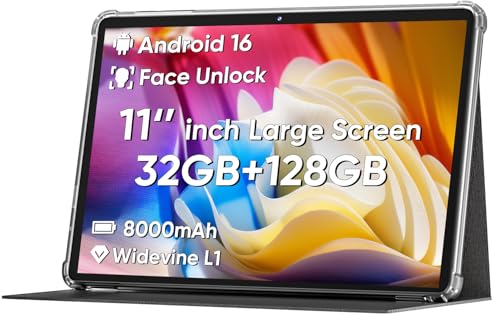
The COLORROOM 11-inch Tablet has the physical traits of a lounge-room tablet. The 11-inch screen is large enough for shared video, the body is listed at 0.55 pounds, and face unlock makes casual access quicker than entering a passcode every time. Its most notable hardware figure is an 8000mAh battery, paired with 18W fast charging.
The screen is an HD 1280 by 800 fully in-cell panel with automatic brightness adjustment and an anti-blue-light design. That should be comfortable for ordinary reading and video, but it is not as crisp as the 2.5K display on either Lenovo Idea Tab. COLORROOM lists wide viewing angles, which matter when two people are watching together, but buyers should keep expectations in the basic HD class.
The tablet advertises 32GB of memory as 4GB physical memory plus 28GB of virtual memory, along with 128GB of internal storage. A microSD card can expand storage up to 1TB. The physical memory is the number to focus on when comparing multitasking, while the storage capacity is more helpful for apps, photos, and downloaded media. The listing does not identify the Unisoc octa-core processor's clock speed or model.
COLORROOM claims eight to ten hours of reading or video on a full charge. Runtime depends on brightness and wireless activity, but the 8000mAh battery gives the tablet a sensible foundation for long sessions. Dual stereo speakers reduce distortion according to the listing, though the Lenovo Idea Tab and Samsung Galaxy Tab A11+ have more ambitious quad-speaker systems. There is no camera specification in the provided features, so camera performance should not be the deciding factor.
This model makes more sense for watching and reading than for demanding apps. The Evermyth 10-inch Tablet offers Wi-Fi 6 and Bluetooth 5.4, while the COLORROOM offers the larger screen and face unlock. If you want sharper text or pen input, choose Lenovo. If you want a large basic tablet with a substantial battery claim, COLORROOM is the more direct match.
8. ECOPAD 10.1-inch Tablet: Best for Simple Media

Pros
- 10.1-inch IPS touchscreen
- Android 15 and Google Mobile Services
- 6000mAh battery
- Expandable storage up to 1TB
- One-year warranty listed
Cons
- Quad-core processor
- 2MP front camera
- Bluetooth 5.0 is older than the wireless standard on several rivals
Best for: straightforward video, reading, and web use with expandable storage.
The ECOPAD 10.1-inch Tablet is a simple media device with the basics covered. Its 10.1-inch IPS display is a comfortable size for video and ebooks, and Android 15 with Google Mobile Services means it has access to the familiar Google app environment. The listing also includes a one-year warranty, which is a useful support detail for an unfamiliar brand.
The panel has a 1280 by 800 resolution, putting it well below the 2.5K Lenovo Idea Tab for fine text and detailed images. That is not a deal-breaker for streaming, but it limits the tablet as a study or creative tool. The front camera is 2MP and the rear camera is 8MP, enough for basic calls and snapshots when lighting is cooperative.
ECOPAD lists 12GB of memory as 4GB plus 8GB, along with 64GB of internal storage. The tablet accepts an SD card of up to 1TB, so a large video or photo library does not have to live entirely in internal storage. The quad-core processor is less ambitious than the octa-core chips in URAO and Samsung's compact model, so this tablet is better suited to one or two ordinary tasks at a time.
A 6000mAh battery is rated for up to eight hours of uninterrupted video playback. Dual-band Wi-Fi supports both common wireless bands, while Bluetooth 5.0 handles speakers, headphones, and other accessories. The listing does not specify charging speed, so it is hard to position ECOPAD against the faster-charging tablets with more detailed charging claims.
The main weakness is its combination of a basic processor, modest front camera, and older Bluetooth standard. The Lenovo Tab One is lighter and more polished for children, while the Evermyth 10-inch Tablet has a newer wireless package. ECOPAD is the straightforward choice for someone who wants a large screen and expandable storage for uncomplicated media use.
9. Samsung Galaxy Tab A11 WiFi: Best Compact Samsung

Pros
- Compact 8.7-inch size
- 90Hz display
- MediaTek Helio G99 processor
- 64GB storage with support for up to 2TB
- 5MP front and 8MP autofocus rear cameras
Cons
- International model has no warranty listed
- Charger is not included
- Wi-Fi only with no SIM card slot
Best for: buyers who want a small Samsung tablet with a smooth display and expandable storage.
The Samsung Galaxy Tab A11 WiFi is the compact Samsung option, with an 8.7-inch screen and a body that weighs 0.95 pounds. It is small enough for a nightstand, kitchen counter, or travel bag, but it is not as light as the Lenovo Tab One. Its 90Hz refresh rate gives scrolling a smooth feel that the Lenovo's 60Hz display cannot match.
The display is a 1340 by 800 WXGA+ TFT panel with 16 million colors. It is sharper than a plain 1280 by 800 screen at this size, though it cannot compete with the 2.5K Lenovo Idea Tab for large documents or detailed diagrams. The 90Hz rate is the more noticeable feature during browsing. Samsung also lists a 5MP front camera and an 8MP autofocus rear camera, which gives it more versatile camera hardware than the ECOPAD.
A MediaTek Helio G99, 4GB of memory, and 64GB of storage make this a sensible basic Samsung configuration. The microSD slot supports up to 2TB of expanded memory, according to the listing, which is unusually generous among these picks. Bluetooth 5.3, dual-band Wi-Fi, USB-C 2.0, and a 3.5mm headphone jack round out the connection options.
The 5100mAh battery should suit reading, web browsing, and video, but the provided listing does not give a streaming-runtime claim. This is an international Latin American model, and the listing says there is no warranty. It also says the charger is not included, and country selection during setup may require choosing a country before changing it later in settings. Those are practical ownership details, not footnotes to ignore.
The Samsung Galaxy Tab A11+ is the better Samsung for family viewing because its screen is larger and its audio system is more substantial. The Lenovo Tab One is lighter and includes a folio case. Choose this A11 WiFi model when compact size, 90Hz scrolling, a headphone jack, and expandable storage matter most, and be comfortable with the international-model limitations.

How to choose best budget android tablet
The right tablet comes down to screen comfort, real memory, storage, battery behavior, and the support details that survive beyond the first week.
Display size and resolution
An 8.7-inch screen is easier to hold and carry, while 10 or 11 inches gives web pages, split-screen apps, and video more breathing room. Resolution matters most for reading and schoolwork. The Lenovo Idea Tab's 2.5K panel is meaningfully sharper than the 1280 by 800 screens on URAO, Evermyth, COLORROOM, and ECOPAD.
Refresh rate affects scrolling and touch movement. A 90Hz panel, such as those on both Lenovo Idea Tab configurations and the Samsung tablets listed here, should feel more fluid than the 60Hz Lenovo Tab One. Do not confuse refresh rate with resolution. A smooth HD display can still look less detailed than a slower, sharper panel.
Physical memory
Tablet listings often combine physical RAM with virtual memory. The URAO advertises 36GB, but the breakdown is 6GB physical plus 30GB virtual. Evermyth lists 24GB as 3GB physical plus 21GB virtual, and COLORROOM lists 32GB as 4GB physical plus 28GB virtual.
Physical memory is the more useful figure when comparing app switching. The 8GB Lenovo Idea Tab 256GB has the clearest multitasking advantage in this group. A tablet with 3GB or 4GB of physical memory can still handle browsing and video, but it is more likely to reload apps when you move between tasks.
Treat virtual memory as a supporting feature, not a replacement for physical RAM.
Storage and expansion
Internal storage determines how much room apps and files have before you reach for a card. The Lenovo Idea Tab 256GB gives the most built-in space, while the Lenovo Idea Tab 128GB, Samsung Galaxy Tab A11+, and COLORROOM provide a more comfortable starting point than the 64GB models.
Expandable storage helps with videos, photos, music, and documents, but it does not make apps run faster. URAO, Evermyth, and COLORROOM support up to 1TB, while the international Samsung Galaxy Tab A11 listing specifies support for up to 2TB. Check whether the tablet includes a card before planning a large offline library.
Battery and charging
Battery claims are useful only when tied to a task. Lenovo lists up to 12 hours of YouTube streaming for both Idea Tab configurations, and the Lenovo Tab One lists up to 12.5 hours. URAO, Evermyth, and ECOPAD list up to eight hours for mixed use or video, while COLORROOM lists eight to ten hours of reading or video.
Charging speed affects how quickly a tablet recovers between sessions. Lenovo lists a 20W charger for the Idea Tab, while URAO and COLORROOM specify 18W fast charging. The Lenovo Tab One lists 15W charging. The Samsung Galaxy Tab A11 international listing says a charger is not included, so check the box contents before assuming the tablet is ready to use.
Software and support
Android version numbers are only part of the decision. Lenovo adds learning apps and Google Kids Space to the Tab One, Samsung includes Circle to Search and Google Gemini features on the A11+ and lists One UI 7 on the international A11, and the smaller brands offer Google Play or Google Mobile Services in their listings.
Support details deserve equal attention. Lenovo lists two years of security patches for the Tab One, while ECOPAD lists a one-year warranty. The international Samsung model is listed with no warranty. A tablet with the right screen and storage is still a poor fit if its update and support situation does not match how long you plan to keep it.
For a wider look at screen sizes and use cases, how much tablet screen you really need for daily tasks is a useful next step. If Android software features are your priority, the trade-offs between different Android tablet sizes can help narrow the field. Families choosing a smaller device should also consider which tablet features make shared child use easier.

Frequently asked questions
Is an 11-inch tablet better than an 8.7-inch tablet?
An 11-inch tablet is better for documents, split-screen apps, and shared video because it provides more usable space. An 8.7-inch model is easier to hold and carry. Choose the larger size for schoolwork and home entertainment, and the smaller size for travel or one-handed reading.
How much physical memory does a tablet need?
Four gigabytes of physical memory is enough for browsing, video, reading, and simple apps. More physical memory helps when you switch between many apps or keep large pages open. Be careful with listings that combine physical and virtual memory into one large headline.
Can these tablets replace a laptop for school?
The Lenovo Idea Tab models are the closest matches for school use because they combine a sharp 11-inch screen, a pen, a folio case, and learning apps. They are still Android tablets, so desktop software and complex file workflows may be limited. For notes, reading, research, and light document work, they are better suited than the basic HD models.
Which tablet is easiest to carry?
The Lenovo Tab One is the lightest model in this roundup at 0.704 pounds and has an 8.7-inch display. The Samsung Galaxy Tab A11 WiFi also has an 8.7-inch screen, but its listed weight is 0.95 pounds. The smaller screen is the main portability advantage over the 10 and 11-inch tablets.
Do all of these tablets include a charger?
The provided listings do not give identical box contents. The Lenovo Idea Tab listing mentions a 20W charger, while the Samsung Galaxy Tab A11 international listing specifically says a charger is not included. Check the individual product page before ordering accessories or planning first use.
Do these tablets have cellular connectivity?
The Samsung Galaxy Tab A11 WiFi listing specifies Wi-Fi only and no SIM card slot. The URAO listing also says it cannot share accounts directly with iOS and has no GPS. The supplied data does not identify cellular connectivity for the other models, so do not assume a Wi-Fi tablet can use mobile data.
Which tablet has the sharpest screen?
The Lenovo Idea Tab 128GB and Lenovo Idea Tab 256GB have the sharpest listed panels, with 11-inch 2.5K IPS displays. The Samsung Galaxy Tab A11 WiFi has a 1340 by 800 display, while several other models use 1280 by 800 panels. The Samsung Galaxy Tab A11+ listing gives the screen size and refresh rate but does not specify its resolution.
The bottom line
The Best budget android tablet for most people here is the Lenovo Idea Tab 128GB. Its 11-inch 2.5K 90Hz display, MediaTek Dimensity 6300 processor, included Tab Pen, folio case, quad speakers, and up to 12 hours of YouTube streaming cover school, streaming, and ordinary household use unusually well.
Choose the Lenovo Idea Tab 256GB if you expect heavier multitasking or want more room for apps and files. For a compact device, the Lenovo Tab One is the easiest to carry, while the Samsung Galaxy Tab A11+ is the better family entertainment pick because of its larger screen and quad Dolby Atmos speakers.
If you are undecided, buy the Lenovo Idea Tab 128GB unless portability or Samsung's software ecosystem matters more than display sharpness.
As an Amazon Associate we earn from qualifying purchases.