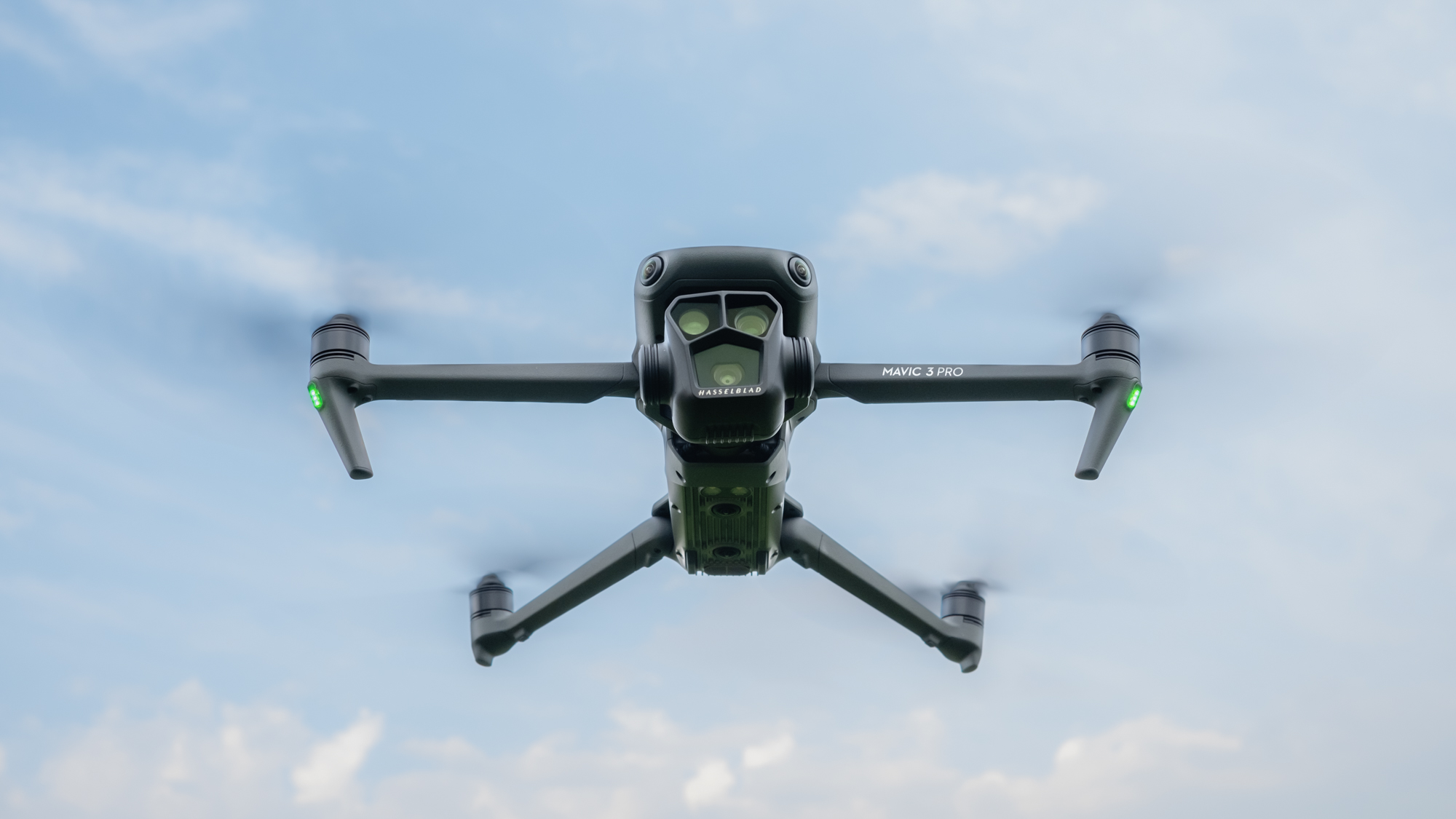

A drone can look impressive in a product photo and still produce shaky footage, lose its position in a breeze, or leave a beginner staring at a confusing controller. The right camera drone needs more than a high-resolution label. It needs stable video, dependable return-to-home behavior, sensible controls, and enough battery time to make a flight worthwhile.
Our Best camera drones picks range from compact beginner models to larger GPS drones with mechanical gimbals, follow modes, built-in screens, and extended battery kits. DJI leads for polished flight behavior and footage, while Ruko and Bwine offer useful alternatives with different strengths.
For most people, the DJI Mini 4K Camera Drone Combo is the single best pick, with the Ruko F11PRO 2 close behind for longer total flight time and more automated flight modes.
Comparison table
| # | Product | Award | Camera and stabilization | Flight time | Best for |
|---|---|---|---|---|---|
| 1 | DJI Mini 4K Camera Drone | Best overall | 4K UHD, 3-axis gimbal | Up to 62 minutes | Most new pilots |
| 2 | Ruko F11PRO 2 | Best for automated flights | 4K/30fps, 3-axis gimbal, 6K photos | Up to 70 minutes | Follow and waypoint shots |
| 3 | Loiley 2K Beginner Drone | Best for first-time flyers | 2K, adjustable 90-degree camera | About 26 minutes | Indoor and casual practice |
| 4 | DJI Mini 4K | Best compact starter | 4K UHD, 3-axis gimbal | Up to 31 minutes | Simple solo flights |
| 5 | Oddire GPS 4K Drone | Best for GPS modes | 2048 x 1088 video, 4096 x 3072 photos | Up to 48 minutes | Creative automated shots |
| 6 | Bwine F7GB2 Pro | Best for wind resistance | 4K, 3-axis gimbal, 120-degree lens | Up to 75 minutes | Larger outdoor locations |
| 7 | DJI Mini 4K Fly More Combo | Best extended DJI kit | 4K UHD, 3-axis gimbal | Up to 93 minutes | Full-day shooting |
| 8 | Bwine F7MINI | Best controller screen | 8K photos, 4K video, 3-axis gimbal | Up to 64 minutes | Pilots who dislike phone pairing |
| 9 | TRINTON TECH GPS Drone | Best built-in-screen beginner drone | EIS camera, dual camera system | Not specified | Follow-me filming |
1. DJI Mini 4K Camera Drone: Best Overall

Pros
- Smooth 4K footage from a 3-axis gimbal
- Under 249 g with GPS return-to-home
- Useful QuickShots for simple cinematic movements
- Two batteries provide up to 62 minutes of listed flight time
- Long-range HD video transmission
Cons
- DJI Fly must be downloaded from the DJI website for Android users
- The camera does not offer the higher-resolution photo modes found on some rivals
- The included controller relies on a connected phone for viewing
Best for: new pilots who want dependable controls and polished 4K footage.
The DJI Mini 4K Camera Drone is the easiest recommendation in this group because it gets the important parts right without burying a beginner in flight modes. It feels like a proper camera drone rather than a flying toy, yet the one-touch takeoff and landing, stable hovering, and GPS Return to Home make the first few flights much less intimidating.
Its 4K UHD camera is mounted on a 3-axis gimbal, which matters more than a resolution badge when the drone is moving, turning, or dealing with mild wind. The gimbal helps keep the horizon and subject steady instead of allowing motor vibration and small control movements to dominate the shot. DJI lists Level 5 wind resistance at 38 kph, along with brushless motors and takeoff capability at altitudes up to 4, 000 meters.
The two-battery package lists up to 62 minutes of total flight time. That is a package figure rather than one uninterrupted flight, but it still changes how much time you can spend framing shots instead of swapping batteries. HD video transmission is listed up to 10 km, and the GPS system supports automatic return when the pilot commands it or the drone needs to come home. Those safety features are more useful to a learner than an extra novelty mode.
QuickShots add Helix, Dronie, Rocket, Circle, and Boomerang moves that can be started with a few taps. The Ruko F11PRO 2 offers more automated flight options, and the Bwine F7MINI adds a built-in display, but DJI has the more coherent mix of stabilization, software guidance, and compact design. One practical catch is that DJI Fly has been removed from Google Play because of a platform compatibility issue, so Android owners need to download it from DJI's official website.
The DJI Mini 4K Camera Drone is not the choice for someone who wants a controller with its own screen or a camera built around 8K stills. It is the one we'd keep for travel, learning, and regular landscape shooting because the basic flying experience is unusually well balanced.
2. Ruko F11PRO 2: Best for Automated Flights

Pros
- 4K/30fps video and 6K still photos
- Mechanical 3-axis gimbal
- Up to 70 minutes from two batteries
- GPS Follow, Waypoint Flight, Cruise Control, and Orbit Mode
- One-key takeoff and landing with Beginner Mode
Cons
- The controller's side USB-C port is for charging only
- The phone connection requires attention to the correct data port
- Heavier and less compact than the DJI Mini models
Best for: families and travelers who want guided aerial movements with little manual piloting.
The Ruko F11PRO 2 is the alternative for people who want the drone to do more of the flying. Its appeal is not just the camera. GPS Follow, Waypoint Flight, Cruise Control, and Orbit Mode give a solo pilot ways to create moving footage without managing every turn and change in speed by hand.
The camera records 4K video at 30fps and captures 6K photos. A mechanical 3-axis gimbal steadies the image, which gives it a meaningful advantage over the Loiley 2K Beginner Drone and the TRINTON TECH GPS Drone for footage where smooth movement matters. The product is aimed at beginners, and its dedicated Beginner Mode plus one-key takeoff and landing should make the initial setup less demanding.
Two intelligent batteries provide up to 70 minutes of listed total flying time. That is longer than the DJI Mini 4K Camera Drone package, though the DJI models remain smaller and have a more established compact travel profile. Ruko also lists a 10, 000-foot transmission range, giving pilots room to explore large properties and open landscapes while maintaining a live view.
GPS Auto Return activates for low battery, lost signal, or a manual command. That is the kind of feature that helps a new pilot concentrate on composition instead of constantly worrying about recovery. The 0.787-pound listed product weight also makes clear that this is not in the same lightweight class as the under-249-gram DJI and Oddire models.
There is a small but important setup detail. The Type-C port on the side of the remote is for charging, while the correct data connection sits at the top and is visible when the phone holder is raised. It is not a reason to skip the drone, but it is exactly the sort of detail that can create confusion on a first flight. Choose the Ruko F11PRO 2 if automated movement and longer sessions matter more than the smallest possible aircraft.
If you are still learning the basics, the flight features that make a drone easier to learn are more important than a headline camera number.
3. Loiley 2K Beginner Drone: Best for First-Time Flyers

Pros
- Simple one-touch takeoff and landing
- Altitude Hold and optical flow positioning
- Adjustable camera angle up to 90 degrees
- Two batteries provide about 26 minutes
- Folded size of 5 x 3 x 2 inches
Cons
- 2K camera is behind the 4K models here
- No GPS return-to-home system is listed
- The lightweight design is better suited to calm conditions
Best for: beginners and younger pilots who need a forgiving practice drone.
The Loiley 2K Beginner Drone is the clear change of pace in this roundup. It is less about cinematic footage and more about making the first few flights approachable. One-key takeoff and landing, headless mode, speed adjustment, gravity sensing, and altitude hold give a new pilot several ways to reduce the mental load of controlling a quadcopter.
Its 2K camera can be adjusted through 90 degrees from the remote, and a phone provides the first-person view. Optical flow positioning helps the drone hold its place, which is useful while a beginner learns how small stick movements affect altitude and direction. That system is not a substitute for GPS, but it is a sensible fit for practice flights and close-range casual filming.
Two rechargeable batteries provide approximately 26 minutes of combined flight time. The drone folds to 5 x 3 x 2 inches, making it easier to pack than the larger Ruko F11PRO 2 or Bwine F7GB2 Pro. At under 250 g, it is also designed around the lightweight category, though pilots should still check current local rules for the way they intend to fly.
The camera is the main compromise. Its 2K output can record a view from above, but it does not offer the smoother 4K footage of the DJI Mini 4K Camera Drone or the 6K stills of the Ruko. This model also lists optical flow rather than GPS return-to-home, so it is not the one to send far over a large open area.
A carrying bag, propeller guards, spare blades, and controller batteries make the package practical for learning. The Loiley 2K Beginner Drone makes sense for a first owner who expects bumps, short flights, and practice rather than polished travel films. Pilots who already know how to fly should move up to a GPS model.
4. DJI Mini 4K: Best Compact Starter

Pros
- Compact under-249-gram design
- 4K UHD camera with 3-axis gimbal
- GPS return-to-home and stable hovering
- QuickShots simplify repeatable camera movements
- One-battery package is straightforward to carry
Cons
- One included battery limits time between charges
- No built-in controller display
- DJI Fly requires a direct download on Android
Best for: solo travelers who want the core DJI flying experience in the smallest package.
The DJI Mini 4K is the simplest version of DJI's compact camera drone in this list. It includes one battery, an RC-N1C controller, and the equipment needed to start flying, so there is less kit to organize than with the two-battery combo or Fly More Combo. That makes it a natural fit for someone who wants to learn without committing to a large carrying case.
The camera records in 4K UHD and uses a 3-axis gimbal. In practical terms, the gimbal is doing the stabilizing work that digital correction alone cannot always handle. It helps keep pans smooth and footage usable when the drone is turning or hovering in moving air. DJI lists 38 kph Level 5 wind resistance and brushless motors, though conditions and pilot skill still matter.
GPS Return to Home, stable hovering, and one-touch takeoff and landing give this model a strong foundation for a first camera drone. QuickShots include Helix, Dronie, Rocket, Circle, and Boomerang, so a new pilot can create a few controlled movements before mastering manual camera work. The DJI Fly app also includes learning resources, although Android owners need to download the app from DJI's website rather than Google Play.
Compared with the DJI Mini 4K Camera Drone Combo, the aircraft and camera capability are essentially the same, but this package has one battery rather than two. The Loiley is smaller when folded and easier to treat as a practice toy, but the DJI offers the more capable gimbal, camera, and GPS flight system. The F7MINI is more convenient for viewing because its controller includes a screen, but it is a larger commitment for a basic starter kit.
The limitation is endurance. One battery can make a session feel short if you are learning and repeatedly repositioning for a shot. The DJI Mini 4K is best for people who value compact storage and a clean starting point, while regular outdoor shooters should consider one of the multi-battery packages.
For a broader look at camera and stabilization trade-offs, the controls that matter when filming from above are worth understanding before you choose.
5. Oddire GPS 4K Drone: Best for GPS Modes

Pros
- GPS Auto Return, Follow, Route Planning, and Orbit
- Brushless motor with listed Level 5 wind resistance
- Two batteries provide up to 48 minutes
- Adjustable 4K camera with a 110-degree lens
- Foldable 249-gram design
Cons
- Listed video resolution is 2048 x 1088 rather than 4K
- 500-meter transmission range is much shorter than DJI's listed range
- An SD card is not included
Best for: beginners who want a broad set of automated flight modes in a compact frame.
The Oddire GPS 4K Drone packs an unusually long list of automated modes into a foldable aircraft. GPS Follow, Route Planning, Fly Around, gesture photography, 3D Flip, and one-key takeoff and landing give it more creative range than the basic Loiley. The controls are aimed at beginners, but there is enough here for a pilot who wants to experiment with planned movements.
Its camera uses an F2.15 110-degree wide-angle lens with an angle adjustable through 90 degrees. The product lists still images at 4096 x 3072 and video at 2048 x 1088. That distinction matters: the title calls it a 4K drone, but the listed video specification is not the same as the 4K UHD recording offered by DJI Mini 4K or the Ruko F11PRO 2.
Two 7.7V 1800mAh batteries are listed for up to 48 minutes of total flight time. The battery indicator helps with planning, while the brushless motor and stated Level 5 wind resistance should make the aircraft more capable outdoors than a small optical-flow practice drone. At 249 g, it remains compact and easy to carry, though local flight requirements still depend on how and where it is used.
GPS Auto Return is available when the battery is low, the connection breaks, or the pilot presses the return command. The 5G Wi-Fi system and signal repeater are listed for transmission up to 500 meters. That is suitable for nearby filming, but it is not the long-distance system claimed by the DJI Mini 4K or Bwine F7MINI.
The Oddire is more interesting than a simple camera drone because its software modes invite experimentation. Its weakness is that the camera specification needs careful reading, and the missing SD card adds one more thing to prepare. Choose it when route planning and orbit shots matter more than the cleanest 4K video.
6. Bwine F7GB2 Pro: Best for Wind Resistance

Pros
- 4K camera with a 3-axis gimbal
- Larger CMOS sensor and 120-degree field of view
- Three batteries provide up to 75 minutes
- GPS return, follow, path, and orbit functions
- Remote ID certification is listed
Cons
- Heavier than the compact DJI and Oddire models
- The listed dimensions appear unusually small for the aircraft
- Its larger design is less convenient for casual travel
Best for: outdoor pilots who need longer sessions and stronger wind capability.
The Bwine F7GB2 Pro is built around endurance and outdoor flying rather than pocketability. Three 2600mAh batteries provide up to 75 minutes of listed total flight time, giving it a clear advantage over the single-battery DJI Mini 4K and a practical edge over the two-battery DJI combo when a shoot involves repeated takeoffs.
Its detachable 4K camera uses a 120-degree field of view, a larger CMOS sensor, 5x digital zoom, and a 3-axis gimbal. The larger sensor claim is relevant for scenes with changing light, while the gimbal is the feature that should have the biggest effect on ordinary footage. The product specifically calls out night scenes, but no detailed low-light recording specification is provided, so expectations should remain measured.
Bwine lists a built-in 1806 brushless motor, compass, gyroscope, and barometer, along with Level 6 wind resistance testing. It also lists flights at altitudes up to 2, 000 meters and control up to 3, 000 meters, with an ideal range stated between 9, 800 and 10, 000 feet. Those figures describe the product's claimed operating capability, not a guarantee for every location or weather condition.
GPS automatically returns the drone for low battery, lost signal, or a manual command. Follow, path, and orbit modes give it the same broad type of creative automation found on the Ruko and Oddire. The package includes a carrying shell case, three batteries, a transmitter, spare propeller blades, cables, and hardware. Bwine also lists a two-year replacement warranty and 30-day money-back coverage.
The F7GB2 Pro is not the most natural choice for a short walk or a light travel bag. The DJI Mini models are easier to carry, and the Bwine F7MINI has a much more useful controller screen. Pick the F7GB2 Pro when wind resistance, battery rotation, and a steadier platform matter more than minimum weight.
7. DJI Mini 4K Fly More Combo: Best Extended DJI Kit

Pros
- Same compact 4K and 3-axis gimbal platform as the Mini 4K
- Three batteries provide up to 93 minutes
- Includes a two-way charging hub
- GPS return-to-home and QuickShots
- Under 249 g
Cons
- Android users need to download DJI Fly from DJI
- Controller still requires a phone for live viewing
- More accessories mean a larger kit to carry
Best for: DJI owners planning long outdoor sessions or repeated flights in one day.
The DJI Mini 4K Fly More Combo is not a different aircraft from the DJI Mini 4K. Its advantage is the way the package supports the aircraft. Three batteries, a two-way charging hub, a shoulder bag, and the rest of the flight kit turn the same compact drone into a more practical tool for a full day outside.
The camera records 4K UHD video through a 3-axis gimbal. That combination remains the reason this model ranks so highly. The gimbal handles the physical movement of the aircraft, while the 4K output gives footage enough detail for editing and cropping. DJI lists up to 10 km of HD video transmission and Level 5 wind resistance at 38 kph.
The three batteries are listed for up to 93 minutes of total flight time. Real flight conditions affect any battery estimate, but having three charged packs changes the rhythm of a shoot. You can land, replace the battery, and keep working while another pack is ready in the charging hub. The Ruko F11PRO 2 has fewer batteries and a slightly shorter listed total, while the Bwine F7GB2 Pro claims longer total time but uses a larger aircraft.
GPS Return to Home, stable hovering, one-touch takeoff and landing, and QuickShots make this a strong fit for people who want repeatable results rather than a long learning curve. QuickShots include Helix, Dronie, Rocket, Circle, and Boomerang. The under-249-gram design also keeps the aircraft easy to pack, though pilots still need to check current regulations for their planned use.
The main downside is that the controller does not have its own screen. You need a compatible phone, and Android owners must install DJI Fly directly from the DJI website because it is not currently on Google Play. If that setup is acceptable, the Fly More Combo is the DJI package we'd choose for long shooting days.
8. Bwine F7MINI: Best Controller Screen

Pros
- 5.5-inch 1080p, 60Hz, 500-nit controller screen
- 8K photos and 4K video
- 3-axis brushless gimbal with EIS
- Two batteries provide up to 64 minutes
- GPS Follow, Orbit, Waypoint, and Cruise Control
Cons
- Larger controller than a phone-based remote
- PD 3.0 fast charger is sold separately
- Claimed transmission figures vary by condition
Best for: pilots who want live flight viewing without connecting a phone.
The Bwine F7MINI stands apart immediately because the controller includes its own 5.5-inch 1080p display. That removes phone pairing from the flight setup and gives the pilot a dedicated view with flight data. The screen is listed at 60Hz and 500 nits, specifications that should make live framing easier than relying on a phone whose brightness, notifications, or incoming calls may interfere.
The camera combines 8K photos, 4K UHD video, a 48MP output, an F1.8 aperture, 5x zoom, and vertical shooting. A 3-axis brushless gimbal and EIS work together to smooth the image. The resolution and format options make this more flexible for social clips and still photography than the basic DJI Mini 4K, while the gimbal gives it a stronger foundation than the EIS-only TRINTON TECH model.
Two batteries are listed for up to 64 minutes of total flight time, with each battery rated at 32 minutes in the product description. The controller itself is listed for three hours of use, and 32GB of internal storage can save and review shots directly on the remote. Bwine also includes a carrying shell case, replacement propellers, a charging cable, a two-year warranty, and lifetime firmware updates.
GPS modes include Active Track, Cruise Control, Orbit Flight, and Waypoint Planning. The product lists a 6 km range and a stable 4.5 km signal in urban areas, with 0.1-second latency under stated conditions. It also includes a drone locator with a 120dB buzzer through the app. These features make it a better fit for structured outdoor filming than a basic beginner drone.
The trade-off is physical size and setup. A controller with a bright screen is convenient, but it is not as light as a phone-based remote. PD 3.0 fast charging is supported, though the charger is sold separately. The Bwine F7MINI is the right choice for pilots who want a ready-to-view controller and more camera formats, not for someone whose first priority is the smallest aircraft.
9. TRINTON TECH GPS Drone: Best Built-In-Screen Beginner Drone

Pros
- Built-in 4.5-inch HD LCD controller
- GPS Auto Return for low battery and lost signal
- Follow Me distance range from 3 to 50 meters
- Includes a carrying case
- Supports 32GB SD card storage
Cons
- Camera specification is less detailed than the DJI and Ruko models
- EIS is used rather than a listed mechanical gimbal
- Flight time is not specified
Best for: beginners who want a dedicated live view and simple GPS follow shots.
The TRINTON TECH GPS Drone is designed to remove one common frustration: needing a phone to see what the drone sees. Its remote has a built-in 4.5-inch HD LCD screen with live video and flight data, so the pilot can take off without first pairing a separate display.
The product describes a dual-camera system with a wide-angle stabilized lens and EIS. That can help reduce small movements in recorded footage, but it is a different approach from the 3-axis mechanical gimbals in the DJI Mini 4K, Ruko F11PRO 2, and Bwine models. The listing does not provide a video resolution, frame rate, or battery duration, so this drone should not be selected primarily for detailed cinematic recording.
GPS Auto Return brings the aircraft back when the signal is lost, the battery is low, or the pilot triggers the command. Follow Me can maintain a set distance from 3 to 50 meters, while AI Track and Orbit modes are listed for hands-free activity shots. Those functions are useful for a new owner who wants to record walks, rides, or outdoor movement without making every camera adjustment manually.
A carrying case is included, and the drone supports a 32GB SD card for immediate storage. The product description is slightly unclear about whether the card is included, so buyers should confirm the package contents before expecting onboard storage. At under 249 g, it follows the same lightweight design goal as several other picks, but that does not remove the need to follow local flight rules.
The TRINTON TECH model is easier to operate than its sparse camera details might suggest. It makes sense when a built-in screen and follow mode are more important than maximum image quality. Choose the Ruko or DJI instead if your priority is a specified 4K recording mode and a mechanical gimbal.
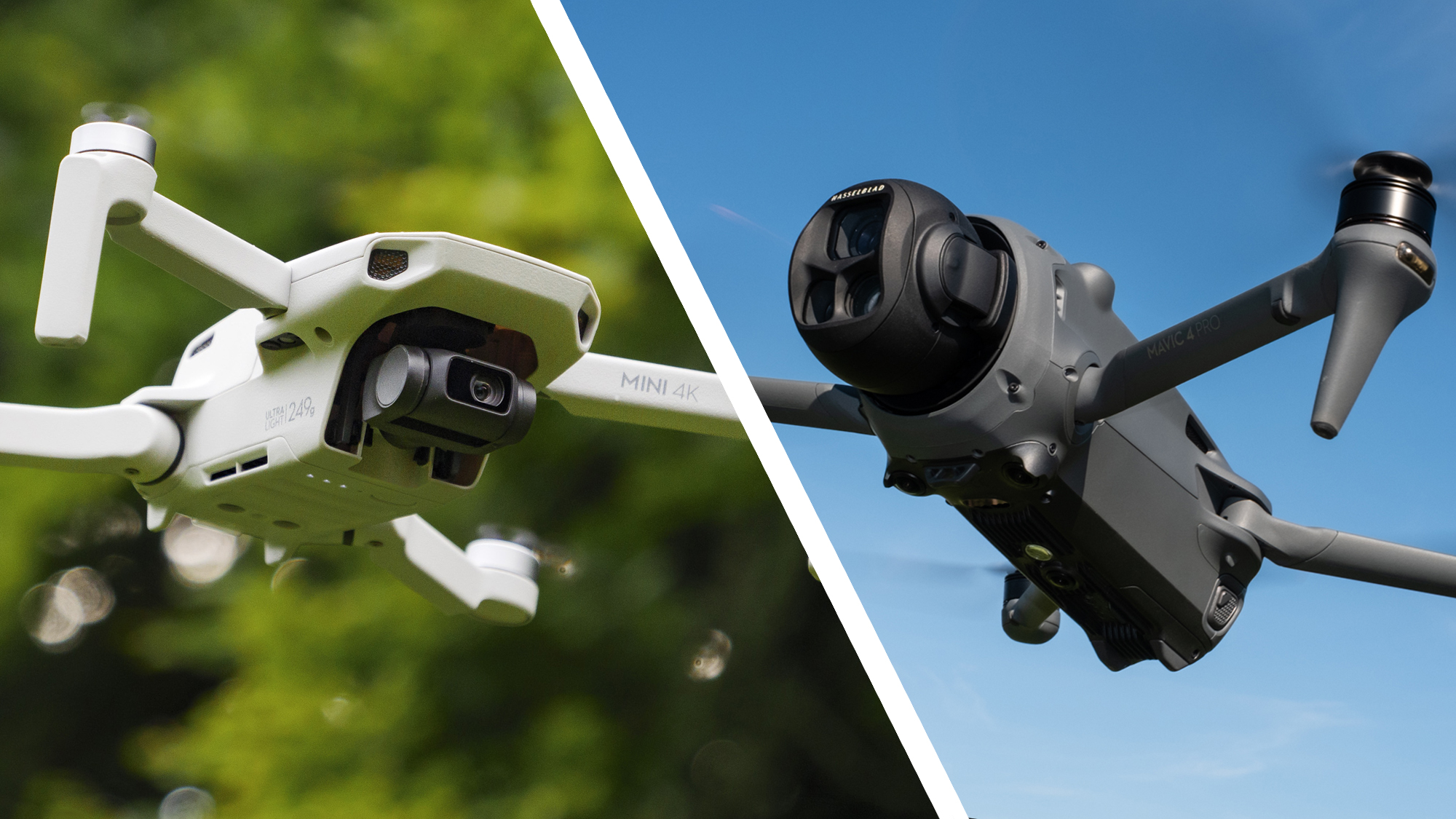
How to choose best camera drones
The right camera drone is defined by the relationship between image stability, flight control, battery planning, and the way you expect to use the footage.
Camera resolution and frame rate
A 4K label is useful only when the drone actually records 4K video at a suitable frame rate. The DJI Mini 4K models and Ruko F11PRO 2 list 4K video, with Ruko specifying 30fps. The Oddire title uses 4K language, but its listed video output is 2048 x 1088, so reading the actual recording specification matters.
Higher-resolution still photos can help with cropping, but they do not automatically make video better. Look for the recording resolution, frame rate, lens angle, and storage method together.
Gimbal and electronic stabilization
A 3-axis mechanical gimbal physically steadies the camera as the drone pitches, rolls, and turns. That is why the DJI, Ruko, Bwine F7GB2 Pro, and Bwine F7MINI have an advantage for smooth moving footage. EIS can reduce small shakes, but it does its work after capture and may crop the image.
For aerial video, a stable 4K camera usually matters more than a dramatic resolution number attached to an unstabilized lens.
GPS safety features
GPS Return to Home is one of the most important features for an outdoor camera drone. It can bring the aircraft back after signal loss, low battery, or a manual command. Follow, Orbit, and Waypoint modes are useful creative tools, but they should come after reliable hovering and return behavior.
The Loiley relies on optical flow positioning rather than a listed GPS system, making it better suited to close practice flights. The DJI, Ruko, Oddire, Bwine, and TRINTON TECH models list GPS features for outdoor use.
Battery planning
Flight time figures are usually listed as a total across the included batteries, not necessarily one continuous flight. The DJI Mini 4K single-battery package lists up to 31 minutes, while the two-battery DJI combo lists up to 62 minutes and the Fly More Combo lists up to 93 minutes.
Ruko lists up to 70 minutes from two batteries, Bwine F7GB2 Pro up to 75 minutes from three, Bwine F7MINI up to 64 minutes from two, and Oddire up to 48 minutes from two. A charging hub or spare batteries can matter as much as the headline figure when filming outdoors.
Controller and live view
A phone-based controller keeps the kit familiar and compact, but it requires a charged, compatible phone and an app. The DJI Mini 4K models use the RC-N1C controller, while Ruko's controller requires the phone to be connected to the correct data port.
The Bwine F7MINI and TRINTON TECH GPS Drone include dedicated screens. The F7MINI has a 5.5-inch 1080p display rated at 60Hz and 500 nits, while TRINTON TECH uses a 4.5-inch HD LCD. A built-in screen is convenient, but it also makes the controller larger.
Weight and outdoor handling
Under-249-gram drones are easier to carry and may have different registration requirements depending on how they are operated. DJI Mini 4K, Oddire, Bwine F7MINI, and TRINTON TECH list lightweight designs. Those aircraft are convenient, but a larger drone such as the Bwine F7GB2 Pro may offer a more substantial platform for windy locations.
Weight alone does not determine stability. Motor design, gimbal quality, GPS performance, and the actual weather all affect how confidently a drone holds position.

Frequently asked questions
Do camera drones need GPS?
No. The Loiley 2K Beginner Drone uses optical flow positioning and altitude hold rather than a listed GPS system. GPS is useful for outdoor hovering and Return to Home, especially when the drone is flying farther from the pilot.
Is a 3-axis gimbal important for drone video?
Yes, if smooth footage is a priority. A 3-axis mechanical gimbal helps keep the camera level as the aircraft moves, while electronic stabilization works through software. The DJI Mini 4K, Ruko F11PRO 2, Bwine F7GB2 Pro, and Bwine F7MINI all list 3-axis gimbal stabilization.
Which drone is easiest for a beginner?
The DJI Mini 4K is the strongest beginner choice for someone who wants a serious camera and GPS safety features. The Loiley 2K Beginner Drone is easier to treat as a practice aircraft because it has altitude hold, optical flow positioning, headless mode, and speed adjustment.
Do all of these drones record true 4K video?
No. The DJI Mini 4K models, Ruko F11PRO 2, Bwine F7GB2 Pro, and Bwine F7MINI list 4K video. Oddire's listing includes 4K language but specifies video at 2048 x 1088, while the TRINTON TECH listing does not provide a video resolution.
Is a built-in controller screen better than using a phone?
It is more convenient because it avoids phone pairing and interruptions. The Bwine F7MINI has a 5.5-inch 1080p screen, and the TRINTON TECH GPS Drone has a 4.5-inch HD LCD. A phone-based controller is usually easier to replace and can keep the overall kit smaller.
How does Return to Home work?
The drone records a home point and uses GPS to fly back when the pilot activates the function or when a low battery or lost signal triggers it. The feature appears on the DJI, Ruko, Oddire, Bwine, and TRINTON TECH models in this roundup. Pilots still need to set a safe return altitude and follow local flight rules.

The bottom line
The DJI Mini 4K Camera Drone is the Best camera drones pick for most buyers because it combines a 4K camera, 3-axis gimbal, GPS safety features, compact under-249-gram design, and approachable controls. The two-battery combo is the better package for regular outdoor sessions, while the single-battery DJI Mini 4K is a clean starting point for solo travelers.
Choose the Ruko F11PRO 2 when GPS Follow, Waypoint Flight, Orbit Mode, 6K photos, and longer listed battery life matter more than the smallest aircraft. The Bwine F7MINI is the better specialist option for pilots who want a bright dedicated controller screen, while the Loiley remains the sensible choice for basic practice.
If you are undecided, buy the DJI Mini 4K Camera Drone Combo and spend your attention learning safe, smooth flight before chasing more advanced modes.
As an Amazon Associate we earn from qualifying purchases.