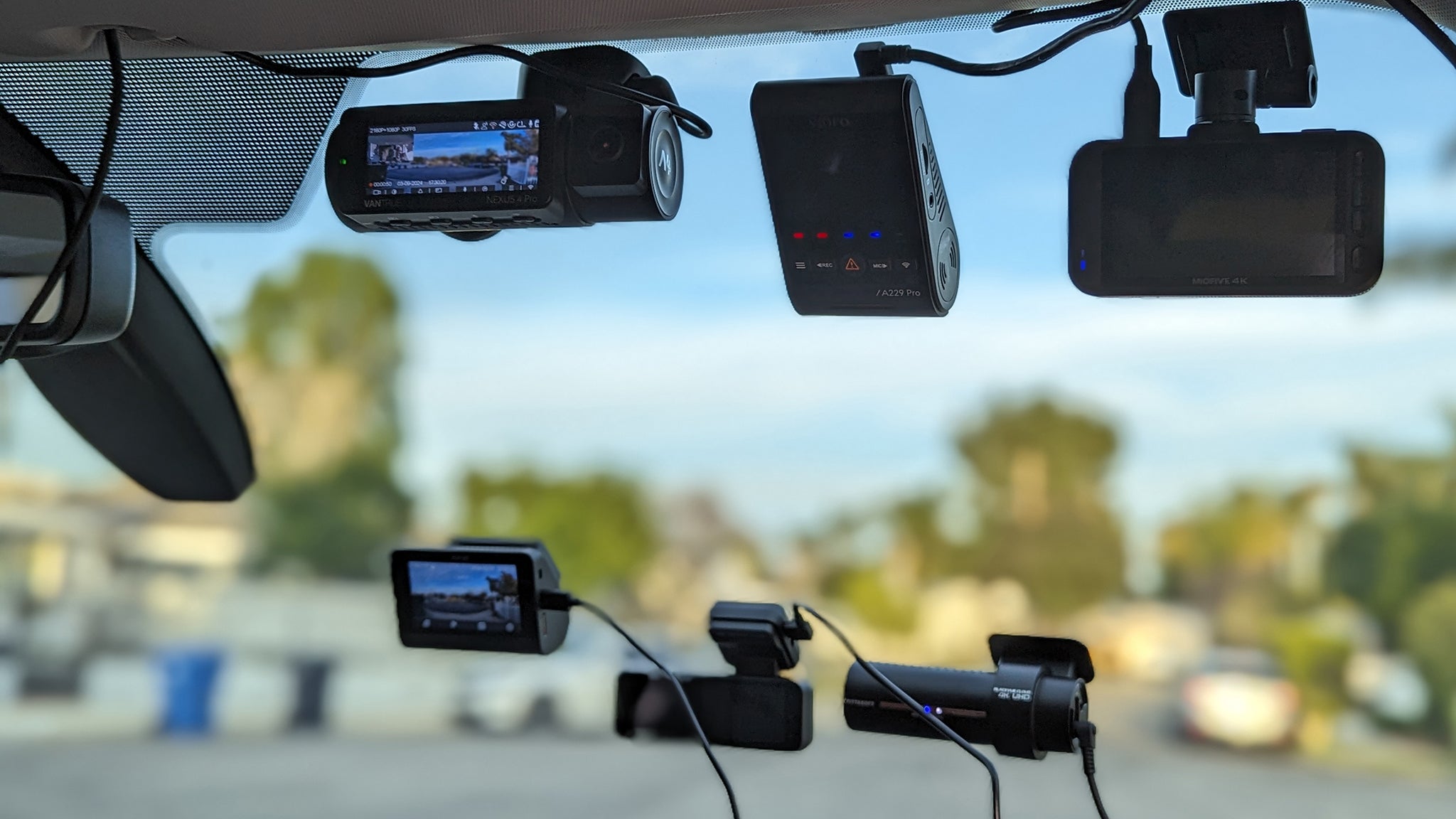

A dashcam is only useful if it captures the detail that matters before the moment disappears. That means readable plates, a clear view behind you, dependable recording at night, and footage that does not vanish when the memory card fills up. The Best dashcams for cars also need to be reasonably painless to install and use every day.
We compared ten front, rear, interior, and 360-degree cameras, paying close attention to channel count, resolution, night recording, app connectivity, GPS, storage, and parking features. 70mai T800E is our top pick, while the rest cover everything from four-camera surround recording to a simple front-facing setup.
Comparison table
| # | Product | Award | Coverage | Resolution | Wi-Fi and GPS | Best for |
|---|---|---|---|---|---|---|
| 1 | 70mai T800E | Best overall | Front, rear, interior | 4K front, 1080P rear and interior | Wi-Fi 6, GPS | Rideshare and family vehicles |
| 2 | ZMOPO 360 View | Best four-channel coverage | Front, rear, left, right | 1080P on all four cameras | 5GHz Wi-Fi, optional GPS | Full vehicle coverage |
| 3 | IIWEY N6 | Best night interior view | Front, rear, left, right | Ultra FHD on four cameras | Wi-Fi 6, GPS | Rideshare and fleet use |
| 4 | 70mai A810 Lite | Best connected dual cam | Front and rear | 4K front, 1080P rear | Wi-Fi 6, GPS, optional 4G LTE | Remote vehicle monitoring |
| 5 | FAIMEE F6 | Best dual-channel detail | Front and rear | 4K front, 2K rear | Dual-band Wi-Fi, GPS | Clear road evidence |
| 6 | Neideso N300 | Best adjustable 360-degree camera | Front, rear, sides, interior | Up to 4K front with three additional channels | 5GHz Wi-Fi, GPS | Flexible camera positioning |
| 7 | Affver A4 | Best rear resolution | Front and rear | 4K front, 2.5K rear | Wi-Fi 6, GPS | High-detail two-camera recording |
| 8 | iZEEKER 2.5K | Best simple front camera | Front | 1440P at 30fps | No GPS or Wi-Fi listed | Basic front coverage |
| 9 | WANLIPO A13 | Best compact dual cam | Front and rear | 4K front, 2.5K rear | 5GHz Wi-Fi, GPS | App-based footage review |
| 10 | IIWEY N5 | Best four-channel value-free design | Front, rear, sides, interior | Up to 2.5K front and 1080P elsewhere | 5GHz Wi-Fi, no GPS | Full cabin and side recording |
1. 70mai T800E: Best Overall

Pros
- 4K front footage with rear and interior coverage
- Wi-Fi 6 and built-in GPS
- Switchable infrared interior recording
- Voice commands and emergency locking
- Supercapacitor design for hot and cold conditions
Cons
- Rear and interior cameras are limited to 1080P
- Parking monitoring needs a compatible hardwire kit
- Does not support 4G connectivity
Best for: drivers who want strong front detail plus useful interior coverage in one system.
The 70mai T800E is the easiest camera here to recommend to a wide range of drivers. Its 4K front view gives road signs and license plates the most useful level of detail in this group, while the 1080P rear and interior cameras fill in the parts a conventional front-facing dashcam misses. That interior channel matters for rideshare drivers, parents, and anyone who wants a record of what happened inside the vehicle as well as ahead of it.
Its imaging setup is more thoughtful than the headline resolution suggests. HDR and 3D noise reduction are intended to balance harsh headlights and dark areas, and the interior camera has switchable infrared recording for nighttime cabin footage. The front and rear lenses use an F1.55 aperture, while the built-in five-mode GPS records speed, route, and location. Those details make the T800E more useful after an incident than a camera that only saves a wide, blurry clip.
File handling is one of its strongest practical points. Wi-Fi 6 can transfer footage through the 70mai app at speeds listed up to 10 MB/s, and voice control can start recording, take a photo, or lock a clip without reaching for the camera. A 64GB card is included, with support for cards up to 512GB. Loop recording handles routine storage, while the G-sensor protects footage after an impact.
The weakness is that the 360-degree cameras from ZMOPO 360 View and IIWEY N6 see the sides of the vehicle, while the T800E does not. Its rear and interior channels are also 1080P rather than 4K. Parking monitoring requires a hardwire kit, and the feature list specifically says 4G is not supported. Drivers who need remote live access should look at 70mai A810 Lite instead.
For most commuters, families, and rideshare drivers, this is the most balanced setup. It combines the front detail we want with useful cabin recording, strong connectivity, GPS, and a heat-tolerant supercapacitor design without making the system as complicated as a four-camera installation.
2. ZMOPO 360 View: Best Four-Channel Coverage

Pros
- Simultaneous front, rear, left, and right recording
- Eight infrared lights for low-light coverage
- Time-lapse parking recording
- 128GB card included
- 5GHz Wi-Fi and loop recording
Cons
- All four cameras record at 1080P
- GPS requires a separate logger
- Parking mode needs an optional hardwire kit
Best for: drivers who care more about side coverage than maximum front resolution.
The defining feature of the ZMOPO 360 View is not subtle. It records four Full HD 1080P views at the same time, covering the front, rear, left, and right sides of the vehicle. That makes it a better fit than 70mai T800E for documenting a side impact, a parking-lot scrape, or activity around the doors. The front cameras can be adjusted, and the listing allows flexible positioning that can include the cabin.
The trade-off is resolution. A 1080P image from each channel gives you broad situational coverage, but it does not have the same fine detail potential as the 4K front view on the T800E or the 4K plus 2.5K combination on FAIMEE F6. Its 160-degree view is broad, and WDR helps balance bright and dark areas, but readers who mainly want the clearest plate capture ahead should choose a higher-resolution dual camera.
Night recording gets a useful hardware assist from eight infrared lights. The camera also includes a time-lapse mode that compresses 60 minutes into one minute, which conserves card space during parked monitoring. A 128GB card is included, loop recording replaces older unlocked files, and incident lock protects footage when the camera detects an impact.
There is an important distinction around connectivity. The unit supports 5GHz Wi-Fi for transfers through its iOS and Android app, but GPS is optional and requires a separately purchased logger. Parking mode also needs an ACC hardwire kit. That is less self-contained than the GPS and parking features on the T800E, and the installation requires more camera placement and cable management than a standard front and rear system.
Choose this model when side evidence is the priority. It is particularly logical for city parking, commercial vehicles, and drivers who want a view of all four sides rather than sharper footage from only the front and rear.
3. IIWEY N6: Best Night Interior View

Pros
- Four-channel surround recording
- 170-degree front and rear views
- 150-degree side views
- Eight IR lights and infrared side cameras
- Wi-Fi 6, GPS, and a 128GB card included
Cons
- Requires hardwiring for parking surveillance
- No built-in battery
- More involved installation than a dual camera
Best for: rideshare, fleet, and family drivers who need broad night coverage.
The IIWEY N6 is the more feature-rich four-channel alternative to the ZMOPO. It records the front, rear, and both sides simultaneously, with 170-degree front and rear fields of view and 150-degree side coverage. That arrangement is useful when the important event happens beside the car rather than directly ahead. Adjustable side cameras also make it easier to aim the system around a particular vehicle layout.
Its night emphasis is unusually clear. Eight infrared lights support the side and interior views, and the listing describes infrared night vision and Vision Enhance processing for lanes and plates at junctions. The N6 records ultra-FHD footage across the four channels, though the supplied data does not give a separate pixel count for each camera. That makes it safer to think of the N6 as a coverage-first system rather than a front-camera resolution champion.
The practical package is strong. Wi-Fi 6 operates at 5.8GHz and is listed with transfer speeds up to about 20 MB/s, while 2.4GHz is also supported. Built-in GPS records speed and route information for playback through the app or a PC viewer. Loop recording manages routine clips, the included 128GB card provides a useful starting point, and the G-sensor locks emergency footage. Storage support extends to 256GB.
Parking surveillance is not ready to use from the camera alone. A separate IIWEY hardwire kit is required for time-lapse recording at 1, 3, or 5 frames per second, or for impact detection that saves a 10-second clip. The camera has no built-in battery and must be powered through the car charger or a hardwire connection. That is not a flaw for normal driving, but it is an installation detail buyers should understand first.
The N6 beats IIWEY N5 on stated front and rear viewing angles, Wi-Fi 6, GPS, and night-focused side coverage. It is the IIWEY model we would choose for a rideshare or fleet vehicle where interior and side evidence matter as much as the road ahead.
4. 70mai A810 Lite: Best Connected Dual Cam

Pros
- 4K front and 1080P rear recording
- Optional 4G LTE remote access
- GPS with three satellite systems
- Wi-Fi 6 and voice control
- HDR night vision and supercapacitor
Cons
- 4G remote access needs a separate hardwire kit
- Rear footage is 1080P
- No interior camera
Best for: owners who want to check on a parked vehicle remotely.
The 70mai A810 Lite is the specialist pick for connected vehicle monitoring. It records 4K in front and 1080P behind, giving it the same basic front and rear resolution split as the T800E. The difference is the optional 4G LTE system, which can provide live view, location tracking, and alerts through the app when the required UP05 hardwire kit is installed.
The front camera uses an F1.55 large aperture with HDR night processing. That combination is meant to reduce headlight glare and preserve detail in tunnels, rain, and dark roads. The three-mode GPS system uses GPS, GLONASS, and BDS to record route, speed, and location. For drivers who need a map-linked record of a trip, this is a more connected setup than cameras that only save video files locally.
Its app features are well developed on paper. Wi-Fi 6 at 5GHz is listed with transfer speeds up to 25 MB/s, and the app supports live view, playback, GPS data, firmware updates, and downloads. Voice control handles hands-free operation, while loop recording and emergency locking keep ordinary and incident clips separate. The compact, credit card-sized design should also be easier to hide behind a rearview mirror than the four-camera units.
The major limitation is that the most distinctive feature depends on extra hardware. The 24-hour parking modes, low-voltage protection, and 4G LTE remote access all require a compatible hardwire kit. It also records no interior view, so 70mai T800E is the stronger choice for rideshare drivers or families who want cabin evidence. The A810 Lite is for people who specifically want remote contact with the car.
If your vehicle spends long periods in an airport lot, workplace lot, or on the street, the A810 Lite makes more sense than a simpler dual camera. For ordinary driving without remote access, its advantages are less decisive than the T800E's interior channel.
5. FAIMEE F6: Best Dual-Channel Detail

Pros
- 4K front and 2K rear recording
- 170-degree lenses
- Built-in GPS and dual-band Wi-Fi
- 64GB card included
- 3-inch IPS display
Cons
- Parking monitoring requires hardwiring
- No interior or side cameras
- Fewer hands-free controls than 70mai models
Best for: drivers who want sharper rear footage from a conventional two-camera setup.
The FAIMEE F6 takes the straightforward front and rear route, but it improves the rear camera specification over several dual-channel alternatives. Its front camera records 4K at 3840 by 2160, while the rear records 2K at 2304 by 1296. That extra rear detail can be helpful when a collision or close following happens behind you, and it gives the F6 a stronger two-camera balance than the 1080P rear on the 70mai models.
The lenses cover 170 degrees, and the front uses an F1.8 aperture. WDR and night vision are intended to manage dark roads, bright headlights, and high-contrast scenes. The camera has a 3-inch IPS screen, large enough to check framing and review a clip without immediately opening the phone app. Its compact body is designed to sit behind the mirror without taking over the driver's view.
The F6 includes built-in GPS for route, speed, and location data, plus dual-band Wi-Fi at 5.8GHz and 2.4GHz. Through the FAIMEE app, footage can be viewed, downloaded, and shared. A 64GB high-endurance card is included, support extends to 256GB, and loop recording handles full storage while the G-sensor locks collision footage.
This is less elaborate than 70mai A810 Lite because there is no stated 4G remote access, and it lacks voice control. It also does not offer the interior coverage of 70mai T800E or the side coverage of the four-channel options. Parking monitoring uses time-lapse and impact-triggered recording, but continuous parked protection requires a hardwire kit.
The F6 is a sensible pick for the driver who wants a traditional front and rear arrangement with stronger rear resolution. It avoids the complexity of four-camera installation while giving more information behind the car than a basic 1080P rear module.
6. Neideso N300: Best Adjustable 360-Degree Camera

Pros
- Four-channel recording with selectable modes
- Rotatable and adjustable camera angles
- 8 infrared LEDs and Night Vision 3.0
- GPS, 5GHz Wi-Fi, and voice control
- 24-hour parking mode support
Cons
- Requires a separate hardwire kit for parking mode
- No cloud storage or remote monitoring
- More cables than a dual-channel camera
Best for: drivers who want to tune camera angles around a specific cabin and vehicle shape.
The Neideso N300 stands out because it gives the owner more control over how the four cameras are aimed. The front, rear, side, and interior cameras can be rotated and adjusted, and the system offers three recording combinations: 4K plus 1080P, 4K plus two 1080P channels, or 2K plus three 1080P channels. That flexibility lets a driver prioritize front detail or activate broader coverage.
Its 5GHz Wi-Fi connection supports transfers up to 10 MB/s through the app, and built-in GPS records speed, route, time, and location. Night Vision 3.0 uses eight infrared LEDs and WDR to respond to sudden changes in brightness, including headlights. The design also supports voice commands such as taking a photo, starting video, toggling audio, switching Wi-Fi, and turning the screen on or off.
There are practical recording safeguards here. Loop recording divides footage into three-minute clips and overwrites the oldest files when the card is full. The G-sensor places collision clips in an Event folder so they are not overwritten. Parking mode can start quickly and record a one-minute clip when the car is unattended, but 24-hour operation requires the separate N300 hardwire kit.
The N300's flexible resolution modes are useful, but they also make the product less immediately simple than ZMOPO 360 View, which uses four 1080P channels, or IIWEY N6, which takes a more defined coverage and night-vision approach. It also does not include cloud storage or remote monitoring, so footage remains local to the camera and app.
Pick the N300 when camera placement is the deciding factor. It makes more sense for unusual interiors, larger vehicles, or owners willing to spend time setting each view than for someone who wants a quick front and rear installation.
7. Affver A4: Best Rear Resolution

Pros
- 4K front and 2.5K rear recording
- Wi-Fi 6 and built-in GPS
- 3.59-inch IPS display
- F1.5 aperture and WDR
- 64GB card included
Cons
- Parking mode needs a dedicated hardwire kit
- No interior camera
- Listing dimensions are not useful for judging the installed footprint
Best for: drivers who want a high-resolution rear channel and a large built-in screen.
The Affver A4 is a compelling two-camera design because it does not treat the rear view as an afterthought. The front records 4K through a 160-degree lens, while the rear records 2.5K across 155 degrees. That combination sits above the 1080P rear cameras on the 70mai models and gives the A4 a clear reason to exist alongside the FAIMEE F6.
The front lens uses an F1.5 aperture and a six-layer lens, with the listing describing a 60 percent increase in light intake compared with its earlier design. WDR adjusts exposure in very dark conditions, while the 3.59-inch IPS screen gives the driver a relatively large interface for settings and playback. The low-profile design is intended to keep the camera from interfering with the forward view.
Wi-Fi 6 operates at 5GHz and supports transfers listed up to 10 MB/s. GPS records speed, route, and coordinates for playback in the app or a Windows and Mac GPS player. A 64GB card is included, loop recording replaces older clips, and the three-axis gravity sensor locks footage when it detects a serious collision. The car charger includes an extra USB port, which is a useful small detail for a vehicle with limited charging points.
As with most cameras here, parked protection has a condition attached. The A4 needs its dedicated Type-C hardwire kit to continue recording in low-frame-rate mode after the ignition is off. It has no interior or side cameras, so a driver seeking complete cabin coverage should choose Neideso N300 or IIWEY N6 instead.
The A4 is a strong fit for drivers who want a clear screen and detailed front and rear clips without moving to a four-camera system. Its rear resolution is the main reason to choose it over the more conventional 70mai A810 Lite.
8. iZEEKER 2.5K: Best Simple Front Camera

Pros
- 1440P QHD recording at 30fps
- 3-inch IPS display
- 170-degree viewing angle
- Manual and automatic emergency recording
- Two parking modes
Cons
- Front camera only
- No GPS or Wi-Fi listed
- Memory card is not included in the supplied features
Best for: drivers who want a basic front-facing camera with an integrated screen.
The iZEEKER 2.5K is the least complicated camera in this roundup. It records a single 1440P QHD front view at 30 frames per second and shows the result on a 3-inch IPS display. That is enough for drivers who want a visible record of the road ahead without running a rear cable, positioning interior cameras, or learning a multi-camera app.
Its 170-degree lens gives broad forward coverage, while WDR and Night Vision help preserve visibility in dark streets and scenes with uneven lighting. The G-sensor can automatically save footage after a sudden shock, and a physical lock control lets the driver preserve a clip manually even when there was no impact. Loop recording overwrites older files when storage is full, with support for memory cards from 16GB to 128GB.
Parking monitoring is supported in two forms. The camera can record emergency footage after detecting a shake or collision, but 24-hour parking monitoring requires a hardwire kit. The detachable car charger is a useful installation touch because it can work when the usual cigarette lighter socket is occupied or unavailable.
The missing features are just as important as the included ones. There is no rear camera, no stated GPS, and no Wi-Fi for phone transfers. You will need to manage the card directly, and WANLIPO A13 is a better choice if you want front and rear recording, an app, and GPS. The 1440P front view also cannot match the detail potential of the 4K cameras.
This is the model to choose when simplicity matters more than broad coverage. It is a reasonable first dashcam for a driver who wants a clear front record and an uncomplicated screen, but it is not the right fit for anyone who regularly needs rear or side evidence.
9. WANLIPO A13: Best Compact Dual Cam

Pros
- 4K front and 2.5K rear recording
- 5GHz Wi-Fi and built-in GPS
- 64GB card included
- 2-inch IPS screen
- 170-degree front view
Cons
- Rear lens is narrower at 120 degrees
- Parking mode requires hardwiring
- No interior or side cameras
Best for: drivers who want dual-channel recording in a discreet installation.
The WANLIPO A13 keeps the familiar front and rear layout but uses a sharper 2.5K rear camera instead of a basic 1080P module. Its front camera records 4K through a 170-degree lens, while the rear uses 2.5K resolution and a 120-degree lens. The narrower rear view gives it less side-to-side coverage than the FAIMEE F6, but the additional detail is useful for reading what is directly behind the vehicle.
The camera uses a 2-inch IPS screen, small enough to keep the installation discreet behind the mirror. Its F1.8 aperture and six-layer optical lens support WDR in low-light scenes. A 64GB card is included, loop recording handles full storage, and the G-sensor locks clips after collisions or abrupt events.
The built-in GPS records speed, route, latitude, and longitude, while 5GHz Wi-Fi sends footage to the Viidure app at speeds listed up to 8 MB/s. The app supports viewing, downloading, sharing, and camera setup without requiring membership for those core functions. Some separate app features do require membership, so buyers should not assume every connected function is included.
Parking mode records a 15-second emergency video after a strong vibration or impact, but the feature needs a separate hardwire kit. The A13 also lacks the interior channel found on 70mai T800E, and the 120-degree rear lens is less expansive than the 170-degree rear view listed for that model. It is a focused road recorder, not a surround-coverage system.
The A13 makes sense for a driver who wants the resolution benefits of a 4K and 2.5K pair in a compact body. It is less suitable for rideshare work or side-impact documentation, where a three- or four-channel camera earns its extra wiring.
10. IIWEY N5: Best Four-Channel Value-Free Design

Pros
- Front, rear, side, and interior recording
- Up to 2.5K front resolution
- 3-inch IPS screen
- 128GB card included
- Time-lapse and impact parking modes
Cons
- No GPS
- Must use the included cigarette lighter charger
- Parking mode needs a separate hardwire kit
Best for: drivers who want four viewing directions and a large card included.
The IIWEY N5 provides the same basic four-direction idea as the N6, but with a different set of compromises. It records the front, rear, sides, and interior, using 170-degree front and rear cameras and 150-degree side cameras. The system can record 1080P on all four channels or use a 2.5K front camera with 1080P on the other three.
A 3-inch IPS screen makes the multi-camera layout easier to inspect, and the rear camera can be adjusted 360 degrees while the bracket adjusts 90 degrees. That flexibility is helpful during installation, though the system does require the rear camera to be wired to the front unit. The included 128GB card supports loop recording, with capacity support up to 256GB.
The N5 has 5GHz Wi-Fi and works with the iiwey and Viidure apps for previewing, downloading, and sharing footage. Its supercapacitor is rated for temperatures from minus 4 degrees Fahrenheit to 167 degrees Fahrenheit, and the G-sensor locks emergency clips. Parking modes include one-frame-per-second time-lapse and impact detection that saves a 10-second clip.
The compromises are significant. The N5 has no GPS and does not support an OBD connection, so footage will not include route or speed data from the camera. It must use the original cigarette lighter charger and cannot be powered by a USB or Type-C cable. Parking monitoring requires a separate hardwire kit, and the four-camera installation is more involved than WANLIPO A13 or iZEEKER 2.5K.
Choose the N5 for its coverage and included storage, not for connected navigation data. It is a reasonable alternative to the N6 when a 2.5K front mode and large screen matter more than GPS and Wi-Fi 6.
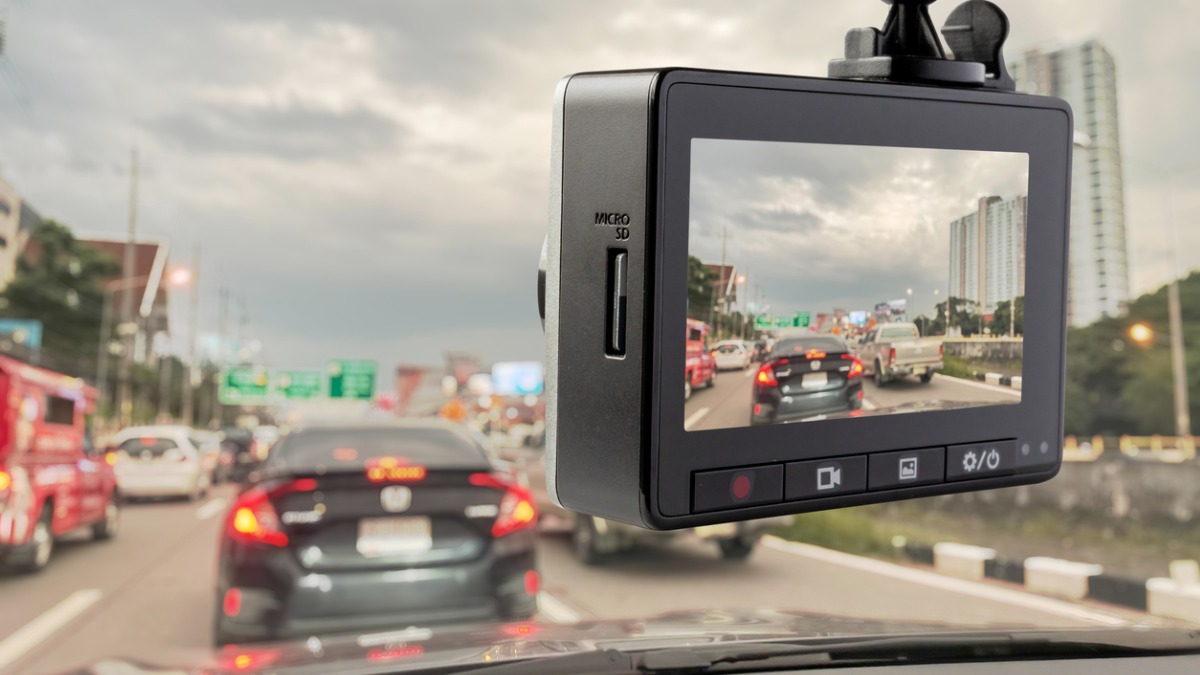
How to choose best dashcams for cars
The right dashcam depends on what you need to prove after an incident: a detailed front view, a record behind you, activity inside the cabin, or movement around all sides of the vehicle.
Camera coverage
A front-only camera is the simplest installation, but it cannot show what happened behind you or beside the car. Dual-channel models add a rear view, which is the most useful upgrade for many drivers. Four-channel cameras such as ZMOPO 360 View, IIWEY N6, and IIWEY N5 add side and interior evidence, but they require more cables and careful positioning.
Resolution and lens angle
Higher resolution can preserve more useful detail in road signs and plates, especially when the subject is not close to the camera. A 4K front view is stronger than 1080P for fine detail, while a 2.5K rear camera gives models such as FAIMEE F6, Affver A4, and WANLIPO A13 a meaningful advantage over 1080P rear units. A wide lens increases coverage, but an extremely broad view can make distant objects appear smaller.
Night recording
Night performance depends on more than the resolution number. HDR and WDR help manage headlights and uneven exposure, while a larger aperture can let more light reach the sensor. Infrared lights are particularly useful for interior and side cameras, as shown by the N6 and N300. Look for a camera that addresses both glare and dark areas rather than one that only advertises a high pixel count.
A sharp front camera is useful, but a camera that cannot preserve detail through glare or darkness may still miss the evidence you need.
Storage and incident protection
Loop recording keeps the camera running by replacing older unlocked clips when the card fills. A larger included card gives multi-channel cameras more breathing room, since four simultaneous streams consume storage faster than one. G-sensor emergency locking protects clips after an impact, while manual locking is useful when an important event does not trigger the sensor.
Parking monitoring and power
Parking modes generally need a hardwire kit because the camera must remain powered after the ignition is off. Time-lapse recording saves storage by capturing at a lower frame rate, while impact detection wakes or records after a bump. Check the power requirements carefully. The IIWEY N5, for example, must use its original cigarette lighter charger during normal operation, while several other models use supercapacitors rather than batteries.
App connections and GPS
Wi-Fi makes it easier to move clips to a phone without removing the memory card. GPS adds speed, route, and location information to the recording, which can help establish where an event happened. The 70mai A810 Lite goes further with optional 4G remote access, but that feature requires extra hardware. A camera with no stated GPS, such as the IIWEY N5, will not provide route data even if it has Wi-Fi.
For drivers comparing more than dashcams, details such as how a car camera fits into a wider vehicle safety setup can help clarify which features are genuinely useful. If the main concern is a simple installation, the trade-off between front-only and dual-channel recording is a better starting point than focusing on resolution alone.
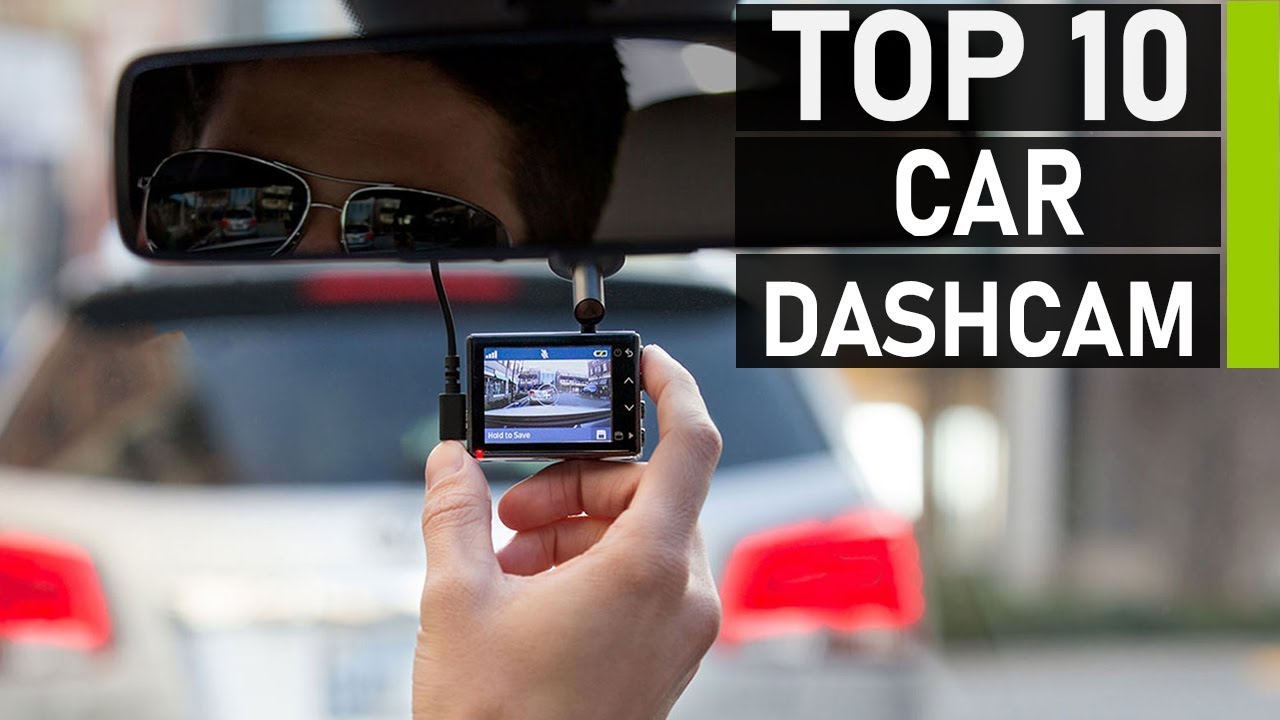
Frequently asked questions
Do dashcams record when the car is parked?
Some do, but parked recording usually requires a hardwire kit that supplies power after the ignition is off. The specific mode may use impact detection, time-lapse recording, or both. Check the individual camera's power requirements before assuming parking monitoring works out of the box.
Is 4K necessary for a dashcam?
No. A 1440P camera such as the iZEEKER 2.5K can provide useful front footage, especially when paired with good exposure handling. 4K is more helpful when you want to preserve fine detail from a greater distance, but lens quality, night performance, and correct mounting also matter.
Is a front and rear dashcam better than a front-only model?
For most drivers, adding a rear camera creates more useful evidence than a front-only system. It can show a following vehicle, a rear impact, or the road behind you. A front-only model remains sensible when the simplest installation is the priority.
Are four-channel dashcams difficult to install?
They are more involved because the side and interior cameras need to be positioned and connected, and the rear cable must usually run through the cabin. The result is broader coverage, but installation takes more planning than a front and rear pair. Drivers who want a discreet setup may prefer a dual-channel model.
Do dashcams need GPS?
GPS is not required for video recording, but it can add speed, route, and location information to saved clips. That information may help explain where and how an event occurred. If you only need a visual record, a camera without GPS can still perform its basic job.
Can I transfer dashcam videos to my phone?
Models with Wi-Fi can usually connect to a phone app for playback and downloads. The 70mai, Affver, FAIMEE, WANLIPO, Neideso, and IIWEY models in this roundup list Wi-Fi features. The iZEEKER listing does not specify Wi-Fi, so its footage is managed through the memory card.
Do dashcams use batteries?
Several cameras here use supercapacitors instead of conventional batteries. Supercapacitors can be better suited to high temperatures, but they still need the vehicle's power connection while recording. A supercapacitor does not mean the camera can operate indefinitely without a power source.
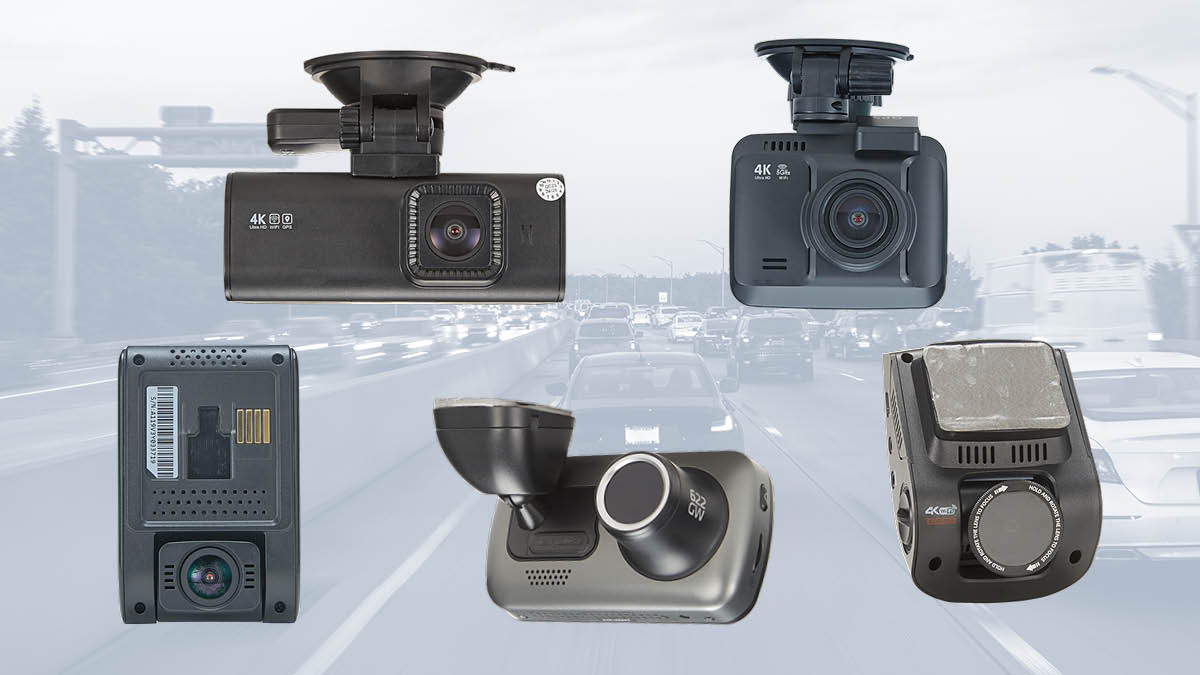
The bottom line
The Best dashcams for cars begin with 70mai T800E because it combines 4K front recording, rear and interior views, GPS, Wi-Fi 6, voice control, and switchable infrared cabin recording. It is the most balanced option for ordinary drivers, families, and rideshare users, though it does not provide side coverage or 4G remote access.
Choose 70mai A810 Lite when remote vehicle monitoring matters more than interior recording. For complete surround coverage, IIWEY N6 is the stronger four-channel choice, while FAIMEE F6 and Affver A4 make more sense for drivers who want sharper rear footage from a conventional dual-camera layout.
If you are undecided, choose the T800E for the best mix of coverage and control, or choose the N6 when side and cabin evidence are non-negotiable.
As an Amazon Associate we earn from qualifying purchases.