
FPV flying becomes frustrating when the goggles, controller, batteries, and drone do not work together. A beginner-friendly camera drone can be easy to launch yet feel nothing like true first-person flight, while a serious FPV kit can overwhelm a new pilot before the first takeoff.
Our Best FPV Drones picks range from the remarkably light DJI Neo 2 to several DJI Avata 2 bundles, plus two inexpensive beginner models with screens, altitude hold, and simple controls. The single best pick is the DJI Avata 2 3-Battery Combo, while the DJI Neo 2 is the smarter choice for lightweight, hands-free flights.
Comparison table
| # | Product | Award | Camera | Batteries | Best for |
|---|---|---|---|---|---|
| 1 | DJI Neo 2 | Best overall | 4K | 3 | Portable FPV and tracking |
| 2 | DJI Avata 2 3-Battery Combo | Best for immersive flight | 4K at 60fps | 3 | Serious FPV practice and video |
| 3 | DJI Avata 2 Smart Combo | Best starter Avata 2 | 4K at 60fps | 1 | First complete DJI FPV setup |
| 4 | DJI Avata 2 1-Battery Combo | Best single-battery Fly More kit | 4K at 60fps | 1 | New pilots wanting Goggles 3 |
| 5 | DJI Avata 2 Smart 3-Battery | Best for repeat flights | 4K at 60fps | 3 | Aspiring pilots and longer outings |
| 6 | Loiley 2K FPV Drone | Best beginner value | 2K | 2 | First camera drone |
| 7 | F417PRO FPV Drone | Best controller screen | 1080p | Not stated | Phone-free flying |
| 8 | DJI Avata 2 Creator Bundle | Best travel bundle | 4K | 3 | Content creators with accessories |
1. DJI Neo 2: Best Overall

Pros
- Extremely light at 151g
- Full-coverage propeller guards
- Palm takeoff and landing
- ActiveTrack and gesture controls
- Three batteries included
Cons
- Goggles N3 are less advanced than Goggles 3
- Motion control is less precise than a traditional FPV controller
- DJI Fly must be downloaded outside Google Play
Best for: travelers and beginners who want approachable FPV flying without carrying a large aircraft.
The DJI Neo 2 is the easiest drone here to imagine taking everywhere. At 151g, it is dramatically lighter than the Avata 2 models, and the compact body has full-coverage propeller guards that make casual indoor or backyard flying less intimidating. It feels designed around quick moments rather than a formal flight session. Palm takeoff, palm landing, gesture control, and SelfieShot all reduce the number of steps between deciding to fly and getting a usable clip.
That simplicity does not mean the Neo 2 is merely a toy. Its 4K camera gives it enough capture detail for travel clips and social video, while ActiveTrack can keep a moving subject in focus. The feature set also includes omnidirectional obstacle sensing, which adds a useful safety layer when the drone is following someone or moving through a changing environment. Apple Watch support can show the live feed and flight status, and the product data says it can also accept voice control for tracking adjustments.
The included RC Motion 3 and Goggles N3 make this a genuine FPV package rather than a conventional drone that happens to have a camera. The Motion controller should feel less complicated to a first-time pilot than a full stick transmitter. Compared with the DJI Avata 2 Smart Combo, the Neo 2 is much more portable and more forgiving for casual use. The Avata 2 remains the better tool for wide, dramatic FPV footage and more committed flying, but the Neo 2 is easier to pick up after a long break.
There are compromises. The Motion controller favors intuitive movement over the fine control that experienced FPV pilots expect, and the Goggles N3 do not match the more advanced Goggles 3 bundled with some Avata 2 packages. The camera system is also better suited to personal clips and follow shots than to the broad, high-speed perspective of the Avata 2. Android users should note that the DJI Fly app has been removed from Google Play because of platform compatibility issues, so the listing directs users to DJI’s official website for the current app and manual.
The three included batteries make the Neo 2 more practical for a day out, and the charging hub keeps the package self-contained. Anyone who wants a light drone for travel, hands-free controls, and quick subject tracking should start here. Pilots focused on aggressive acrobatics or cinematic low-altitude footage should move up to the Avata 2 line.
2. DJI Avata 2 3-Battery Combo: Best for Immersive Flight

Pros
- 4K video at 60fps
- Wide 155-degree field of view
- Large 1/1.3-inch image sensor
- Goggles 3 and RC Motion 3 included
- Three Intelligent Batteries
Cons
- Larger and heavier than the DJI Neo 2
- Motion control is not a substitute for a full manual transmitter
- The wide view needs careful framing
Best for: anyone who wants the most complete immersive FPV setup in this group.
The DJI Avata 2 3-Battery Combo is the clearest choice for readers who mean FPV in the traditional, goggles-first sense. Put on the Goggles 3, lift the aircraft with the RC Motion 3, and the flight experience is immediately more involving than a phone screen can provide. The integrated propeller guards add confidence around obstacles and help the aircraft tolerate the occasional scrape better than an exposed-propeller design.
Its camera is the main reason to choose it over the Neo 2. The 1/1.3-inch image sensor is paired with 4K capture at 60fps, and the 155-degree field of view creates the stretched, energetic perspective that makes FPV footage feel different from ordinary aerial video. That wide view is especially useful for low-altitude passes, action scenes, and routes where the sense of movement matters as much as image detail. It also means pilots need to think about framing, since the camera sees a lot of the surroundings.
The RC Motion 3 keeps the first flights approachable. The product supports flips, rolls, and 180-degree drifts, so a new pilot can explore the fun parts of FPV without beginning with a complicated set of sticks and switches. The Avata 2 also works with a broad range of DJI controllers and goggles, including Goggles 3, Goggles N3, Goggles 2, Goggles Integra, RC Motion 2, RC Motion 3, FPV Remote Controller 2, and FPV Remote Controller 3. That compatibility gives the platform room to grow.
Compared with the DJI Avata 2 Smart Combo, this package is far better suited to repeated practice because it includes three Intelligent Batteries. The single-battery bundles can still be sensible for a first flight, but one battery limits a session to short bursts followed by charging. The DJI Neo 2 is smaller and easier to carry, while the Avata 2 3-Battery Combo wins when the priority is immersive flight and footage with a strong sense of speed.
The aircraft is not the lightest option here. Its listed weight is about 0.83 pounds, and the package takes more room in a travel bag than the Neo 2. The goggles also make the pilot less aware of the immediate environment, so responsible flying and a clear launch area matter. Buyers who want a tiny camera drone for quick family clips should choose the Neo 2 instead.
For pilots who want to practice, perform simple aerial tricks, and create dramatic 4K footage, this is the package we'd keep. If your goal is learning the control habits before flying a real FPV aircraft, a simulator can still be a useful companion, but the Avata 2 is the strongest ready-to-fly experience in this list.
3. DJI Avata 2 Smart Combo: Best Starter Avata 2

Pros
- Complete drone, goggles, and motion controller setup
- 4K at 60fps
- 155-degree field of view
- Integrated propeller guards
- Supports several DJI controller options
Cons
- Only one battery included
- Larger than the DJI Neo 2
- Not the ideal package for long practice sessions
Best for: first-time DJI buyers who want the full Avata 2 experience and plan to add flight time gradually.
The DJI Avata 2 Smart Combo is the cleanest entry into DJI’s more serious FPV platform. It includes the drone, RC Motion 3, and Goggles N3, so there is no need to assemble a kit from separate core components. The aircraft itself is the same Avata 2 design that makes the three-battery combo appealing, with integrated propeller guards and an immersive first-person view.
The imaging hardware is strong for this class. A 1/1.3-inch sensor records 4K video at 60fps, and the 155-degree field of view emphasizes movement through space. That combination suits pilots who want footage of trail rides, low passes, and fast turns rather than static overhead surveys. LightCut app templates are also included in the product description as a way to turn footage into quick edits, which is useful for people who want to share clips without starting in a full desktop editor.
The RC Motion 3 is a good fit for an FPV newcomer. Its hand-oriented controls avoid the intimidation of a full transmitter, and the aircraft can perform flips, rolls, and 180-degree drifts. The Avata 2 platform can also work with Goggles 3, Goggles N3, Goggles 2, Goggles Integra, RC Motion 2, FPV Remote Controller 2, and FPV Remote Controller 3. A buyer who starts with the Motion 3 can therefore move toward more conventional control later.
The one included battery is the obvious limitation. A first session can be exciting, but the aircraft will spend more time charging once that battery is depleted. The DJI Avata 2 3-Battery Combo is the better match for regular practice, and the DJI Avata 2 Smart 3-Battery offers a similar three-battery setup with Goggles N3. This single-battery version makes more sense for someone who is still deciding how often they will fly.
It is also less portable than the DJI Neo 2. The Neo 2 weighs 151g and is built around casual transport, while this Avata 2 is a larger machine at about 0.83 pounds. The trade is a more vivid FPV camera experience and a stronger platform for progressing as a pilot. Skip it if your main goal is an ultra-light drone that can launch from your palm.
Choose the DJI Avata 2 Smart Combo when the goggles experience matters more than maximum session length. It gives a new pilot the right core hardware without requiring a larger bundle on day one.
4. DJI Avata 2 1-Battery Combo: Best Single-Battery Fly More Kit

Pros
- Full Avata 2 FPV experience
- Goggles 3 included
- RC Motion 3 included
- 4K at 60fps with a 155-degree view
- Integrated propeller guards
Cons
- Only one battery
- Heavier listed package than some other Avata 2 entries
- Less practical for extended practice than the three-battery versions
Best for: new pilots who specifically want Goggles 3 with the Avata 2 aircraft.
The DJI Avata 2 1-Battery Combo occupies an unusual place in the lineup. It offers the complete aircraft, RC Motion 3, and Goggles 3 experience, but it includes just one battery. For a buyer who has already decided on Goggles 3, that distinction may matter more than the number of batteries in the box. The goggles provide the more polished visual interface among the DJI packages listed here.
The Avata 2’s core camera remains the attraction. Its 1/1.3-inch image sensor records 4K at 60fps, and the 155-degree field of view captures the visual rush of low-altitude FPV flight. The wide lens is useful for dynamic footage, though it can make ordinary compositions look exaggerated. The integrated propeller guards support a more relaxed approach to practice, especially when learning how close the aircraft can safely pass to a subject.
RC Motion 3 keeps the flight controls approachable. New pilots can use natural hand movements rather than learning every control on a traditional transmitter, and the drone supports flips, rolls, and 180-degree drifts. The product is also compatible with RC Motion 2, FPV Remote Controller 2, and FPV Remote Controller 3, along with multiple DJI goggles. That matters for a pilot who may want more direct control after gaining confidence.
The DJI Avata 2 Smart Combo is the closer alternative. It includes the same type of motion controller and Goggles N3, while this model includes Goggles 3. The DJI Avata 2 3-Battery Combo is the better pick for most frequent flyers because it solves the battery bottleneck from the start. The DJI Neo 2 is much easier to pack and better for spontaneous flights, but it does not offer the same broad, immersive camera perspective.
The weakness is not subtle. With one battery, the ownership experience can feel stop-and-start, particularly when learning maneuvers that require repeated attempts. Its listed aircraft weight is about 2.38 pounds, which also makes the data for this entry look notably heavier than the other Avata 2 listings. Buyers should pay attention to the exact package and product details before ordering, especially because these Avata 2 listings are easy to confuse.
This kit is best for a new pilot who values Goggles 3 and expects to add batteries later. If uninterrupted practice is the priority, choose one of the three-battery Avata 2 packages instead.
5. DJI Avata 2 Smart 3-Battery: Best for Repeat Flights

Pros
- Three Intelligent Batteries
- Goggles N3 and RC Motion 3 included
- 4K at 60fps
- Wide 155-degree field of view
- Built-in propeller guards
Cons
- Uses Goggles N3 rather than Goggles 3
- More cumbersome than the DJI Neo 2
- Listing details differ from the other Avata 2 bundles
Best for: aspiring pilots who want more practice time without moving to a separate controller setup.
The DJI Avata 2 Smart 3-Battery is built around a simple advantage: more time in the air. It includes the Avata 2 drone, three Intelligent Batteries, RC Motion 3, and Goggles N3. That gives a beginner enough equipment to explore the aircraft’s flight modes, repeat a maneuver, and capture several takes without turning every session into a charging exercise.
Its camera is identical in the important ways to the other Avata 2 entries here. The 1/1.3-inch sensor records 4K at 60fps, while the 155-degree field of view brings an expansive perspective to fast, low-altitude footage. The drone’s integrated propeller guards make it a more forgiving aircraft for learning close passes and basic acrobatics. Flips, rolls, and 180-degree drifts are part of the feature set, so there is a clear path beyond simple straight-line flights.
The RC Motion 3 is approachable enough for a first FPV session. It avoids the dense control layout of a full transmitter, yet the platform supports more advanced DJI hardware later. Compatibility includes Goggles 3, Goggles N3, Goggles 2, Goggles Integra, RC Motion 2, RC Motion 3, FPV Remote Controller 2, and FPV Remote Controller 3. That makes this more than a sealed beginner toy.
The DJI Avata 2 3-Battery Combo is its closest rival. Both provide three batteries and the same basic flight concept, but the bundle contents and goggles differ. The 3-Battery Combo lists Goggles 3, while this Smart 3-Battery package lists Goggles N3. The DJI Avata 2 Smart Combo has the same general Smart naming but only one battery, so it is the weaker choice for pilots who already know they want regular practice.
The drone is not a pocket companion. Its listed dimensions are 8.35 inches long, 7.28 inches wide, and 2.52 inches high, with a listed weight of about 3.44 pounds for this package. Those figures make it harder to carry than the DJI Neo 2, and the product listing should be checked carefully because the package measurements differ across the Avata 2 entries. Buyers who want a small camera drone for a backpack should look elsewhere.
For a family of aspiring pilots or an individual who wants to repeat flights and build confidence, the three-battery format is compelling. Choose this version when Goggles N3 are acceptable and practice time matters more than the lighter Neo 2 design.
6. Loiley 2K FPV Drone: Best Beginner Value

Pros
- 2K camera with 90-degree adjustable angle
- Optical flow positioning and altitude hold
- Two batteries with approximately 26 minutes of listed flight time
- Folded size of 5 by 3 by 2 inches
- Propeller guards and carrying bag included
Cons
- Smartphone connection is required for live camera viewing
- Camera quality is below the DJI models
- Listed weight and under-250g claim do not align cleanly
Best for: beginners who want a simple camera drone with two batteries and basic assisted flight modes.
The Loiley 2K FPV Drone is aimed at the first-time flyer who wants a camera, not a complicated FPV rig. One-key takeoff and landing, headless mode, gravity sensing, and altitude hold make the initial controls less demanding. Optical flow positioning is intended to help the drone maintain a steadier position, which can give beginners more time to think about framing instead of constantly correcting height.
The camera records in 2K and has a 90-degree angle adjustment from the remote. Live viewing requires connecting a smartphone to the drone, so this is a phone-assisted FPV experience rather than a goggles-based system like the DJI Avata 2. That distinction is important. The Loiley is better for seeing where the camera is pointed and sharing simple aerial clips, while the DJI models are designed around immersion and the feeling of sitting inside the flight.
Two rechargeable batteries are included, with approximately 26 minutes of total flight time stated in the product features. The batteries have built-in overvoltage protection, and the remote controller provides a low-battery warning. A carrying bag, propeller guards, and spare fan blades are also listed, which makes the package convenient for a child, family, or beginner who may be learning in a backyard.
The DJI Neo 2 is a much more capable camera and tracking platform, and its 4K capture, palm controls, and omnidirectional obstacle sensing justify moving up when those features matter. The Loiley is easier to recommend to someone who wants basic altitude hold and a low-pressure way to learn. It also folds to a stated 5 by 3 by 2 inches, making it easier to put in a pocket or small backpack.
There are two details to treat carefully. The listing says the drone weighs under 250g and describes it as avoiding FAA registration, but the product information separately lists a weight of 1.1 pounds. Those figures conflict, so buyers should verify the actual aircraft weight and current rules rather than relying on the marketing claim. The camera is also not in the same league as the 4K DJI systems, especially for footage that will be cropped or edited heavily.
This is a sensible first step for someone who wants assisted flight, two batteries, and a phone-based camera view. Readers choosing between a basic camera drone and a more capable beginner model can also consider the controls and safety features that matter for a first flight.
7. F417PRO FPV Drone: Best Controller Screen

Pros
- Built-in LCD screen removes the need for a phone
- 90-degree adjustable camera
- Brushless motor listed at 10000RPM
- 1080p camera with night vision feature
- One-key start, altitude hold, and three speeds
Cons
- Lower camera resolution than every DJI pick
- Storage is limited to up to 32GB
- Battery count is not clearly stated in the supplied details
Best for: families and beginners who want a screen on the controller instead of relying on a smartphone.
The F417PRO FPV Drone makes one practical decision that many inexpensive camera drones get wrong: it puts the display on the controller. The built-in LCD means a beginner can fly without installing an app, pairing a phone, or handing over a personal screen. For backyard use and family trips, that is a meaningful convenience.
Its 1080p camera has a 90-degree adjustable lens, allowing the pilot to change the view from the controller. The listing also describes a night vision camera, though low-light performance should be treated as a bonus rather than a replacement for a dedicated camera system. Storage support is listed at up to 32GB, and Type-C charging is included in the feature description.
The assisted-flight controls are familiar and useful. One-key start, altitude hold, three speed settings, and headless mode reduce the learning curve, while 3D flips add a simple stunt option once the pilot is comfortable. The brushless motor is listed at 10000RPM, but the supplied data does not state a flight time or battery count. That missing information matters more than the motor headline for anyone planning longer sessions.
Compared with the Loiley 2K FPV Drone, the F417PRO gives up camera resolution but avoids the phone connection. The Loiley has two batteries and approximately 26 minutes of listed total flight time, while the F417PRO listing does not provide a comparable battery figure. The DJI Neo 2 is in another class for image quality, tracking, obstacle sensing, and true FPV equipment, but it also requires a larger commitment to the DJI ecosystem.
The F417PRO is described as weighing under 249g and not requiring FAA registration, but that should be verified against the aircraft’s actual takeoff weight and current regulations. The controller screen is a real strength, although its smaller viewing area will not provide the immersive perspective of goggles. This is a conventional remote-view drone with FPV branding, not a direct rival to the Avata 2.
Pick it for easy family flying and a self-contained controller. Skip it if 4K footage, goggles, or a clearly documented multi-battery setup is central to the purchase.
8. DJI Avata 2 Creator Bundle: Best Travel Bundle

Pros
- DJI Avata 2 with Goggles 3
- Three-battery Fly More setup
- 64GB memory card included
- Sling backpack and landing pad included
- Cleaning kit and card reader included
Cons
- Accessory bundle is larger to pack
- Core drone features are similar to the standard Avata 2
- Product listing describes a 22-piece bundle while item count data differs
Best for: travelers and creators who want the Avata 2 system with storage and carrying accessories in one package.
The DJI Avata 2 Creator Bundle is fundamentally an Avata 2 travel package, not a different aircraft. Its appeal comes from the extras surrounding the drone: Goggles 3, three batteries, a 64GB memory card, sling backpack, landing pad, cleaning kit, card reader, and card wallet are all listed. That makes it the most ready-to-pack option for someone who wants to leave with a complete content kit.
The camera retains the strengths that make the standard Avata 2 models attractive. The supplied feature description calls it a compact 4K drone for cinematic content and emphasizes an immersive FPV experience. The three-battery setup is useful for travel days, where repeated charging may be inconvenient and a single missed shot can be difficult to recreate. The sling backpack also gives the package a more organized way to carry the goggles and flight equipment.
Compared with the DJI Avata 2 3-Battery Combo, the aircraft and core FPV concept are not presented as materially different. The Creator Bundle simply adds travel and storage items, with Goggles 3 and a memory card called out in the listing. The DJI Neo 2 remains the better option for lightweight travel because its aircraft weighs 151g and has full propeller guards, but the Avata 2 Creator Bundle is the more cinematic choice when the flight perspective is the priority.
The bundle has a documentation wrinkle. Its title describes a 22-piece package, while the product information lists the number of items as 11. That does not necessarily change the usefulness of the included accessories, but buyers should review the current package contents carefully. Accessories also add bulk, so this is not automatically the right choice for someone who already owns a card, bag, or cleaning kit.
The Avata 2’s wide FPV view is better for action and movement than for every type of aerial photography. If your project depends on choosing a drone for dramatic video movement, this type of aircraft makes sense. If the priority is carefully composed still imagery from a high, stable viewpoint, another drone category may fit better.
Choose the Creator Bundle when the backpack, card, landing pad, and three batteries will genuinely be used. Otherwise, the standard DJI Avata 2 3-Battery Combo keeps the focus on the aircraft and goggles.
How to choose best fpv drones
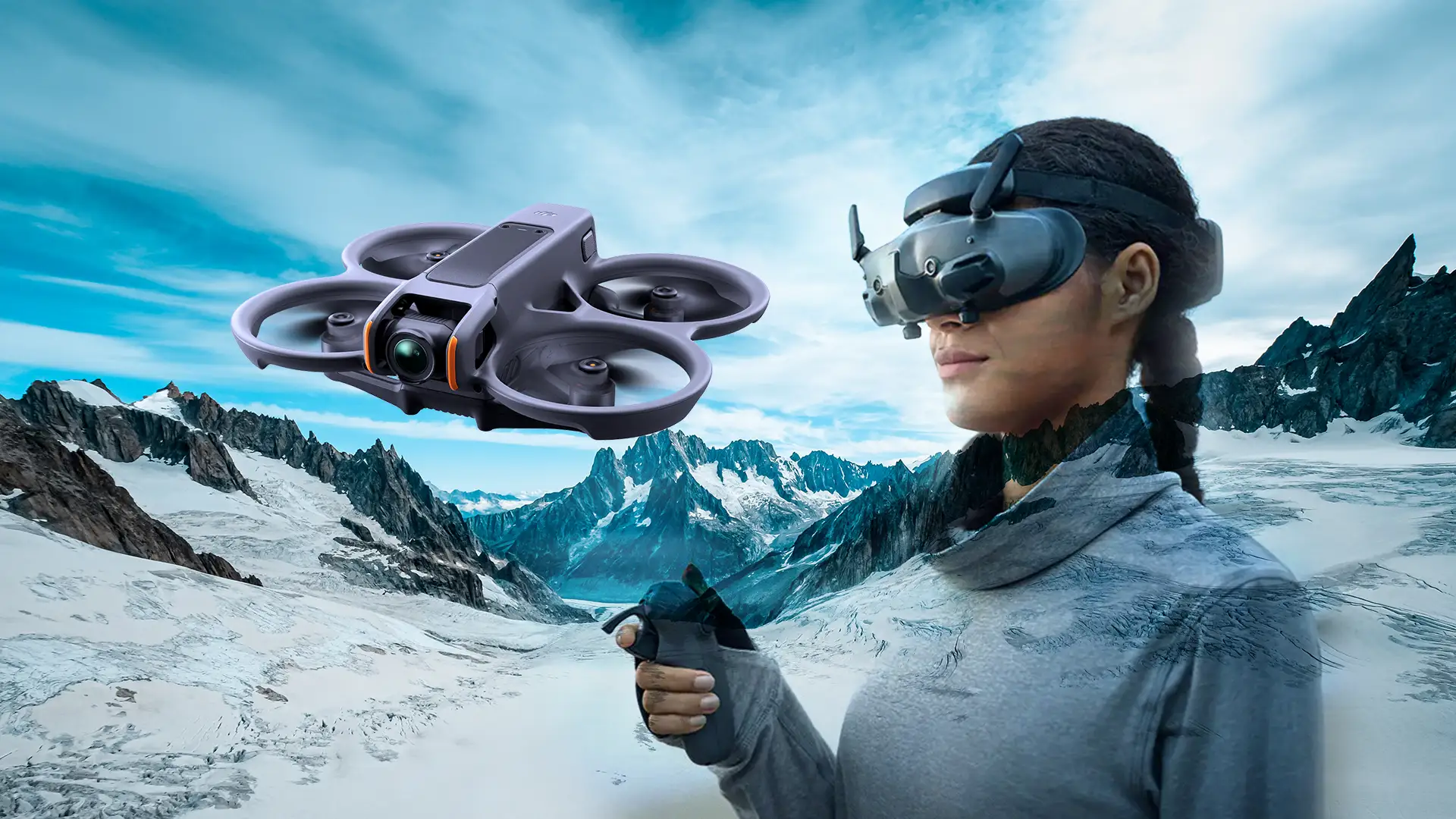
The right FPV drone depends on whether you want immersive goggles, simple camera monitoring, or a lightweight aircraft that can follow you without a traditional flight setup.
Flight control
Motion controllers are easier to understand than a full FPV transmitter. The DJI Neo 2 and Avata 2 models use RC Motion 3 in the supplied bundles, letting beginners steer through natural hand movements. A conventional transmitter offers more precise control, but none of the listed packages includes one as the primary controller.
For inexpensive beginner drones, look for altitude hold, headless mode, one-key takeoff, and speed settings. These features reduce workload, but they do not create the same immersive experience as goggles.
A drone that is easy to launch is not automatically easy to fly well. Match the control system to the kind of practice you actually intend to do.
Camera and field of view
The DJI Avata 2 models use a 1/1.3-inch sensor, 4K recording at 60fps, and a 155-degree field of view. That combination favors fast movement and dramatic FPV footage. The DJI Neo 2 also records in 4K, while the Loiley records in 2K and the F417PRO records in 1080p.
A wide field of view can make turns and low passes feel more exciting, but it also changes composition. For social clips and action footage, the Avata 2 is the stronger fit. For basic family videos, the lower-resolution models may be sufficient.
Battery setup
Battery count determines how much flying can happen during one outing. The DJI Neo 2, DJI Avata 2 3-Battery Combo, DJI Avata 2 Smart 3-Battery, and DJI Avata 2 Creator Bundle all list three batteries. The two single-battery Avata 2 entries are better suited to occasional flights or buyers planning to expand later.
The Loiley lists two batteries and approximately 26 minutes of total flight time. The F417PRO features do not state a battery count or flight time, so buyers should not assume it matches the Loiley.
Propeller protection
The DJI Neo 2 has full-coverage propeller guards, and every Avata 2 listing describes integrated propeller guards. That protection helps new pilots feel more comfortable near obstacles and can reduce damage from minor contact.
The Loiley also lists propeller guards, while the F417PRO details supplied here do not clearly describe a guard system. If the drone is intended for children, indoor areas, or frequent beginner practice, protection around the propellers deserves more attention than stunt modes.
Portability and weight
The DJI Neo 2 is the clear portability leader at 151g, with dimensions of 6.74 by 5.8 by 1.59 inches. The Loiley folds to a stated 5 by 3 by 2 inches, although its product information separately lists a weight of 1.1 pounds. The Avata 2 aircraft are larger and need room for goggles and controllers.
Weight claims also affect flying rules. The Loiley and F417PRO listings make under-250g or under-249g claims, but those claims should be checked against the actual aircraft and current regulations before flight.
Frequently asked questions
Are these FPV drones suitable for beginners?
The DJI Neo 2 and DJI Avata 2 models are the most approachable true FPV options here because their packages include motion controllers and goggles. The Loiley and F417PRO are simpler camera drones with assisted controls, but they use phone viewing or an LCD controller rather than an immersive headset.
Which model has the best camera?
The DJI Avata 2 models have the most detailed camera specification in the supplied data, with a 1/1.3-inch image sensor, 4K recording at 60fps, and a 155-degree field of view. The DJI Neo 2 also records in 4K, while the Loiley and F417PRO list 2K and 1080p cameras.
Which drone is easiest to carry?
The DJI Neo 2 is the lightest documented option at 151g and has a compact body with full-coverage propeller guards. The Loiley also folds into a small stated footprint, but its listed weight conflicts with its under-250g marketing claim.
Do all of these drones use goggles?
No. The DJI Neo 2 and DJI Avata 2 packages include goggles. The Loiley uses a connected smartphone for its live camera view, and the F417PRO has an LCD screen built into its remote controller.
Which package gives the most practice time?
The three-battery packages are the strongest choices for repeated flights. Those include the DJI Neo 2, DJI Avata 2 3-Battery Combo, DJI Avata 2 Smart 3-Battery, and DJI Avata 2 Creator Bundle.
Can the DJI Avata 2 use other controllers?
The supplied product details list compatibility with RC Motion 2, RC Motion 3, FPV Remote Controller 2, and FPV Remote Controller 3. They also list Goggles 3, Goggles N3, Goggles 2, and Goggles Integra as compatible goggles, though buyers should confirm compatibility for the exact aircraft and firmware.
Do the under-249g claims remove all registration requirements?
Not necessarily. The Loiley and F417PRO listings make weight and registration claims, but the supplied Loiley data contains conflicting weight figures. Pilots should check the actual takeoff weight and current FAA rules before flying.
The bottom line
The DJI Avata 2 3-Battery Combo is the strongest all-around recommendation in this Best FPV Drones group. Its 4K at 60fps camera, 155-degree view, Goggles 3, motion controller, propeller guards, and three batteries make it the most complete choice for immersive flying and repeat practice.
The DJI Neo 2 is the better pick for travelers, casual pilots, and anyone who values a 151g aircraft with palm controls, ActiveTrack, gesture control, and full-coverage propeller guards. The Loiley and F417PRO are reasonable first camera drones, but they do not offer the same image quality or goggles-based experience.
If you are undecided, choose the DJI Neo 2 for portability and the DJI Avata 2 3-Battery Combo for serious FPV flight.
As an Amazon Associate we earn from qualifying purchases.