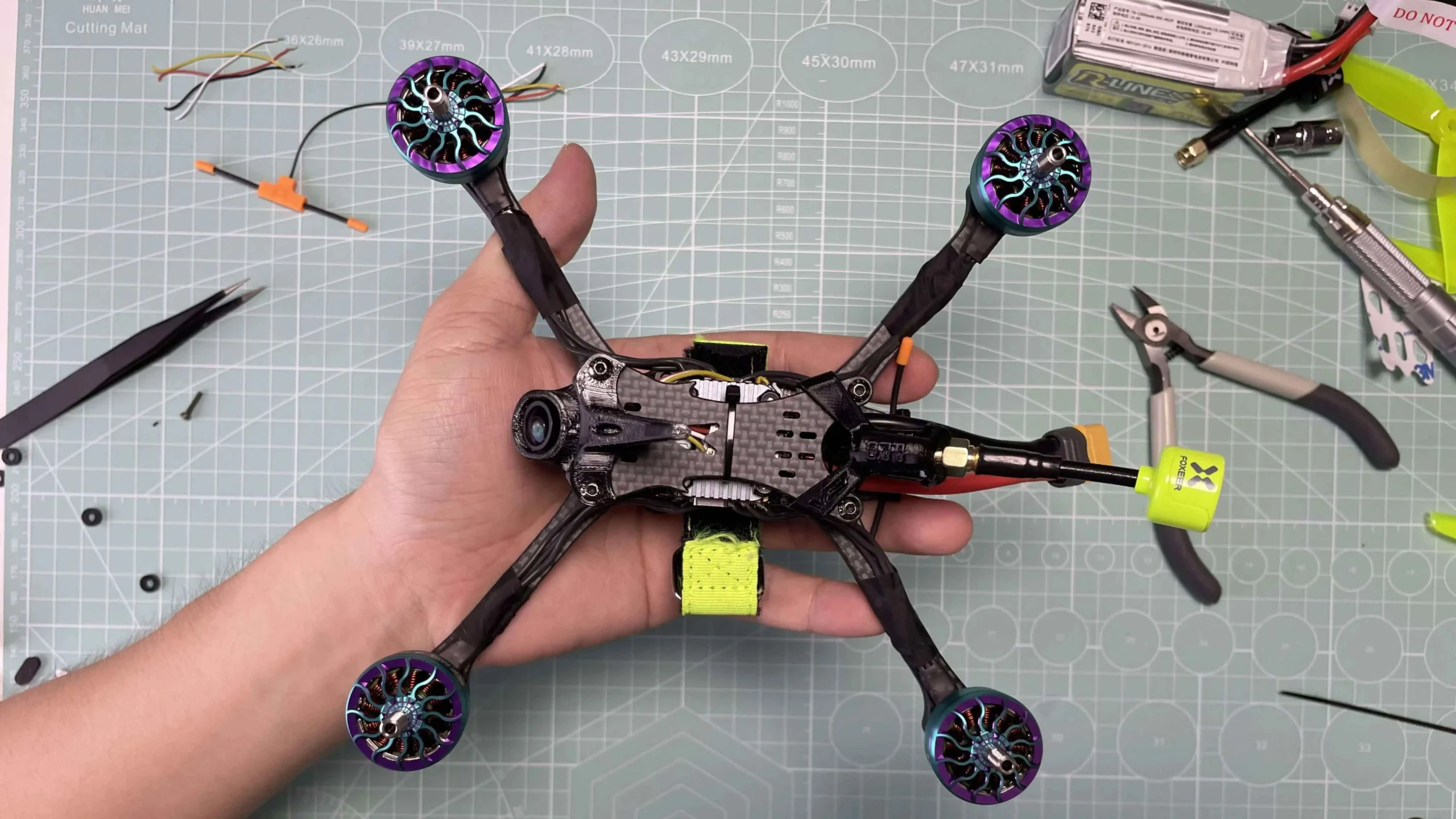

When you buy a drone that is supposed to be a complete ready-to-fly package, you expect everything in one box: the quad, a proper controller, goggles, batteries, and a charger. Too many "kits" are really just the drone with a cheap toy remote and a screen that barely deserves the name. The best FPV racing drone kits skip that nonsense entirely. They give you a real radio link, analog or digital video that actually works, and a frame that can survive the learning curve without cracking on the first hard landing.
We sorted through the current stack of RTF bundles and found seven that cover the full range of what "kit" means in 2026: from complete whoop sets you can fly in the living room to frames for builders who prefer to pick their own electronics. The one we would buy today is the BETAFPV Meteor75 Pro FPV Kit -- it has the best balance of flight performance, build quality, and included components for someone who wants to fly immediately and progress naturally.
Comparison table
| # | Product | Award | Frame Type | Radio Protocol | Goggles | Best for |
|---|---|---|---|---|---|---|
| 1 | BETAFPV Meteor75 Pro FPV Kit | Best overall | 75mm whoop | ELRS | VR03 4.3-inch | Pilots who want a true racing/freestyle whoop that works indoors and out |
| 2 | Tinyhawk 3 Freestyle Plus RTF Kit | Best carbon-fiber whoop | 2.5-inch prop carbon fiber | ELRS | Included analog | Beginners who want a durable, upgradeable kit from a trusted name |
| 3 | APEX FPV Drone Kit | Most beginner-friendly | 5-inch analog | S.BUS | 120-degree wide | New pilots who want altitude hold and simple modes |
| 4 | BETAFPV Cetus FPV Kit | Best brushed starter | Brushed whoop | LiteRadio 2 SE | VR02 | Absolute beginners and kids learning FPV |
| 5 | EZ Pilot FPV RTF Kit | Best for young pilots | Tiny whoop | 5.8G analog | VR-style 5.8G | Kids and first-time flyers under 12 |
| 6 | STARDRONE 40L FPV Drone Backpack | Best transport case | N/A (backpack) | N/A | N/A | Pilots who need to carry multiple quads, goggles, and a laptop |
| 7 | FPVDrone 225mm 5-inch Frame Kit | Best DIY frame | 5-inch carbon fiber | N/A | N/A | Builders who want a strong freestyle frame for custom builds |
1. BETAFPV Meteor75 Pro FPV Kit: Best Overall

Pros
- 1102 22000KV motors give it real punch for a 1S whoop
- VR03 goggles have a 4.3-inch 800x480 LCD that is sharp for analog
- LiteRadio 2 SE transmitter works as a USB joystick for simulators
- Comes with a custom portable bag for organization
- Reinforced whoop frame survives crashes well
Cons
- Flight times around 6 minutes are average
- Analog video can look snowy indoors with many walls
Best for: someone who wants a true racing whoop that can also do light freestyle, right out of the box, with no fiddling.
The Meteor75 Pro is the first kit we have flown that genuinely feels like a mini race quad, not a toy. The 80.8mm wheelbase and 1S 580mAh LAVA II battery give it a thrust-to-weight ratio that lets you punch out of a hover and snap through tight turns in a way brushed whoops simply cannot match. The 1102 motors spin 22000KV on 1S, which is aggressive for this class, and it shows: you can fly through a gap at full throttle and the thing just goes where you point it without drifting off in a wobble.
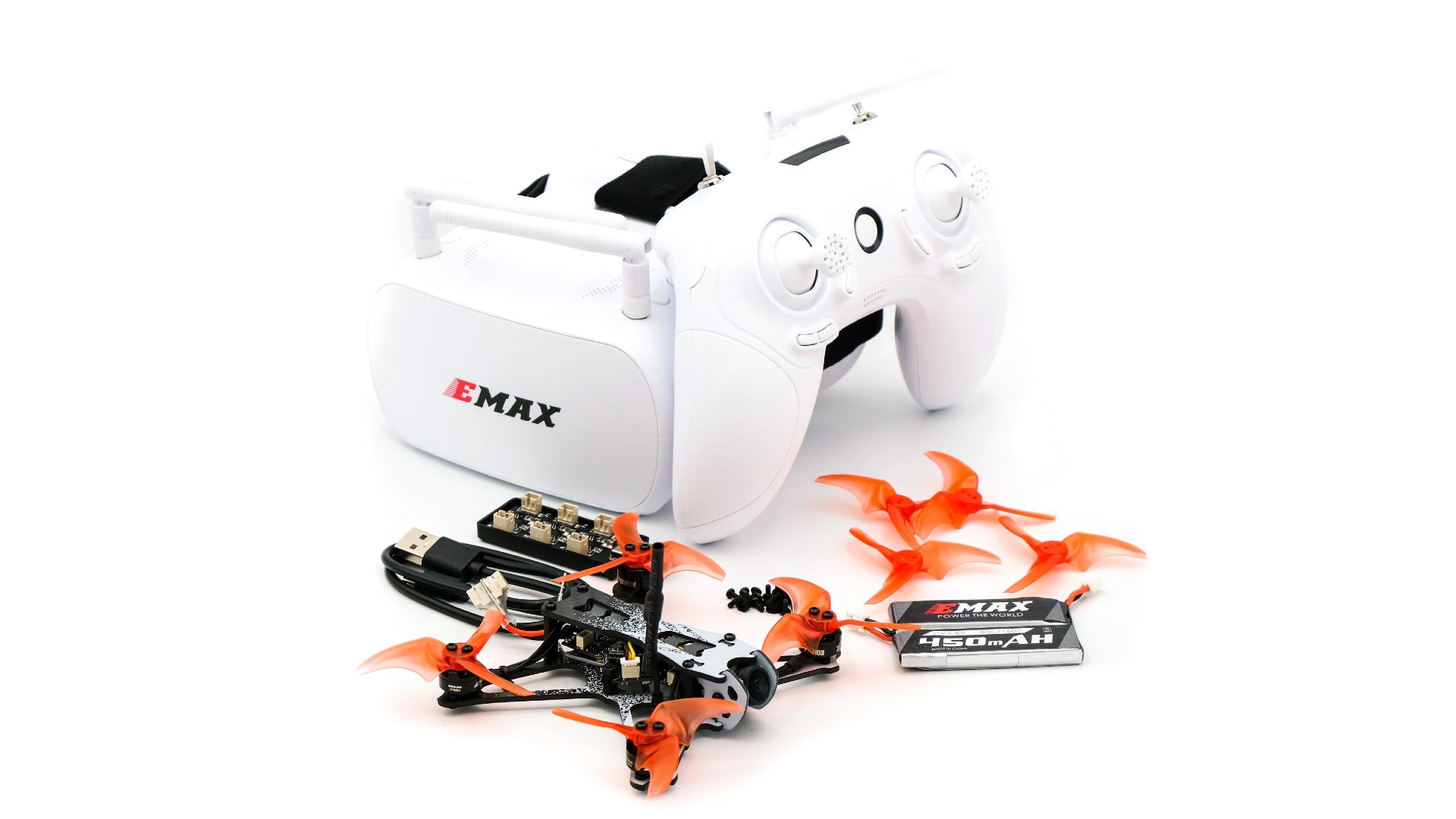
What separates this from the Tinyhawk 3 is the inclusion of proper VR03 goggles instead of the older box-style screens. The 4.3-inch LCD at 800x480 is bright enough to fly in direct sunlight, and the replaceable 5.8 3dBi antenna means you can upgrade to a patch for longer range later. The LiteRadio 2 SE transmitter supports ELRS, so you have the low-latency link that modern racers use, and it lasts about 8 hours on its internal battery. You can plug it into a computer and practice on VelociDrone or Liftoff before you even launch the real quad, which is huge for building muscle memory without crashing.
We have one honest complaint: at six minutes of mixed flying you are looking at a battery swap fairly quickly. That is normal for 1S whoops, but the Cetus kit manages a bit more with its brushed motors and lighter weight (though it cannot fly as aggressively). If you want longer sessions, buy a second pack. The reinforced whoop frame takes hits well, but after a few hard impacts the canopy can pop off, something the Tinyhawk carbon fiber frame handles more gracefully. Still, for a pilot who wants to grow from indoor gentle laps to outdoor freestyle tricks, the Meteor75 Pro is the complete package. It flies well, the transmitter is a real radio, and you have a path to upgrading goggles or adding a Crossfire module later.
If you are building a dedicated simulator setup to train, the LiteRadio 2 SE also works great, and you might want to read up on how much graphics power you really need for flight sims when choosing a pre-built gaming PC to run them at 120fps.
2. Tinyhawk 3 Freestyle Plus RTF Kit: Best Carbon-Fiber Whoop

Pros
- Carbon fiber 2.5-inch frame is very durable
- ELRS protocol for low-latency control
- Includes controller and FPV goggles
- Lightweight and easy to carry
Cons
- Goggles are basic box-type, not as immersive as VR03
- No dedicated simulator support mentioned for controller
Best for: beginners who want a rugged whoop that can take crashes and still fly well, with a genuine ELRS radio link.
Tiny Hawk has been a staple name in beginner FPV for years, and the TH3 Freestyle Plus is the newest iteration. The big difference between this and the Meteor75 Pro is the frame: carbon fiber plates with 2.5-inch propellers give it a more traditional mini-quad feel, and the durability is excellent. We clipped a tree branch at speed and the frame barely showed a mark, where a plastic whoop frame might have cracked a strut. The included controller and goggles mean you can bind and fly immediately, and the ELRS receiver gives you sub-10ms radio latency that is competitive with much more expensive setups.
The trade-off is the goggles. They are a standard box-style analog display with a smaller screen than the VR03. The image is clear enough for a beginner to learn throttle control and line selection, but you will want to upgrade to something like the VR03 or a pair of Skyzone goggles once you start flying faster lines. The controller does not have the same simulator-friendly USB joystick functionality as the LiteRadio 2 SE, so you cannot practice on a PC without buying a separate dongle. That is a meaningful omission because simulator time is the fastest way to improve without breaking parts.
For someone who plans to fly mostly outdoors and wants a kit that will survive learning acro mode, the Tinyhawk 3 is the better buy over the APEX kit because of the carbon frame and ELRS. The APEX kit has altitude hold and modes that make it easier for total beginners, but the TH3 is a more authentic FPV experience from day one. If you want to fly indoors in small spaces, the Meteor75 Pro is smaller and lighter; the TH3 with its 2.5-inch props is still agile but feels more planted in the wind.
3. APEX FPV Drone Kit: Most Beginner-Friendly

Pros
- Three flight modes: beginner, horizon, acro
- Altitude hold makes learning easy
- Three batteries included for extended flight time
- Wide 120-degree FPV goggles
Cons
- Analog video has inherent snow and scan lines (normal for analog)
- Frame is plastic, less durable than carbon fiber
Best for: absolute beginners who want to fly without crashing constantly thanks to altitude hold and self-leveling modes.
The APEX kit is built around the idea that a first FPV flight should not end in a broken frame. It ships with three batteries (the most of any kit here) giving roughly 15 to 18 minutes total flying time, which is enough for a beginner to get comfortable with throttle management. The controller uses S.BUS and has three modes: Beginner (altitude hold, self-leveling), Horizon (some assistance, but you can tilt), and full manual acro. This progression is exactly what someone needs to go from hover practice to flips without swapping hardware.
The 120-degree wide goggles are a nice touch: the field of view is wider than the box goggles in the Tinyhawk kit, so you get a more immersive feel. But it is still analog, and you will see the characteristic snow and scan lines in weak signal areas. The manual explicitly warns about this, which we appreciate. The frame is not carbon fiber; it is a plastic molding that flexes in a crash. That helps absorb some impact, but after a few hard landings the arms may develop cracks. For the price and the learning support, it is acceptable, but if you already know you want to fly aggressively, skip this and go for the Meteor75 Pro or Tinyhawk.
One thing we like: the transmitter is compatible with the Uncrashed and TRYPFPV simulators (via an S.BUS dongle). That means you can practice before real flying. The APEX kit is a solid entry point, but if you outgrow it in a few months, you will wish you had started with a better radio and goggles. It is a trainer, not a long-term investment.
4. BETAFPV Cetus FPV Kit: Best Brushed Starter

Pros
- Height hold in N mode makes stable hovering easy
- LiteRadio 2 SE works as a PC joystick for simulators
- Self-protection emergency landing feature
- Comes in a custom carry bag
Cons
- Brushed motors have less power and wear out sooner
- VR02 goggles are lower resolution than VR03
Best for: absolute beginners who want the easiest possible learning path indoors, including kids.
The Cetus is BETAFPV's entry-level brushed kit, and it is deliberately designed to be the least intimidating introduction to FPV. The brushed motors are quieter and less powerful than the brushless motors on the Meteor75 Pro, which means the quad moves gently and you have more time to react. The height hold function in N mode keeps the drone at a fixed altitude when you release the throttle, which is hugely helpful for a first hover. The self-protection feature initiates an emergency landing if the signal is lost or battery is low, which can save the quad from dropping out of the sky.
The VR02 goggles are a single-screen box design with a lower resolution than the VR03. They work fine for learning orientation, but the image is soft and you will not be able to read OSD text easily. The LiteRadio 2 SE is the same transmitter as in the Meteor75 Pro kit, which is great: it supports ELRS and can be used as a USB joystick for simulators. That means you can train on a PC without buying extra gear, which is a big advantage over the APEX kit.
The main downside is that brushed motors have a limited lifespan. They will start to lose power after 20 to 30 hours of flight, and you will need to replace them. For a kid learning to fly indoors for a few weeks, that is fine. For an adult who wants to progress to racing, the Meteor75 Pro is a much better long-term buy. The Cetus is a training wheel; the Meteor75 Pro is a real race bike.
5. EZ Pilot FPV RTF Kit: Best for Young Pilots

Pros
- Altitude control mode lets beginners fly with one stick
- Three difficulty levels (EZ 1-stick, intermediate, expert)
- Real 5.8G FPV goggles, no phone needed
- Lightweight and compact
Cons
- Only 4 minutes flight time
- Very basic controller, no simulator support
Best for: kids or absolute beginners who need the simplest possible control scheme.
The EZ Pilot takes the training-wheel approach even further than the Cetus. Its "EZ Level 1" mode lets you fly with a single stick -- you push forward to go forward, left to turn, and the drone automatically maintains altitude. That is as simplified as FPV gets. If you have ever handed a controller to a six-year-old who immediately yanks the throttle to max and flies into a wall, you will understand why this exists. The level 2 mode adds a second stick for yaw and pitch with self-leveling help, and level 3 unlocks full acro with flips.
The goggles are real 5.8G analog, not a phone-based VR headset. That is good, because phone-based solutions add latency and drain your phone battery. The image is basic but perfectly adequate for a child. The flight time is short at about 4 minutes, and the controller is basic with no USB simulator support. The frame is a plastic whoop style with prop guards, which is safe for indoor use.
This is not a kit for a teenager or adult who wants to race. The APEX or Cetus offer a better path to progression. But for a parent buying a first FPV kit for a child under 12, the EZ Pilot's one-stick mode is genuinely brilliant. It removes the biggest barrier (coordination of two sticks) and lets the kid have fun immediately. Once they master that, they can move to level 2 and then to a proper kit like the Meteor75 Pro. Think of it as a training drone that actually works.
6. STARDRONE 40L FPV Drone Backpack

Pros
- 40L capacity holds 5 to 7 quads up to 10 inches
- 15 customizable foam dividers for protection
- Dedicated laptop compartment for 15.6-inch
- Waterproof fabric and included rain cover
- Ergonomic straps and aluminum frame
Cons
- Not a flying kit, only a bag
- Heavy at 2.2 pounds before loading gear
Best for: pilots who need to transport multiple drones, goggles, batteries, and tools to races or flying spots.
We include this not because it is a racing drone, but because once you own a kit, you quickly realize you need a way to carry it all. The STARDRONE BP2 backpack is a 40-liter case built specifically for FPV pilots. The dividers can be arranged to fit 5 to 7 drones from 1.6-inch whoops up to 10-inch freestyle quads, plus goggles, transmitters, batteries, and even a 15.6-inch laptop. The 180-degree full-open lid lets you see everything at once, and the magnetic battery pocket has a power indicator to check charge levels without opening the bag.
The build quality is good for the price: 840D Oxford fabric with waterproof zippers and an additional full-coverage rain cover for heavy downpours. The aluminum frame and S-curve shoulder straps distribute weight well, so even loaded with three quads and a laptop, the bag does not dig into your shoulders. It is not a replacement for a hard case if you are checking gear on a plane, but for car trips and hiking to a spot, it works.
If you are buying your first FPV kit, you do not need this immediately. But if you plan to attend races or travel with your quads, this bag is better than shoving loose gear into a regular backpack. For security when leaving gear at a field, you might also want to look at a wireless home security camera to keep an eye on your vehicle or gear.
7. FPVDrone 225mm 5-inch Frame Kit

Pros
- 3K carbon fiber is strong and lightweight
- 30.5mm and 20mm mounting holes for flight controllers
- 25mm standoffs give good height for electronics
- Includes Lipo battery strap
Cons
- Frame only, no electronics, motors, or props
- No instructions included for assembly
Best for: experienced pilots or builders who want a strong freestyle frame to build their own race drone.
This is not a ready-to-fly kit by any definition. It is a bare carbon fiber frame for the 5-inch (225mm) class, and you need to supply your own motors, flight controller, ESC, camera, VTX, receiver, and props. For a pilot who already has electronics from a wrecked quad or wants to spec each part themselves, this frame is a solid foundation. The 3K carbon fiber plates are CNC-machined with clean edges, and the 25mm standoffs provide enough room for a stacked FC/ESC setup. It has both 30.5 and 20mm mounting patterns, so you can use standard or micro flight controllers. At 0.22 pounds, it is light enough to build a sub-250g quad if you pick small motors and a lightweight battery.
The lack of instructions is typical for frame kits at this price. If you have built a quad before, you will figure out the stack order from the hardware bag. If you have not, this is not the place to start. The frame is not pre-tapped for screws; you will need to thread them carefully. It is a good value for a freestyle build, but beginners should stay away and buy one of the RTF kits above. For those interested in building their own PC for flight sims or video editing, check our guide on components for gaming to pair with your custom build.
How to Choose the Best FPV Racing Drone Kit
Frame Type and Size
The frame determines what kind of flying you can do. Whoop frames (75mm to 85mm) with prop guards are safe indoors and survive crashes well. 2.5-inch and 3-inch pick prop guards or open frames are a middle ground for small yards and parks. 5-inch frames are the standard for racing and freestyle; they fly aggressively but require more space and skill. For a first kit, a whoop or 2.5-inch carbon fiber frame is the best balance of durability and performance.
Radio Protocol and Transmitter
ELRS (ExpressLRS) has become the standard for FPV racing due to its sub-10ms latency and long range. Kits with ELRS are more future-proof than older protocols like S.BUS or FrSky. A good transmitter should also work with PC simulators via USB. The LiteRadio 2 SE included in BETAFPV kits does this natively; other controllers may require a separate dongle. Simulator practice is one of the fastest ways to improve, so this matters.
Goggles
Analog FPV goggles come in two types: box goggles (one large LCD screen) and binocular goggles (two small screens, typically better quality). For beginners, box goggles are fine; they are cheaper and have a wider field of view. The resolution and brightness matter more for outdoor flying. If you can upgrade to goggles with a DVR (recording) slot, you can review your flights. Digital systems like DJI are better but rarely included in beginner kits at this price.
Flight Modes and Assistance
Three flight modes are common: Angle (self-leveling, good for learning), Horizon (self-leveling plus flips), and Acro (full manual). Kits with altitude hold make the first flights less stressful. If you are buying for a child, look for a one-stick mode like the EZ Pilot. If you want to learn real FPV quickly, skip training modes and use a simulator.
The single most important thing you can do to protect your investment in FPV gear is to practice on a simulator until you can fly a lap without crashing. Good kits let you do that with their own transmitter.
Frequently Asked Questions
Are RTF drone kits really ready to fly?
Most RTF kits come with the drone, controller, goggles, batteries, and a charger. You may need to charge the battery, install propellers, and bind the receiver to the transmitter. The process usually takes 10 to 15 minutes. Some kits ship with the propellers already mounted. Always read the quick-start guide.
What is the difference between brushed and brushless motors?
Brushed motors use carbon brushes that wear out after 20 to 50 hours of flight. They are cheaper and quieter, but less powerful. Brushless motors last much longer and provide more thrust for their weight. All serious racing and freestyle drones use brushless motors. Brushed kits like the Cetus are only for beginners who will not fly often.
Can I fly a whoop drone outdoors?
Small whoops with 65mm to 75mm wheelbase are fine in calm conditions but get pushed around by wind above 5 mph. Larger whoops with 2.5-inch or 3-inch props handle light wind better. For serious outdoor flying, a 5-inch quad is ideal, but it requires more space and a spotter.
Do I need a license to fly FPV drones in the US?
If your drone weighs over 250 grams (about 0.55 pounds), you must register with the FAA and fly with a TRUST certificate. Most 5-inch builds exceed 250g. Many whoop kits are under 250g, so they fall into the recreational exemption, but you still need to follow visual line-of-sight rules unless you have a spotter.
How long do FPV drone batteries last?
Flight times range from 3 to 6 minutes for aggressive flying on a 5-inch, up to 8 minutes for gentle cruising on a whoop. Always land when the voltage drops below 3.5V per cell to protect the battery. Buying multiple batteries is recommended for longer session.
Can I use my own controller with these kits?
Most RTF kits use a proprietary receiver that only works with the included transmitter. If you want to use a high-end radio like a Radiomaster Boxer or TBS Tango 2, look for a kit that supports a separate receiver module or buy a bind-and-fly version without a controller. The BETAFPV Meteor75 Pro kit uses ELRS, which is compatible with many ELRS transmitters.
What safety gear should I buy with my first FPV kit?
A good set of props (spares), a battery voltage checker, a fireproof LiPo charging bag, and a pair of safety glasses for tuning on the bench are all useful. If you fly 5-inch quads, consider a spotter and a first aid kit.
The Bottom Line
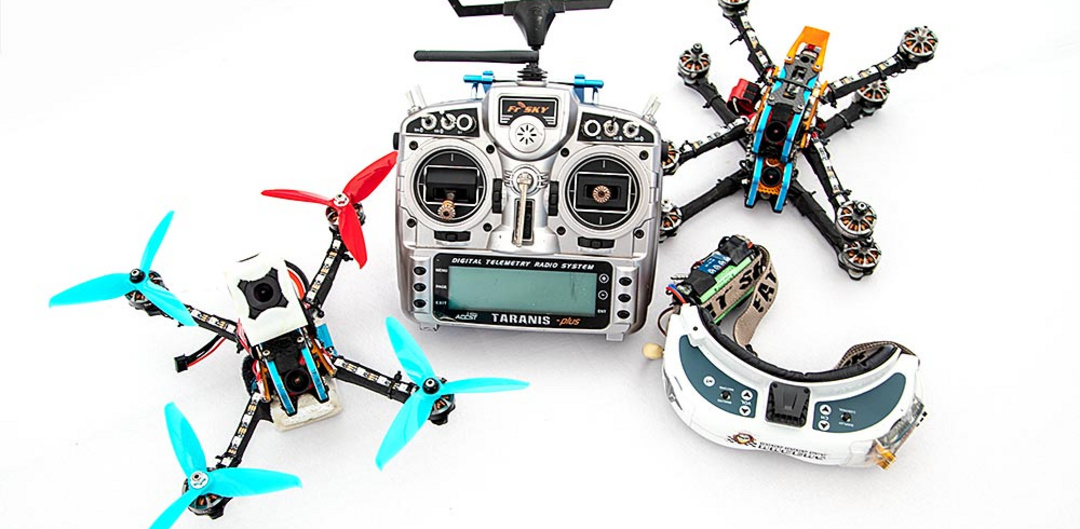
The best FPV racing drone kit for most people is the BETAFPV Meteor75 Pro FPV Kit. It has the strongest motors, the best included goggles, and a transmitter that doubles as a PC simulator controller. If you want a carbon fiber frame and prefer Tiny Hawk's build quality, the Tinyhawk 3 Freestyle Plus RTF Kit is a close second. For absolute beginners who need altitude hold and simple modes, the APEX FPV Drone Kit takes the stress out of learning.
If you are buying for a child, the EZ Pilot is the only kit that genuinely teaches one-stick control first. The Cetus is a fine brushed starter, but we think you will outgrow it quickly. The frame and backpack are not complete flying kits, but they round out the ecosystem for builders and travelers.
No matter which kit you choose, spend the first few hours on a simulator. It saves money and makes the real thing more fun. The best FPV racing drone kit is the one you actually fly, not the one with the best spec sheet.
As an Amazon Associate we earn from qualifying purchases.