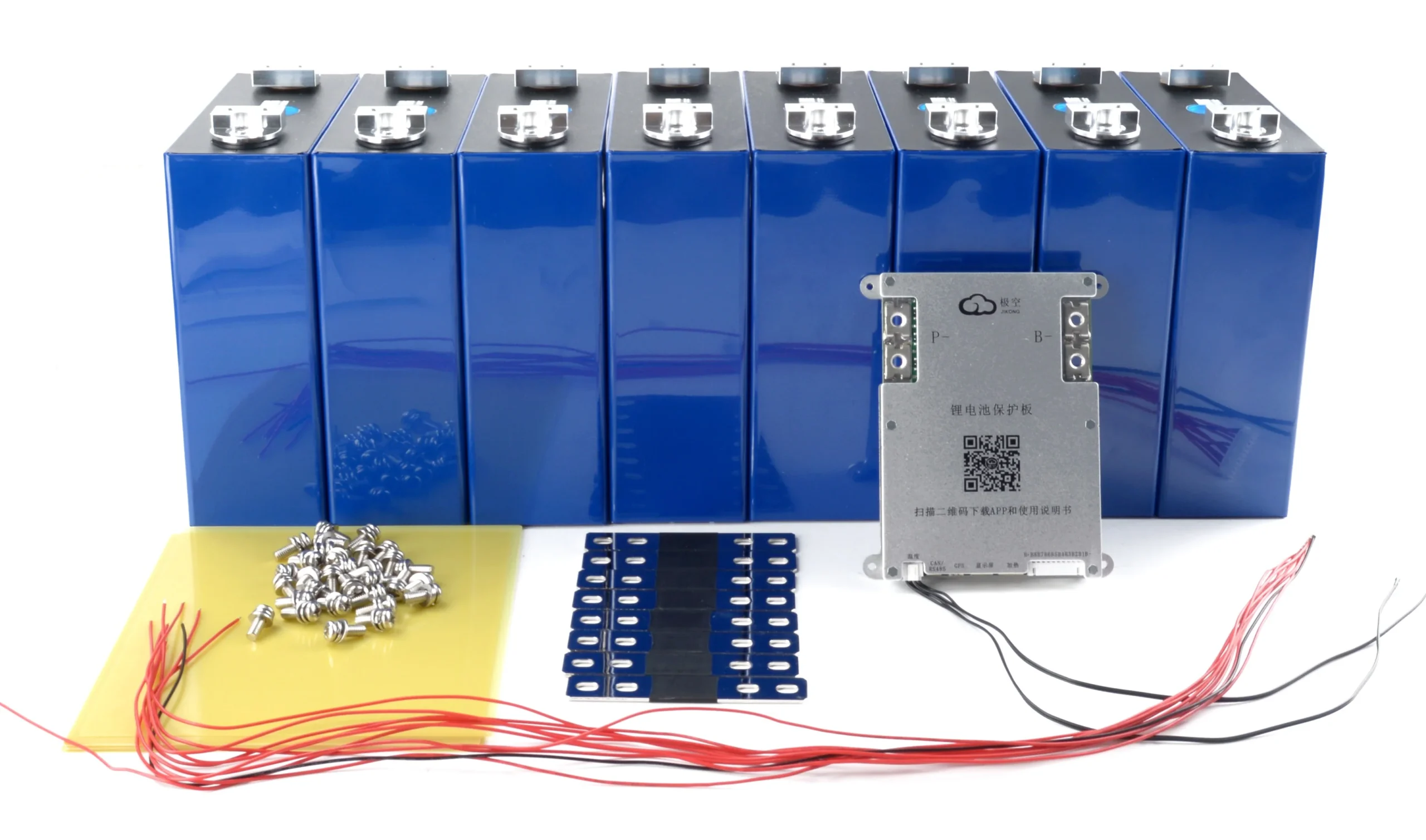

A battery that fits the compartment can still be wrong for the job. A trolling motor needs a different current profile from a home backup bank, while a cold-weather RV setup needs charging protection that a basic deep-cycle battery may not provide. The right LiFePO4 battery is a system component, not just a box marked 12V or 48V.
We compared 10 batteries across compact backup units, Group 24 and Group 31 replacements, large RV banks, golf cart systems and server-rack storage. The Best lifepo4 battery for most larger 12V installations is the ECO-WORTHY 280Ah Metal Case, while the VEMDIA Group 31 is the more practical fit for many everyday 12V compartments. The list also includes small-format batteries and high-voltage systems for buyers with more specialized requirements.
Comparison table
| # | Product | Award | Voltage and capacity | BMS | Best for |
|---|---|---|---|---|---|
| 1 | ECO-WORTHY 280Ah Metal Case | Best overall | 12V, 280Ah | 200A | Large RV and off-grid systems |
| 2 | SUPER EMPOWER Group 24 | Best drop-in fit | 12V, 100Ah | 100A | RVs and marine compartments |
| 3 | VEMDIA Group 31 Smart | Best Group 31 | 12V, 100Ah | Smart 100A | Expandable solar and marine banks |
| 4 | HeyFuture Group 24 Bluetooth | Best connected Group 24 | 12V, 100Ah | Intelligent BMS | Trolling motors and connected setups |
| 5 | dumfume 150Ah Max | Best mid-size capacity | 12V, 150Ah | 100A | RV and solar storage |
| 6 | CYCLENBATT 10Ah 2-Pack | Best compact pair | 12V, 10Ah each | 10A | UPS, lighting and small devices |
| 7 | dumfume 314Ah | Best high-capacity 12V | 12V, 314Ah | 200A | Large off-grid energy banks |
| 8 | VEMDIA Group 31 Deep Cycle | Best fast-charging Group 31 | 12V, 100Ah | Smart 100A | RV, marine and home backup |
| 9 | TEMGO 48V Golf Cart Battery | Best golf cart kit | 48V, 100Ah | Smart 200A | 48V golf carts |
| 10 | ECO-WORTHY Cubix100 | Best rack battery | 51.2V, 100Ah | Bluetooth, CAN and RS485 | Home backup and solar racks |
1. ECO-WORTHY 280Ah Metal Case: Best Overall

Pros
- Large 280Ah capacity for 12V systems
- Metal enclosure adds heat and impact protection
- Bluetooth monitoring and low-temperature charging cutoff
- 200A BMS supports demanding loads
- Mounting feet allow direct installation
Cons
- Large and heavy compared with 100Ah batteries
- Exterior label style is shipped randomly
- No rating data is provided for this listing
Best for: RV owners and off-grid users building a substantial 12V energy bank.
The ECO-WORTHY 280Ah Metal Case is the battery we would choose when a 12V system needs serious reserve without immediately moving to a multi-battery bank. Its defining feature is not just the capacity. The heavy-duty metal enclosure, four mounting feet and low-voltage power switch make it feel designed for a permanent installation rather than occasional portable use. That matters in an RV or van, where vibration, movement and tight mounting spaces can turn a loose battery into a safety concern.
At 280Ah, it is a very different proposition from the 100Ah Group 24 and Group 31 models elsewhere in this roundup. The listing gives it a maximum energy figure of 3584Wh, while the built-in 200A BMS provides more current headroom than the 100A protection circuits used by the SUPER EMPOWER Group 24, VEMDIA Group 31 Smart and HeyFuture Group 24 Bluetooth. That does not make it suitable for every inverter or motor setup, but it gives a larger installation more room to handle substantial loads. The metal case also removes the need for a separate battery box according to the product listing.
Bluetooth monitoring is useful when the battery is buried inside an RV cabinet. The app can show voltage, capacity and charge or discharge status, so the owner does not have to guess what is happening inside the bank. Low-temperature protection automatically cuts off charging in cold conditions, which is an important safeguard for LiFePO4 cells. The BMS also covers overcharge, over-discharge, over-current, short circuit and temperature protection.
The weakness is physical scale. At 16.54 inches wide, 8.64 inches long and 9.65 inches high, this is not a casual replacement for a small lead-acid compartment, and the listing does not provide a product weight. It also lacks the modular simplicity of using several smaller batteries, and buyers who only need a trolling motor battery may be carrying more capacity than necessary. For advice on the surrounding charging hardware, how battery chemistry changes charger requirements is a useful question to settle before installation.
Choose the ECO-WORTHY 280Ah Metal Case when a large 12V bank, strong enclosure and app monitoring matter more than compact dimensions. It is the most complete all-purpose package here, but it should be skipped if the battery compartment was designed around a smaller Group 24 or Group 31 format.
2. SUPER EMPOWER Group 24: Best Drop-In Fit

Pros
- Standard BCI Group 24 footprint
- 21.6-pound listed weight
- Low-temperature charging and discharge protection
- Supports up to 4S4P configurations
- M8 terminals and clear charging guidance
Cons
- Intended for energy storage, not engine starting
- No Bluetooth monitoring
- 100Ah capacity is modest for large inverter loads
Best for: anyone replacing a lead-acid or AGM battery in a standard Group 24 compartment.
The SUPER EMPOWER Group 24 gets the basics right for a common replacement job. Its 6.49 by 10.24 by 8.98-inch dimensions are given as a BCI Group 24 fit, and the 21.6-pound listed weight should make installation less awkward than moving a comparable lead-acid battery. For an RV house battery, boat accessory circuit or trolling motor compartment that already uses Group 24 hardware, that predictable shape is the main attraction.
Its 100Ah capacity is familiar territory for 12V LiFePO4 batteries, but the useful details are in the operating protections. The 100A BMS covers overcharge, over-discharge, over-current, short circuit and temperature conditions. Charging stops below 32 degrees Fahrenheit, and discharge stops below minus 4 degrees Fahrenheit, with discharge resuming above 41 degrees Fahrenheit. Those separate thresholds are more informative than a vague claim of all-weather operation.
The battery supports a 12V lithium charger using a 14.4 to 14.6V charging profile, and it can work with solar controllers set to lithium mode. Generator charging is also supported when paired with a lithium or DC to DC charger. Up to four batteries can be connected in series and four in parallel, creating a potential 51.2V, 400Ah configuration with 20.48kWh capacity. That gives the small single battery a credible path into a larger system, provided the installer follows the manufacturer’s configuration guidance.
The biggest limitation is that it is explicitly for energy storage and is not intended for engine starting or cranking. There is no Bluetooth app, so checking battery state requires an external monitor or the system’s own display. The VEMDIA Group 31 Smart offers a larger physical format and smart BMS, while the SUPER EMPOWER model wins when the existing compartment is specifically Group 24. Readers replacing an older chemistry may also want to compare the fit and maintenance differences between battery types before reusing their charger.
This is the sensible pick for a straightforward RV or marine conversion where physical compatibility comes first. Choose it for a known Group 24 bay and deep-cycle use. Skip it for engine starting, built-in monitoring or systems that need more than 100Ah from one unit.
3. VEMDIA Group 31 Smart: Best Group 31

Pros
- Group 31 drop-in format
- Smart 100A BMS with low-temperature cutoff
- Supports 4S4P expansion
- 24-pound listed weight
- Wide discharge temperature range
Cons
- No stated Bluetooth or app monitoring
- Cycle-life claims vary by depth of discharge
- Not the smallest 100Ah option
Best for: Group 31 RV, marine and solar installations that may expand later.
The VEMDIA Group 31 Smart is the most balanced replacement in the familiar larger marine and RV footprint. Its stated dimensions are about 12.9 by 6.69 by 8.5 inches, and the 24-pound weight keeps it manageable during installation. That combination makes sense for a Group 31 battery box where a 100Ah lithium unit needs to occupy the same general space as the battery it replaces.
The smart 100A BMS is the important hardware inside. It protects against overcharge, over-discharge, over-current and short circuits, and it cuts off charging below 32 degrees Fahrenheit. During discharge, the battery is specified to operate from minus 4 to 140 degrees Fahrenheit. That cold-charge cutoff is particularly useful for boats and RVs that spend time in unheated storage, though the owner still needs a charger and system wiring configured for LiFePO4.
VEMDIA describes different cycle figures at different depths of discharge: 15, 000 cycles at 60 percent, more than 8, 000 at 80 percent and 6, 000 at 100 percent. That distinction is worth paying attention to because it gives a clearer picture of how usage affects longevity. The battery can be connected up to four in series and four in parallel, allowing a bank up to 51.2V and 400Ah. The listing also specifies a 14.6V 20A charger for a five-hour full-charge example.
Compared with the SUPER EMPOWER Group 24, this battery needs more room but gives the Group 31 owner a more expandable platform. The HeyFuture Group 24 Bluetooth is more appealing if app access and a smaller footprint are the priority. VEMDIA’s weakness is that the listing calls the BMS smart without specifying a built-in Bluetooth interface, so buyers should not assume phone monitoring. Its cycle claims also depend heavily on depth of discharge rather than representing one universal figure.
The VEMDIA Group 31 Smart is the Best lifepo4 battery for a conventional Group 31 replacement that may become part of a larger bank. It suits RV house power, marine accessories and off-grid storage. Pick another model if your compartment is Group 24 or if app-based monitoring is essential.
4. HeyFuture Group 24 Bluetooth: Best Connected Group 24

Pros
- Bluetooth monitoring
- Standard Group 24 size
- 21.5-pound listed weight
- BMS includes low-temperature cutoff
- Series and parallel expansion
Cons
- Older charging systems may need upgrades
- No detailed current rating for the BMS
- Capacity remains 100Ah
Best for: buyers who want Group 24 compatibility with connected battery monitoring.
The HeyFuture Group 24 Bluetooth is a straightforward 12V 100Ah battery with one feature that changes how it is managed: Bluetooth access. Its stated 6.61 by 10.24 by 8.3-inch dimensions and 21.5-pound weight place it in the same practical installation class as the SUPER EMPOWER Group 24. For an RV cabinet or boat compartment that already accepts Group 24 batteries, it is a neat way to add monitoring without installing a separate display.
The intelligent BMS protects against overcharging, discharge, overcurrent and overheating, and the listing says it has dustproof, waterproof and low-temperature cutoff functions. The product is positioned for marine use, with shock resistance and protection for wet or dusty environments. Those claims make it more interesting for a trolling motor or yacht accessory bank than a generic indoor battery, although the listing does not provide an IP rating or a precise BMS amperage.
Expansion is available in both series and parallel, up to 4S4P, for a maximum stated configuration of 48V and 400Ah. That is useful for someone starting with one battery and planning a larger solar or off-grid system later. The standard Group 24 format is another advantage, but HeyFuture warns that some older lead-acid charging systems are not compatible without system upgrades. The battery needs lithium-aware charging rather than simply inheriting every setting from the old installation.
The VEMDIA Group 31 Smart is the stronger choice for a Group 31 bay and spells out more operating figures. The HeyFuture model is the better fit for Group 24 users who care about phone access, while the SUPER EMPOWER Group 24 provides more explicit charging instructions and temperature thresholds. HeyFuture’s weakness is the lack of a published BMS current rating and detailed dimensional weight beyond the listed 21.5 pounds, which makes system matching less precise.
Use this battery when a compact Group 24 replacement and Bluetooth monitoring are the central requirements. It is a good match for connected RV, marine and solar setups, but buyers with an older charging system should plan the electrical upgrade before ordering.
5. dumfume 150Ah Max: Best Mid-Size Capacity

Pros
- 150Ah capacity and 1920Wh stated energy
- IP65 waterproof rating
- 100A BMS
- Supports 4S4P expansion
- Compact form for its capacity
Cons
- Charging performance requires temperatures of at least 5°C
- Not intended for engine starting
- Requires a maintenance cycle every six months during storage
Best for: RV and solar users who need more reserve than a 100Ah battery without moving to a 300Ah unit.
The dumfume 150Ah Max occupies a useful middle ground. A 100Ah battery is easy to specify, but it can feel restrictive when an RV runs several small loads overnight or a solar system has a short charging window. This model raises capacity to 150Ah and lists 1920Wh of energy, giving the owner more reserve without jumping straight to the much larger 314Ah Dumfume battery.
Its 10.04 by 7.68 by 9.84-inch form is relatively compact for the capacity, though the supplied information lists its weight around 41 to 43 pounds. The IP65 waterproof rating is relevant for outdoor and marine-adjacent installations because it indicates protection against dust and water jets, not immersion. The 100A BMS handles overcharge, over-discharge, short circuit and overheating, while temperature protection is intended to control charging and discharging.
Dumfume states more than 4, 000 cycles to 80 percent capacity. That is a useful operating reference, but it is not the same claim as the 15, 000-cycle figures quoted by the VEMDIA models at a lower depth of discharge. The battery can be expanded to 4S4P, making it a flexible base for a larger solar or backup setup. It is designed for energy storage rather than engine starting, so it belongs in an RV house bank or solar system, not a starter circuit.
The important catch is cold-weather behavior. The listing says battery performance requires temperatures of 5°C or higher and warns buyers to verify suitability before purchase. That is a more restrictive statement than the explicit below-freezing charging cutoff on the SUPER EMPOWER and VEMDIA batteries. The ECO-WORTHY 280Ah Metal Case offers far more capacity and a stronger metal enclosure, while this Dumfume is easier to fit when 280Ah would be excessive.
Choose the dumfume 150Ah Max when capacity between the common 100Ah size and a large 300Ah bank is the deciding factor. It is a capable RV and solar battery, but cold-weather users should choose a model with clearly stated low-temperature charging protection instead.
6. CYCLENBATT 10Ah 2-Pack: Best Compact Pair

Pros
- Two compact 12V 10Ah batteries
- UL certified
- IP67 water resistance
- 10A continuous and 20A five-second peak discharge
- Supports up to 4S4P configurations
Cons
- Not suitable for large RV inverters
- Limited 10Ah capacity per battery
- No app monitoring
Best for: small UPS units, lighting, fish finders, trail cameras and other modest loads.
The CYCLENBATT 10Ah 2-Pack is not a shrunken version of the large RV batteries. It is a different kind of product for equipment that needs a compact 12V source. Each battery measures 5.95 by 2.56 by 3.7 inches, matching the stated footprint of a standard 12V 7Ah SLA battery, and the two-pack weighs 4.41 pounds according to the listing. That makes it easy to place inside a UPS, alarm system or small outdoor device.
The electrical limits explain where it belongs. Each unit has a 10A continuous charge and discharge rating, with a 20A peak discharge for five seconds, and the listing gives a total power output of 128W. That is suitable for fish finders, lighting, trail cameras, gate openers, ride-on toys and similar loads. It is not the right tool for a large inverter, RV house bank or trolling motor that demands sustained high current.
A built-in 10A BMS provides protection against overcharge, over-discharge, over-current, over-voltage, extreme temperatures and short circuits. IP67 water resistance adds useful protection for outdoor equipment, and the listing identifies the batteries as UL certified. More than 5, 000 cycles and a stated 10-year service life are also claimed. Up to four batteries can be placed in series and four in parallel, with a maximum stated 51.2V, 40Ah and 2048Wh configuration.
The two-pack format gives more flexibility than a single small battery, but it can also create confusion if the buyer expects 20Ah from one 12V unit. The SUPER EMPOWER Group 24 is a much better fit for an RV or trolling motor, while CYCLENBATT wins when the physical space is close to a small SLA battery. Its lack of Bluetooth is not a serious drawback for the low-power devices it targets, but users who need live state-of-charge information will need external equipment.
This is the Best lifepo4 battery option here for compact electronics and small backup systems. Select it for fit, water resistance and modest loads. Do not use it as a substitute for a 100Ah deep-cycle battery simply because both products use 12V chemistry.
7. dumfume 314Ah: Best High-Capacity 12V
Pros
- Up to 4019.2Wh stated energy
- 200A BMS
- High-strength ABS casing
- 314Ah capacity in a single 12V battery
- Series and parallel expansion
Cons
- Around 61 pounds listed weight
- Charging performance requires temperatures of at least 5°C
- Large footprint needs careful installation
Best for: high-demand 12V RV, home backup and off-grid systems.
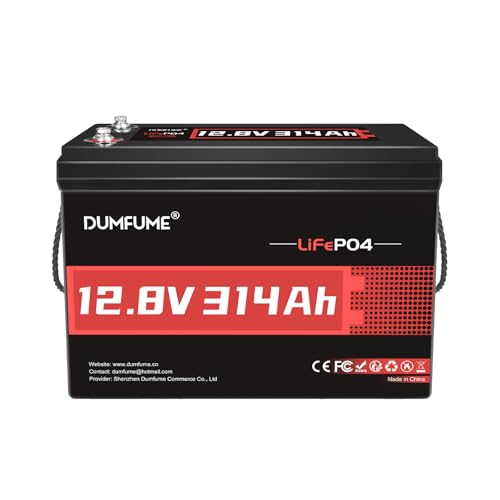
The dumfume 314Ah is for buyers who want to keep a system at 12V while adding as much reserve as possible from one battery. The listing gives it up to 4019.2Wh of energy and a 314Ah capacity, which is enough to change the design of an RV house bank or small off-grid system. It avoids the wiring complexity of combining several 100Ah batteries, though the physical installation becomes more demanding.
A 200A BMS gives it twice the stated current rating of the 100A circuits in several smaller models. The protection system covers overcharge, over-discharge, overcurrent, overheating and short circuits, with automatic high and low temperature cutoff. The battery uses a high-strength ABS casing described as impact, heat, weather and flame resistant. Its stated size is 15.16 by 7.6 by 9.84 inches, and the product information lists a weight of about 61 pounds.
Dumfume claims 4, 000 cycles at 100 percent depth of discharge and up to 15, 000 cycles at 60 percent depth of discharge, with a lifespan of up to 10 years. That distinction matters for planning: extracting every available watt-hour on every cycle places a different demand on the cells than using a shallower daily cycle. The battery can also be connected in series and parallel for larger systems, making it a possible building block for home energy storage or a large RV bank.
This battery is more substantial than the dumfume 150Ah Max and offers greater current capacity than the 100Ah units. The ECO-WORTHY 280Ah Metal Case has a metal enclosure, Bluetooth monitoring and a built-in low-voltage switch, so it is more appealing when installation safety and app access matter. The 314Ah Dumfume’s weakness is its size and weight, along with the warning that performance requires at least 5°C. It also needs a charge or discharge cycle every six months during extended storage.
Pick the dumfume 314Ah when a 12V system needs maximum reserve and the mounting location can safely support the battery. It is overkill for a small boat or compact camper, but it makes sense for demanding off-grid and home backup installations.
8. VEMDIA Group 31 Deep Cycle: Best Fast-Charging Group 31

Pros
- Group 31 replacement format
- Smart 100A BMS with low-temperature cutoff
- Five-hour charging example with a 20A charger
- 24-pound listed weight
- 4S4P expansion support
Cons
- Product information includes inconsistent dimensional data
- No stated Bluetooth interface
- Cycle figures depend on depth of discharge
Best for: RV, marine and backup systems where charging speed and Group 31 fit both matter.
The VEMDIA Group 31 Deep Cycle is closely related in purpose to the VEMDIA Group 31 Smart, but its listing puts more emphasis on charging speed and high-demand applications. It is a 12V 100Ah battery intended as a Group 31 replacement, with stated dimensions of 12.9 by 6.7 by 8.5 inches and a 24-pound weight in the feature text. That combination is practical for a marine compartment, RV house bank or golf cart installation where lifting and fitting a battery are regular chores.
Its smart 100A BMS provides overcharge, over-discharge, over-current and short-circuit protection. Charging is automatically cut off below 32 degrees Fahrenheit, while the stated discharge range runs from minus 4 to 140 degrees Fahrenheit. For a battery installed in a cold-weather RV or boat, that charging cutoff is more useful than a generic temperature claim because it identifies the condition that can damage LiFePO4 cells.
The listing says a 14.6V 20A LiFePO4 charger can fully charge the battery in five hours, and solar panels or an alternator can be used with suitable equipment. It also supports up to 4S4P, producing a possible 51.2V and 400Ah bank. Cycle claims are listed as 6, 000 cycles at 100 percent depth of discharge, 8, 000 at 80 percent and 15, 000 at 60 percent. Those figures are ambitious, but the depth-of-discharge context gives the buyer a meaningful way to interpret them.
The VEMDIA Group 31 Smart is the more natural choice if its emphasis on operating range and scalable storage matches your installation, while this model is better when a five-hour charging example matters. The SUPER EMPOWER model is a better match for Group 24 compartments. One concern is the product information, which lists an inconsistent set of 3 by 3 by 1-inch dimensions elsewhere, so buyers should verify the physical fit using the stated Group 31 measurements before ordering.
Use this battery for a Group 31 system that will cycle regularly and has a correctly configured lithium charger. It is a strong RV and marine option, but do not assume Bluetooth monitoring or ignore the dimensional inconsistency in the listing.
9. TEMGO 48V Golf Cart Battery: Best Golf Cart Kit

Pros
- Complete 48V upgrade kit
- 200A smart BMS with Bluetooth
- LCD touch display and charger included
- 200A continuous discharge
- Supports up to four units in parallel
Cons
- Not compatible with carts requiring CAN communication
- Compatibility depends on the cart controller
- Listed weight is 61.73 pounds
Best for: owners of compatible 48V golf carts who want a complete lithium conversion kit.
The TEMGO 48V Golf Cart Battery is more than a battery replacement. It is presented as an upgrade kit that includes a 58.4V 18A charger, a 2.8-inch LCD touch display and a retention strap. That makes it a more coherent purchase for a golf cart owner than a bare battery that leaves the charger, mounting and monitoring questions unresolved.
Its 48V, or 51.2V, 100Ah configuration is built around a 200A smart BMS with Bluetooth monitoring. TEMGO specifies 200A continuous discharge, 600A for three seconds and maximum power output of 10.24kW. Those numbers give the battery the headroom expected from a golf cart system, where acceleration and hills can create short bursts that a modest 12V deep-cycle BMS is not designed to handle.
The battery is rated for more than 5, 000 cycles at 80 percent depth of discharge and uses A-grade LiFePO4 cells according to the listing. Four units can be connected in parallel for up to 20.48kWh of stated usable energy. The physical dimensions are 20.67 inches wide, 10.59 inches long and 8.66 inches high, with a listed weight of 61.73 pounds, so the cart’s battery bay and mounting hardware need to be checked carefully.
Compatibility is the decisive issue. TEMGO says the battery works with most 48V golf carts and low-speed utility carts using a standard 48V controller, but it is not compatible with carts originally equipped with lithium batteries that require CAN or other communication protocols. The ECO-WORTHY Cubix100 is better suited to a stationary solar rack, while every 12V model here is the wrong electrical architecture for this application. Before replacing a cart battery, the system checks that prevent a mismatched battery installation are worth reviewing even if the battery will not be used in an RV.
Choose TEMGO when you need a 48V golf cart solution with a charger, display and Bluetooth in one kit. Skip it if your controller requires CAN communication or if the battery bay cannot accommodate its dimensions.
10. ECO-WORTHY Cubix100: Best Rack Battery

Pros
- 51.2V, 100Ah server-rack format
- UL9540, UL1973 and CEC listed
- CAN and RS485 communication
- Bluetooth and Wi-Fi monitoring
- Supports up to 32 units in parallel
Cons
- Listed weight is 100 pounds
- Large rack-oriented enclosure
- Requires compatible inverter communication
Best for: home backup and solar storage systems built around a 48V-class rack architecture.
The ECO-WORTHY Cubix100 belongs in a different class from the 12V batteries above. Its 51.2V, 100Ah configuration and 5120Wh stated capacity are aimed at solar storage and home backup, not a boat compartment or basic RV accessory circuit. The server-rack design makes the battery part of a larger energy system, where inverter communication, parallel expansion and installation standards matter as much as the cell chemistry.
Its strongest feature is the communication stack. CAN and RS485 interfaces support closed-loop communication with compatible solar inverters, while Bluetooth and Wi-Fi allow monitoring through the ECO-WORTHY app. That can give a home energy system more useful control than a battery that merely reports voltage. The battery supports up to 32 units in parallel, with a stated possible expansion to 163.8kWh, so it can scale far beyond a single-battery backup installation.
The safety credentials are unusually clear in this group. The product is listed as UL9540, UL1973 and CEC listed, with testing described as covering electrical safety and thermal runaway management. It also includes parallel cables, communication cables, grounding wires, terminal covers, screws and a manual. A 10-year limited warranty is stated. Those details make it a more system-ready choice than the TEMGO, although TEMGO is the better fit for a mobile golf cart.
The tradeoff is size and installation complexity. The battery measures 25.59 by 21.26 by 9.45 inches and weighs 100 pounds according to the product information. It needs a suitable rack or mounting surface, safe lifting and an inverter that can use its communication protocols. The ECO-WORTHY 280Ah Metal Case is much easier to use in a 12V RV system, while the Cubix100 makes sense only when the rest of the installation is designed around a 48V-class battery bank.
This is the Best lifepo4 battery pick for a rack-based solar or home backup system that can use CAN or RS485 communication. Choose it for certification, monitoring and expansion. Do not choose it as a casual replacement for a 12V battery or a golf cart pack.

How to choose best lifepo4 battery
The right LiFePO4 battery starts with the electrical system and the installation space, then moves to capacity, protection and monitoring.
Voltage and system architecture
A 12V battery belongs in a 12V system unless several units are deliberately wired in series. The TEMGO and ECO-WORTHY Cubix100 operate in the 48V class, so they require compatible controllers, chargers and inverters. Mixing a 48V battery into a 12V installation is not a minor wiring mistake. Confirm the system voltage before comparing capacity.
Capacity and usable energy
Amp-hours describe capacity at a stated voltage, while watt-hours make comparisons between voltage classes easier. The 100Ah 12V batteries suit ordinary RV, marine and solar loads, but the 150Ah, 280Ah and 314Ah options provide more reserve from a single unit. Capacity should be matched to the loads, the desired runtime and how much charging the solar or shore-power system can provide.
A larger battery does not fix an undersized charger, inverter or cable run.
BMS current rating
The battery management system controls charging and discharge safety. A 10A BMS, like the CYCLENBATT unit, belongs with small electronics, while 100A systems suit many 12V deep-cycle applications. The ECO-WORTHY 280Ah and dumfume 314Ah batteries use 200A BMS protection, and TEMGO specifies 200A continuous discharge for its 48V golf cart battery. Compare the BMS rating with the continuous and peak demand of the inverter or motor, not just the battery’s amp-hour label.
Low-temperature protection
LiFePO4 batteries should not be charged below the temperature allowed by their cells and BMS. Several models here cut off charging at 32 degrees Fahrenheit, while the dumfume batteries state that performance requires at least 5°C. Discharge and charge limits are not always the same, so read both. Cold-weather RVs, boats and unheated cabins need a battery with clearly stated charging protection.
Physical fit and installation
Group 24 and Group 31 describe established battery footprints, but the actual height, terminal position and mounting arrangement still need checking. The compact CYCLENBATT batteries fit the physical class of 12V 7Ah SLA batteries, while the rack and 48V models require entirely different spaces. Leave room for cables, ventilation requirements, service access and safe lifting. A battery that technically fits but cannot be secured is the wrong battery.
Monitoring and communication
Bluetooth is useful when the battery is hidden inside a cabinet or installed where a display is inconvenient. The HeyFuture and ECO-WORTHY 280Ah batteries provide app-oriented monitoring, while TEMGO adds Bluetooth and an LCD display. The Cubix100 goes further with CAN and RS485 communication for compatible inverters. These interfaces are only useful when the rest of the system supports them, so confirm protocol compatibility before relying on closed-loop control.
Frequently asked questions
Can a LiFePO4 battery replace a lead-acid battery?
Often, but only when the voltage, physical size, terminals and charging profile are compatible. Several batteries in this roundup are described as Group 24 or Group 31 replacements. A lead-acid charger may need to be replaced or reconfigured for LiFePO4 charging.
Can these batteries start an engine?
Not all of them. The SUPER EMPOWER Group 24 is explicitly intended for energy storage and not engine starting, while the dumfume 150Ah model is also described for energy storage rather than starting. Do not use a deep-cycle battery as a starter battery unless the manufacturer specifically approves that application.
What does a BMS do?
A battery management system monitors and protects the cells. Depending on the model, it can cut off charging or discharge for overvoltage, undervoltage, excessive current, short circuits and unsafe temperatures. The BMS rating also helps indicate how much current the battery can safely manage.
Can LiFePO4 batteries be connected in series and parallel?
Some of the products here support both. The SUPER EMPOWER, VEMDIA, HeyFuture, dumfume and CYCLENBATT listings describe expansion configurations, but the exact limits differ. Follow the manufacturer’s instructions, use matching batteries and ensure the charger and inverter support the resulting voltage.
Can these batteries charge in freezing weather?
Only if the battery and its protection system specifically permit it. The VEMDIA and SUPER EMPOWER models state that charging stops below 32 degrees Fahrenheit, while the dumfume listings specify a minimum performance temperature of 5°C. Never assume that a battery can safely charge simply because it can discharge in cold weather.
Is Bluetooth monitoring necessary?
No, but it can make ownership easier. Bluetooth lets you inspect voltage, capacity and charge or discharge status without opening a cabinet. It is most useful in an RV, boat or solar installation where the battery is difficult to reach.
Which battery is suitable for a 48V system?
The TEMGO is designed for compatible 48V golf carts and utility carts. The ECO-WORTHY Cubix100 is a 51.2V server-rack battery for solar and home backup systems. The 12V batteries can form higher-voltage banks only when the listing explicitly supports series connection and the complete system is configured correctly.

The bottom line
The Best lifepo4 battery for a large 12V RV, camper or off-grid installation is the ECO-WORTHY 280Ah Metal Case. Its 280Ah capacity, 200A BMS, metal enclosure, Bluetooth monitoring and low-temperature charging protection make it the most complete choice in this group. For a standard Group 31 compartment, the VEMDIA Group 31 Smart is easier to fit and gives a clear path to series and parallel expansion.
The specialized picks are just as important. Choose CYCLENBATT for compact 12V equipment, TEMGO for a compatible 48V golf cart and ECO-WORTHY Cubix100 for a rack-based home backup system with inverter communication. If you are undecided, start by measuring the compartment and confirming the system voltage before comparing capacity.
As an Amazon Associate we earn from qualifying purchases.