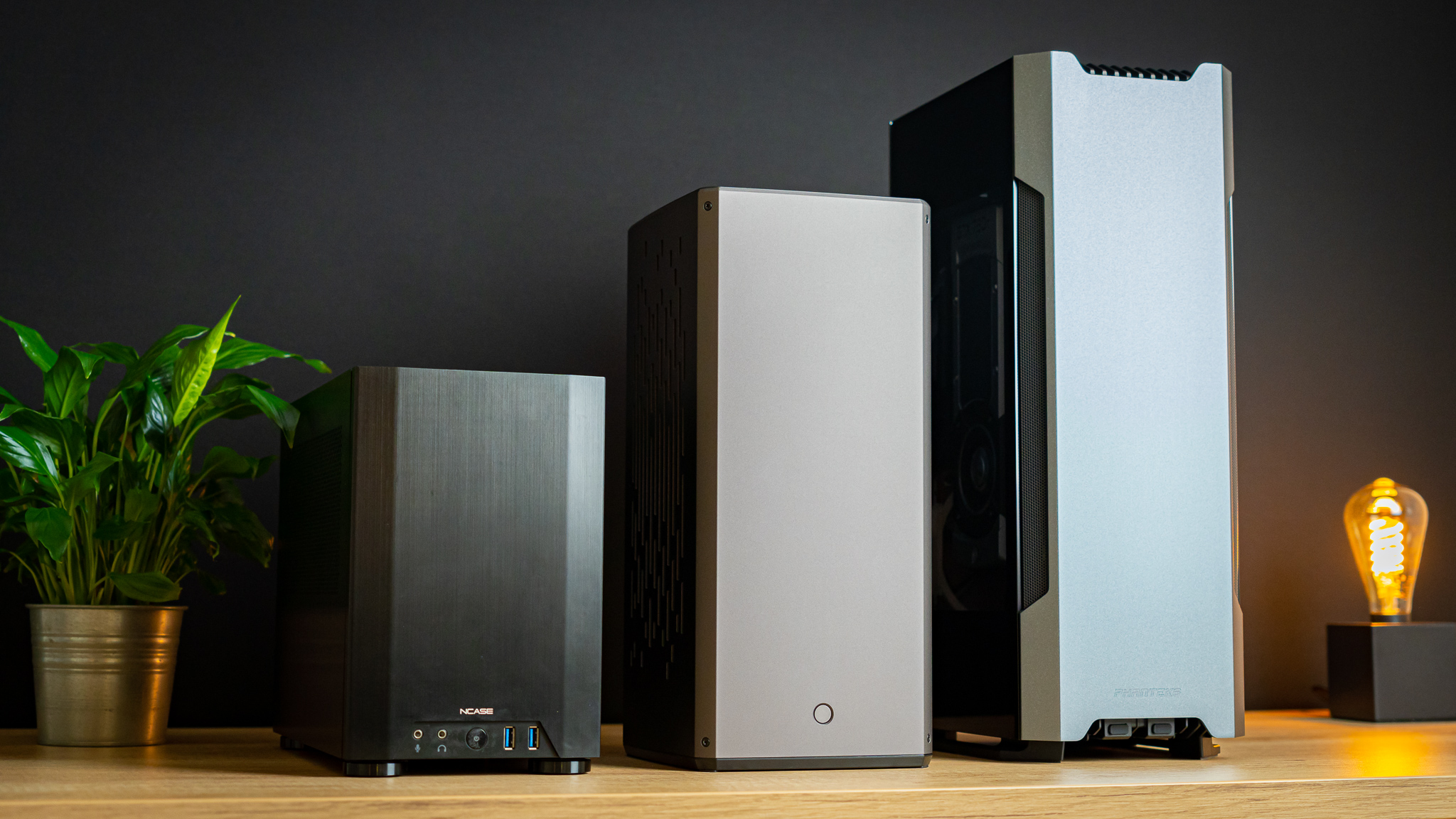

A compact PC can still have serious graphics hardware, but only if the case gets the clearances and cooling layout right. A few millimeters can decide whether your graphics card fits, whether the power supply blocks airflow, and whether the CPU cooler has enough room to work.
The best mini ITX case options here range from ultra-small 4.3-liter aluminum enclosures to the much roomier Cooler Master NR200P MAX V2. There is also a micro-ATX model for builders who want more expansion room without moving to a conventional tower.
Our top pick is the Lian Li A4-H2O, while the six options cover the smallest footprints, high-end cooling, flexible hardware support, and portable designs.
Comparison table
| # | Product | Award | Volume or layout | GPU support | Cooling support | Best for |
|---|---|---|---|---|---|---|
| 1 | Lian Li A4-H2O | Best overall | 11 liters, SFX or SFX-L | Triple-slot GPU | 240mm AIO | A compact performance build |
| 2 | Cooler Master NR200P MAX V2 | Best high-performance bundle | 18.25 liters, Mini-ITX | Up to 357.6mm | 280mm AIO | A powerful build with integrated cooling |
| 3 | JOYJOM Mini ITX | Best ultra-compact design | 4.3 liters, Mini-ITX | Up to 170mm | CPU cooler under 36mm | The smallest compatible build |
| 4 | Jonsbo TK-0 | Best display-focused design | ITX or DTX, dual chamber | Up to 230mm | CPU cooler up to 137mm | A desktop showcase build |
| 5 | KXRORS S300 | Best portable layout | 8.1 liters, Mini-ITX | Up to 305mm | CPU cooler up to 60mm | A portable gaming PC |
| 6 | Jonsbo Z20 | Best expansion flexibility | About 20 liters, Micro-ATX | Up to 363mm | 240mm AIO | A small build with broader hardware support |
1. Lian Li A4-H2O: Best Overall

Pros
- 11-liter footprint
- Supports triple-slot graphics cards
- Includes a PCIe Gen 5 riser cable
- Compatible with a 240mm AIO
- Extensive ventilation on multiple panels
Cons
- Requires an SFX or SFX-L power supply
- Sandwich layout demands careful cable planning
- Limited to Mini-ITX motherboards
Best for: builders who want a genuinely compact performance system without giving up a large GPU or liquid cooling.
The Lian Li A4-H2O is the case we would start with for most serious small-form-factor builds. It is compact enough to disappear beside a monitor or entertainment center, yet its layout is designed around hardware that would be awkward in a truly tiny enclosure. The 11-liter body uses a sandwich arrangement, placing the graphics card behind the motherboard instead of forcing both components into one cramped chamber.
That layout makes the GPU clearance especially useful. The case supports a triple-slot graphics card, and the included 240mm-long PCIe Gen 5 riser cable provides the connection needed for the vertical mounting arrangement. The riser supports PCIe 2.0 through PCIe 4.0 devices as well, while the listed Gen 5 bandwidth reaches 32Gb/s. That gives newer hardware room to operate without making the case dependent on an older expansion standard.
Cooling is the other reason this enclosure stands above the smaller aluminum cases here. The A4-H2O supports a 240mm AIO, with mesh panels on the top, sides, and bottom to keep air moving directly around the components. That is a more capable thermal setup than the JOYJOM Mini ITX or KXRORS S300 can offer, both of which restrict CPU cooler height. The removable power supply bracket accepts SFX and SFX-L units, and a pre-routed power cord extension helps keep the internal arrangement from becoming needlessly tangled.
The tradeoff is the same feature that makes the A4-H2O so capable: the sandwich layout leaves little room for casual assembly. Cable routing and component order matter, and an SFX-class power supply is required. This is not the right enclosure for someone who wants to install ordinary desktop parts with minimal planning. The Lian Li also cannot accept a larger motherboard, so builders considering extra expansion slots should look at the Jonsbo Z20 instead. If your priority is a balanced Mini-ITX build with a large GPU, modern interconnect, and 240mm liquid cooling, this is the most complete design in the group.
2. Cooler Master NR200P MAX V2: Best High-Performance Bundle

Pros
- Includes a 280mm top-mounted liquid cooler
- Includes an 850W SFX Gold ATX 3.1 power supply
- Supports graphics cards up to 357.6mm
- Short custom cables help reduce clutter
- Designed for high-end Mini-ITX hardware
Cons
- Larger than the A4-H2O and other compact options
- Less suitable for a minimal low-power build
- Requires careful attention to vertical GPU clearance
Best for: a high-performance Mini-ITX system where cooling and power capacity matter more than the smallest possible footprint.
The Cooler Master NR200P MAX V2 takes a different approach from the rest of this list. It is not trying to be the smallest enclosure. Its 18.25-liter footprint gives the internal layout enough room for a substantial graphics card, a large radiator, and the power hardware needed to support demanding components. The result is less of a minimalist box and more of a compact performance platform.
The bundle includes a 280mm top-mounted custom-tubing liquid cooler. That is a major distinction in this group because the cooling system is part of the package rather than something the builder has to fit separately. The listed compatibility specifically calls out high-end AMD R9 and Intel Ultra 9 processors. In practical terms, the larger radiator gives the CPU cooling system more surface area than the low-profile air coolers supported by the JOYJOM Mini ITX and S300.
Graphics card support is also unusually broad for this size class. The vertical GPU arrangement accepts cards up to 357.6mm, with the case including a PCIe 4.0 riser cable. The 850W SFX Gold ATX 3.1 power supply is matched to that performance focus, and the specification says it can provide up to 600W to the GPU. Short custom cables are intended to reduce the loose wiring that often makes compact builds difficult to close.
The weakness is footprint. At 14.84 inches long, 7.28 inches wide, and 11.49 inches tall, it occupies noticeably more desk or shelf space than the Lian Li A4-H2O. It also makes less sense for a modest system that does not need a 280mm cooler or an 850W power supply. The Lian Li is easier to justify when the goal is compactness, while the NR200P MAX V2 is the stronger choice for a graphics-heavy build with demanding processor cooling. Choose this Cooler Master when the priority is fitting powerful parts cleanly into a small enclosure, not minimizing every last liter.
3. JOYJOM Mini ITX: Best Ultra-Compact Design

Pros
- Very small 4.3-liter capacity
- 2.0mm aluminum alloy body
- Includes a PCIe 3.0 riser cable
- Supports two 2.5-inch SSDs
- Graphics card support in an extremely small enclosure
Cons
- CPU cooler height is limited to 36mm
- Graphics card length is limited to 170mm
- FLEX-Small 1U power supply is required
Best for: a highly compact Mini-ITX build using carefully selected, short components.
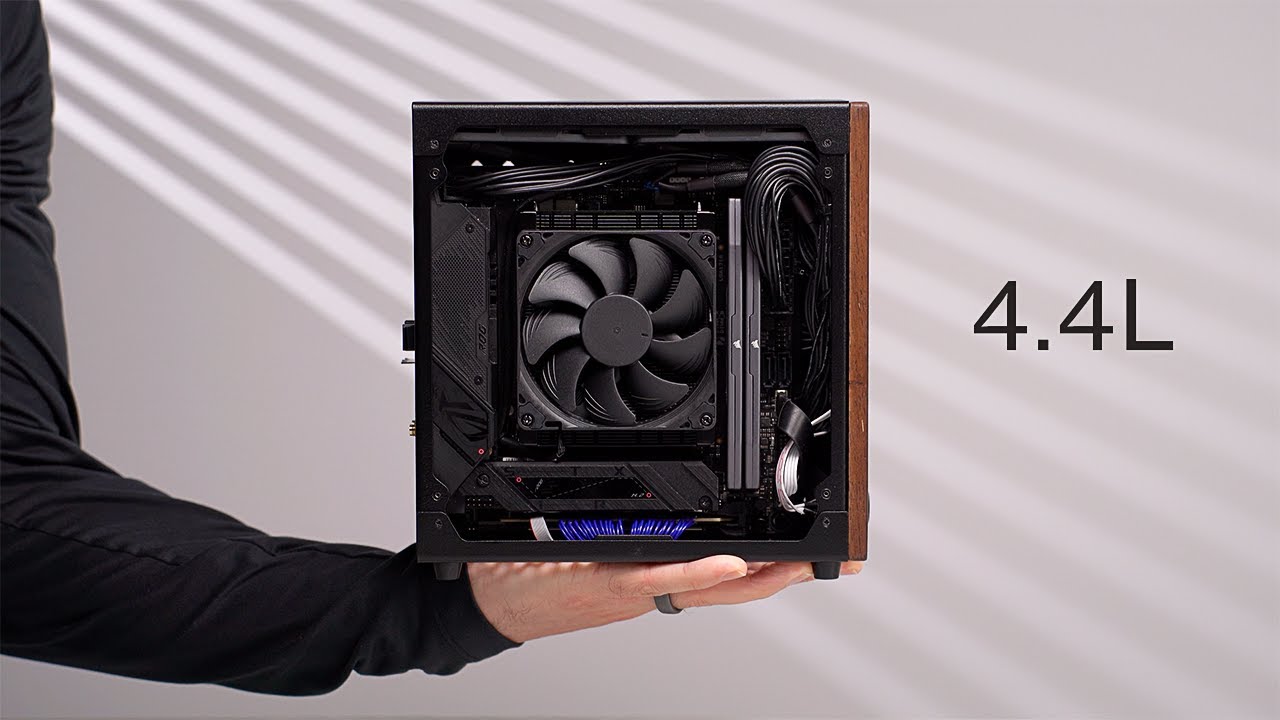
The JOYJOM Mini ITX is the pick for builders who care about volume above almost everything else. Its stated capacity is 4.3 liters, with dimensions of 7.3 by 4.1 by 8.8 inches. That puts it in a very different category from the NR200P MAX V2 and Jonsbo Z20. It is closer to a purpose-built compact enclosure for a carefully planned system than a flexible case that can accept a broad selection of parts.
The 2.0mm aluminum alloy body keeps the enclosure light while also giving it a substantial shell. The listed weight is about 2.5 pounds, and the aluminum is described as offering heatsink performance as well as the finished exterior. The case supports a standard 17 by 17cm Mini-ITX motherboard, a FLEX-Small 1U power supply measuring 15 by 4 by 8cm, and a graphics card up to 17 by 10 by 4cm.
Those limits define the build more than the exterior dimensions do. A CPU cooler under 36mm is required, so conventional tower coolers and liquid cooling are not options here. Storage is similarly compact, with room for two 2.5-inch SSDs that are each less than 9mm thick. The included PCIe 3.0 riser is 18.5cm long, which suits the case's compact graphics card arrangement but makes this a less forward-looking platform than the PCIe Gen 5 Lian Li A4-H2O.
The JOYJOM is not the right choice for someone who wants a high-wattage processor, a large modern graphics card, or an easy first build. The KXRORS S300 is a better fit if you need a graphics card up to 305mm, while the Lian Li offers much more room for both GPU and CPU cooling. The JOYJOM wins on enclosure size, and it is the one to choose when the component list is already known and every part has been checked against its tight clearances. Its weakness is not a flaw in execution, but the narrow hardware envelope that comes with a 4.3-liter design.
4. Jonsbo TK-0: Best Display-Focused Design

Pros
- Dual-chamber structure
- Curved glass display surface
- Supports ITX and DTX motherboards
- Supports graphics cards up to 230mm
- Multiple optional fan positions
Cons
- Larger than the most compact Mini-ITX designs
- GPU clearance is shorter than the Lian Li and Cooler Master
- Fans are listed as optional rather than included
Best for: a visible desktop build where component presentation and cable separation matter as much as compactness.
The Jonsbo TK-0 is the most furniture-like case in this roundup. Its 270-degree dual-curved glass side view is designed to show the hardware from multiple angles, and the combination of aluminum alloy, steel, and a 16mm wood veneer gives it a warmer appearance than the all-metal enclosures. This is a case meant to be seen rather than tucked under a desk.
The separated cabinet structure is useful beyond appearance. The dual-chamber layout divides hardware and cabling, which can make the build easier to organize than a single cramped compartment. The removable aluminum PCI cover is intended to make graphics card installation easier. The case can be placed horizontally or vertically, so it has more flexibility on a shelf or desktop than its 235 by 250 by 280mm dimensions might suggest.
Hardware support is broader than the tiny JOYJOM, though still carefully bounded. The TK-0 accepts ITX or DTX motherboards, an SFX power supply up to 160mm, and a graphics card up to 230mm. There is room for one 3.5-inch hard drive and one 2.5-inch SSD. A CPU cooler up to 137mm can fit, and the case lists optional 120mm or 140mm positions at the top and bottom, along with two optional 90mm rear positions.
The glass and wood design brings compromises. A 230mm graphics card limit rules out many of the larger cards that fit in the NR200P MAX V2, Z20, or S300. The fan positions are also described as optional, so the cooling plan depends on the parts and fans selected by the builder. The Lian Li A4-H2O is more compelling for a compact performance build, while the TK-0 makes more sense for a living-room or desktop showcase where the dual-chamber presentation is the point. Pick it for its visual character and hardware display, not for the smallest possible footprint.
5. KXRORS S300: Best Portable Layout

Pros
- 8.1-liter portable design
- Top leather handle
- Supports graphics cards up to 305mm
- Three-sided mesh ventilation
- Front USB Type-C port
Cons
- PCIe 3.0 riser requires the motherboard BIOS to be set to Gen 3
- CPU cooler height is limited to 60mm
- SFX or SFX-L power supply must be 100 to 130mm
Best for: a compact gaming system that needs a handle and more GPU length than the smallest cases allow.
The KXRORS S300 sits between the extreme JOYJOM and the more capable Lian Li in both size and hardware support. Its listed volume is 8.1 liters, and the 12.2 by 5.3 by 7.6-inch shape is narrow enough for a small shelf or travel setup. The leather handle on top makes the portability obvious, while the aluminum exterior and three-sided mesh panels keep it from feeling like a plain transport box.
Graphics card clearance is the S300's strongest practical feature. It supports cards up to 305mm long, 130mm wide, and 55mm high, with a 2.5-slot limit. That is much more accommodating than the JOYJOM's 170mm limit and gives this case a better chance of accepting a contemporary gaming card. The included PCIe 3.0 16X riser cable handles the vertical arrangement.
There is an important setup detail that should not be skipped. The manufacturer says to set the motherboard BIOS PCIe speed to Gen 3 when using the included riser. Without that setting, the computer may not work. That makes the S300 less plug-and-play with newer platforms than the Lian Li's Gen 5 riser. It is manageable for an experienced builder, but it should be part of the planning process before the system is assembled.
The cooling limits are reasonable for the volume but strict. The CPU fan must be no taller than 60mm, and the supported SFX or SFX-L power supply must be between 100 and 130mm. That leaves less processor cooling headroom than the Jonsbo TK-0 and much less than the 240mm AIO support in the A4-H2O. The front USB 3.0 Type-C port is a useful modern touch, though the case is fundamentally best for a portable, carefully selected build. If you need a handle and a longer GPU than the JOYJOM can accept, the S300 is the more practical compact option. For help thinking through the broader hardware choices around a small system, the parts that make a compact computer practical for everyday use can help before you lock in the case.
6. Jonsbo Z20: Best Expansion Flexibility

Pros
- Supports Micro-ATX motherboards
- Detachable carrying handle
- GPU clearance up to 363mm
- Supports a 240mm AIO
- Accepts ATX, SFX, and SFX-L power supplies
Cons
- About 20 liters, so it is not a true ultra-small ITX enclosure
- Larger than the Lian Li, S300, and JOYJOM in some dimensions
- Hardware compatibility depends on power supply placement
Best for: a small but flexible system that needs Micro-ATX support, several expansion slots, or a large graphics card.
The Jonsbo Z20 is the outlier here, and that is precisely why it deserves a place in the comparison. It is a Micro-ATX case rather than a Mini-ITX enclosure, with about 20 liters of volume and four expansion slots. If your motherboard choice or expansion needs make Mini-ITX too restrictive, this case provides a smaller alternative to a conventional tower.
The hardware support is generous. The Z20 accepts graphics cards up to 363mm, depending on the other components, and supports ATX, SFX, and SFX-L power supplies. SFX mounting is supported on the side, but the manufacturer cautions that power supply positioning can interfere with other hardware. That means the apparent flexibility still needs to be checked against the specific GPU, storage, and cooling configuration.
Cooling support is much stronger than the tiny cases. The top and bottom can each take two 120mm or 140mm fans, with additional rear positions for 120mm and 92mm fans. A 240mm AIO can be installed at the top with a listed thickness limit of 60mm. Air cooling has room for a CPU cooler up to 164mm for Intel processors or 163mm for AMD processors. Those clearances make the Z20 a more forgiving choice than the 36mm JOYJOM or 60mm S300.
The case also has useful everyday features, including a detachable carrying handle, magnetic dust filters, a removable PCI-E fixing piece, and front USB 3.2 Gen 1 Type-A plus USB 3.2 Gen 2 Type-C. Storage support includes either two 2.5-inch SSDs and one 3.5-inch hard drive, or three 2.5-inch SSDs. It is not the right pick for someone specifically seeking the smallest Mini-ITX footprint. But if you are comparing smaller enclosures and find yourself constrained by motherboard size or expansion, the extra room a Micro-ATX layout can give a compact build explains why the Z20 can be the more sensible direction. It is the choice for flexibility first, portability second.
How to choose best mini itx case
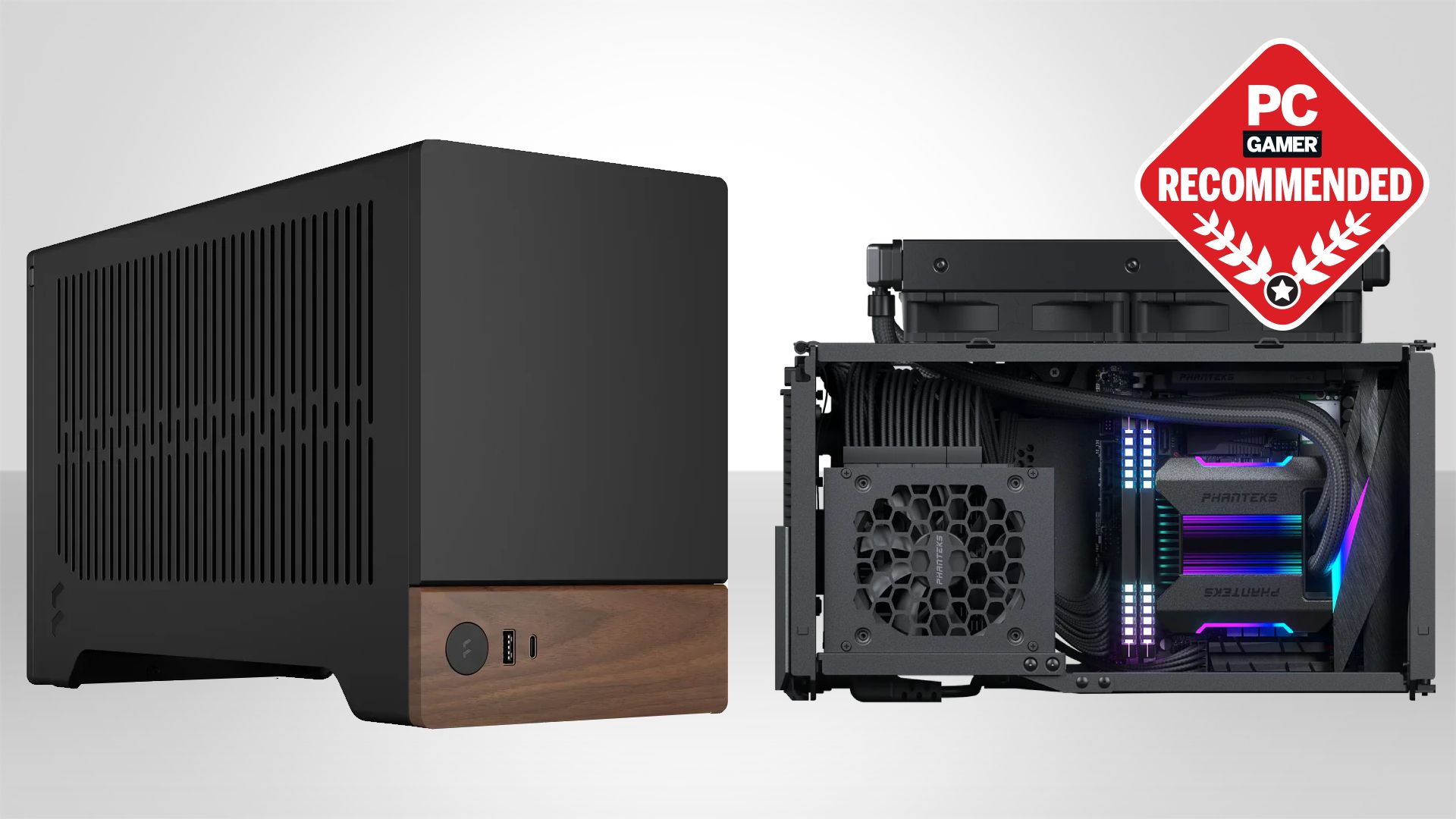
A small case is only successful when its motherboard, power supply, graphics card, cooler, and cables all fit together, so check the complete parts list rather than one clearance figure.
Motherboard format
Mini-ITX cases are built around 17 by 17cm boards, but not every compact-looking enclosure is Mini-ITX only. The JOYJOM, Lian Li, Cooler Master, KXRORS, and TK-0 focus on Mini-ITX support, with the TK-0 also accepting DTX. The Jonsbo Z20 accepts Micro-ATX, which opens the door to more expansion slots and broader motherboard choices.
Choose Mini-ITX when the smallest footprint matters and you do not need multiple expansion slots. Choose Micro-ATX when the board itself, storage layout, or expansion capacity is more important than reaching the smallest possible enclosure.
Graphics card clearance
Graphics card support varies dramatically. The JOYJOM accepts a card up to 170mm, while the TK-0 reaches 230mm. The S300 supports up to 305mm, the Cooler Master reaches 357.6mm, and the Z20 lists up to 363mm depending on the rest of the build. The Lian Li adds triple-slot support, which can matter as much as length.
Measure the card's length, height, and thickness. A stated maximum length does not guarantee compatibility if the card is unusually wide or if the power connector needs extra bending room.
In a small case, GPU thickness and power connector clearance can matter just as much as GPU length.
CPU cooling
Low-profile air coolers are the only option in the smallest cases. The JOYJOM limits CPU cooler height to less than 36mm, and the S300 allows up to 60mm. The TK-0 permits 137mm, while the Z20 allows up to 164mm for Intel or 163mm for AMD. The Lian Li and Cooler Master support 240mm and 280mm liquid cooling respectively.
Match the cooler to the processor's expected heat output. A case with a large radiator mount gives more headroom, while a low-profile cooler requires greater care with processor selection and airflow.
Power supply format
Power supply compatibility can determine the entire build. The JOYJOM uses a FLEX-Small 1U unit, the S300 supports SFX or SFX-L units between 100 and 130mm, and the Lian Li accepts SFX or SFX-L. The Cooler Master includes an 850W SFX Gold ATX 3.1 power supply. The Jonsbo Z20 is the most flexible, accepting ATX, SFX, and SFX-L units, though placement can affect other clearances.
Check both the power supply format and its physical length. In a sandwich or dual-chamber case, cable exits and connector direction can be just as important as wattage.
Riser generation and assembly
Several cases mount the graphics card away from the motherboard and therefore need a riser cable. The JOYJOM and S300 use PCIe 3.0 risers. The S300 specifically requires the motherboard BIOS to be set to Gen 3. The Cooler Master includes a PCIe 4.0 riser, while the Lian Li includes a PCIe Gen 5 riser that also supports PCIe 2.0 through 4.0 devices.
A riser is not an interchangeable afterthought. Confirm its generation, length, mounting direction, and BIOS requirements before buying the rest of the hardware. Builders considering a complete PC rather than a custom enclosure can also compare how much hardware a small gaming system really needs before committing to a custom build.
Frequently asked questions
Is a Mini-ITX case smaller than a Micro-ATX case?
Usually, but not always. Mini-ITX cases are built for smaller 17 by 17cm motherboards, while Micro-ATX boards need more internal space and often have more expansion slots. The Jonsbo Z20 is a Micro-ATX case that keeps a relatively compact footprint, but it is much larger than the JOYJOM or Lian Li.
Which case supports the largest graphics card?
The Jonsbo Z20 lists support for graphics cards up to 363mm, depending on the other hardware. The Cooler Master NR200P MAX V2 supports cards up to 357.6mm, while the KXRORS S300 supports cards up to 305mm. The Lian Li A4-H2O supports triple-slot graphics cards, so thickness is another important consideration.
Can these cases use an ATX power supply?
The Jonsbo Z20 supports ATX, SFX, and SFX-L power supplies. The other cases have tighter requirements. The JOYJOM uses a FLEX-Small 1U unit, the S300 supports SFX or SFX-L units from 100 to 130mm, and the Lian Li uses SFX or SFX-L supplies.
Which case is easiest to cool?
The Cooler Master NR200P MAX V2 has the strongest included cooling setup, with a top-mounted 280mm liquid cooler. The Lian Li A4-H2O supports a 240mm AIO, and the Jonsbo Z20 supports a 240mm AIO plus several fan positions. The JOYJOM and S300 have much tighter CPU cooler height limits.
Do I need to change BIOS settings for a riser cable?
The KXRORS S300 specifically says to set the motherboard PCIe speed to Gen 3 before using its PCIe 3.0 riser. The other products list different riser generations, but builders should still confirm motherboard and graphics card compatibility before assembly. A riser connection can be sensitive to both generation and signal quality.
Is the Jonsbo Z20 a Mini-ITX case?
No. The Jonsbo Z20 is a Micro-ATX mini tower. It appears in this comparison because it is a compact alternative for readers whose build needs a larger motherboard, four expansion slots, or more cooling and storage room than a strict Mini-ITX case can offer.
The bottom line
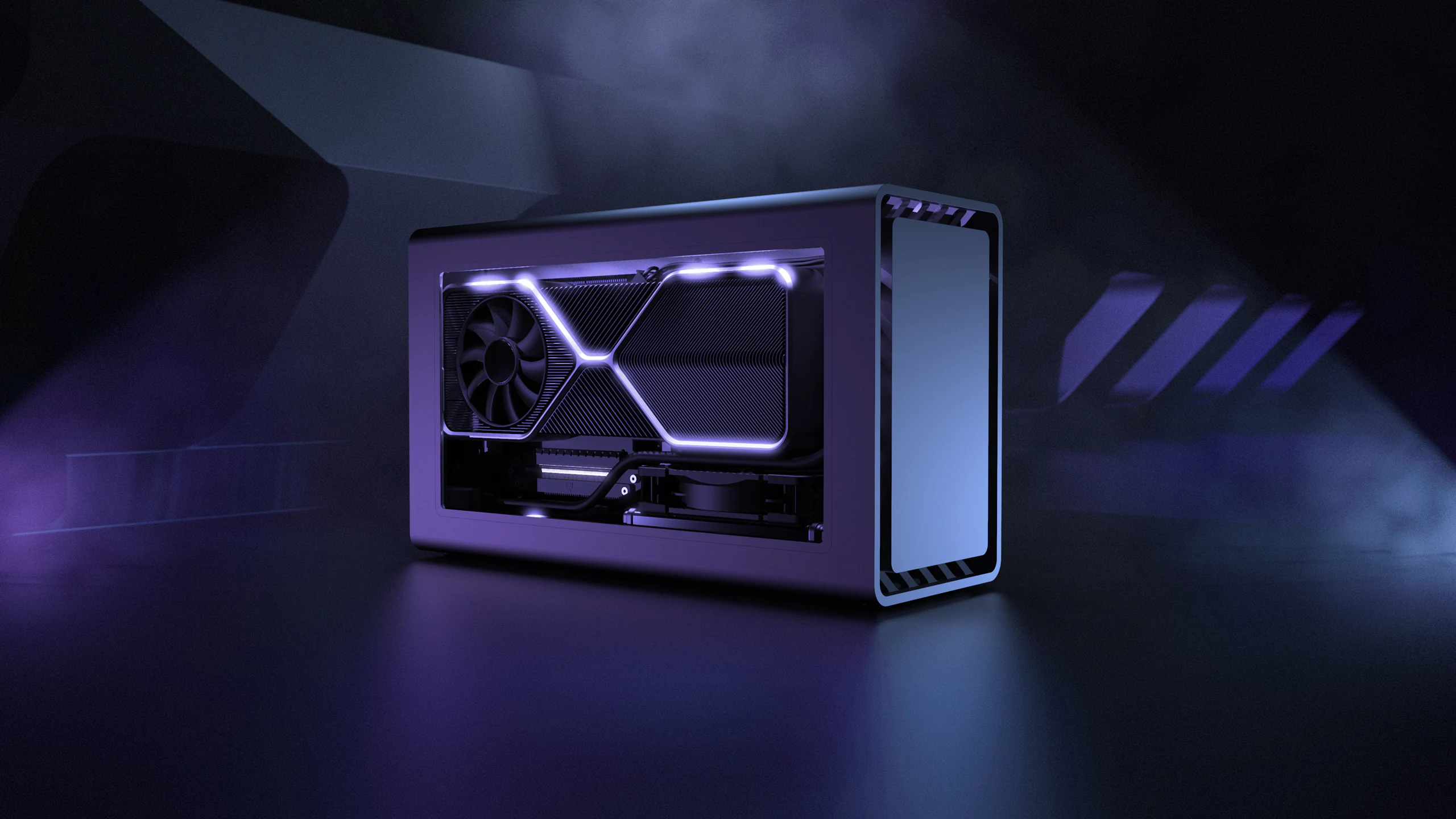
The Lian Li A4-H2O is the most balanced pick in the Best mini ITX case group. Its 11-liter footprint, triple-slot GPU support, PCIe Gen 5 riser, SFX or SFX-L compatibility, and 240mm AIO support give it the broadest combination of compactness and performance.
Choose the Cooler Master NR200P MAX V2 when high-end cooling and a larger GPU matter more than the smallest footprint. Choose the JOYJOM Mini ITX when the build must be exceptionally small, or the Jonsbo Z20 when Micro-ATX support and expansion flexibility are the deciding factors.
If you are undecided, start with your graphics card and CPU cooler dimensions, then choose the smallest case that fits both without relying on guessed clearances.
As an Amazon Associate we earn from qualifying purchases.