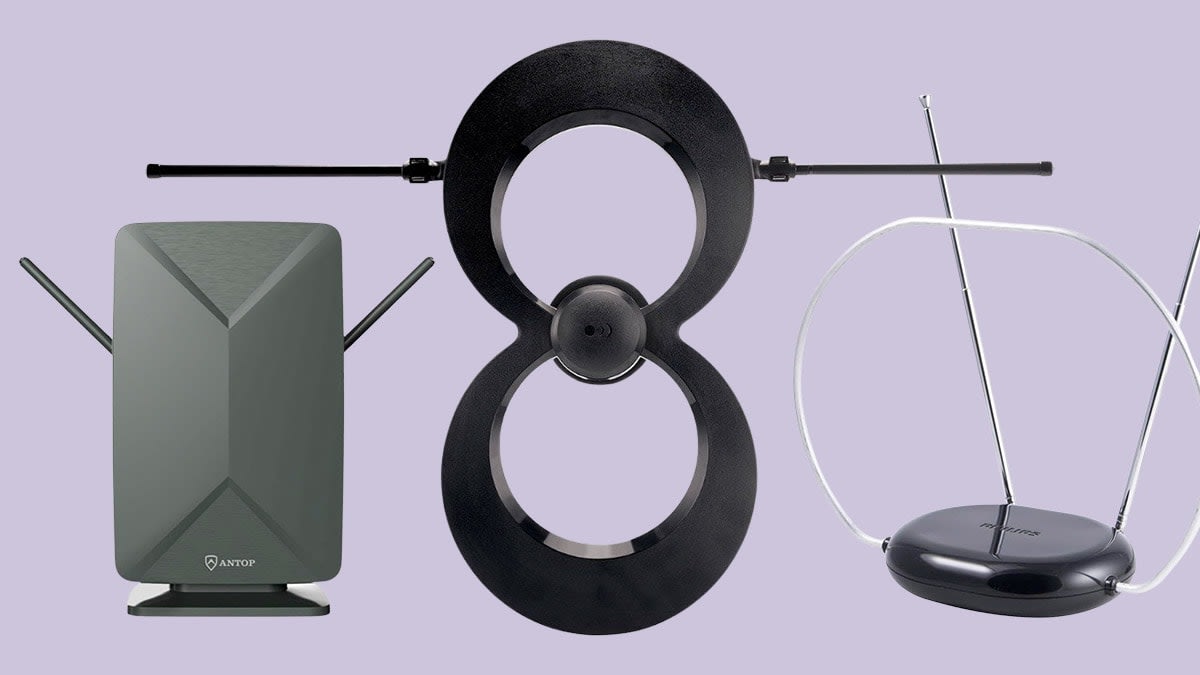

An indoor antenna can be excellent in one room and frustrating in another. Walls, windows, nearby buildings, tower direction, and the difference between VHF and UHF signals all affect the channels that actually appear after a scan. The right placement often matters more than the antenna's headline range.
Our Best best ota digital tv antenna guide covers compact indoor models, amplified designs, a flat indoor antenna, and two options that can live in an attic or outdoors. We focused on reception features, placement flexibility, cable length, amplifier design, and compatibility with current broadcast standards.
Channel Master FLATenna is our top pick for most homes, while the GE Outdoor Antenna is the stronger choice for attic or exterior mounting.
Comparison table
| # | Product | Award | Reception and design | Cable | Best for |
|---|---|---|---|---|---|
| 1 | Channel Master FLATenna | Best overall | Indoor, 35-mile stated range, ATSC 3.0 | 12 feet | Reliable indoor placement |
| 2 | GE Outdoor Antenna 29884 | Best outdoor | Outdoor or attic, 70-plus-mile stated range, VHF/UHF | Not specified | Attic and exterior installations |
| 3 | UltraPro Hover | Best discreet design | Indoor, up to 40 miles, ATSC 3.0 | Not specified | A clean TV-top installation |
| 4 | Vansky Amplified Antenna | Best adjustable setup | Indoor VHF/UHF, detachable amplifier | 16.5 feet | Flexible positioning |
| 5 | HIDB 10-Foot Antenna | Best compact cable reach | Indoor, 360-degree reception claim | 10 feet | Small rooms and TV stands |
| 6 | Intelbras Indoor Antenna | Best switchable reception | Indoor, smart IC, short and long range settings | Not specified | Homes needing range adjustment |
| 7 | HIDB Magnetic Base Antenna | Best small footprint | Indoor, omnidirectional claim, magnetic base | Not specified | Discreet tabletop placement |
| 8 | KANGYUE Amplified Antenna | Best long cable | Indoor, 360-degree reception claim, amplifier | 16.5 feet | TVs far from windows |
| 9 | Bigefeixu Rabbit Ears | Best for older TVs | Adjustable VHF/UHF dipoles | Not specified | Apartments and older sets |
1. Channel Master FLATenna: Best Overall

Pros
- Thin reversible black and white design
- 12-foot RG6 coaxial cable gives placement freedom
- Supports ATSC 3.0 and 4K broadcasts
- Multiple mounting options
Cons
- Indoor reception still depends heavily on the room
- No amplifier for difficult signal environments
- Larger than the tiny tabletop models
Best for: households that want a well-rounded indoor antenna with a long cable and flexible mounting.
The FLATenna is the one we would start with when the antenna needs to work without becoming part of the room's decor. It is an ultra-thin panel that can sit on a tabletop, attach to a wall, or go near a window. The reversible black and white finish also gives you a little control over how visible it is. Compared with the small HIDB models, it takes up more surface area, but that broad, flat form is easier to position deliberately.
Channel Master states a 35-mile reception range for the FLATenna, with the important qualification that real homes introduce obstructions and interference. That is a more useful claim than treating a huge theoretical range as a guarantee. The included 12-foot professional-grade RG6 cable is one of its most practical advantages. It lets you move the antenna away from the television and toward a window or higher wall, which can matter more than changing from one compact antenna to another.
The FLATenna supports HD and digital broadcasts, 4K broadcasts, and ATSC 3.0 NextGen TV where available. That does not create channels that are absent in your area, and it does not turn a weak location into a strong one. It does mean the antenna is not tied to an older broadcast format. The cable's enhanced shielding is intended to help signal reliability, while the multiple mounting options make it easier to respond when the first channel scan is disappointing.
The UltraPro Hover is more discreet, especially when the antenna can sit directly on top of the television, but the FLATenna gives you more freedom to find a better signal position. The Vansky Antenna offers an even longer 16.5-foot cable and a detachable amplifier, so it may be more useful in a difficult room. Its weakness is the absence of an amplifier and the fact that its flat shape still cannot overcome concrete, metal, hills, or a poor tower direction.
For a dependable indoor starting point, the FLATenna has the best balance of physical flexibility, cable length, and broadcast compatibility. If you are unsure how your surroundings will affect reception, the factors that determine antenna performance at your address are worth checking before you choose any indoor model.
2. GE Outdoor Antenna 29884: Best Outdoor

Pros
- Designed for attic or outdoor use
- Weather-resistant construction
- Includes a J mount
- Supports VHF, UHF, and ATSC 3.0 broadcasts
Cons
- Much less discreet than indoor flat antennas
- Installation is more involved
- The stated range depends on elevation and local conditions
Best for: viewers who can mount an antenna in an attic or outside for a clearer path to broadcast towers.
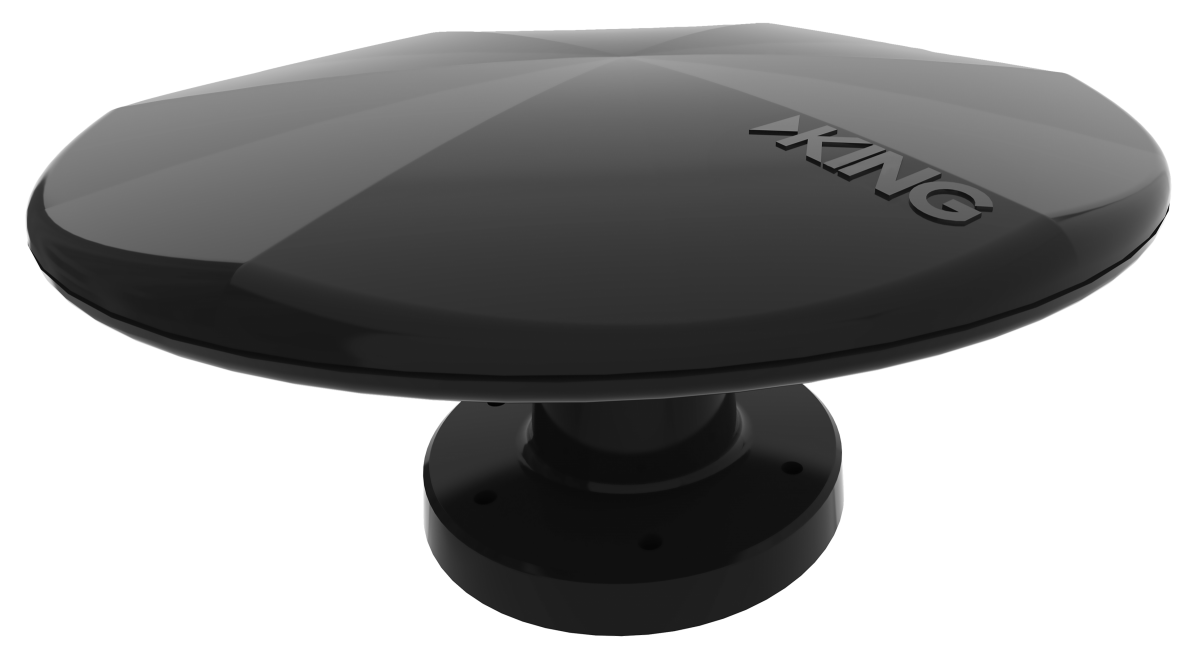
The GE 29884 is not a better version of a tabletop antenna. It is a different kind of solution for a different reception problem. Its weather-resistant body, included J mount, and attic or outdoor design make sense when an indoor antenna cannot see through the walls and obstructions between your television and the local towers.
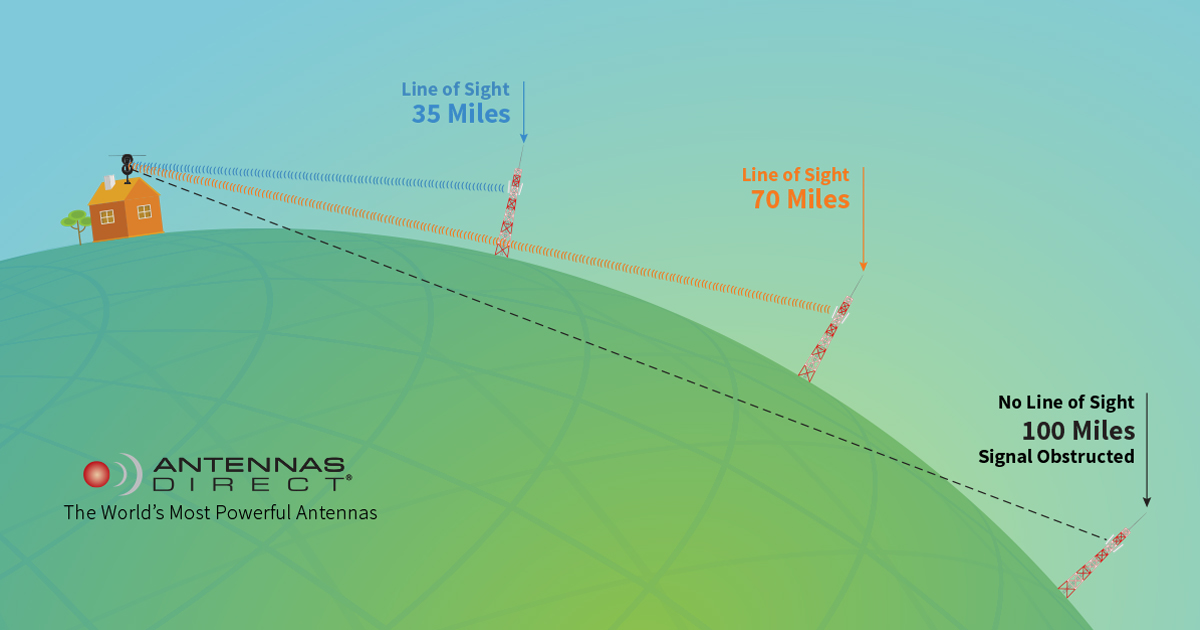
GE lists reception from more than 70 miles away and support for both VHF and UHF signals. Treat that distance as a design claim rather than a promise. Terrain, tower power, building materials, cable runs, and mounting height all affect the result. Still, an exterior or attic antenna has a fundamental advantage over a thin panel behind a television: it can be placed higher and with fewer objects blocking the incoming signal.
The antenna supports 4K and 8K Ultra HD broadcasts where those broadcasts are available, along with ATSC 3.0. Its standard coaxial connection is intended to work with all TV brands and converter boxes that use that connection. The product measures 16.6 inches wide, 5.84 inches high, and 3.5 inches deep, and weighs 3 pounds, so it is a substantial piece of equipment rather than something to tuck behind a small bedroom set.
Compared with the Channel Master FLATenna, the GE is harder to install and far more visible. It also makes less sense for a renter or anyone who cannot run a cable from an attic or exterior mounting point. On the other hand, it is the pick to consider when indoor placement has already failed and the home has a suitable mounting location. The included J mount removes one piece of the installation puzzle, though it does not eliminate the need to think about cable routing and secure mounting.
Choose the GE when the physical location of the antenna is the main limitation. If your television is in an apartment and you need a simple reversible setup, the UltraPro Hover or FLATenna will be easier to live with.
3. UltraPro Hover: Best Discreet Design

Pros
- Attaches directly to the top of a television
- Can also sit on a surface or mount to a wall
- Supports ATSC 3.0
- Rated for up to 40 miles in the product description
- Limited-lifetime replacement pledge
Cons
- TV-top placement is not always the strongest location
- No cable length is specified
- Swivel adjustment is limited to horizontal positioning
Best for: a living room where a visible wall-mounted antenna would be distracting.
The UltraPro Hover solves the problem most flat antennas ignore: where to put the antenna when you do not want to see it. Its hover-style design attaches to the top of the television and can swivel horizontally. That makes it an appealing choice for a clean media console, particularly when a wall or window is not conveniently close.
The product description gives it a range of up to 40 miles and says it captures VHF and UHF signals. It supports 4K and 8K televisions, but the practical benefit is compatibility with current HDTV broadcasts rather than a guarantee of 4K programming. It is also ATSC 3.0 compatible where NextGen TV broadcasts are available. Setup uses a push-on coax connector, and the antenna can instead go on a flat surface or wall with the included mounting tape.
That flexibility makes the Hover more versatile than its name suggests. The cleanest installation is on top of the TV, but the strongest installation may be on a nearby wall or window. It is worth trying both positions and rescanning after each move. A TV-top location can be convenient, yet the television itself, its cables, and nearby electronics may not be the best environment for reception.
The FLATenna is the stronger choice when you need a 12-foot cable and more freedom to place the antenna away from the screen. The UltraPro is smaller and visually neater, while the Bigefeixu Rabbit Ears offers more obvious physical adjustment for VHF and UHF. The Hover's weakness is that its design encourages a convenient position that may not be the optimal one. Its range statement also should not be read as a guarantee in a blocked or distant location.
The UltraPro belongs on a short list for a bedroom, office, or living room where appearance matters. Skip it if your antenna must sit several feet from the TV near a particular window, unless the cable supplied with your unit gives you enough reach.
4. Vansky Amplified Antenna: Best Adjustable Setup

Pros
- 16.5-foot coaxial cable
- Detachable signal amplifier
- Supports VHF, UHF, and ATSC formats
- Flame-retardant indoor construction
- Works with 720p through 4K broadcast formats
Cons
- Amplification can hurt if the unamplified signal is already strong
- Large 13 by 13 inch panel
- Requires experimentation after moving the antenna
Best for: homes where the best signal spot is well away from the television.
The Vansky Antenna is built around a useful truth about indoor reception: the best place for the antenna may not be the best place for the TV. Its 16.5-foot coaxial cable gives you room to reach a window or exterior-facing wall, and that freedom can be more valuable than a compact body. The antenna itself measures 13 by 13 inches, so it needs a real patch of wall or window rather than a narrow shelf behind the set.
Its most important feature is the detachable signal amplifier. The booster can help in homes farther from broadcast towers, but it is not automatically beneficial. If the signal is already strong, adding amplification can complicate reception rather than improve it. Vansky specifically recommends removing the booster and rescanning when a stable signal cannot be locked with it attached. That is good advice and a reminder that an amplifier is a tool, not a substitute for placement.
The antenna supports VHF and UHF signals and lists compatibility with 720p, 1080i, 1080p, and 4K ATSC formats. Its indoor construction uses flame-retardant materials, and the coaxial connection is the standard way to connect it to a television or converter box. Actual results still depend on the local broadcast environment, including valleys, thick walls, high-rise buildings, and distance from towers.
The KANGYUE antenna also has a 16.5-foot cable and an amplifier, but its product description makes much larger range claims and requires USB power for the amplifier. Vansky's more restrained presentation is easier to evaluate, and its detachable booster gives you a clear fallback mode. The FLATenna is thinner and easier to blend into a room, though it lacks the Vansky's long cable and amplifier option.
This is the antenna for someone willing to move the panel, scan, compare, and adjust. It is not the right fit for a tiny room where a 13 by 13 inch panel has nowhere to go, or for anyone expecting the amplifier to fix every reception problem.
5. HIDB 10-Foot Antenna: Best Compact Cable Reach

Pros
- 10-foot coaxial cable
- Compact white design
- Magnetic base
- 360-degree reception claim
- Easy to move and rescan
Cons
- No active amplifier
- Reception remains sensitive to walls and terrain
- The small body may limit placement options in weak-signal areas
Best for: a compact setup where the antenna needs to move from the TV stand to a nearby window.
The second HIDB model in this roundup is the more practical pick when cable reach matters. Its 10-foot coaxial cable gives it a meaningful advantage over tiny antennas that have to stay beside the television. The compact white body is easy to hide, and the magnetic base gives you a simple way to place it on a compatible metal surface or keep it steady on a stand.
HIDB describes the antenna as offering 360-degree reception and says its cable uses enhanced copper wiring to minimize signal loss. Those details are useful, but they do not remove the need for a good location. The product instructions recommend trying a high position near a window and scanning again after moving the antenna. That is the correct workflow for any passive indoor antenna.
The compact design measures roughly 5 inches high and 2.44 inches across its length and width according to the product information. It does not use an active amplifier, which keeps the setup simple. In a strong-signal area, that simplicity is appealing. In a difficult location, you may prefer the Vansky, where you can test an amplifier and then remove it if it causes problems.
Compared with the older HIDB Magnetic Base model, this version has the longer 10-foot cable and a more explicit focus on cable construction. The Channel Master FLATenna has a longer 12-foot cable and a larger surface designed for flexible mounting, while this HIDB is easier to tuck into a small room. Neither passive antenna should be expected to solve a blocked signal path by itself.
The HIDB 10-Foot Antenna makes sense for a bedroom, kitchen, or office television where the antenna needs to remain unobtrusive. It is less convincing for a basement or a room with heavy obstructions, where an outdoor or attic installation may be the more sensible answer.
6. Intelbras Indoor Antenna: Best Switchable Reception

Pros
- Smart IC chip filters cellular and FM signals
- Short-range and long-range regulator settings
- Supports 4K, UHD, and 1080 HDTV broadcasts
- Interchangeable orange and blue accessories
- Straightforward setup
Cons
- Cable length is not specified
- Range claims need local conditions to be interpreted carefully
- Positioning and rescanning are still essential
Best for: households that want a reception setting suited to either a nearby or more distant tower.
The Intelbras antenna stands out because it gives the user a choice between short-range and long-range operation. The instructions specifically say to use the short-range setting when the home is within 35 miles of a broadcast tower. That is a more useful control than a single permanently boosted mode, since excessive amplification can make a strong signal harder to manage.
Its smart IC chip is described as filtering cellular and FM signals while supporting 4K, UHD, and 1080 HDTV broadcasts. The important distinction is that the antenna can pass compatible broadcast signals, not that it determines the resolution of the programs available in your area. The antenna can receive signals from major local networks, but the actual channel list depends on geography and tower placement.
Setup is conventional: connect to the TV's antenna input, place the antenna near a window or wall, and run a channel search. Intelbras also includes interchangeable orange and blue accessories, which is a small but welcome way to change the appearance. The product is listed as a medium-size indoor antenna, though the dataset does not specify the cable length or physical measurements.
The HIDB 10-Foot Antenna is easier to assess if cable reach is the main concern, and the Channel Master FLATenna has a longer documented cable plus a more established flat mounting design. Intelbras is more interesting when the distance to the towers varies by room or when you want to test a short-range setting instead of leaving an amplifier permanently active.
The missing cable specification is a real limitation for planning placement. Choose this model if the included lead is sufficient for your room and you value the range regulator. If you need guaranteed reach to a far window, the Vansky or KANGYUE models are easier to plan around.
7. HIDB Magnetic Base Antenna: Best Small Footprint

Pros
- Small 5-inch-high body
- Magnetic base
- Omnidirectional reception claim
- Moisture-resistant, flame-retardant dual PC material
- Easy to move between placements
Cons
- Cable length is not specified
- Passive design offers no amplifier option
- Small size does not guarantee strong reception
Best for: a tidy tabletop installation in a room with reasonably accessible broadcast signals.
The original HIDB antenna is the smallest and simplest option here. Its body is about 5 inches high and 2.44 inches wide and deep, so it can sit beside a television without taking over the stand. The magnetic base adds stability and gives you another placement method beyond laying the antenna flat on a shelf.
HIDB describes the design as omnidirectional, which can be convenient when you do not want to aim the antenna at a tower. The product still recommends testing vertical and horizontal placement, mounting higher, and placing the unit near a window. Those instructions matter because omnidirectional reception does not mean reception is unaffected by walls, terrain, interference, or tower distance.
The body uses dual PC soft material described as flame-retardant and moisture-resistant for indoor use. It is a passive antenna, so there is no amplifier switch or power connection to manage. That makes it a clean choice for a simple television setup, but it also means there is no active reception tool if the signal is marginal.
The newer HIDB 10-Foot Antenna is the better choice when you want similar compact placement with a documented 10-foot cable. The UltraPro Hover looks more intentional on top of a television and supports ATSC 3.0, while the HIDB magnetic model is less conspicuous on a stand. The absence of a specified cable length is the main practical drawback because it makes window placement harder to predict.
This is a good fit for a small room with a strong local signal and little clutter. Skip it if the television is far from a window or if previous indoor antennas have required extensive repositioning.
8. KANGYUE Amplified Antenna: Best Long Cable

Pros
- 16.5-foot coaxial cable
- 360-degree reception claim
- Smart IC chip filters cellular and FM signals
- Multiple mounting methods
- Short-range amplifier setting
Cons
- Amplifier requires USB power
- Range claims are unusually broad
- Long cable does not replace good antenna placement
Best for: a television that sits well away from the window or the most favorable wall.
KANGYUE's strongest practical feature is not its headline range. It is the 16.5-foot coaxial cable. That length can let the antenna reach a window, exterior-facing wall, or higher shelf while the television stays where you want it. The package also includes mounting options described as adhesive stickers, suction cups, and screws, so there are several ways to test a position without immediately committing to one.
The antenna uses a smart IC chip and claims 360-degree signal reception with cellular and FM filtering. It also includes a signal amplifier with short-range and longer-range operation. KANGYUE advises switching to short range when the home is within 35 miles of a broadcast tower. As with the Intelbras antenna, that control acknowledges that more amplification is not automatically better.
The product description advertises reception up to 300 miles, a figure that should be treated cautiously. Indoor antennas cannot ignore the effects of terrain, walls, tower power, and local interference. The useful takeaway is that this model is designed for flexible indoor placement and includes an amplifier system, not that a viewer should expect a particular channel list at a particular distance.
The Vansky Antenna is the more measured amplified alternative and also offers a detachable booster, which lets you compare amplified and passive operation. KANGYUE's longer cable and multiple mounting methods are its advantages. Its weakness is that the amplifier needs USB power, adding another connection near the TV or a power adapter.
Choose KANGYUE when cable reach is the problem and you are willing to test both amplifier settings. If you want fewer powered accessories, the HIDB or Channel Master models are cleaner choices. Readers weighing amplifier options can also compare how an active booster changes indoor signal behavior before deciding.
9. Bigefeixu Rabbit Ears: Best for Older TVs

Pros
- Adjustable VHF and UHF dipoles
- Works with TVs that have a digital tuner or converter box
- Suction cup and adhesive placement options
- Very compact 1.25 by 1.25 by 4.75 inch body
- Simple plug and scan setup
Cons
- No amplifier
- Manual adjustment takes more effort than a fixed compact antenna
- Cable length is not specified
Best for: small rooms, older televisions, and viewers who want direct control over antenna orientation.
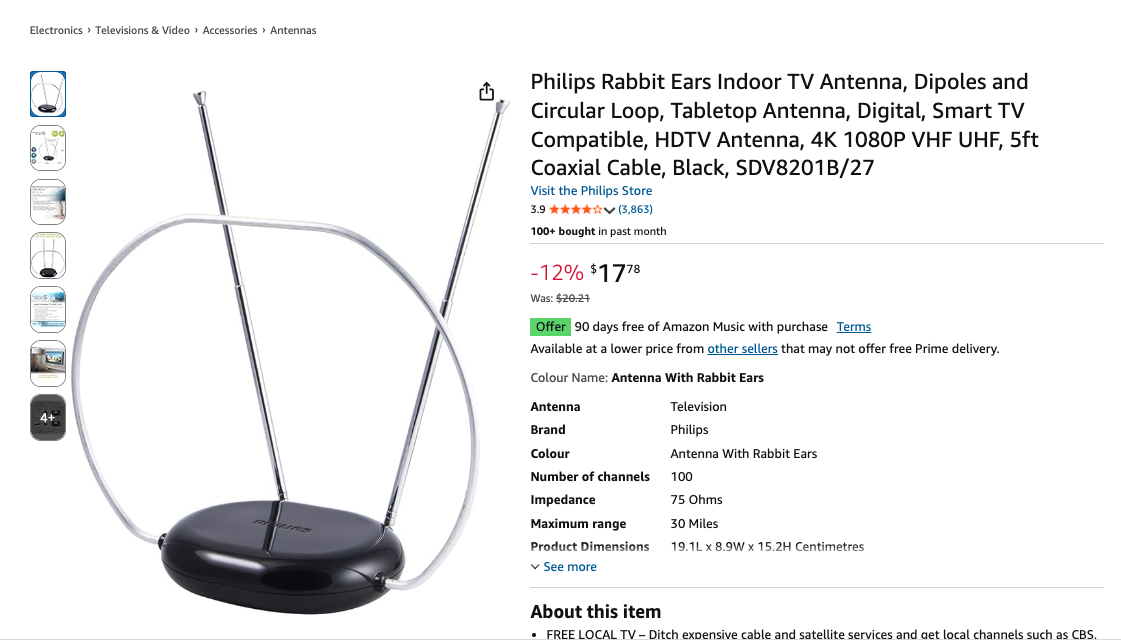
The Bigefeixu Rabbit Ears is the most traditional design in this group. Instead of hiding the reception elements inside a flat panel, it uses adjustable dipoles for VHF and UHF. That makes it easier to understand what you are changing when reception is inconsistent. You can adjust the angle, rescan, and see whether a different orientation helps in your room.
Its compact body measures 1.25 by 1.25 by 4.75 inches, making it one of the easiest antennas to fit behind a television or in a small bedroom, kitchen, office, dorm room, cabin, or RV. The included suction cup and double-sided adhesive support placement on windows, walls, TV stands, and shelves. It connects to the television's antenna or RF input, after which you select antenna mode and run a scan.
The antenna supports VHF and UHF broadcasts and is described as ready for 1080p Full HD and 4K where available. It can work with smart TVs, HDTVs, and older TVs that have a digital tuner or are connected to a converter box. That older-TV compatibility is the clearest reason to choose it over the UltraPro Hover, which is designed more around a modern TV-top installation.
The HIDB Magnetic Base Antenna is smaller in spirit and easier to leave alone, while the Bigefeixu gives you more direct control. The Vansky is a better fit for a weak signal because it has a long cable and detachable amplifier. Bigefeixu's real weakness is the lack of an amplifier and a specified cable length, so it may not reach the best window position in a larger room.
Pick the Rabbit Ears when compact size and manual VHF/UHF adjustment matter more than a powered feature set. If you want the least visible installation or need to position the antenna far from the TV, another model here will be easier.
How to choose best ota digital tv antenna
The right antenna depends less on a dramatic range number than on the broadcast bands in your area, the room's construction, and how freely you can place the antenna.
Indoor or outdoor placement
Indoor antennas are easiest to install, but walls, foil-backed insulation, metal frames, and nearby electronics can weaken or scatter signals. A window or higher wall is usually a better starting point than the space directly behind the television. Outdoor and attic antennas have a clearer path and more height, but mounting and cable routing require more planning.
The GE Outdoor Antenna is the only model here designed specifically for exterior or attic use. The Channel Master FLATenna, Vansky, and other compact models are intended for indoor installations.
VHF and UHF reception
Local stations may use VHF, UHF, or both. Adjustable rabbit ears expose the VHF and UHF elements directly, while flat antennas and compact units use an enclosed design. An antenna that supports only one band can miss channels even when it appears to be receiving other stations well.
A longer stated range cannot compensate for an antenna placed on the wrong side of a concrete wall.
Amplifier behavior
An amplifier can help when cable loss or a weak signal is the problem, but it cannot create a broadcast signal. It can also overload a strong signal. The Vansky and KANGYUE models let you test amplified operation, while the Intelbras antenna provides short-range and longer-range settings. Rescan with the amplifier off when reception becomes unstable.
For a closer look at indoor placement, the room conditions that affect local channel reception should guide your decision before the antenna's advertised range does.
Cable length
Cable length determines whether you can put the antenna in the best part of the room. A short lead often forces the antenna to remain beside the television, while a 10-foot, 12-foot, or 16.5-foot cable can reach a window or high wall. Keep the cable away from unnecessary bends and sources of electrical interference.
The FLATenna includes a 12-foot cable. The HIDB 10-Foot Antenna includes 10 feet, while Vansky and KANGYUE each include 16.5 feet.
NextGen TV compatibility
ATSC 3.0, also called NextGen TV, is available only in some markets. It can support newer broadcast features, but availability depends on local stations and the tuner in your television. The Channel Master FLATenna, UltraPro Hover, and GE Outdoor Antenna specifically state ATSC 3.0 compatibility.
Do not choose an antenna solely because a product description mentions 4K or 8K. Those labels describe compatibility with television and broadcast formats, not a guarantee that local stations transmit in those resolutions.
Frequently asked questions
Do indoor TV antennas work with smart TVs?
Yes. A smart TV can receive over-the-air broadcasts if it has a coaxial antenna input and a built-in digital tuner. Connect the antenna, select the television's antenna or air mode, and run a channel scan.
Does an antenna provide cable channels?
An antenna receives available local over-the-air broadcasts. It does not provide every cable network or streaming channel, and the channel lineup depends on your location and the stations transmitting nearby.
Should I use an amplifier with an indoor antenna?
Use an amplifier when a weak signal or long cable run is limiting reception, but test the antenna without it when possible. A strong signal can become unstable when amplification is added. The Vansky model is useful because its amplifier can be detached.
Where should I place an indoor antenna?
Start near a window or on a higher wall, ideally on the side of the home facing the broadcast towers. After every move, run a fresh channel scan. The best position can be several feet from the television.
Are 4K and 8K antennas different?
An antenna does not process video resolution in the way a television does. A model described as supporting 4K or 8K is referring to compatibility with broadcasts and TVs that use those formats. Reception quality still depends on signal strength and the local broadcast system.
Can an antenna work with an older TV?
It can if the older TV has a digital tuner. If it does not, you will need a compatible converter box between the antenna and television. The Bigefeixu Rabbit Ears specifically describes compatibility with older TVs that use a digital tuner or converter box.
Does an omnidirectional antenna need to face the towers?
An omnidirectional design is intended to receive signals from multiple directions, so aiming is less central. Placement still matters because walls, terrain, and interference can affect reception. Moving the antenna and rescanning may produce a better result even when no aiming is required.
The bottom line
The Best best ota digital tv antenna for most homes is Channel Master FLATenna. Its thin reversible body, 12-foot cable, flexible mounting options, 35-mile stated range, and ATSC 3.0 support make it the most balanced indoor pick. GE Outdoor Antenna 29884 is the better answer when you can use an attic or exterior mount and need the height and weather-resistant design that indoor panels cannot provide.
Choose UltraPro Hover when keeping the antenna nearly invisible matters most, or Vansky Amplified Antenna when a long cable and detachable amplifier give you more ways to solve a difficult room. The HIDB, Intelbras, KANGYUE, and Bigefeixu models are reasonable alternatives when compact placement, a reception switch, a long lead, or adjustable dipoles fit your situation better.
If you are undecided, start with the antenna that lets you place it closest to a window or exterior-facing wall, then rescan after every change.
As an Amazon Associate we earn from qualifying purchases.