
A pocket camera should make spontaneous photos easier, not turn a quick walk into a lesson in menus, lenses, and stabilization. The challenge is that this list includes two very different types: tiny point-and-shoot cameras for still photos, and gimbal cameras built primarily for polished video.
The DJI models lead for creators because their 1-inch sensors, rotating screens, face tracking, and mechanical stabilization solve the hardest parts of handheld video. The Kodak cameras make more sense for simple photos, while the smaller beginner models are aimed at children, casual recording, and first-time vloggers.
The DJI Osmo Pocket 3 Creator is the single best pocket camera here, with the Kodak Pixpro FZ55, DJI Osmo Pocket 3, and several straightforward beginner cameras filling out the range.
Comparison table
| # | Product | Award | Sensor or video | Stabilization or zoom | Best for |
|---|---|---|---|---|---|
| 1 | DJI Osmo Pocket 3 Creator | Best overall | 1-inch CMOS, 4K at 120fps | 3-axis mechanical, ActiveTrack 6.0 | Serious vlogging |
| 2 | Kodak Pixpro FZ55 | Best compact stills camera | 16MP CMOS, 1080p video | 5x optical zoom | Everyday photos |
| 3 | DJI Osmo Pocket 3 | Best camera-only kit | 1-inch CMOS, 4K at 120fps | 3-axis mechanical, ActiveTrack 6.0 | Vloggers with accessories |
| 4 | Kodak Pixpro FZ45 | Best simple point-and-shoot | 16MP CMOS, 1080p video | 4x optical zoom | Families and travel |
| 5 | Xtra Edge Muse | Best DJI alternative | 1-inch CMOS, 4K at 120fps | 3-axis gimbal, Master Follow | Mobile creators |
| 6 | DJI Osmo Pocket 3 Vlog Bundle | Best mic-ready bundle | 1-inch CMOS, 4K at 120fps | 3-axis mechanical, ActiveTrack 6.0 | First-time vloggers |
| 7 | Lmzour 4K Camera | Best rotating-lens design | 4K video, 75MP photos | 330-degree rotating lens | Solo recording |
| 8 | CGXUED Mini Camcorder | Best battery endurance | Video camera, resolution not specified | 180-degree manual lens | Long recording sessions |
| 9 | Lecnippy 4K Camera | Best feature-packed beginner camera | 4K video, 48MP photos | Image stabilization, 16x digital zoom | Casual creators |
| 10 | Lecran Kids Camera | Best for children | 1080p video, 44MP photos | Anti-shake, 16x digital zoom | Kids and young beginners |
1. DJI Osmo Pocket 3 Creator: Best Overall

Pros
- Large 1-inch sensor suits difficult light
- 3-axis mechanical stabilization smooths walking footage
- Rotating 2-inch screen supports vertical and horizontal video
- ActiveTrack 6.0 keeps a moving presenter centered
- Creator Combo includes a DJI Mic 2 transmitter and mini tripod
Cons
- More camera than a casual stills shooter needs
- Gimbal mechanism needs care in a pocket or bag
- Creator Combo is heavier than the camera-only package
Best for: vloggers and travelers who want polished handheld video without carrying a larger camera.
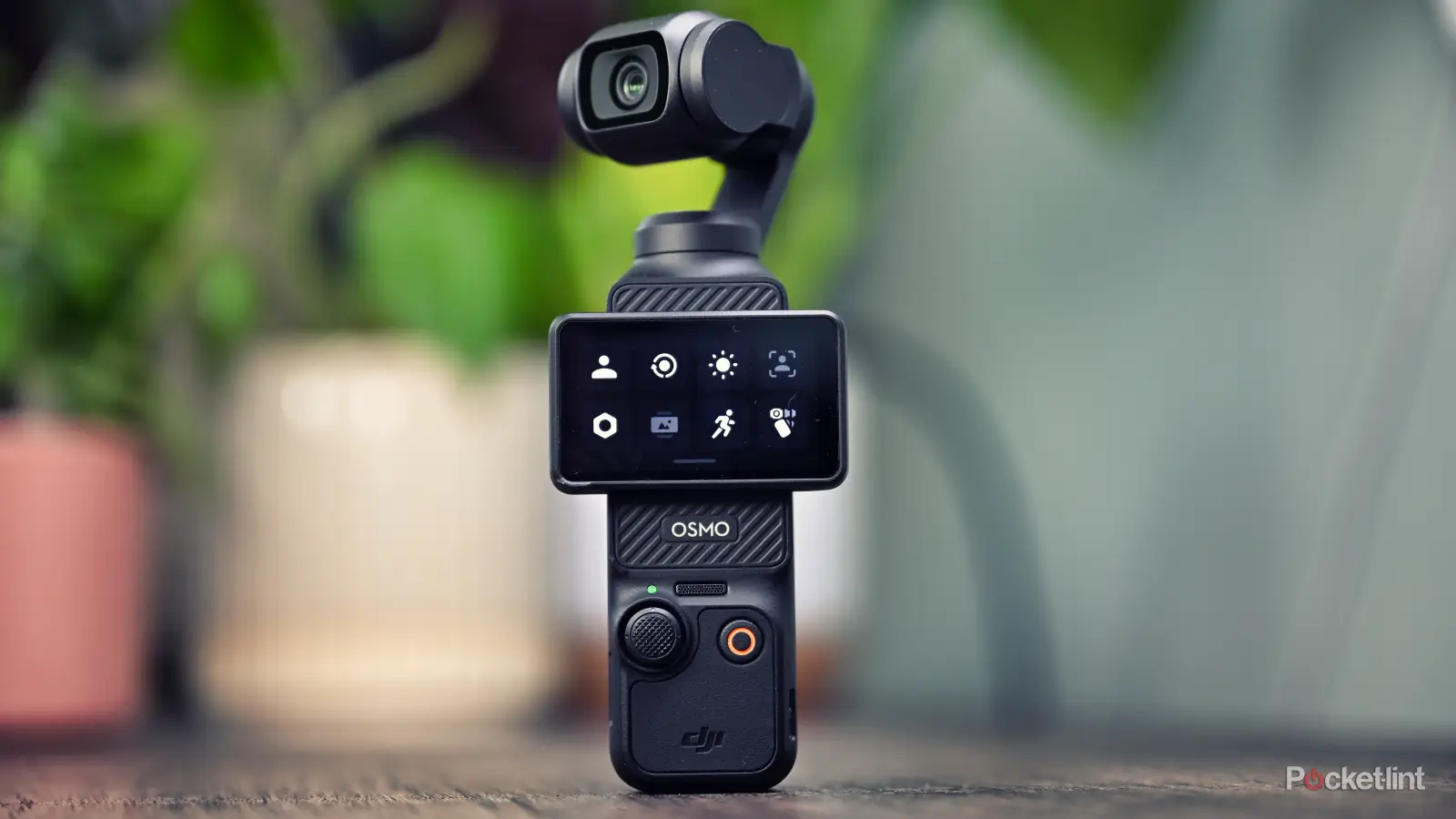
The first thing to know about the DJI Osmo Pocket 3 Creator is that it feels more like a tiny stabilized video rig than a conventional compact camera. Its built-in 3-axis mechanical gimbal keeps the lens level and footage fluid as you walk, turn, or follow a moving subject. That is a much more meaningful advantage for video than a long list of shooting modes.
The 1-inch CMOS sensor gives this model a stronger foundation than the smaller sensor cameras lower down the list. It records 4K video at 120fps, which allows smooth slow-motion footage when the scene and lighting suit it. The rotating 2-inch touch screen makes the camera practical for both landscape clips and vertical social video, while fast focusing helps keep faces and other subjects sharp.
DJI's ActiveTrack 6.0 is the feature that changes solo filming most. Set the camera on a tripod, start recording, and it can keep a person centered while they move through the frame. D-Log M and 10-bit color capture provide more room for color work later, with the product listing describing up to one billion colors. Stereo recording is built in, and the Creator Combo adds a DJI Mic 2 transmitter, battery handle, and mini tripod.
Compared with the DJI Osmo Pocket 3, this package is the better starting point for someone who needs audio and extra handling options immediately. The standard camera has the same core imaging and stabilization, but the Creator Combo is more complete. The Xtra Edge Muse offers a similar headline combination of 1-inch capture, 4K at 120fps, and a 3-axis gimbal, though DJI's tracking and audio ecosystem make the Pocket 3 easier to recommend.
The weakness is its specialization. Someone who mainly wants quick flash-free still photos will find the Kodak Pixpro FZ55 simpler, lighter, and more familiar. The gimbal also needs sensible handling, since a moving mechanism is less carefree than a fixed compact lens. For creators who want a pocketable camera that can produce stable video with very little support gear, this is the one we'd keep.
2. Kodak Pixpro FZ55: Best Compact Stills Camera

Pros
- 16MP CMOS sensor handles everyday photos
- 5x optical zoom is useful for travel and family scenes
- 28mm wide-angle lens suits indoor group shots
- Rechargeable lithium-ion battery keeps the package simple
Cons
- Video tops out at 1080p
- Small 2.7-inch screen is less flexible for self-recording
- No mechanical gimbal or subject tracking
Best for: people who want a conventional pocket point-and-shoot for photos and uncomplicated Full HD clips.
The Kodak Pixpro FZ55 is the most traditional camera in this group. It has the familiar flat compact shape, a physical zoom control, and a straightforward screen instead of a rotating gimbal head. That makes it less exciting than the DJI cameras, but also less intimidating for a family member who wants to switch it on and take a picture.
Its 16MP CMOS sensor is aimed at everyday photography rather than cinematic production. The 28mm wide-angle lens gives the FZ55 a useful starting view for rooms, city streets, and group photos. Its 5x optical zoom is the important part here. Optical zoom changes the lens framing itself, so distant subjects retain more useful detail than they would with a simple digital crop.
The camera records Full HD 1080p video, which is enough for clips destined for a phone, laptop, or family archive. A 2.7-inch LCD provides the basic composition and playback view. Storage works with Class 10 SD, SDHC, and SDXC cards up to 512GB, so the camera can grow with a larger collection of photos without relying on internal memory.
The Kodak Pixpro FZ45 is the closest comparison. It also has a 16MP sensor and 1080p recording, but its 4x optical zoom starts at a slightly wider 27mm equivalent view and it uses two AA alkaline batteries. The FZ55 is the better fit for people who prefer a rechargeable battery and want the extra reach of 5x optical zoom. It also makes more sense than the DJI Osmo Pocket 3 Creator when still photography is the priority.
The trade-off is that the FZ55 has little help for moving video. There is no 3-axis stabilization, face tracking, or rotating display. If your main question is how a compact camera handles everyday travel photography, this style of camera is still worth considering because it gets out of the way. Choose the FZ55 for uncomplicated photos, not for walking vlogs or advanced color grading.
3. DJI Osmo Pocket 3: Best Camera-Only Kit

Pros
- 1-inch CMOS sensor and 4K at 120fps recording
- 3-axis mechanical stabilization
- Rotating 2-inch touchscreen supports two aspect ratios
- ActiveTrack 6.0 is useful for solo presenters
- Includes a handle with a 1/4-inch thread
Cons
- Camera-only package lacks the Creator Combo extras
- Still-photo controls are less conventional than a point-and-shoot
- Mechanical gimbal requires careful storage
Best for: creators who already have audio and support gear or want to assemble their kit separately.
The DJI Osmo Pocket 3 has the same core camera as our top pick, which is why it remains such a strong standalone option. The compact body slips easily into a small bag, then opens up into a serious vlogging tool when the 2-inch screen rotates into position. It is particularly good for someone who wants to move between landscape travel footage and portrait clips without changing cameras.
The 1-inch CMOS sensor helps the Pocket 3 gather more useful image information than the basic compact cameras here. It records 4K at 120fps and includes fast focusing for subjects that do not stay still. The 3-axis mechanical gimbal is the defining feature. It physically steadies the camera rather than asking software to correct every movement, so walking footage can look more natural.
ActiveTrack 6.0 gives solo creators a practical way to stay in the shot. Put the camera on a tripod, enable tracking, and the camera can follow the presenter as they move. D-Log M and 10-bit color are available for people who plan to adjust footage in editing software. Direct connections to two DJI Mic 2 or Mic Mini transmitters also make it more suitable for interviews and livestreams than the fixed-lens Kodaks.
The DJI Osmo Pocket 3 Creator beats it as a ready-made production kit because it includes a DJI Mic 2 transmitter, battery handle, and mini tripod. The DJI Osmo Pocket 3 Vlog Bundle takes a different approach by including a Mic Mini transmitter. This camera-only version is the cleanest choice when you already own a microphone, tripod, or compatible support setup and do not want duplicate accessories.
Its main weakness is the learning curve. A person shopping for simple snapshots may be happier with the Kodak Pixpro FZ55, whose zoom and screen behavior are immediately familiar. The Pocket 3 also is not a fixed-lens camera you can toss around without thought. For someone building a compact video kit one piece at a time, it offers the strongest imaging platform in the list.
4. Kodak Pixpro FZ45: Best Simple Point-and-Shoot

Pros
- Simple controls suit first-time camera users
- 16MP CMOS sensor for everyday still photos
- 4x optical zoom with a 27mm wide-angle lens
- Uses two AA alkaline batteries
- Records Full HD 1080p video
Cons
- Less zoom reach than the FZ55
- AA batteries add weight and require replacements
- No advanced video stabilization
Best for: families who want a basic camera with familiar controls and easy battery replacement.
The Kodak Pixpro FZ45 is a deliberately uncomplicated camera. It does not try to be a pocket cinema rig or a connected social-media device. Its appeal is the simple routine of turning it on, framing a subject on the LCD, pressing the shutter, and putting it away.
The 16MP CMOS sensor is suited to ordinary snapshots, while the 27mm wide-angle lens gives a little more room than the FZ55 at the wide end. That can help in cramped interiors or when a group is standing close to the camera. The 4x optical zoom still provides useful flexibility for portraits, signs, and nearby details, although the FZ55 reaches farther with its 5x zoom.
Full HD 1080p video covers basic family clips and travel memories. The 2.7-inch LCD is not large, but it keeps the body compact and gives users a clear enough view for framing and playback. The FZ45 accepts Class 10 SD, SDHC, and SDXC cards up to 512GB, so it does not require an unusual storage format.
The big practical difference from the FZ55 is power. The FZ45 uses two AA alkaline batteries, while the FZ55 has a rechargeable lithium-ion battery. That makes the FZ45 convenient for a child, guest, or traveler who may not have a charging cable nearby, but it also means carrying spares. Neither Kodak competes with the DJI Osmo Pocket 3 for stabilization or tracking, and neither should be chosen for walking vlogs.
The FZ45's weakness is its modest video system and shorter zoom. It is a poor fit for someone who expects phone-like wireless sharing or smooth moving footage. For a family that wants a straightforward camera that can be handed to almost anyone, it is a sensible, low-fuss alternative to the more complicated models in this roundup.
5. Xtra Edge Muse: Best DJI Alternative

Pros
- 1-inch CMOS sensor records 4K at 120fps
- 3-axis gimbal stabilizer supports active shooting
- 2-inch touchscreen rotates for portrait and landscape work
- Master Follow keeps a subject centered
- X-Log 10-bit color modes support post-production
Cons
- Heavier than the DJI Pocket 3 models
- The product information gives fewer audio details
- Tracking terminology and workflow may be less familiar
Best for: creators who want a stabilized 1-inch video camera with a different brand and accessory package.
The Xtra Edge Muse is the most direct rival to the DJI Pocket 3 family in this group. Its core idea is the same: put a relatively large sensor, a rotating screen, and a mechanical gimbal into a small handheld body. That combination is much more useful for mobile video than a conventional pocket camera with only electronic correction.
The listed 1-inch CMOS sensor records 4K video at 120fps, giving the Muse the headline capture modes needed for detailed footage and slow motion. The 2-inch touchscreen can switch between horizontal and vertical shooting, which helps when one camera has to cover both longer videos and phone-first clips. Fast focusing is not listed as a separate technical measurement, but the product description does specifically emphasize fast focusing and subject-following behavior.
The 3-axis gimbal is the reason to choose this style of camera. It can smooth movement from walking, running, or hiking without asking the user to hold perfectly still. Master Follow is designed to keep a person centered when the camera is mounted and the presenter moves around. X-Log and 10-bit color modes are aimed at editors who want more flexibility when adjusting footage later.
Compared with the DJI Osmo Pocket 3 Creator, the Muse has similar sensor, video, screen, and stabilization claims, but DJI has the clearer advantage in this list for built-in audio options and the established ActiveTrack 6.0 workflow. The Muse includes a carrying bag, wrist strap, and handle with a 1/4-inch thread. Its listed weight is about 0.62 pounds, heavier than the DJI Pocket 3 models, so it is not the lightest choice for all-day carrying.
The Muse should be skipped by still-photo shoppers who want a quick zoom and a familiar shutter layout. It also is not the obvious choice for a buyer who needs a documented microphone setup. For a video creator who values 1-inch capture, gimbal movement, and log recording but does not need the DJI package, the Muse is the most credible alternative here.
6. DJI Osmo Pocket 3 Vlog Bundle: Best Mic-Ready Bundle

Pros
- Same 1-inch CMOS and 4K at 120fps video platform
- 3-axis mechanical stabilization
- ActiveTrack 6.0 supports solo filming
- Includes a DJI Mic Mini transmitter
- Rotating 2-inch screen works in portrait or landscape
Cons
- Battery charger is sold separately
- Bundle is less complete than the Creator Combo
- Not aimed at simple still photography
Best for: first-time vloggers who want a Pocket 3 and a compact wireless microphone in one package.
The DJI Osmo Pocket 3 Vlog Bundle is best understood as a video-first starter package. The camera itself retains the 1-inch CMOS sensor, 4K at 120fps recording, 2-inch rotating touchscreen, and 3-axis mechanical stabilization found on the other Pocket 3 entries. The bundle adds a DJI Mic Mini transmitter for cleaner spoken audio without forcing a new vlogger to assemble every part separately.
That combination matters because image stability and sound quality are the two things that make a handheld vlog feel finished. ActiveTrack 6.0 can keep a presenter centered, while the gimbal smooths the movement of the camera. The Pocket 3 also supports direct connections to two DJI Mic 2 or Mic Mini transmitters, giving the system room to grow for interviews or two-person recordings.
The camera supports D-Log M and 10-bit color depth, which is useful for creators who edit their footage rather than uploading everything untouched. Fast focusing helps when a subject moves toward the lens, and stereo recording is available when the external microphone is not being used. The listed bundle includes the starting set and Mic Mini transmitter, but the product information specifically says the battery charger is sold separately.
The DJI Osmo Pocket 3 Creator is the stronger pick when the buyer wants a battery handle, DJI Mic 2 transmitter, and mini tripod in the box. The regular DJI Osmo Pocket 3 is better for someone who already has audio equipment. This Vlog Bundle occupies the middle ground, with a useful microphone but fewer extras than the Creator package.
It is still a poor match for a person who mainly wants still photos, and the gimbal body needs more care than the Kodak Pixpro FZ45. Buyers should also account for the separate charger requirement before recording away from a computer. For a new vlogger who wants a compact camera and wireless voice recording from the start, this bundle is easy to understand.
7. Lmzour 4K Camera: Best Rotating-Lens Design

Pros
- 330-degree rotating lens suits solo vlogging
- 4K video and 75MP photo capture are listed
- WiFi supports wireless transfer to a smartphone
- Includes a mini tripod, 16GB TF card, and carrying bag
- Time-lapse, slow motion, and interval modes add creative options
Cons
- Listed weight is about 0.79 pounds
- No 3-axis mechanical stabilization is specified
- The 330-degree lens requires more user adjustment than a tracking gimbal
Best for: beginners who want a self-recording camera with built-in WiFi and a rotating lens.
The Lmzour 4K Camera takes a different route from both the Kodaks and the DJI models. Instead of using a stabilized head that automatically follows the subject, it uses a 330-degree rotating lens so the person filming can point the camera toward themselves. That is a useful design for solo clips, especially when the camera is mounted on the included mini tripod.
The product description lists 4K video and 75MP photos, along with autofocus and a wide-angle lens. Those figures describe the camera's capture modes, but they do not tell us the sensor size or establish the same low-light foundation as the DJI models. The camera also includes time-lapse, slow motion, and interval shooting, giving beginners ways to experiment without learning a complicated manual system.
WiFi is the practical standout. It allows photos and videos to move wirelessly to a smartphone for editing and sharing, which is more convenient than removing a card after every short recording. The package includes a 16GB TF card, charging cable, wrist strap, mini tripod, and travel bag, so it is designed to get a new creator started with fewer separate pieces.
The CGXUED Mini Camcorder is smaller in purpose, with one-button recording and a stated 7-hour battery life, but it does not list WiFi. The DJI Osmo Pocket 3 offers far stronger stabilization and subject tracking, while the Lmzour is easier to position for a simple face-to-camera clip. The Lmzour's listed dimensions include a 6.36-inch height and a weight of about 0.79 pounds, so the word pocket should not be taken to mean featherlight.
Its biggest limitation is the absence of a specified mechanical gimbal. A rotating lens can aim the camera, but it will not smooth walking movement in the same way as DJI's 3-axis system. If you want a simple way to compare small cameras for carrying on trips, this design is worth a look. Pick it for beginner self-recording and wireless transfers, not for demanding moving footage.
8. CGXUED Mini Camcorder: Best Battery Endurance

Pros
- Stated 7-hour continuous recording battery life
- One-button recording avoids complicated setup
- 180-degree manually rotating lens supports self-recording
- Includes a 32GB memory card
- 18-month warranty and lifetime technical support are listed
Cons
- Lens rotation is manual
- Product information does not specify video resolution
- Image quality is not intended to match a DSLR
Best for: beginners who prioritize long recording time and simple operation over advanced image quality.
The CGXUED Mini Camcorder is built around convenience rather than ambitious image quality. Its body measures about 5.35 by 1.56 inches according to the feature description, making it easy to carry in a pocket or small bag. One-button recording is the main appeal: there is no app download or complicated setup before capturing a daily clip.
Battery life is the most distinctive claim. The built-in 2, 000mAh rechargeable battery is described as supporting up to 7 hours of continuous recording. That makes the camcorder interesting for long travel days, school events, or a child who may forget to charge a camera after every use. A 32GB memory card is included, which means the camera is ready to record without an immediate accessory purchase.
The 180-degree rotating lens supports point-of-view shots and self-recording, but the rotation is manual. That distinction matters beside the Lmzour 4K Camera, whose lens is described as rotating 330 degrees and whose WiFi helps move files to a phone. The CGXUED does not specify video resolution in the supplied information, so it is not possible to place it alongside the DJI models on capture quality.
The manufacturer explicitly says this camera is not designed to deliver DSLR-level image quality. That honesty also tells you where it belongs: simple and fun everyday recording, not polished commercial footage. The compact body, built-in battery, included card, and stated support coverage make it easier to hand to a beginner than the more advanced gimbal cameras.
Skip it if sharp high-resolution video, tracking, or strong low-light performance is central to your plans. The DJI Osmo Pocket 3 Creator is in another class for moving footage, while the Lecran Kids Camera offers more child-focused shooting modes. Choose the CGXUED when recording endurance and one-button simplicity matter more than detailed specifications.
9. Lecnippy 4K Camera: Best Feature-Packed Beginner Camera

Pros
- 4K video and 48MP photo modes are listed
- Autofocus uses a two-step shutter process
- 2.8-inch IPS screen is larger than the Kodak displays
- Webcam mode supports calls and livestreams
- Includes a 32GB SD card and two batteries
Cons
- 16x zoom is digital rather than optical
- Sensor size is not specified
- Not a substitute for a stabilized gimbal camera
Best for: casual photographers who want many beginner features and a camera that can double as a webcam.
The Lecnippy 4K Camera is a small all-purpose device rather than a focused specialist. It combines still photography, video recording, webcam use, and a selection of family-friendly modes. The included 32GB SD card, two batteries, and Type-C cable make the setup approachable for someone who wants to start shooting without building a separate kit.
The listed capture modes include 4K video and 48MP photos. The product information does not specify the sensor size, so those headline figures should not be read as evidence that it will match the DJI Pocket 3's 1-inch CMOS sensor. The camera's 16x zoom is digital, which can help with framing but cannot provide the same detail-preserving reach as the Kodak Pixpro FZ55's 5x optical zoom.
Autofocus is designed to be simple. Pressing the shutter button once focuses and pressing it again takes the photo, a sequence that can help beginners avoid accidental soft images. The 2.8-inch IPS screen gives more room for viewing than the 2.7-inch screens on the Kodak models. Smile capture, continuous shooting, self-timer, and image stabilization add useful options for family gatherings and casual trips.
The webcam function broadens its role beyond a pocket stills camera. Connect it to a computer and it can support video calls or livestreaming, while recording during charging helps with longer sessions. The Lecran Kids Camera includes a wider selection of child-oriented functions, but the Lecnippy's webcam mode and autofocus make it more appealing to teens or adults who want a flexible starter camera.
Its weakness is that the specification list is more impressive on paper than the camera's design is specialized. There is no 3-axis gimbal, no optical zoom, and no stated sensor size. Readers comparing the practical differences between compact digital camera designs should treat it as a feature-rich beginner device. It suits casual use, gifts, and webcam duty better than demanding travel video.
10. Lecran Kids Camera: Best for Children

Pros
- Simple controls suit children and first-time users
- Full HD 1080p video and 44MP photo modes are listed
- Two rechargeable batteries support longer outings
- Includes a 32GB SD card, lanyard, bag, and Type-C cable
- Two-year satisfaction warranty is listed
Cons
- 16x zoom is digital
- No optical zoom or advanced stabilization system
- Child-focused design is limiting for serious adult photography
Best for: children, teens, and beginners who need a simple camera for experimenting with photos and video.
The Lecran Kids Camera is the most clearly targeted beginner model here. It is designed to be carried with a lanyard, operated through simple settings, and used without much supervision. That makes it a better first camera for a child than the DJI models, whose gimbals and editing options are excessive for casual experimentation.
The camera lists 44MP photos and Full HD 1080p video, plus anti-shake support. It also has a 16x digital zoom. Digital zoom enlarges the image rather than extending the lens, so it is best treated as a framing convenience rather than a way to capture distant subjects with extra detail.
The feature set is generous for a starter camera. Children can try filters, time-lapse, slow motion, continuous shooting, motion detection, face detection, self-timer, and webcam mode. The timestamp function can add dates to photos and videos. A large LCD and playback on the camera or a computer make it easier for a young user to see what they captured.
The package includes a 32GB SD card, Type-C cable, charger adapter, two rechargeable batteries, lanyard, and bag. That is more immediately usable than the camera-only DJI Osmo Pocket 3, but the DJI is vastly better for anyone who cares about smooth movement, high-resolution video, tracking, or color grading. The Lecnippy 4K Camera is the better step up for a teen who wants webcam use and a less child-specific design.
The Lecran's limitations are straightforward. It has no optical zoom, no gimbal, and no specified sensor size, so it is not a serious alternative to the Kodak cameras for controlled still photography or to DJI for vlogging. Its purpose is to make photography approachable. For a young beginner who needs a forgiving first camera, it is the right choice.
How to choose the best pocket camera
The right pocket camera depends on whether you want still photos, stabilized video, or a simple first device. These are the specifications and design choices that separate the useful options in this list.
Sensor size and image modes
Sensor size usually matters more than a large megapixel claim. The DJI Osmo Pocket 3 models and Xtra Edge Muse list 1-inch CMOS sensors, which give them a stronger basis for video and difficult light than the cameras here that do not specify sensor size.
A 16MP sensor in the Kodak FZ55 or FZ45 is plenty for ordinary prints and social sharing. The 44MP, 48MP, and 75MP claims on the beginner cameras describe available photo modes, not necessarily a larger or better sensor. Look for a specified sensor size when image quality matters.
Video resolution and frame rate
Full HD 1080p is suitable for family clips and straightforward playback. The DJI Pocket 3 models and Xtra Edge Muse record 4K at 120fps, giving creators more detail and the option of smooth slow motion.
Resolution alone does not guarantee good footage. A camera also needs reliable focus, a stable lens, and usable audio. The CGXUED Mini Camcorder does not list its video resolution in the supplied product details, so it should be judged by its simple recording design and stated battery endurance instead.
For walking video, a stabilized lens usually matters more than a bigger number printed on the box.
Stabilization and subject tracking
A 3-axis mechanical gimbal physically steadies the camera, which is why the DJI Osmo Pocket 3 and Xtra Edge Muse are the strongest choices for walking and moving footage. ActiveTrack 6.0 on the DJI models and Master Follow on the Muse help keep a presenter in the frame.
Anti-shake or built-in image stabilization can help with casual stills, but it is not the same as a mechanical gimbal. The Lecnippy and Lecran cameras offer stabilization features, while the Kodaks focus on conventional point-and-shoot operation.
Lens and zoom
Optical zoom changes the lens framing and is the useful kind of zoom for distant subjects. The Kodak Pixpro FZ55 has 5x optical zoom, while the FZ45 has 4x optical zoom. Their 28mm and 27mm wide-angle starting points are useful for rooms, streets, and groups.
The 16x zoom listed on the Lecnippy and Lecran cameras is digital. It can enlarge a subject on screen, but it does not provide the same detail as optical reach. Rotating lenses serve a different purpose. The Lmzour's 330-degree lens and CGXUED's 180-degree lens are mainly for self-recording and unusual framing.
Screen, audio, and connectivity
A rotating 2-inch screen makes the DJI and Xtra Edge cameras easy to use for both portrait and landscape video. The Kodaks use fixed 2.7-inch LCDs, while the Lecnippy lists a 2.8-inch IPS screen.
Audio is central to vlogging. The DJI models can connect directly to DJI Mic 2 and Mic Mini transmitters, and the Creator Combo includes a DJI Mic 2 transmitter. The Lmzour adds WiFi for transferring files to a phone, while the Lecnippy offers webcam mode for computer calls and livestreams.
Frequently asked questions
What is the best pocket camera for vlogging?
The DJI Osmo Pocket 3 Creator is the strongest choice for vlogging in this group. Its 1-inch CMOS sensor, 4K at 120fps recording, 3-axis mechanical stabilization, rotating 2-inch screen, and ActiveTrack 6.0 address the main challenges of solo video.
Is a pocket camera with a gimbal better for walking video?
Yes, a mechanical gimbal generally provides more useful stabilization for walking footage than basic anti-shake or digital correction. The DJI Osmo Pocket 3 models and Xtra Edge Muse use 3-axis gimbal stabilization, while the other cameras do not list an equivalent mechanical system.
Which camera is best for simple family photos?
The Kodak Pixpro FZ55 is the most suitable simple family camera here. Its 16MP sensor, 5x optical zoom, 28mm wide-angle lens, fixed LCD, and rechargeable battery make it easy to use for ordinary snapshots.
Do these pocket cameras need a memory card?
Most of the products list removable storage or include a card. The Kodak FZ55 and FZ45 support Class 10 SD, SDHC, or SDXC cards up to 512GB, while the Lmzour includes a 16GB TF card, the CGXUED includes a 32GB card, and the Lecnippy and Lecran include 32GB cards.
Which pocket camera is best for a child?
The Lecran Kids Camera is the clearest fit for children. It has simple settings, filters, a lanyard, two rechargeable batteries, a bag, and several creative modes, including time-lapse, slow motion, face detection, and webcam capability.
Can a pocket camera replace a phone camera?
It can, depending on the reason you want one. The Kodak models provide optical zoom and a dedicated physical camera, while the DJI models provide much stronger stabilization and video controls. Phones remain more convenient for immediate sharing, so a pocket camera makes the most sense when you want optical reach, dedicated controls, or a specialized gimbal.
The bottom line
The DJI Osmo Pocket 3 Creator is the Best pocket camera in this roundup for creators who care about smooth, polished video. Its 1-inch sensor, 4K at 120fps recording, ActiveTrack 6.0, rotating screen, and included audio and support accessories make it the most complete choice.
For simple still photos, choose the Kodak Pixpro FZ55. It has a useful 5x optical zoom and a familiar point-and-shoot design, while the DJI Osmo Pocket 3 remains the better camera-only choice for vloggers who already have their own accessories.
If you are undecided, choose the FZ55 for photos and the DJI Osmo Pocket 3 Creator for video.
As an Amazon Associate we earn from qualifying purchases.