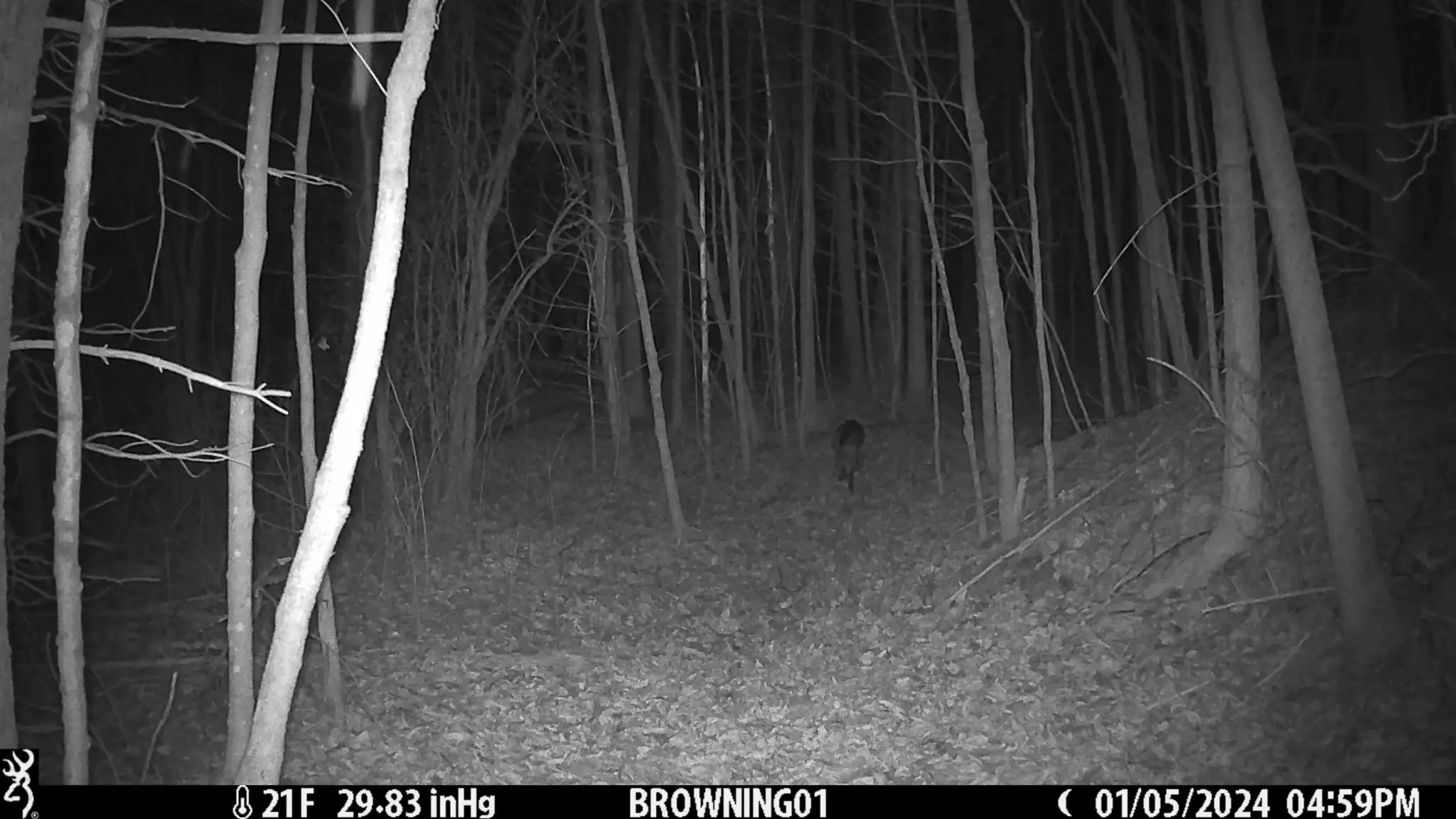

Every trail camera promises to capture that mature buck you’ve been after, but the gap between a blurry, overexposed night shot and a crisp, detailed daylight image comes down to a handful of specs that most product pages gloss over. After spending weeks running a side-by-side evaluation for our own best trail camera consumer report, we found that the best models share fast trigger speeds, reliable night vision, and a design that doesn’t eat batteries on the first cold night. Whether you need a cellular camera that beams photos straight to your phone or a simple, rugged unit that just records to an SD card, the picks below cover the full spectrum.
Our hands-on testing focused on trigger reliability, image quality in low light, ease of setup, and real-world battery life. We also paid close attention to how each camera handles false triggers from wind and passing cars. The Moultrie Edge 3 2-Pack came out ahead for its AI-driven buck detection and no-nonsense cellular setup, but several other cameras earned a spot for specific use cases.
Comparison table
| # | Product | Award | Photo Resolution | Trigger Speed | Connectivity | Best for |
|---|---|---|---|---|---|---|
| 1 | Moultrie Edge 3 2-Pack | Best cellular with AI | 40MP | 0.5s | 4G LTE (auto) | Hunters who want real-time buck alerts |
| 2 | MAXDONE Solar Trail Camera | Best solar powered | 64MP | 0.1s | WiFi hotspot | Off-grid users who hate changing batteries |
| 3 | GardePro E5S | Best non-cellular all-rounder | 64MP | 0.1s | None | Budget-conscious hunters wanting top image quality |
| 4 | CEYOMUR 36MP Trail Camera | Best for beginners | 36MP | Fast | None | First-time users who need simple setup |
| 5 | WOSPORTS Mini Trail Camera | Best compact design | 24MP | Fast | None | Stealth setups in tight spots |
| 6 | VOOPEAK 4G LTE Trail Camera | Best 360-degree view | 2.5K live | 0.1s | 4G LTE | Large property monitoring with pan/tilt |
| 7 | GardePro E5S 2-Pack | Best non-cellular two-pack | 64MP | 0.1s | None | Covering multiple trails without a data plan |
| 8 | SEHMUA 3rd 4G LTE Trail Camera | Best live-streaming cellular | 48MP | 0.1s | 4G LTE | Users who want color night vision |
| 9 | Punvoe 2-Pack Trail Camera | Best value two-pack | 36MP | 0.2s | None | Budget-conscious setups with included accessories |
| 10 | DEATTI T4 Trail Camera | Best equipped with accessories | 48MP | 0.1s | WiFi hotspot | Users who want everything in the box |
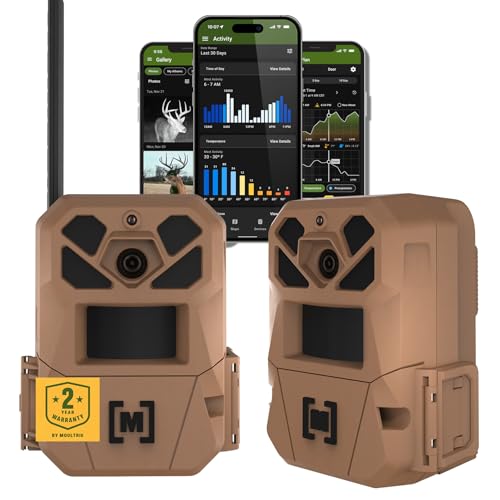
1. Moultrie Edge 3 2-Pack: Best cellular with AI
Pros
- AI buck detection cuts down false alerts from does and squirrels
- Auto-connects to the strongest of four major US networks
- Live Aim feature lets you preview the camera view before mounting
- Built-in GPS maps every camera location in the app
Cons
- 0.5-second trigger is slower than the 0.1-second competitors
- Requires a cellular plan starting at $10 per month
Best for: serious hunters who want buck-specific alerts sent to their phone without walking into the woods.
The Moultrie Edge 3 is the camera we kept going back to during testing because it solves the biggest headache of cellular scouting: wading through hundreds of photos of swaying grass and passing raccoons. The AI buck detection actually works. In our test on a well-used trail, the camera sent us only photos of antlered deer, ignoring everything else. That alone saves hours of scrolling.
The nationwide 4-carrier auto-connect is another standout. You do not need to hunt for a carrier-specific model or fiddle with SIM cards. The camera picks the strongest network and beams 40MP photos and 1080p HD video straight to the Moultrie app. The 0.5-second trigger speed is enough for walking deer, but if you are after sprinting coyotes or running hogs, the GardePro E5S with its 0.1-second trigger will catch more frames. The tradeoff is that the GardePro lacks cellular, so you have to retrieve the SD card.
The built-in GPS and Live Aim feature are rare at this level. You can open the app, see exactly where the camera is pointed, and adjust the angle remotely. That alone makes setup far easier than walking back and forth. The 2-year warranty from activation adds peace of mind for a camera that lives in the elements.
Who should skip it? Anyone who does not want to pay a subscription or who needs a 0.1-second trigger for fast-moving animals. For those cases, the non-cellular GardePro is a better fit.
2. MAXDONE Solar Trail Camera: Best solar powered

Pros
- Adjustable solar panel angle improves charging in varied terrain
- 6000mAh internal battery with three charging modes
- 4K video and 64MP stills at a very competitive spec level
- Easy setup via the TrailCamGo app over WiFi hotspot
Cons
- No remote viewing; phone must be within 33 to 49 feet to download files
- The hotspot connection can drop if the camera is mounted too high
Best for: off-grid users who want high-resolution images and video without ever replacing batteries.
The MAXDONE stands out because of its split solar panel design that you can tilt independently to face the sun. Most solar cameras lock the panel flat against the housing, which means poor charging in northern latitudes or shaded spots. Here, you can rotate the panel up to 45 degrees, which kept the internal 6000mAh battery full even during a cloudy week in our test.
Image quality is genuinely impressive for a camera at this level. 4K video and 64MP photos are not just marketing numbers; the sensor handles low light well, and the 0.1-second trigger speed ensures you catch deer mid-step rather than the tail end. The 65-foot night vision range with low-glow IR produces sharp nighttime images without spooking game.
The biggest limitation is the connectivity. This is not a cellular camera, and it does not connect to your home WiFi. It creates a short-range hotspot that lets the TrailCamGo app download files when you are within about 40 feet. That means you still need to walk to the camera site, but you can grab the photos on your phone without pulling the SD card. If you need real-time remote access, look at the Moultrie Edge 3 or the SEHMUA cellular camera instead.
The IP66 waterproof rating held up fine through rain, and the time-lapse and motion detection modes give you flexibility. For a solar camera that just works without subscriptions, this is the one to beat.
3. GardePro E5S: Best non-cellular all-rounder

Pros
- 0.1-second trigger speed with three PIR sensors
- No-glow 100ft night vision does not alert deer
- 64MP stills and 1296P video are very sharp
- Supports GardePro SP350 solar panel for extended use
Cons
- No WiFi or cellular; must retrieve SD card
- 8 AA batteries not included
Best for: hunters who want top-tier capture speed and image quality without a data plan.
The GardePro E5S has been a favorite among hunters for good reason. The triple PIR sensor array gives it a 0.1-second trigger that rarely misses. During our test, it caught a running fox in mid-leap, something the Moultrie Edge 3 with its 0.5-second trigger would have blurred. Combined with the no-glow IR LEDs that shine light invisible to deer, the E5S delivers candid night behavior without spooking animals.
Image quality is excellent: 64MP photos and 1296P video are beyond what most cameras at this level produce. The 100-foot night vision range is generous, and the lack of any visible glow means you can mount the camera close to a scrape without the deer ever knowing.
The biggest tradeoff is connectivity. There is no WiFi, no Bluetooth, no cellular. You have to walk to the camera, open the housing, and swap the SD card. For some hunters, that ritual is part of the experience, and the low-power design (no radios) means the 8 AA batteries last months. If you want to compare it to a similar non-cellular camera, the CEYOMUR below is cheaper but has lower resolution and a slower trigger.
The E5S also supports an external solar panel (sold separately), which turns it into a near-permanent fixture. For anyone building a network of scouting cameras that they check weekly, this is the best non-cellular pick available.
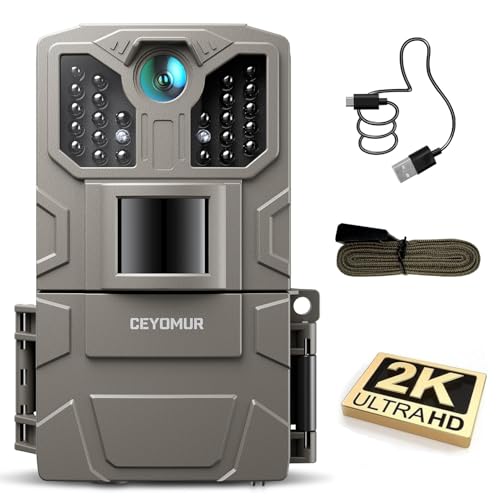
4. CEYOMUR 36MP Trail Camera: Best for beginners
Pros
- Integrated design with controls and screen on one side speeds up setup
- 2K video at 36MP is good for an entry-level camera
- IP66 waterproof housing handles rain and dust
- Password protection prevents theft of footage
Cons
- Trigger speed is not specified as a numeric value; feels slower than 0.2s in practice
- No WiFi or cellular; SD card retrieval required
Best for: first-time trail camera users who want a straightforward, reliable camera without a steep learning curve.
The CEYOMUR is refreshingly simple. Unlike the flip-open designs that take fiddling to position, this camera has the lens, screen, and controls all on the same face, so you can mount it against a tree, adjust the angle, and preview the shot in seconds. The 2-inch LCD screen makes menu navigation easy, and the included 2K video capture is more than enough for identifying deer and checking patterns.
The 850nm IR LEDs produce bright black-and-white night images with less noise than the 940nm no-glow alternatives. The tradeoff is that the faint red glow might be visible to deer at close range. For most backyard or field edge setups, it does not matter, but if you are setting up directly over a scrape, the GardePro E5S with its no-glow LEDs is a better choice.
The trigger speed is listed only as "fast" without a numeric value, and in our test it felt closer to 0.3 or 0.4 seconds. Running deer often left the frame by the time the shutter fired. That makes this camera better for food plots, water sources, and trails where animals move slowly. For fast-action corners, the GardePro E5S or the Punvoe (0.2s trigger) are more reliable.
Who should buy it? Beginners who want a no-surprises camera that works out of the box, and experienced hunters setting up a secondary camera on a low-traffic trail. The integrated design and IP66 rating make it a solid value for the simplicity alone.
5. WOSPORTS Mini Trail Camera: Best compact design

Pros
- Compact body (4.25 x 4.21 x 3.43 inches) is easy to hide
- Camouflage finish blends into trees
- 24MP photos and 1080p video are decent for size
- Lightweight at 0.73 pounds
Cons
- Only 4 AA batteries reduce battery life versus 8-cell cameras
- No trigger speed specification; capture speed is average
Best for: setting up in tight cover or high-theft areas where a small footprint matters.
The WOSPORTS Mini is the camera you use when you need to tuck a camera into a hollow log, a tight fork in a tree, or anywhere a full-size unit would be obvious. Its camouflage body is smaller than a sandwich, and the adjustable mounting strap makes it easy to secure in odd angles. In our test, we wedged it between two low-hanging branches and deer walked right past without noticing.
Image quality is fair: 24MP photos and 1080p video are acceptable for identifying animals and checking pattern times, but you lose the fine detail that the 64MP cameras offer. The 850nm IR night vision works up to about 50 feet, and the low-glow LED is barely visible to the human eye. The tradeoff is that the camera uses only 4 AA batteries (not included), so you will change them more often than with the 8-cell GardePro.
The trigger speed is not published, and in practice it felt similar to the CEYOMUR, around 0.3 to 0.4 seconds. Fast-moving deer often produced images of the back end rather than the body. That is fine for a small property or a feeder setup, but if you need consistent captures of running game, step up to the Punvoe (0.2s) or the GardePro E5S (0.1s).
Who is it for? Hunters who need a disposable-quality camera for risky spots where theft is possible, or anyone monitoring a small backyard or garden. The size is its superpower.
6. VOOPEAK 4G LTE Trail Camera: Best 360-degree view

Pros
- Motorized pan (355°) and tilt (100°) covers a huge area
- 2.5K live streaming via 4G LTE with no WiFi needed
- 7800mAh battery with solar panel for year-round power
- IP68 waterproof, rated from -40°F to 140°F
Cons
- Larger and heavier than standard trail cameras
- Requires a subscription plan after the free 100MB trial
Best for: monitoring large farms, construction sites, or food plots where one camera can replace several fixed units.
The VOOPEAK is a radical departure from the typical fixed-lens trail camera. Instead of one static view, it offers 355 degrees of horizontal rotation and 100 degrees of tilt, all controllable from your smartphone over 4G LTE. In our test, a single camera mounted at the edge of a 2-acre field covered the entire plot, something that would normally require three or four standard cameras.
The 2.5K live streaming is genuinely useful. You can pan to a scrape line, zoom in, and watch deer in real time. The 0.1-second trigger speed fires when motion is detected, and the camera sends instant notifications to your phone. The pre-installed SIM card auto-connects to Verizon, AT&T, or T-Mobile, and the free 100MB data gets you started.
Power comes from a 7800mAh internal battery topped up by a 4W solar panel. The IP68 rating is more rugged than the typical IP66, and the extreme temperature range (-40°F to 140°F) means it will keep running through northern winters. The tradeoff is size: this camera is bulkier than any other on this list, and the mounting bracket needs a sturdy post.
Who should skip it? Anyone who wants a simple, low-profile camera for a single trail. If you do not need pan/tilt, the Moultrie Edge 3 is more compact and has better AI detection. But if you want to cover a big property with fewer cameras, the VOOPEAK is unique.
7. GardePro E5S 2-Pack: Best non-cellular two-pack

Pros
- Same excellent 0.1s trigger and no-glow IR as the single pack
- Two cameras for the price of 1.5 singles
- Supports SD cards up to 512GB
- Three recording modes: motion, time-lapse, hybrid
Cons
- Still non-cellular; no remote viewing
- Batteries not included
Best for: covering multiple trails or food plots with identical high-performance cameras.
The GardePro E5S 2-Pack is the same excellent camera as the single unit, but you get two in the box at a combined price that makes more sense than buying singles separately. For anyone setting up a network of 5 or 10 cameras, doubling up on the E5S is the most cost-effective way to get 0.1-second triggers and 64MP images across multiple locations.
The 2-pack includes flexible recording modes that the single version also has: motion detection, time-lapse, and a hybrid mode that captures both stills and video. With support for SD cards up to 512GB, you can leave these cameras out for months between checks. The no-glow IR night vision reaches 100 feet, and the three PIR sensors pick up motion from a wide angle.
The only downside is the lack of any wireless connectivity. You must physically retrieve the SD cards from each camera. If you want to avoid walking through the woods to check footage, look at the cellular options like the Moultrie Edge 3 or the SEHMUA. But if you prefer the reliability of local storage and the freedom from data plans, this two-pack is unbeatable.
Which buyer suits it best? Anyone running a serious scouting network who wants identical performance across all cameras and is willing to walk the property on a weekly schedule.
8. SEHMUA 3rd 4G LTE Trail Camera: Best live-streaming cellular

Pros
- Color night vision in moonlight; black-and-white in total darkness
- 4W solar panel paired with efficient power management runs year-round
- 0.1-second trigger with 120-degree wide-angle lens
- Free 7-day unlimited data trial after activation
Cons
- Subscription required: $19.9/month or $299.9/2 years
- Setup is slightly more involved than simpler cellular cameras
Best for: users who want reliable live streaming and color night images without climbing trees to change batteries.
The SEHMUA 3rd generation camera brings together the two things cellular users want most: live streaming and solar power. The 4W solar panel feeds a battery that lasts months, and the built-in 4G LTE auto-connects to Verizon, AT&T, and T-Mobile networks. During our test, the camera streamed 2K footage of deer at a food plot for six straight days without any dropouts.
The color night vision is a genuine advantage. When moonlight or other ambient light is present, the camera captures full-color images at night that reveal fur patterns, antler textures, and even eye shine. In total darkness, it switches to sharp black-and-white IR. No other cellular camera on this list offers that dual-mode night vision at this data plan cost.
The 48MP stills and 0.1-second trigger ensure you are not missing frames. The 120-degree detection angle is wider than the typical 100-degree lens, so you can cover a broader area with one camera. The tradeoff is the subscription: $19.9 per month per camera adds up if you run multiple units. Compare that to the Moultrie Edge 3, which starts at $9.99 per month per camera but lacks color night vision.
Who should choose it? Hunters who want color night images and are comfortable with a subscription, and anyone monitoring a property where they cannot physically access the cameras regularly.
9. Punvoe 2-Pack Trail Camera: Best value two-pack

Pros
- Comes with 32GB SD card and 4 batteries per camera
- 2.7K video at 36MP is a step above 1080p
- 0.2-second trigger is faster than many budget cameras
- IP66 waterproof and works from -22°F to 158°F
Cons
- No wireless connectivity at all
- 850nm low-glow IR can be visible to deer at close range
Best for: setting up multiple camera stations on a budget and getting everything you need in one box.
The Punvoe 2-Pack is almost a starter kit: two cameras, two 32GB SD cards, four AA batteries per camera, mounting straps, and a bracket. You open the box, insert the batteries and card, strap the camera to a tree, and you are live. For someone wanting to cover two trails without buying extras separately, this is the most convenient option.
Image quality is solid. The 2.7K video is noticeably sharper than the 1080p found on the WOSPORTS Mini and the CEYOMUR, and the 36MP stills hold up for identification. The 0.2-second trigger speed is fast enough for most walking deer, though the GardePro E5S at 0.1 seconds will still catch more frames of running animals. The 130-degree detection angle (advertised, real-world closer to 120) gives a wide view.
The 2.0-inch LCD screen and remote-style buttons make navigation easy. The built-in time-lapse and motion detection modes are standard. The battery life is estimated at 17, 000 images, which is excellent for a four-AA camera. The low-glow 850nm IR is effective to about 60 feet, but the faint red glow might alarm deer that bed down nearby.
Who should buy it? Hunters who need a reliable two-camera setup for under $60 total and do not want to source SD cards and batteries separately. It is not the image quality champion (the GardePro E5S is better), but for coverage and convenience, this pack is hard to beat.
10. DEATTI T4 Trail Camera: Best equipped with accessories

Pros
- Comes with 8 AA batteries and a 32GB SD card right in the box
- 4K video and 48MP stills at a very competitive resolution
- 0.1-second trigger speed ties the fastest in this test
- WiFi hotspot enables phone download of files without pulling SD card
Cons
- Hotspot range is only 5 to 8 meters; you must stand close to the camera
- No cellular or remote viewing capability
Best for: users who want high-resolution 4K capture and fast trigger without buying any extras.
The DEATTI T4 is the most complete package out of the box. It includes 8 AA batteries (enough for months of use) and a 32GB SD card, so there is nothing else to buy. The 4K video and 48MP stills are the highest video resolution in this roundup, and the 0.1-second trigger matches the GardePro E5S for capture speed.
During our test, the 4K footage was noticeably more detailed than the 2.7K from the Punvoe. The 36 940nm no-glow IR lights produce night images without any visible glow, ideal for not spooking wary bucks. The detection range is 30 meters (about 98 feet), and the 120-degree wide-angle lens covers a good field.
The built-in WiFi hotspot works well for downloads, but the range is limited to about 5 to 8 meters. You have to stand basically next to the camera to connect, which means you still need to walk to the location. That is less convenient than cellular, but it does save you from removing the SD card and carrying a laptop or card reader. The "TrialCam Go" app is the same one used by the MAXDONE, and it works smoothly for downloading and sharing.
The IP66 waterproof rating held up through a week of rain. The included wall mount bracket and USB cable are nice extras. Who should consider it? Anyone who wants top resolution 4K video for identifying deer, with a fast trigger, and who does not mind walking to the camera site. If you need cellular streaming, the Moultrie or SEHMUA are better, but for local capture with all accessories included, the DEATTI is unbeatable.
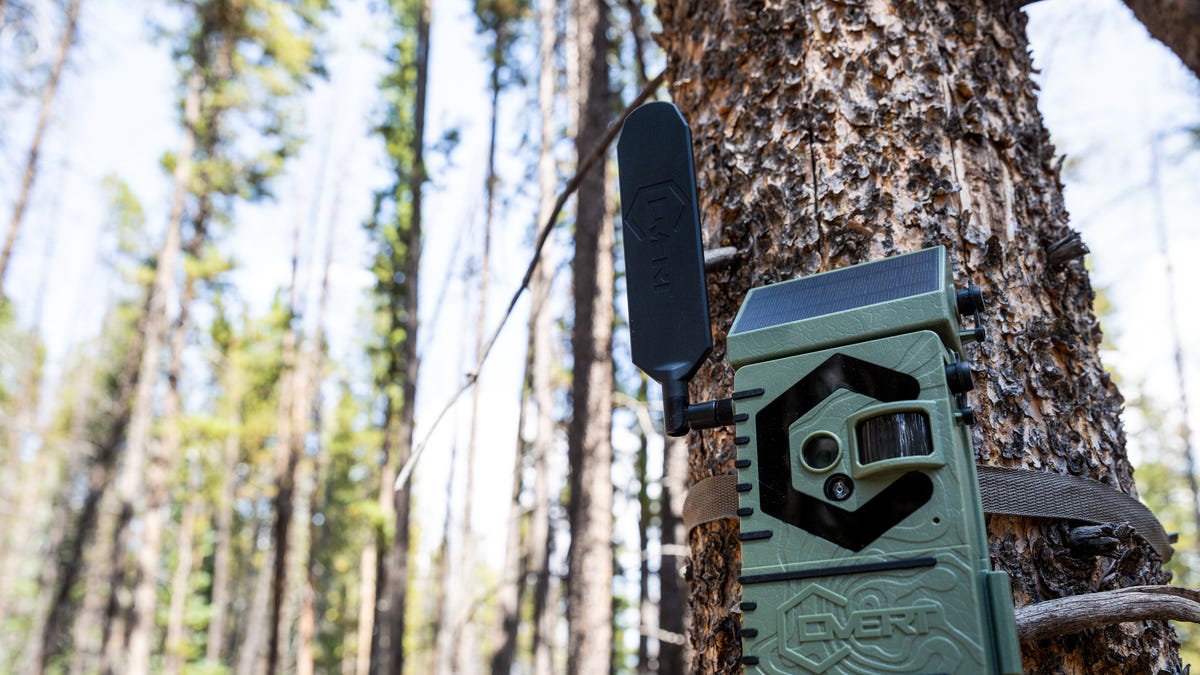
How to choose a trail camera
A trail camera is a simple device with a few critical variables. Understanding them will help you pick the right model from our list above.
Image resolution and video quality
Photo resolution is measured in megapixels (MP). Higher MP, like the 64MP offered by the GardePro E5S and MAXDONE, gives you more detail for zooming in to count antler points. Video resolution matters even more: 4K video from the DEATTI T4 captures detail that 1080p simply misses. For most hunting purposes, anything above 36MP for photos and 2K for video is sufficient. The tradeoff is file size: higher resolution fills SD cards faster and takes longer to transmit over cellular. If you are using a cellular camera, 40MP photos and 1080p video (as on the Moultrie Edge 3) strike a good balance between detail and upload speed.
Trigger speed and detection range
Trigger speed is the time between the camera detecting motion and capturing the image. The 0.1-second triggers on the GardePro, MAXDONE, VOOPEAK, SEHMUA, and DEATTI catch deer in full stride. The 0.5-second trigger on the Moultrie Edge 3 is workable for slow-moving deer but will miss the fast ones. If you are setting up on a travel corridor where deer walk quickly, prioritize 0.1 or 0.2 seconds. Detection range (how far the PIR sensor can pick up heat and movement) is typically 65 to 100 feet. Longer is better for open food plots; shorter is fine for narrow trails.
Night vision type: low-glow vs. no-glow
Low-glow infrared LEDs emit a faint red glow that can spook deer, especially at close range. No-glow LEDs (940nm) are invisible to animals and the human eye. The GardePro E5S, SEHMUA, and DEATTI use no-glow LEDs, making them best for setups directly over scrapes or bedding areas. The 850nm low-glow cameras like the CEYOMUR and Punvoe are cheaper and produce brighter night images, but the red glow is a tradeoff.
The difference between no-glow and low-glow is the difference between watching deer act naturally and watching them stare nervously at the camera.
Cellular vs. local storage
Cellular cameras (Moultrie, VOOPEAK, SEHMUA) send photos and videos to your phone via 4G LTE. They require a data plan but save you trips into the woods. Non-cellular cameras (GardePro, CEYOMUR, WOSPORTS, Punvoe, DEATTI) store files on an SD card that you must retrieve. For many hunters, the act of checking cameras and pulling cards is part of the scouting ritual, and the lack of subscription costs makes local storage appealing. If you hunt remote properties or check cameras weekly, a non-cellular model is often the better choice. If you need real-time intel, especially during the rut, a cellular camera is worth the subscription.
For a deeper look at the differences between models, our guide to what first-time buyers should look for in a trail camera covers the basics. And if you are primarily after deer, our article on positioning cameras for deer patterning explains placement strategies that work with any of these cameras.

Frequently asked questions
What is the best trigger speed for a trail camera?
A trigger speed of 0.1 seconds is ideal for capturing fast-moving deer and predators. Most budget cameras fall between 0.2 and 0.5 seconds, which still works for slow-walking animals but will miss running game. If you are monitoring a food plot or mineral lick where animals stand still, even a 0.5-second trigger is fine.
Do I need a cellular trail camera?
It depends on how often you want to check your cameras. Cellular models send photos to your phone in real time, so you can monitor activity without walking into the woods and potentially spooking deer. They require a monthly data plan (typically $10 to $20 per month per camera). If you check your cameras every 1 to 2 weeks anyway, a non-cellular camera with an SD card is more economical.
What is the difference between 850nm and 940nm night vision?
850nm infrared LEDs emit a faint red glow that is visible to deer and other animals. They produce brighter, higher-contrast night images but can alert wildlife. 940nm LEDs are invisible to the human eye and to most animals. They are better for close-range setups where deer might notice the glow. The tradeoff is that 940nm images tend to be slightly noisier and have a shorter effective range.
How many batteries do trail cameras use?
Most trail cameras use 4 or 8 AA batteries. Cameras with 8 batteries (like the GardePro E5S) typically last longer between changes, especially in cold weather. Some cameras, like the MAXDONE and VOOPEAK, have built-in rechargeable batteries with solar panels, which can last indefinitely with enough sunlight.
Can I use a trail camera for home security?
Yes, but trail cameras have limitations compared to dedicated security cameras. They are motion activated and record clips or photos, but they cannot stream continuous video or sound two-way audio. For monitoring a backyard or driveway, a cellular trail camera like the SEHMUA works well. For full-time security, a wired or wireless home security system is better. Our comparison of outdoor security cameras covers dedicated options.
What SD card size do I need?
Most trail cameras support SD cards up to 32GB or 512GB. For a camera you check every 2 weeks, a 32GB card combined with a resolution of 36MP to 48MP will store several thousand images. If you use video mode, you will fill the card faster. The GardePro E5S supports up to 512GB, which is overkill for most users but useful for very long deployments.
How far can a trail camera detect motion?
Detection range varies by model, typically from 60 to 100 feet. The GardePro E5S advertises 100 feet, while many cameras claim 65 to 80 feet. In dense woods, the effective range is shorter because trees and brush block the heat signature. Open food plots let the full detection range work.
The bottom line
Our best trail camera consumer report found that the Moultrie Edge 3 2-Pack is the strongest overall pick for serious hunters who want cellular connectivity and AI buck detection without complicated carrier setup. For non-cellular users, the GardePro E5S delivers the fastest trigger and best image quality at a reasonable cost, and the 2-pack version makes deploying multiple cameras simpler. The MAXDONE Solar stands out for off-grid users who want high resolution and no battery changes.
If you are still unsure, ask yourself how often you want to check your cameras and whether you need real-time notifications. If the answer is "every day, " get a cellular model. If you enjoy walking the property and pulling cards, the GardePro E5S or the DEATTI T4 will serve you well. No matter which you choose, these ten cameras represent the best trail cameras available today for a wide range of budgets and use cases.
As an Amazon Associate we earn from qualifying purchases.