

Vinyl is easy to enjoy badly. A shaky platter, a poorly balanced tonearm, or speakers squeezed beside the turntable can make a promising record sound thin and noisy. The right deck makes the ritual simple while giving the stylus a stable, careful ride through the groove.
Our Best turntables for vinyl records picks range from compact automatic players to complete speaker systems and serious manual decks. Audio-Technica AT-LP60X is the best starting point for most listeners, while the list also includes wireless convenience, built-in speakers, USB recording, and higher-end analog hardware.
Comparison
| # | Product | Award | Speeds | Operation | Connectivity | Best for |
|---|---|---|---|---|---|---|
| 1 | Audio-Technica AT-LP60X | Best overall | 33-1/3, 45 RPM | Fully automatic | RCA | First-time vinyl listeners |
| 2 | Audio-Technica AT-LP120XUSB | Best manual deck | 33, 45, 78 RPM | Fully manual | RCA, USB | Vinyl enthusiasts and digitizing |
| 3 | 1byone High Fidelity | Best all-in-one design | 33, 45 RPM | Belt drive | Bluetooth, AUX, RCA | Simple room setups |
| 4 | Cotsoco Retro Player | Best portable pick | 33, 45, 78 RPM | Belt drive | Bluetooth, AUX, RCA, headphone | Casual listening and small spaces |
| 5 | Fluance RT85 | Best analog upgrade | Not specified | Manual | RCA | Detailed two-channel systems |
| 6 | 1byone 36W HiFi System | Best speaker bundle | Not specified | Not specified | Bluetooth, USB, RCA | A complete stereo setup |
| 7 | 1byone Automatic Player | Best remote operation | 33-1/3, 45 RPM | Fully automatic | Wireless input | Hands-off listening |
| 8 | Audio-Technica AT-LP60XBT | Best wireless upgrade | 33-1/3, 45 RPM | Fully automatic | Bluetooth, RCA | Bluetooth speaker owners |
| 9 | Audio-Technica AT-LP70X | Best cartridge flexibility | 33-1/3, 45 RPM | Fully automatic | Switchable phono, RCA | Beginners planning future upgrades |
| 10 | Audio-Technica AT-LP60X-GM | Best alternate finish | 33-1/3, 45 RPM | Fully automatic | RCA | A straightforward second option |
1. Audio-Technica AT-LP60X: Best Overall

Pros
- Fully automatic start and return
- Anti-resonance die-cast aluminum platter
- Simple two-speed operation
- External AC adapter helps reduce chassis noise
Cons
- No Bluetooth or USB output
- Limited manual adjustment
- Not the choice for 78 RPM records
Best for: first-time listeners who want a dependable automatic deck for standard records.
The AT-LP60X is the deck we would put in front of most people who are buying their first turntable. Press a button, and the tonearm moves into place by itself. At the end of a side, it returns automatically. That removes two of the most intimidating parts of starting with vinyl without turning the player into a novelty product.
It plays 33-1/3 and 45 RPM records through a belt-drive system. Those are the speeds needed for the overwhelming majority of LPs and singles, while the anti-resonance die-cast aluminum platter gives the record a more stable platform than the flimsiest compact players. Audio-Technica also redesigned the tonearm base and headshell to improve tracking and reduce resonance, a useful combination when the turntable is sitting on ordinary furniture rather than a dedicated audio rack.
The external AC adapter handles AC/DC conversion outside the chassis. That design is intended to reduce noise in the signal path, and it keeps the main enclosure relatively uncluttered. The included dust cover is another practical advantage. It is easy to dismiss until a layer of dust starts collecting around the platter and stylus.
Compared with the AT-LP60X-GM, this model has the same core feature set, so the choice is mainly about finish and availability. The AT-LP60XBT is the more convenient pick if the listening system is wireless, while the AT-LP120XUSB is much better for listeners who want speed control, a balanced tonearm, or 78 RPM support. The AT-LP60X has no USB output and does not offer the adjustment range of those manual decks.
That limitation is real. You cannot treat it as a long-term upgrade platform in the same way as the AT-LP70X, and serious listeners may eventually want more control over setup. For a new collector, though, the automatic operation and sensible tracking design matter more than enthusiast flexibility. It is the cleanest answer for anyone who wants to play standard vinyl without making the hardware part of the hobby.
2. Audio-Technica AT-LP120XUSB: Best Manual Deck

Pros
- Direct-drive motor with three speeds
- Adjustable anti-skate and variable pitch
- USB conversion for vinyl archiving
- Balanced S-shaped tonearm
- Removable hinged dust cover
Cons
- Fully manual operation demands more attention
- Heavy and physically large
- More setup than automatic alternatives
Best for: experienced listeners who want control, digitizing, and support for 78 RPM records.
The AT-LP120XUSB is the serious tool in this group. It asks you to place the stylus, lift it at the end, and make the basic decisions yourself, but that hands-on approach comes with a far wider range of control. It feels designed for someone who already knows why they want a turntable rather than someone who simply wants music with a vintage look.
Its direct-drive DC servo motor supports 33, 45, and 78 RPM. Direct drive is useful here because the platter is driven directly by the motor instead of through a belt, and the quartz speed lock helps maintain the selected speed. Variable pitch control gives you another layer of adjustment, while the adjustable dynamic anti-skate control helps keep the tonearm moving smoothly across the record.
The balanced S-shaped tonearm includes a hydraulically damped lift control and a lockable rest. Those details matter during setup and handling. The included counterweight lets you balance the tonearm properly, and the felt mat, 45 RPM adapter, RCA cable, USB cable, and dust cover mean the deck arrives with the essentials for a conventional system and a computer-based one.
USB output is the feature that separates this from nearly every automatic model here. With compatible recording software such as Audacity, you can convert vinyl into digital audio files. That is useful for preserving hard-to-find records or listening away from the turntable. It does not make the records themselves less valuable, but it gives a collection a practical second life.
The cost of that control is complexity. The AT-LP60X is much easier to operate, and the Fluance RT85 offers a more focused analog build for listeners who do not need USB recording or 78 RPM playback. Skip the AT-LP120XUSB if you want to press one button and walk away. Choose it if you want to learn the setup, experiment with pitch, archive records, or play a wider range of formats.
3. 1byone High Fidelity: Best All-in-One Design

Pros
- Built-in speakers simplify the first setup
- Bluetooth and AUX input
- RCA output for powered speakers
- Adjustable counterweight
- Audio-Technica diamond-tipped stylus
Cons
- Built-in speakers limit stereo placement
- Only supports 33 and 45 RPM
- Larger than compact portable players
Best for: listeners who want a self-contained system that can later connect to external speakers.
The 1byone High Fidelity is a sensible middle ground between a bare turntable and a suitcase-style record player. Its built-in speakers let you start listening without assembling a separate system, but it does not stop there. The amplifier can connect to externally powered speakers, giving the turntable a path into a more capable room setup later.
The belt-drive platter supports 33 and 45 RPM, covering standard LPs and singles. A magnet-type cartridge and adjustable counterweight are important inclusions because they provide more control over tracking than the fixed, simplified arms found on many basic all-in-one players. The Audio-Technica diamond-tipped stylus is another encouraging detail, since stylus quality has a direct effect on clarity and groove tracking.
Wireless playback works for phones, tablets, PCs, and other compatible devices, while AUX input handles a wired source. The RCA output can feed external powered speakers. That flexibility makes it more than a record player with speakers attached. It can become the center of a modest listening setup, although the built-in speakers are still the easiest way to use it.
The wooden and metal construction gives it a more deliberate piece-of-furniture appearance than the Cotsoco Retro Player. The Cotsoco is lighter and supports 78 RPM, but its compact design is aimed more at casual playback. The 1byone is the better fit for someone who cares about a counterweight and wants a route to bigger speakers without replacing the deck.
Its main weakness is the compromise inherent in built-in speakers. They save space, but they cannot create the stereo separation of speakers positioned apart from the turntable. If you already own an amplifier and speakers, the Audio-Technica AT-LP120XUSB or Fluance RT85 makes more sense. For a bedroom, office, or small living room where simplicity matters, this 1byone is an unusually flexible all-in-one choice.
4. Cotsoco Retro Player: Best Portable Pick
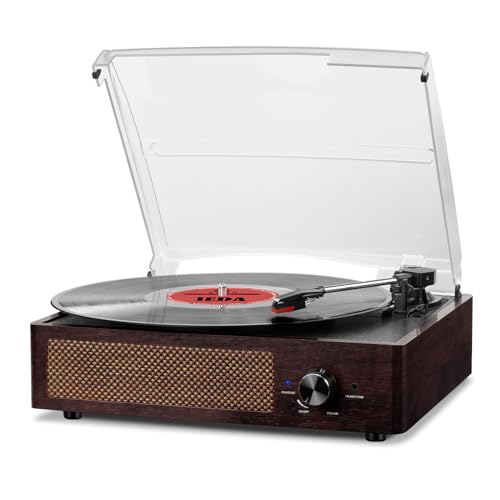
Pros
- Supports 33, 45, and 78 RPM
- Built-in stereo speakers
- Bluetooth receiver, AUX, RCA, and headphone output
- Removable protective cover
- Light and easy to move
Cons
- Compact speakers are not suited to room-filling sound
- Simplified control and tonearm design
- 12-inch records need careful placement
Best for: casual listeners, dorm rooms, gifts, and spaces where portability matters.
The Cotsoco Retro Player is built around convenience rather than audiophile adjustment. It is small, light, and ready to play through its two built-in stereo speakers. The removable top cover helps keep dust away when it is not in use, and the textured retro enclosure is clearly intended to function as room decor as well as audio equipment.
It supports 33, 45, and 78 RPM, plus 7, 10, and 12-inch records. That third speed is a meaningful advantage over the Audio-Technica AT-LP60X and AT-LP70X, although buyers should take care with 12-inch records. The product instructions specifically call for gently tilting a 12-inch record toward the tonearm when placing it on the platter.
Connectivity is broad for such a compact player. Bluetooth lets you stream from a compatible phone, while AUX input handles a wired device. RCA line output can feed an external speaker, and the headphone jack offers private listening. Those connections make it more useful than the built-in speakers alone suggest.
The trade-off is fidelity. The Cotsoco is lighter and more portable than the 1byone High Fidelity, but it does not offer that model's adjustable counterweight or the same upgrade-minded design. The built-in speakers are fine for background listening and shared rooms, yet they are not a substitute for properly placed external speakers. If you are assembling a serious record collection, the AT-LP70X is a more appropriate foundation.
Choose this model when the attraction is the physical experience of records, broad speed support, and an easy setup. Skip it if your priority is extracting the most detail from valuable records or tuning the tonearm to different cartridges. It is a friendly casual player, not a component for a demanding separates system.
5. Fluance RT85: Best Analog Upgrade

Pros
- Ortofon 2M Blue elliptical cartridge
- High-density acrylic platter
- Isolated motor and vibration control
- Adjustable resonance damping feet
- Heavy MDF plinth
Cons
- Phono preamp is not included
- Manual operation
- No USB or Bluetooth output
Best for: listeners building a dedicated analog system around detail and isolation.
The Fluance RT85 is the most focused analog deck here. It does not include speakers, wireless streaming, or USB recording. Instead, its design spends the available attention on the platter, cartridge, motor isolation, and plinth. It is the turntable to choose when the rest of the stereo system is already serious enough to show those improvements.
The Ortofon 2M Blue elliptical cartridge is a particularly important part of the package. Its claimed benefits include improved linearity, higher channel separation, and reduced distortion, all of which can help records sound more open and precise. The cartridge is not a decorative upgrade. It is the component physically tracing the groove, so its profile and alignment have a direct role in the sound.
The high-density acrylic platter adds mass and helps damp unwanted vibration. Fluance says that design contributes to tighter bass, a fuller midrange, and a more three-dimensional presentation. The isolated motor is intended to keep motor vibration and noise away from the platter, while the adjustable resonance damping feet help the heavy MDF plinth stay separated from the supporting surface.
Speed control is another strength. The listed wow and flutter figure is 0.07 percent, which describes variation in platter speed. Lower variation helps sustained piano notes, vocals, and other held tones sound steadier. The RT85 is therefore aimed at listeners who notice timing and stability, not just people looking for a turntable-shaped object.
The limitation is system dependency. A phono preamp is not included, so you need an amplifier with a phono input or a separate phono stage. The Audio-Technica AT-LP120XUSB is more versatile because it includes USB connectivity and three speeds, while the RT85 is more narrowly committed to two-speed analog playback. Choose the Fluance when your speakers and amplification are ready for a dedicated source. It is not the sensible pick for someone who wants a complete standalone setup.
For speaker placement and matching advice, consider the room and speaker decisions that shape record playback before choosing the rest of the system. The RT85 benefits most when it is given a stable surface and speakers that can reveal its cleaner, more controlled presentation.
6. 1byone 36W HiFi System: Best Speaker Bundle

Pros
- Includes bookshelf speakers
- Built-in phono line switch and preamplifier
- Bluetooth streaming
- USB vinyl recording
- Adjustable counterweight and anti-skate
Cons
- Requires space for separate speakers
- More complicated than a one-piece player
- Some specifications are not stated in the product data
Best for: buyers who want a ready-made stereo system rather than a turntable alone.
The 1byone 36W HiFi System solves the most common problem with buying a turntable: the deck is only one part of the listening setup. This package includes bookshelf speakers, so it can function as a complete stereo system without requiring an external amplifier. The speakers do need room on either side of the turntable, but that separation is also what gives a stereo system a more convincing image than built-in speakers.
The turntable includes an adjustable counterweight and anti-skating force control. Those are meaningful controls for record care and tracking, particularly when compared with the fixed arms on simpler automatic players. A solid iron platter is designed to provide uniform inertial mass for stable rotation, while the built-in switchable phono line output and preamplifier make it possible to use the included speakers or connect other externally powered speakers.
Connectivity is unusually broad. Bluetooth handles streaming from compatible phones and tablets, and USB connects the turntable to a computer for converting vinyl into MP3 files. Dual RCA outputs are included for speaker connections. That makes this more adaptable than the Cotsoco Retro Player and more complete as a first stereo system than the Fluance RT85.
The main comparison is with the 1byone High Fidelity. That model has built-in speakers and a smaller footprint, while the 36W HiFi System uses separate bookshelf speakers for better placement flexibility. The High Fidelity model is less demanding on furniture space, but this system is the stronger choice when stereo sound matters and you do not already own speakers.
You should skip it if you want a minimalist deck or already have a carefully assembled amplifier and speaker chain. Its appeal is the complete package, not the ability to isolate every component. For a living room or starter listening station, it removes several compatibility decisions while retaining useful manual controls.
Before arranging the speakers, think about how speaker placement changes a music listening room. Separate speakers need more planning than a built-in pair, but that extra space is part of what makes this system more convincing.
7. 1byone Automatic Player: Best Remote Operation

Pros
- One-step automatic playback
- Remote and on-device controls
- Repeat function
- Includes bookshelf speakers
- Wireless streaming
Cons
- Fixed tonearm does not support cartridge upgrades
- Only supports 33-1/3 and 45 RPM
- Forward and backward navigation is not track selection
Best for: listeners who want automatic operation and remote control with a speaker pair included.
The 1byone Automatic Player is built for people who want vinyl to behave like a modern source. Press one button and the tonearm moves into position, plays the record, and returns when the side ends. The remote can control the system from a sofa, while the controls on the unit remain available for closer operation.
It plays 33-1/3 and 45 RPM records and includes a pair of bookshelf speakers with a quad-driver configuration. Each speaker is described as using two 30W woofers and two 10W tweeters, with JL DSP tuning and a built-in amplifier. Those details point to a more substantial speaker setup than a compact player with tiny integrated drivers.
The repeat function restarts a record automatically, and the memory function remembers the last playback mode and volume setting. Forward and backward controls let you move through a record without lifting the needle, but the product information is clear that they do not provide track-specific selection. Wireless input also lets compatible phones and tablets play through the speakers.
Its most important restriction is the fixed AT-3600L stylus setup. The tonearm is precision-balanced for that stylus, and cartridge upgrades are not supported. The Audio-Technica AT-LP70X is a better choice for someone who expects to change styli over time, while the 1byone 36W HiFi System offers more traditional adjustment features. This 1byone wins on ease of use instead.
The release date listed for this model is February 13, 2026, so it is the newest design in this group. That does not automatically make it the most capable for a record enthusiast. It is best for someone who wants a polished, low-effort listening routine, room-filling speaker output, and controls that do not require standing over the turntable.
8. Audio-Technica AT-LP60XBT: Best Wireless Upgrade

Pros
- Fully automatic operation
- Bluetooth wireless output
- Compatible with aptX
- Anti-resonance die-cast aluminum platter
- Wired RCA output remains available
Cons
- No USB recording
- No 78 RPM playback
- Limited adjustment for enthusiasts
Best for: anyone who already owns Bluetooth speakers or headphones.
The AT-LP60XBT is the easiest way to add records to a wireless listening setup. It keeps the automatic design of the AT-LP60X, then adds Bluetooth so the turntable can connect to compatible speakers and other devices without a cable running across the room. Wired audio remains possible through the included dual RCA output cable.
It supports 33-1/3 and 45 RPM, which covers standard albums and singles. The anti-resonance die-cast aluminum platter is shared with the wired AT-LP60X, and the fully automatic mechanism handles both the start and end of playback. For a listener who wants records without manual tonearm balancing, this is a straightforward package.
The aptX compatibility is the most notable wireless detail. Actual wireless performance still depends on the receiving device, but support for the codec gives compatible equipment a route to higher-quality Bluetooth playback than a basic connection. It does not make Bluetooth identical to a wired analog system, yet it is a useful convenience when the speakers are across the room.
Compared with the AT-LP60X, the BT version is more flexible in a modern home. The AT-LP70X has the stronger upgrade path because its integrated AT-VM95C cartridge works with VM95 Series replacement styli. The AT-LP120XUSB is the better technical tool for manual control and archiving. The AT-LP60XBT is about removing cables and decisions.
That focus also defines its weakness. There is no USB output, no 78 RPM setting, and little scope for enthusiast adjustment. If you are building a traditional component system, the regular AT-LP60X may be enough. Pick this one when a Bluetooth speaker, headphone system, or wireless room is already central to how you listen.
9. Audio-Technica AT-LP70X: Best Cartridge Flexibility

Pros
- Fully automatic belt-drive operation
- Integrated AT-VM95C cartridge
- Compatible with VM95 Series replacement styli
- Switchable phono preamplifier
- Removable hinged dust cover
Cons
- Only supports 33-1/3 and 45 RPM
- No USB or Bluetooth listed
- Less manual control than the AT-LP120XUSB
Best for: beginners who want automatic playback with a clear stylus upgrade path.
The AT-LP70X is the automatic turntable for someone who wants to start simply without closing the door on future improvements. Its belt-drive mechanism starts and stops automatically, and the hinged dust cover protects the working parts between listening sessions. The design is less intimidating than a fully manual deck but more adaptable than the basic AT-LP60X family.
The integrated AT-VM95C cartridge is the key feature. It is compatible with any VM95 Series replacement stylus, so a listener can explore different stylus options without replacing the entire cartridge platform. That gives the AT-LP70X a meaningful advantage over the fixed cartridge arrangement in the newer 1byone Automatic Player.
A switchable phono preamplifier provides either phono-level or line-level output. Phono-level output is appropriate for an amplifier with a phono input, while line-level output lets the turntable connect to compatible equipment without that dedicated input. The J-shaped tonearm is engineered to minimize tracking errors, another reason this model feels more like a long-term component than a disposable starter player.
The AT-LP60X remains easier to recommend when the goal is the simplest possible first purchase. The AT-LP60XBT is more attractive for wireless rooms, and the AT-LP120XUSB provides 78 RPM, USB recording, anti-skate adjustment, and variable pitch. The AT-LP70X sits between those choices, offering automatic operation and cartridge flexibility without becoming a manual enthusiast deck.
It is not the pick for collectors with 78 RPM records or listeners who want to tune every part of the tonearm. It also does not list USB or Bluetooth connectivity. For someone beginning with standard records and wanting a sensible upgrade path, however, the AT-LP70X is one of the more durable choices in this roundup.
10. Audio-Technica AT-LP60X-GM: Best Alternate Finish

Pros
- Fully automatic playback
- Supports 33-1/3 and 45 RPM
- Anti-resonance aluminum platter
- Redesigned tonearm base
- External AC adapter design
Cons
- No Bluetooth or USB
- No 78 RPM support
- Limited upgrade control
Best for: listeners who want the AT-LP60X design in a gunmetal and black finish.
The AT-LP60X-GM is effectively the alternate-finish sibling to our top pick. It is aimed at the same listener: someone who wants standard record speeds, automatic operation, and a turntable that does not demand much setup. The gunmetal and black finish gives it a different visual character, but the important hardware is familiar.
It plays 33-1/3 and 45 RPM records with a belt-drive system. The anti-resonance die-cast aluminum platter helps provide a stable base, and the redesigned tonearm base and headshell are intended to improve tracking while reducing resonance. Those are the details that matter more than the finish once the stylus reaches the groove.
The external AC adapter handles the AC/DC conversion outside the chassis, a design intended to reduce noise in the signal chain. The automatic mechanism is the main ownership advantage. It is convenient for anyone who is nervous about lowering a stylus by hand, and it reduces the chance of leaving the stylus running at the end of a side.
The AT-LP60X is the better-known version in this list, but the two share the same basic limitation. Neither offers Bluetooth, USB recording, 78 RPM, or the tonearm adjustment available on the AT-LP120XUSB. The AT-LP70X is the more interesting step up for anyone thinking about replacement styli, while the AT-LP60XBT is the logical alternative for wireless listening.
Choose the AT-LP60X-GM when its finish suits the room or when it is the available version of this straightforward design. Skip it if you are already planning cartridge changes or digital archiving. It remains a clean, uncomplicated entry point for standard vinyl playback.
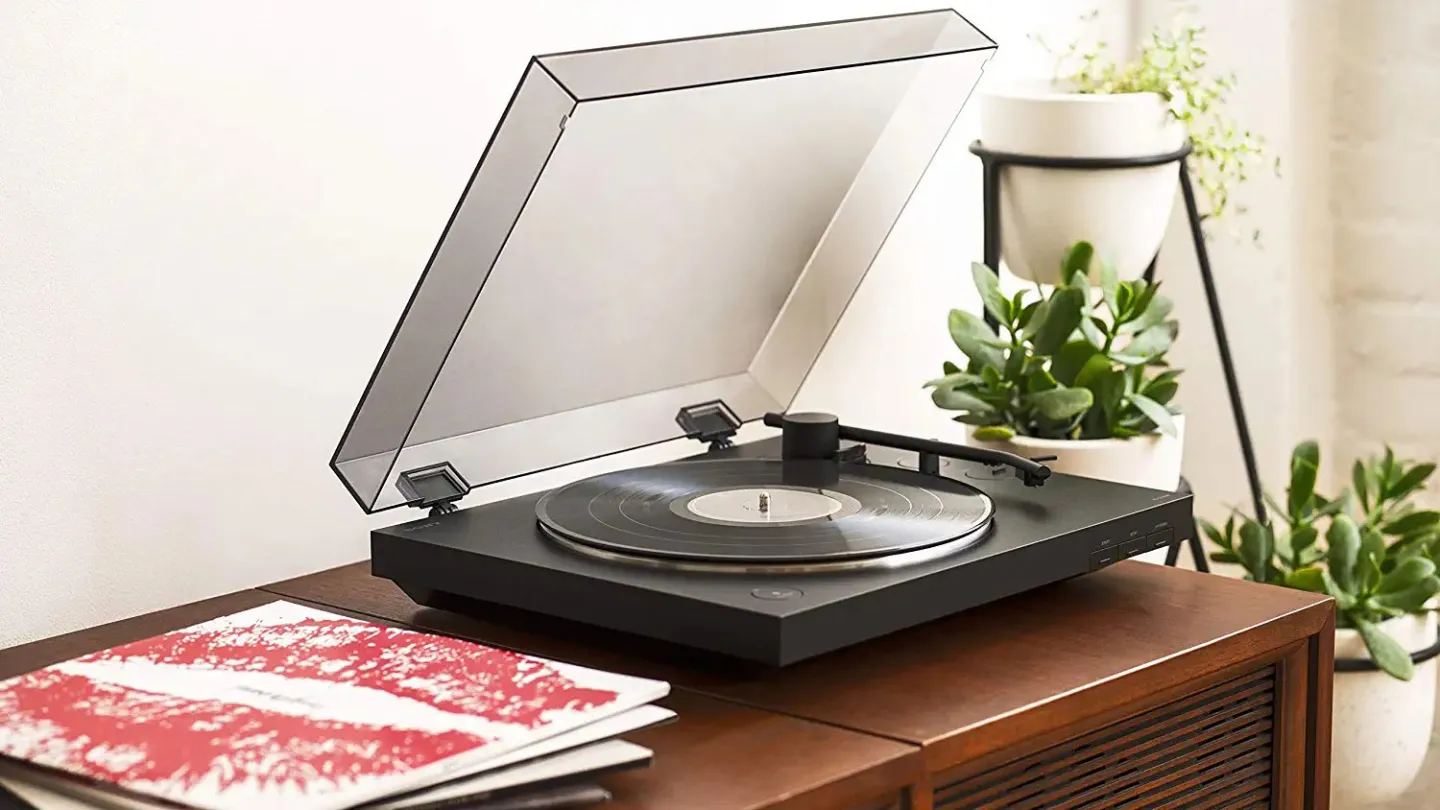
How to choose best turntables for vinyl records
The right turntable depends less on appearance than on how much control, connectivity, and setup work you want from the listening system.
Playback speeds
Most records use 33-1/3 or 45 RPM, so those two speeds cover ordinary LPs and singles. A 78 RPM setting matters if your collection includes older shellac records or specific archival releases. The AT-LP120XUSB and Cotsoco Retro Player support three speeds, while the Audio-Technica automatic models here support two.
Automatic and manual operation
Fully automatic decks start the record, lift the tonearm at the end, and return it to its rest. They are the easiest choice for beginners and reduce handling mistakes. Manual turntables such as the AT-LP120XUSB and RT85 require more involvement but give the listener greater control over setup and playback.
An automatic arm removes friction from listening. A manual arm rewards the person who wants to shape the whole setup.
Cartridge and stylus
The cartridge converts groove movement into an electrical signal, while the stylus is the part that tracks the groove. A fixed cartridge keeps setup simple but limits future changes. The AT-LP70X stands out because its AT-VM95C cartridge accepts VM95 Series replacement styli, while the newer 1byone Automatic Player uses a fixed AT-3600L setup that does not support cartridge upgrades.
Platter and vibration control
A stable platter helps the record rotate consistently, and isolation keeps motor or furniture vibration from reaching the stylus. The Fluance RT85 uses a high-density acrylic platter, isolated motor, heavy MDF plinth, and adjustable damping feet. The Audio-Technica AT-LP60X family uses an anti-resonance die-cast aluminum platter, which is a simpler but practical design for an entry-level automatic deck.
Connections and system matching
Check whether the turntable needs an amplifier, powered speakers, headphones, or a wireless receiver. RCA output is the standard wired route, while a built-in phono preamp allows line-level connection to compatible equipment. Bluetooth helps when speakers are across the room, and USB matters when you want to archive records on a computer. If your system needs more amplification, the differences between amplifier types for music can help before you choose a deck.
Frequently asked questions
Do all of these turntables play standard vinyl records?
No. The standard speeds are 33-1/3 and 45 RPM, and those are supported by the Audio-Technica models and most of the 1byone options here. The Cotsoco Retro Player and AT-LP120XUSB also support 78 RPM.
Is an automatic turntable better for beginners?
Automatic operation is usually easier for a beginner because the tonearm starts and returns without manual placement. It also reduces the chance of accidentally dragging the stylus across the record. Manual decks can sound excellent, but they require more care during setup and use.
Do built-in speakers produce stereo sound?
Built-in speakers can provide left and right channels, but their close placement limits stereo separation. Separate bookshelf speakers can be positioned farther apart and usually create a more spacious presentation. The 1byone speaker systems are more suitable when you want a complete setup without buying an amplifier separately.
Can these turntables connect to Bluetooth speakers?
The Audio-Technica AT-LP60XBT, 1byone High Fidelity, Cotsoco Retro Player, and 1byone 36W HiFi System list Bluetooth or wireless playback features. The AT-LP60X and AT-LP120XUSB use wired connections instead. Check the receiving speaker or headphone device for compatibility before choosing a wireless setup.
Can I convert records to digital files?
The AT-LP120XUSB supports USB connection to a computer for vinyl recording with software such as Audacity. The 1byone 36W HiFi System also lists USB vinyl recording. The other models in this roundup do not list USB conversion.
Does every turntable include a phono preamp?
No. The AT-LP70X has a switchable phono preamplifier, and the 1byone 36W HiFi System includes a switchable phono line and preamplifier. The Fluance RT85 does not include a phono preamp, so it needs an amplifier with a phono input or a separate phono stage.
Can I upgrade the stylus later?
The AT-LP70X is the clearest choice for stylus changes because its AT-VM95C cartridge works with VM95 Series replacement styli. The 1byone Automatic Player has a fixed AT-3600L setup and does not support cartridge upgrades. The other models vary in adjustment and compatibility, so check the specific cartridge design before planning an upgrade.
The bottom line
The Best turntables for vinyl records are not all aimed at the same listener. Audio-Technica AT-LP60X is the easiest recommendation for a first collection because it is automatic, stable, and uncomplicated. Audio-Technica AT-LP120XUSB is the stronger choice for enthusiasts who want manual control, 78 RPM playback, and USB archiving.
For a complete system, the 1byone 36W HiFi System avoids the need to source speakers separately, while Fluance RT85 is the more serious analog component for a system built around a dedicated amplifier and speakers. Audio-Technica AT-LP70X deserves attention from beginners who want automatic operation today and stylus flexibility later.
If you are undecided, choose the AT-LP60X for simple wired listening, or move to the AT-LP60XBT when your room is already built around Bluetooth.
As an Amazon Associate we earn from qualifying purchases.