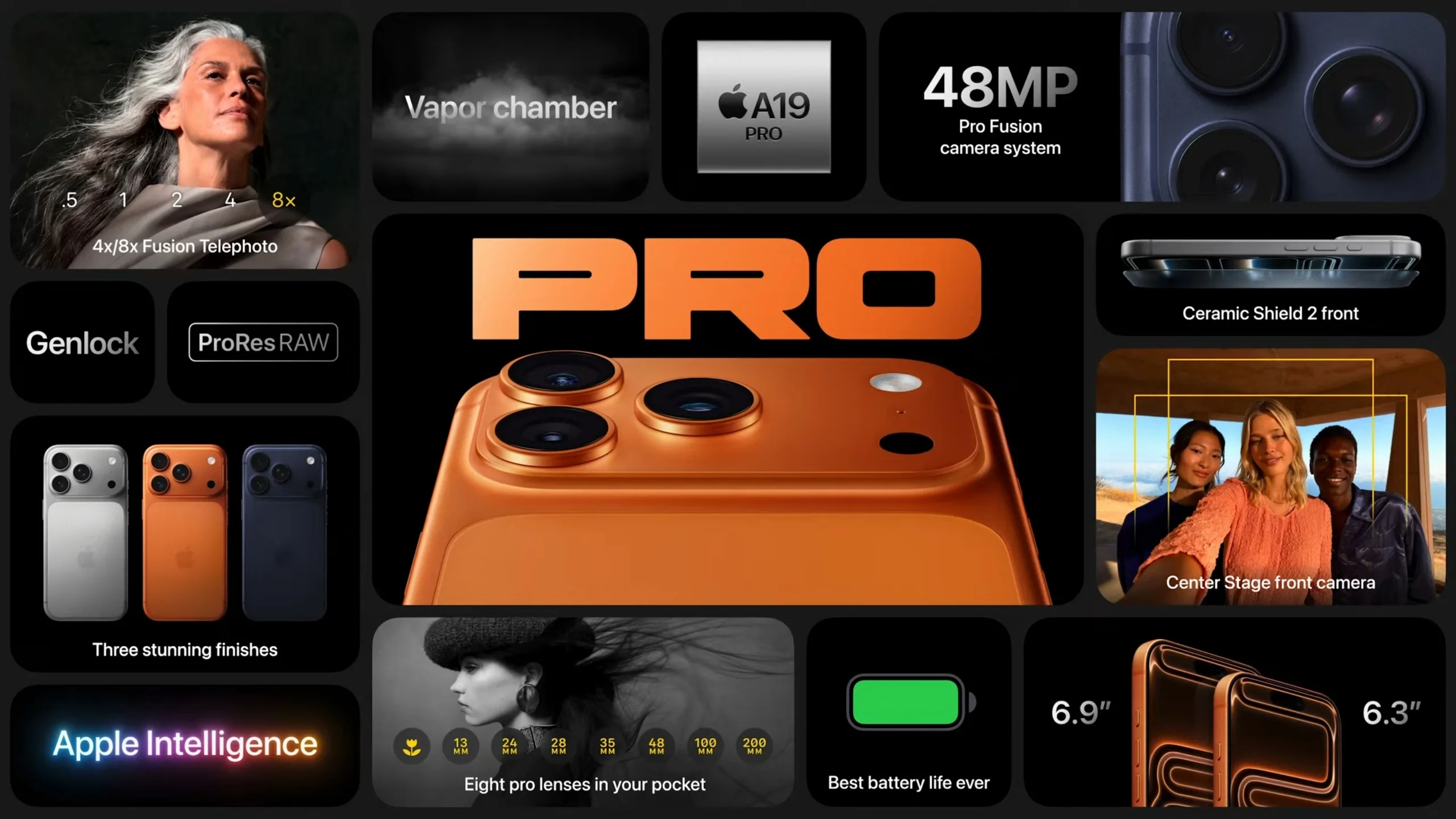

The iPhone 17 Pro Max specs center on a larger display, a faster processor, and a more capable camera system, continuing Apple’s pattern of incremental but meaningful upgrades. While final details won’t be official until the September announcement, enough reliable leaks and industry patterns exist to give you a clear picture of what to expect and which specs actually matter for your daily use.
Display and Design
The iPhone 17 Pro Max is widely expected to feature a 6.9-inch OLED display, up from the 6.7-inch panel on the iPhone 16 Pro Max. That extra 0.2 inches comes from thinner bezels and a slightly taller aspect ratio, not a bigger body. The screen will almost certainly retain ProMotion’s 120 Hz adaptive refresh rate, which makes scrolling and animations feel fluid while saving battery when you’re reading static text.
Peak brightness should climb again, likely exceeding 2, 000 nits for HDR content and around 1, 000 nits for typical use. That matters most if you frequently use the phone outdoors or watch Dolby Vision video in bright rooms. The display will also use Apple’s latest generation of ceramic shield glass, which improves drop resistance without adding thickness.
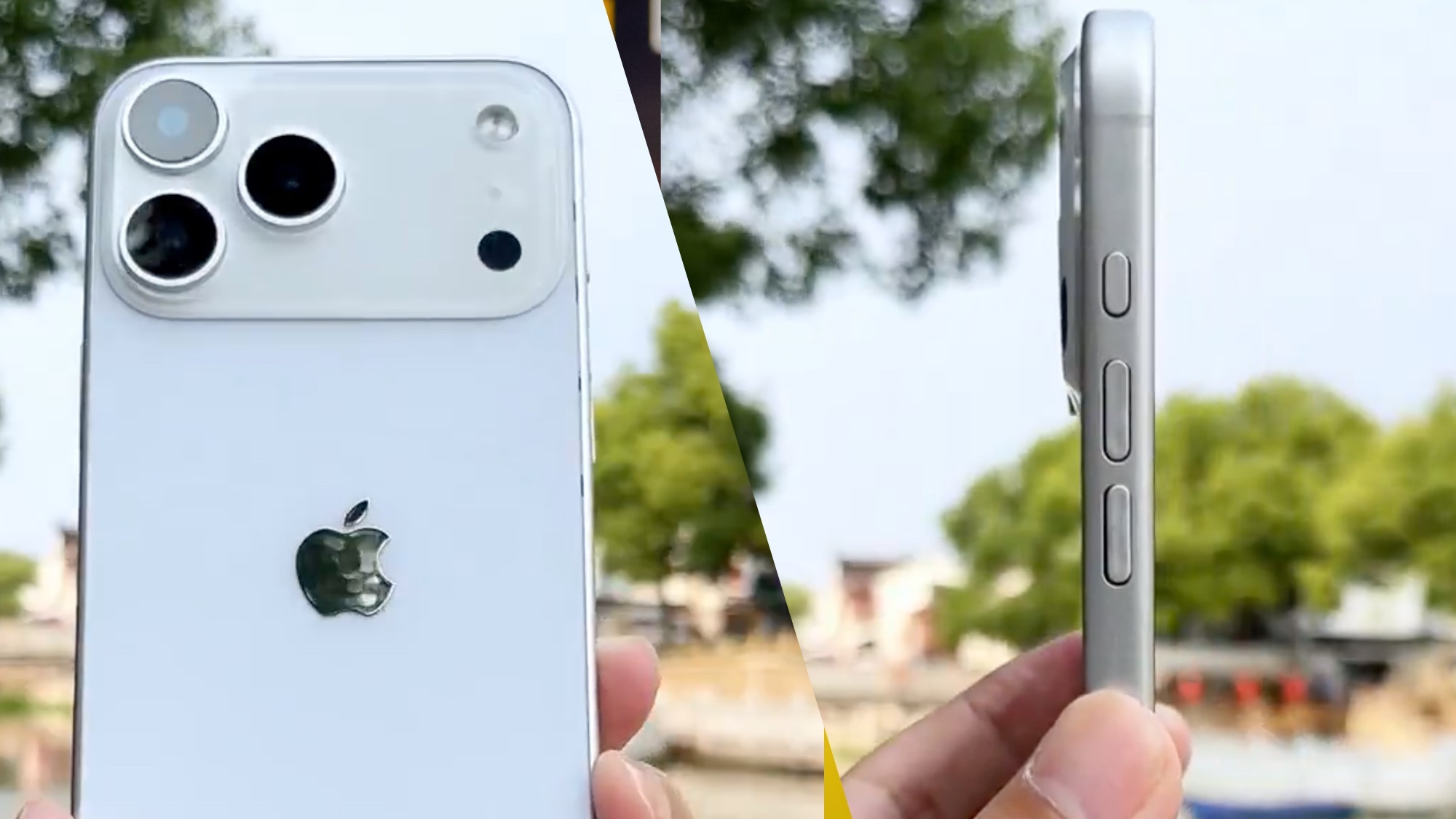
The chassis is rumored to switch from stainless steel to a titanium alloy, similar to the Apple Watch Ultra. That would shave weight while maintaining rigidity. Expect the same IP68 water and dust resistance rating, meaning it can survive submersion in up to 6 meters of water for 30 minutes.
Processor and Performance
The A19 Pro chip will be the engine inside the iPhone 17 Pro Max. Built on a 3-nanometer process (likely the enhanced N3E node), it should deliver a 10 to 15 percent improvement in CPU performance and a more noticeable 20 to 25 percent boost in GPU performance over the A18 Pro. That translates to faster app launches, smoother multitasking, and better sustained frame rates in demanding games.
RAM is expected to increase to 12 GB, up from 8 GB on the 16 Pro Max. That extra memory helps keep more apps and browser tabs open without reloading, and it matters for future AI features that run on-device. Storage options will probably start at 256 GB and go up to 2 TB, though Apple has not confirmed final capacities.
Real-world performance: the iPhone 17 Pro Max will handle everything you throw at it for at least three to four years before you feel any slowdown. The spec that matters most in day-to-day use is the GPU, especially if you play graphically intensive games or edit 4K video on the phone.
Camera System
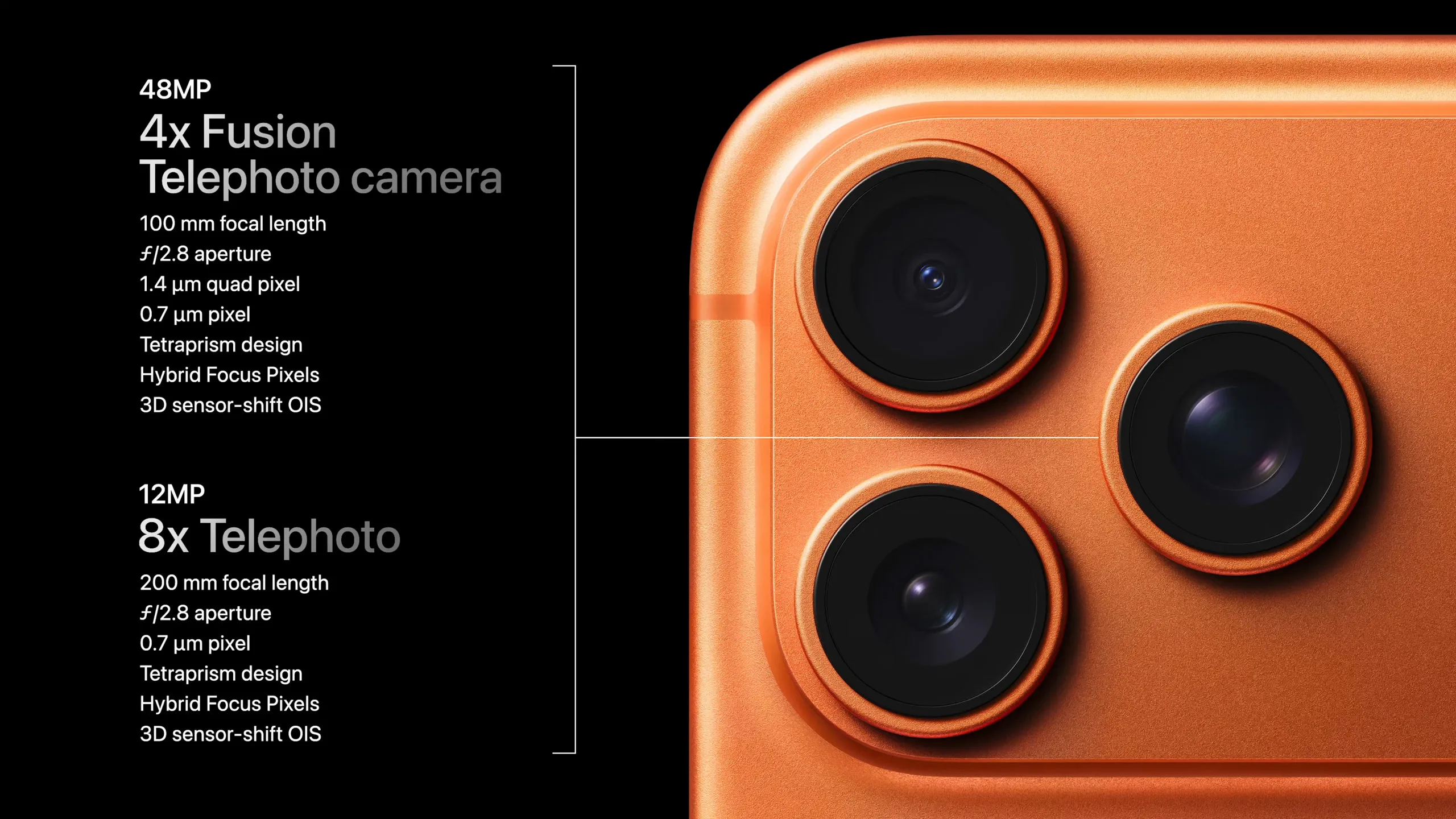
The camera array will likely remain a triple-lens setup with a LiDAR scanner, but the telephoto lens gets the biggest upgrade. A periscope-style zoom is expected to offer 5x optical zoom (up from 3x on the 16 Pro Max) and possibly 10x optical zoom through a hybrid system. That means you can get closer to distant subjects without losing detail.
The main wide lens will probably use a larger sensor with bigger pixels, improving low-light performance by about one stop. The ultra-wide lens may gain autofocus and a macro mode, a feature currently limited to the main camera. Video recording will likely support 8K at 30 fps and improved ProRes recording with less rolling shutter.
What this means for you: if you shoot a lot of portraits or travel photos, the telephoto upgrade is the most compelling reason to consider the Pro Max over the standard Pro. If you mostly take snapshots in good light, the differences will be subtle.
Battery and Charging
Battery capacity is expected to increase to around 4, 700 mAh, up from about 4, 400 mAh in the iPhone 16 Pro Max. Combined with the more efficient A19 chip and the variable refresh rate display, you can expect roughly 30 hours of video playback, making it the longest-lasting iPhone yet.
Charging speeds may finally see a bump. Rumors point to 35 W wired charging (up from 27 W) and 20 W MagSafe wireless charging (up from 15 W). That would charge the phone from empty to 50 percent in about 25 minutes. Still well behind Android rivals that push 65 W or more, but a meaningful improvement for iPhone users.
The trade-off: a larger battery means a heavier phone. If you value one-handed comfort, the regular Pro model might be a better fit. Battery health degradation is also a long-term consideration; fast charging generates more heat, which can accelerate capacity loss over two to three years.
Connectivity and Ports
The iPhone 17 Pro Max will almost certainly use USB-C, following the European mandate and Apple’s own shift on the 15 series. The port is expected to support USB 3.2 Gen 2 speeds (up to 10 Gbps), which is fast enough to transfer large video files or connect to external displays. If you plan to use the phone with a computer, it helps to understand how iPhones connect to other devices and what cables you need.
5G support will include faster mmWave bands in the US and sub-6 GHz bands elsewhere. Wi-Fi 7 is likely, offering lower latency and higher throughput for streaming and gaming on local networks. Bluetooth 5.3 will be standard for wireless audio and accessories.
For those considering buying the phone without a carrier contract, what an unlocked iPhone actually means is worth reading. Unlocked models give you the freedom to switch carriers and often have better resale value.
Audio and Accessories
The speaker system will probably get a minor upgrade with wider stereo separation and slightly more bass, but don’t expect a night-and-day difference. The iPhone 17 Pro Max still lacks a headphone jack, so your audio quality depends on the wireless headphones you pair with it. If you’re in the market for new headphones, which noise cancelling models work best in 2025 is a good starting point.
For professional audio recording, you can connect an external USB-C audio interface. The phone’s USB-C port supports class-compliant devices, meaning you can record high-quality audio with a dedicated microphone setup.
Software and Features
The iPhone 17 Pro Max will ship with iOS 20, which is expected to bring deeper AI integration, including on-device language models for Siri and photo editing. These features will rely on the A19’s Neural Engine and the increased RAM. Apple Intelligence, the company’s suite of generative AI tools, will likely be a headline feature, though many capabilities will roll out over the following year.
The honest limitation: software features often look impressive in demos but don’t change daily use as much as hardware upgrades do. A faster chip doesn’t make texting faster, and better AI photo editing can’t fix a poorly composed shot. Focus on the specs that solve a real problem you have today.
FAQ
Does the iPhone 17 Pro Max have a USB-C port?
Yes, it will use USB-C, not Lightning. The port supports USB 3.2 Gen 2 speeds for fast data transfer and video output. You can use the same cable as your iPad or MacBook.
How much RAM will the iPhone 17 Pro Max have?
It is expected to have 12 GB of RAM, up from 8 GB on the 16 Pro Max. This helps with multitasking and future AI features.
Will the iPhone 17 Pro Max support faster charging?
Yes, wired charging is expected to increase to 35 W, and MagSafe wireless charging to 20 W. That means a 0 to 50 percent charge in about 25 minutes.
Is the periscope zoom available on the regular iPhone 17 Pro?
The periscope telephoto lens is likely exclusive to the Pro Max model, at least for the first generation. The regular Pro will probably stick with a 3x optical zoom.
When will the iPhone 17 Pro Max be released?
Apple typically announces new iPhones in September, with preorders starting the same week and shipping a week or two later. Expect the iPhone 17 Pro Max to follow that schedule in 2026.