

A bad solder joint often starts before the iron touches the board. Wire that is too thick can flood a small pad, while the wrong flux can leave oxidation in place and make the solder bead up instead of wetting the connection. The Best best solder for electronics needs to match the size of the work, the alloy you want, and whether you are repairing a circuit board or joining wire.
This list includes traditional tin-lead rosin core wire, lead-free starter supplies, two adjustable irons, a complete station, and separate flux for jobs where the built-in core is not enough. MAIYUM 0.8mm 50g is the best pick for most electronics repairs, with the YIHUA 926 III Station as the more capable choice for a dedicated bench.
Comparison table
| # | Product | Award | Alloy or format | Diameter or range | Best for |
|---|---|---|---|---|---|
| 1 | MAIYUM 0.8mm 50g | Best overall | 63/37 tin-lead, rosin core | 0.8mm, 1.8% flux | General circuit-board repair |
| 2 | TOWOT 1.0mm 50g | Best for larger joints | 63/37 tin-lead, rosin core | 1.0mm, 1.8% flux | Wires and larger pads |
| 3 | Q-MING 60W Iron Kit | Best starter kit | Adjustable soldering iron | 200 to 450°C | First electronics workbench |
| 4 | MAIYUM 0.8mm 100g | Best larger spool | 63/37 tin-lead, rosin core | 0.8mm, 1.8% flux | Frequent repair work |
| 5 | YIHUA 926 III Station | Best complete station | 60W digital station | 194 to 896°F | Organized bench soldering |
| 6 | HGMZZQ 60/40 0.8mm | Best 60/40 wire | 60/40 tin-lead, rosin core | 0.8mm, 2.2% flux | Everyday repairs |
| 7 | HengTianMei 63/37 Wire | Best compact spool | 63/37 tin-lead, rosin core | 0.8mm, 1.8% flux | Portable DIY work |
| 8 | Liouhoum 80W Iron Kit | Best fast-heating iron | Adjustable soldering iron | 180 to 480°C | Quick repairs |
| 9 | SRA 135 Flux Paste | Best paste flux | Rosin paste, type RA | 93 to 315°C active range | Oxidized joints and wire |
| 10 | QUIMTECH Liquid Flux | Best liquid flux | RMA rosin liquid | 30ml dropper | Precise flux application |
1. MAIYUM 0.8mm 50g: Best Overall

Pros
- 63/37 tin-lead alloy
- Fine 0.8mm wire suits small pads
- 1.8% rosin core flux is built in
- Melts at 183°C
Cons
- Contains lead
- The 50g spool is limited for high-volume work
- No-clean behavior is not claimed
Best for: general circuit-board repairs, small electronic joints, and DIY work.
The first thing to like about MAIYUM 0.8mm 50g is that it stays in the useful middle ground for electronics. The wire is narrow enough to control on a circuit board, but not so fine that it takes several feeds to build an ordinary joint. Its 63/37 tin-lead alloy is a familiar choice for repair work, and the rosin core means the flux is carried right to the point where the wire melts.
MAIYUM lists a 1.8% flux content and a melting point of 361°F, or 183°C. That relatively low melting temperature helps the wire flow before the workpiece has absorbed excessive heat. On small pads, that can make the difference between a clean joint and a lifted pad, especially when the board or component is not designed for prolonged heating. The 0.8mm diameter also gives better control than the 1.0mm TOWOT wire when the target is a narrow lead or compact through-hole connection.
This is the spool we would reach for before the thicker wires in this roundup. The HGMZZQ wire is also 0.8mm, but its 60/40 alloy and 2.2% flux content give it a different working profile. The MAIYUM is the more natural fit for readers who want the 63/37 formulation, while the 100g MAIYUM spool is the sensible step up when the workbench sees regular use. For a closer look at how wire size affects board work, the difference between solder for small PCB pads and larger connections is a useful distinction to make before choosing a spool.
The limitation is important: this is tin-lead solder. It is not the right choice for anyone who must avoid lead, and the product warning should be taken seriously. Ventilation, clean work habits, and hand washing still matter. It also does not claim to be no-clean, so residue may need attention after the joint cools. Choose it for controlled electronics repair where a fine, low-melting wire matters more than a lead-free formulation.
2. TOWOT 1.0mm 50g: Best for Larger Joints

Pros
- 63/37 tin-lead alloy
- 1.0mm diameter feeds quickly
- 1.8% rosin flux content
- Designed for electrical repair work
Cons
- Too broad for especially fine pads
- Contains lead
- Only a 50g spool
Best for: wire ends, larger through-hole joints, and general electrical repairs.
TOWOT 1.0mm 50g makes sense when 0.8mm wire feels a little slow. Its 1.0mm diameter puts more alloy onto the joint with each feed, which is useful for heavier component leads, wire connections, and broad through-hole pads. It still uses the 63/37 tin-lead formulation, so the solder is aimed at the same kind of controlled, low-temperature electronics work as the top MAIYUM spool.
The built-in flux content is listed as 1.8%, and TOWOT describes the wire as having a low melting point with smooth flow. The larger diameter is the meaningful distinction here. It is easier to add material quickly, but less forgiving when the pad is tiny or the lead spacing is tight. A careful hand can still use it on smaller work, yet the MAIYUM 0.8mm wire offers finer control without requiring as much restraint.
TOWOT is particularly well matched to repairs involving cable ends, appliance wiring, and larger solder joints. It is not a complete solution for every electronics bench because the spool does not include a separate flux product or any tools. If your projects move between circuit boards and wire harnesses, keeping a fine spool and this 1.0mm wire nearby is more practical than trying to force one diameter to do everything.
The weakness is the same alloy-related concern as the MAIYUM products. It contains lead, so it requires sensible handling and is not appropriate where lead-free materials are required. The 50g quantity also favors occasional repairs over long production sessions. Pick TOWOT when the work involves joints that benefit from a faster feed, and pick MAIYUM 0.8mm when precision is the priority.
3. Q-MING 60W Iron Kit: Best Starter Kit

Pros
- Adjustable 200 to 450°C temperature range
- Ceramic heating core reaches temperature in 15 seconds
- Includes five interchangeable tips
- Includes fine 0.6mm solder wire and rosin flux paste
Cons
- Simple stand rather than a full station
- Included accessories are basic
- Does not specify a digital temperature display
Best for: beginners who need an iron, tips, wire, and basic accessories in one kit.
The Q-MING 60W Iron Kit is not solder wire, but it addresses the other half of the problem. A good spool cannot compensate for an iron that cannot hold a useful temperature or a tip that is wrong for the joint. This kit gives a new user a complete starting point, including the iron, a stand, a sponge, five interchangeable tips, 0.6mm solder wire, and no-clean rosin flux paste.
Its adjustable range runs from 200 to 450°C, or 392 to 842°F. That covers the 183°C melting point quoted for the 63/37 wires in this roundup, while leaving room for lead-free work and heat-hungry connections. Q-MING says the ceramic heating core reaches the desired temperature within 15 seconds. The 60W rating is enough for ordinary circuit-board repair, though large metal areas can still draw heat away faster than a small pad.
The pencil design is portable and straightforward. An on/off switch is useful when the iron will sit idle between joints, and four ventilation holes are intended to reduce heat traveling toward the handle. Compared with the Liouhoum 80W Iron Kit, Q-MING offers a slightly narrower temperature ceiling and slower stated warm-up, but its five tips and included soldering supplies make the package easier to use immediately. Readers who want a more stable bench setup should look at what separates a basic iron from a dedicated soldering station.
The stand is the compromise. It is described as simple, so it does not provide the same integrated organization or safety features as the YIHUA 926 III Station. The kit also does not state that its temperature control is digitally displayed. That makes it a sensible first setup, not the most precise long-term workstation. Choose it for occasional repairs, learning, and small DIY projects where having the basic pieces together matters.
4. MAIYUM 0.8mm 100g: Best Larger Spool

Pros
- 100g quantity for repeated repairs
- Fine 0.8mm diameter
- 63/37 tin-lead alloy
- 1.8% rosin core flux
- Melting point of 183°C
Cons
- Contains lead
- More solder than occasional users may need
- No separate flux applicator or dispenser
Best for: repairers who want the top pick's wire size and alloy in a larger spool.
MAIYUM 0.8mm 100g is the straightforward expansion of the top pick. It retains the same 63/37 tin-lead alloy, 0.8mm diameter, 1.8% flux content, and stated 361°F, or 183°C, melting point. The practical change is the quantity. There is more wire available for repeated board repairs, cable work, and DIY projects without changing the way the solder feeds.
That consistency is useful if you already like the behavior of a fine 63/37 wire. The 0.8mm diameter is still manageable around small component leads, while the low melting point keeps dwell time under control when the iron is set appropriately. It is a more precise choice for compact electronics than TOWOT's 1.0mm wire, but it supplies material more generously than the 50g MAIYUM spool.
The extra solder does not make a joint stronger by itself. Technique, tip condition, heat transfer, and flux activity still determine whether the finished connection is smooth and properly wetted. The reason to choose this spool is continuity. It is the same basic format as our top pick, so a repairer can keep working without changing wire diameter or adjusting to the different 60/40 blend used by HGMZZQ.
The limitation is simple: lead is part of the alloy. Anyone working under lead-free requirements should skip it, and every user should keep the area ventilated and wash hands after handling solder. The spool also does not include the dispensing accessories found in the YIHUA kit. It is best for a repair drawer or active bench that goes through solder regularly.
5. YIHUA 926 III Station: Best Complete Station

Pros
- Digital temperature control from 194 to 896°F
- PID temperature stabilization
- Adjustable sleep mode
- Includes six tips and helping hands
- Includes lead-free solder, solder sucker, and tweezers
Cons
- Larger and less portable than a pencil iron
- The included solder is lead-free rather than 63/37 tin-lead
- More equipment than a casual user may need
Best for: a dedicated electronics bench that needs control, accessories, and hands-free support.
The YIHUA 926 III Station is the most complete setup in this roundup. It is built around a 60W digital soldering station rather than a standalone pencil, and the difference shows in the way the controls and accessories are organized. Two helping hands, a solder sucker, stainless steel tweezers, a sponge, a wire dispenser, and six tips are included, so the station is ready for more than simply heating a piece of wire.
Its temperature range is listed as 194 to 896°F, and YIHUA says PID stabilization keeps the iron at the selected temperature. That matters when a joint absorbs heat unevenly or when you move between a delicate board pad and a larger connection. The display can switch between Celsius and Fahrenheit, while digital calibration gives experienced users a way to correct the indicated temperature. These are bench features rather than headline numbers, but they make repeated work less frustrating.
The integrated holder saves space, and a protective metal mesh at the rear helps keep an idle hot iron separated from the work area. Sleep mode can be set to 5, 10, or 30 minutes, which is useful for tip and heating-element care when soldering pauses. Compared with the Q-MING 60W Iron Kit, the YIHUA is less convenient to carry but far better organized for a series of repairs. It is also a stronger platform for using different wire diameters and separate flux products.
The included solder is lead-free, so it does not directly match the 63/37 MAIYUM or TOWOT wire. That is not a defect, but buyers should understand the distinction before starting a project with a preferred alloy. The station is also overbuilt for someone who repairs one loose wire every few months. For a permanent work surface, though, the features that make a station easier to use for repeated repairs are exactly where this kit earns its place.
6. HGMZZQ 60/40 0.8mm: Best 60/40 Wire

Pros
- Familiar 60/40 tin-lead alloy
- 0.8mm diameter for controlled feeding
- 2.2% rosin flux content
- Listed 183°C melting point
- Intended for boards and household electronics
Cons
- Contains lead
- Smaller 50g quantity
- Alloy differs from the 63/37 wires above
Best for: users who specifically prefer 60/40 solder for everyday electrical repairs.
HGMZZQ 60/40 0.8mm gives this list a clear alternative to the repeated 63/37 formulations. The wire combines 60% tin and 40% lead with a 0.8mm diameter, so it remains easy to meter onto small and medium joints. Its 2.2% rosin core flux content is higher than the 1.8% listed for MAIYUM, TOWOT, and HengTianMei.
The stated melting point is 361°F, or 183°C, and the product description emphasizes even melting, smooth flow, and less smoke. A 60/40 alloy is not automatically better or worse for every board. It is simply a different balance from 63/37, and the choice can come down to the working feel a user already knows. The added flux content may also be useful when the surfaces are not perfectly fresh, though it does not replace proper cleaning or preparation.
HGMZZQ is more closely matched to MAIYUM 0.8mm 50g than to TOWOT because both use the same wire diameter and 50g quantity. The real comparison is alloy and flux content. Choose HGMZZQ when 60/40 is the formulation you want; choose MAIYUM when you prefer 63/37's composition and slightly lower listed flux content. For wire joining, the correct preparation still matters more than switching between these two close formats.
The drawback is that there is no lead-free option here, and the spool is not especially large for a busy repair bench. Users who are unsure about alloy choice should not treat the 60/40 label as a universal recommendation. This is a focused pick for hobbyists and repairers who want a conventional 60/40 wire in a controllable diameter.
7. HengTianMei 63/37 Wire: Best Compact Spool

Pros
- 63/37 tin-lead composition
- 0.8mm diameter
- 1.8% flux content
- Low listed melting point of 183°C
- Suited to boards, wires, and electronic devices
Cons
- Contains lead
- Only 50g
- No separate no-clean or liquid flux
Best for: portable DIY repair kits and users who want a small 63/37 spool.
The HengTianMei 63/37 Wire is a compact, conventional electronics solder. It uses the same 63/37 tin-lead alloy, 0.8mm diameter, and 1.8% flux content listed by the MAIYUM 50g spool. That makes it a natural fit for circuit boards, wires, motors, radios, and other small repairs where a fine wire is easier to control than a thicker feed.
HengTianMei calls out the 361°F, or 183°C, melting point and describes the wire as smooth flowing with strong solder points. The useful part for a beginner is the predictable format. A 0.8mm wire does not force as much material onto the joint as TOWOT's 1.0mm wire, so it is easier to stop feeding before a small pad becomes crowded. It also works well with the Q-MING kit's adjustable temperature range.
The product is close enough to MAIYUM 0.8mm 50g that the choice is not about a dramatic specification difference. The MAIYUM has a clearer position as an all-purpose first pick, while HengTianMei makes sense for a compact repair box or as a spare spool for occasional jobs. If your projects involve joining wires more often than board-level work, the practical choices for making durable wire connections will matter more than the brand printed on the spool.
The weakness is the limited quantity and the lack of a separate flux product. Rosin core helps, but older or oxidized surfaces can still benefit from carefully applied additional flux. Lead handling remains a consideration as well. Choose this wire when portability and a familiar fine 63/37 format are more important than stocking a large bench spool.
8. Liouhoum 80W Iron Kit: Best Fast-Heating Iron

Pros
- 80W ceramic heating core
- Stated 10-second warm-up
- LCD temperature display
- Adjustable from 180 to 480°C
- Automatic sleep and temperature memory
Cons
- Standalone iron lacks a full station's organization
- Higher power requires careful temperature control
- Included tip and accessory details are limited
Best for: quick electronics repairs where fast heat-up and a readable temperature display matter.
The Liouhoum 80W Iron Kit is the most ambitious of the two portable irons here. Its ceramic core is rated at 80W, and the product states that it reaches operating temperature in 10 seconds. That quick start is useful when the iron is used for short repair sessions, especially if you do not want to keep a station running between joints.
Temperature is adjustable from 180 to 480°C, or 356 to 896°F, and the LCD shows the selected setting. The range begins just below the 183°C melting point listed for several 63/37 wires, but the actual work temperature still needs to be chosen with the joint, tip, and solder in mind. The higher ceiling also supports lead-free work, although more heat is not a substitute for good contact between the tip and the joint.
Liouhoum adds automatic sleep after five minutes on the stand, with the display showing “OFF, ” and the handle restores heating when picked up. Temperature memory returns the iron to the last setting after power cycling, according to the product description. Compared with the Q-MING 60W Iron Kit, Liouhoum heats faster, reaches a higher stated maximum, and adds a digital display. Q-MING counters with a more explicitly described set of five interchangeable tips and included soldering supplies.
The portable design is also the compromise. There is no full station with integrated tip storage, helping hands, or a protected holder arrangement like the YIHUA. The 80W output can be useful for heat-hungry joints, but beginners should avoid assuming that more power means a better setting for small pads. Pick Liouhoum for quick, varied repairs and choose Q-MING when a simpler starter bundle matters more.
9. SRA 135 Flux Paste: Best Paste Flux

Pros
- Type RA rosin activated flux
- Semi-solid texture is easy to place
- Acid-free formulation for electrical work
- Active range from 93 to 315°C
- 2oz jar
Cons
- Paste is less precise than a dropper for tiny pads
- It is an added step when using rosin core wire
- Residue handling still deserves attention
Best for: oxidized wires, circuit boards, and joints that need extra flux to wet properly.
The SRA 135 Flux Paste is a supporting product rather than a replacement for solder wire. Its job is to help solder wet a surface that is oxidized, dirty, or simply resisting the normal flow from rosin core wire. The semi-solid texture is the key design choice. It can be applied to a board or used by dipping a copper wire, without behaving like a loose liquid that runs across nearby pads.
SRA identifies this as type RA, or rosin activated, flux and lists an active temperature range from 93 to 315°C, or 200 to 600°F. The range covers the working temperatures used by the Q-MING and Liouhoum irons, while the acid-free formulation is intended for electrical and electronic applications. It is also described as a no-goop paste, which should make controlled application easier than a thick hardware-store flux.
This paste is most useful when the solder itself is not the only problem. A fresh MAIYUM or HengTianMei spool already carries 1.8% rosin flux, but extra flux can help when a wire end will not accept solder or a board surface has developed oxidation. For very small SMD work, the application method matters, and choosing a tip that can place heat precisely on tiny components may be more important than adding a large amount of flux.
The jar format is less precise than QUIMTECH's dropper. It is easy to put too much paste on a small area, and users should still follow sensible cleanup practices even when a product is described as no clean. Pick SRA 135 when you want tactile control and a paste that stays where it is placed. Skip it if your work only involves fresh, clean joints that already wet immediately.
10. QUIMTECH Liquid Flux: Best Liquid Flux

Pros
- RMA rosin liquid formulation
- Dropper supports precise application
- Listed as lead-free
- Neutral pH and non-corrosive formula
- 30ml volume
Cons
- Flux alone cannot replace solder wire
- Liquid is easier to overapply than paste
- No solder is included
Best for: targeted flux application on boards, wires, and rework points.
The QUIMTECH Liquid Flux takes the opposite approach to SRA 135. Instead of a semi-solid paste, it comes in a dropper with 30ml of liquid RMA rosin flux. That format is handy when a joint needs only a small amount and you want to put it directly on a pad, wire end, or rework point without touching the whole surrounding area.
QUIMTECH describes the formula as high-purity, mildly activated rosin and says it removes oxides from tin-lead, lead-free, gold, silver, and copper alloys. It also lists neutral pH, non-corrosive behavior, and no zinc chloride or ammonium chloride. Those details make it better suited to electronics than acid-based fluxes intended for plumbing or general metalwork. The product is also described as lead-free, but that applies to the flux, not to any solder wire used with it.
Liquid flux pairs naturally with the fine MAIYUM 0.8mm wire or the HengTianMei spool when the built-in rosin core is not enough. A small application can improve wetting while keeping the added material away from neighboring pads. Compared with SRA 135, QUIMTECH is easier to place precisely, while SRA's paste is easier to control on a wire or larger contact because it does not flow as readily.
The dropper also makes overapplication possible. More flux is not automatically better, and residue should be managed according to the project and the board maker's requirements. This is not a solder substitute, either. Choose QUIMTECH as a precise supplement for rework and oxidation, especially if a liquid applicator fits your technique better than a jar of paste.

How to choose best solder for electronics
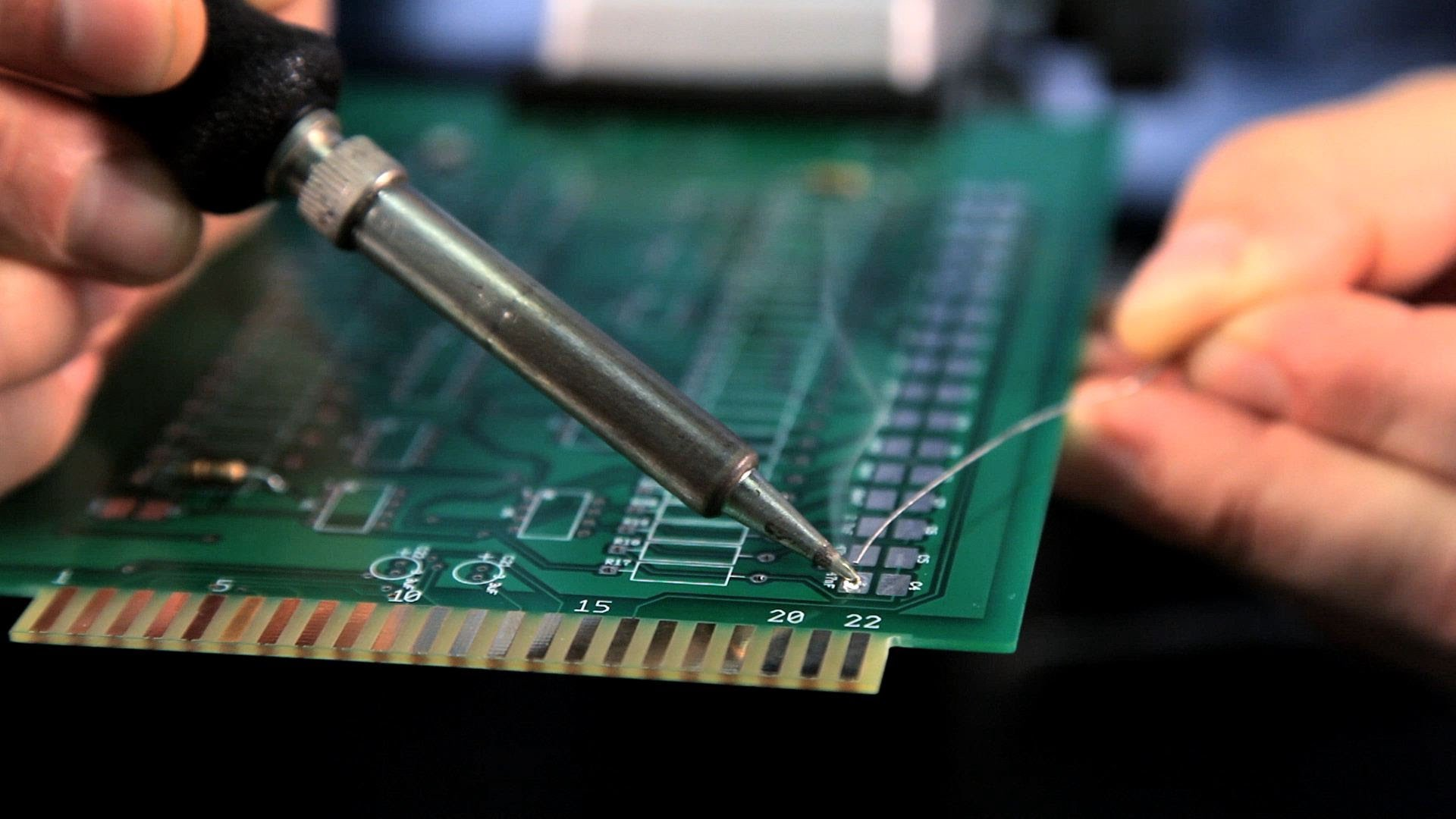
The right choice starts with the joint itself, then moves to alloy, wire diameter, flux, and the iron controlling the heat.
Alloy composition
The 63/37 wires in this roundup, including MAIYUM, TOWOT, and HengTianMei, use a tin-lead composition that melts at the listed 183°C. HGMZZQ uses 60/40 tin-lead, also with a stated 183°C melting point. Lead-free solder is a separate choice and should be used when a project or workplace requires it.
Tin-lead solder requires careful handling, ventilation, and hand washing. Do not choose it for work that must be lead-free. The YIHUA kit includes lead-free solder, making it the more obvious starting point for users who want that formulation.
Wire diameter
A 0.8mm wire is a strong general-purpose size for electronics because it gives control on small pads without being painfully slow on ordinary through-hole joints. The 1.0mm TOWOT wire feeds more material with each touch and is better suited to larger pads and wire connections.
A thinner wire is not automatically more precise if the user has to feed excessive lengths, but a thick wire can overwhelm compact pads quickly. Match the diameter to the joint rather than choosing by spool size alone.
For small electronics, wire control matters more than feeding a large amount of solder quickly.
Flux type
Rosin core wire carries flux inside the solder, which is convenient for clean, prepared joints. Extra flux becomes useful when a surface is oxidized or when the solder beads instead of spreading. SRA 135 provides a semi-solid paste, while QUIMTECH supplies a liquid RMA formula through a dropper.
Flux intended for electronics should not be confused with acid flux for plumbing. Even a no-clean or non-corrosive product should be applied sparingly. Flux helps the solder wet the surface, but it cannot repair a dirty pad, damaged trace, or poor heat connection.
Temperature control
The Q-MING iron offers adjustable control from 200 to 450°C, while the Liouhoum model spans 180 to 480°C and adds an LCD. The YIHUA station lists 194 to 896°F, PID stabilization, calibration, and sleep settings. These features give more control than an unregulated iron.
Set the iron for the solder and workpiece rather than simply selecting the highest setting. Too little heat creates a dull or incomplete joint. Too much heat increases the chance of damaging pads, insulation, or components.
Workstation support
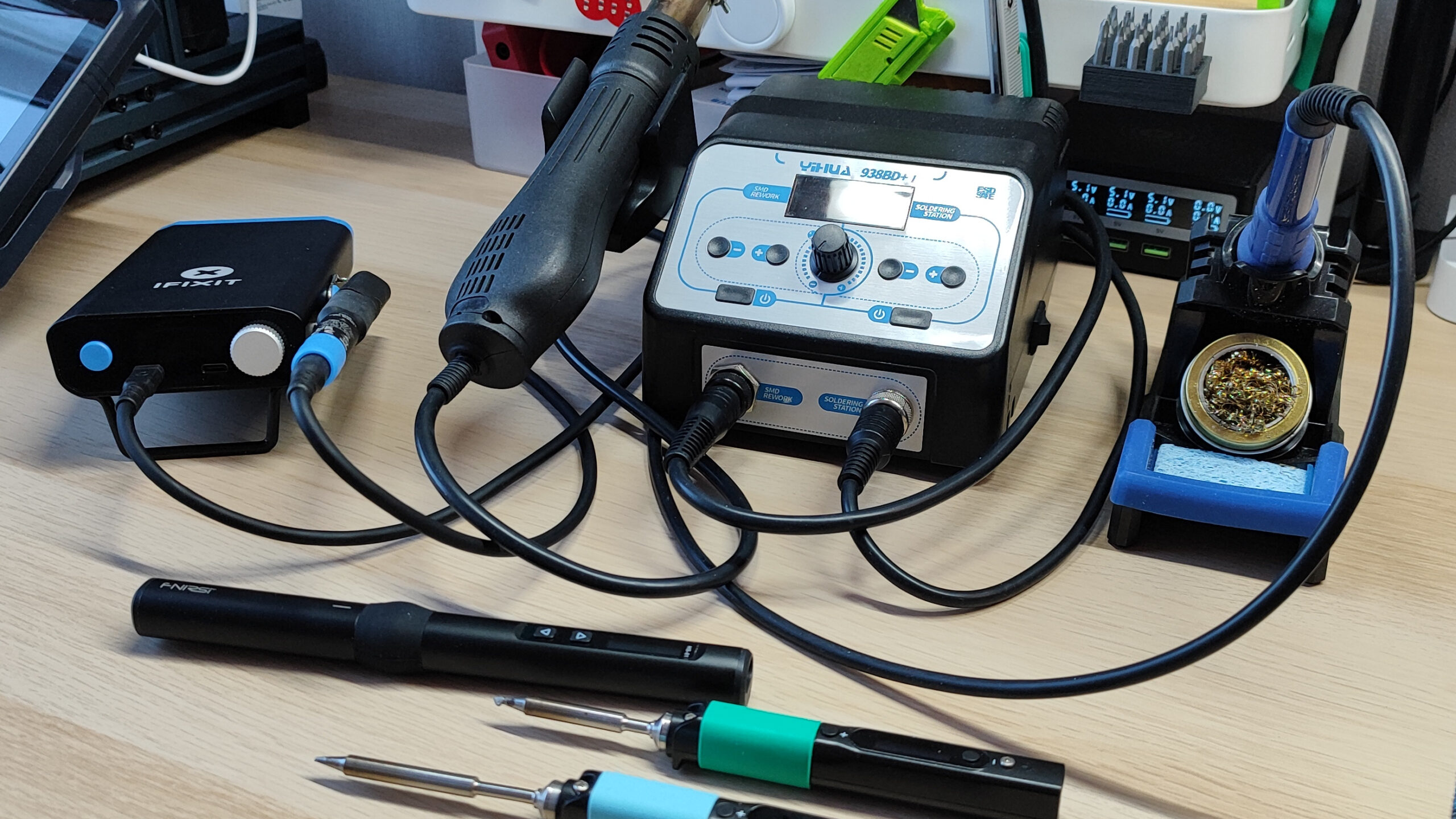
A standalone iron is portable and quick to put away. The YIHUA station takes more bench space but adds a holder, tip storage, helping hands, cleaning sponge, solder sucker, and tweezers. Those accessories matter when a project involves holding a board, removing old solder, or switching between tips.
The Q-MING kit sits between those approaches. It includes useful basics without the organization of a full station. Pick a portable kit for occasional work, and choose a station when soldering is a regular activity with several tools on the bench.
Frequently asked questions
What solder alloy is easiest for electronics work?
The 63/37 tin-lead alloy is a common choice for electronics repair because the products here list a melting point of 183°C and describe smooth flow. It is not suitable when lead-free materials are required. HGMZZQ offers a 60/40 tin-lead alternative with the same listed melting point.
Is 0.8mm solder wire suitable for circuit boards?
Yes. A 0.8mm wire is a useful general-purpose diameter for small pads, component leads, and many through-hole joints. It gives more control than 1.0mm wire on compact boards, while still feeding quickly enough for ordinary repairs.
Do I need extra flux with rosin core solder?
Not for every joint. Fresh, clean surfaces may solder well with the flux already inside MAIYUM, TOWOT, HGMZZQ, or HengTianMei wire. Extra flux can help with oxidation, stubborn wire ends, and rework, where SRA 135 or QUIMTECH can be applied carefully.
Is paste flux or liquid flux better?
Paste flux stays in place and is useful on wires or larger contact areas. Liquid flux from a dropper allows more precise application to a pad or rework point. The better format depends on how much control you need and how easily the work area can tolerate spreading liquid.
Can I use lead-free solder with these irons?
The Q-MING and Liouhoum irons both list temperature ranges that extend well above the melting point of the tin-lead wires in this roundup. YIHUA includes lead-free solder. The correct setting still depends on the specific solder formulation and the heat tolerance of the board and components.
What should I use for soldering wires?
A 0.8mm wire is suitable for many small and medium wire joints, while TOWOT's 1.0mm diameter can add material more quickly to larger connections. Clean the wire, use suitable flux when needed, and make sure the iron can transfer heat into the joint rather than only touching the solder.
The bottom line
The Best best solder for electronics for most small repairs is MAIYUM 0.8mm 50g. Its 63/37 alloy, fine diameter, built-in 1.8% rosin flux, and stated 183°C melting point make it a controlled choice for circuit boards and general electrical work. Choose MAIYUM 0.8mm 100g instead when the same format needs to stay on the bench for repeated repairs.
For a complete setup, YIHUA 926 III Station is the stronger recommendation. Its digital controls, PID stabilization, sleep mode, multiple tips, helping hands, and included tools make it much more capable than a bare iron. Buyers who want a portable iron should choose the Q-MING kit for its starter accessories or the Liouhoum kit for its faster stated warm-up and LCD.
If you are undecided, choose 0.8mm 63/37 wire for ordinary repairs, then add a small amount of flux only when the joint needs help wetting.
As an Amazon Associate we earn from qualifying purchases.